
Pollo Asado with Rice and Beans
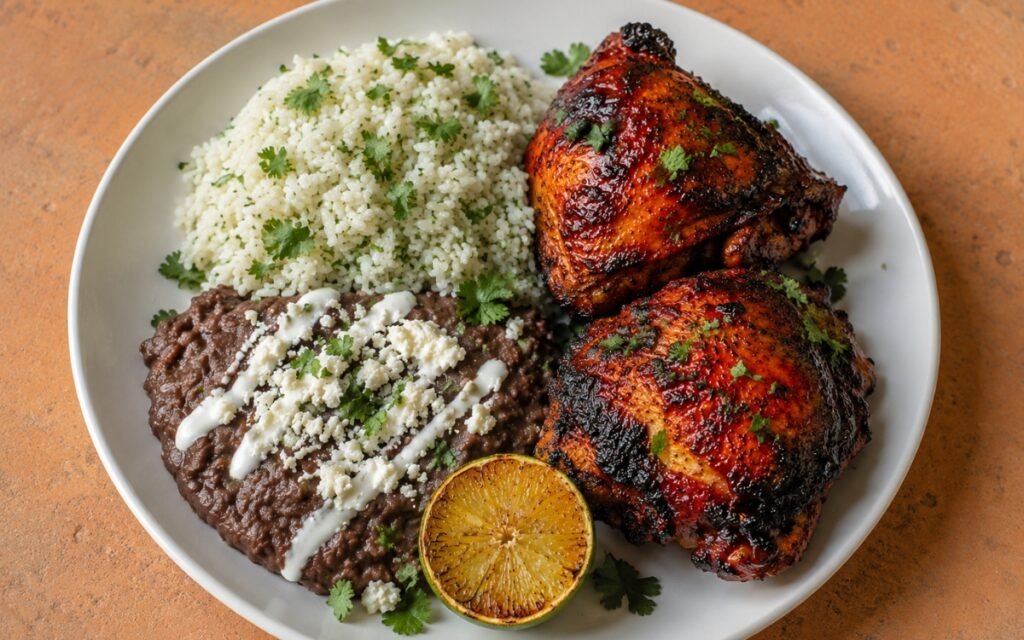
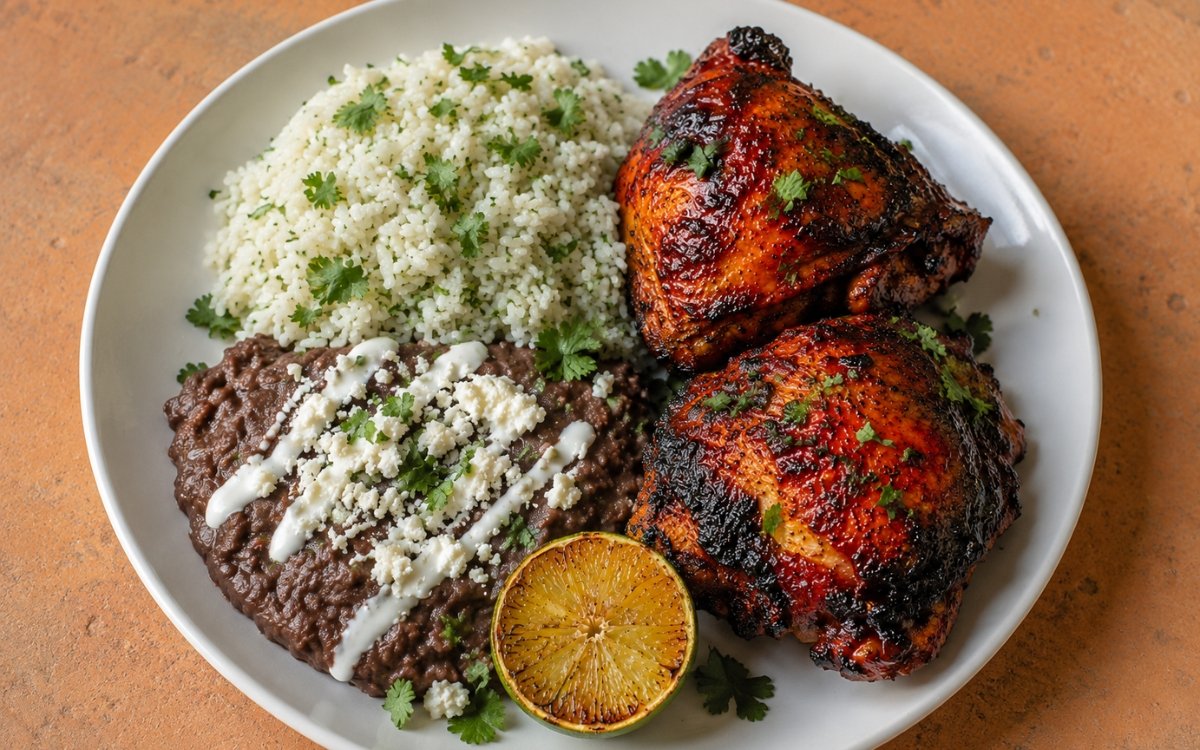
Skin-on bone-in chicken thighs marinated with achiote, citrus, garlic, and warm spices, then grilled until deeply red, caramelised, charred at the edges, and glossy, served with cilantro-lime jasmine rice, creamy refried black beans finished with crema and crumbled queso fresco, grilled lime halves, and fresh cilantro. The two-zone grilling method is the entire structural logic of this recipe — cooking the chicken over indirect heat first, then finishing skin-side down over direct heat, is what allows achiote’s sugar-heavy marinade to caramelise into deep red char without burning before the meat near the bone is fully cooked, the same indirect-then-direct sequencing used elsewhere in this collection whenever a sugar-forward marinade needs real colour without scorching. Drying the marinated skin thoroughly before it hits the grill matters just as much, since wet marinade produces black, bitter patches instead of controlled, even caramelisation. Bone-in, skin-on thighs are specified deliberately rather than a faster boneless cut, since the bone slows the cook just enough to let the skin develop real char while the meat stays genuinely juicy. The payoff is a plate built on colour contrast — deep red, glossy charred chicken skin against pale, fluffy rice and dark, creamy beans.
Prep Time : 35 min
Cook Time : 55 min
Servings : 4
35 min
55 min
4
Ingredients
For the Pollo Asado
• 8 bone-in, skin-on chicken thighs, about 1.8–2.2kg total
• 120g achiote paste — this one on Amazon
• 120ml fresh orange juice
• 60ml fresh lime juice
• 45ml neutral oil
• 30ml apple cider vinegar
• 20g garlic, finely grated or minced
• 10g light brown sugar
• 6g ground cumin — this one on Amazon
• 5g smoked paprika — this one on Amazon
• 4g dried Mexican oregano — this one on Amazon
• 2g ground coriander — this one on Amazon
• 3g freshly cracked black pepper
• 16g kosher salt
• Neutral oil, for brushing the grill or skillet
For the Cilantro-Lime Rice — (Full recipe — see Cilantro Lime Jasmine Rice)
• 300g jasmine rice — this one on Amazon
• 525ml water
• 5g salt
• 15ml vegetable oil
• 45ml fresh lime juice
• 30g fresh cilantro, chopped
• 10g unsalted butter — this one on Amazon
• 3g lime zest
For the Refried Spiced Black Beans
• 2 cans black beans, about 425g each, drained and rinsed
• 25ml neutral oil or lard
• 120g white onion, finely diced
• 3 garlic cloves, minced
• 4g ground cumin
• 3g smoked paprika
• 2g dried Mexican oregano
• 5g kosher salt, plus more to taste
• 2g freshly cracked black pepper
• 120–180ml water or chicken stock, as needed
• 20g unsalted butter, for finishing
For Garnishing and Serving
• 120g Mexican crema or sour cream, loosened slightly for drizzling
• 80g queso fresco, crumbled — this one on Amazon
• 25g fresh cilantro leaves
• 2 limes, halved for grilling
This post may contain affiliate links. As an Amazon Associate I earn from qualifying purchases, at no additional cost to you.
Directions
- Marinate the Pollo Asado
In a large bowl, whisk the achiote paste, orange juice, lime juice, neutral oil, apple cider vinegar, garlic, brown sugar, cumin, smoked paprika, Mexican oregano, coriander, black pepper, and salt until smooth. The marinade should be thick, vivid red-orange, and able to cling to the chicken. Add the chicken thighs and coat thoroughly, pushing some marinade around the edges of the skin and onto the flesh side. Cover and refrigerate for 2–8 hours. Do not marinate overnight. The citrus and vinegar can soften the chicken surface too much, especially around the edges. Achiote paste is doing most of the colour work in this marinade — its earthy, slightly musky character combined with the citrus and vinegar is what produces the deep, unmistakable red that defines pollo asado, and the marinade needs to stay thick enough to genuinely cling rather than simply coat and drip off. - Temper and Dry the Chicken
Remove the chicken from the refrigerator 30 minutes before cooking. Lift each thigh from the marinade and let excess marinade drip off. Lightly scrape away thick clumps of marinade from the skin, then pat the skin side dry with paper towels while leaving a red coating behind. This is the main turning point. If the skin is wet and loaded with marinade paste, it will burn before the chicken cooks through. You want a dry red-tinted surface, not dripping sauce. The distinction between “thick clumps scraped away” and “red coating left behind” matters more than it might sound — a bare, fully wiped-clean thigh loses much of the achiote colour and flavour, while a heavily loaded one burns before the meat is done. The goal is a thin, even, dry film. - Prepare the Cilantro-Lime Rice
Rinse the jasmine rice until the water runs mostly clear, then drain well. Add the rice, water, salt, and vegetable oil to a pot. Bring to a boil, then reduce to low, cover, and cook for 12–14 minutes, until the water is absorbed. Turn off the heat and rest covered for 10 minutes. Fluff with a fork, then fold in the butter, lime juice, lime zest, and chopped cilantro. Keep covered until plating. Rinsing the rice removes surface starch that would otherwise make the finished grains gummy and clumped rather than separate and fluffy — this step, along with the undisturbed rest afterward, is what gives the rice its light texture before the lime and cilantro are even folded in. - Prepare the Refried Black Beans
Heat the oil or lard in a skillet over medium heat. Add the diced onion and cook for 4–5 minutes until softened. Add the garlic and cook for 30 seconds. Add the drained black beans, cumin, smoked paprika, oregano, salt, black pepper, and 120ml water or stock. Simmer for 5–7 minutes, then mash until creamy but still slightly textured. Add more water or stock as needed to keep the beans soft and spoonable. Stir in the butter at the end. The beans should hold as a creamy mound on the plate, not run like soup and not sit stiff like paste. Mashing with a masher or fork rather than blending leaves some bean skins and texture intact, giving the finished beans body rather than a perfectly uniform purée — the butter stirred in at the very end adds richness and a glossy finish without needing to cook any further. - Grill the Chicken
Preheat a charcoal, gas, or wood grill for two-zone cooking: medium indirect heat on one side and higher direct heat on the other. Brush the grates lightly with oil. Place the chicken skin-side up over indirect heat. Cover and cook for 25–30 minutes, turning occasionally, until the internal temperature reaches about 65°C near the bone. Move the chicken skin-side down over direct heat and grill for 3–5 minutes, turning as needed, until the skin is deeply red, caramelised, slightly charred at the edges, and glossy. Continue cooking until the thickest part near the bone reaches 74–78°C. If using a thick skillet, sear skin-side down over medium heat for 6–8 minutes until browned, then flip and finish covered over medium-low heat until fully cooked. This two-stage approach exists specifically because achiote’s sugar content and the marinade’s citrus would burn well before bone-in thighs finish cooking if exposed to direct heat from the start — the indirect stage brings the meat most of the way to done gently, leaving only a short, controlled direct-heat finish to build the char. - Grill the Lime Halves
Place the lime halves cut-side down on the hot grill or skillet for 2–3 minutes, until charred and juicy. Keep them warm for serving. Charring the cut face develops a light bitterness and smoky depth alongside the lime’s natural acidity — a meaningfully different result from a plain raw lime wedge, and one that’s specifically suited to cutting through the richness of the chicken skin and beans. - Rest the Chicken
Transfer the chicken to a tray and rest for 8–10 minutes. Do not cut into it immediately. The juices need time to settle, and the skin will stay cleaner on the plate. As with any grilled or roasted protein, cutting in immediately releases juices that would otherwise redistribute back through the meat during this rest — for bone-in thighs specifically, this rest also lets the skin firm up slightly, so it stays intact and glossy rather than tearing when the chicken is moved to the plate. - Assemble the Plates
Divide the cilantro-lime rice among four plates. Add a generous spoonful of refried black beans beside the rice. Place 2 pollo asado thighs on each plate, keeping the charred red skin facing upward. Drizzle the beans with crema and scatter with crumbled queso fresco. Add one grilled lime half per plate and finish everything with fresh cilantro leaves. Keeping the charred skin facing upward and visible, rather than tucked underneath, is what puts the dish’s defining colour and texture on full display — the deep red, glossy skin is the visual centrepiece of the plate. - Serve
Serve immediately while the chicken skin is hot and glossy, the rice is fluffy, and the beans are creamy. Squeeze the grilled lime over the chicken just before eating. The charred lime’s smoky acidity is meant to be added at the table, right before eating, rather than earlier in the process — squeezed too far ahead, it would soften the skin’s texture rather than simply brightening the flavour on contact.
*Notes :
- The two-zone grilling method is the single most important technique in this recipe and is worth understanding rather than treating as an arbitrary instruction. Achiote paste and the brown sugar in the marinade both caramelise readily, which is exactly what produces pollo asado’s signature deep red, glossy char — but that same sugar content burns easily under sustained direct heat. Cooking the chicken over indirect heat first brings it most of the way to done without exposing the sugary marinade to flame, and the subsequent short direct-heat finish is calibrated to build char in minutes rather than the much longer time direct heat alone would need to cook bone-in thighs through, which would burn the exterior long before the interior finished.
- Drying the marinated skin without wiping it completely clean is a genuinely narrow target worth aiming for carefully. The goal is a thin, even, dry film of the red marinade left on the skin — enough to carry achiote’s colour and flavour into the char, but dry enough that it won’t steam or drip during the direct-heat stage. Either extreme, a fully wiped-clean thigh or one still heavily coated in wet marinade, produces a worse result: one loses the defining colour, the other burns into bitter black patches.
- Bone-in, skin-on thighs are specified over a faster-cooking boneless cut for real structural reasons rather than tradition alone. The bone conducts heat more slowly than the surrounding meat, which extends the cooking time just enough to let the skin develop deep, even char during the direct-heat stage without the meat drying out — a boneless thigh would cook through considerably faster, offering much less time for that char to properly develop before the meat is overdone.
- Charring the lime halves before serving is a small step that’s easy to treat as optional but genuinely changes what the lime contributes to the finished plate. A raw lime wedge provides straightforward acidity; a charred one adds a layer of smoky, slightly bitter depth from the caramelised cut face alongside that same acidity, which is specifically suited to cutting through the richness of both the chicken skin and the buttery, creamy beans.
Why This Recipe Works
This recipe works because the two-zone grilling method solves the central tension of cooking a sugar-heavy, achiote-based marinade on bone-in chicken: indirect heat cooks the meat through gently while the direct-heat finish builds real char in a short, controlled window rather than risking scorched sugar over a longer direct cook.
Drying the marinated skin to a thin, even film rather than either extreme protects both the colour and the texture of the char, and the bone itself slows the cook just enough to let that char develop fully.
Fluffy cilantro-lime rice, creamy spiced black beans, and a squeeze of charred lime round out the plate with textures and acidity that balance the rich, charred chicken.
Ingredient Breakdown
Bone-In, Skin-On Chicken Thighs
The specified cut — the bone slows cooking just enough for the skin to develop deep char while the meat stays juicy.
Achiote-Citrus Marinade
The colour and flavour base — achiote provides the defining deep red, citrus and vinegar add brightness and light tenderising.
Two-Zone Indirect-Then-Direct Grilling
The critical technique — cooks the meat through gently before a short, controlled direct-heat finish builds char without burning the sugary marinade.
Butter-Finished Refried Black Beans
The creamy side — mashed partially for texture, finished with butter for richness and a glossy consistency.
Charred Lime Halves
The finishing acidity — grilled cut-side down for a smoky depth beyond what a raw wedge would provide.
Flavor Structure Explained
This pollo asado follows a layered balance model:
- Deep charred foundation (achiote-marinated grilled chicken)
- Warm earthy spice (cumin, oregano, coriander)
- Fresh citrus lift (cilantro-lime rice, charred lime)
- Creamy savoury body (refried black beans)
- Rich cooling finish (crema, queso fresco)
The grilled chicken defines the plate with deep, charred, achiote-forward flavour and warm background spice from cumin, oregano, and coriander. Cilantro-lime rice contributes fresh, citrus-bright lightness that keeps the plate from feeling heavy. Refried black beans add a creamy, earthy savoury body underneath the chicken’s richness. Crema and queso fresco both cool and round out the beans with mild, salty creaminess, while a final squeeze of smoky charred lime ties the whole plate together with bright acidity.
Common Mistakes to Avoid
- Grilling Over Direct Heat From the Start – The achiote and sugar in the marinade will burn before the meat near the bone is cooked through. Always start over indirect heat and finish with a short direct-heat sear.
- Leaving Wet Marinade on the Skin – Excess wet marinade produces black, bitter patches instead of controlled, even char. Always pat the skin dry, leaving only a thin red-tinted film behind.
- Marinating Longer Than 8 Hours – Extended contact with citrus and vinegar softens the chicken’s surface too much, especially around the edges. Always stay within the 2–8 hour window.
- Cooking to Time Instead of Temperature – Bone-in thighs vary in size and need to reach at least 74°C near the bone regardless of how long that takes. Always verify with a thermometer rather than relying on the clock alone.
- Leaving the Rice Uncovered After Cooking – Cilantro-lime rice dries out quickly once exposed to air. Always keep it covered until the moment of plating.
Variations
Spicier Version
Add 1 finely minced chipotle pepper in adobo to the marinade for a smokier, sharper heat throughout the chicken.
With Grilled Vegetables
Add grilled bell peppers and onion wedges alongside the chicken during the direct-heat stage for a fuller, more colourful plate.
Boneless Version
Substitute boneless, skin-on thighs for a faster cook, reducing the indirect-heat stage to 12–15 minutes before finishing over direct heat, watching closely since boneless meat cooks through more quickly.
Pollo Asado Tacos
Shred or chop the grilled chicken and serve in warm corn tortillas with the same rice and beans on the side, plus diced onion and cilantro, for a taco-style version of the same flavours.
Storage & Make-Ahead
Raw chicken can marinate for up to 8 hours in the refrigerator; do not exceed this window given the acidic marinade.
Grilled chicken can be refrigerated in an airtight container for up to 3 days. Reheat gently in a covered skillet or oven to avoid drying out the skin.
Cilantro-lime rice can be refrigerated for up to 4 days. Reheat covered with a splash of water to restore its texture.
Refried black beans can be refrigerated for up to 4 days. Reheat with a splash of water or stock to loosen before serving.
The fully plated dish is best assembled fresh; reheat each component separately rather than storing the assembled plate.
Frequently Asked Questions
Why does the chicken need to cook over indirect heat before finishing over direct heat?
Achiote paste and the marinade’s brown sugar caramelise readily, which produces the dish’s signature deep red char — but that same sugar burns quickly under sustained direct heat. Cooking gently over indirect heat first brings the meat most of the way to done, leaving only a short, controlled direct-heat finish to build char without scorching.
Why dry the marinated skin without wiping it completely clean?
A thin, even film of marinade left on the skin carries achiote’s colour and flavour into the char while staying dry enough not to steam or burn. Wiping the skin fully clean loses much of that colour and flavour, while leaving it heavily coated produces black, bitter patches during the direct-heat stage.
Why use bone-in, skin-on thighs instead of a faster boneless cut?
The bone conducts heat more slowly than the surrounding meat, extending the cooking time just enough for the skin to develop real, even char without the meat drying out. A boneless thigh cooks through considerably faster, leaving much less time for that char to properly build.
Why grill the lime halves instead of serving them raw?
Charring the cut face develops a light bitterness and smoky depth alongside the lime’s natural acidity, adding a different dimension than a plain raw wedge provides. That smoky-tart quality specifically cuts through the richness of the chicken skin and the buttery beans.
Are there similar Mexican grilled-protein plates worth trying?
If you enjoy this grilled, citrus-marinated protein-and-rice format, Carne Asada Plate follows a similar structure with skirt steak instead of chicken — marinated, grilled hard for char, and served alongside Cilantro Lime Jasmine Rice, Salsa Roja, and charred cebollitas instead of black beans.
Nutrition Facts
( per serving )
Calories
~780 kcal
Protein
48 g
Fat
40 g
Carbs
58 g
Calories
~780 kcal
Protein
48 g
Fat
40 g
Carbs
58 g
Related Recipes
Related Recipes

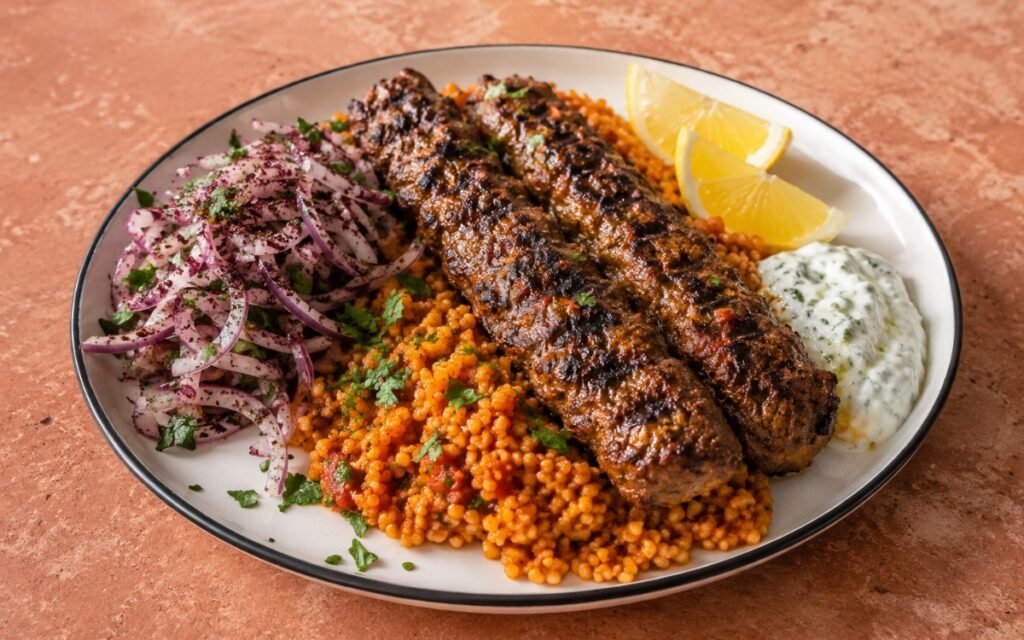
Turkish Adana Kebab with Tomato Couscous
Ground lamb shoulder mixed with pressed onion, parsley, garlic, and pul biber, shaped onto skewers, and grilled until deeply charred. Served over Couscous with sumac onions and tzatziki.
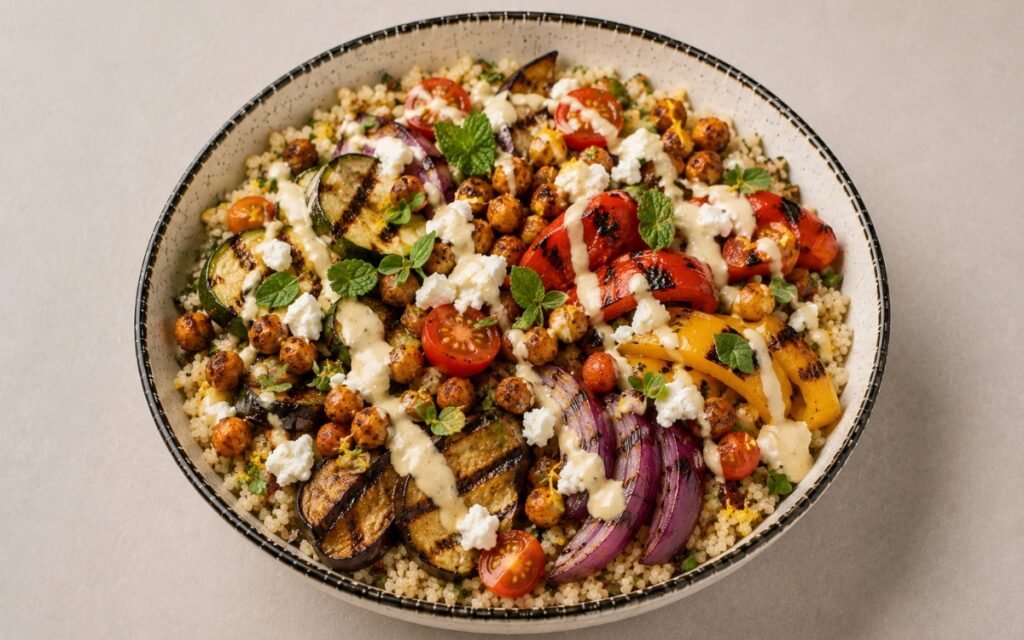
Grilled Mediterranean Veggie Bowl
Smoky grilled vegetables with lemon-herb quinoa, crispy chickpeas & creamy tahini-yogurt sauce.
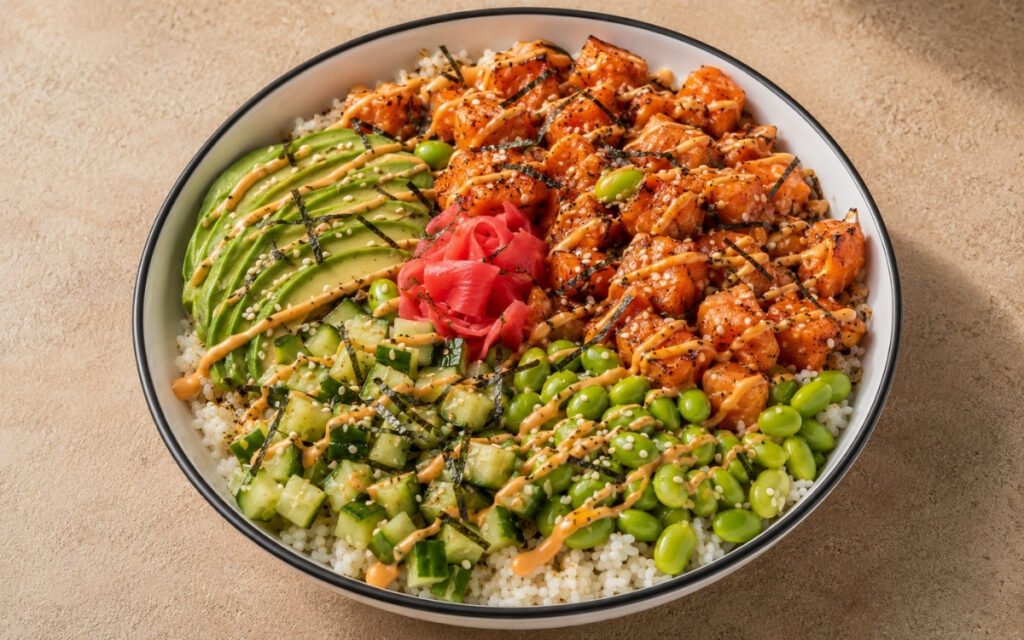
Spicy Salmon Sushi Bowl
Soy-honey marinated salmon seared 90 seconds for caramelised medium-rare — over seasoned sushi rice with spicy Kewpie mayo, avocado, edamame, nori, and pickled ginger. 45 minutes.
You might also like
You might also like
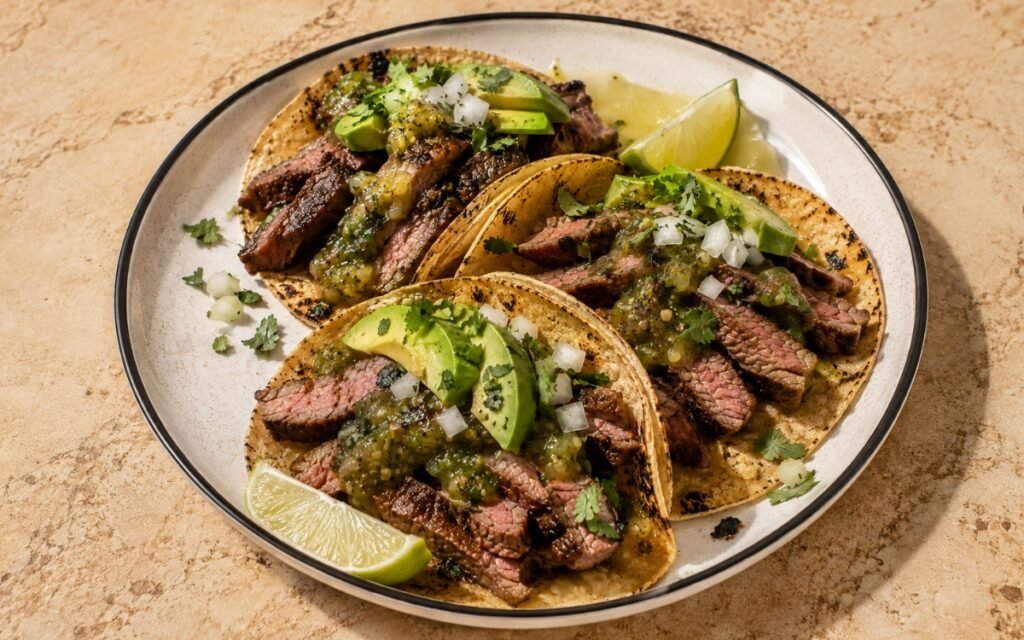
Steak Tacos with Salsa Verde
Dry-brined, hard-seared steak, rested and sliced thin against the grain, in warm homemade corn tortillas with salsa verde, onion, and avocado.
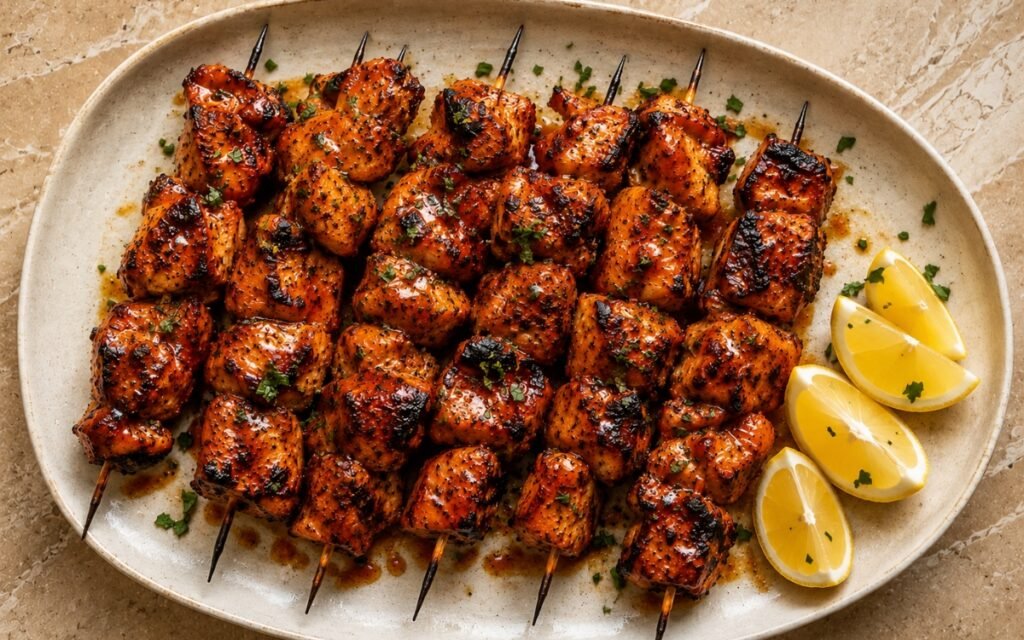
Grilled Chicken Skewers
Juicy grilled chicken skewers lacquered with caramelized honey–sriracha glaze for smoky, sticky heat.
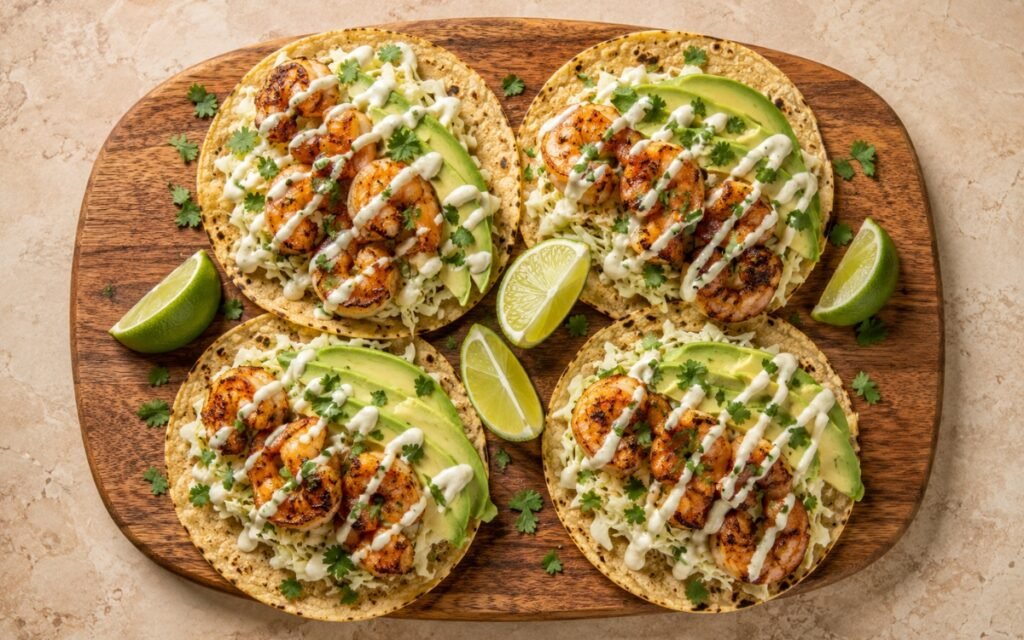
Shrimp Tacos with Lime Crema
Large shrimp dried, spiced, and seared hot and fast, piled onto small corn tortillas with crisp cabbage, fanned avocado, and a thick lime crema drizzle.
Pollo Asado with Rice and Beans
Ingredients
Method
- In a large bowl, whisk the achiote paste, orange juice, lime juice, neutral oil, apple cider vinegar, garlic, brown sugar, cumin, smoked paprika, Mexican oregano, coriander, black pepper, and salt until smooth. The marinade should be thick, vivid red-orange, and able to cling to the chicken. Add the chicken thighs and coat thoroughly, pushing some marinade around the edges of the skin and onto the flesh side. Cover and refrigerate for 2–8 hours. Do not marinate overnight. The citrus and vinegar can soften the chicken surface too much, especially around the edges. Achiote paste is doing most of the colour work in this marinade — its earthy, slightly musky character combined with the citrus and vinegar is what produces the deep, unmistakable red that defines pollo asado, and the marinade needs to stay thick enough to genuinely cling rather than simply coat and drip off.
- Remove the chicken from the refrigerator 30 minutes before cooking. Lift each thigh from the marinade and let excess marinade drip off. Lightly scrape away thick clumps of marinade from the skin, then pat the skin side dry with paper towels while leaving a red coating behind. This is the main turning point. If the skin is wet and loaded with marinade paste, it will burn before the chicken cooks through. You want a dry red-tinted surface, not dripping sauce. The distinction between “thick clumps scraped away” and “red coating left behind” matters more than it might sound — a bare, fully wiped-clean thigh loses much of the achiote colour and flavour, while a heavily loaded one burns before the meat is done. The goal is a thin, even, dry film.
- Rinse the jasmine rice until the water runs mostly clear, then drain well. Add the rice, water, salt, and vegetable oil to a pot. Bring to a boil, then reduce to low, cover, and cook for 12–14 minutes, until the water is absorbed. Turn off the heat and rest covered for 10 minutes. Fluff with a fork, then fold in the butter, lime juice, lime zest, and chopped cilantro. Keep covered until plating. Rinsing the rice removes surface starch that would otherwise make the finished grains gummy and clumped rather than separate and fluffy — this step, along with the undisturbed rest afterward, is what gives the rice its light texture before the lime and cilantro are even folded in.
- Heat the oil or lard in a skillet over medium heat. Add the diced onion and cook for 4–5 minutes until softened. Add the garlic and cook for 30 seconds. Add the drained black beans, cumin, smoked paprika, oregano, salt, black pepper, and 120ml water or stock. Simmer for 5–7 minutes, then mash until creamy but still slightly textured. Add more water or stock as needed to keep the beans soft and spoonable. Stir in the butter at the end. The beans should hold as a creamy mound on the plate, not run like soup and not sit stiff like paste. Mashing with a masher or fork rather than blending leaves some bean skins and texture intact, giving the finished beans body rather than a perfectly uniform purée — the butter stirred in at the very end adds richness and a glossy finish without needing to cook any further.
- Preheat a charcoal, gas, or wood grill for two-zone cooking: medium indirect heat on one side and higher direct heat on the other. Brush the grates lightly with oil. Place the chicken skin-side up over indirect heat. Cover and cook for 25–30 minutes, turning occasionally, until the internal temperature reaches about 65°C near the bone. Move the chicken skin-side down over direct heat and grill for 3–5 minutes, turning as needed, until the skin is deeply red, caramelised, slightly charred at the edges, and glossy. Continue cooking until the thickest part near the bone reaches 74–78°C. If using a thick skillet, sear skin-side down over medium heat for 6–8 minutes until browned, then flip and finish covered over medium-low heat until fully cooked. This two-stage approach exists specifically because achiote’s sugar content and the marinade’s citrus would burn well before bone-in thighs finish cooking if exposed to direct heat from the start — the indirect stage brings the meat most of the way to done gently, leaving only a short, controlled direct-heat finish to build the char.
- Place the lime halves cut-side down on the hot grill or skillet for 2–3 minutes, until charred and juicy. Keep them warm for serving. Charring the cut face develops a light bitterness and smoky depth alongside the lime’s natural acidity — a meaningfully different result from a plain raw lime wedge, and one that’s specifically suited to cutting through the richness of the chicken skin and beans.
- Transfer the chicken to a tray and rest for 8–10 minutes. Do not cut into it immediately. The juices need time to settle, and the skin will stay cleaner on the plate. As with any grilled or roasted protein, cutting in immediately releases juices that would otherwise redistribute back through the meat during this rest — for bone-in thighs specifically, this rest also lets the skin firm up slightly, so it stays intact and glossy rather than tearing when the chicken is moved to the plate.
- Divide the cilantro-lime rice among four plates. Add a generous spoonful of refried black beans beside the rice. Place 2 pollo asado thighs on each plate, keeping the charred red skin facing upward. Drizzle the beans with crema and scatter with crumbled queso fresco. Add one grilled lime half per plate and finish everything with fresh cilantro leaves. Keeping the charred skin facing upward and visible, rather than tucked underneath, is what puts the dish’s defining colour and texture on full display — the deep red, glossy skin is the visual centrepiece of the plate.
- Serve immediately while the chicken skin is hot and glossy, the rice is fluffy, and the beans are creamy. Squeeze the grilled lime over the chicken just before eating. The charred lime’s smoky acidity is meant to be added at the table, right before eating, rather than earlier in the process — squeezed too far ahead, it would soften the skin’s texture rather than simply brightening the flavour on contact.