Ingredients
Method
Marinate the Pollo Asado
- In a large bowl, whisk the achiote paste, orange juice, lime juice, neutral oil, apple cider vinegar, garlic, brown sugar, cumin, smoked paprika, Mexican oregano, coriander, black pepper, and salt until smooth. The marinade should be thick, vivid red-orange, and able to cling to the chicken. Add the chicken thighs and coat thoroughly, pushing some marinade around the edges of the skin and onto the flesh side. Cover and refrigerate for 2–8 hours. Do not marinate overnight. The citrus and vinegar can soften the chicken surface too much, especially around the edges. Achiote paste is doing most of the colour work in this marinade — its earthy, slightly musky character combined with the citrus and vinegar is what produces the deep, unmistakable red that defines pollo asado, and the marinade needs to stay thick enough to genuinely cling rather than simply coat and drip off.
Temper and Dry the Chicken
- Remove the chicken from the refrigerator 30 minutes before cooking. Lift each thigh from the marinade and let excess marinade drip off. Lightly scrape away thick clumps of marinade from the skin, then pat the skin side dry with paper towels while leaving a red coating behind. This is the main turning point. If the skin is wet and loaded with marinade paste, it will burn before the chicken cooks through. You want a dry red-tinted surface, not dripping sauce. The distinction between "thick clumps scraped away" and "red coating left behind" matters more than it might sound — a bare, fully wiped-clean thigh loses much of the achiote colour and flavour, while a heavily loaded one burns before the meat is done. The goal is a thin, even, dry film.
Prepare the Cilantro-Lime Rice
- Rinse the jasmine rice until the water runs mostly clear, then drain well. Add the rice, water, salt, and vegetable oil to a pot. Bring to a boil, then reduce to low, cover, and cook for 12–14 minutes, until the water is absorbed. Turn off the heat and rest covered for 10 minutes. Fluff with a fork, then fold in the butter, lime juice, lime zest, and chopped cilantro. Keep covered until plating. Rinsing the rice removes surface starch that would otherwise make the finished grains gummy and clumped rather than separate and fluffy — this step, along with the undisturbed rest afterward, is what gives the rice its light texture before the lime and cilantro are even folded in.
Prepare the Refried Black Beans
- Heat the oil or lard in a skillet over medium heat. Add the diced onion and cook for 4–5 minutes until softened. Add the garlic and cook for 30 seconds. Add the drained black beans, cumin, smoked paprika, oregano, salt, black pepper, and 120ml water or stock. Simmer for 5–7 minutes, then mash until creamy but still slightly textured. Add more water or stock as needed to keep the beans soft and spoonable. Stir in the butter at the end. The beans should hold as a creamy mound on the plate, not run like soup and not sit stiff like paste. Mashing with a masher or fork rather than blending leaves some bean skins and texture intact, giving the finished beans body rather than a perfectly uniform purée — the butter stirred in at the very end adds richness and a glossy finish without needing to cook any further.
Grill the Chicken
- Preheat a charcoal, gas, or wood grill for two-zone cooking: medium indirect heat on one side and higher direct heat on the other. Brush the grates lightly with oil. Place the chicken skin-side up over indirect heat. Cover and cook for 25–30 minutes, turning occasionally, until the internal temperature reaches about 65°C near the bone. Move the chicken skin-side down over direct heat and grill for 3–5 minutes, turning as needed, until the skin is deeply red, caramelised, slightly charred at the edges, and glossy. Continue cooking until the thickest part near the bone reaches 74–78°C. If using a thick skillet, sear skin-side down over medium heat for 6–8 minutes until browned, then flip and finish covered over medium-low heat until fully cooked. This two-stage approach exists specifically because achiote's sugar content and the marinade's citrus would burn well before bone-in thighs finish cooking if exposed to direct heat from the start — the indirect stage brings the meat most of the way to done gently, leaving only a short, controlled direct-heat finish to build the char.
Grill the Lime Halves
- Place the lime halves cut-side down on the hot grill or skillet for 2–3 minutes, until charred and juicy. Keep them warm for serving. Charring the cut face develops a light bitterness and smoky depth alongside the lime's natural acidity — a meaningfully different result from a plain raw lime wedge, and one that's specifically suited to cutting through the richness of the chicken skin and beans.
Rest the Chicken
- Transfer the chicken to a tray and rest for 8–10 minutes. Do not cut into it immediately. The juices need time to settle, and the skin will stay cleaner on the plate. As with any grilled or roasted protein, cutting in immediately releases juices that would otherwise redistribute back through the meat during this rest — for bone-in thighs specifically, this rest also lets the skin firm up slightly, so it stays intact and glossy rather than tearing when the chicken is moved to the plate.
Assemble the Plates
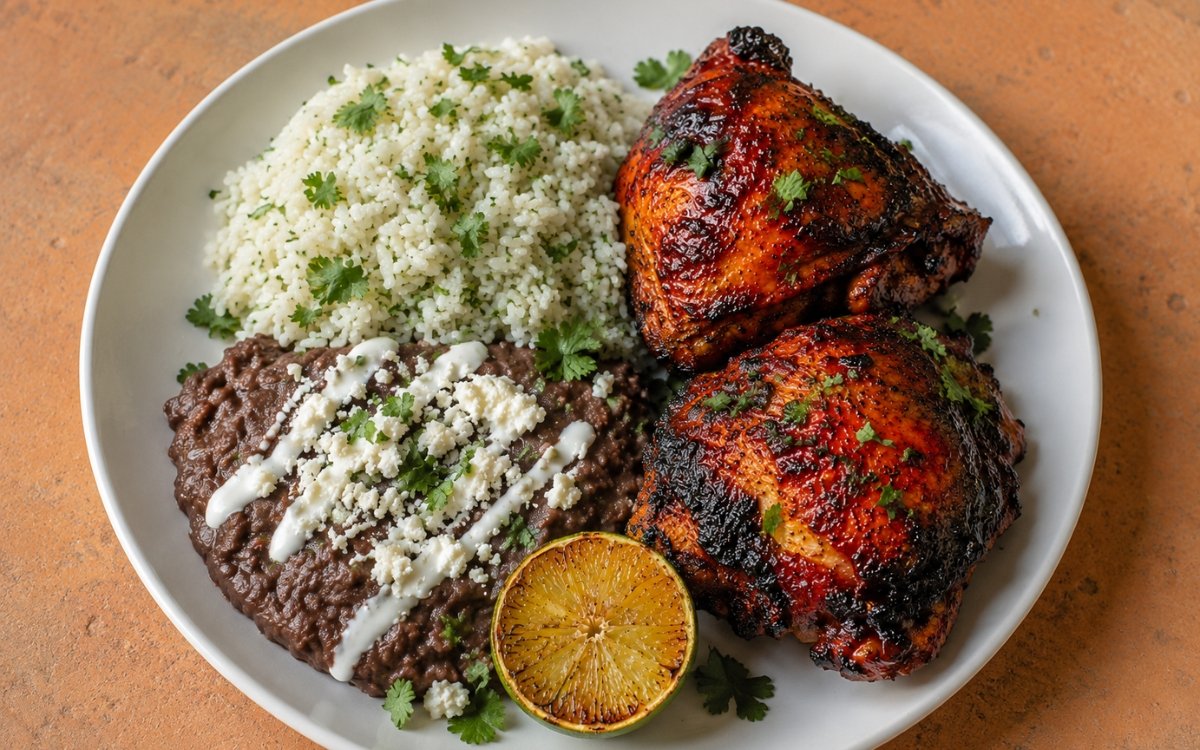
- Divide the cilantro-lime rice among four plates. Add a generous spoonful of refried black beans beside the rice. Place 2 pollo asado thighs on each plate, keeping the charred red skin facing upward. Drizzle the beans with crema and scatter with crumbled queso fresco. Add one grilled lime half per plate and finish everything with fresh cilantro leaves. Keeping the charred skin facing upward and visible, rather than tucked underneath, is what puts the dish's defining colour and texture on full display — the deep red, glossy skin is the visual centrepiece of the plate.
Serve
- Serve immediately while the chicken skin is hot and glossy, the rice is fluffy, and the beans are creamy. Squeeze the grilled lime over the chicken just before eating. The charred lime's smoky acidity is meant to be added at the table, right before eating, rather than earlier in the process — squeezed too far ahead, it would soften the skin's texture rather than simply brightening the flavour on contact.
Notes
The two-zone grilling method is the single most important technique in this recipe and is worth understanding rather than treating as an arbitrary instruction. Achiote paste and the brown sugar in the marinade both caramelise readily, which is exactly what produces pollo asado's signature deep red, glossy char — but that same sugar content burns easily under sustained direct heat. Cooking the chicken over indirect heat first brings it most of the way to done without exposing the sugary marinade to flame, and the subsequent short direct-heat finish is calibrated to build char in minutes rather than the much longer time direct heat alone would need to cook bone-in thighs through, which would burn the exterior long before the interior finished.
Drying the marinated skin without wiping it completely clean is a genuinely narrow target worth aiming for carefully. The goal is a thin, even, dry film of the red marinade left on the skin — enough to carry achiote's colour and flavour into the char, but dry enough that it won't steam or drip during the direct-heat stage. Either extreme, a fully wiped-clean thigh or one still heavily coated in wet marinade, produces a worse result: one loses the defining colour, the other burns into bitter black patches.
Bone-in, skin-on thighs are specified over a faster-cooking boneless cut for real structural reasons rather than tradition alone. The bone conducts heat more slowly than the surrounding meat, which extends the cooking time just enough to let the skin develop deep, even char during the direct-heat stage without the meat drying out — a boneless thigh would cook through considerably faster, offering much less time for that char to properly develop before the meat is overdone.
Charring the lime halves before serving is a small step that's easy to treat as optional but genuinely changes what the lime contributes to the finished plate. A raw lime wedge provides straightforward acidity; a charred one adds a layer of smoky, slightly bitter depth from the caramelised cut face alongside that same acidity, which is specifically suited to cutting through the richness of both the chicken skin and the buttery, creamy beans.