
Pambazo Sandwich
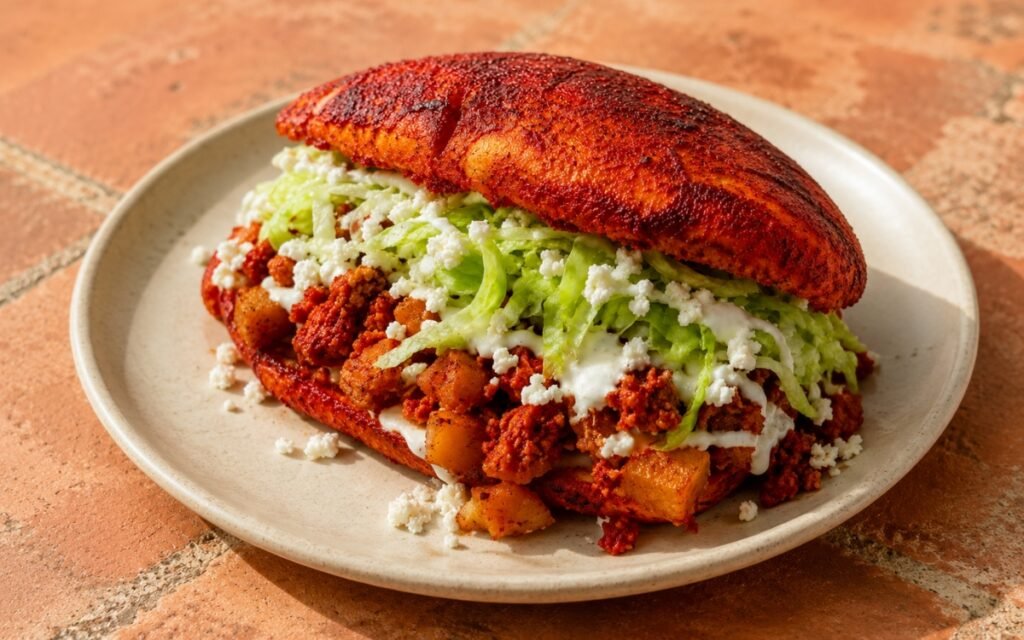
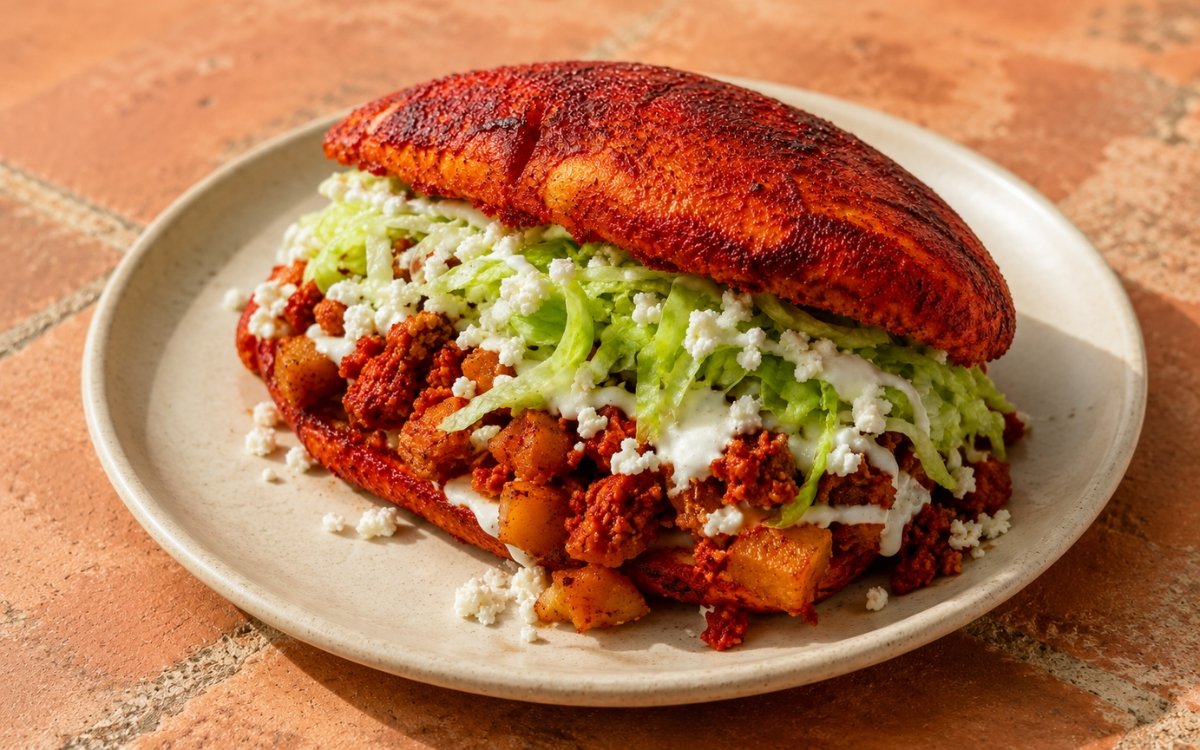
A classic Mexican pambazo made with rolls dipped in a vivid guajillo chili sauce and griddled until the exterior turns deep red and lightly crisp, filled with a savory potato-and-chorizo mixture, then finished with shredded lettuce, crema, and crumbled queso fresco. Getting the guajillo sauce’s consistency right before the rolls ever touch it is the technique this whole sandwich depends on — a sauce that’s too thick coats unevenly, while one that’s too thin turns the bread soggy before it ever reaches the griddle, the same dip-sauce-calibration principle used elsewhere in this collection whenever bread needs to be stained and flavoured rather than fully saturated. Griddling the sauce-coated rolls only briefly is what builds pambazo’s signature deep red, lightly crisp exterior while keeping the interior soft enough to bite through cleanly. Keeping the potato-chorizo filling cohesive rather than wet protects that same bread from collapsing once assembled. The payoff is a sandwich with a genuinely vivid red, crisp-edged roll around a savoury, well-seasoned potato and chorizo filling, finished with cool crema and sharp queso fresco.
Prep Time : 20 min
Cook Time : 35 min
Servings : 4
20 min
35 min
4
Ingredients
For the Guajillo Chili Sauce
• 8 dried guajillo chiles, stemmed and deseeded — this one on Amazon
• 1 small white onion, roughly chopped
• 2 garlic cloves
• ½ tsp dried Mexican oregano — this one on Amazon
• ¼ tsp ground cumin — this one on Amazon
• 250–300ml hot water, plus more as needed
• 1 tsp neutral oil
• 1 tsp fine sea salt, or to taste
For the Potato and Chorizo Filling
• 500g potatoes, peeled and cut into medium chunks
• 300g Mexican chorizo, casing removed if needed
• 1 tbsp neutral oil, only if the chorizo is very lean
• Fine sea salt, to taste
• Freshly ground black pepper, to taste
For the Sandwiches
• 4 pambazo rolls or telera rolls — see Telera Rolls
• 2–3 tbsp neutral oil, for griddling
• 120g shredded lettuce
• 80–100ml Mexican crema
• 100g queso fresco, crumbled — this one on Amazon
This post may contain affiliate links. As an Amazon Associate I earn from qualifying purchases, at no additional cost to you.
Directions
- Cook the Potatoes
Place the potatoes in a pot of cold salted water. Bring to a boil and cook until tender, about 12–15 minutes, depending on size. Drain well and let the steam escape for 2–3 minutes. Lightly mash the potatoes. They should be broken up and fluffy, but not completely smooth like purée. The potatoes should be fully tender and easy to mash, but still dry enough to hold texture once mixed with the chorizo. Letting the steam escape for a couple of minutes after draining, rather than mashing them straight away, removes surface moisture that would otherwise make the filling wetter than it should be once combined with the chorizo’s own rendered fat. - Make the Guajillo Chili Sauce
Place the guajillo chiles in a bowl and cover with hot water. Let them soak for 10–15 minutes until softened. Transfer the softened chiles to a blender with the onion, garlic, oregano, cumin, oil, salt, and about 250ml of the soaking water or fresh hot water. Blend until completely smooth. Add a little more water if needed to help it blend. Strain the sauce through a fine sieve if you want a smoother finish, then taste and adjust the salt. The sauce should be smooth, vivid red, and fluid enough to coat the bread evenly without being watery. It should stain the bread easily rather than sit on the surface in a thick paste. This sauce’s consistency is a genuine balance point worth checking carefully before moving on — thick enough to actually cling and colour the bread, but loose enough to coat evenly rather than sitting as a heavy, uneven paste. - Cook the Chorizo and Finish the Filling
Place a skillet over medium heat. Add the chorizo and cook, breaking it up with a spoon, until fully cooked, fragrant, and lightly crisp in spots, about 8–10 minutes. If the chorizo is very lean and sticks, add a little oil. Add the mashed potatoes to the skillet and fold everything together until evenly combined. Cook for another 2–3 minutes so the flavors come together. Taste and adjust with salt and black pepper if needed. The filling should be cohesive and well mixed, with the chorizo fat lightly coating the potatoes. It should not be wet or loose. Folding the potatoes directly into the rendered chorizo fat, rather than combining them separately, is what lets that fat’s flavour distribute evenly through the whole filling rather than pooling on its own. - Prepare the Rolls
Slice the pambazo or telera rolls horizontally, leaving a hinge if you prefer. Working one roll at a time, dip or brush the outside of each roll generously with the guajillo sauce. Coat the top, bottom, and sides so the bread turns a vivid red-orange. Do not soak the interior crumb heavily; the goal is to stain and flavor the exterior without making the roll collapse. If the sauce is too thick, the bread will not coat evenly; if too thin, the bread can become soggy. Adjust the sauce consistency before dipping the rolls. Keeping the coating focused on the exterior crust, rather than working the sauce deep into the crumb, is what allows the bread to pick up pambazo’s signature colour and flavour without compromising the structural integrity the roll needs to hold its filling. - Griddle the Pambazos
Heat a large skillet or griddle over medium heat and add a thin film of neutral oil. Place the sauce-coated rolls cut-side open first just briefly if you want a little toast inside, then griddle the outside surfaces until the bread is hot, lightly crisp, and stained a deeper red, about 1–2 minutes per side as needed. The bread should be warmed through and lightly crisped on the outside, but still soft enough to bite through. Do not overcook or the rolls can dry out and crack. This brief griddling stage does two things simultaneously — it sets and slightly caramelises the guajillo sauce into the bread’s crust, deepening its colour, while also crisping the exterior just enough to give the roll real structure against the warm filling that follows. - Fill and Finish
Fill each warm roll with a generous portion of the potato-and-chorizo mixture. Top with shredded lettuce, a drizzle of crema, and a generous sprinkle of crumbled queso fresco. Serve immediately while the bread is still warm and lightly crisp, and the filling is hot. Adding the cool crema, lettuce, and cheese only at this final step keeps those fresh components crisp and distinct rather than wilting against the hot filling and freshly griddled bread.
*Notes :
- The guajillo sauce’s consistency is worth checking with real care before a single roll is dipped, since it’s the detail most directly responsible for whether the finished pambazo looks and eats correctly. A sauce blended too thick won’t spread evenly across the bread’s surface, leaving patchy, uneven colour; one left too thin will soak in rather than simply staining the crust, softening the bread before it even reaches the griddle. Straining the sauce, and adjusting its thickness with a little extra water if needed, is worth the extra few minutes it takes.
- Restricting the sauce’s contact to the bread’s exterior, rather than letting it work deeply into the crumb, is a deliberate structural choice specific to this format. Pambazo’s identity depends on a roll that’s vividly coloured and lightly crisp on the outside while staying genuinely soft enough to bite through inside — a roll oversaturated with sauce loses that contrast and risks falling apart before it ever reaches the filling stage.
- The brief griddling step is doing more than simply warming the bread through. Direct contact with the hot, oiled pan is what sets and slightly caramelises the guajillo sauce already coating the roll, deepening its red colour and building a light crispness at the surface — this is a genuinely different result from simply warming a sauce-dipped roll in an oven or under a lid, where that direct-contact caramelisation wouldn’t happen the same way.
- Keeping the potato-chorizo filling cohesive rather than loose protects the same vulnerable bread from a second direction. Even a properly griddled, appropriately sauced roll has limited tolerance for a wet filling sitting inside it — a filling with excess moisture, whether from underdrained potatoes or unrendered chorizo fat, works against everything the sauce-and-griddle stage was built to protect.
Why This Recipe Works
This recipe works because the guajillo sauce is calibrated to a specific consistency that stains the bread’s exterior without soaking through it, and the potato filling is kept cohesive rather than wet by draining the potatoes properly and folding them directly into the chorizo’s rendered fat.
Griddling the sauce-coated rolls briefly sets and caramelises that coating into the crust, building pambazo’s signature deep red, lightly crisp exterior while the interior stays soft.
Adding the cool crema, lettuce, and cheese only at the final assembly step keeps those fresh components distinct against the hot bread and filling.
Ingredient Breakdown
Blended Guajillo Chili Sauce
The defining coating — calibrated to a specific fluid consistency so it stains the bread’s exterior evenly without soaking through.
Well-Drained Mashed Potatoes
The filling’s base — cooked and drained thoroughly so excess moisture doesn’t loosen the finished filling.
Mexican Chorizo, Rendered Fat and All
The filling’s flavour foundation — its rendered fat is folded directly into the potatoes rather than kept separate.
Sauce-Coated, Briefly Griddled Roll
The critical bread technique — direct pan contact sets and caramelises the guajillo coating into a deep red, lightly crisp crust.
Late-Added Fresh Toppings (Lettuce, Crema, Queso Fresco)
The finishing layer — added only at final assembly to stay crisp and visually distinct against the hot filling.
Flavor Structure Explained
This pambazo follows a layered balance model:
- Vivid smoky-spiced foundation (guajillo-stained, griddled bread)
- Rich savoury centre (potato and chorizo filling)
- Cool creamy contrast (crema)
- Sharp salty finish (queso fresco)
- Fresh crisp lift (lettuce)
The guajillo-stained, griddled roll defines the sandwich with warm, smoky chile flavour and a lightly crisp, deep red crust. The potato-and-chorizo filling adds rich, savoury substance, with the chorizo’s own fat carrying spice and depth through every bite. Crema cools the whole sandwich down with mild, tangy creaminess, while crumbled queso fresco adds a sharp, salty finish. Fresh shredded lettuce lifts everything with clean, crisp contrast against the warm, rich components beneath it.
Common Mistakes to Avoid
- Getting the Guajillo Sauce’s Consistency Wrong – Too thick coats unevenly; too thin soaks the bread and turns it soggy. Always check and adjust the consistency before dipping the rolls.
- Working the Sauce Deep Into the Crumb – This softens the bread from the inside and risks it collapsing. Always keep the coating focused on the exterior crust.
- Leaving the Filling Wet Instead of Cohesive – Excess moisture from underdrained potatoes or unrendered chorizo fat softens the bread from within. Always keep the filling well combined and dry enough to hold texture.
- Overcooking the Rolls on the Griddle – This dries out and can crack the bread. Always griddle briefly, just until crisped and coloured.
- Assembling Too Far Ahead of Serving – The rolls soften quickly once filled. Always assemble only when ready to serve.
Variations
Spicier Version
Add a dried chile de árbol to the guajillo soak for a sharper, more assertive heat in the sauce.
With Refried Beans
Spread a thin layer of refried beans inside the roll before adding the potato-chorizo filling for a heartier, more traditional version.
Vegetarian Version
Substitute the chorizo with a plant-based chorizo alternative, following the identical cooking and filling method.
Extra-Crispy Version
Extend the griddling time by 30–60 seconds per side for a more pronounced crisp exterior, watching closely so the bread doesn’t crack.
Storage & Make-Ahead
The guajillo chili sauce can be made 2–3 days ahead and refrigerated in a sealed container. The potato-and-chorizo filling can be made a day ahead and refrigerated; reheat gently before assembling.
Rolls are best sauced and griddled fresh right before serving rather than prepared ahead. Fully assembled sandwiches are not suitable for storage — assemble only what will be eaten immediately, given how quickly the bread softens once filled.
Frequently Asked Questions
Why does the guajillo sauce’s consistency matter so much before dipping the rolls?
A sauce that’s too thick won’t spread evenly, leaving patchy colour, while one that’s too thin soaks into the bread rather than simply staining it, softening the roll before it even reaches the griddle. Getting that balance right protects the finished sandwich’s structure and appearance.
Why keep the sauce mostly on the bread’s exterior rather than letting it soak into the crumb?
Pambazo’s identity depends on a roll that’s vividly coloured and lightly crisp outside while staying soft enough to bite through inside. A roll oversaturated with sauce loses that contrast and risks falling apart before it’s even filled.
Why does the potato-chorizo filling need to stay cohesive rather than loose?
Even a properly prepared roll has limited tolerance for a wet filling sitting inside it. Excess moisture, whether from underdrained potatoes or unrendered chorizo fat, works directly against the structural integrity the sauce-and-griddle stage was built to protect.
Why griddle the sauce-coated rolls instead of just warming them another way?
Direct contact with the hot, oiled pan sets and slightly caramelises the guajillo sauce already on the bread, deepening its red colour and building light crispness. Warming the roll another way, like in an oven, wouldn’t produce that same direct-contact caramelisation.
Are there other substantial Mexican or chorizo-based sandwiches worth trying?
Torta de Milanesa Sandwich and Pulled Pork Sandwich both offer different substantial sandwich directions worth exploring. Cuban Frita Burger and Argentine Choripán both feature a chorizo-based filling as well, each with its own distinct sauce and format. Cuban Sandwich (Cubano) is also worth trying if you enjoy this kind of substantial, pressed or griddled sandwich.
Nutrition Facts
( per serving )
Calories
~680 kcal
Protein
26 g
Fat
40 g
Carbs
56 g
Calories
~680 kcal
Protein
26 g
Fat
40 g
Carbs
56 g
Related Recipes
Related Recipes

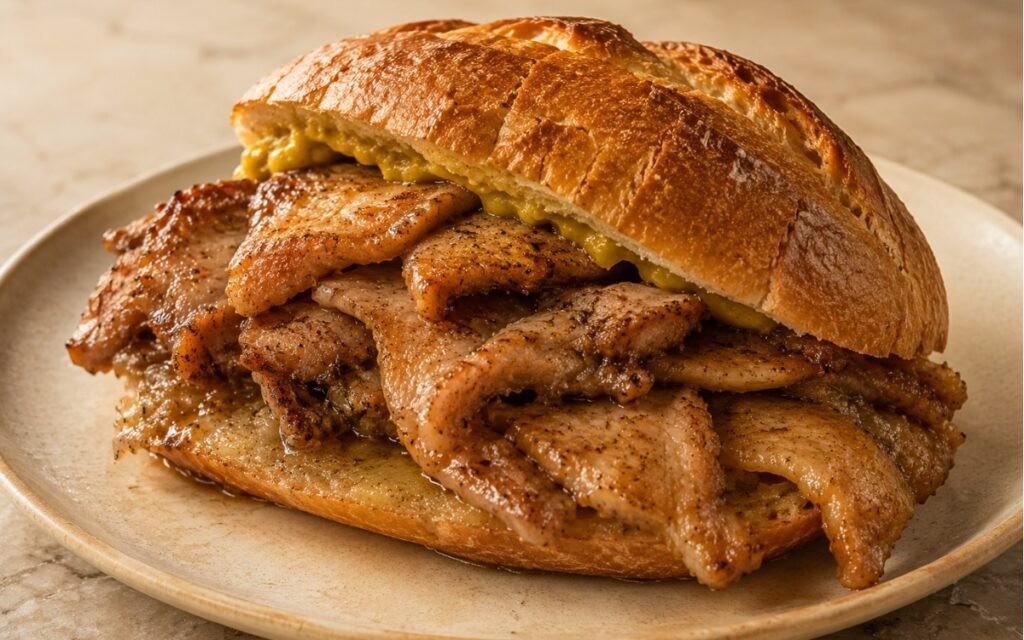
Portuguese Pork Bifana
Thin pork slices marinated in garlic and white wine, simmered until glossy and tender, piled into crusty homemade papo-seco rolls.
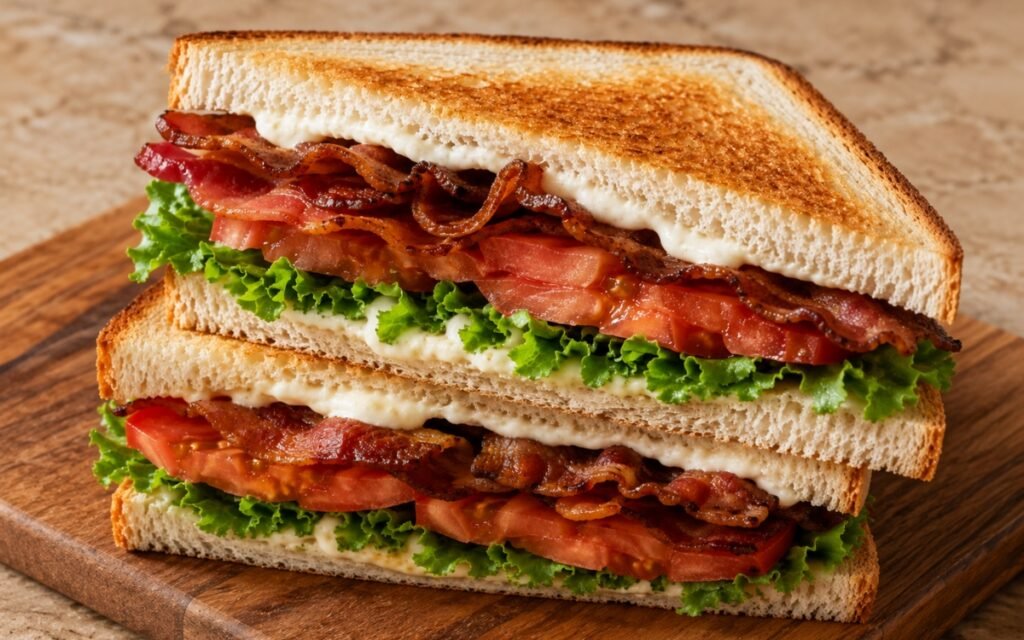
BLT Sandwich
Toasted white bread with crispy bacon, ripe tomato, crisp lettuce, and a generous layer of mayonnaise.
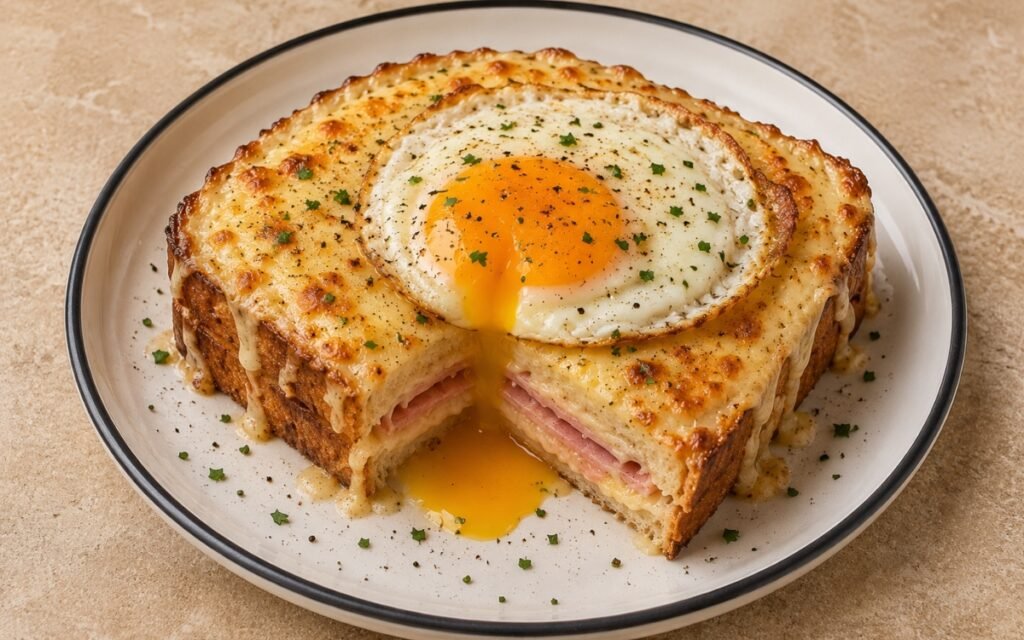
Croque Madame
Toasted bread with ham, Gruyère, and thick béchamel, baked until bubbling and topped with a gently fried egg.
You might also like
You might also like
Pipián Verde Chicken
Gently poached chicken finished in a vivid green pipián sauce of roasted tomatillos, pumpkin seeds, green chiles, and herbs.
Pho Sandwich
Slow-braised beef in a fragrant, charred pho-style spice base, sliced and glazed, piled into a crusty baguette with fresh herbs and crispy shallots.
Portuguese Pork Bifana
Thin pork slices marinated in garlic and white wine, simmered until glossy and tender, piled into crusty homemade papo-seco rolls.
Pambazo Sandwich
Ingredients
Method
- Place the potatoes in a pot of cold salted water. Bring to a boil and cook until tender, about 12–15 minutes, depending on size. Drain well and let the steam escape for 2–3 minutes. Lightly mash the potatoes. They should be broken up and fluffy, but not completely smooth like purée. The potatoes should be fully tender and easy to mash, but still dry enough to hold texture once mixed with the chorizo. Letting the steam escape for a couple of minutes after draining, rather than mashing them straight away, removes surface moisture that would otherwise make the filling wetter than it should be once combined with the chorizo’s own rendered fat.
- Place the guajillo chiles in a bowl and cover with hot water. Let them soak for 10–15 minutes until softened. Transfer the softened chiles to a blender with the onion, garlic, oregano, cumin, oil, salt, and about 250ml of the soaking water or fresh hot water. Blend until completely smooth. Add a little more water if needed to help it blend. Strain the sauce through a fine sieve if you want a smoother finish, then taste and adjust the salt. The sauce should be smooth, vivid red, and fluid enough to coat the bread evenly without being watery. It should stain the bread easily rather than sit on the surface in a thick paste. This sauce’s consistency is a genuine balance point worth checking carefully before moving on — thick enough to actually cling and colour the bread, but loose enough to coat evenly rather than sitting as a heavy, uneven paste.
- Place a skillet over medium heat. Add the chorizo and cook, breaking it up with a spoon, until fully cooked, fragrant, and lightly crisp in spots, about 8–10 minutes. If the chorizo is very lean and sticks, add a little oil. Add the mashed potatoes to the skillet and fold everything together until evenly combined. Cook for another 2–3 minutes so the flavors come together. Taste and adjust with salt and black pepper if needed. The filling should be cohesive and well mixed, with the chorizo fat lightly coating the potatoes. It should not be wet or loose. Folding the potatoes directly into the rendered chorizo fat, rather than combining them separately, is what lets that fat’s flavour distribute evenly through the whole filling rather than pooling on its own.
- Slice the pambazo or telera rolls horizontally, leaving a hinge if you prefer. Working one roll at a time, dip or brush the outside of each roll generously with the guajillo sauce. Coat the top, bottom, and sides so the bread turns a vivid red-orange. Do not soak the interior crumb heavily; the goal is to stain and flavor the exterior without making the roll collapse. If the sauce is too thick, the bread will not coat evenly; if too thin, the bread can become soggy. Adjust the sauce consistency before dipping the rolls. Keeping the coating focused on the exterior crust, rather than working the sauce deep into the crumb, is what allows the bread to pick up pambazo’s signature colour and flavour without compromising the structural integrity the roll needs to hold its filling.
- Heat a large skillet or griddle over medium heat and add a thin film of neutral oil. Place the sauce-coated rolls cut-side open first just briefly if you want a little toast inside, then griddle the outside surfaces until the bread is hot, lightly crisp, and stained a deeper red, about 1–2 minutes per side as needed. The bread should be warmed through and lightly crisped on the outside, but still soft enough to bite through. Do not overcook or the rolls can dry out and crack. This brief griddling stage does two things simultaneously — it sets and slightly caramelises the guajillo sauce into the bread’s crust, deepening its colour, while also crisping the exterior just enough to give the roll real structure against the warm filling that follows.
- Fill each warm roll with a generous portion of the potato-and-chorizo mixture. Top with shredded lettuce, a drizzle of crema, and a generous sprinkle of crumbled queso fresco. Serve immediately while the bread is still warm and lightly crisp, and the filling is hot. Adding the cool crema, lettuce, and cheese only at this final step keeps those fresh components crisp and distinct rather than wilting against the hot filling and freshly griddled bread.