Ingredients
Method
Cook the Rice
- Cook the jasmine rice so it is fluffy and dry enough to support the stir-fry rather than wet or clumpy. Keep warm. For this dish, freshly cooked rice is ideal. Slightly drier rice gives a better final balance once the saucy pork is spooned on top. That deliberately drier rice consistency protects against the whole plate turning soggy once the glossy, sauced pork is spooned directly over it.
Prepare the Sauce and Aromatics
- Stir together the oyster sauce, fish sauce, light soy sauce, dark soy sauce, sugar, and water until combined. Roughly chop or pound the garlic and chilies together so they are coarse rather than finely pureed. If using shallots, slice them thinly. Pick the holy basil leaves and discard tough stems. Having everything ready matters because the stir-fry moves very quickly once it hits the pan. Keeping the garlic and chili mixture genuinely coarse, rather than a fine paste, is what lets each piece retain some real, distinct texture and bite once folded through the finished pork.
Start the Pork
- Heat a wok or large skillet over high heat until very hot. Add the oil, then add the ground pork. Spread it out and let it sit briefly before stirring so it starts to brown and develop dark caramelized edges. Break it up into small crumbles and stir-fry until most of the moisture cooks off and the pork begins to fry in its own fat. This is one of the key turning points: do not rush to add sauce while the pork is still pale and wet. It should look lightly browned, concentrated, and slightly crisp in spots. That deliberate pause before stirring gives the pork's own surface genuine, sustained contact with the hot pan — breaking it apart too early interrupts that contact before any real browning has the chance to develop.
Add the Aromatics
- Add the garlic-chili mixture and the shallots, if using. Stir-fry for 30–60 seconds until fragrant. Do not let the garlic scorch black; it should smell sweet and sharp, not bitter. That brief, watched cooking window reflects how little margin coarsely chopped garlic actually has between fragrant and burnt — pushed even slightly further, it would introduce real bitterness straight into the finished dish.
Sauce the Stir-Fry
- Pour in the sauce mixture and keep stir-frying over high heat. Cook until the sauce reduces and clings to the pork in a glossy coating rather than pooling thinly at the bottom. The mixture should look shiny and intense, with some darker caramelized bits around the edges of the pan. That real reduction, cooking until the sauce genuinely clings rather than pools, is what delivers the glossy, concentrated coating this dish depends on — a sauce pulled too early would leave the pork sitting in a thin, watery liquid instead.
Finish with Holy Basil
- Add the holy basil and toss just until wilted, 15–30 seconds. Do not overcook the basil. It should collapse into the pork while still keeping its aroma. Remove the stir-fry from the heat as soon as the basil is wilted. That genuinely brief window protects the basil's own distinctive aroma — holy basil loses real fragrance quickly under sustained heat, and pulling the pan the moment it wilts is what preserves that character right through to serving.
Fry the Eggs
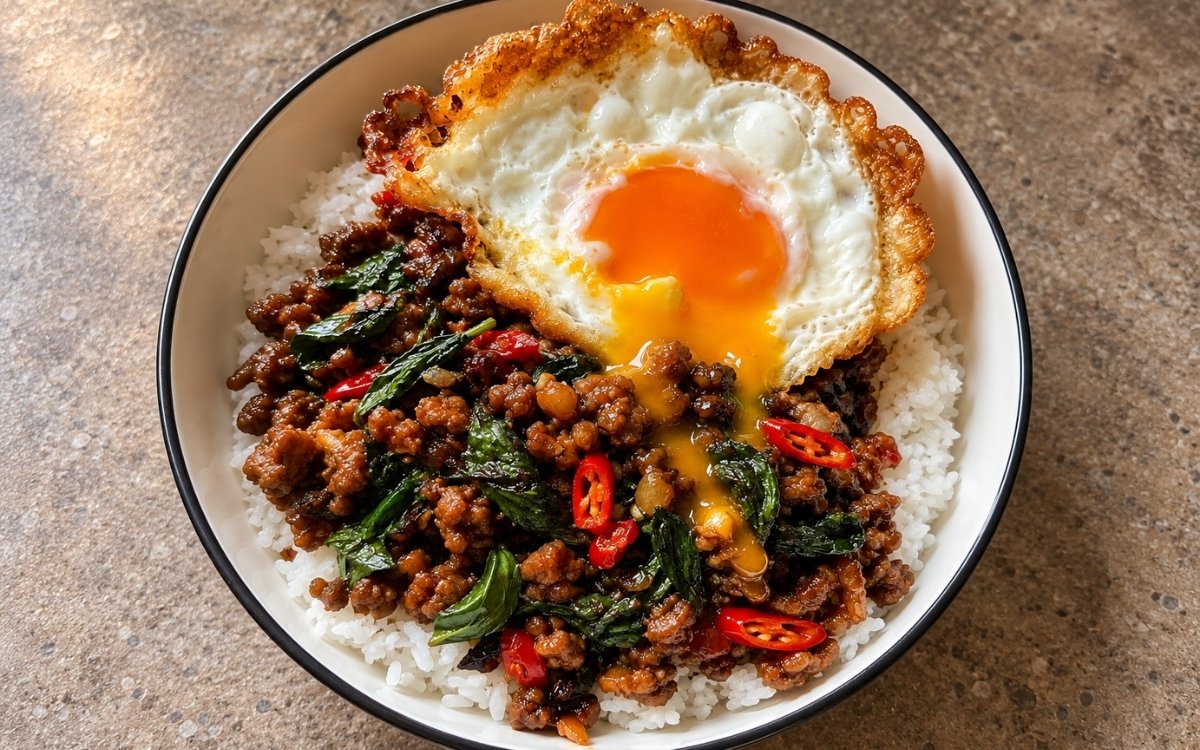
- In a separate pan, heat a generous layer of oil over medium-high to high heat. Fry the eggs one at a time or two at a time until the whites are set, the edges are deeply lacy and golden-brown, and the yolks remain runny. Spoon some hot oil over the whites if needed to help them set without flipping. Drain briefly. The egg should have crisp frilly edges and a fluid yolk that can run into the pork and rice. That genuinely generous layer of hot oil is what actively fries the egg's own edges into their characteristic lacy, crisp texture — a thin film of oil alone couldn't produce the same deep, frilly browning around the white.
Serve
- Divide the rice among 4 bowls or plates. Spoon the pad krapao over the rice and top each serving with one fried egg. Serve immediately. Serving without delay delivers the whole plate at its intended contrast — the pork's own hot, glossy intensity and the egg's crisp edges both change noticeably the longer everything sits.
Notes
Letting the pork sit briefly in the hot pan before breaking it up deserves genuine recognition as the technique most directly responsible for whether this dish achieves its characteristic deep, caramelized flavour. The recipe's own explicit framing of this as "one of the key turning points" reflects exactly how much rides on it — pork stirred and broken apart too early never gets the sustained pan contact real browning depends on.
Reducing the sauce until it genuinely clings to the pork, rather than pulling it while still thin, deserves the same attention this technique receives throughout this collection's other glossy, sauced stir-fries. That real reduction is what produces the concentrated, shiny coating this dish is specifically known for — a thinner, pooled sauce would leave the finished pork tasting noticeably diluted by comparison.
Adding the holy basil only at the very last moment, tossing it for the briefest possible window, deserves genuine respect as the detail responsible for preserving this dish's whole distinctive aromatic character. Holy basil's own fragrance fades quickly under sustained heat, and pulling the pan the instant it wilts is what protects that aroma right through to the moment the dish is served.
Frying the eggs in a genuinely generous layer of hot oil, rather than a thin film, deserves attention as the technique responsible for their characteristic crisp, lacy edges. That real volume of hot oil actively fries the egg's exterior into a frilly, deeply golden texture — a shallow film simply wouldn't produce the same effect around the white's own edges.