
Cuban Mojo Pork Rice Bowl
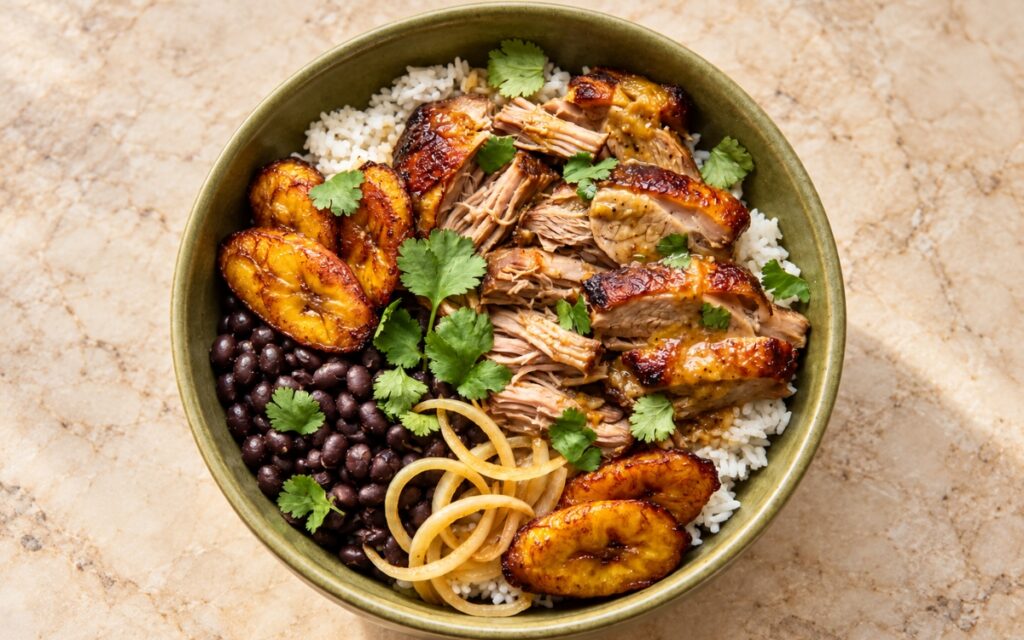
A hearty Cuban-inspired rice bowl built from citrus-garlic mojo roast pork shoulder, fluffy white rice, soft black beans, sweet sautéed onions, and fried ripe plantains, with the pork served as tender shreds beside thicker slices that carry caramelised, glossy edges. Marinating the pork in garlic, oregano, cumin, and orange, lime, and lemon juice for at least 8 hours, rather than just before roasting, is the technique this whole bowl depends on for pork that tastes seasoned all the way through — a short soak only flavours the surface, the same long-soak-for-real-flavour principle used elsewhere in this collection whenever a roasted protein must carry its seasoning to the centre. Roasting the pork covered at 160°C fan for roughly 2½–3 hours is what keeps it moist and lets it turn genuinely fork-tender, with an uncovered finish building colour on top. Reducing the strained roasting liquid and re-crisping part of the meat in a hot skillet is what gives the bowl both a glossy sauce and browned edges. The payoff is a bowl with real, layered contrast — juicy, garlicky pork with crisp edges, fluffy rice, creamy beans, sweet onions, and caramelised plantains in every spoonful.
Prep Time : 35 min
Total Time : 11 hr 50 min
Servings : 4
35 min
11 hr 50 min
4
Ingredients
For the Mojo Pork
• 1.4kg boneless pork shoulder
• 2 tsp kosher salt
• 1 tsp black pepper
• 10 garlic cloves, finely minced or crushed
• 2 tsp dried oregano
• 1 tsp ground cumin
• 180ml fresh orange juice
• 45ml fresh lime juice
• 30ml fresh lemon juice
• 60ml olive oil
• 1 medium white onion, thinly sliced
• 2 bay leaves
For the Rice
• 300g long-grain white rice
• 540ml water
• ½ tsp kosher salt
• 1 tsp neutral oil or butter
For the Black Beans
• 1 tbsp olive oil
• 80g white onion, finely diced
• 2 garlic cloves, minced
• 1 can (400g) black beans, drained and rinsed
• 120ml water or light stock
• ½ tsp ground cumin
• ½ tsp dried oregano
• 1 bay leaf
• ½ tsp kosher salt, or to taste
• Black pepper, to taste
For the Sautéed Onions
• 1 large white onion, thinly sliced
• 1 tbsp olive oil
• A pinch of salt
For the Sweet Plantains
• 2 ripe sweet plantains, yellow with black spots
• 2–3 tbsp neutral oil
• A pinch of salt
For the Finishing and Garnish
• 2–3 tbsp chopped fresh cilantro
• A few spoonfuls of reserved roasting liquid, reduced to a mojo glaze
Directions
- Marinate the Pork
Pat the 1.4kg pork shoulder completely dry with paper towels. In a bowl, whisk the 2 tsp kosher salt, 1 tsp black pepper, 10 minced garlic cloves, 2 tsp oregano, 1 tsp cumin, 180ml orange juice, 45ml lime juice, 30ml lemon juice, and 60ml olive oil into a loose, fragrant marinade. Place the pork in a large bowl or zip bag with the 1 sliced medium onion and 2 bay leaves, pour over the marinade, and rub it into every surface so the garlic coats the meat evenly. Cover and refrigerate for at least 8 hours, preferably overnight and no longer than 24 hours. That long, cold soak is what carries the salt and citrus beyond the surface so the pork tastes seasoned all the way through. - Roast the Pork
Take the pork out of the fridge 30 minutes before cooking, and use that time to heat the oven to 160°C fan / 175°C conventional and to cut the onions for the beans and the sauté. Transfer the pork and all the marinade, onion, and bay leaves to a roasting dish or Dutch oven, cover tightly with foil or a lid, and roast for 2½–3 hours until very tender and easy to pull apart. Uncover for the last 20–30 minutes so the top develops some colour, then rest the pork for 15 minutes. It should be fork-tender but not dry, so return it to the oven if it resists shredding. That tight cover is what traps steam around the shoulder so it softens instead of drying out. - Cook the Rice
During the last 40 minutes of roasting, rinse the 300g rice in a sieve until the water runs mostly clear. Combine it in a saucepan with the 540ml water, ½ tsp salt, and 1 tsp oil or butter, bring to a boil, and stir once. Cover, reduce to very low heat, and cook for 15 minutes without lifting the lid, then turn off the heat and let it stand covered for 10 minutes. Fluff with a fork until the grains look separate and tender. That undisturbed steaming is what keeps the rice fluffy instead of gluey. - Cook the Black Beans
Heat 1 tbsp olive oil in a small saucepan over medium heat, add the 80g diced onion, and cook for 4–5 minutes until softened. Stir in the 2 minced garlic cloves for 30 seconds, then add the drained beans, 120ml water or light stock, ½ tsp cumin, ½ tsp oregano, 1 bay leaf, ½ tsp salt, and a few grinds of black pepper. Simmer uncovered for 10–15 minutes until lightly thickened, then mash a small portion of the beans against the side of the pan while keeping most whole. Remove the bay leaf and adjust the seasoning so the beans look moist and spoonable, never soupy or dry. That partial mashing is what gives the beans a creamy body without turning them into a purée. - Sauté the Onions
Heat 1 tbsp olive oil in a skillet over medium heat, add the 1 large thinly sliced onion and a pinch of salt, and cook for 8–10 minutes, stirring often, until softened and lightly golden. Lower the heat if the edges colour faster than the centres, because the slices should end up sweet and tender, never browned hard or crisp. Slide them onto a plate and keep them warm beside the beans while you finish the pork. That moderate heat and frequent stirring is what coaxes out sweetness rather than bitterness. - Shape and Glaze the Pork
Strain the roasting liquid into a saucepan, pressing on the onions to extract their flavour, then discard the bay leaves and spent onions and skim the fat from the surface into a small bowl. Pull the rested pork into a mix of thick slices and juicy shredded pieces. Heat a large skillet over medium-high heat with a spoonful of the skimmed fat, add about half the meat with a few spoonfuls of the strained juices, and cook for 4–5 minutes until the edges are browned and lightly caramelised. Boil the remaining liquid for 5–8 minutes until lightly glossy, then spoon some over the pork. That mix of tender strands and browned edges is what gives the bowl its texture. - Fry the Sweet Plantains
Peel the 2 ripe plantains and cut them on the diagonal into 1cm slices. Heat 2–3 tbsp neutral oil in a large skillet over medium heat, then fry the slices in a single layer for 2–3 minutes per side until golden brown and lightly caramelised, working in batches if the pan is crowded. Drain briefly on paper towels and season with a tiny pinch of salt. Only plantains that are yellow with black spots will work, because green or barely yellow ones stay starchy rather than sweet and soft. That ripeness is what delivers the soft, sweet, Cuban-style contrast to the savoury pork. - Assemble the Bowls
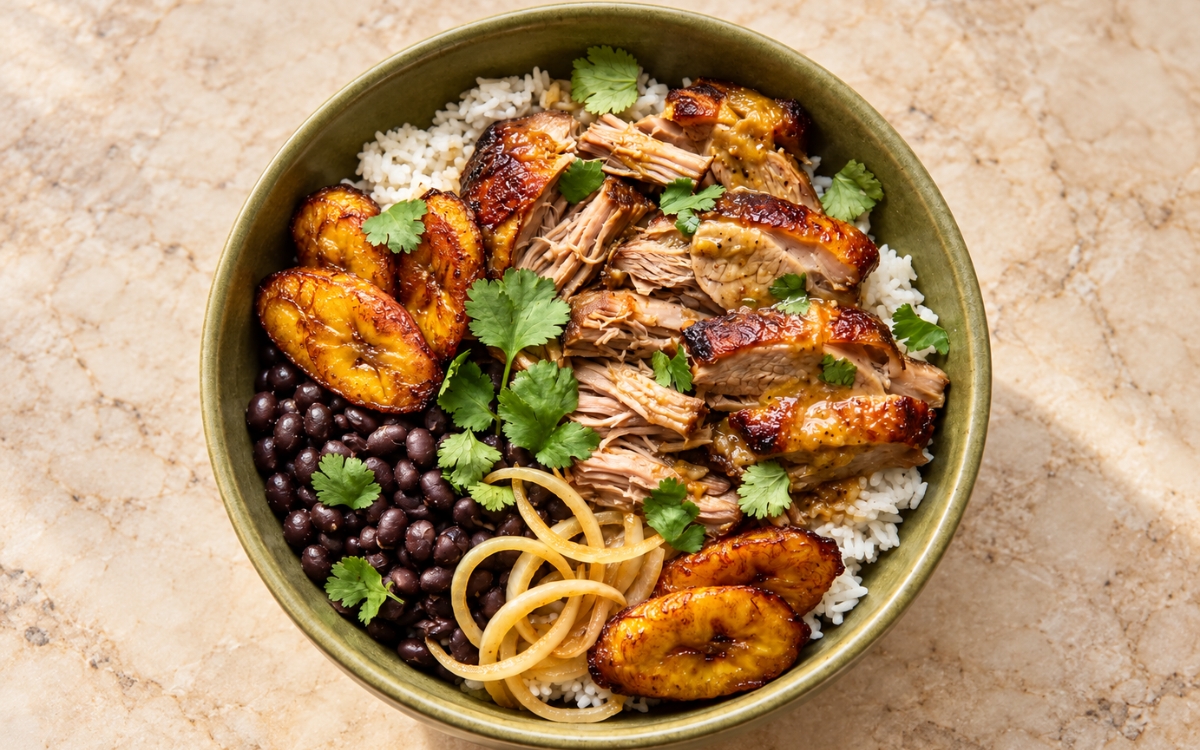
Divide the fluffy white rice among 4 bowls and spoon a portion of black beans to one side. Mound a generous portion of the mojo pork over the rice, add a small portion of the sautéed onions, and arrange several fried plantain slices alongside. Spoon a little of the reduced mojo roasting liquid over the meat, finish with the 2–3 tbsp chopped cilantro, and serve immediately while the plantains are still hot. The bowl should show clear sections of rice, beans, onions, plantains, and pork, with the pork as the dominant element. That visible separation is what keeps every component distinct and the pork clearly in charge.
*Notes :
- The long marinade deserves genuine recognition as the technique most directly responsible for whether this bowl tastes like mojo pork or merely roast pork. The recipe’s own explicit instruction that “Mojo pork should taste deeply seasoned all the way through, not only on the surface” reflects how slowly salt, garlic, and citrus travel into a thick shoulder, which is why 8 hours is the minimum rather than a suggestion.
- Covered roasting deserves the same attention this technique receives throughout this collection’s other slow-roasted and braised dishes. A tight lid or foil traps steam around the shoulder so its collagen can slowly melt into gelatin over 2½–3 hours, and the uncovered final 20–30 minutes then lets the top colour properly instead of staying pale and boiled-looking.
- The fork-tender test deserves genuine respect as the detail most directly responsible for pork that pulls apart instead of chewing like a roast. The source recipe’s cue that “The pork should be fork-tender but not dry” is a checkable signal, because shoulder that resists shredding still holds tight collagen and simply needs more time, not more heat.
- Using both shredded and sliced pork, with a quick skillet sear, deserves attention as a genuine, checkable texture goal rather than a loose approximation. A finished bowl should show tender strands plus browned edges, and the glossy reduced mojo on top is what stops the seared pieces from tasting dry and the pork from looking like wet stew meat.
Why This Recipe Works
This recipe works because a long citrus-garlic marinade seasons the pork shoulder all the way to the centre, while the tight cover and long, low oven time melt its collagen into tender, juicy strands. Uncovering the dish at the end and searing part of the meat with the strained juices adds the browned edges that give the bowl real texture. Reducing the roasting liquid turns the cooking juices into a glossy mojo finish that seasons the rice and beans as well. Fluffy rice, creamy beans, sweet onions, and caramelised plantains then balance the garlicky acidity, so the bowl ends with pork as the clear, dominant centrepiece.
Ingredient Breakdown
Citrus-Garlic Marinade (8–24 Hours)
The critical technique — salt, garlic, oregano, and citrus soak slowly into the shoulder, seasoning it genuinely through to the centre.
Boneless Pork Shoulder
The critical ingredient choice — its fat and collagen keep the meat juicy while giving both shreddable interior meat and caramelised edge pieces.
Covered Low Roast (160°C Fan)
The critical technique — trapped steam and gentle heat melt connective tissue over 2½–3 hours until the pork pulls apart easily.
Orange, Lime, and Lemon Juice
The flavour foundation — orange adds sweetness while lime and lemon add acidity, approximating the bright tang of classic sour orange.
Reduced Mojo Roasting Liquid
The finishing technique — boiling the strained juices until glossy turns the cooking liquid into a garlicky glaze for pork and rice.
Ripe Black-Spotted Plantains
The finishing touch — their caramelised sweetness contrasts with the garlicky, acidic pork, which green plantains cannot provide because they stay starchy.
Flavor Structure Explained
This Cuban mojo pork rice bowl follows a layered balance model:
- Savoury, garlicky core (mojo pork shoulder, garlic, oregano, cumin)
- Bright citrus lift (orange, lime, and lemon juice, reduced mojo glaze)
- Soft, neutral base (fluffy white rice)
- Creamy, earthy support (black beans, cumin, bay leaf)
- Sweet, caramelised contrast (ripe fried plantains, sautéed onions)
Roasted pork shoulder supplies the savoury, garlicky core, and its browned edges deepen that richness. Orange, lime, and lemon juice, concentrated into the reduced glaze, lift the meat with a bright, tangy edge. Fluffy rice gives the bowl a mild base that soaks up the juices, while the lightly mashed black beans add an earthy, creamy backdrop. Sweet onions and caramelised plantains finish the contrast, and the final scatter of cilantro ties the bowl together.
Common Mistakes to Avoid
- Marinating for Only an Hour or Two – This seasons just the surface, leaving the centre of the shoulder bland under a garlicky crust. Always marinate for at least 8 hours, ideally overnight.
- Roasting the Pork Uncovered the Whole Time – This lets the surface dry out before the collagen softens, leaving tough, leathery meat. Always cover tightly and uncover only for the last 20–30 minutes.
- Discarding the Roasting Liquid – This throws away the garlic-citrus flavour that moistens and glazes the pork, leaving the finished bowl dry. Always strain, skim, and reduce it into a glossy finish.
- Using Green or Barely Yellow Plantains – This gives starchy, firm slices instead of the sweet, soft ones that balance the pork. Always choose plantains that are yellow with black spots.
- Stirring the Rice While It Steams – This releases starch and turns the grains gluey instead of fluffy and separate. Always stir once at the boil, then cover and leave the pan undisturbed.
Variations
Sour Orange Version
Replace the orange, lime, and lemon juices with about 240ml sour orange juice, as the recipe’s own note suggests, for the most classical mojo flavour and a sharper, more authentically tangy marinade.
Dutch Oven Version
Roast the pork and its marinade in a lidded Dutch oven instead of a foil-covered roasting dish for steadier moisture and an easy uncovered finish, which gives the same tender, lightly coloured result.
Pulled Pork Version
Shred all of the meat instead of slicing some, then crisp it in the skillet with the reduced mojo for a juicier, more uniform bowl that still carries browned edges.
Light Stock Version
Simmer the black beans in light stock instead of water for a deeper savoury background, keeping the seasoning gentle so the beans remain a supporting element rather than the main flavour.
Storage & Make-Ahead
Marinate the pork up to 24 hours ahead in a covered bowl or zip bag in the refrigerator, because the extra time deepens the seasoning, but go no longer so the citrus does not soften the surface too much.
Roast the pork up to 2 days ahead, cool it within 2 hours, and refrigerate it in its strained roasting liquid, then shred, sear, and glaze it just before serving so the edges are fresh and browned.
Cook the rice and black beans up to 3 days ahead, refrigerating each within 1 hour of cooking in an airtight container, and loosen the beans with a splash of water when reheating.
Sauté the onions and fry the plantains as close to serving as possible, because plantain slices soften and lose their caramelised edges within an hour of frying and are best served hot.
Store leftover components separately in airtight containers in the refrigerator for up to 3 days, and reheat the pork covered at 160°C fan with a splash of its liquid until steaming hot in the centre.
Frequently Asked Questions
Why does the pork need to marinate for at least 8 hours?
Salt, garlic, and citrus move slowly into a thick shoulder, so a short soak only flavours the surface, while 8 hours or more genuinely seasons the meat all the way through to the centre.
Why is the pork roasted covered and then uncovered for the last 20–30 minutes?
The cover traps steam so the collagen melts into tender, juicy meat, while uncovering at the end lets the exposed top dry slightly and develop colour instead of staying pale.
Why is part of the pork seared in a skillet after roasting?
Roasted shoulder is tender but soft all over, so searing some of it with the strained juices adds caramelised, browned edges that contrast with the shredded strands.
Why do the plantains need to be yellow with black spots?
Genuinely ripe, speckled plantains have converted much of their starch to sugar, so they fry up soft and caramelised, while green or barely yellow ones stay firm and starchy rather than sweet.
Are there other classic Cuban, sandwich, or rice-and-beans dishes worth trying?
Cuban Mojo Chicken Rice Bowl offers another classic Cuban rice bowl direction worth exploring alongside this one. Cuban Yuca con Mojo and Cuban Sandwich (Cubano) are also worth trying for other mojo-style and sandwich directions, and Ropa Vieja Cubana and Caribbean Coconut Rice and Beans offer other Cuban main and rice-and-beans dishes worth exploring.
Nutrition Facts
( Per Serving )
Calories
~1090 kcal
Protein
55 g
Fat
48 g
Carbs
110 g
Calories
~1090 kcal
Protein
55 g
Fat
48 g
Carbs
110 g
Related Recipes
Related Recipes
-

Cuban Frita Burger
A paprika-red chorizo-beef patty glazed in tangy frita sauce, piled high with crispy thin shoestring potatoes on a toasted brioche bun.
-
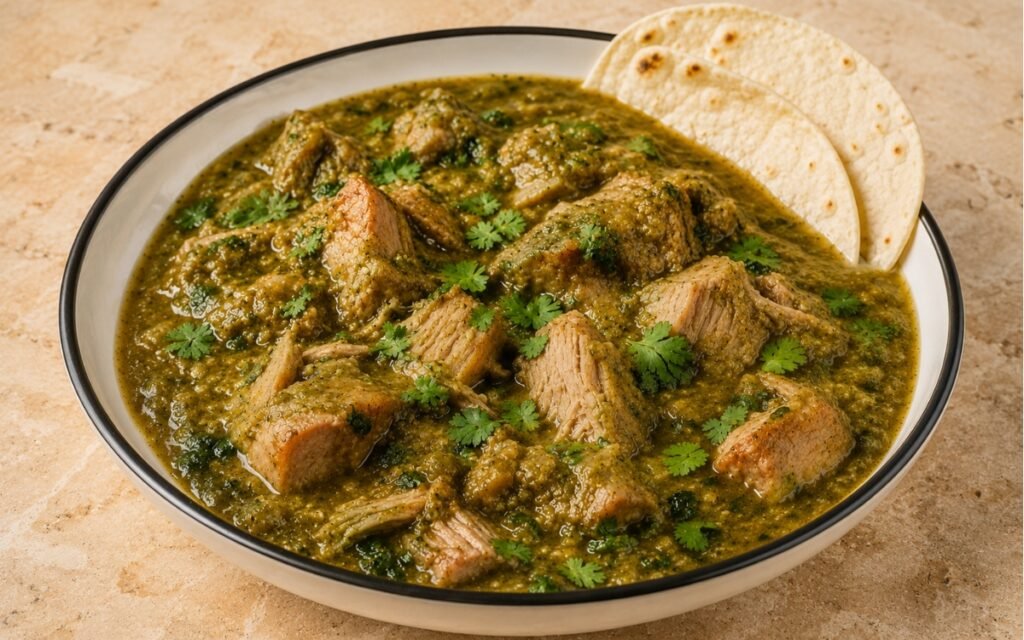
Pork Chile Verde
Browned pork shoulder braised tender in a roasted tomatillo-green chile sauce, thick and glossy with poblano body.
-
Pan-Fried Pork Buns / Sheng Jian Bao
Soft, pleated yeasted pork buns with juicy aspic-rich filling and deeply golden crisp bases, finished with sesame seeds and scallions beside a black vinegar dip.


You might also like
You might also like
-
Croque Madame
Toasted bread with ham, Gruyère, and thick béchamel, baked until bubbling and topped with a gently fried egg.
-
Meatball Sub Sandwich
Tender panade-enriched beef meatballs in thick marinara, melted mozzarella and provolone, and fresh basil, in toasted long French rolls.
-
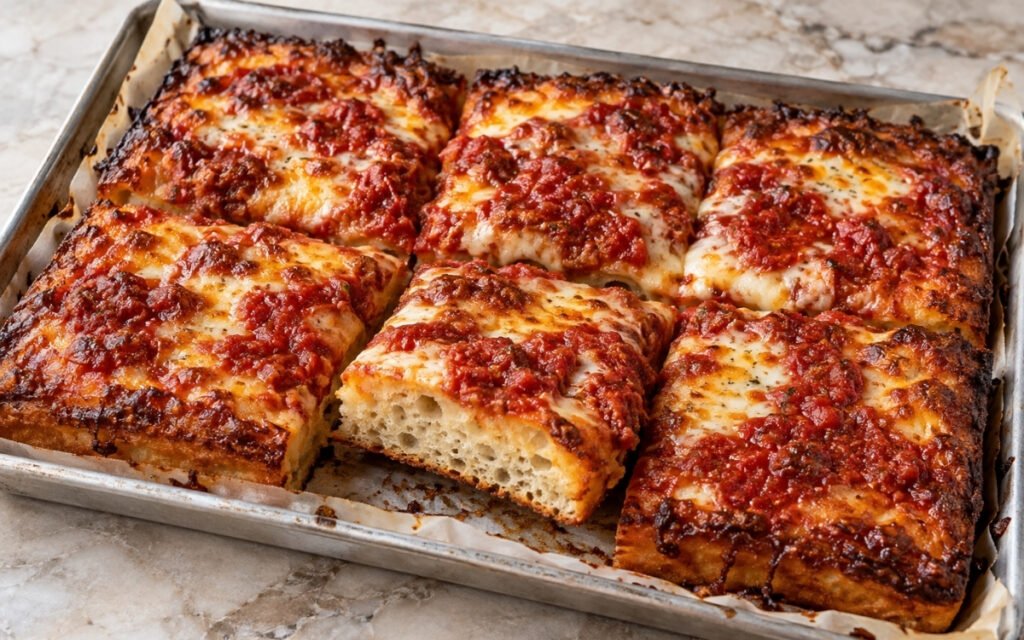
Sicilian-Style Sheet Pan Pizza
Thick, airy, focaccia-like crust baked in a well-oiled pan, topped with mozzarella and rich tomato sauce, finished with crisp caramelized edges.


Cuban Mojo Pork Rice Bowl
Ingredients
Method
- Pat the 1.4kg pork shoulder completely dry with paper towels. In a bowl, whisk the 2 tsp kosher salt, 1 tsp black pepper, 10 minced garlic cloves, 2 tsp oregano, 1 tsp cumin, 180ml orange juice, 45ml lime juice, 30ml lemon juice, and 60ml olive oil into a loose, fragrant marinade. Place the pork in a large bowl or zip bag with the 1 sliced medium onion and 2 bay leaves, pour over the marinade, and rub it into every surface so the garlic coats the meat evenly. Cover and refrigerate for at least 8 hours, preferably overnight and no longer than 24 hours. That long, cold soak is what carries the salt and citrus beyond the surface so the pork tastes seasoned all the way through.
- Take the pork out of the fridge 30 minutes before cooking, and use that time to heat the oven to 160°C fan / 175°C conventional and to cut the onions for the beans and the sauté. Transfer the pork and all the marinade, onion, and bay leaves to a roasting dish or Dutch oven, cover tightly with foil or a lid, and roast for 2½–3 hours until very tender and easy to pull apart. Uncover for the last 20–30 minutes so the top develops some colour, then rest the pork for 15 minutes. It should be fork-tender but not dry, so return it to the oven if it resists shredding. That tight cover is what traps steam around the shoulder so it softens instead of drying out.
- During the last 40 minutes of roasting, rinse the 300g rice in a sieve until the water runs mostly clear. Combine it in a saucepan with the 540ml water, ½ tsp salt, and 1 tsp oil or butter, bring to a boil, and stir once. Cover, reduce to very low heat, and cook for 15 minutes without lifting the lid, then turn off the heat and let it stand covered for 10 minutes. Fluff with a fork until the grains look separate and tender. That undisturbed steaming is what keeps the rice fluffy instead of gluey.
- Heat 1 tbsp olive oil in a small saucepan over medium heat, add the 80g diced onion, and cook for 4–5 minutes until softened. Stir in the 2 minced garlic cloves for 30 seconds, then add the drained beans, 120ml water or light stock, ½ tsp cumin, ½ tsp oregano, 1 bay leaf, ½ tsp salt, and a few grinds of black pepper. Simmer uncovered for 10–15 minutes until lightly thickened, then mash a small portion of the beans against the side of the pan while keeping most whole. Remove the bay leaf and adjust the seasoning so the beans look moist and spoonable, never soupy or dry. That partial mashing is what gives the beans a creamy body without turning them into a purée.
- Heat 1 tbsp olive oil in a skillet over medium heat, add the 1 large thinly sliced onion and a pinch of salt, and cook for 8–10 minutes, stirring often, until softened and lightly golden. Lower the heat if the edges colour faster than the centres, because the slices should end up sweet and tender, never browned hard or crisp. Slide them onto a plate and keep them warm beside the beans while you finish the pork. That moderate heat and frequent stirring is what coaxes out sweetness rather than bitterness.
- Strain the roasting liquid into a saucepan, pressing on the onions to extract their flavour, then discard the bay leaves and spent onions and skim the fat from the surface into a small bowl. Pull the rested pork into a mix of thick slices and juicy shredded pieces. Heat a large skillet over medium-high heat with a spoonful of the skimmed fat, add about half the meat with a few spoonfuls of the strained juices, and cook for 4–5 minutes until the edges are browned and lightly caramelised. Boil the remaining liquid for 5–8 minutes until lightly glossy, then spoon some over the pork. That mix of tender strands and browned edges is what gives the bowl its texture.
- Peel the 2 ripe plantains and cut them on the diagonal into 1cm slices. Heat 2–3 tbsp neutral oil in a large skillet over medium heat, then fry the slices in a single layer for 2–3 minutes per side until golden brown and lightly caramelised, working in batches if the pan is crowded. Drain briefly on paper towels and season with a tiny pinch of salt. Only plantains that are yellow with black spots will work, because green or barely yellow ones stay starchy rather than sweet and soft. That ripeness is what delivers the soft, sweet, Cuban-style contrast to the savoury pork.
- Divide the fluffy white rice among 4 bowls and spoon a portion of black beans to one side. Mound a generous portion of the mojo pork over the rice, add a small portion of the sautéed onions, and arrange several fried plantain slices alongside. Spoon a little of the reduced mojo roasting liquid over the meat, finish with the 2–3 tbsp chopped cilantro, and serve immediately while the plantains are still hot. The bowl should show clear sections of rice, beans, onions, plantains, and pork, with the pork as the dominant element. That visible separation is what keeps every component distinct and the pork clearly in charge.