Ingredients
Method
Marinate the Pork
- Pat the 1.4kg pork shoulder completely dry with paper towels. In a bowl, whisk the 2 tsp kosher salt, 1 tsp black pepper, 10 minced garlic cloves, 2 tsp oregano, 1 tsp cumin, 180ml orange juice, 45ml lime juice, 30ml lemon juice, and 60ml olive oil into a loose, fragrant marinade. Place the pork in a large bowl or zip bag with the 1 sliced medium onion and 2 bay leaves, pour over the marinade, and rub it into every surface so the garlic coats the meat evenly. Cover and refrigerate for at least 8 hours, preferably overnight and no longer than 24 hours. That long, cold soak is what carries the salt and citrus beyond the surface so the pork tastes seasoned all the way through.
Roast the Pork
- Take the pork out of the fridge 30 minutes before cooking, and use that time to heat the oven to 160°C fan / 175°C conventional and to cut the onions for the beans and the sauté. Transfer the pork and all the marinade, onion, and bay leaves to a roasting dish or Dutch oven, cover tightly with foil or a lid, and roast for 2½–3 hours until very tender and easy to pull apart. Uncover for the last 20–30 minutes so the top develops some colour, then rest the pork for 15 minutes. It should be fork-tender but not dry, so return it to the oven if it resists shredding. That tight cover is what traps steam around the shoulder so it softens instead of drying out.
Cook the Rice
- During the last 40 minutes of roasting, rinse the 300g rice in a sieve until the water runs mostly clear. Combine it in a saucepan with the 540ml water, ½ tsp salt, and 1 tsp oil or butter, bring to a boil, and stir once. Cover, reduce to very low heat, and cook for 15 minutes without lifting the lid, then turn off the heat and let it stand covered for 10 minutes. Fluff with a fork until the grains look separate and tender. That undisturbed steaming is what keeps the rice fluffy instead of gluey.
Cook the Black Beans
- Heat 1 tbsp olive oil in a small saucepan over medium heat, add the 80g diced onion, and cook for 4–5 minutes until softened. Stir in the 2 minced garlic cloves for 30 seconds, then add the drained beans, 120ml water or light stock, ½ tsp cumin, ½ tsp oregano, 1 bay leaf, ½ tsp salt, and a few grinds of black pepper. Simmer uncovered for 10–15 minutes until lightly thickened, then mash a small portion of the beans against the side of the pan while keeping most whole. Remove the bay leaf and adjust the seasoning so the beans look moist and spoonable, never soupy or dry. That partial mashing is what gives the beans a creamy body without turning them into a purée.
Sauté the Onions
- Heat 1 tbsp olive oil in a skillet over medium heat, add the 1 large thinly sliced onion and a pinch of salt, and cook for 8–10 minutes, stirring often, until softened and lightly golden. Lower the heat if the edges colour faster than the centres, because the slices should end up sweet and tender, never browned hard or crisp. Slide them onto a plate and keep them warm beside the beans while you finish the pork. That moderate heat and frequent stirring is what coaxes out sweetness rather than bitterness.
Shape and Glaze the Pork
- Strain the roasting liquid into a saucepan, pressing on the onions to extract their flavour, then discard the bay leaves and spent onions and skim the fat from the surface into a small bowl. Pull the rested pork into a mix of thick slices and juicy shredded pieces. Heat a large skillet over medium-high heat with a spoonful of the skimmed fat, add about half the meat with a few spoonfuls of the strained juices, and cook for 4–5 minutes until the edges are browned and lightly caramelised. Boil the remaining liquid for 5–8 minutes until lightly glossy, then spoon some over the pork. That mix of tender strands and browned edges is what gives the bowl its texture.
Fry the Sweet Plantains
- Peel the 2 ripe plantains and cut them on the diagonal into 1cm slices. Heat 2–3 tbsp neutral oil in a large skillet over medium heat, then fry the slices in a single layer for 2–3 minutes per side until golden brown and lightly caramelised, working in batches if the pan is crowded. Drain briefly on paper towels and season with a tiny pinch of salt. Only plantains that are yellow with black spots will work, because green or barely yellow ones stay starchy rather than sweet and soft. That ripeness is what delivers the soft, sweet, Cuban-style contrast to the savoury pork.
Assemble the Bowls
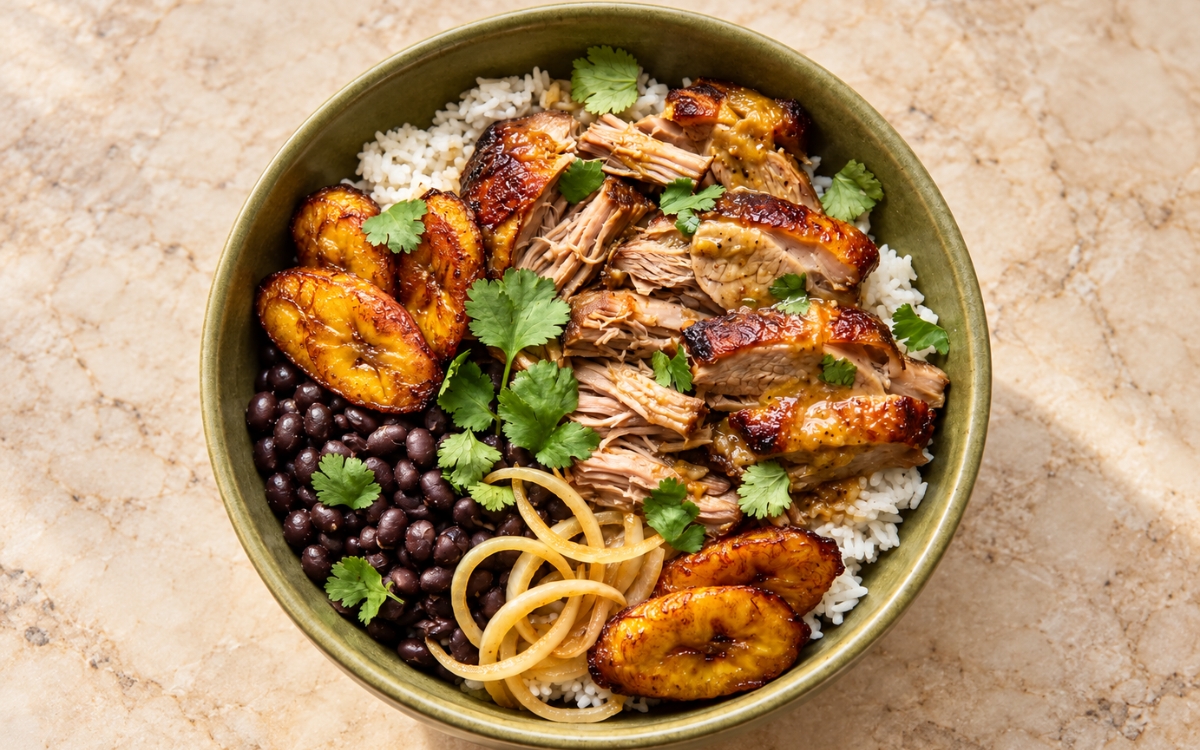
- Divide the fluffy white rice among 4 bowls and spoon a portion of black beans to one side. Mound a generous portion of the mojo pork over the rice, add a small portion of the sautéed onions, and arrange several fried plantain slices alongside. Spoon a little of the reduced mojo roasting liquid over the meat, finish with the 2–3 tbsp chopped cilantro, and serve immediately while the plantains are still hot. The bowl should show clear sections of rice, beans, onions, plantains, and pork, with the pork as the dominant element. That visible separation is what keeps every component distinct and the pork clearly in charge.
Notes
The long marinade deserves genuine recognition as the technique most directly responsible for whether this bowl tastes like mojo pork or merely roast pork. The recipe’s own explicit instruction that “Mojo pork should taste deeply seasoned all the way through, not only on the surface” reflects how slowly salt, garlic, and citrus travel into a thick shoulder, which is why 8 hours is the minimum rather than a suggestion.
Covered roasting deserves the same attention this technique receives throughout this collection’s other slow-roasted and braised dishes. A tight lid or foil traps steam around the shoulder so its collagen can slowly melt into gelatin over 2½–3 hours, and the uncovered final 20–30 minutes then lets the top colour properly instead of staying pale and boiled-looking.
The fork-tender test deserves genuine respect as the detail most directly responsible for pork that pulls apart instead of chewing like a roast. The source recipe’s cue that “The pork should be fork-tender but not dry” is a checkable signal, because shoulder that resists shredding still holds tight collagen and simply needs more time, not more heat.
Using both shredded and sliced pork, with a quick skillet sear, deserves attention as a genuine, checkable texture goal rather than a loose approximation. A finished bowl should show tender strands plus browned edges, and the glossy reduced mojo on top is what stops the seared pieces from tasting dry and the pork from looking like wet stew meat.