
Sausages in Blankets
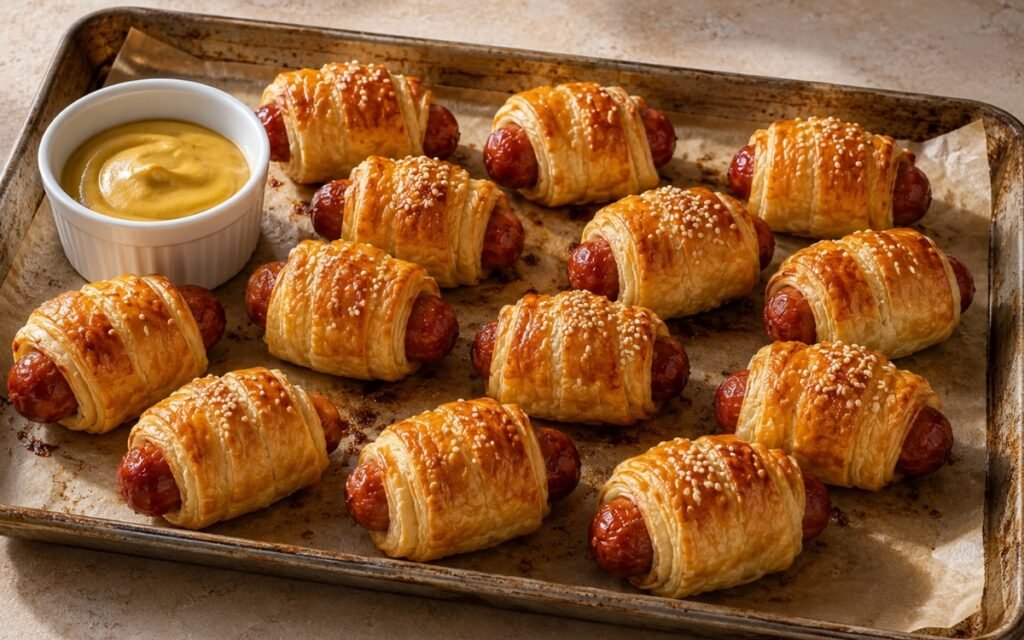
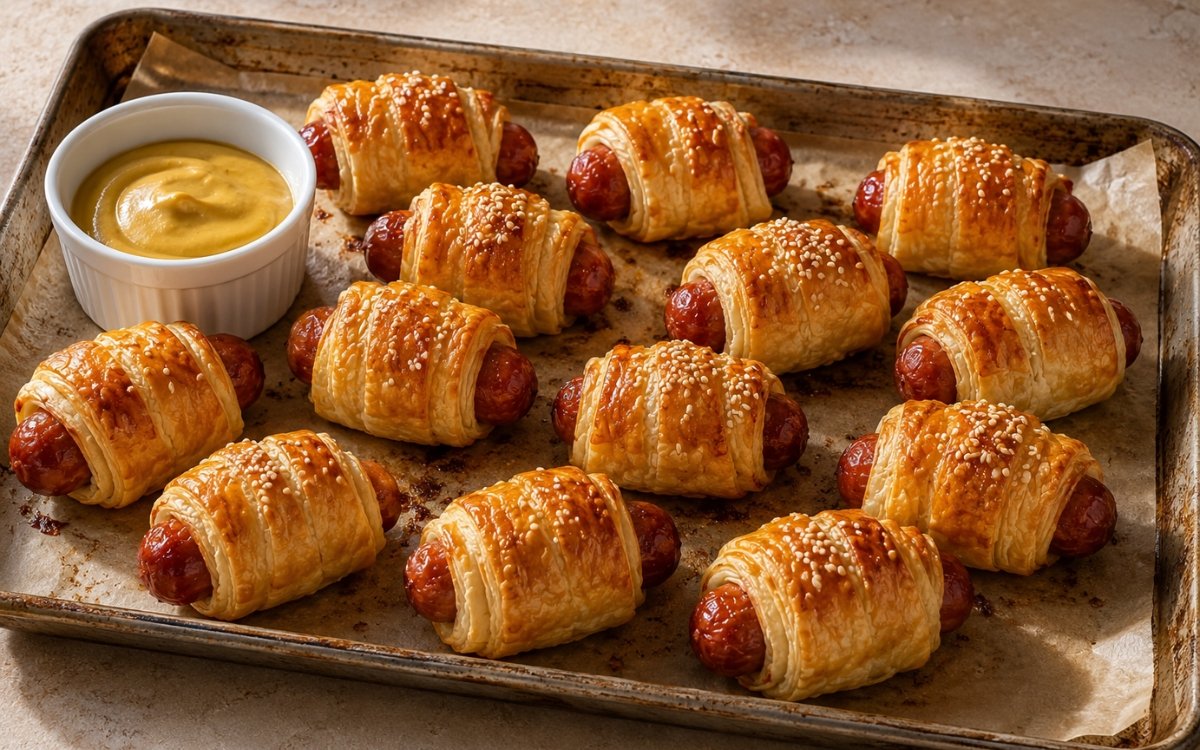
Small cocktail sausages wrapped in flaky puff pastry with a small log of cheddar tucked alongside each sausage inside the pastry, brushed with egg wash until glossy and deep golden, with some finished with sesame seeds. Patting the sausages dry before they ever meet the pastry is a small but genuinely important step — any surface moisture works against the pastry’s ability to grip and seal cleanly around the filling, the same dry-before-wrap principle used elsewhere in this collection whenever a wet or oily filling needs to sit inside a dough that has to seal and hold its shape. Placing the cheddar log beside the sausage rather than on top of it keeps the finished shape neat and evenly wrapped, with the cheese mostly enclosed rather than poking out unpredictably. Sealing the seam and placing each piece seam-side down on the tray is what keeps the pastry closed through baking, since an unsealed or upward-facing seam is where filling and melted cheese are most likely to escape. The payoff is a batch of small, glossy, deep golden pastries with a little cheese peeking out at the seams, best eaten warm while the pastry is still crisp.
Prep Time : 15 min
Cook Time : 18–22 min
Servings : 4
15 min
18–22 min
4
Ingredients
For the Sausages in Blankets
• 16 small cocktail sausages
• 200g cheddar cheese, cut into 16 short logs, each slightly shorter than the sausages — this one on Amazon
• 1 sheet puff pastry, about 320–375g, thawed if frozen (if your sheet is small, use 2 sheets as needed) — this one on Amazon
• 1 egg
• 1 tbsp milk or water
• 1–2 tbsp sesame seeds, optional
For Serving
• Mustard
• Ketchup
This post may contain affiliate links. As an Amazon Associate I earn from qualifying purchases, at no additional cost to you.
Directions
- Prepare the Oven and Tray
Preheat the oven to 200°C. Line a baking tray with parchment paper. Having the tray fully lined and ready before the wrapping stage begins means each piece can go straight from being wrapped to the tray without sitting around and warming up, which matters for how well the pastry holds its shape through baking. - Prepare the Filling
Pat the cocktail sausages dry with paper towel so the pastry grips them better. Cut the cheddar into 16 small logs, each one slightly shorter than the sausage so the cheese stays mostly enclosed once wrapped. Drying the sausages thoroughly removes surface moisture that would otherwise sit between the meat and the pastry, weakening the seal at exactly the point where the wrap needs to hold together tightest. - Cut the Puff Pastry
Lightly flour the work surface if needed and roll the puff pastry just enough to even it out. Cut the pastry into 16 strips or rectangles, large enough to wrap around one sausage and one cheddar log placed side by side. You want enough pastry to encase them snugly, but not so much that the layers become too thick. Cutting each piece to a snug rather than generous size keeps the pastry-to-filling ratio balanced — too much excess pastry produces a thicker, doughier wrap that takes longer to cook through and can overwhelm the small filling inside. - Wrap the Sausages
Place one sausage and one cheddar log side by side on a piece of pastry. Wrap the pastry around them so the sausage sits beside the cheese inside the pastry, not on top of it. Seal the edge lightly by pressing the seam closed, then place seam-side down on the prepared tray. Repeat with the remaining sausages. Placing the sausage and cheese side by side rather than stacked keeps the finished cross-section compact and even, and positioning the seam face-down against the tray uses gravity and the pastry’s own weight to help hold it closed through the initial stages of baking, before the heat has set the dough. - Egg Wash and Finish
Whisk the egg with the milk or water until smooth. Brush each wrapped sausage generously with the egg wash. Sprinkle some of them with sesame seeds if desired, leaving some plain for a more classic mixed look. A generous, even egg wash is what produces the deep golden colour and glossy sheen on the finished pastry — thin or patchy coverage bakes up duller and less uniformly browned. - Bake
Bake for 18–22 minutes, or until the pastry is deep golden-brown, glossy, and fully puffed. The pastry should look crisp and cooked through, and the sausage ends should be lightly browned. A little melted cheddar escaping at the seams is completely fine. Puff pastry’s rise depends on layers of butter creating steam as they heat, which is why the oven needs to be properly preheated before the tray goes in — a cooler starting oven gives the butter time to melt and seep out before the pastry has a chance to puff, producing a flatter, greasier result. - Rest and Serve
Let them rest for 3–5 minutes after baking so the cheese settles slightly. Serve warm with mustard and ketchup on the side. The cheese is at its most fluid straight out of the oven; a short rest lets it firm up just enough to stay contained rather than spilling out completely the moment each piece is picked up, while it’s still warm and melted when eaten.
*Notes :
- Drying the sausages before wrapping is a step that’s easy to skip given how quick and simple this recipe otherwise is, but it has a real effect on how cleanly the pastry seals. Any lingering surface moisture on the sausage sits directly against the pastry at the seam, which is exactly the point where a clean, tight seal matters most for keeping the wrap intact through baking — a damp surface there makes that seal noticeably less reliable.
- Positioning the cheese log beside the sausage rather than stacked on top of it is a small assembly choice with a real payoff in the finished shape. Side by side, the two fillings sit at roughly the same height, which lets the pastry wrap around them evenly without one component distorting the shape more than the other. Stacking them instead tends to produce a lumpier, less consistent wrap from piece to piece.
- The seam-side-down placement on the tray is worth doing consistently rather than treating as optional, since it uses the simplest available tool — gravity — to help keep the wrap closed during the early part of baking, before the pastry itself has set. A seam left facing upward or to the side has a better chance of opening slightly as the pastry puffs and shifts, which is when filling and melted cheese are most likely to escape untidily.
- A properly preheated oven is worth confirming rather than assuming, given how directly puff pastry’s rise depends on heat arriving quickly and consistently. The pastry’s characteristic flaky layers come from butter melting and releasing steam as the dough heats — that process needs to happen fast enough that the steam gets trapped and pushes the layers apart before the butter simply melts out and pools. An underheated oven undermines that timing and produces a flatter, less flaky result.
Why This Recipe Works
This recipe works because each step protects the pastry’s ability to seal and puff properly: sausages are dried to give the seam a clean surface to grip, the cheese and sausage are positioned side by side for an even wrap, and each piece is sealed and placed seam-side down to keep it closed through baking.
A generous, even egg wash produces the deep golden colour and gloss, and a properly preheated oven ensures the pastry puffs and crisps quickly rather than melting flat before it has a chance to rise.
Ingredient Breakdown
Dried Cocktail Sausages
The prep step — moisture-free surface gives the pastry a clean point of contact for a tighter, more reliable seal.
Cheddar Logs (Sized Shorter Than the Sausage)
The paired filling — kept slightly shorter so it stays mostly enclosed rather than poking out at the ends.
Side-by-Side Wrapping
The assembly technique — positions the sausage and cheese at even height for a consistent, evenly shaped wrap.
Seam-Side-Down Placement
The baking technique — uses the pastry’s own weight against the tray to help keep the seal closed during baking.
Generous Egg Wash
The finishing touch — an even, full coating produces the deep golden colour and glossy sheen that define the finished bake.
Flavor Structure Explained
This sausages in a blankets follow a layered balance model:
- Crisp buttery foundation (flaky puff pastry)
- Savoury centre (cocktail sausage)
- Rich melted accent (cheddar cheese)
- Sharp tangy finish (mustard, ketchup)
The puff pastry provides a crisp, buttery, flaky exterior that shatters lightly with each bite. Inside, the cocktail sausage delivers straightforward, savoury flavour, while the cheddar log alongside it adds a rich, melted accent that occasionally escapes at the seams. Served with mustard and ketchup on the side, each piece gets a final sharp, tangy contrast that cuts through the pastry’s richness.
Common Mistakes to Avoid
- Not Drying the Sausages Before Wrapping – Surface moisture weakens the pastry’s seal at the seam. Always pat them dry first.
- Overloading Each Piece with Too Much Pastry – Excess pastry produces a thick, doughy wrap that takes longer to cook through evenly. Always cut pastry pieces to a snug rather than generous size.
- Placing the Cheese on Top of the Sausage Instead of Beside It – This produces a lumpier, less even wrap. Always position them side by side.
- Leaving the Seam Facing Up on the Tray – This makes it more likely to open during baking. Always place each piece seam-side down.
- Baking in an Underheated Oven – Puff pastry needs quick, consistent heat to rise properly; a cooler oven lets the butter melt out before it puffs. Always confirm the oven is fully preheated first.
Variations
Spicier Version
Add a thin strip of pickled jalapeño alongside the cheese and sausage before wrapping for a sharper kick.
With Different Cheese
Substitute a sharper cheese like a mature cheddar or a smoked variety for a more pronounced flavour inside the wrap.
Herbed Pastry Version
Mix a small amount of finely chopped fresh rosemary or thyme into the egg wash for a subtle herbal note across the finished crust.
Mini Party Size
Use even smaller cocktail sausages and proportionally smaller pastry pieces and cheese logs for bite-sized party portions.
Storage & Make-Ahead
Assembled, unbaked sausages in blankets can be refrigerated, covered, for up to 24 hours before baking, or frozen on a tray until solid and then transferred to a bag for up to 2 months — bake directly from frozen, adding a few extra minutes to the bake time.
Baked sausages in blankets can be refrigerated in an airtight container for up to 3 days. Reheat in the oven or air fryer at around 180°C for 6–8 minutes until warmed through and re-crisped; a microwave will make the pastry soft and chewy rather than flaky.
Frequently Asked Questions
Why does the sausage need to be dried before wrapping in pastry?
Surface moisture sits directly against the pastry at the seam, which is exactly where a clean, tight seal matters most. A dry surface gives the pastry a better grip and reduces the chance of the wrap opening during baking.
Why place the cheese beside the sausage instead of on top of it?
Side by side, the two fillings sit at roughly the same height, letting the pastry wrap around them evenly. Stacked, one component tends to distort the shape more than the other, producing a lumpier, less consistent result.
Why does each piece need to be placed seam-side down on the tray?
This uses the pastry’s own weight and gravity to help hold the seal closed during the early part of baking, before the pastry itself has fully set. A seam left facing up or to the side is more likely to open as the pastry puffs.
Why does the oven need to be fully preheated before baking?
Puff pastry’s flaky layers depend on butter melting and releasing steam quickly enough to be trapped and push the layers apart. An underheated oven lets the butter melt out too slowly, producing a flatter result rather than a properly risen, flaky one.
Are there other classic sausage-and-pastry or fried snacks worth trying?
American Corn Dogs and Korean Corn Dogs both take a completely different approach to wrapping a sausage — battered and deep-fried rather than encased in puff pastry — but share the same appeal of a handheld, snackable format built around a hot dog or sausage at the centre.
Nutrition Facts
( per serving )
Calories
~480 kcal
Protein
18 g
Fat
36 g
Carbs
24 g
Calories
~480 kcal
Protein
18 g
Fat
36 g
Carbs
24 g
Related Recipes
Related Recipes

Japanese Pork Gyoza — Pan-Fried Dumplings
Juicy pork, napa cabbage, chive and ginger filling wrapped in thin dumpling skins, pan-fried crisp and steamed tender.
Flan Round Cake
A silky three-milk custard baked gently in a water bath over deep amber caramel, chilled overnight, and unmoulded glossy and smooth.
Honey Lemon Pepper Wings
Crispy wings coated in glossy honey-lemon pepper glaze deliver citrus bite, heat, and buttery richness.
You might also like
You might also like
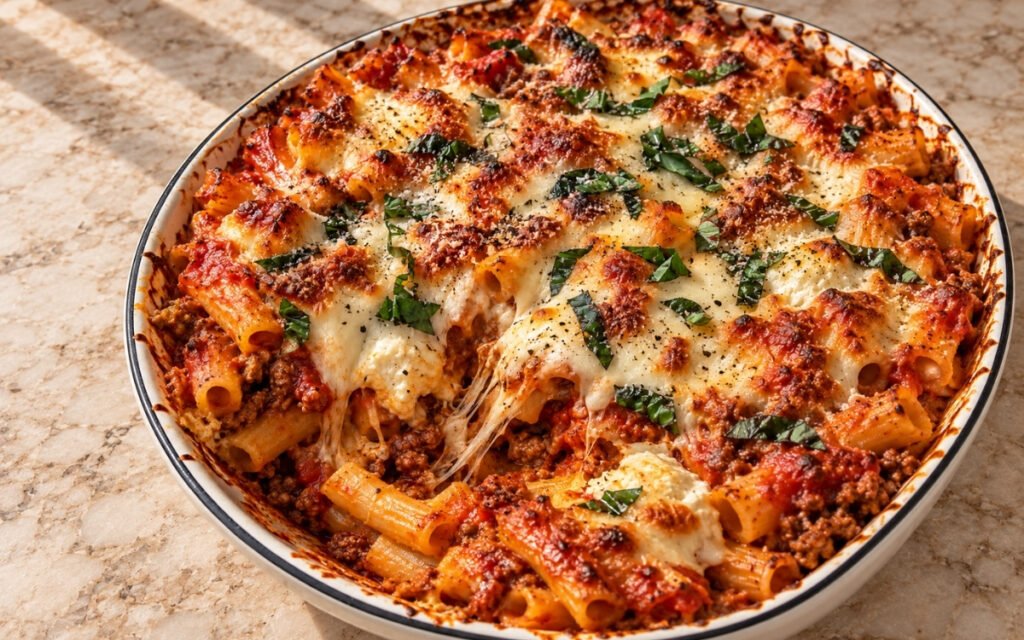
Baked Ziti
Ziti tossed in a rich beef and pork tomato sauce, layered with creamy ricotta pockets, mozzarella, and Parmesan, baked until bubbling.
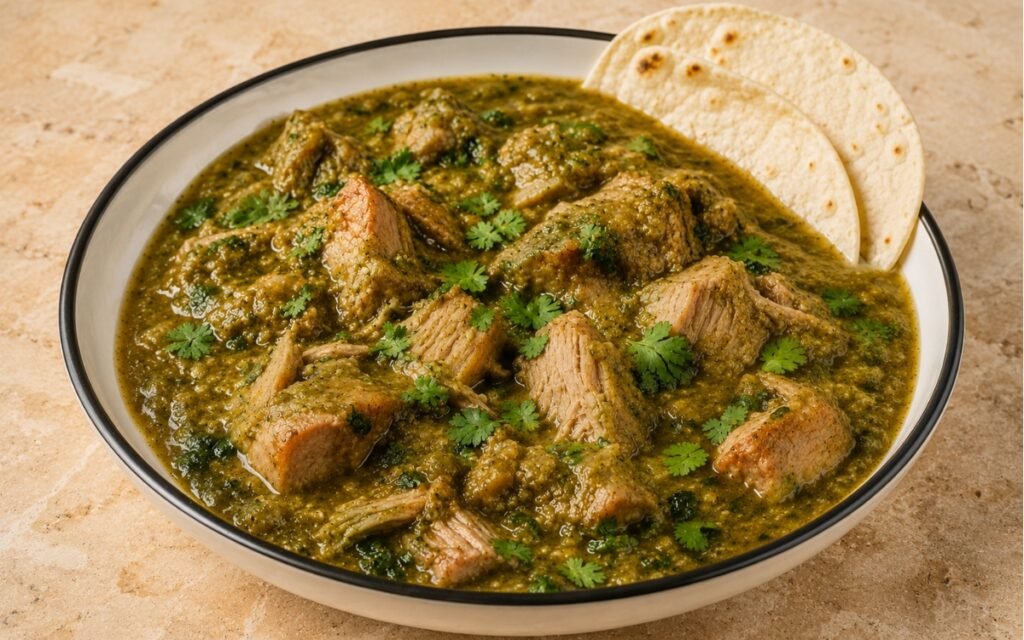
Pork Chile Verde
Browned pork shoulder braised tender in a roasted tomatillo-green chile sauce, thick and glossy with poblano body.
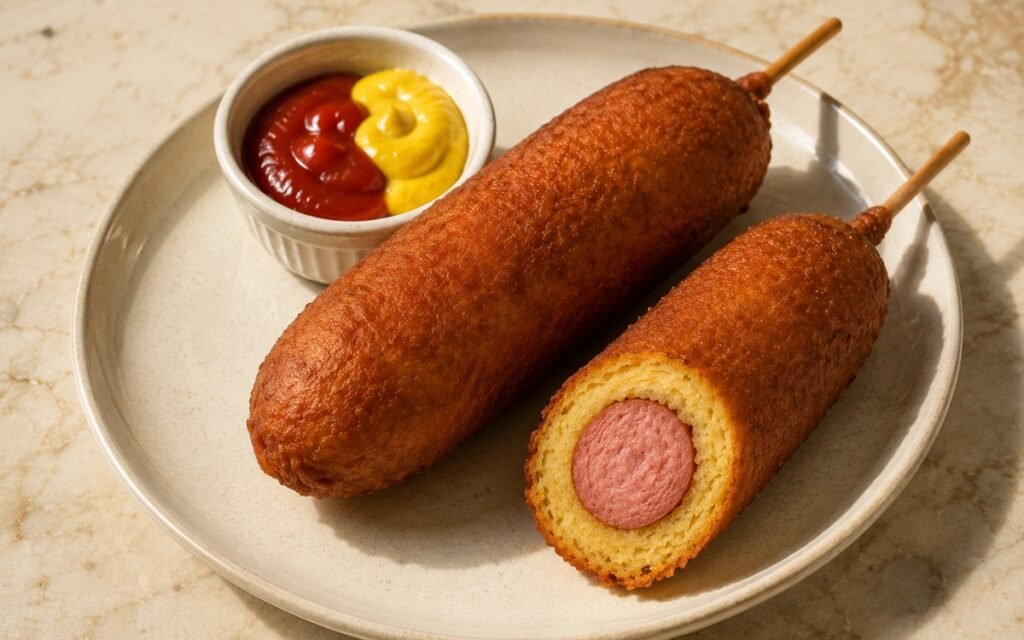
American Corn Dogs
Smoked frankfurters dusted in flour, dipped in thick cornmeal batter, and deep-fried until deeply golden, crisp, and slightly bumpy.
Sausages in Blankets
Ingredients
Method
- Preheat the oven to 200°C. Line a baking tray with parchment paper. Having the tray fully lined and ready before the wrapping stage begins means each piece can go straight from being wrapped to the tray without sitting around and warming up, which matters for how well the pastry holds its shape through baking.
- Pat the cocktail sausages dry with paper towel so the pastry grips them better. Cut the cheddar into 16 small logs, each one slightly shorter than the sausage so the cheese stays mostly enclosed once wrapped. Drying the sausages thoroughly removes surface moisture that would otherwise sit between the meat and the pastry, weakening the seal at exactly the point where the wrap needs to hold together tightest.
- Lightly flour the work surface if needed and roll the puff pastry just enough to even it out. Cut the pastry into 16 strips or rectangles, large enough to wrap around one sausage and one cheddar log placed side by side. You want enough pastry to encase them snugly, but not so much that the layers become too thick. Cutting each piece to a snug rather than generous size keeps the pastry-to-filling ratio balanced — too much excess pastry produces a thicker, doughier wrap that takes longer to cook through and can overwhelm the small filling inside.
- Place one sausage and one cheddar log side by side on a piece of pastry. Wrap the pastry around them so the sausage sits beside the cheese inside the pastry, not on top of it. Seal the edge lightly by pressing the seam closed, then place seam-side down on the prepared tray. Repeat with the remaining sausages. Placing the sausage and cheese side by side rather than stacked keeps the finished cross-section compact and even, and positioning the seam face-down against the tray uses gravity and the pastry’s own weight to help hold it closed through the initial stages of baking, before the heat has set the dough.
- Whisk the egg with the milk or water until smooth. Brush each wrapped sausage generously with the egg wash. Sprinkle some of them with sesame seeds if desired, leaving some plain for a more classic mixed look. A generous, even egg wash is what produces the deep golden colour and glossy sheen on the finished pastry — thin or patchy coverage bakes up duller and less uniformly browned.
- Bake for 18–22 minutes, or until the pastry is deep golden-brown, glossy, and fully puffed. The pastry should look crisp and cooked through, and the sausage ends should be lightly browned. A little melted cheddar escaping at the seams is completely fine. Puff pastry’s rise depends on layers of butter creating steam as they heat, which is why the oven needs to be properly preheated before the tray goes in — a cooler starting oven gives the butter time to melt and seep out before the pastry has a chance to puff, producing a flatter, greasier result.
- Let them rest for 3–5 minutes after baking so the cheese settles slightly. Serve warm with mustard and ketchup on the side. The cheese is at its most fluid straight out of the oven; a short rest lets it firm up just enough to stay contained rather than spilling out completely the moment each piece is picked up, while it’s still warm and melted when eaten.