
Korean Corn Dogs
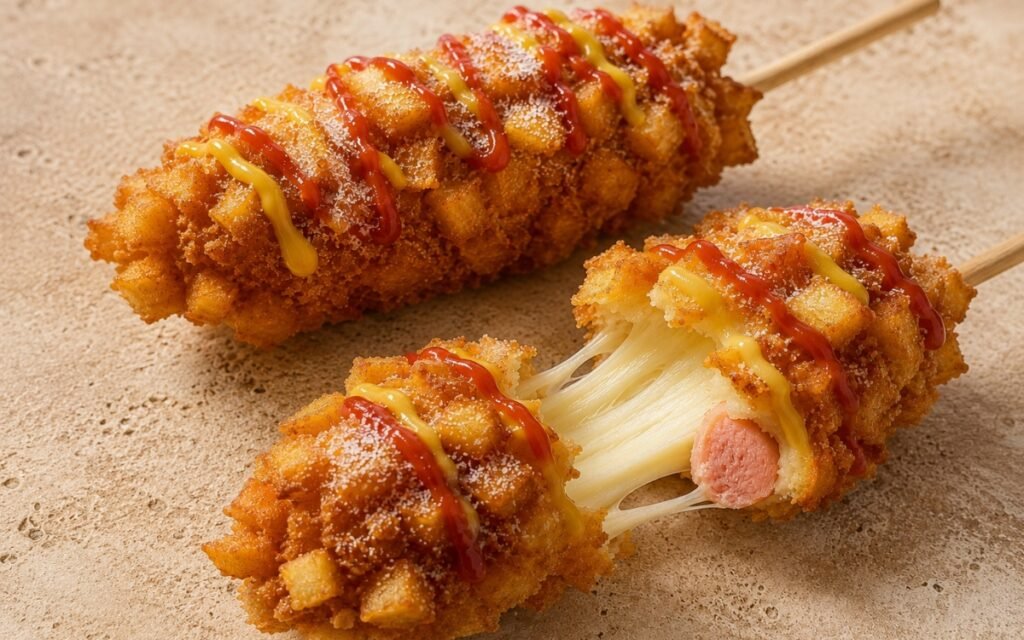
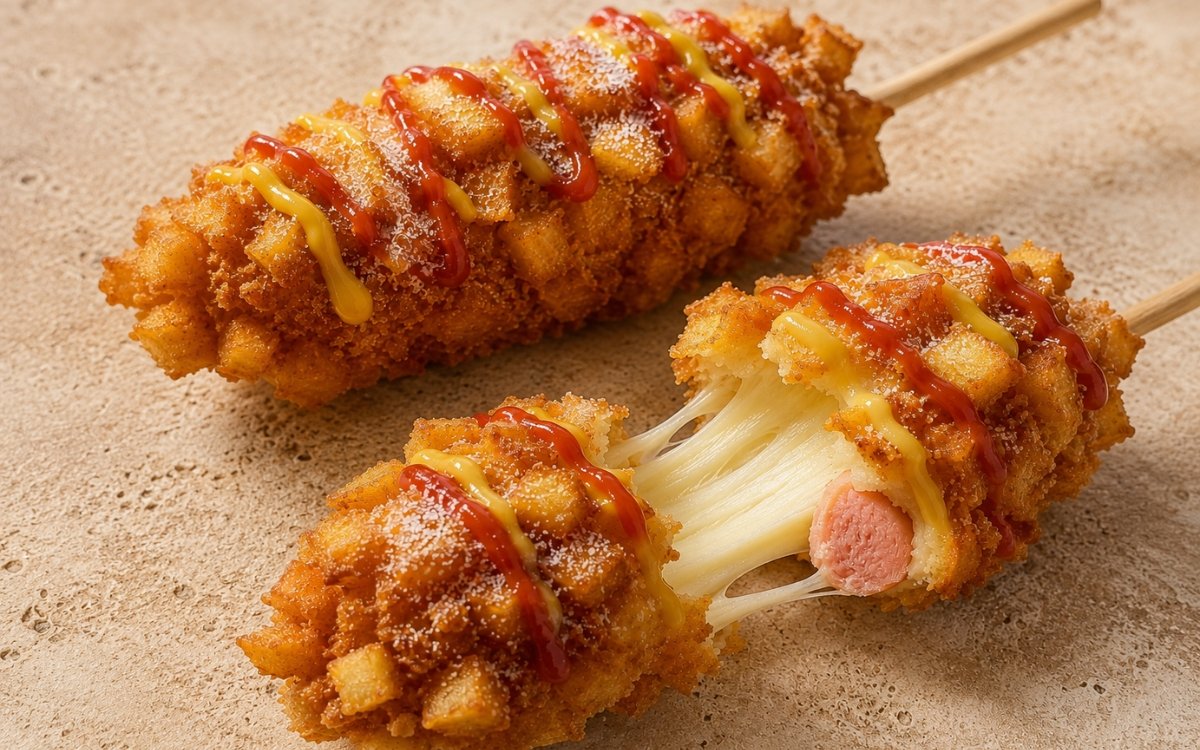
A yeasted batter — the Korean corn dog’s specific advantage over American corn dog batter — that rises for 30 minutes and produces a lighter, slightly chewier coating than an unleavened batter could achieve. A hot dog half and a mozzarella piece threaded on each skewer and kept cold until the moment of frying — the cold temperature helping the batter adhere and the mozzarella stay cohesive rather than leaking. Par-boiled diced potato rolled onto the battered exterior before the panko coat, producing the specific textural layer that distinguishes Korean corn dogs visually and texturally from every other version. Rotated continuously in the oil during frying so every surface crisps simultaneously and the coating sets as a smooth, even shell. Finished with a pinch of sugar and salt while still hot. Drizzled with the gochujang-sriracha-mayo sauce. The Korean street food that earns the reputation.
Prep Time : 35 min
Cook Time : 20 min
Servings : 12 corn dogs
35 min
20 min
12 corn dogs
Ingredients
For the Korean Corn Dogs
• 6 hot dogs, halved crosswise — 12 halves
• 12 sticks low-moisture mozzarella cheese, halved crosswise — 12 pieces
• 6g instant yeast
• 340g all-purpose flour
• 4g fine salt
• 60g granulated sugar — plus a small amount for finishing
• 360ml warm water, approximately 37°C
• 3 large russet potatoes, peeled and cut into 12mm (½ inch) dice
• 200g panko breadcrumbs — approximately 3 cups — this one on Amazon
• Approximately 4 litres vegetable oil, for deep-frying
• Pinch of fine salt, for finishing
For the Sweet Gochujang Sauce
• 180g mayonnaise
• 85g sriracha — this one on Amazon
• 30g gochujang — this one on Amazon
• 25g honey
• 10ml toasted sesame oil — this one on Amazon
• 20ml rice vinegar
This post may contain affiliate links. As an Amazon Associate I earn from qualifying purchases, at no additional cost to you.
Directions
- Assemble the Skewers
Thread one half hot dog onto a wooden skewer, cut-side facing upward. Place one mozzarella piece directly on top so it sits flush against the hot dog’s cut end — the mozzarella should cap the skewer without any skewer tip exposed above it. Repeat for all 12 skewers. Place the assembled skewers on a baking sheet and refrigerate. Cold skewers are not optional — the temperature differential between the cold filling and the warm batter is what makes the batter adhere cleanly on contact rather than sliding off. - BoiMake the Yeasted Batter
Add the 6g of instant yeast to the 360ml of warm water at approximately 37°C — warm enough to activate the yeast but not hot enough to kill it. Whisk briefly to combine. In a large bowl, whisk together the 340g of flour, 4g of salt, and 60g of sugar until evenly distributed. Pour the yeast-water into the flour mixture and whisk until completely smooth with no lumps remaining. Cover the bowl tightly with plastic wrap and allow to rise at room temperature for 30 minutes. After 30 minutes the batter should have increased slightly in volume and will show small bubbles across the surface — the yeast activity that makes this batter specifically lighter and slightly chewier than a standard unleavened corn dog coating. - Par-Boil and Chill the Potatoes
Place the diced russet potatoes in a saucepan and cover with cold water. Season generously with salt. Bring to a boil and cook for exactly 2–3 minutes — the potatoes must remain firm rather than tender. They are being par-boiled for adhesion, not eating; fully cooked potatoes will break apart when rolled onto the battered skewer rather than adhering as distinct cubes. Drain immediately and spread in a single layer on a baking sheet. Refrigerate until fully cold. Cold potatoes adhere to the battered surface more effectively than warm ones — their firm, cold surface grips the batter and holds in place during the panko-rolling step. - Heat the Oil
Fill a large, deep, heavy-bottomed pot just over halfway with the vegetable oil. Heat to 175°C. Set a wire cooling rack over a baking tray alongside the pot for draining. Maintain the oil temperature actively throughout frying — cold corn dogs entering the oil drop the temperature significantly and the heat must be raised immediately to restore it before the next batch. - Set Up the Coating Station
Pour the risen batter into a tall glass or jar — the tall, narrow container allows each skewer to be dipped and coated in a single motion by submerging vertically. Place the chilled diced potatoes in a shallow tray alongside the batter. Place the 200g of panko breadcrumbs in a second shallow tray. Work quickly from this point — the batter, potato, and panko coating sequence must be executed while the skewers are still cold. - Coat the Corn Dogs
Remove the skewers from the refrigerator. Working one at a time, dip each cold skewer fully into the batter — submerging the entire hot dog and mozzarella section down to the batter line. Hold above the glass for 3–4 seconds to allow excess batter to drip off. Immediately roll the battered skewer in the chilled potato cubes, pressing gently as you roll to compact the potatoes into the batter surface. Work quickly so the potatoes contact the batter while it is still tacky — potatoes rolled onto dried batter will not adhere. Without delay, roll the potato-coated skewer in the panko breadcrumbs, twirling the skewer between your fingers to build an even, complete crust across the entire surface. Press gently to compact the panko into the potato layer. If at any point the batter appears to be sliding or loosening — a sign that either the skewer or the batter has warmed — return the skewers to the refrigerator for 5 minutes and place the batter container in the freezer for 3 minutes before continuing. - Fry with Continuous Rotation
Hold each coated skewer by its exposed handle and lower it slowly and steadily into the 175°C oil. The moment the corn dog enters the oil, begin rotating the skewer continuously between your fingers — a constant, steady rotation that turns the corn dog slowly throughout the entire frying period. The continuous rotation is the technique that produces the smooth, even, domed Korean street-food shell. Without rotation, one side of the corn dog rests against the pot’s bottom or wall, flattening and browning unevenly while the other side remains pale. Continuous rotation ensures every surface is in contact with the hot oil for an equal amount of time and that the batter sets as a symmetrical, smooth cylinder. Fry 1–3 at a time depending on pot size — never crowding. Fry for 3–4 minutes until deeply golden brown and uniformly crisp across the entire surface. Transfer each finished corn dog to the wire rack. - Finish with Sugar and Salt
While each corn dog is still hot — within 30 seconds of leaving the oil — sprinkle very lightly with granulated sugar and a pinch of fine salt. The combination of hot surface, residual oil, and the slight crystalline crunch of sugar and salt is the specific Korean street-food finish that balances the richness of the mozzarella and the savoury coating with sweet-salty contrast. Do not skip this step and do not apply it once the corn dog has cooled — the salt and sugar adhere to the hot, slightly oily surface rather than falling off a dry cooled crust. - Make the Gochujang Sauce
In a medium bowl, whisk together the 180g of mayonnaise, 85g of sriracha, 30g of gochujang, 25g of honey, 10ml of toasted sesame oil, and 20ml of rice vinegar until completely smooth and uniformly coloured. Transfer to a squeeze bottle for the specific controlled drizzle application characteristic of Korean street food presentation. - Serve
Drizzle each hot corn dog generously with the gochujang sauce in a zigzag pattern along its length. Serve immediately — Korean corn dogs are at their maximum textural quality in the first 3–5 minutes after frying while the mozzarella is fully molten and the crust is at peak crispness.
*Notes :
- The yeasted batter is the single most important distinction between a Korean corn dog and an American corn dog. The yeast produces carbon dioxide during the 30-minute rise period, aerating the batter with micro-bubbles that create a lighter, slightly chewier coating during frying. An unyeasted batter produces a denser, more bread-like result without the specific springy-yet-crisp texture of the Korean version. The 30-minute rise is also what allows the batter to be made from pantry staples rather than requiring buttermilk or leavening acids.
- The par-boiled potato coating is the visual and textural signature of Korean corn dogs — the feature that immediately identifies them as the Korean version rather than any other corn dog style. The diced potatoes adhere to the outer batter surface and fry into individual golden cubes, producing a rough, textured, dramatically crunchy exterior that contrasts completely with the smooth batter beneath and the stretchy mozzarella inside. The three-layer textural experience — shattering potato crust, springy yeasted batter, and molten cheese — is what makes Korean corn dogs specifically more compelling than any single-layer preparation.
- Low-moisture mozzarella is specified rather than fresh mozzarella for a specific technical reason. Fresh mozzarella has a very high water content — when heated to the frying temperature, the water converts to steam and produces a watery, potentially leaking cheese that loses its stretch. Low-moisture mozzarella’s reduced water content allows it to melt and stretch without steaming, producing the characteristic long, dramatic pull of molten cheese on the first bite.
Why This Recipe Works
This recipe works because every component — the cold skewers, the risen yeasted batter, the chilled par-boiled potatoes, the continuous oil rotation — is specifically positioned to solve a problem that makes home Korean corn dogs fail. Cold skewers make the batter adhere.
The yeasted batter produces the correct texture. Chilled potatoes adhere without breaking. Continuous rotation produces the smooth, even shell. Every technique decision is in service of recreating the specific Korean street food experience at home.
Ingredient Breakdown
Yeasted Batter (30-Minute Rise)
The Korean corn dog base — yeast aeration produces a lighter, slightly chewier coating than unleavened batter; the rise is not optional.
Par-Boiled, Chilled Potato Cubes
The visual and textural signature — individual golden cubes frying into the outer surface produce the dramatically crunchy exterior that identifies the Korean version.
Low-Moisture Mozzarella
The stretchy molten interior — reduced water content produces the clean, dramatic pull without steaming or leaking.
Cold Skewers Throughout
The adhesion requirement — cold temperature is what makes batter, potatoes, and panko adhere reliably rather than sliding off.
Continuous Rotation During Frying
The technique that produces the smooth, symmetrical shell — without rotation, one side browns while the other remains pale.
Sugar and Salt Finish
The Korean street-food balance — sweet-salty contrast against the rich mozzarella applied while hot for adhesion.
Gochujang-Sriracha-Mayo Sauce
The sweet-spiced connecting drizzle — gochujang’s fruity fermented depth and sriracha’s direct heat in a mayonnaise base with honey and sesame.
Flavor Structure Explained
This Korean corn dogs follow a layered balance model:
- Sweet-salty crunchy exterior (potato crust, panko, sugar-salt finish)
- Chewy sweet batter layer (yeasted dough)
- Rich savory filling (hot dog, mozzarella)
- Creamy spicy sauce (gochujang sauce)
- Multi-texture contrast (crisp, chewy, molten)
The outer crust defines the first impression with shattering crunch and the signature sweet-salty balance of Korean street food. The yeasted batter creates a chewy intermediate layer that separates the crisp exterior from the molten filling. Hot dog and mozzarella provide the rich savory center — one meaty and salty, the other creamy and stretchy. Gochujang sauce ties the structure together with sweet heat, garlic depth, and creamy richness. The dish works because every bite delivers contrasting textures and flavors simultaneously: crisp against molten, sweet against savory, spicy against rich.
Common Mistakes to Avoid
- Not Keeping the Skewers Cold – Warm skewers allow the batter to slide off rather than adhering on contact. Always refrigerate until the last possible moment.
- Skipping the Batter Rise – The 30-minute rise is what produces the correct light, slightly chewy texture. An unbubbled batter produces a denser, heavier coating.
- Not Chilling the Par-Boiled Potatoes – Warm potato cubes break when pressed onto the batter rather than adhering as firm, distinct pieces. Always refrigerate until fully cold.
- Not Rotating Continuously – Stationary corn dogs in the fryer produce flat, unevenly browned shells. Continuous rotation is the technique that produces the smooth, even golden surface.
- Overcrowding the Oil – 1–3 maximum depending on pot size — crowding drops the oil temperature and the batter absorbs oil rather than crisping immediately.
- Not Finishing with Sugar and Salt While Hot – The finish must be applied to the hot, slightly oily surface where it adheres. Applied cold it falls off.
Variations
Mozzarella Only Version
Skip the hot dog and use a full mozzarella stick on each skewer — a cheese-only Korean corn dog that is the specific street-food vegetarian version. The technique is identical; the cheese pull on the first bite is even more dramatic.
With Rice Flour
Replace 80g of the all-purpose flour with 80g of rice flour — the rice flour produces a slightly crispier, slightly more delicate crust and adds a specific lightness to the Korean style that all-purpose flour alone cannot provide.
Spicier Sauce
Increase the gochujang to 50g and add 5g of gochugaru to the sauce — the additional fermented chili depth and Korean pepper flake heat produce a more aggressively spiced drizzle for those who prefer pronounced heat.
Ramen Noodle Crust Korean Corn Dogs
Replace the panko entirely with crushed instant ramen noodles — pressed into the batter instead of breadcrumbs for the specific jagged, ultra-crunchy exterior that photographs dramatically and produces a different crunch character.
Storage & Make-Ahead
Fried corn dogs are best eaten immediately, since the potato crust begins to soften within 5 to 10 minutes as moisture from the inside moves outward. To restore some of the texture, reheat them on a wire rack in a 200°C oven for about 5 minutes. An air fryer at the same temperature works just as well.
Assembled but unfried skewers can be prepared and refrigerated for up to 4 hours before battering and frying, as long as they are kept cold the entire time.
The batter can be made in advance, allowed to rise, and then refrigerated for up to 2 hours after rising. Before dipping the skewers, let the batter come back toward room temperature briefly.
Gochujang sauce can be refrigerated in a sealed squeeze bottle for up to 1 week. Its flavor deepens noticeably overnight.
Frequently Asked Questions
Why yeasted batter rather than regular batter?
Yeast produces carbon dioxide during the 30-minute rise, aerating the batter with micro-bubbles that create a lighter, slightly chewier result during frying. This is the specific texture of authentic Korean corn dogs — distinctly springy and airy rather than dense or doughy.
Why par-boil the potatoes?
Raw potato cubes do not adhere well to the batter surface and can take longer to cook through than the frying time allows. Par-boiling for 2–3 minutes partially cooks each cube so it crisps and colours completely in the 3–4 minute fry time without remaining starchy or raw in the centre.
Why low-moisture mozzarella specifically?
Fresh mozzarella has high water content that converts to steam during frying — potentially causing leakage and producing a wet, less stretchy result. Low-moisture mozzarella melts cleanly and produces the dramatic long-pull stretch without steaming or leaking.
Why rotate continuously in the oil?
A stationary corn dog in the oil rests against the pot’s surface on one side — that side flattens, browns faster, and produces an asymmetrical shape and uneven colour. Continuous gentle rotation keeps the corn dog suspended in the oil with every surface receiving equal heat exposure, producing the smooth, even, cylindrical shape and uniform golden colour of the Korean street-food version.
What is gochujang?
Gochujang is a Korean fermented red chili paste — sweet, spiced, and deeply savoury from the fermentation process. Its character is fundamentally different from fresh chili or dried chili flakes; the fermentation produces a fruity, complex, rounded heat rather than a sharp or simple spiciness. Available at Korean grocery stores and increasingly at mainstream supermarkets in the Asian foods section.
Nutrition Facts
( per serving )
Calories
~510 kcal
Protein
17 g
Fat
28 g
Carbs
47 g
Calories
~510 kcal
Protein
17 g
Fat
28 g
Carbs
47 g
Related Recipes
Related Recipes

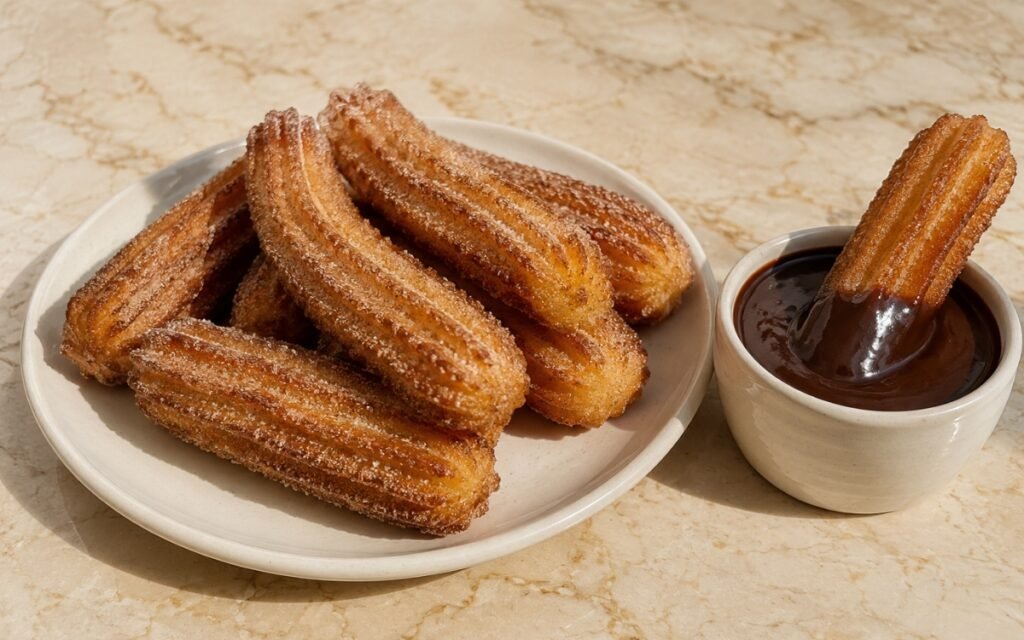
Homemade Churros with Chocolate Sauce
Piped churro dough cooked for real structure, fried until deeply golden and ridged, tossed in cinnamon sugar, and served with rich chocolate sauce.
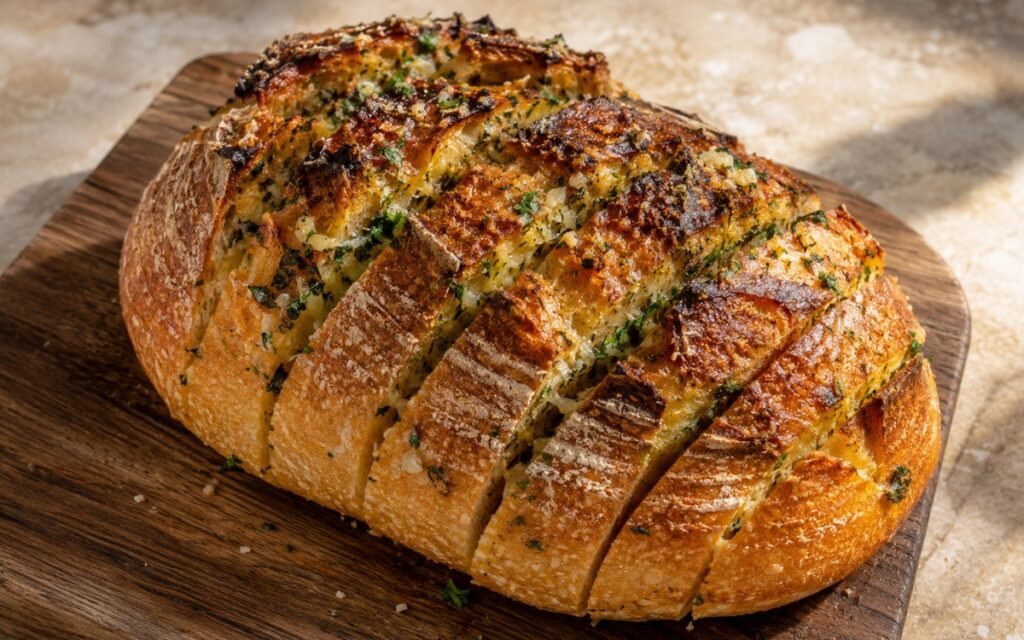
Sourdough Garlic Bread
Sourdough spread with genuinely soft garlic herb butter, baked foil-wrapped then unwrapped until golden and crisp. Rich and aromatic.
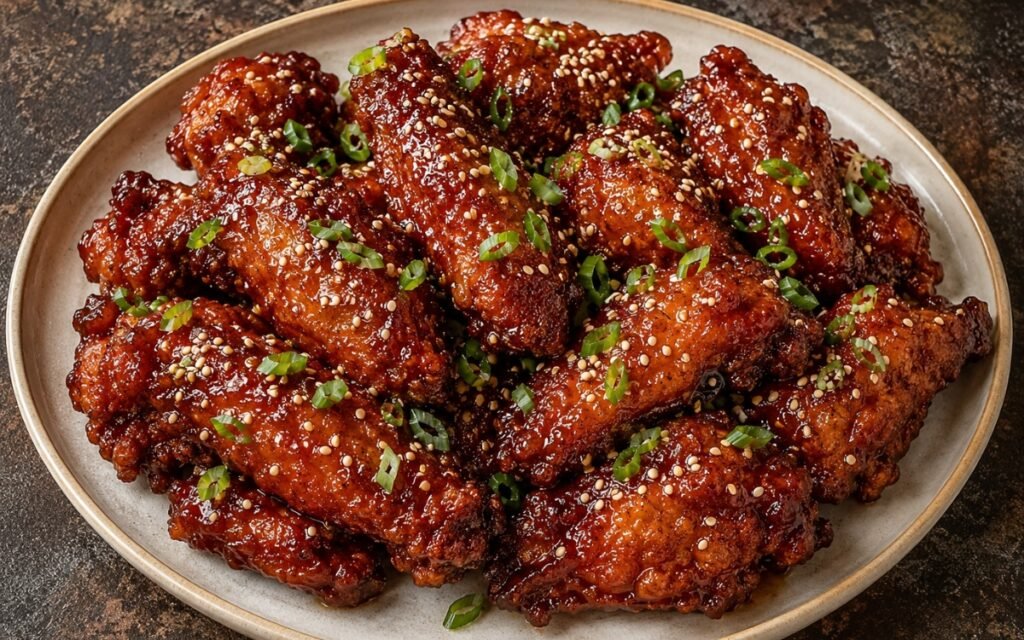
Korean BBQ Chicken Wings
Double-fried wings glazed in sticky gochujang barbecue deliver shattering crunch with sweet-heat intensity and garlic depth.
You might also like
You might also like
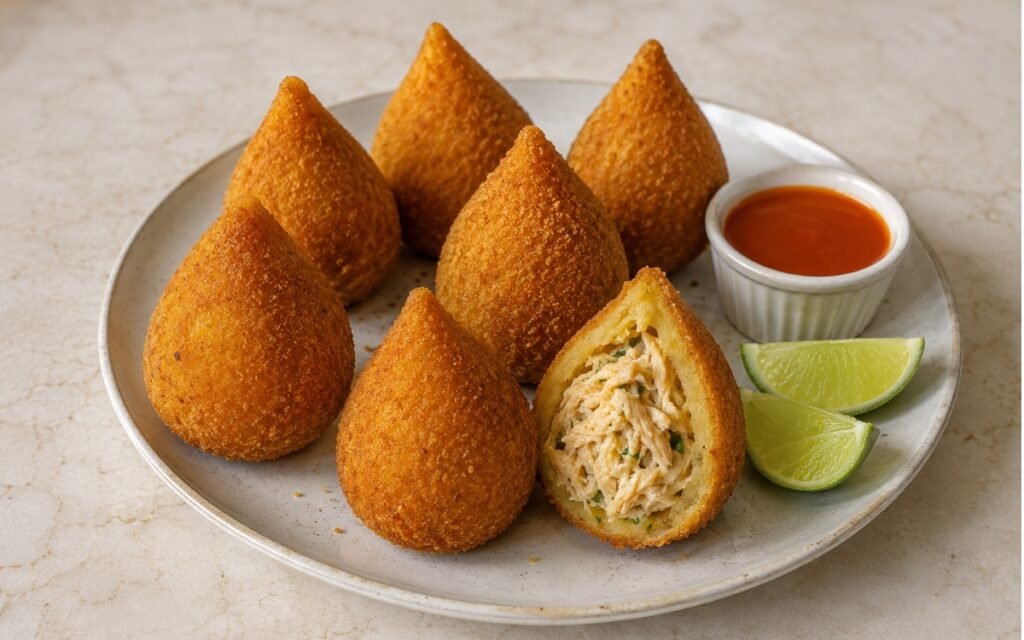
Brazilian Coxinha
Creamy shredded chicken filling wrapped in cooked-starch dough, shaped into classic teardrops, and fried until deeply golden and crisp.
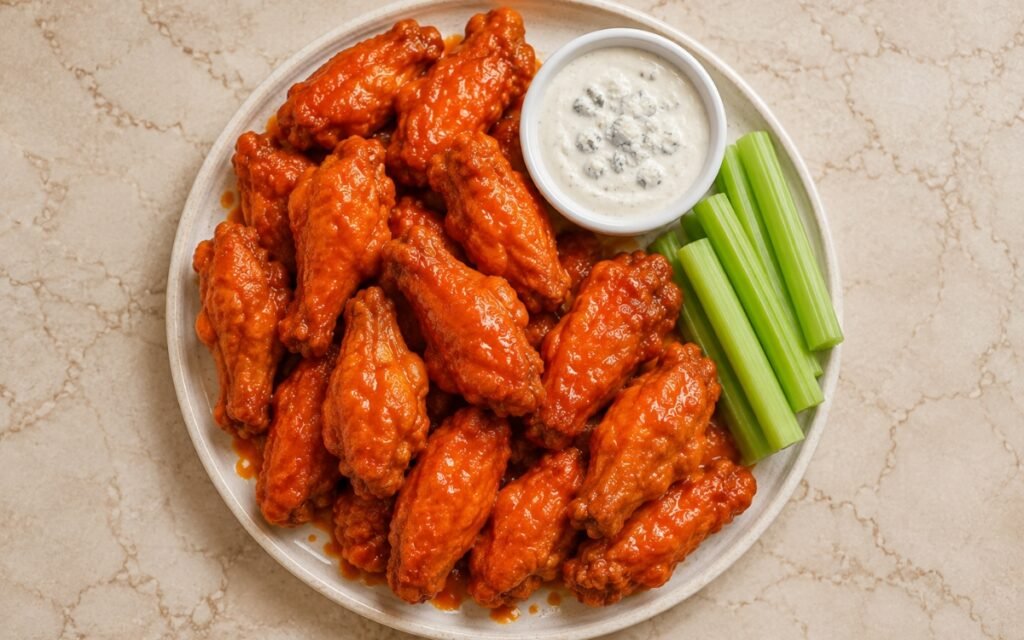
Hot Buffalo Wings
Double-fried chicken wings tossed hot in a glossy butter-and-hot-sauce Buffalo coating, served with blue cheese dressing and celery.
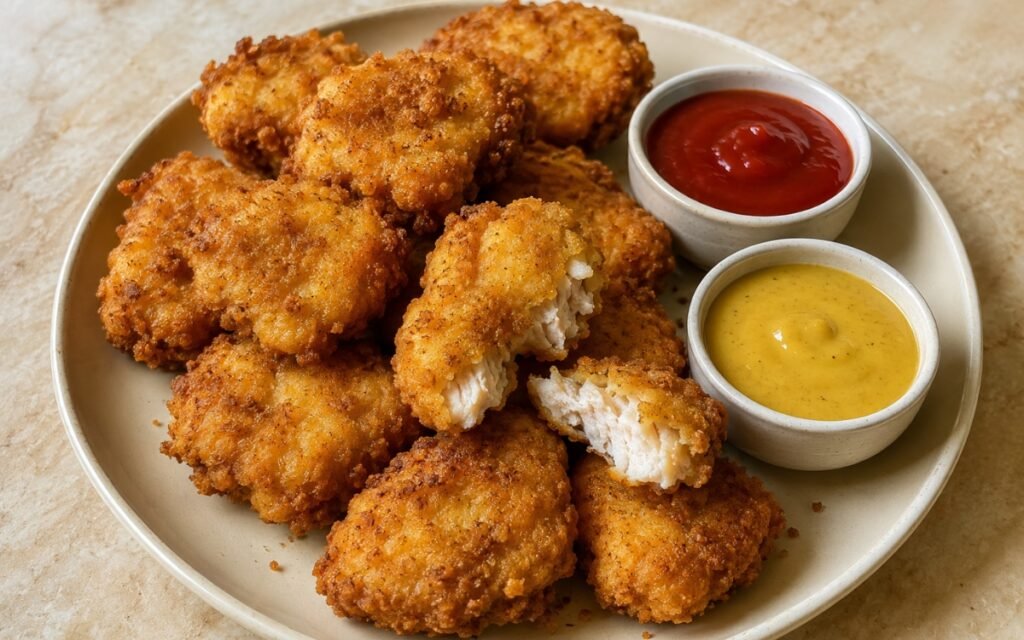
Homemade Chicken Nuggets
A juicy chicken-and-pork blend shaped into hand-formed nuggets, coated in a craggy panko-breadcrumb crust, and fried until deeply golden.
Korean Corn Dogs
Ingredients
Method
- Thread one half hot dog onto a wooden skewer, cut-side facing upward. Place one mozzarella piece directly on top so it sits flush against the hot dog’s cut end — the mozzarella should cap the skewer without any skewer tip exposed above it. Repeat for all 12 skewers. Place the assembled skewers on a baking sheet and refrigerate. Cold skewers are not optional — the temperature differential between the cold filling and the warm batter is what makes the batter adhere cleanly on contact rather than sliding off.
- Add the 6g of instant yeast to the 360ml of warm water at approximately 37°C — warm enough to activate the yeast but not hot enough to kill it. Whisk briefly to combine. In a large bowl, whisk together the 340g of flour, 4g of salt, and 60g of sugar until evenly distributed. Pour the yeast-water into the flour mixture and whisk until completely smooth with no lumps remaining. Cover the bowl tightly with plastic wrap and allow to rise at room temperature for 30 minutes. After 30 minutes the batter should have increased slightly in volume and will show small bubbles across the surface — the yeast activity that makes this batter specifically lighter and slightly chewier than a standard unleavened corn dog coating.
- Place the diced russet potatoes in a saucepan and cover with cold water. Season generously with salt. Bring to a boil and cook for exactly 2–3 minutes — the potatoes must remain firm rather than tender. They are being par-boiled for adhesion, not eating; fully cooked potatoes will break apart when rolled onto the battered skewer rather than adhering as distinct cubes. Drain immediately and spread in a single layer on a baking sheet. Refrigerate until fully cold. Cold potatoes adhere to the battered surface more effectively than warm ones — their firm, cold surface grips the batter and holds in place during the panko-rolling step.
- Fill a large, deep, heavy-bottomed pot just over halfway with the vegetable oil. Heat to 175°C. Set a wire cooling rack over a baking tray alongside the pot for draining. Maintain the oil temperature actively throughout frying — cold corn dogs entering the oil drop the temperature significantly and the heat must be raised immediately to restore it before the next batch.
- Pour the risen batter into a tall glass or jar — the tall, narrow container allows each skewer to be dipped and coated in a single motion by submerging vertically. Place the chilled diced potatoes in a shallow tray alongside the batter. Place the 200g of panko breadcrumbs in a second shallow tray. Work quickly from this point — the batter, potato, and panko coating sequence must be executed while the skewers are still cold.
- Remove the skewers from the refrigerator. Working one at a time, dip each cold skewer fully into the batter — submerging the entire hot dog and mozzarella section down to the batter line. Hold above the glass for 3–4 seconds to allow excess batter to drip off. Immediately roll the battered skewer in the chilled potato cubes, pressing gently as you roll to compact the potatoes into the batter surface. Work quickly so the potatoes contact the batter while it is still tacky — potatoes rolled onto dried batter will not adhere. Without delay, roll the potato-coated skewer in the panko breadcrumbs, twirling the skewer between your fingers to build an even, complete crust across the entire surface. Press gently to compact the panko into the potato layer. If at any point the batter appears to be sliding or loosening — a sign that either the skewer or the batter has warmed — return the skewers to the refrigerator for 5 minutes and place the batter container in the freezer for 3 minutes before continuing.
- Hold each coated skewer by its exposed handle and lower it slowly and steadily into the 175°C oil. The moment the corn dog enters the oil, begin rotating the skewer continuously between your fingers — a constant, steady rotation that turns the corn dog slowly throughout the entire frying period. The continuous rotation is the technique that produces the smooth, even, domed Korean street-food shell. Without rotation, one side of the corn dog rests against the pot’s bottom or wall, flattening and browning unevenly while the other side remains pale. Continuous rotation ensures every surface is in contact with the hot oil for an equal amount of time and that the batter sets as a symmetrical, smooth cylinder. Fry 1–3 at a time depending on pot size — never crowding. Fry for 3–4 minutes until deeply golden brown and uniformly crisp across the entire surface. Transfer each finished corn dog to the wire rack.
- While each corn dog is still hot — within 30 seconds of leaving the oil — sprinkle very lightly with granulated sugar and a pinch of fine salt. The combination of hot surface, residual oil, and the slight crystalline crunch of sugar and salt is the specific Korean street-food finish that balances the richness of the mozzarella and the savoury coating with sweet-salty contrast. Do not skip this step and do not apply it once the corn dog has cooled — the salt and sugar adhere to the hot, slightly oily surface rather than falling off a dry cooled crust.
- In a medium bowl, whisk together the 180g of mayonnaise, 85g of sriracha, 30g of gochujang, 25g of honey, 10ml of toasted sesame oil, and 20ml of rice vinegar until completely smooth and uniformly coloured. Transfer to a squeeze bottle for the specific controlled drizzle application characteristic of Korean street food presentation.
- Drizzle each hot corn dog generously with the gochujang sauce in a zigzag pattern along its length. Serve immediately — Korean corn dogs are at their maximum textural quality in the first 3–5 minutes after frying while the mozzarella is fully molten and the crust is at peak crispness.