
Homemade Onion Rings
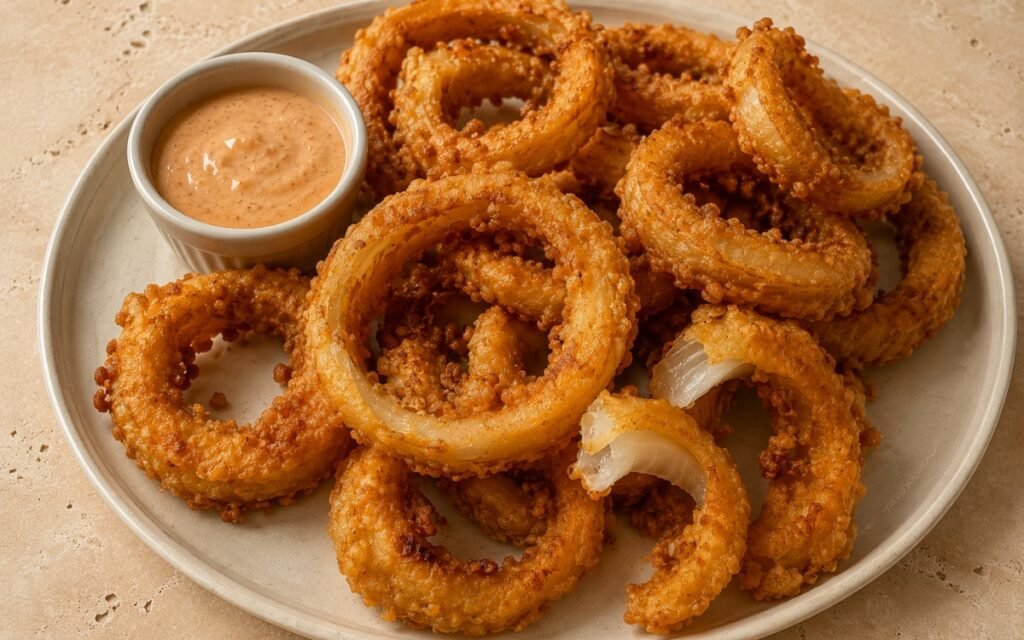
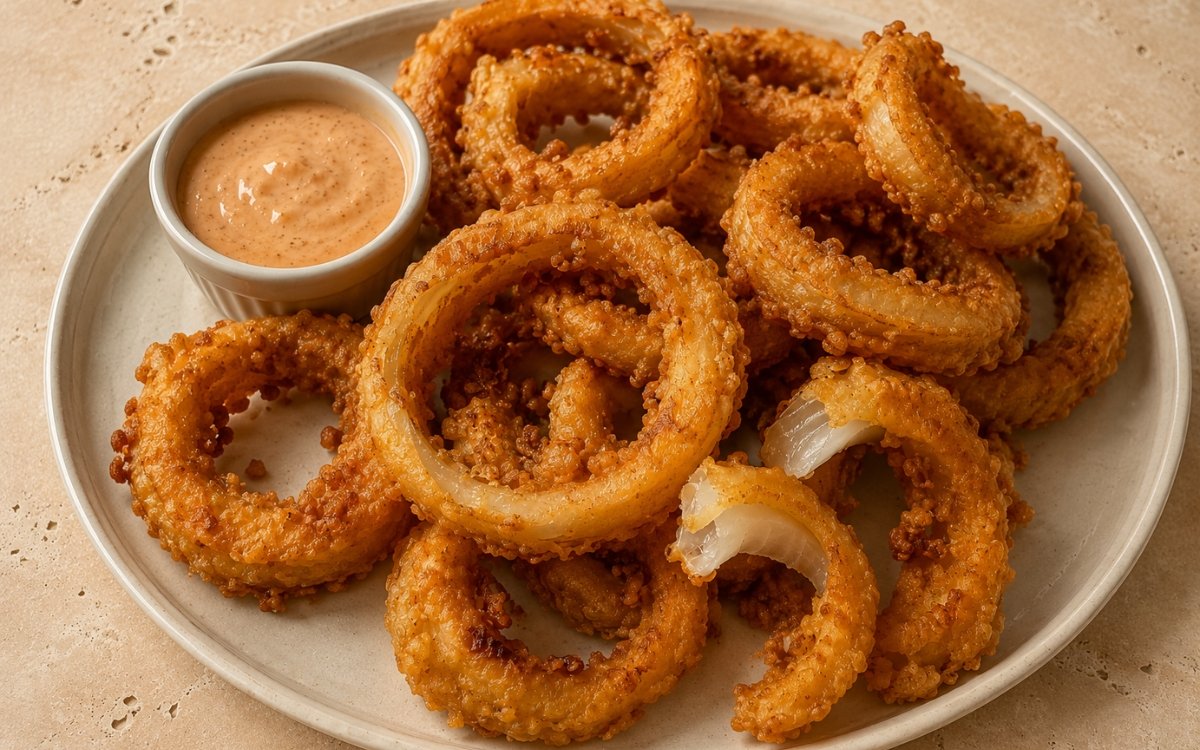
The batter that produces the specific shattering crunch — flour, baking powder, smoked paprika, garlic powder, and salt whisked with milk, eggs, and Dijon mustard into a smooth, lump-free coating that puffs slightly at 185°C and produces a light, airy crust rather than the dense, doughy result of a flour-only batter. The three-stage breading — plain flour first for adhesion, batter second for structure and flavour, panko third for the shatter — is what specifically differentiates these from average onion rings. The dipping sauce made ahead and refrigerated: mayonnaise, ketchup, Dijon, grated garlic, mushroom powder, sriracha, and Worcestershire — the mushroom powder is the ingredient that makes people ask what is in the sauce without being able to identify it. Thirty-five minutes, the onion rings that make every other version seem insufficient.
Prep Time : 15 min
Cook Time : 20 min
Servings : 12
15 min
20 min
12
Ingredients
For the Dipping Sauce
• 240g mayonnaise
• 120g ketchup
• 10g Dijon mustard, about 2 tsp
• 3 garlic cloves, finely grated
• 6g oyster or porcini mushroom powder, about 2 tsp
• 25g sriracha, about 1½ tbsp — this one on Amazon
• 8g Worcestershire sauce, about 2 tsp
For the Breaded Onion Rings
• 6 large yellow onions, cut into ½-inch (1.3cm) thick rings
• 480g all-purpose flour — divided: 240g for the batter, 240g for the first stage coating
• 8g baking powder, about 2 tsp
• 30g smoked paprika, about 2 tbsp — this one on Amazon
• 30g garlic powder, about 2 tbsp
• 8g kosher salt, about 2 tsp, plus extra for seasoning after frying
• 750ml whole milk
• 2 large eggs
• 30g Dijon mustard, about 2 tbsp — this one on Amazon
• 200g panko breadcrumbs — this one on Amazon
• Vegetable oil, for deep-frying — approximately 1.5 litres
This post may contain affiliate links. As an Amazon Associate I earn from qualifying purchases, at no additional cost to you.
Directions
- Make the Dipping Sauce
Make the sauce first and refrigerate it — it improves meaningfully over 15–20 minutes as the garlic’s pungency mellows into the mayonnaise and the sriracha’s heat distributes evenly throughout. In a medium bowl, combine the 240g of mayonnaise, 120g of ketchup, 10g of Dijon mustard, 3 finely grated garlic cloves, 6g of mushroom powder, 25g of sriracha, and 8g of Worcestershire sauce. Whisk vigorously until completely smooth and uniformly combined — no visible garlic streaks or mustard separation. The mushroom powder is the specific ingredient that makes this sauce more than a standard cocktail or burger sauce — its concentrated glutamate content amplifies every other flavour compound present simultaneously, producing a sauce that tastes specifically deeper and more complex than its ingredients would suggest. Both oyster mushroom powder and porcini mushroom powder work; porcini produces a slightly more assertive, earthier depth while oyster is milder and more neutral. Cover and refrigerate until serving. - Prepare the Onions
Cut the tops from all 6 large yellow onions. Slice into ½-inch (1.3cm) rounds — thick enough that the onion inside retains some structure and sweetness after frying rather than disappearing entirely into the batter. Separate each round into individual rings, setting aside or discarding the thin, small innermost core rings that are too small to bread effectively. Run a finger around the interior of each ring and gently remove any thin, papery inner membrane that is present — this translucent layer is water-retentive and prevents the batter from adhering properly to the onion’s surface, producing batter separation and a soggy interior during frying. Thoroughly pat all separated rings dry with paper towels on all surfaces — surface moisture is the single most consequential cause of failed breading. Any moisture remaining on the onion’s surface prevents the flour from adhering, which prevents the batter from adhering, which prevents the panko from adhering. All three stages of the breading depend on the first flour layer sticking cleanly to a dry surface. - Make the Batter
In a large mixing bowl, whisk together the 240g of all-purpose flour, 8g of baking powder, 30g of smoked paprika, 30g of garlic powder, and 8g of salt until the dry ingredients are fully combined and the spices are evenly distributed. The baking powder is the specific leavening agent that makes this batter produce a light, airy, slightly puffed crust rather than a flat, dense coating — it produces CO₂ bubbles during the brief frying period that expand the batter slightly and create the internal air pockets that produce the shatter. In a separate bowl, whisk together the 750ml of whole milk, 2 eggs, and 30g of Dijon mustard until the eggs are fully incorporated and the mixture is smooth — the Dijon adds a background mustard tang and an emulsifying quality that contributes to a smoother, more cohesive batter. Gradually pour the wet mixture into the dry ingredients while whisking continuously — adding the liquid gradually and whisking constantly prevents the immediate lump formation that occurs when all the liquid is added at once. Continue whisking until the batter is completely smooth with no visible flour pockets. The correct batter consistency is similar to a thick pancake batter — it drops from the whisk in a slow, heavy ribbon and coats a dipped onion ring in a visible, even layer without being so thick it clumps or so thin it runs off. - Set Up the Breading Station
Arrange three shallow, wide bowls or dishes in sequence: First bowl — the remaining 240g of plain all-purpose flour. Second bowl — the prepared batter. Third bowl — the 200g of panko breadcrumbs. This three-stage breading sequence is the architecture of the crust: the plain flour first provides the dry foundation the batter adheres to — without the flour stage, batter applied directly to a dry onion surface tends to slip off rather than coating consistently. The batter second provides the seasoned, leavened coating that produces the flavour and the airy structure. The panko third provides the shatter — panko’s irregular, jagged, air-filled flake structure creates more surface texture and more air gaps during frying than fine breadcrumbs, producing the specific light, splintering crunch that defines a properly made onion ring. - Bread the Onion Rings
Working with 6–8 rings at a time, bread each ring through the three stages in sequence: First, toss in the plain flour and shake off all excess vigorously — the flour coating must be thin and even, as any excess clumped flour will produce a thick, uneven batter layer. Second, dip into the batter and allow the excess to drip off naturally for 3–4 seconds — a well-drained batter coating is thin, uniform, and clings without excess pooling at the base of the ring. Third, press firmly into the panko breadcrumbs, turning to coat all surfaces and pressing the panko against the batter-coated ring with your palm to ensure maximum adhesion. Place each breaded ring on a wire rack — the rack allows air circulation beneath each ring, preventing the bottom coating from becoming damp from contact with a flat surface. Allow to rest on the rack for 3–5 minutes before frying — the brief rest allows the panko to adhere more firmly to the batter as the batter slightly dries on the surface. - Fry to Golden and Shatteringly Crisp
Fill a large, heavy-bottomed pot with approximately 6cm depth of vegetable oil. Heat to 185°C — use a cooking thermometer throughout, as oil temperature is the single most controllable variable in the quality of the finished onion rings. Below 175°C the rings absorb oil and produce a greasy, dense crust rather than the light, puffed crust the baking powder batter is designed to produce. Above 190°C the exterior browns and crisps before the onion interior has softened fully. The 185°C target produces simultaneous exterior crispness and tender, sweet interior. Working in batches of 4–5 rings maximum — never more than fits with clear space between each ring — carefully lower each ring into the hot oil using tongs or a slotted spoon. Fry for 2–3 minutes, turning once gently at the midpoint, until evenly deep golden-brown across the entire surface of each ring. Transfer immediately to the wire rack over a baking sheet. Season with salt immediately while each ring is still hot — the heat from the freshly fried surface activates the salt’s moisture absorption, causing it to adhere to the coating rather than sliding off. Allow the oil to return to 185°C before adding the next batch. - Serve
Serve immediately while the panko crust is at maximum crunch — onion rings lose their shatter within 5–8 minutes of leaving the fryer as steam from the onion interior migrates outward through the crust and softens it progressively. Serve with the refrigerated dipping sauce alongside.
*Notes :
- The mushroom powder in the dipping sauce is a specific umami-amplification technique that has broad application across dressings, sauces, and marinades. Dried mushroom powders — particularly porcini and oyster — contain very high concentrations of glutamates, guanylate, and other umami compounds that in small quantities (2 tsp in a sauce of this volume) produce a pervasive, unidentifiable depth that makes the sauce taste more complete without tasting of mushroom. At this quantity it is not detectable as a mushroom flavour — it is simply present as the background richness that makes people describe the sauce as tasting specifically different without being able to name why. The same technique applies to adding small amounts of mushroom powder to braising liquids, burger patties, and stir-fry sauces.
- The double-dip technique mentioned in the notes section — coating in panko, resting 5 minutes, then dipping again in batter and re-coating in panko — produces an even thicker, more dramatically crunchy crust that is specific to restaurant-quality extra-crispy onion rings. The second batter and panko layer builds on the set first layer, producing a crust that is essentially twice as thick with proportionally more crunch. The 5-minute rest between coats is essential — insufficient rest produces a second coat that slides over the wet first coat rather than adhering to it.
- The inner membrane removal is the most tedious step of the preparation and the most justifiable — the papery inner membrane on each onion ring is essentially a dry barrier between the onion’s moist surface and the flour coating. Where the membrane is present, flour rests on the membrane rather than adhering to the onion, and the batter on top of the flour subsequently separates during frying. Removing it takes approximately 30 additional seconds per batch and eliminates one of the most common onion ring failure modes.
Why This Recipe Works
This recipe works because it combines three specific technique decisions that each individually improve the final result: removing the inner membrane for batter adhesion; using baking powder in the batter for a light, airy, puffed crust rather than a dense one; and panko rather than fine breadcrumbs for maximum shatter.
The dipping sauce’s mushroom powder is the ingredient decision that makes the sauce specifically more complex than the sum of its other components. And the wire rack for both resting before frying and draining after frying keeps the coating at its best at both stages.
Ingredient Breakdown
Baking Powder (In the Batter)
The leavening agent — produces CO₂ bubbles during frying that expand and create the air pockets in the crust responsible for the light, puffed, shattering texture.
Smoked Paprika and Garlic Powder
The specific seasoning pair — smoked paprika for colour and warm sweetness, garlic for savoury depth; both in the batter so every bite of the crust is seasoned throughout.
Panko Breadcrumbs
The shatter layer — irregular Japanese-style flakes create more surface texture and air gaps than fine breadcrumbs, producing the specific light, splintering crunch.
Three-Stage Breading (Flour → Batter → Panko)
The architecture of the crust — flour for adhesion, batter for structure and seasoning, panko for crunch; each stage depends on the previous one.
Mushroom Powder (In the Sauce)
The invisible depth amplifier — concentrated glutamates produce pervasive umami complexity without any detectable mushroom flavour at this quantity.
185°C Oil Temperature
The frying requirement — below this the batter absorbs oil; above this the exterior over-browns before the onion softens. The thermometer is non-negotiable.
Flavor Structure Explained
This Homemade onion rings follow a layered balance model:
- Sweet onion core (yellow onion)
- Savory crunchy crust (paprika, garlic, fried batter)
- Airy crisp texture (leavened coating)
- Tangy spicy sauce contrast (ketchup, sriracha, mayo)
- Deep savory finish (mushroom powder)
The onion provides the foundation with softened sweetness and slight bite that remain distinct beneath the crust. The batter builds the dominant textural layer — airy, crisp, savory, and warmly spiced with paprika and garlic. Baking powder creates the light crunch that separates good onion rings from dense fried batter. The dipping sauce balances richness, acidity, sweetness, and heat in a single layer that cuts through the fried coating. Mushroom powder quietly reinforces the savory depth underneath, making the sauce taste fuller and more complex without drawing attention to itself.
Common Mistakes to Avoid
- Not Removing the Inner Membrane – The papery inner membrane prevents batter adhesion and causes crust separation during frying. Always remove before breading.
- Not Drying the Onion Rings Thoroughly – Any residual moisture on the onion surface prevents the flour from adhering, causing the entire three-stage coating to slide off. Always thoroughly pat dry.
- Not Shaking Off Excess Flour – Excess clumped flour produces an uneven, thick batter layer and heavy crust. Always shake off vigorously after the first flour stage.
- Frying at Incorrect Temperature – Below 175°C produces greasy, dense onion rings; above 190°C browns the exterior before the interior softens. Use a thermometer throughout.
- Overcrowding the Oil – More onion rings than fit with clear space dramatically drops the oil temperature, producing oil-saturated rather than crisped rings. Never more than 4–5 per batch.
- Not Salting Immediately After Frying – Salt applied to cooled onion rings slides off rather than adhering. Always season the moment each ring leaves the oil.
Variations
Double-Dip Extra-Crispy Version
After the first full three-stage breading, place rings on the wire rack and rest for 5 minutes. Dip each ring back into the batter and re-coat in panko for a second time. The double coat produces a dramatically thicker, more substantially crunchy crust — the restaurant extra-crispy method.
Buttermilk Batter Onion Rings
Replace the whole milk with 750ml of buttermilk for a tangier, slightly more acidic batter that tenderises the onion surface slightly during the brief marinate and adds a lactic acid brightness to the finished crust’s flavour.
Spicy Batter Version
Add 5g of cayenne pepper and 5g of chili powder to the dry batter ingredients for a version where every bite carries building heat from inside the crust rather than only from the dipping sauce.
Air-Fryer Onion Rings
Bread identically. Spray each ring very generously with cooking spray on all surfaces. Air-fry at 200°C for 8–10 minutes, turning once. The result is less dramatically crunchy than deep-fried but satisfying and significantly lighter.
Storage & Make-Ahead
Fried onion rings are not suitable for storage, since the crust softens irreversibly within 15 to 20 minutes after frying. For the best texture, they should be fried to order and served immediately.
Breaded but unfried onion rings can be held on a wire rack in the refrigerator for up to 1 hour before frying. In fact, the resting time helps the coating adhere better. Before frying, let them sit at room temperature for about 10 minutes.
The dipping sauce can be refrigerated in a sealed jar for up to 5 days. Its flavor deepens and improves over the first 24 hours. It is also one of the most versatile make-ahead sauces and works especially well with burgers, fries, and sandwiches.
Frequently Asked Questions
Why does my batter fall off the onion rings?
Three potential causes in order of likelihood: the inner membrane was not removed (it prevents adhesion); the onion rings were not completely dry before breading (moisture prevents flour from sticking); or excess flour was not shaken off before the batter stage (thick flour layer slides off during frying). Address all three.
What is mushroom powder and where do I find it?
Mushroom powder is dried, ground mushroom — typically porcini, oyster, or shiitake. At small quantities in a sauce it provides concentrated glutamate-rich umami depth without a detectable mushroom flavour. Available at health food stores, specialty grocery stores, and online. It keeps in an airtight jar for up to 1 year.
Why panko rather than regular breadcrumbs?
Panko’s irregular, airy, jagged flake structure creates significantly more surface texture and air pockets during frying than the uniform, fine structure of regular breadcrumbs. The result is a crust that shatters and splinters pleasantly rather than producing the uniform, dense crunch of fine breadcrumbs.
Why baking powder in the batter?
Baking powder produces CO₂ bubbles in the batter when it contacts the hot oil, expanding the batter slightly and creating internal air pockets. These air pockets are what produce the light, puffed, airy crust rather than the flat, dense coating of a batter without leavening.
How do I keep the oil at the correct temperature across multiple batches?
Allow 2–3 full minutes between batches for the oil to return to 185°C — each batch drops the temperature significantly as the cold rings enter the oil. Monitor with the thermometer between every batch and do not add a new batch until the thermometer reads 185°C again.
Nutrition Facts
( per serving )
Calories
~530 kcal
Protein
10 g
Fat
30 g
Carbs
55 g
Calories
~530 kcal
Protein
10 g
Fat
30 g
Carbs
55 g
Related Recipes
Related Recipes

Cripsy Oven-Baked Chicken Thighs
Crispy-skinned chicken thighs baked with simple spices—the most forgiving and flavorful cut.
Southern Sweet Tea (Light Version)
Black tea at full boil for 5 minutes, white sugar dissolved into hot brew immediately — cooled, chilled 1–2 hours. Classic Southern character, lighter and more drinkable.
Sourdough Bread
Levain-built, cold-proofed, Dutch oven-baked sourdough with crackling crust and open crumb — the complete method with jalapeño cheddar, sun-dried tomato Parmesan, and olive rosemary variations.

You might also like
You might also like
Lobster Roll (Connecticut Style)
Large chunky pieces of warm lobster meat gently coated in melted butter, piled into buttery griddled split-top brioche buns with chives and lemon.
Bao Buns with Crispy Fried Chicken
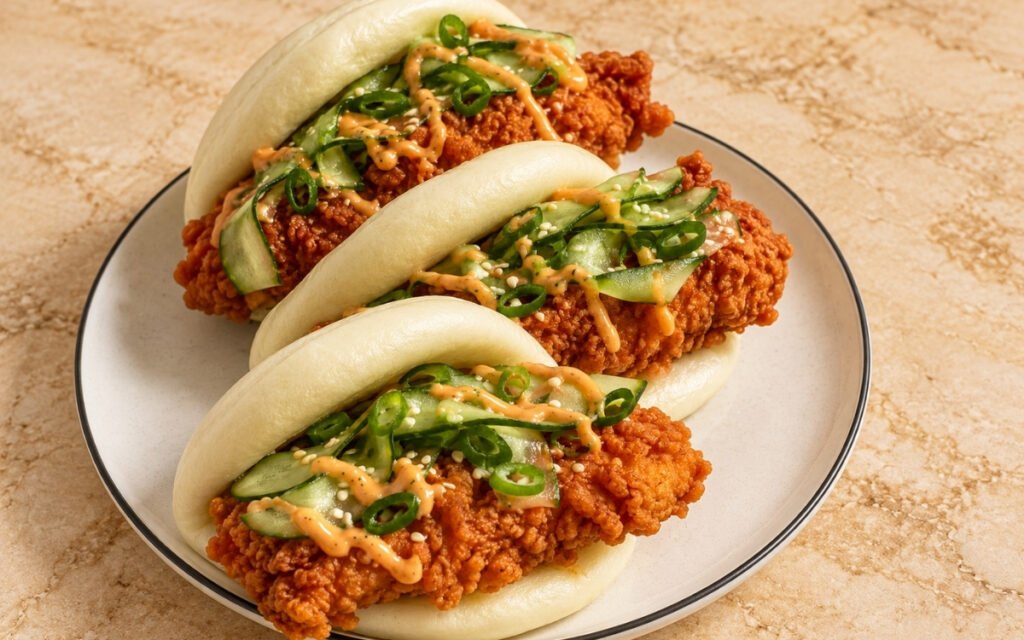
Soft steamed bao buns filled with extremely crisp fried chicken, quick-pickled cucumber ribbons, scallions, sesame seeds, and glossy sriracha mayo.
Pan-Seared Skirt Steak
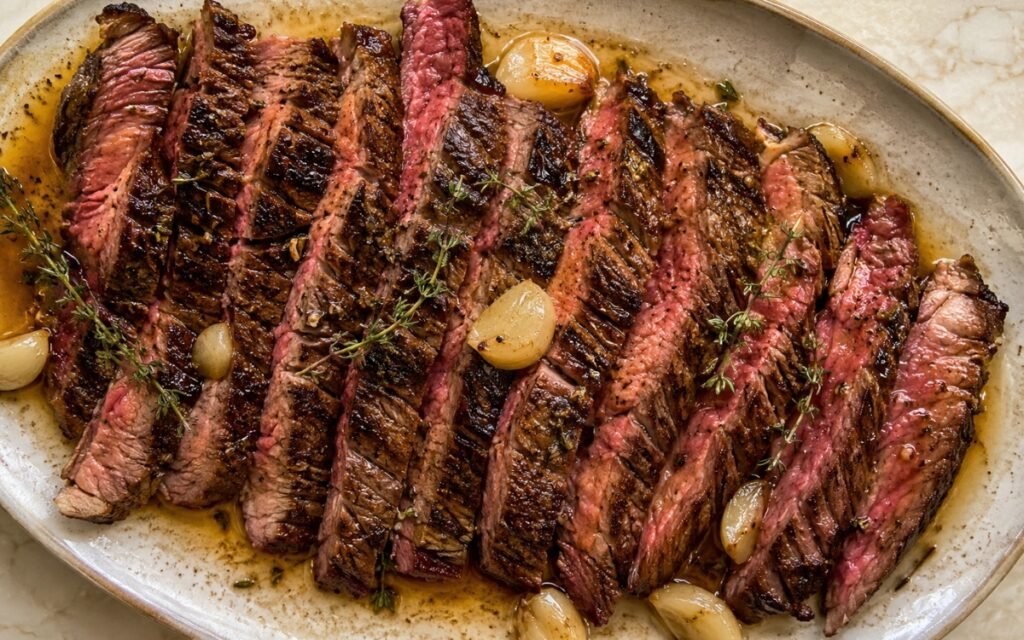
Quick-seared skirt steak with garlic herb butter, sliced against the grain for maximum tenderness.
Homemade Onion Rings
Ingredients
Method
- Make the sauce first and refrigerate it — it improves meaningfully over 15–20 minutes as the garlic’s pungency mellows into the mayonnaise and the sriracha’s heat distributes evenly throughout. In a medium bowl, combine the 240g of mayonnaise, 120g of ketchup, 10g of Dijon mustard, 3 finely grated garlic cloves, 6g of mushroom powder, 25g of sriracha, and 8g of Worcestershire sauce. Whisk vigorously until completely smooth and uniformly combined — no visible garlic streaks or mustard separation. The mushroom powder is the specific ingredient that makes this sauce more than a standard cocktail or burger sauce — its concentrated glutamate content amplifies every other flavour compound present simultaneously, producing a sauce that tastes specifically deeper and more complex than its ingredients would suggest. Both oyster mushroom powder and porcini mushroom powder work; porcini produces a slightly more assertive, earthier depth while oyster is milder and more neutral. Cover and refrigerate until serving.
- Cut the tops from all 6 large yellow onions. Slice into ½-inch (1.3cm) rounds — thick enough that the onion inside retains some structure and sweetness after frying rather than disappearing entirely into the batter. Separate each round into individual rings, setting aside or discarding the thin, small innermost core rings that are too small to bread effectively. Run a finger around the interior of each ring and gently remove any thin, papery inner membrane that is present — this translucent layer is water-retentive and prevents the batter from adhering properly to the onion’s surface, producing batter separation and a soggy interior during frying. Thoroughly pat all separated rings dry with paper towels on all surfaces — surface moisture is the single most consequential cause of failed breading. Any moisture remaining on the onion’s surface prevents the flour from adhering, which prevents the batter from adhering, which prevents the panko from adhering. All three stages of the breading depend on the first flour layer sticking cleanly to a dry surface.
- In a large mixing bowl, whisk together the 240g of all-purpose flour, 8g of baking powder, 30g of smoked paprika, 30g of garlic powder, and 8g of salt until the dry ingredients are fully combined and the spices are evenly distributed. The baking powder is the specific leavening agent that makes this batter produce a light, airy, slightly puffed crust rather than a flat, dense coating — it produces CO₂ bubbles during the brief frying period that expand the batter slightly and create the internal air pockets that produce the shatter. In a separate bowl, whisk together the 750ml of whole milk, 2 eggs, and 30g of Dijon mustard until the eggs are fully incorporated and the mixture is smooth — the Dijon adds a background mustard tang and an emulsifying quality that contributes to a smoother, more cohesive batter. Gradually pour the wet mixture into the dry ingredients while whisking continuously — adding the liquid gradually and whisking constantly prevents the immediate lump formation that occurs when all the liquid is added at once. Continue whisking until the batter is completely smooth with no visible flour pockets. The correct batter consistency is similar to a thick pancake batter — it drops from the whisk in a slow, heavy ribbon and coats a dipped onion ring in a visible, even layer without being so thick it clumps or so thin it runs off.
- Arrange three shallow, wide bowls or dishes in sequence: First bowl — the remaining 240g of plain all-purpose flour. Second bowl — the prepared batter. Third bowl — the 200g of panko breadcrumbs. This three-stage breading sequence is the architecture of the crust: the plain flour first provides the dry foundation the batter adheres to — without the flour stage, batter applied directly to a dry onion surface tends to slip off rather than coating consistently. The batter second provides the seasoned, leavened coating that produces the flavour and the airy structure. The panko third provides the shatter — panko’s irregular, jagged, air-filled flake structure creates more surface texture and more air gaps during frying than fine breadcrumbs, producing the specific light, splintering crunch that defines a properly made onion ring.
- Working with 6–8 rings at a time, bread each ring through the three stages in sequence: First, toss in the plain flour and shake off all excess vigorously — the flour coating must be thin and even, as any excess clumped flour will produce a thick, uneven batter layer. Second, dip into the batter and allow the excess to drip off naturally for 3–4 seconds — a well-drained batter coating is thin, uniform, and clings without excess pooling at the base of the ring. Third, press firmly into the panko breadcrumbs, turning to coat all surfaces and pressing the panko against the batter-coated ring with your palm to ensure maximum adhesion. Place each breaded ring on a wire rack — the rack allows air circulation beneath each ring, preventing the bottom coating from becoming damp from contact with a flat surface. Allow to rest on the rack for 3–5 minutes before frying — the brief rest allows the panko to adhere more firmly to the batter as the batter slightly dries on the surface.
- Fill a large, heavy-bottomed pot with approximately 6cm depth of vegetable oil. Heat to 185°C — use a cooking thermometer throughout, as oil temperature is the single most controllable variable in the quality of the finished onion rings. Below 175°C the rings absorb oil and produce a greasy, dense crust rather than the light, puffed crust the baking powder batter is designed to produce. Above 190°C the exterior browns and crisps before the onion interior has softened fully. The 185°C target produces simultaneous exterior crispness and tender, sweet interior. Working in batches of 4–5 rings maximum — never more than fits with clear space between each ring — carefully lower each ring into the hot oil using tongs or a slotted spoon. Fry for 2–3 minutes, turning once gently at the midpoint, until evenly deep golden-brown across the entire surface of each ring. Transfer immediately to the wire rack over a baking sheet. Season with salt immediately while each ring is still hot — the heat from the freshly fried surface activates the salt’s moisture absorption, causing it to adhere to the coating rather than sliding off. Allow the oil to return to 185°C before adding the next batch.
- Serve immediately while the panko crust is at maximum crunch — onion rings lose their shatter within 5–8 minutes of leaving the fryer as steam from the onion interior migrates outward through the crust and softens it progressively. Serve with the refrigerated dipping sauce alongside.