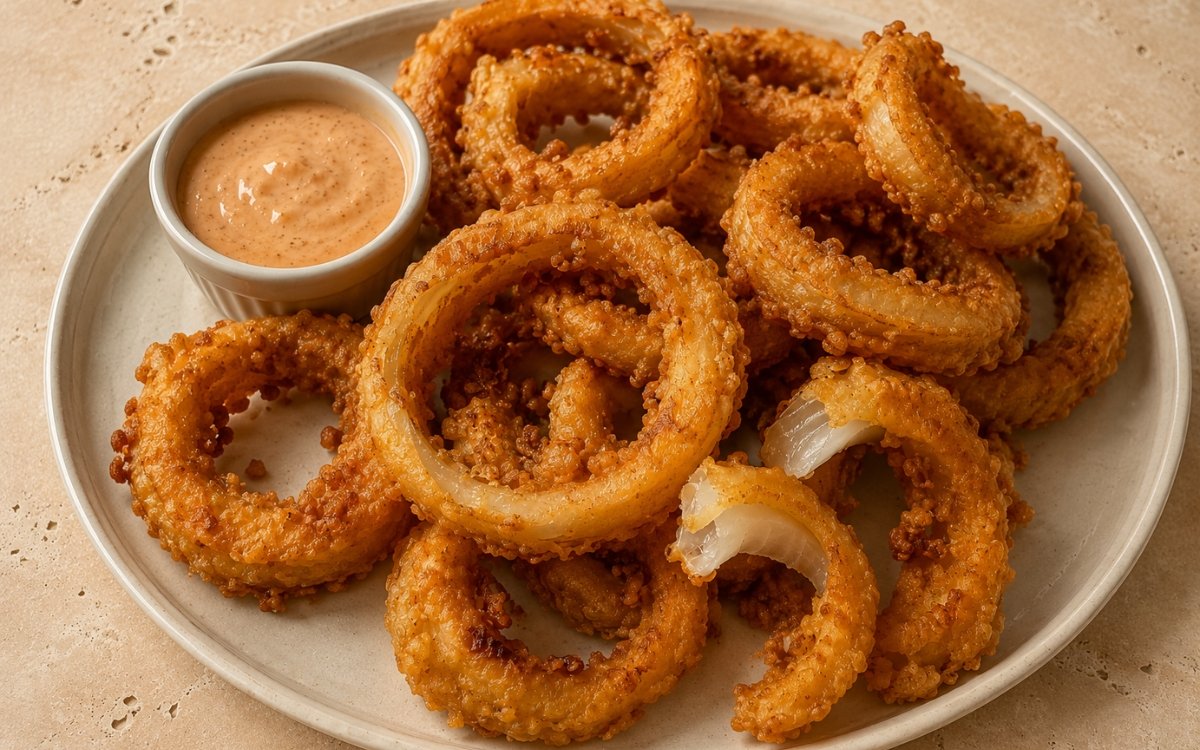
Ingredients
Method
Make the Dipping Sauce
- Make the sauce first and refrigerate it — it improves meaningfully over 15–20 minutes as the garlic's pungency mellows into the mayonnaise and the sriracha's heat distributes evenly throughout. In a medium bowl, combine the 240g of mayonnaise, 120g of ketchup, 10g of Dijon mustard, 3 finely grated garlic cloves, 6g of mushroom powder, 25g of sriracha, and 8g of Worcestershire sauce. Whisk vigorously until completely smooth and uniformly combined — no visible garlic streaks or mustard separation. The mushroom powder is the specific ingredient that makes this sauce more than a standard cocktail or burger sauce — its concentrated glutamate content amplifies every other flavour compound present simultaneously, producing a sauce that tastes specifically deeper and more complex than its ingredients would suggest. Both oyster mushroom powder and porcini mushroom powder work; porcini produces a slightly more assertive, earthier depth while oyster is milder and more neutral. Cover and refrigerate until serving.
Prepare the Onions
- Cut the tops from all 6 large yellow onions. Slice into ½-inch (1.3cm) rounds — thick enough that the onion inside retains some structure and sweetness after frying rather than disappearing entirely into the batter. Separate each round into individual rings, setting aside or discarding the thin, small innermost core rings that are too small to bread effectively. Run a finger around the interior of each ring and gently remove any thin, papery inner membrane that is present — this translucent layer is water-retentive and prevents the batter from adhering properly to the onion's surface, producing batter separation and a soggy interior during frying. Thoroughly pat all separated rings dry with paper towels on all surfaces — surface moisture is the single most consequential cause of failed breading. Any moisture remaining on the onion's surface prevents the flour from adhering, which prevents the batter from adhering, which prevents the panko from adhering. All three stages of the breading depend on the first flour layer sticking cleanly to a dry surface.
Make the Batter
- In a large mixing bowl, whisk together the 240g of all-purpose flour, 8g of baking powder, 30g of smoked paprika, 30g of garlic powder, and 8g of salt until the dry ingredients are fully combined and the spices are evenly distributed. The baking powder is the specific leavening agent that makes this batter produce a light, airy, slightly puffed crust rather than a flat, dense coating — it produces CO₂ bubbles during the brief frying period that expand the batter slightly and create the internal air pockets that produce the shatter. In a separate bowl, whisk together the 750ml of whole milk, 2 eggs, and 30g of Dijon mustard until the eggs are fully incorporated and the mixture is smooth — the Dijon adds a background mustard tang and an emulsifying quality that contributes to a smoother, more cohesive batter. Gradually pour the wet mixture into the dry ingredients while whisking continuously — adding the liquid gradually and whisking constantly prevents the immediate lump formation that occurs when all the liquid is added at once. Continue whisking until the batter is completely smooth with no visible flour pockets. The correct batter consistency is similar to a thick pancake batter — it drops from the whisk in a slow, heavy ribbon and coats a dipped onion ring in a visible, even layer without being so thick it clumps or so thin it runs off.
Set Up the Breading Station
- Arrange three shallow, wide bowls or dishes in sequence: First bowl — the remaining 240g of plain all-purpose flour. Second bowl — the prepared batter. Third bowl — the 200g of panko breadcrumbs. This three-stage breading sequence is the architecture of the crust: the plain flour first provides the dry foundation the batter adheres to — without the flour stage, batter applied directly to a dry onion surface tends to slip off rather than coating consistently. The batter second provides the seasoned, leavened coating that produces the flavour and the airy structure. The panko third provides the shatter — panko's irregular, jagged, air-filled flake structure creates more surface texture and more air gaps during frying than fine breadcrumbs, producing the specific light, splintering crunch that defines a properly made onion ring.
Bread the Onion Rings
- Working with 6–8 rings at a time, bread each ring through the three stages in sequence: First, toss in the plain flour and shake off all excess vigorously — the flour coating must be thin and even, as any excess clumped flour will produce a thick, uneven batter layer. Second, dip into the batter and allow the excess to drip off naturally for 3–4 seconds — a well-drained batter coating is thin, uniform, and clings without excess pooling at the base of the ring. Third, press firmly into the panko breadcrumbs, turning to coat all surfaces and pressing the panko against the batter-coated ring with your palm to ensure maximum adhesion. Place each breaded ring on a wire rack — the rack allows air circulation beneath each ring, preventing the bottom coating from becoming damp from contact with a flat surface. Allow to rest on the rack for 3–5 minutes before frying — the brief rest allows the panko to adhere more firmly to the batter as the batter slightly dries on the surface.
Fry to Golden and Shatteringly Crisp
- Fill a large, heavy-bottomed pot with approximately 6cm depth of vegetable oil. Heat to 185°C — use a cooking thermometer throughout, as oil temperature is the single most controllable variable in the quality of the finished onion rings. Below 175°C the rings absorb oil and produce a greasy, dense crust rather than the light, puffed crust the baking powder batter is designed to produce. Above 190°C the exterior browns and crisps before the onion interior has softened fully. The 185°C target produces simultaneous exterior crispness and tender, sweet interior. Working in batches of 4–5 rings maximum — never more than fits with clear space between each ring — carefully lower each ring into the hot oil using tongs or a slotted spoon. Fry for 2–3 minutes, turning once gently at the midpoint, until evenly deep golden-brown across the entire surface of each ring. Transfer immediately to the wire rack over a baking sheet. Season with salt immediately while each ring is still hot — the heat from the freshly fried surface activates the salt's moisture absorption, causing it to adhere to the coating rather than sliding off. Allow the oil to return to 185°C before adding the next batch.
Serve
- Serve immediately while the panko crust is at maximum crunch — onion rings lose their shatter within 5–8 minutes of leaving the fryer as steam from the onion interior migrates outward through the crust and softens it progressively. Serve with the refrigerated dipping sauce alongside.
Notes
The mushroom powder in the dipping sauce is a specific umami-amplification technique that has broad application across dressings, sauces, and marinades. Dried mushroom powders — particularly porcini and oyster — contain very high concentrations of glutamates, guanylate, and other umami compounds that in small quantities (2 tsp in a sauce of this volume) produce a pervasive, unidentifiable depth that makes the sauce taste more complete without tasting of mushroom. At this quantity it is not detectable as a mushroom flavour — it is simply present as the background richness that makes people describe the sauce as tasting specifically different without being able to name why. The same technique applies to adding small amounts of mushroom powder to braising liquids, burger patties, and stir-fry sauces.
The double-dip technique mentioned in the notes section — coating in panko, resting 5 minutes, then dipping again in batter and re-coating in panko — produces an even thicker, more dramatically crunchy crust that is specific to restaurant-quality extra-crispy onion rings. The second batter and panko layer builds on the set first layer, producing a crust that is essentially twice as thick with proportionally more crunch. The 5-minute rest between coats is essential — insufficient rest produces a second coat that slides over the wet first coat rather than adhering to it.
The inner membrane removal is the most tedious step of the preparation and the most justifiable — the papery inner membrane on each onion ring is essentially a dry barrier between the onion's moist surface and the flour coating. Where the membrane is present, flour rests on the membrane rather than adhering to the onion, and the batter on top of the flour subsequently separates during frying. Removing it takes approximately 30 additional seconds per batch and eliminates one of the most common onion ring failure modes.