
Samosa Chaat
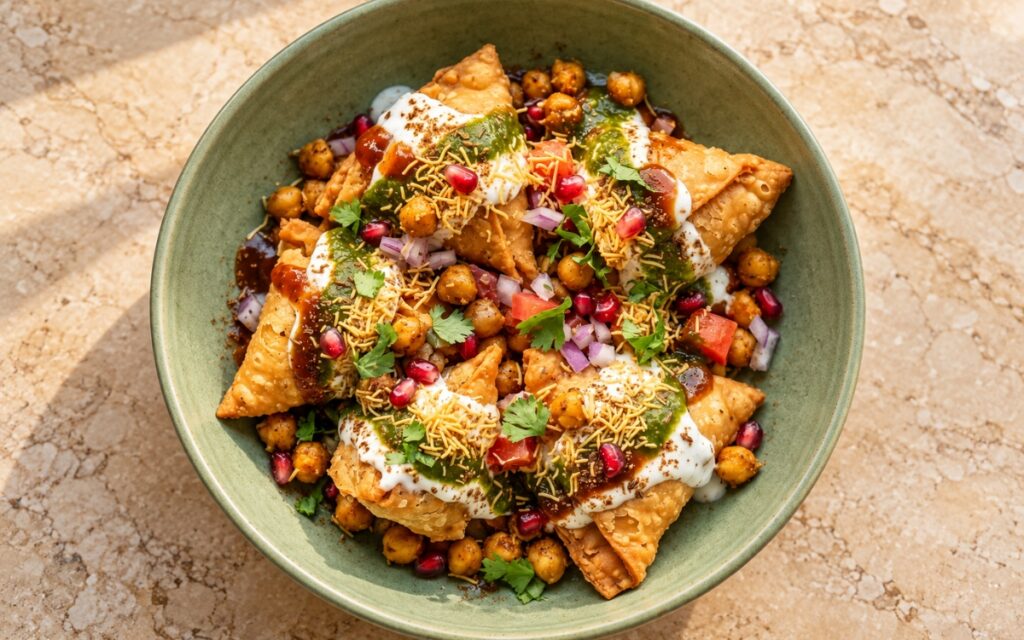
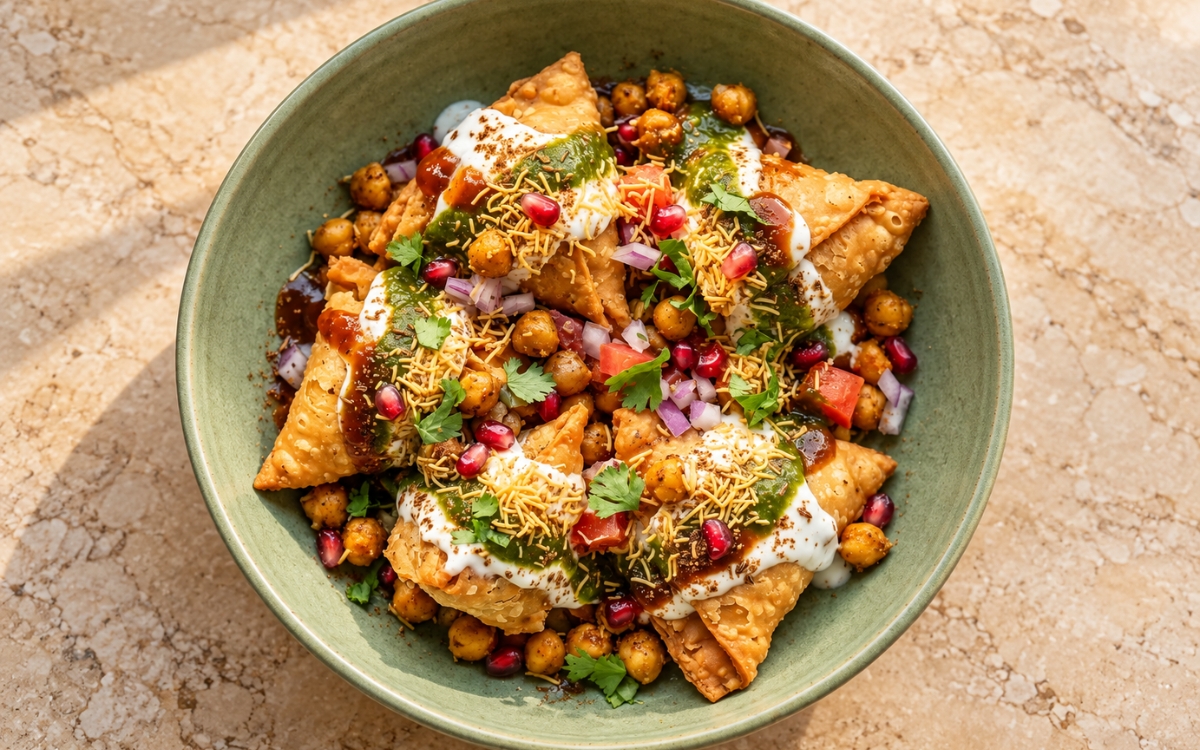
A classic North Indian samosa chaat — crisp homemade triangle samosas filled with spiced potato and peas, broken into large pieces and loaded with warm chickpeas, cool yogurt, green chutney, tamarind chutney, sev, onion, cilantro and chaat spices, the key being pastry that stays visibly crisp beneath generous toppings. Rubbing the ghee thoroughly into a stiff dough and frying the samosas slowly at 150–160°C, rather than in hot oil, is the technique this whole dish depends on for a short, sturdy, crisp shell — soft dough and hot oil brown the pastry before it cooks through, leaving bubbles, raw seams and a shell that collapses under the chickpeas, the same slow-fry-for-structure principle used elsewhere in this collection whenever filled pastry must stay crisp beneath wet toppings. Cooling a dry, textured potato and pea filling completely before shaping is what keeps the thin dough from softening, tearing or bursting open in the oil. Simmering the chickpeas until thick and spoonable, rather than soupy, is what lets them settle into the broken samosas without flooding the bowl. The payoff is a chaat with real, loaded contrast — hot, crackling pastry, soft spiced potato, warm chickpeas, cool yogurt, sharp chutneys and crunchy sev in every spoonful.
Prep Time : 1 hr 10 min
Total Time : 2 hr 50 min
Servings : 4
1 hr 10 min
2 hr 50 min
4
Ingredients
For the Samosa Dough
• 375g all-purpose flour
• 1 tsp fine salt
• 1 tsp ajwain
• 65g ghee, melted but not hot, or neutral oil
• 150–170ml water, added gradually
• Neutral oil, for deep frying
For the Potato and Pea Filling
• 700g potatoes, peeled and cut into large chunks
• Salt, for the cooking water
• 120g green peas, fresh or frozen
• 2 tbsp neutral oil or ghee
• 1 tsp cumin seeds
• 1 tsp coriander seeds, lightly crushed
• 1–2 green chillies, finely chopped
• 1 tbsp finely grated ginger
• A pinch of asafoetida, optional
• 1 tsp ground coriander
• ½ tsp ground cumin
• ½ tsp turmeric
• ½–1 tsp Kashmiri chilli powder or mild red chilli powder
• ½ tsp garam masala
• 1–1½ tsp amchur, or to taste
• 1¼ tsp salt, or to taste
• 2 tbsp chopped cilantro
• 1–2 tbsp water, only if needed
For the Chickpea Topping
• 2 tbsp neutral oil or ghee
• 1 tsp cumin seeds
• 1 small onion, finely chopped
• 1½ tsp ginger-garlic paste
• 150g tomato, finely chopped or crushed
• 1 tbsp tomato paste, optional, for depth
• 1 tsp ground coriander
• ½ tsp ground cumin
• ¼ tsp turmeric
• ½ tsp Kashmiri chilli powder
• 1 tsp chana masala
• ½ tsp garam masala
• 2 × 400g cans chickpeas, drained and rinsed, or about 500g cooked chickpeas
• 250–350ml water
• ¾ tsp salt, or to taste
• 1 tsp tamarind chutney or lemon juice, optional, to finish
For the Green Chutney
• 40g cilantro leaves and tender stems
• 15g mint leaves
• 1–2 green chillies
• 10g ginger
• 1 small garlic clove
• 1 tbsp lemon juice
• ½ tsp roasted cumin powder
• ½ tsp sugar
• ½ tsp salt
• 2–4 tbsp cold water, as needed
For the Tamarind Chutney
• 60g tamarind pulp, or the equivalent in concentrate
• 300ml hot water
• 50–60g jaggery or brown sugar
• 2 soft dates, optional but recommended
• ½ tsp roasted cumin powder
• ½ tsp Kashmiri chilli powder
• ¼ tsp black salt
• ½ tsp regular salt, or to taste
For the Yogurt
• 400g plain full-fat yogurt
• 1–2 tsp sugar
• A pinch of salt
• 2–4 tbsp cold water, as needed
For the Assembly
• 50–70g sev
• 1 small red onion, finely diced
• 1 small tomato, finely diced, optional
• 3–4 tbsp chopped cilantro
• 1–2 tbsp pomegranate arils, optional
• 1½ tsp chaat masala, or to taste
• 1 tsp roasted cumin powder, or to taste
• Kashmiri chilli powder, for sprinkling
• Black salt, to taste
Directions
- Make and Rest the Samosa Dough
Combine the 375g all-purpose flour, the 1 tsp fine salt and the 1 tsp ajwain in a large bowl. Add the 65g melted ghee or oil and rub it into the flour with your fingertips for 3–4 minutes, until the mixture resembles coarse crumbs and holds its shape when squeezed in your fist. Add the 150–170ml water a few tablespoons at a time and knead just until a stiff, smooth dough forms. It should feel noticeably firmer than roti or naan dough and spring back only slowly when pressed; if it cracks badly at the edges, work in 1 tsp more water, but never let it turn soft. Cover and rest for 30 minutes. That thorough rubbing-in of the fat is what coats the flour and limits gluten, giving the short, slightly flaky shell that fries up genuinely crisp. - Cook the Potato Filling
While the dough rests, boil the 700g potato chunks in well-salted water for 15–20 minutes, until a knife slides in easily but the pieces still hold their shape. Drain well, let the steam escape for 3–4 minutes, then break them into small chunks without mashing. Heat the 2 tbsp oil or ghee in a wide pan over medium heat, add the cumin seeds and crushed coriander seeds and, once fragrant, the green chillies, ginger and asafoetida, if using, stirring for 20–30 seconds. Add the 120g peas, straight from frozen if necessary, and cook for 1–2 minutes, then stir in the ground coriander, ground cumin, turmeric, chilli powder and garam masala. Add the potatoes, the 1¼ tsp salt and the amchur, lightly crushing some pieces while keeping others intact, and add 1–2 tbsp water only if the spices will not coat evenly. Cook for 2–3 minutes more, stir in the 2 tbsp cilantro, then spread the filling on a tray to cool completely. That dry, fully cooled filling is what protects the thin dough, since warm or wet potato softens the pastry and can burst it open in the oil. - Make the Tamarind Chutney
Combine the 60g tamarind pulp, the dates, if using, and the 300ml hot water in a bowl and leave for 10–15 minutes to soften. Mash or blend thoroughly, then press through a sieve into a small saucepan, discarding the fibres and stones; if using concentrate, simply whisk it into the hot water. Add the 50–60g jaggery or brown sugar, the ½ tsp roasted cumin powder, the ½ tsp Kashmiri chilli powder, the ¼ tsp black salt and the ½ tsp regular salt. Simmer over low heat for 5–8 minutes, stirring now and then, until lightly thickened and glossy. It should pour easily from a spoon without looking watery. Cool fully. That early stop matters because the chutney thickens further as it cools, and a syrupy reduction sits heavily over the yogurt. - Make the Green Chutney
Place the 40g cilantro, the 15g mint leaves, the 1–2 green chillies, the 10g ginger, the garlic clove, the 1 tbsp lemon juice, the ½ tsp roasted cumin powder, the ½ tsp sugar and the ½ tsp salt in a small blender jar. Add 2 tbsp of the cold water and blend until smooth, scraping down the sides, then add up to 2 tbsp more only if the blades stall. The chutney should be thick but spoonable, holding a soft ribbon rather than running across the plate. Taste and adjust the salt, acidity and heat, then cover and chill. That thick consistency is what lets the chutney streak over the yogurt in bright, distinct lines instead of thinning everything beneath it. - Whisk the Yogurt
Whisk the 400g full-fat yogurt with the 1–2 tsp sugar and a pinch of salt until completely smooth. Add 2 tbsp of the cold water and whisk again, adding up to 2 tbsp more only if it still sits in dense clumps. It should flow slowly off a spoon in a thick ribbon and taste mildly seasoned, never sweet like a dessert yogurt. If it starts to run freely, stop adding water. Cover and chill until needed. That slow-flowing texture is what lets the yogurt drape over the warm chickpeas as a cool layer without flooding the bowl. - Shape the Samosas
Divide the rested dough into 10 equal balls, about 60g each, and keep them covered. Roll one ball into an oval about 22cm long and 2mm thick, then cut it in half crosswise to make 2 semicircles. Brush the straight edge of one semicircle lightly with water, overlap the straight edges by about 1cm to form a cone and press firmly along the seam to seal. Fill the cone with about 40g of the cooled filling, roughly 2½ tbsp, pressing it down gently and leaving about 1cm clear at the top; do not overfill. Moisten the open edge, then pinch and pleat it shut very firmly, pressing out any trapped air. Set the samosa under a cloth and repeat to make 20. That tight, air-free seal is what stops the seams opening and the pastry separating from the filling in the oil. - Fry the Samosas
Heat enough neutral oil for deep frying in a deep, heavy pot to 150–160°C; a small piece of dough should rise slowly with gentle bubbles rather than sizzling hard. Lower in 6–7 samosas at a time without crowding and fry over low to medium-low heat for 10–14 minutes, turning occasionally, until pale golden and beginning to crisp. Raise the heat slightly to about 170°C for the final 2–3 minutes and fry until deep golden and evenly crisp. Lift onto a rack or paper towels to drain, then repeat in 2 more batches, letting the oil return to 150–160°C before each one. If the samosas colour within the first 5 minutes, the oil is too hot. That slow start is what cooks the pastry right through before it browns, avoiding bubbles, raw seams and soft shells. - Make the Chickpea Topping
While the samosas fry, heat the 2 tbsp oil or ghee in a saucepan over medium heat on a second burner, add the cumin seeds and let them sizzle. Add the onion and cook for 6–8 minutes until soft and lightly golden. Stir in the ginger-garlic paste for 30–45 seconds, then add the 150g tomato and the tomato paste, if using, and cook for 5–6 minutes until the tomato breaks down and the oil begins to separate at the edges. Add the ground coriander, ground cumin, turmeric, Kashmiri chilli powder, chana masala and garam masala and stir for 20–30 seconds. Add the chickpeas, the ¾ tsp salt and 250ml of the water and simmer for 10–15 minutes, mashing a small portion against the pan to thicken it and adding up to 100ml more water only if it tightens too much. Finish with the tamarind chutney or lemon juice for brightness, if needed. That thick, spoonable consistency is what lets the chickpeas coat the samosa pieces without drowning them. - Assemble the Chaat
Place 5 hot samosas in each of 4 bowls or plates and break them into large, crisp pieces with a spoon, keeping them recognisable as samosas rather than crushing them to crumbs. Spoon a quarter of the warm chickpeas over each serving, add the yogurt generously, then streak over the green chutney and tamarind chutney. Top with the 50–70g sev, the diced red onion, the diced tomato, if using, the 3–4 tbsp cilantro and the pomegranate arils, if using. Finish each bowl with a share of the 1½ tsp chaat masala and the 1 tsp roasted cumin powder, a pinch of black salt and a light dusting of Kashmiri chilli powder. Serve immediately. That last-minute assembly is what preserves the contrast between hot pastry, warm chickpeas, cool yogurt and crisp sev before the shell softens.
*Notes :
- Rubbing the ghee into a stiff dough deserves genuine recognition as the technique most directly responsible for whether the samosa shell turns short and crisp or tough and blistered. The recipe’s own instruction that “The dough must be stiff and the fat must be rubbed in properly” reflects how fat-coated flour develops less gluten — soft, under-rubbed dough puffs into bubbles, weakens at the seams and fries up leathery rather than crisp.
- Slow frying at 150–160°C deserves the same attention this technique receives throughout this collection’s other fried pastry dishes, because oil temperature genuinely decides whether the pastry cooks through before it colours. Starting low lets moisture leave the dough gradually so the shell sets firm and evenly crisp, whereas hot oil browns the surface within minutes and leaves raw, bubbled pastry beneath it, exactly as the recipe warns: “Start low and fry slowly.”
- A dry, completely cooled filling deserves genuine respect as the detail most directly responsible for samosas that shape cleanly and survive the fryer intact. The recipe’s own note that “The filling must be fully cooled before shaping or the dough softens and tears” reflects simple steam physics — warm or wet potato pushes moisture into the thin pastry, softening it before frying and forcing the seams open once it meets hot oil.
- The consistency of the chickpeas, yogurt and chutneys deserves attention as a genuine, checkable readiness cue rather than a loose approximation. The chickpeas should be thick and spoonable, the yogurt should flow slowly off a spoon and the tamarind chutney should pour easily without looking watery, because any one of them made too thin floods the bowl and destroys the crisp pastry the whole chaat depends on.
Why This Recipe Works
This recipe works because a stiff, ajwain-scented dough with the ghee properly rubbed in gives a short pastry that can stay crisp under wet toppings. A dry, textured potato and pea filling, cooled completely before shaping, keeps that thin pastry intact, while tight, air-free seals stop the samosas opening in the oil. Slow frying at 150–160°C then cooks the shell right through before it browns. Thick, warmly spiced chickpeas, slow-flowing yogurt and two well-judged chutneys add depth, coolness and sweet-sour heat without drowning the pastry, and last-minute sev, onion and chaat spices leave every bowl genuinely crunchy, sharp and tangy.
Ingredient Breakdown
Stiff Dough With Rubbed-In Ghee
The critical technique — fat worked thoroughly into the flour limits gluten, giving a short, slightly flaky shell rather than a chewy one.
Slow Frying at 150–160°C
The critical timing technique — gentle oil cooks the pastry through before it browns, avoiding bubbles, raw seams and soft shells.
Dry, Fully Cooled Potato and Pea Filling
The critical safeguard — a textured, steam-free filling protects the thin dough from softening, tearing or bursting in the fryer.
Thick Spiced Chickpea Topping
The structural foundation — chickpeas simmered with tomato, chana masala and garam masala add warm, hearty depth without flooding the bowl.
Tamarind Chutney With Jaggery and Dates
The defining flavour ingredient — tamarind, jaggery and soft dates give a glossy sweet-sour layer that pours easily over the yogurt.
Smooth, Mildly Seasoned Yogurt
The structural choice — thinned full-fat yogurt drapes over the hot samosas as a cool, creamy contrast, never dessert-sweet.
Last-Minute Sev and Chaat Masala
The finishing touch — crisp sev, raw onion, chaat masala and black salt add crunch and a tangy, street-style finish.
Flavor Structure Explained
This samosa chaat follows a layered balance model:
- Crisp, savoury foundation (fried samosa pastry, ghee, ajwain)
- Warm, earthy filling (potato, peas, cumin, coriander, amchur, garam masala)
- Hearty, spiced depth (chickpeas, tomato, ginger-garlic paste, chana masala)
- Cool, creamy layer (whisked full-fat yogurt, sugar, salt)
- Sweet-sour and herbal contrast (tamarind chutney, jaggery, dates, green chutney, mint)
- Crunchy, tangy finish (sev, red onion, chaat masala, black salt)
The crisp, ajwain-scented pastry gives this chaat its savoury foundation, while the potato and pea filling adds warm, earthy spice sharpened by amchur. The chickpeas bring hearty, tomato-rich depth, and the whisked yogurt cools every spoonful against them. Tamarind chutney answers with glossy sweet-sour richness as the green chutney cuts through with fresh herbs and chilli. Sev, raw onion, chaat masala and black salt add the crunch and genuinely tangy finish that ties this samosa chaat together.
Common Mistakes to Avoid
- Making the Dough Too Soft – This gives pastry that blisters, weakens at the seams and fries up less crisp. Always knead a stiff dough, firmer than roti dough, after rubbing the ghee in properly.
- Shaping With Warm or Wet Filling – This softens the thin dough so it tears during shaping and can burst in the oil. Always spread the filling on a tray and cool it completely first.
- Leaving Gaps or Air in the Seams – This lets the samosas open, separate from the filling or burst as they fry. Always press each seam firmly and pinch the top shut without trapping air.
- Frying the Samosas in Hot Oil – This browns the pastry before it cooks through, leaving bubbles, raw seams and soft shells. Always start at 150–160°C and fry slowly for 10–14 minutes.
- Making the Chickpeas Too Soupy – This floods the bowl and turns the broken samosas soggy within moments. Always simmer until thick and spoonable, mashing a few chickpeas to bind the liquid.
- Assembling the Chaat Too Early – This lets the yogurt and chickpeas soften the pastry completely before anyone eats. Always keep every component separate and assemble each bowl just before serving.
Variations
Semolina-Crisp Shell Version
Mix 1 tbsp fine semolina into the flour, per the recipe’s own note, for a genuinely crisper samosa shell that holds its crunch longer beneath the warm chickpeas and yogurt.
Extra-Loaded Chaat Version
Increase the chickpea topping slightly and add a little more yogurt and sev to each bowl, per the recipe’s own suggestion, for a more substantial chaat that still shows large samosa pieces.
Oil-Based Dough Version
Use neutral oil instead of melted ghee in the dough, as the ingredient list allows, for a cleaner-tasting shell that still rubs in properly and fries up short and crisp.
Lemon-Brightened Chickpea Version
Finish the chickpea topping with lemon juice instead of tamarind chutney, as the ingredient list allows, for a sharper, fresher acidity that contrasts more clearly with the sweet tamarind drizzle on top.
Storage & Make-Ahead
Make the green and tamarind chutneys 1–2 days ahead, per the recipe’s own note, and keep them covered in the refrigerator, loosening the tamarind chutney with a splash of warm water if it thickens too much.
Fry the samosas up to several hours ahead and hold them uncovered at room temperature, per the recipe’s own note, then re-crisp them in a 180°C oven for 6–8 minutes just before breaking them into bowls.
Cook the chickpea topping up to 2 days ahead and refrigerate it in a covered container, then reheat it gently over low heat with a splash of water until warm, thick and spoonable again.
Whisk and chill the seasoned yogurt up to a day ahead, then whisk it again before serving and adjust with a little cold water so it flows slowly rather than sitting in dense clumps.
For service, keep every component separate and assemble each bowl to order, per the recipe’s own note, since assembled samosa chaat genuinely does not keep, while leftover plain samosas can be refrigerated for up to 2 days and re-crisped in the oven.
Frequently Asked Questions
Why must the samosa dough be stiffer than roti dough?
A stiff dough holds less water, so it fries genuinely crisp instead of puffing into bubbles and steaming soft. Combined with ghee rubbed properly into the flour, it gives the short, slightly flaky shell that survives wet toppings.
Why are the samosas fried at such a low temperature?
At 150–160°C the pastry cooks through and dries steadily before it browns. Hotter oil colours the outside within minutes, leaving raw seams, bubbles underneath and a shell that softens quickly once topped.
Why does the filling need to cool completely before shaping?
Warm filling releases steam into the thin dough, softening it so it tears as the seams are pleated. That trapped moisture also turns to steam in the hot oil and can burst the samosas open.
Why should the samosas be broken into large pieces rather than crushed?
Large pieces keep a genuine amount of crisp pastry above the chickpeas and yogurt and stay recognisable as samosas. Crushing them to crumbs lets the toppings soak in at once, turning the whole bowl soft and pasty.
Are there other classic Indian chaat, curry, or street food dishes worth trying?
Aloo Tikki Chaat offers another classic Indian chaat direction worth exploring alongside this one. Chana Masala and Tamarind Date Chutney are also worth trying for other spiced chickpea and sweet-sour directions, and Cucumber Raita and Pav Bhaji offer other cooling side and hearty street food dishes worth exploring.
Nutrition Facts
( Per Serving — 1 bowl of 5 samosas )
Calories
~1530 kcal
Protein
33 g
Fat
72 g
Carbs
188 g
Calories
~1530 kcal
Protein
33 g
Fat
72 g
Carbs
188 g
Related Recipes
Related Recipes
-

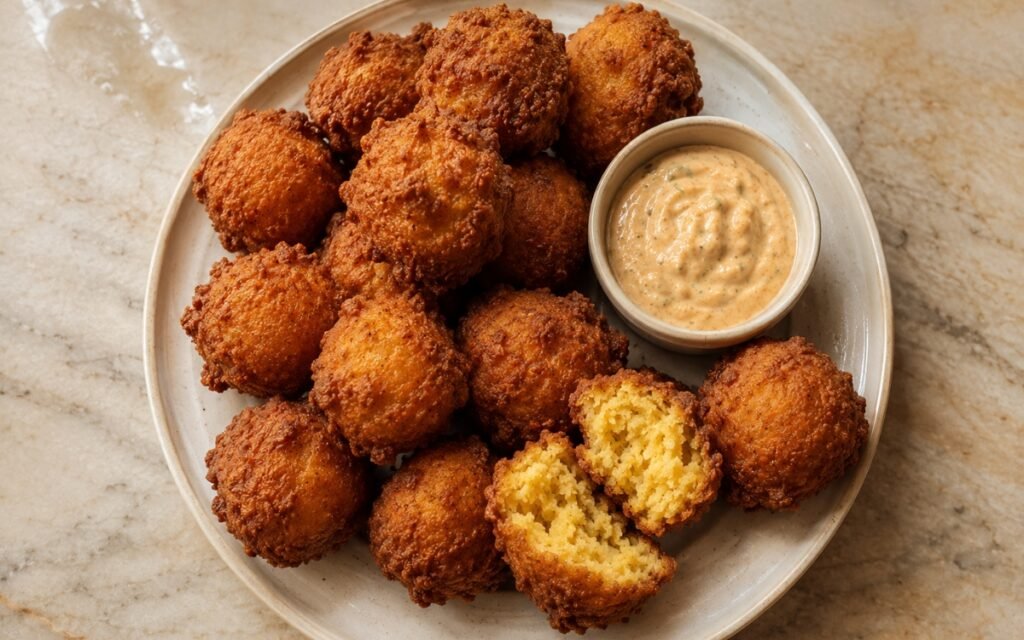
Hush Puppies
Thick cornmeal batter with finely minced onion, fried until deeply golden and crisp outside with a soft, steaming interior, served with tangy remoulade.
-
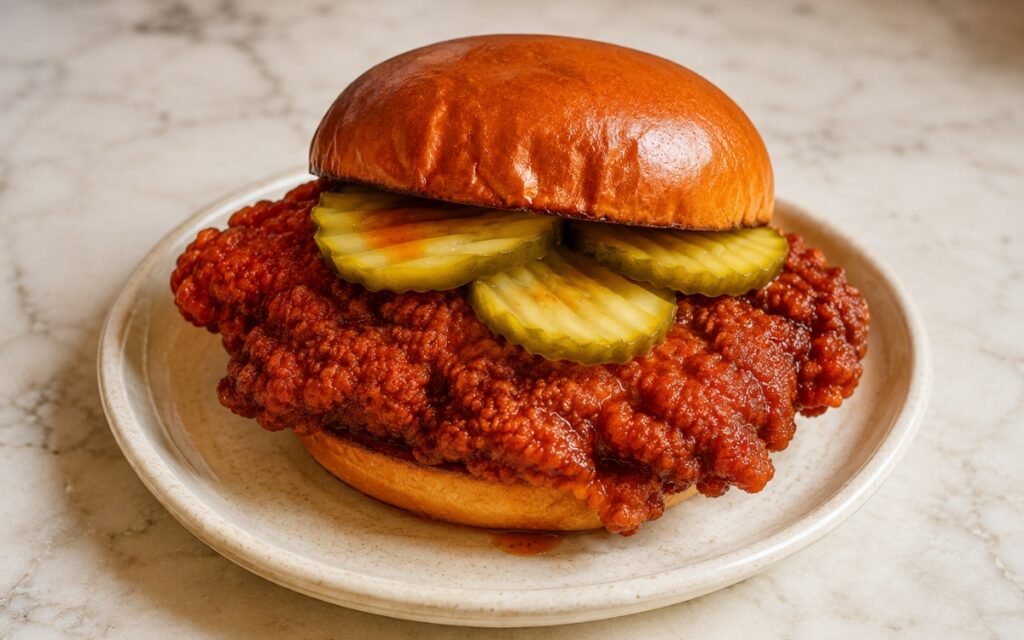
Nashville Hot Chicken Sandwich
Double-dredged, cold-water-rehydrated fried chicken coated in a fiery Nashville hot glaze, served on toasted brioche with mayonnaise and dill pickles.
-
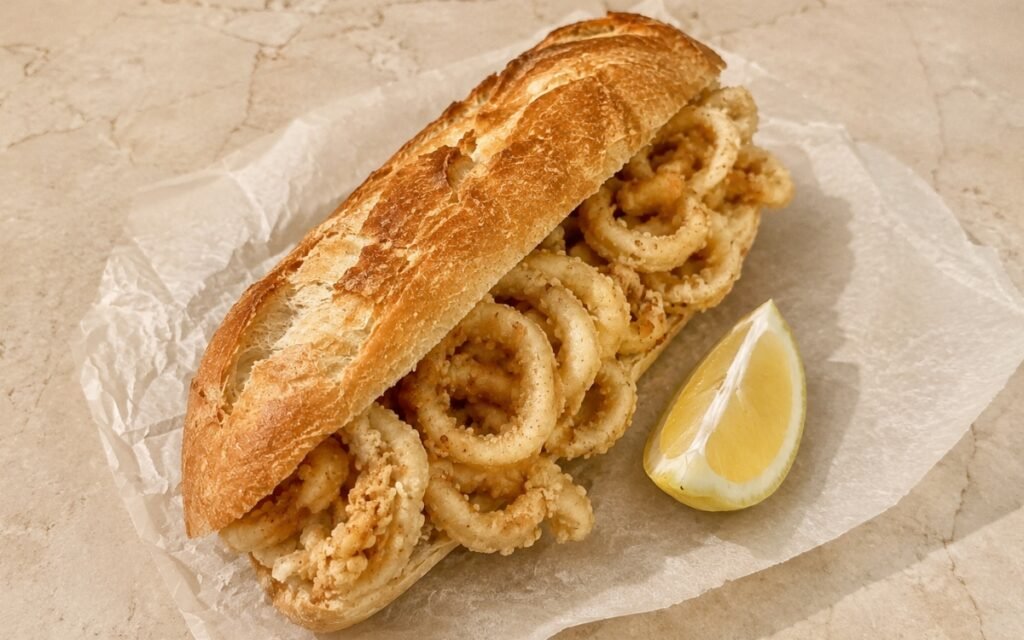
Bocadillo de Calamares
Crusty baguette-style bread filled generously with pale golden, crisp fried calamari rings, brightened with a squeeze of lemon.
You might also like
You might also like
-
Corviche de Pescado
Green plantain dough wrapped around a savory fish filling, shaped into oval dumplings, and fried until deeply golden and crisp.
-
Deep Fried Calamari
Tender squid rings and tentacles lightly coated in flour and cornstarch, fried briefly until pale golden and crisp, served with marinara.
-
Bao Buns — Braised Pork Belly (Gua Bao)
Soft folded steamed bao buns filled with glossy dark-braised pork belly, pickled mustard greens, crushed sweet-salty peanuts, cilantro and reduced braising glaze.
Samosa Chaat
Ingredients
Method
- Combine the 375g all-purpose flour, the 1 tsp fine salt and the 1 tsp ajwain in a large bowl. Add the 65g melted ghee or oil and rub it into the flour with your fingertips for 3–4 minutes, until the mixture resembles coarse crumbs and holds its shape when squeezed in your fist. Add the 150–170ml water a few tablespoons at a time and knead just until a stiff, smooth dough forms. It should feel noticeably firmer than roti or naan dough and spring back only slowly when pressed; if it cracks badly at the edges, work in 1 tsp more water, but never let it turn soft. Cover and rest for 30 minutes. That thorough rubbing-in of the fat is what coats the flour and limits gluten, giving the short, slightly flaky shell that fries up genuinely crisp.
- While the dough rests, boil the 700g potato chunks in well-salted water for 15–20 minutes, until a knife slides in easily but the pieces still hold their shape. Drain well, let the steam escape for 3–4 minutes, then break them into small chunks without mashing. Heat the 2 tbsp oil or ghee in a wide pan over medium heat, add the cumin seeds and crushed coriander seeds and, once fragrant, the green chillies, ginger and asafoetida, if using, stirring for 20–30 seconds. Add the 120g peas, straight from frozen if necessary, and cook for 1–2 minutes, then stir in the ground coriander, ground cumin, turmeric, chilli powder and garam masala. Add the potatoes, the 1¼ tsp salt and the amchur, lightly crushing some pieces while keeping others intact, and add 1–2 tbsp water only if the spices will not coat evenly. Cook for 2–3 minutes more, stir in the 2 tbsp cilantro, then spread the filling on a tray to cool completely. That dry, fully cooled filling is what protects the thin dough, since warm or wet potato softens the pastry and can burst it open in the oil.
- Combine the 60g tamarind pulp, the dates, if using, and the 300ml hot water in a bowl and leave for 10–15 minutes to soften. Mash or blend thoroughly, then press through a sieve into a small saucepan, discarding the fibres and stones; if using concentrate, simply whisk it into the hot water. Add the 50–60g jaggery or brown sugar, the ½ tsp roasted cumin powder, the ½ tsp Kashmiri chilli powder, the ¼ tsp black salt and the ½ tsp regular salt. Simmer over low heat for 5–8 minutes, stirring now and then, until lightly thickened and glossy. It should pour easily from a spoon without looking watery. Cool fully. That early stop matters because the chutney thickens further as it cools, and a syrupy reduction sits heavily over the yogurt.
- Place the 40g cilantro, the 15g mint leaves, the 1–2 green chillies, the 10g ginger, the garlic clove, the 1 tbsp lemon juice, the ½ tsp roasted cumin powder, the ½ tsp sugar and the ½ tsp salt in a small blender jar. Add 2 tbsp of the cold water and blend until smooth, scraping down the sides, then add up to 2 tbsp more only if the blades stall. The chutney should be thick but spoonable, holding a soft ribbon rather than running across the plate. Taste and adjust the salt, acidity and heat, then cover and chill. That thick consistency is what lets the chutney streak over the yogurt in bright, distinct lines instead of thinning everything beneath it.
- Whisk the 400g full-fat yogurt with the 1–2 tsp sugar and a pinch of salt until completely smooth. Add 2 tbsp of the cold water and whisk again, adding up to 2 tbsp more only if it still sits in dense clumps. It should flow slowly off a spoon in a thick ribbon and taste mildly seasoned, never sweet like a dessert yogurt. If it starts to run freely, stop adding water. Cover and chill until needed. That slow-flowing texture is what lets the yogurt drape over the warm chickpeas as a cool layer without flooding the bowl.
- Divide the rested dough into 10 equal balls, about 60g each, and keep them covered. Roll one ball into an oval about 22cm long and 2mm thick, then cut it in half crosswise to make 2 semicircles. Brush the straight edge of one semicircle lightly with water, overlap the straight edges by about 1cm to form a cone and press firmly along the seam to seal. Fill the cone with about 40g of the cooled filling, roughly 2½ tbsp, pressing it down gently and leaving about 1cm clear at the top; do not overfill. Moisten the open edge, then pinch and pleat it shut very firmly, pressing out any trapped air. Set the samosa under a cloth and repeat to make 20. That tight, air-free seal is what stops the seams opening and the pastry separating from the filling in the oil.
- Heat enough neutral oil for deep frying in a deep, heavy pot to 150–160°C; a small piece of dough should rise slowly with gentle bubbles rather than sizzling hard. Lower in 6–7 samosas at a time without crowding and fry over low to medium-low heat for 10–14 minutes, turning occasionally, until pale golden and beginning to crisp. Raise the heat slightly to about 170°C for the final 2–3 minutes and fry until deep golden and evenly crisp. Lift onto a rack or paper towels to drain, then repeat in 2 more batches, letting the oil return to 150–160°C before each one. If the samosas colour within the first 5 minutes, the oil is too hot. That slow start is what cooks the pastry right through before it browns, avoiding bubbles, raw seams and soft shells.
- While the samosas fry, heat the 2 tbsp oil or ghee in a saucepan over medium heat on a second burner, add the cumin seeds and let them sizzle. Add the onion and cook for 6–8 minutes until soft and lightly golden. Stir in the ginger-garlic paste for 30–45 seconds, then add the 150g tomato and the tomato paste, if using, and cook for 5–6 minutes until the tomato breaks down and the oil begins to separate at the edges. Add the ground coriander, ground cumin, turmeric, Kashmiri chilli powder, chana masala and garam masala and stir for 20–30 seconds. Add the chickpeas, the ¾ tsp salt and 250ml of the water and simmer for 10–15 minutes, mashing a small portion against the pan to thicken it and adding up to 100ml more water only if it tightens too much. Finish with the tamarind chutney or lemon juice for brightness, if needed. That thick, spoonable consistency is what lets the chickpeas coat the samosa pieces without drowning them.
- Place 5 hot samosas in each of 4 bowls or plates and break them into large, crisp pieces with a spoon, keeping them recognisable as samosas rather than crushing them to crumbs. Spoon a quarter of the warm chickpeas over each serving, add the yogurt generously, then streak over the green chutney and tamarind chutney. Top with the 50–70g sev, the diced red onion, the diced tomato, if using, the 3–4 tbsp cilantro and the pomegranate arils, if using. Finish each bowl with a share of the 1½ tsp chaat masala and the 1 tsp roasted cumin powder, a pinch of black salt and a light dusting of Kashmiri chilli powder. Serve immediately. That last-minute assembly is what preserves the contrast between hot pastry, warm chickpeas, cool yogurt and crisp sev before the shell softens.