
Deep Fried Calamari
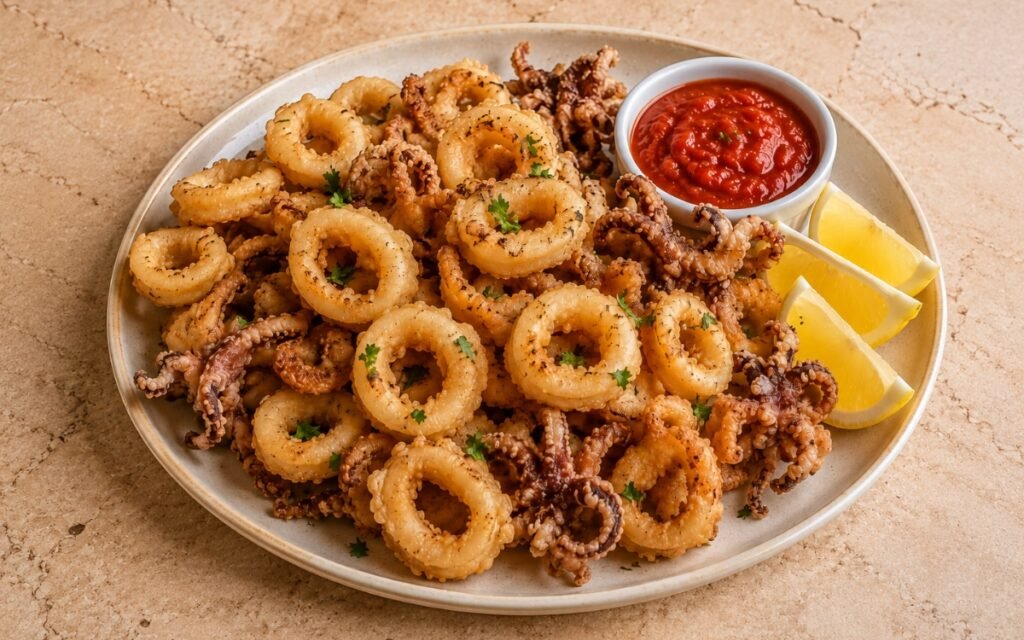
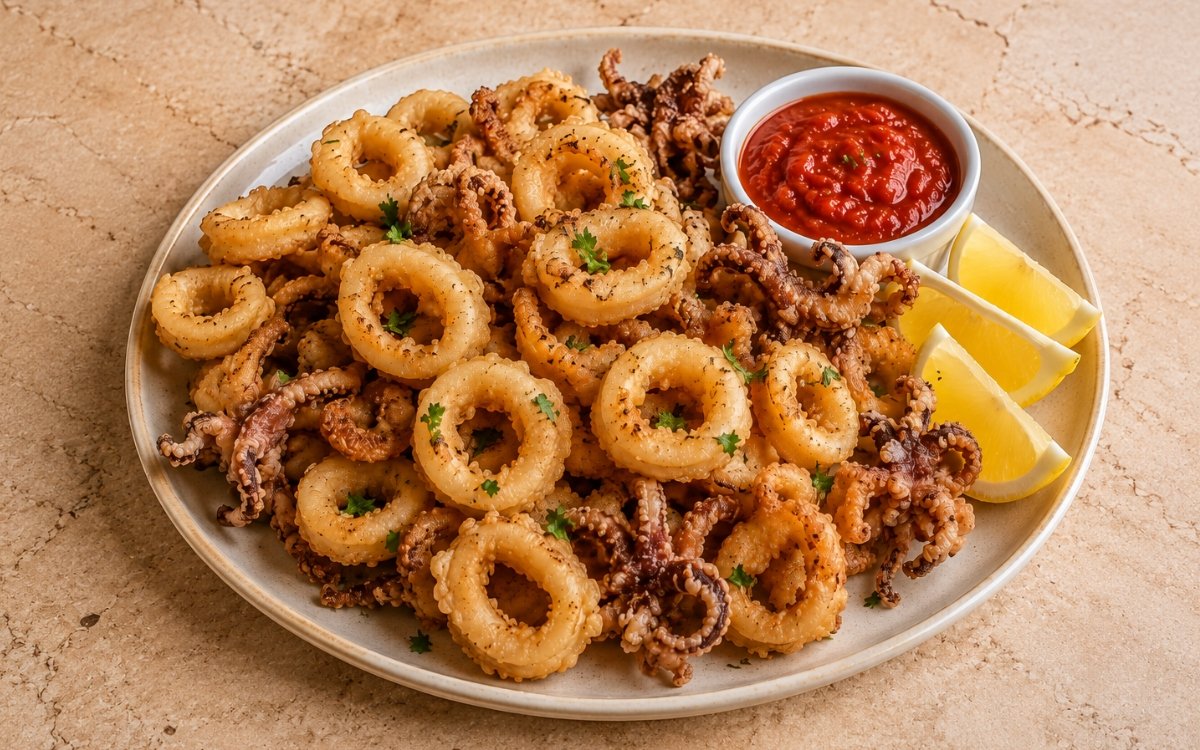
A classic Italian-style fried calamari made with tender squid rings and tentacles lightly coated and fried until pale golden and crisp, then finished with fresh parsley, lemon wedges, and a side of vivid marinara. Keeping the fry genuinely short — just 60–90 seconds for smaller pieces — is the technique this whole dish depends on, since squid has an unusual cooking curve where it’s tender either very briefly cooked or cooked for a long, slow braise, with a wide, unforgiving middle zone that turns it tough and rubbery, the same brief-and-hot principle used elsewhere in this collection whenever a naturally tender protein needs speed rather than patience in the fryer. Drying the calamari thoroughly before dredging matters just as much, since any lingering surface moisture makes the coating patchy and heavy while also causing dangerous spattering in the oil. Dredging only the batch about to be fried, rather than coating everything in advance, is what keeps the flour-cornstarch mixture light and crisp rather than gummy. The payoff is calamari with a genuinely light, pale golden, crisp coating around tender, springy squid, served with bright marinara for dipping.
Prep Time : 25 min
Cook Time : 20 min
Servings : 4
25 min
20 min
4
Ingredients
For the Marinara
• 2 tbsp extra-virgin olive oil — this one on Amazon
• 3 garlic cloves, finely minced
• 1 small pinch chili flakes, optional
• 400g crushed tomatoes or tomato passata
• 1 tsp dried oregano — this one on Amazon
• Fine sea salt, to taste
• Freshly ground black pepper, to taste
• 4–5 basil leaves, torn, or 1 tbsp chopped parsley
For the Calamari
• 1kg cleaned squid, tubes and tentacles
• Fine sea salt, to taste
• Freshly ground black pepper, to taste
• 180g all-purpose flour — this one on Amazon
• 60g cornstarch
• Neutral frying oil, as needed
For Finishing and Serving
• 1 small handful fresh parsley, finely chopped
• 1–2 lemons, cut into wedges
This post may contain affiliate links. As an Amazon Associate I earn from qualifying purchases, at no additional cost to you.
Directions
- Make the Marinara
Heat the olive oil in a small saucepan over medium heat. Add the garlic and cook for 20–30 seconds until fragrant but not browned. Add the chili flakes if using, then pour in the crushed tomatoes or passata. Stir in the oregano. Bring to a gentle simmer and cook for 12–15 minutes, stirring occasionally, until the sauce thickens slightly and the raw tomato taste cooks out. Season with salt and black pepper, then finish with basil or parsley. Transfer to a ramekin or small serving bowl. The marinara should be bright red, lightly thickened, and spoonable — not watery. If it still tastes raw or thin, simmer a little longer. Cooking the garlic only briefly, just until fragrant, protects it from turning bitter — garlic pushed past that point and toward browning would carry an unwanted sharpness directly into the finished sauce. - Prepare the Calamari
If needed, slice the squid tubes into rings about 1–1.5cm thick. Leave small tentacles whole and halve any very large ones. Pat the calamari extremely dry with paper towels or a clean kitchen towel. Season lightly with salt and black pepper. In a wide bowl, combine the flour and cornstarch. The calamari must be dry before dredging. Surface moisture turns the coating patchy and heavy, and it also causes more spluttering in the oil. The squid pieces should feel dry and slightly tacky, not wet or slippery. Squid naturally holds a fair amount of surface moisture, and that moisture works directly against an even, light coating — thorough drying here is what allows the flour-cornstarch mixture to adhere evenly rather than clumping unevenly against damp patches. - Heat the Oil
Fill a deep heavy pot or fryer with neutral oil and heat to 180°C. Set a wire rack over a tray for draining the fried calamari. A wire rack is better than paper towels here because it keeps the coating crisp all around instead of trapping steam underneath. Given how quickly calamari cooks and how briefly the coating spends developing crispness, protecting that crispness immediately after frying matters more here than it might for a longer-cooked item — a rack lets residual steam escape rather than softening the coating within moments of it coming out of the oil. - Dredge and Fry
Working in batches, toss some of the calamari in the flour-cornstarch mixture until evenly coated. Shake off all excess coating before frying. Fry in small batches at 180°C for about 60–90 seconds for smaller pieces and 1½ to 2 minutes for larger rings, just until pale golden and crisp. Do not overcrowd the pot. Transfer each batch to the wire rack and season lightly with a little extra salt while still hot. Repeat with the remaining calamari, always dredging only the batch you are about to fry. The coating should be pale golden, crisp, and dry-looking, with some lightly craggy edges. The calamari should feel springy and tender. If fried too long, it becomes firm and rubbery. Dredging immediately before frying matters. If coated too far in advance, the flour absorbs moisture from the squid and becomes gummy instead of crisp. This just-in-time dredging is a genuine technique decision rather than a convenience — squid continues releasing surface moisture even after being patted dry, and flour sitting against that moisture for any real length of time absorbs it and loses the dry, light quality needed for a crisp fry. - Finish and Serve
Pile the hot fried calamari onto a serving platter. Scatter generously with chopped parsley and serve immediately with lemon wedges and the marinara alongside. Serve while hot and crisp. Squeezing lemon over the calamari only at the table, rather than well ahead of serving, keeps its acidity as a bright finishing touch rather than something that has time to soak in and soften the coating.
*Notes :
- Calamari’s specific cooking curve is worth understanding as the reason every timing instruction in this recipe is so precise. Squid’s proteins tighten quickly under heat, and there’s a genuinely narrow window — well under two minutes at proper frying temperature — where it stays tender before crossing into a tough, rubbery texture that doesn’t reverse without a long, slow braise instead. This recipe’s short fry times exist specifically to stay inside that tender window rather than accidentally crossing into the tough zone.
- Drying the squid thoroughly before dredging addresses a problem that compounds through the whole frying process. Squid naturally releases surface moisture even after an initial pat-dry, and any of that lingering moisture both weakens the coating’s adhesion and increases spattering once the pieces hit hot oil. The emphasis on genuine dryness here is worth taking seriously rather than treating as a routine instruction.
- Dredging only the batch about to be fried, rather than coating the full quantity of squid all at once for convenience, is a small procedural choice with a real payoff in the finished texture. Flour and cornstarch sitting against squid’s naturally moist surface for any extended time absorb that moisture and turn gummy rather than staying light and dry — dredging in small, immediate batches keeps every portion’s coating in its ideal, freshly applied state right up until it hits the oil.
- Using a wire rack rather than paper towels for draining matters more here than it might for a longer-fried item, precisely because calamari’s fry time is so brief. There’s very little margin to recover lost crispness once the pieces are out of the oil, and any steam trapped beneath them on a flat surface or absorbent paper works against that already-narrow window of peak texture.
Why This Recipe Works
This recipe works because every step protects calamari’s narrow window of tenderness: the squid is dried thoroughly before dredging so the coating adheres evenly, the flour-cornstarch mixture is applied only to the batch about to be fried so it never sits and turns gummy, and the fry itself is kept genuinely brief — under two minutes — to stay inside the tender range before the squid’s proteins tighten into something rubbery.
Draining on a wire rack rather than paper towels protects the coating’s crispness in the short window immediately after frying, and the bright marinara alongside provides acidic contrast to the rich, fried calamari.
Ingredient Breakdown
Thoroughly Dried Squid
The critical prep step — moisture-free surface allows the coating to adhere evenly and reduces spattering in the oil.
Flour-Cornstarch Dredge
The coating composition — cornstarch lightens the fry for a genuinely crisp, non-heavy result.
Just-in-Time Dredging
The critical technique — squid is coated only immediately before frying, since flour left sitting against its moist surface turns gummy.
Brief, High-Heat Fry
The defining timing — 60–90 seconds for smaller pieces, calibrated specifically to stay within squid’s narrow window of tenderness.
Bright, Simmered Marinara
The dipping sauce — cooked down until thick and spoonable, providing acidic contrast to the rich, fried calamari.
Flavor Structure Explained
This deep fried calamari follows a layered balance model:
- Crisp light foundation (flour-cornstarch coating)
- Tender savoury centre (squid)
- Bright acidic contrast (marinara)
- Fresh herbal finish (parsley)
- Sharp citrus lift (lemon)
The crisp, light coating provides a genuinely delicate crunch that gives way to tender, springy squid beneath it. The bright, simmered marinara adds acidic, tomato-forward contrast that cuts through the fried richness. Fresh parsley scattered over the top contributes clean, herbal brightness, while a final squeeze of lemon at the table sharpens every bite with citrus acidity that keeps the whole dish feeling light rather than heavy.
Common Mistakes to Avoid
- Not Drying the Squid Thoroughly – Surface moisture produces a patchy, heavy coating and more spattering in the oil. Always pat it extremely dry before dredging.
- Coating All the Calamari in Advance – Flour sitting against the squid’s moist surface for too long turns gummy rather than staying light and crisp. Always dredge only the batch about to be fried.
- Frying for Too Long – Squid tightens into a tough, rubbery texture well before two minutes at proper temperature. Always keep the fry brief, checking at the lower end of the time range first.
- Overcrowding the Frying Oil – This drops the temperature and extends the fry time, pushing the squid toward rubbery. Always fry in small, properly spaced batches.
- Draining on Paper Towels Instead of a Wire Rack – Trapped steam softens the already-brief window of crispness. Always drain on a rack instead.
Variations
Spicy Marinara Version
Increase the chili flakes in the marinara for a sharper, spicier dipping sauce.
With Aioli Instead of Marinara
Serve alongside a classic Spanish Aioli for a creamier, richer dipping option in place of or alongside the marinara.
Extra-Crispy Version
Substitute a portion of the flour with additional cornstarch for an even lighter, crunchier coating.
With Fried Lemon Slices
Dredge and briefly fry a few thin lemon slices alongside the calamari for a traditional Italian-style garnish.
Storage & Make-Ahead
The marinara can be made 1–2 days ahead and refrigerated in a sealed container, or frozen for up to 3 months.
Cleaned, cut squid can be refrigerated for up to 1 day before frying; dry thoroughly again just before dredging.
Fried calamari is best eaten immediately; it loses its crisp texture within a short time and does not reheat well, becoming tough and rubbery rather than crisp.
Frequently Asked Questions
Why does the calamari need to fry for such a short time?
Squid has a narrow window of tenderness under heat — cooked too long, its proteins tighten and it turns tough and rubbery, a texture that doesn’t reverse without a long, slow braise instead. The brief 60–90 second fry is calibrated specifically to stay inside that tender window.
Why does the squid need to be dried so thoroughly before dredging?
Squid naturally holds surface moisture even after an initial pat-dry, and any lingering moisture makes the coating patchy and heavy while also increasing spattering in the hot oil. Genuine dryness is what allows the flour-cornstarch mixture to adhere evenly.
Why dredge only the batch about to be fried instead of coating everything at once?
Flour and cornstarch sitting against squid’s moist surface for any real length of time absorb that moisture and turn gummy rather than staying light and dry. Dredging just-in-time keeps every batch’s coating in its freshly applied, crisp-ready state.
Why use a wire rack instead of paper towels for draining?
Calamari’s fry time is so brief that there’s very little margin to recover lost crispness afterward. A rack lets steam escape rather than becoming trapped underneath and softening the coating within moments of it leaving the oil.
Are there other fried or battered seafood dishes worth trying?
Shrimp Po’ Boy Sandwich and Lobster Roll (Connecticut Style) both offer different seafood-forward directions worth exploring. Crispy Fish Sandwich and Fish Tacos with Mango Salsa both feature battered, fried white fish in different sandwich and taco formats worth trying alongside this calamari.
Nutrition Facts
( per serving )
Calories
~480 kcal
Protein
32 g
Fat
20 g
Carbs
38 g
Calories
~480 kcal
Protein
32 g
Fat
20 g
Carbs
38 g
Related Recipes
Related Recipes

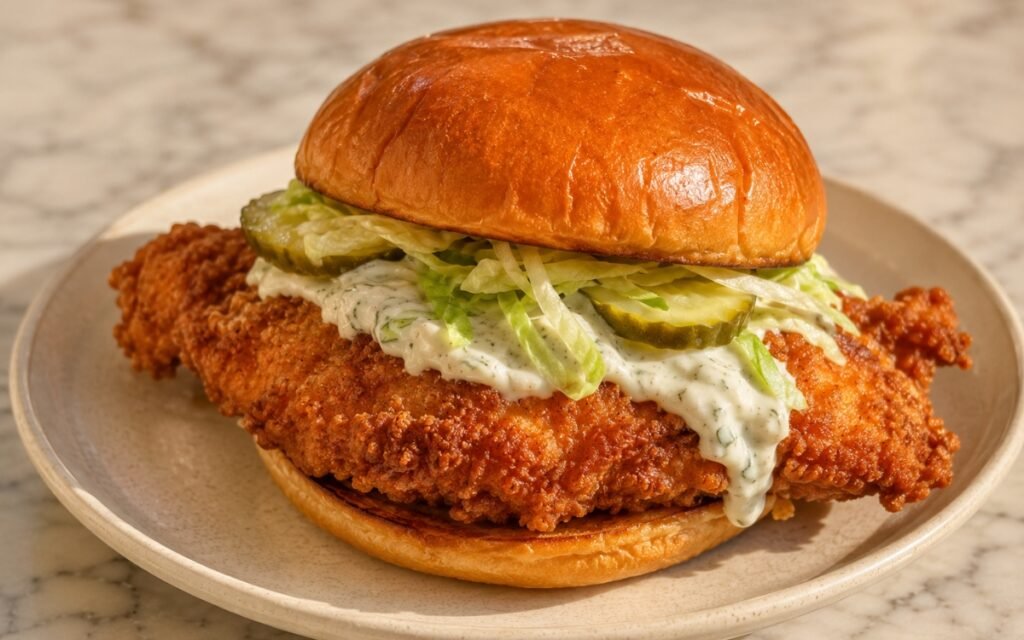
Crispy Fish Sandwich
Beer-battered cod fried until deeply golden and crisp, piled onto a soft toasted brioche bun with tangy tartar sauce, lettuce, and pickles.
Classic Fresh Lemonade
Simple syrup without reduction, fresh lemon juice with natural pulp — salt, cold water, syrup adjusted by taste, chilled. Crisp, bright, and precisely balanced.
Meyer Lemon Lemonade
Meyer lemon zest steeped 8–10 minutes for floral aromatics, syrup starting at 100ml for natural sweetness — fresh juice, salt, chilled. Soft, floral, and elegantly balanced.


You might also like
You might also like
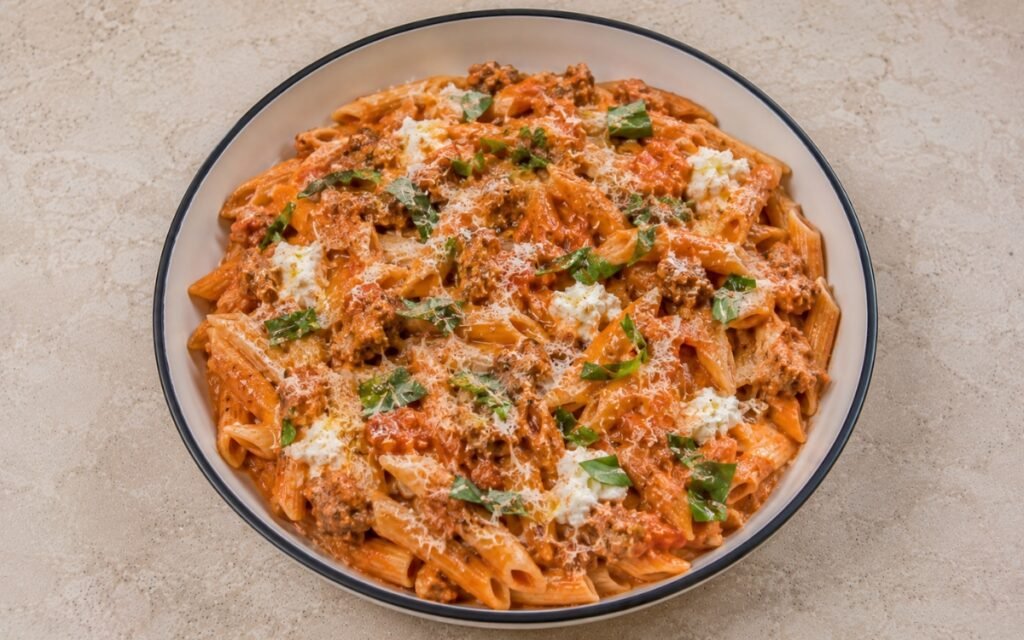
Tomato Pasta with Ricotta & Italian Sausage
Deeply browned sausage, caramelised tomato paste, and crushed tomatoes — whole milk ricotta folded in off the heat for creamy finish without cream. 40 minutes.
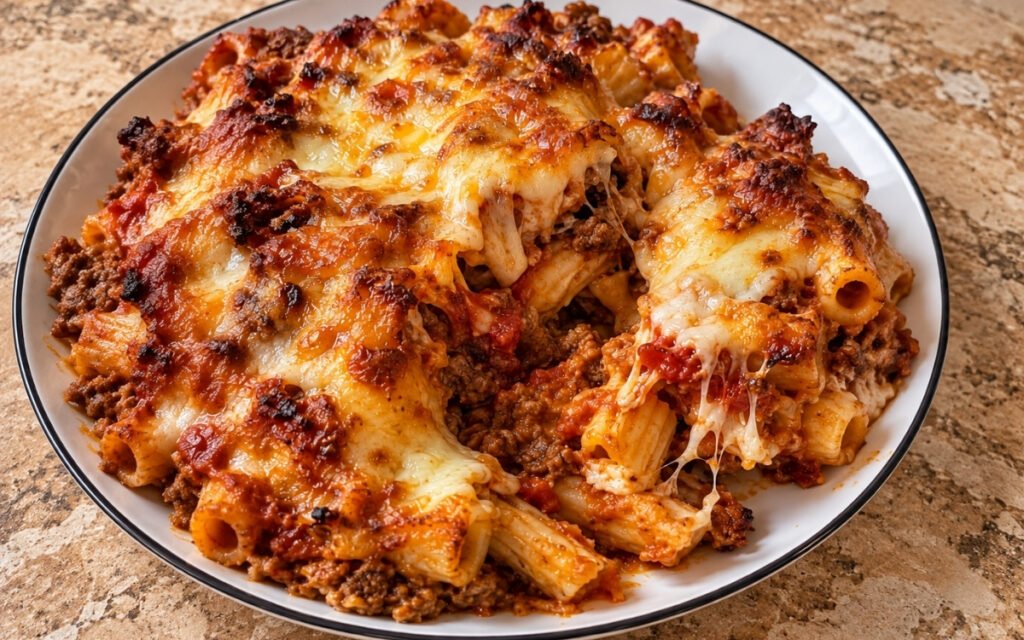
Pasta al Forno
Rigatoni or penne in a rich beef and pork tomato sauce with melted mozzarella and a browned cheesy top, baked until bubbling.
Crispiest Fried Chicken
Buttermilk-brined chicken with a thick, craggy double-dredged crust built using a cold-water rehydration dip, then double-fried until aggressively crunchy.

Deep Fried Calamari
Ingredients
Method
- Heat the olive oil in a small saucepan over medium heat. Add the garlic and cook for 20–30 seconds until fragrant but not browned. Add the chili flakes if using, then pour in the crushed tomatoes or passata. Stir in the oregano. Bring to a gentle simmer and cook for 12–15 minutes, stirring occasionally, until the sauce thickens slightly and the raw tomato taste cooks out. Season with salt and black pepper, then finish with basil or parsley. Transfer to a ramekin or small serving bowl. The marinara should be bright red, lightly thickened, and spoonable — not watery. If it still tastes raw or thin, simmer a little longer. Cooking the garlic only briefly, just until fragrant, protects it from turning bitter — garlic pushed past that point and toward browning would carry an unwanted sharpness directly into the finished sauce.
- If needed, slice the squid tubes into rings about 1–1.5cm thick. Leave small tentacles whole and halve any very large ones. Pat the calamari extremely dry with paper towels or a clean kitchen towel. Season lightly with salt and black pepper. In a wide bowl, combine the flour and cornstarch. The calamari must be dry before dredging. Surface moisture turns the coating patchy and heavy, and it also causes more spluttering in the oil. The squid pieces should feel dry and slightly tacky, not wet or slippery. Squid naturally holds a fair amount of surface moisture, and that moisture works directly against an even, light coating — thorough drying here is what allows the flour-cornstarch mixture to adhere evenly rather than clumping unevenly against damp patches.
- Fill a deep heavy pot or fryer with neutral oil and heat to 180°C. Set a wire rack over a tray for draining the fried calamari. A wire rack is better than paper towels here because it keeps the coating crisp all around instead of trapping steam underneath. Given how quickly calamari cooks and how briefly the coating spends developing crispness, protecting that crispness immediately after frying matters more here than it might for a longer-cooked item — a rack lets residual steam escape rather than softening the coating within moments of it coming out of the oil.
- Working in batches, toss some of the calamari in the flour-cornstarch mixture until evenly coated. Shake off all excess coating before frying. Fry in small batches at 180°C for about 60–90 seconds for smaller pieces and 1½ to 2 minutes for larger rings, just until pale golden and crisp. Do not overcrowd the pot. Transfer each batch to the wire rack and season lightly with a little extra salt while still hot. Repeat with the remaining calamari, always dredging only the batch you are about to fry. The coating should be pale golden, crisp, and dry-looking, with some lightly craggy edges. The calamari should feel springy and tender. If fried too long, it becomes firm and rubbery. Dredging immediately before frying matters. If coated too far in advance, the flour absorbs moisture from the squid and becomes gummy instead of crisp. This just-in-time dredging is a genuine technique decision rather than a convenience — squid continues releasing surface moisture even after being patted dry, and flour sitting against that moisture for any real length of time absorbs it and loses the dry, light quality needed for a crisp fry.
- Pile the hot fried calamari onto a serving platter. Scatter generously with chopped parsley and serve immediately with lemon wedges and the marinara alongside. Serve while hot and crisp. Squeezing lemon over the calamari only at the table, rather than well ahead of serving, keeps its acidity as a bright finishing touch rather than something that has time to soak in and soften the coating.