
Spanish Alioli
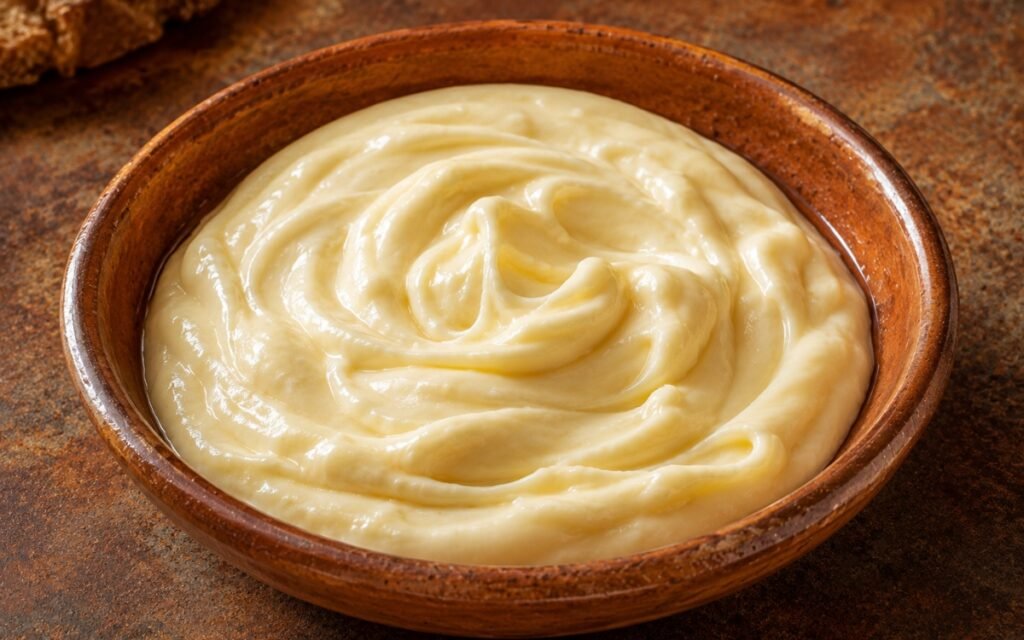
Three ingredients. Garlic, salt, and extra-virgin olive oil. No egg yolks, no mustard, no lemon juice, no shortcuts — the strict traditional Spanish alioli that pre-dates mayonnaise by centuries and is emulsified entirely by the garlic’s own natural compounds rather than by lecithin. The emulsion achieved through the mortar and pestle’s continuous circular grinding motion, which mechanically forces the olive oil into the garlic paste in smaller and smaller droplets at a rate the garlic’s saponins and proteins can encapsulate — drop by drop at first, then a thin stream once the emulsion has established itself. Patience is the technique: the alioli that forms after 15–20 minutes of unhurried mortar work is thick enough to hold soft peaks and more intensely garlicky, more specifically Catalan in character than any garlic mayonnaise made with egg yolk ever tastes. A split recovery method included for both the mortar and food processor versions. The condiment that makes grilled seafood, patatas bravas, and crusty bread specifically better.
Prep Time : 20 min
Cook Time : 0 min
Servings : 8
20 min
0 min
8
Ingredients
For the Spanish Alioli
• 6 garlic cloves, peeled
• ½ tsp fine sea salt
• 240ml extra-virgin olive oil — this one on Amazon
Optional — Only If Needed
• A few drops of fresh lemon juice — for stabilising a struggling emulsion
• 1–2 tsp cold water — for adjusting consistency or stabilising
This post may contain affiliate links. As an Amazon Associate I earn from qualifying purchases, at no additional cost to you.
Directions
- Prepare the Garlic
Peel the 6 garlic cloves and inspect each one for a green inner sprout — the small central shoot that develops in older cloves and contributes the most bitter, most aggressively pungent compounds to any garlic preparation. Halve each clove and remove any visible sprout with the tip of a knife. Use the firmest, freshest cloves available — older, softening garlic with large sprouts has significantly degraded emulsifying compounds and produces both a harsher flavour and a more difficult emulsion to build. - Grind to a Completely Smooth Paste (Mortar and Pestle)
Add the prepared garlic cloves to a mortar along with the ½ tsp of fine sea salt. The salt serves two simultaneous functions: it provides seasoning, and its abrasive crystal structure acts as a grinding medium against the mortar’s interior surface — accelerating the reduction of the garlic cloves from rough pieces to the completely smooth, wet paste that the alioli’s emulsification requires. Begin crushing the garlic with the pestle using downward pressing and smearing strokes — pressing the garlic against the mortar’s curved interior and smearing outward rather than simply pounding, which produces pieces rather than paste. Continue for 3–5 minutes until every visible garlic piece has been reduced to a completely smooth, homogeneous paste with no fibrous strands or visible chunks remaining. Any remaining garlic chunks at this stage will prevent the emulsion from forming completely — the garlic’s emulsifying saponins are released from its cells during grinding, and incompletely crushed pieces contain trapped saponins that are not available to the surrounding oil. - Begin the Oil Addition Drop by Drop
This is the stage that requires the most patience and the most deliberate pace — and also the stage where the entire preparation succeeds or fails. With the pestle in one hand and the olive oil in the other, begin adding the 240ml of olive oil literally a few drops at a time — every addition should be visually smaller than a teaspoon. Simultaneously, grind and stir the mixture in a continuous, steady circular motion with the pestle, working the tiny oil drops into the garlic paste with each addition. Alioli’s emulsification differs fundamentally from mayonnaise’s because it has no egg-yolk lecithin as a primary emulsifying agent. The emulsion is held entirely by the garlic’s natural saponins — plant-based surfactant compounds — and by the mechanical action of the mortar and pestle continuously breaking each oil addition into smaller droplets that the saponin-coated paste can encapsulate. This physical emulsification is significantly more fragile than lecithin-stabilised emulsions and completely intolerant of rapid oil addition at any stage, particularly at the beginning before the emulsion is established. A single large pour at the start produces an oil-flooded paste that the saponins cannot encapsulate faster than it arrives — the emulsion breaks immediately. For the first 3–5 tablespoons of oil: drop by drop. No faster. - Build the Emulsion and Increase Oil Flow Gradually
After approximately 3–5 tablespoons of oil have been incorporated and the mixture has visibly thickened, whitened slightly, and begun to look glossy and cohesive rather than oily and separated, the emulsion has established itself sufficiently to tolerate a slightly faster addition. Increase from individual drops to the thinnest possible steady stream — a thread of oil rather than a pour — while continuing the circular grinding motion continuously. Any pause in the grinding motion allows the oil droplets to begin coalescing before they are fully encapsulated; continuous motion is what maintains the dispersed droplet state throughout. Continue building gradually until all 240ml of olive oil has been incorporated. The entire process at the mortar and pestle takes 15–20 minutes from first oil drop to finished alioli — this is the correct time for this preparation. Rushing it produces a broken emulsion. The finished alioli should be thick enough to hold soft peaks when a spoon is lifted from it — maintaining its shape rather than flowing — and should be pale yellow-white in colour from the emulsified olive oil. Taste and adjust with additional salt if needed. Food Processor Method: Use a small food processor or mini chopper — a large standard processor bowl cannot properly process such a small quantity. Add the garlic and salt first. Process until the garlic forms a very smooth paste, scraping down the sides repeatedly — even more critical than in the mortar, because the machine’s blades cannot make consistent contact with small quantities against the bowl’s walls. With the machine running continuously, begin adding the olive oil drop by drop through the feed tube — identically to the mortar method. Do not pour. After the mixture begins thickening and whitening, increase to the thinnest possible thread of oil, pausing occasionally to scrape the bowl sides. If the alioli becomes too thick before all the oil is incorporated, add 1 tsp of cold water and continue. Avoid running the machine continuously for more than 30–40 seconds without a pause — heat generated by the motor can warm the emulsion and destabilise it. - Split Recovery
If the alioli separates at any point — visible as the mixture returning to an oily, thin, separated state rather than the cohesive white cream — stop adding oil immediately. Adding more oil to a broken emulsion makes the recovery significantly harder, not easier. Mortar and pestle recovery: In a clean mortar, crush 1 fresh garlic clove with a small pinch of salt to a completely smooth paste — this new paste provides a fresh saponin base for re-emulsification. Add the split alioli back into the new paste one teaspoon at a time, grinding constantly and allowing each addition to be fully incorporated before adding the next. The split alioli will progressively re-emulsify as each small addition is worked into the new base. Food processor recovery: Make a fresh garlic paste with 1 clove and a small pinch of salt in a clean mini processor. With the machine running, drizzle the split alioli back in drop by drop until re-emulsified. If the alioli still struggles to stabilise after either recovery method, add a few drops of fresh lemon juice or 1 tsp of cold water — both help stabilise the emulsion when the garlic saponins are insufficient. Note that once lemon juice is added the preparation is technically no longer the strict three-ingredient traditional version, but remains a good alioli.
*Notes :
- Traditional Spanish alioli — Catalan: all i oli, literally “garlic and oil” — is one of the oldest emulsified condiments in culinary history, predating both mayonnaise and aioli (the French-influenced egg-yolk version) by several centuries in the Catalan and Valencian regions of Spain. The three-ingredient version is specifically the Catalan tradition; the egg-yolk versions common in other parts of Spain and southern France are modern adaptations. The flavour difference between the traditional three-ingredient alioli and any garlic mayonnaise is dramatic — traditional alioli is significantly more pungent, more intensely garlicky, and more specifically aromatic because there is nothing between the palate and the raw garlic’s full character.
- The mortar and pestle versus food processor question is both practical and philosophical. The mortar and pestle produces the most authentic texture — the saponins released by the manual grinding method are more completely distributed through the paste than those released by machine processing, producing a more stable emulsion that is less prone to splitting. The food processor produces a good result more quickly with less physical effort. For the first attempt, the mortar method provides better control and better feedback about the emulsion’s development state.
- Extra-virgin olive oil — not light olive oil, not neutral oil — is the correct and only fat for traditional alioli. The olive oil’s flavour is the secondary flavour of the finished condiment after the garlic; a bland oil produces a bland alioli. The robust, slightly bitter, peppery finish of good extra-virgin olive oil is specifically complementary to the garlic’s pungency.
Why This Recipe Works
This recipe works because it executes the only technique that produces traditional alioli — a completely smooth garlic paste before any oil enters, an absolute drop-by-drop oil addition at the start before the emulsion is established, and continuous motion throughout.
The split recovery method means a broken emulsion is always salvageable rather than a wasted preparation. And the three-ingredient composition produces the specifically more pungent, more Catalan character that is the purpose of making traditional alioli rather than garlic mayonnaise.
Ingredient Breakdown
Six Garlic Cloves (Completely Smooth Paste)
The primary flavour and the emulsifying agent — the garlic’s saponins, released by grinding to a smooth paste, are the only emulsifying compounds present; any unground chunk withholds its saponins from the surrounding oil.
Fine Sea Salt (Abrasive Grinding Medium and Seasoning)
Dual function — its crystals accelerate the garlic reduction to paste in the mortar alongside seasoning the finished condiment.
Extra-Virgin Olive Oil (Drop by Drop at First)
The emulsion’s dispersed phase — the flavour base and the 240ml that must be incorporated at a rate the garlic saponins can encapsulate; never faster than the paste can absorb.
Drop-by-Drop Addition Rate
The technique requirement — alioli’s only emulsifying agent is significantly weaker than lecithin; the saponin film can only encapsulate oil droplets as fast as the grinding motion creates small enough droplets at a slow enough rate.
Flavor Structure Explained
This Spanish alioli follows a layered balance model:
- Pungent garlic core (raw garlic)
- Rich emulsified body (olive oil)
- Fruity peppery depth (extra-virgin olive oil)
- Salty flavor amplifier (sea salt)
- Dense creamy texture (traditional emulsion)
Raw garlic defines the entire identity of alioli with intense pungency, savory heat, and aromatic force that remain fully present because there is no egg-based dilution. Olive oil provides the body of the sauce, transforming the garlic into a smooth, rich emulsion while contributing substantial richness of its own. High-quality extra-virgin olive oil adds fruity and peppery notes that give the condiment its distinctly Spanish character. Sea salt sharpens and amplifies both the garlic and oil, making their flavors more vivid and expressive. The result is a sauce built on simplicity, where a small number of ingredients create remarkable intensity and depth.
Common Mistakes to Avoid
- Not Grinding the Garlic to Complete Smoothness – The most consequential preparation error. Any visible garlic chunk withholds its saponins from the paste — producing fewer emulsifying compounds and a weaker emulsion that is more likely to split at any stage.
- Adding Oil Too Quickly at Any Stage – The saponin film can only encapsulate oil droplets at the rate the grinding motion creates small enough droplets. Any addition faster than drop-by-drop in the early stages floods the paste before encapsulation can occur.
- Not Continuing the Circular Motion – The mechanical grinding is not simply for mixing but for continuously creating new small droplets from each oil addition. Any pause allows existing droplets to coalesce.
- Using Old or Sprouting Garlic – Fresh, firm garlic cloves have the highest saponin content. Old, sprouting cloves have degraded emulsifying capacity and produce a harsher, more difficult-to-emulsify paste.
- Using a Large Food Processor Bowl – The blades cannot process such a small garlic quantity in a large bowl — the garlic simply slides around without contact. Always a small food processor or mini chopper.
Variations
Modern Aioli (With Egg Yolk)
Add 1 egg yolk to the garlic paste before beginning the oil addition — the lecithin provides a significantly more stable emulsifying base and allows faster oil addition. The result is a more stable, less intensely garlicky condiment that is technically aioli rather than traditional alioli.
With Lemon
Add 1 tsp of fresh lemon juice alongside the final salt adjustment — its acidity brightens the olive oil’s flavour and softens the garlic’s sharpness slightly. This is a common variation in parts of Spain and produces a lighter-tasting result.
Roasted Garlic Spanish Alioli
Replace the raw garlic with 8 cloves of slow-roasted garlic — roasted at 180°C for 30–35 minutes until caramelised. The roasted garlic’s sweet, mellow depth produces a significantly less pungent, more rounded alioli. Note: roasted garlic’s emulsifying compounds are reduced by heat; the emulsion is less stable and may require a small amount of cold water.
Storage & Make-Ahead
When refrigerated in a sealed container, it will keep for up to 2 days. The flavor intensifies during storage as the garlic compounds continue to develop. Before serving, stir it well, since the emulsion may separate slightly in the refrigerator. If needed, briefly work it with a spoon to bring it back together.
Alioli is best served at room temperature. When cold, it becomes noticeably stiffer and the flavors of the garlic and olive oil are much less pronounced.
Frequently Asked Questions
Why no egg yolk in traditional alioli?
The traditional Catalan preparation predates the egg-yolk-stabilised aioli and uses only garlic, salt, and olive oil. The garlic’s natural saponins — plant-based surfactant compounds released during grinding — are the only emulsifying agents. The result is a significantly more pungent, more intensely garlicky condiment than the egg-yolk version. Adding egg yolk produces a stable, less pungent result that is technically a different preparation.
Why does the oil have to go in drop by drop?
The garlic’s saponins can only encapsulate oil droplets as fast as the grinding motion creates droplets small enough to be surrounded by the surfactant film. Adding oil faster than the saponins can encapsulate it produces oil that coalesces rather than being dispersed — the emulsion breaks. Once the emulsion is established (after approximately 3–5 tablespoons), the film has grown large enough to tolerate a thin stream.
What is the difference between alioli and aioli?
Alioli (Catalan/Spanish) is the traditional three-ingredient preparation — garlic, salt, and olive oil. Aioli (French-influenced) typically contains egg yolk as a primary emulsifier alongside garlic, olive oil, and usually lemon juice or mustard. The flavour is significantly different — alioli is more intensely garlicky and more pungent; aioli is milder, creamier, and more stable.
Why does the mortar and pestle produce better results than a food processor?
The mortar’s manual grinding releases the garlic’s saponins more completely than the machine’s blades, producing more emulsifying compounds available to stabilise the oil. The manual grinding also provides better tactile feedback about the emulsion’s development state — you can feel the consistency changing through the pestle in a way that the machine does not communicate.
What do I do if my alioli splits?
Stop adding oil immediately. In a clean mortar, crush 1 fresh garlic clove with a small pinch of salt to a completely smooth paste — this new paste provides a fresh saponin base. Add the split alioli back into the new paste one teaspoon at a time, grinding constantly. If it still struggles, a few drops of lemon juice or 1 tsp cold water helps stabilise — though lemon juice means the preparation is no longer strictly the three-ingredient traditional version.
Nutrition Facts
( per serving )
Calories
~185 kcal
Protein
0 g
Fat
21 g
Carbs
1 g
Calories
~185 kcal
Protein
0 g
Fat
21 g
Carbs
1 g
Related Recipes
Related Recipes

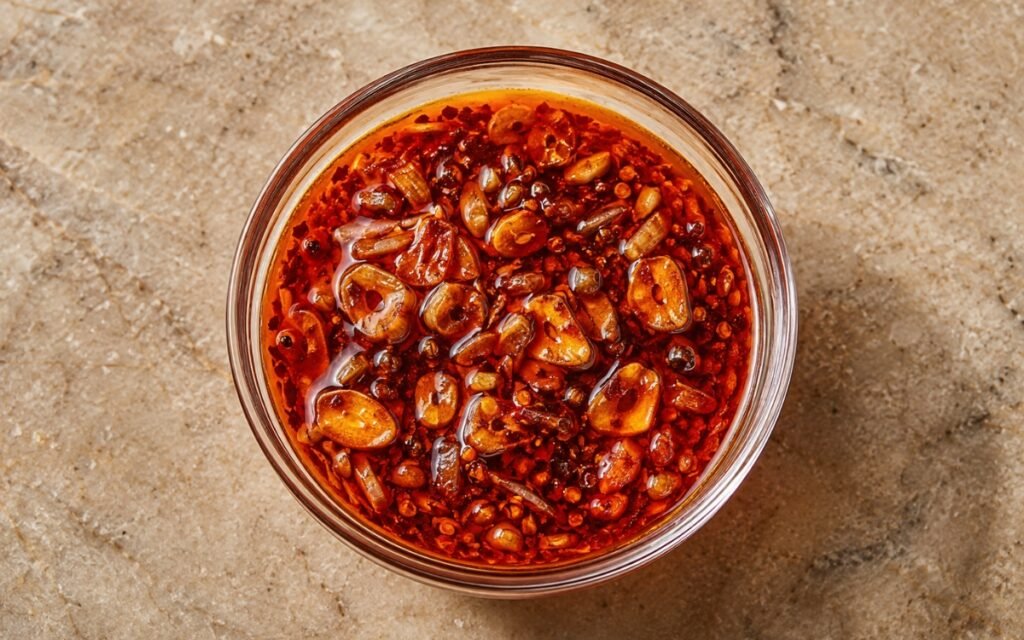
Chili Garlic Oil
Crispy garlic and toasted chilies in fragrant oil — a 15-minute condiment that transforms every dish.
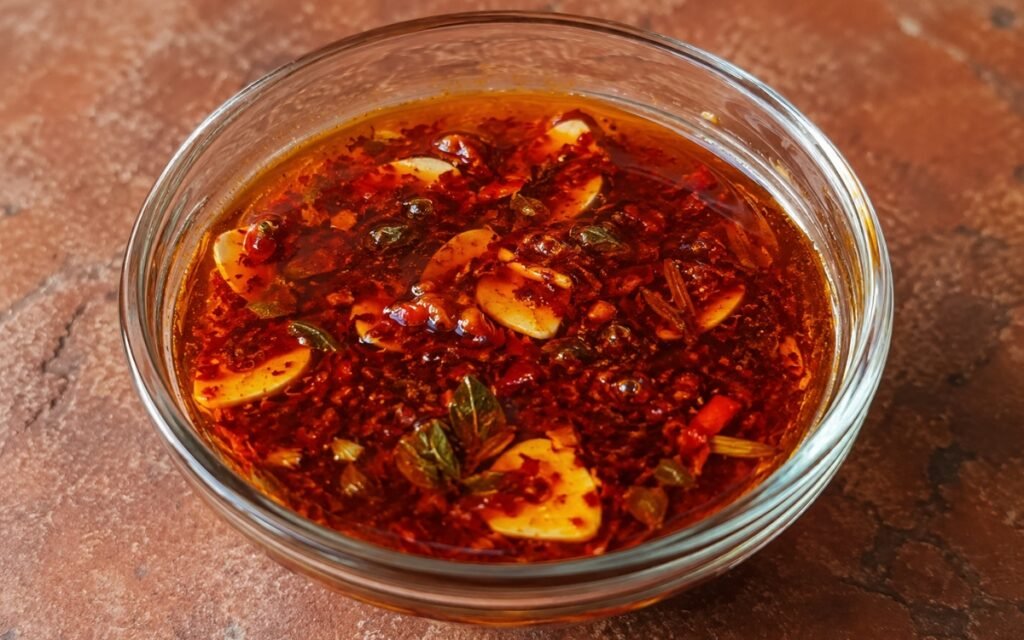
Calabrian Chili Oil Drizzle
Fruity-spicy chili oil with garlic and oregano. Instant flavor boost for pizza, pasta, and vegetables.
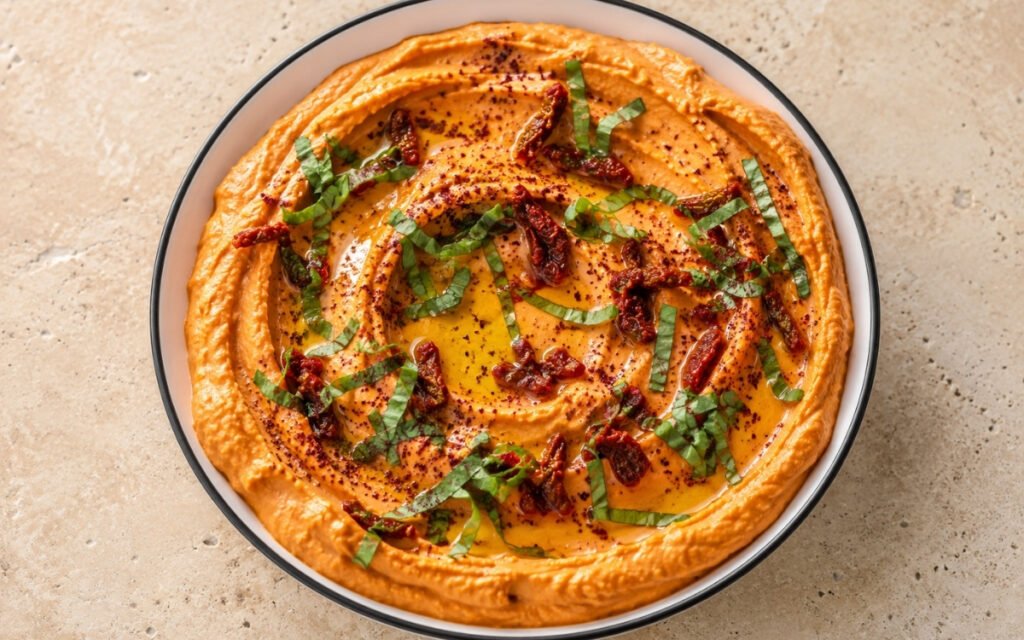
Sun-Dried Tomato & Basil Hummus
Oil-packed sun-dried tomatoes and fresh basil blended into the classic chickpea-tahini base — deep red-orange, sweet-acidic, and unmistakably Mediterranean Italian.
You might also like
You might also like
Rose Lemonade
Edible rose petals steeped in warm syrup exactly 6–8 minutes, strained with light pressing — fresh lemon juice, salt, cold water, chilled. Lemon first, rose warmly behind.
Basil Strawberry White Iced Tea
White tea at 75–80°C for 3–4 minutes, strawberry syrup with a pinch of salt, basil clapped and briefly infused — chilled. Delicate, clean, and softly fruity.
Peach Rosemary Sparkling Mocktail
Sweet golden peach, rosemary depth, and lemon zest over sparkling water — warm and refreshing.


Spanish Aioli — Alioli
Ingredients
Method
- Peel the 6 garlic cloves and inspect each one for a green inner sprout — the small central shoot that develops in older cloves and contributes the most bitter, most aggressively pungent compounds to any garlic preparation. Halve each clove and remove any visible sprout with the tip of a knife. Use the firmest, freshest cloves available — older, softening garlic with large sprouts has significantly degraded emulsifying compounds and produces both a harsher flavour and a more difficult emulsion to build.
- Add the prepared garlic cloves to a mortar along with the ½ tsp of fine sea salt. The salt serves two simultaneous functions: it provides seasoning, and its abrasive crystal structure acts as a grinding medium against the mortar’s interior surface — accelerating the reduction of the garlic cloves from rough pieces to the completely smooth, wet paste that the alioli’s emulsification requires. Begin crushing the garlic with the pestle using downward pressing and smearing strokes — pressing the garlic against the mortar’s curved interior and smearing outward rather than simply pounding, which produces pieces rather than paste. Continue for 3–5 minutes until every visible garlic piece has been reduced to a completely smooth, homogeneous paste with no fibrous strands or visible chunks remaining. Any remaining garlic chunks at this stage will prevent the emulsion from forming completely — the garlic’s emulsifying saponins are released from its cells during grinding, and incompletely crushed pieces contain trapped saponins that are not available to the surrounding oil.
- This is the stage that requires the most patience and the most deliberate pace — and also the stage where the entire preparation succeeds or fails. With the pestle in one hand and the olive oil in the other, begin adding the 240ml of olive oil literally a few drops at a time — every addition should be visually smaller than a teaspoon. Simultaneously, grind and stir the mixture in a continuous, steady circular motion with the pestle, working the tiny oil drops into the garlic paste with each addition. Alioli’s emulsification differs fundamentally from mayonnaise’s because it has no egg-yolk lecithin as a primary emulsifying agent. The emulsion is held entirely by the garlic’s natural saponins — plant-based surfactant compounds — and by the mechanical action of the mortar and pestle continuously breaking each oil addition into smaller droplets that the saponin-coated paste can encapsulate. This physical emulsification is significantly more fragile than lecithin-stabilised emulsions and completely intolerant of rapid oil addition at any stage, particularly at the beginning before the emulsion is established. A single large pour at the start produces an oil-flooded paste that the saponins cannot encapsulate faster than it arrives — the emulsion breaks immediately. For the first 3–5 tablespoons of oil: drop by drop. No faster.
- After approximately 3–5 tablespoons of oil have been incorporated and the mixture has visibly thickened, whitened slightly, and begun to look glossy and cohesive rather than oily and separated, the emulsion has established itself sufficiently to tolerate a slightly faster addition. Increase from individual drops to the thinnest possible steady stream — a thread of oil rather than a pour — while continuing the circular grinding motion continuously. Any pause in the grinding motion allows the oil droplets to begin coalescing before they are fully encapsulated; continuous motion is what maintains the dispersed droplet state throughout.
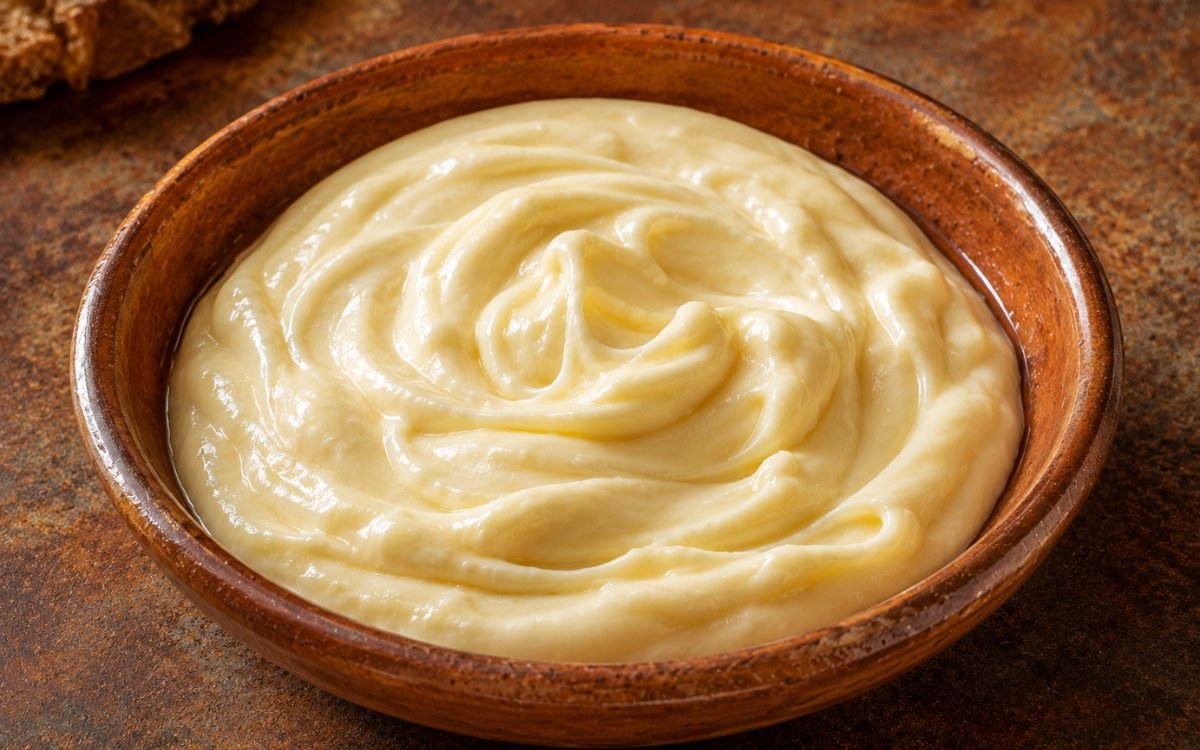
- Continue building gradually until all 240ml of olive oil has been incorporated. The entire process at the mortar and pestle takes 15–20 minutes from first oil drop to finished alioli — this is the correct time for this preparation. Rushing it produces a broken emulsion. The finished alioli should be thick enough to hold soft peaks when a spoon is lifted from it — maintaining its shape rather than flowing — and should be pale yellow-white in colour from the emulsified olive oil. Taste and adjust with additional salt if needed. Food Processor Method: Use a small food processor or mini chopper — a large standard processor bowl cannot properly process such a small quantity. Add the garlic and salt first. Process until the garlic forms a very smooth paste, scraping down the sides repeatedly — even more critical than in the mortar, because the machine’s blades cannot make consistent contact with small quantities against the bowl’s walls. With the machine running continuously, begin adding the olive oil drop by drop through the feed tube — identically to the mortar method. Do not pour. After the mixture begins thickening and whitening, increase to the thinnest possible thread of oil, pausing occasionally to scrape the bowl sides. If the alioli becomes too thick before all the oil is incorporated, add 1 tsp of cold water and continue. Avoid running the machine continuously for more than 30–40 seconds without a pause — heat generated by the motor can warm the emulsion and destabilise it.
- If the alioli separates at any point — visible as the mixture returning to an oily, thin, separated state rather than the cohesive white cream — stop adding oil immediately. Adding more oil to a broken emulsion makes the recovery significantly harder, not easier. Mortar and pestle recovery: In a clean mortar, crush 1 fresh garlic clove with a small pinch of salt to a completely smooth paste — this new paste provides a fresh saponin base for re-emulsification. Add the split alioli back into the new paste one teaspoon at a time, grinding constantly and allowing each addition to be fully incorporated before adding the next. The split alioli will progressively re-emulsify as each small addition is worked into the new base. Food processor recovery: Make a fresh garlic paste with 1 clove and a small pinch of salt in a clean mini processor. With the machine running, drizzle the split alioli back in drop by drop until re-emulsified. If the alioli still struggles to stabilise after either recovery method, add a few drops of fresh lemon juice or 1 tsp of cold water — both help stabilise the emulsion when the garlic saponins are insufficient. Note that once lemon juice is added the preparation is technically no longer the strict three-ingredient traditional version, but remains a good alioli.