
Classic Spaghetti all’Amatriciana
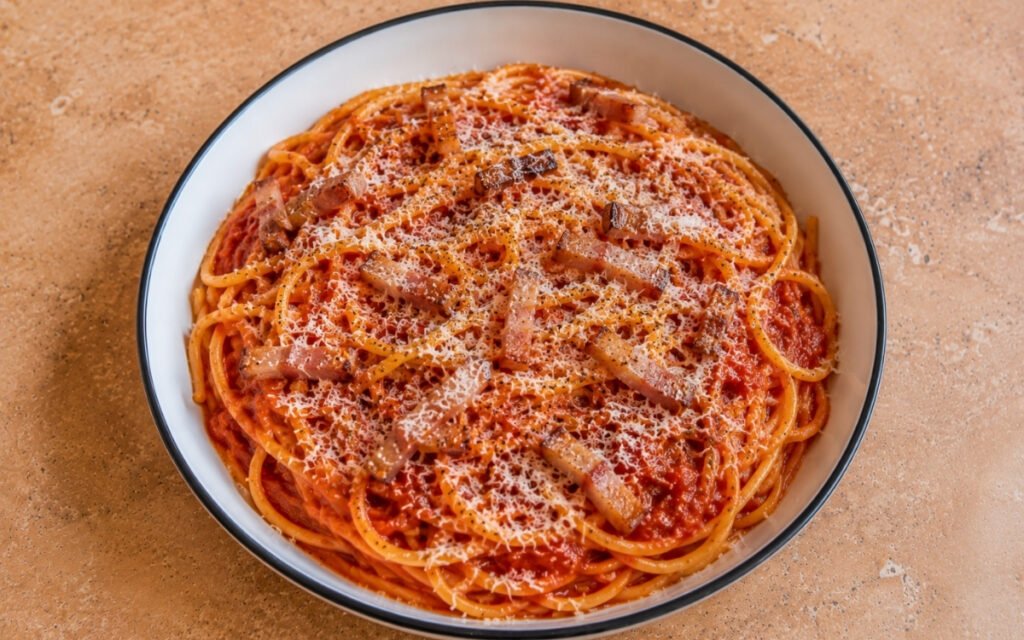
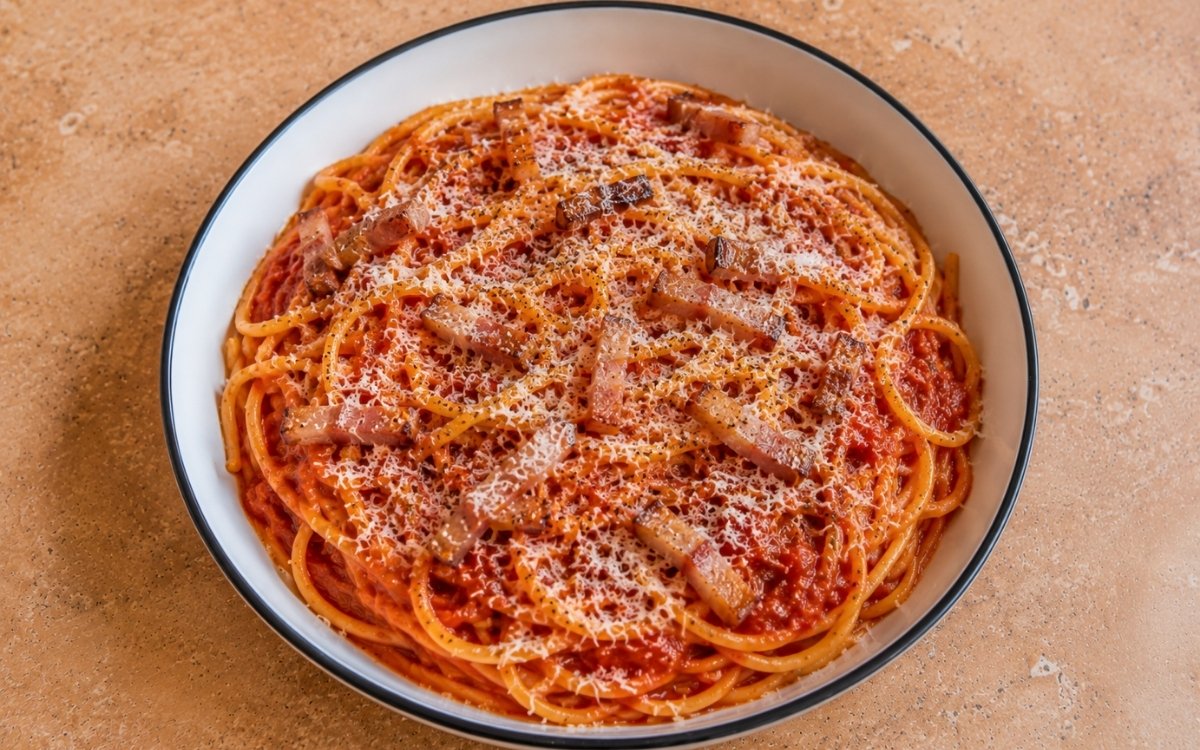
One of the four canonical Roman pasta dishes — and the one with the most complex flavour story for its ingredient count. Guanciale rendered from cold until sweet, crispy-edged, and swimming in its own fat; white wine reducing in the same pan to lift the fond and add a secondary acid note; San Marzano tomatoes simmered until the sauce tightens and the fat begins to separate at the edges; Pecorino Romano added off the heat to create the creamy, coating emulsion that makes the sauce cling to every strand. The combination of cured pork, tomato, chili heat, and sharp aged cheese is specifically Roman and specifically irreplaceable. Forty minutes, one pan, and a plate that tastes like a trattoria in Lazio.
Prep Time : 15 min
Cook Time : 25 min
Servings : 4
15 min
25 min
4
Ingredients
For the Pasta
• 400g spaghetti (preferably thick spaghetti or bucatini) — this one on Amazon
• 15g fine sea salt (for pasta water)
For the Sauce
• 200g guanciale (cured pork jowl), cut into 1cm strips — this one on Amazon
• 15g extra virgin olive oil
• 1 small dried red chili pepper (peperoncino), crushed, or 1/4 tsp red pepper flakes
• 150ml dry white wine
• 600g canned San Marzano tomatoes, hand-crushed — this one on Amazon
• Fine sea salt
• Freshly ground black pepper
For Finishing
• 120g Pecorino Romano, finely grated, plus extra for serving — this one on Amazon
This post may contain affiliate links. As an Amazon Associate I earn from qualifying purchases, at no additional cost to you.
Directions
- Render the Guanciale from Cold
Place the guanciale strips and olive oil in a large, cold skillet — stainless steel or carbon steel for maximum fond development. Start with the pan cold and bring the heat up together to medium-low, exactly as you would for carbonara. The cold-start method allows the guanciale’s fat to render gradually from inside each strip, producing pieces that are completely rendered, golden and crispy at the edges, but still slightly tender and yielding at the centre — rather than the uniformly hard, dry result of a hot-pan start that browns the exterior before the interior fat can melt. Cook slowly for 8–10 minutes, stirring occasionally, until the strips are deeply golden at their edges, the fat has rendered fully into the pan — approximately 3–4 tablespoons of clear, sweet pork fat — and the pieces are crispy at the tips but still have some texture. The guanciale’s rendered fat is not just a cooking medium — it is an active flavour component of the sauce. Every drop stays in the pan and becomes part of the finished amatriciana. Add the crushed dried chili pepper or red pepper flakes to the rendered fat and toast for 30 seconds, stirring continuously, until intensely fragrant. At low heat the chili’s aromatic compounds and fat-soluble capsaicin bloom into the surrounding guanciale fat rather than burning — this blooming step infuses the fat that will subsequently coat every component of the sauce with a pervasive, even heat rather than delivering concentrated chili flavour only when a flake is encountered directly. - Deglaze with White Wine
Increase the heat to medium-high and pour in the 150ml of dry white wine. The wine will sizzle and steam immediately on contact with the hot rendered fat and fond. Let it bubble vigorously for 2–3 minutes without stirring initially — the violent reduction is partly what lifts the fond from the pan surface. After 30 seconds of vigorous bubbling, scrape the bottom of the pan firmly with a wooden spoon or spatula to dissolve all browned bits into the wine. Continue cooking over medium-high heat until the wine is reduced by approximately half — the sharp, raw alcohol edge should be completely cooked off and the liquid should smell of concentrated wine rather than raw alcohol. The white wine serves three distinct functions in amatriciana: it deglazes the pan and incorporates the fond; it adds a secondary, more delicate acidity that bridges the guanciale’s sweetness and the tomato’s more direct acidic flavour; and it adds a slight fruity depth that you cannot add by any other means. Traditional Roman amatriciana does not always include wine — some recipes use only tomato — but the wine version produces a more layered, more complex sauce with noticeably better depth. - Add the Tomatoes and Simmer
Add the hand-crushed San Marzano tomatoes with all their juices to the skillet. Hand-crushing — squeezing each whole tomato over the pan until it breaks open — rather than using pre-crushed tomatoes gives you textural control: some sections remain as identifiable tomato pieces that provide distinct tomato bites in the finished dish, while the rest becomes sauce. The varied texture is more interesting and more visually appealing than uniformly crushed tomatoes. Reduce the heat to medium-low and simmer uncovered for 12–15 minutes, stirring occasionally, until the sauce has thickened noticeably and the fat from the guanciale has begun to separate slightly at the edges of the sauce — visible as small orange-red pools of enriched oil at the perimeter. This fat separation is not a flaw but the sign that the sauce has reached the correct concentration and that the guanciale’s fat has fully integrated and then re-emerged as a visible finishing element. The sauce should coat the back of a spoon clearly at this point. Season with salt very conservatively — taste first, because the guanciale’s salt and the Pecorino that will be added at the end are both very salty. The sauce may need no additional salt at all, or only the smallest pinch. Add black pepper to taste. - Cook the Pasta
While the sauce simmers, bring a large pot of water to a full rolling boil and add the 15g of fine sea salt. Add the spaghetti or bucatini and cook for 2 minutes less than the package directions indicate — the pasta will finish cooking in the sauce. Bucatini — the thick, hollow spaghetti shape — is the most traditional format for amatriciana, originating from the town of Amatrice from which the sauce takes its name. Its hollow core traps sauce and guanciale pieces inside, delivering a concentrated burst of flavour from the interior of each piece alongside the sauce-coated exterior. Thick spaghetti is equally traditional and more widely available. Standard spaghetti produces an excellent result. Before transferring the pasta, reserve at least 200ml of the starchy pasta cooking water in a heatproof jug and keep it warm. - Finish the Pasta in the Sauce
Using tongs, transfer the underdrained pasta directly from the pot to the skillet with the amatriciana sauce — bringing approximately 60ml of pasta water with it in the transfer. Return the heat to medium. Toss the pasta vigorously in the sauce for 1–2 minutes, turning continuously to coat every strand. The pasta finishes cooking in the sauce during this time — absorbing the tomato, guanciale fat, and wine into the pasta itself rather than being simply coated externally. Add reserved pasta water in 30ml increments if the sauce tightens — the starchy water loosens it immediately while the starch also contributes to the emulsification. After 1–2 minutes the pasta should be at perfect al dente, coated in a glossy, slightly thickened tomato-guanciale sauce with the pasta water’s starch having partially emulsified the fat into the sauce. - Add the Pecorino Romano
Remove the skillet from the heat completely. Allow to rest for 30 seconds — this brief cooling is important because Pecorino Romano, like all high-protein hard cheeses, seizes and clumps when added to liquid that is at a full boil. The 30-second rest brings the sauce to the temperature range where the cheese proteins remain pliable and melt smoothly rather than seizing. Add 80g of the finely grated Pecorino Romano to the pasta and toss energetically — lift from the bottom and fold over the top in continuous motion. The residual heat of the pasta, sauce, and pan is precisely sufficient to melt the Pecorino smoothly into a creamy, coating emulsion that combines with the fat and starch in the sauce into a unified, glossy finish. Add small amounts of the reserved pasta water if needed to maintain a flowing consistency — the sauce should coat each strand without pooling at the bottom of the pan. Divide immediately among four warm bowls. Top each portion with a portion of the remaining 40g of Pecorino Romano and a generous crack of fresh black pepper. Serve without delay.
*Notes :
- Amatriciana originates from Amatrice, a town in the Lazio region northeast of Rome that was partially destroyed in a 2016 earthquake — an event that brought renewed international attention and solidarity toward the town’s cultural heritage, including its most famous culinary contribution. The original preparation, called gricia, contained only guanciale, Pecorino, black pepper, and pasta — no tomatoes, which were not incorporated until the 18th century. The tomato version — amatriciana — became the dominant preparation and eventually one of the four canonical Roman pasta dishes alongside carbonara, cacio e pepe, and cacio e pepe’s cousin gricia.
- The difference between guanciale and pancetta in this dish is more significant than in carbonara because amatriciana’s guanciale fat becomes a visible, textural, and flavour component of the sauce rather than being emulsified invisibly into an egg-cheese coating. The sweet, delicate character of guanciale’s fat specifically complements the tomato’s acidity — pancetta’s fat is more neutral and bacon’s fat is smoked, which competes with rather than complements the tomato. Guanciale is increasingly available and worth sourcing for the authentic result.
- San Marzano DOP tomatoes are specified because their balance of low acidity, high flesh content, and concentrated sweetness produces a sauce that reaches the correct consistency and flavour balance in 12–15 minutes. Standard crushed tomatoes require longer cooking and more sugar adjustment to reach the same balance.
Why This Recipe Works
This recipe works because it stages the development of the sauce’s three flavour layers — the guanciale’s sweet rendered fat, the white wine’s secondary acidity and fond integration, and the tomato’s body and primary acidity — in the correct sequence, each building on the previous without any being lost.
The cold-start guanciale renders the fat most completely. The white wine deglaze captures and integrates the fond rather than discarding it. The Pecorino added off the heat at the end creates the creamy emulsion without seizing. The pasta finished in the sauce rather than alongside it makes the dish cohesive rather than assembled.
Ingredient Breakdown
Guanciale (Cold-Start Rendered)
The flavour foundation and fat source — sweet, delicate, and rendered most completely from a cold pan. Its fat is an active flavour ingredient in the sauce throughout the cooking process.
Dry White Wine
The fond integrator and secondary acid — reduces in the rendered fat to lift all caramelised bits and add a second, more delicate acid dimension alongside the tomato’s primary acidity.
San Marzano Tomatoes (Hand-Crushed)
The sauce body and primary character — low acidity, concentrated sweetness, and varied texture from hand-crushing rather than uniform pre-crushing.
Dried Chili (Peperoncino)
Background warmth bloomed in guanciale fat — fat-soluble capsaicin distributed evenly throughout the sauce rather than concentrated in individual pieces.
Pecorino Romano (Added Off-Heat)
The finishing emulsifier — sharp, salty, and creamy when melted into the warm sauce at the correct temperature. Added in two stages: into the sauce and over the finished bowl.
Reserved Pasta Water
The consistency adjuster and starch emulsifier — keeps the sauce at the correct flowing consistency and helps the fat and tomato bind into the coating that defines well-made amatriciana.
Flavor Structure Explained
This Amatriciana follows a layered balance model:
- Savory fatty core (guanciale)
- Sweet-acidic body (tomato, wine)
- Sharp dairy finish (Pecorino)
- Warm heat (chili)
- Emulsified richness (fat + sauce integration)
Guanciale defines the foundation with sweet, rendered fat and deep pork savoriness distributed throughout the sauce. Tomato builds the body with balanced sweetness and acidity, enhanced by wine reduction for added depth. Pecorino finishes the profile with sharp, salty richness that binds into a creamy coating. Chili adds a subtle warmth that lifts the tomato and fat without dominating. The integration of fat and sauce creates a cohesive emulsion, ensuring all layers are present simultaneously rather than separately.
Common Mistakes to Avoid
- Starting the Guanciale in a Hot Pan – High initial heat browns the exterior before the interior fat renders, producing chewy, incompletely rendered pieces in insufficient fat. Always start cold.
- Adding Pecorino to a Boiling Pan – The proteins seize immediately at boiling temperature, producing grainy clumps rather than a smooth emulsion. Always remove from heat completely and rest 30 seconds before adding cheese.
- Using Bacon Instead of Guanciale – Bacon’s smokiness overwhelms the tomato’s sweetness and competes with the Pecorino. Pancetta is an acceptable substitute; bacon is not.
- Not Hand-Crushing the Tomatoes – Pre-crushed tomatoes produce a uniformly fine sauce without textural interest. Hand-crushing produces a more varied, more interesting result.
- Over-salting – Guanciale and Pecorino are both very salty ingredients. The sauce and pasta water together often provide sufficient salt — always taste before adding any.
- Finishing the Pasta Separately – Pasta finished in separate bowls without the sauce-tossing step produces an assembled rather than cohesive dish. Always finish in the sauce with pasta water.
Variations
Bucatini all’Amatriciana
Replace the spaghetti with 400g of bucatini — the traditional hollow thick pasta format from Amatrice itself. The hollow core traps sauce and guanciale inside, producing a more concentrated flavour experience per piece than solid spaghetti.
No-Wine Version
Omit the white wine and instead add an additional 30ml of pasta water during the fond-deglazing step. The sauce will be slightly less complex but still excellent — the traditional version without wine.
Extra Spicy Version
Increase the peperoncino to 2 whole dried chilies or ½ tsp red pepper flakes for a more assertively spiced sauce where the chili is a prominent note rather than background warmth.
Rigatoni Version
Replace the spaghetti with rigatoni for a pasta format that holds the chunky guanciale pieces and tomato sauce inside the tubes — a less traditional but extremely satisfying alternative.
Storage & Make-Ahead
Amatriciana sauce is one of the best make-ahead pasta sauces in this collection. It can be refrigerated for up to 4 days, and the flavor deepens noticeably over the first 24 to 48 hours as the guanciale fat fully integrates into the tomato. To use it, reheat the sauce gently over low heat with a splash of water, then finish freshly cooked pasta in it.
Cooked pasta that has already been mixed with the sauce can be refrigerated for up to 2 days, but the pasta will continue to absorb the sauce during storage. To reheat it, warm it in a pan over low heat with a splash of water, then add a small amount of freshly grated Pecorino at the end to bring back the creamy coating.
The sauce without pasta also freezes well for up to 3 months. Thaw it overnight in the refrigerator, then reheat it gently before tossing it with freshly cooked pasta and finishing with Pecorino.
Frequently Asked Questions
What is guanciale and how is it different from pancetta or bacon?
Guanciale is cured pork jowl (cheek) — salt-cured and hung to age, producing a fat that is sweet, delicate, and flavour-rich in a way that pancetta (cured pork belly) and bacon (smoked pork belly) are not. Guanciale’s fat has a specific sweetness and mouthfeel that is integral to authentic amatriciana, carbonara, and gricia. Available at Italian specialty stores and increasingly at quality delicatessens.
What is the difference between amatriciana and arrabbiata?
Both are tomato-based pasta sauces with chili. Arrabbiata contains only olive oil, garlic, crushed tomatoes, and chili — aggressive, sharp, and spicy. Amatriciana adds guanciale as its primary flavour element and Pecorino Romano as its finishing cheese, producing a richer, more complex, sweeter sauce with the pork fat as its character-defining ingredient.
Why bucatini specifically?
Bucatini’s hollow centre traps the sauce and guanciale pieces inside each tube, producing a bite that delivers the sauce from the exterior and the interior simultaneously — a more intense flavour experience than solid pasta provides. The town of Amatrice traditionally used spaghetti, but the Roman adaptation standardised on bucatini. Both are authentic.
Can I use Parmigiano-Reggiano instead of Pecorino Romano?
Parmigiano produces a milder, less sharp, more neutral cheese finish that changes the dish’s character significantly — amatriciana is specifically Roman in identity partly because of the Pecorino’s assertive, slightly grassy sharpness. A 50/50 blend of both is used in some preparations for a more moderate result, but full Pecorino substitution with Parmigiano produces a noticeably less authentic dish.
Why does the recipe specify hand-crushing the tomatoes?
Hand-crushing rather than using pre-crushed tomatoes gives texture control — some pieces remain as identifiable tomato chunks that provide distinct tomato bites and visual interest in the finished sauce, while the rest becomes the sauce body. Pre-crushed tomatoes produce a uniformly fine sauce without this variation.
Nutrition Facts
( per serving )
Calories
~745 kcal
Protein
28 g
Fat
32 g
Carbs
82 g
Calories
~745 kcal
Protein
28 g
Fat
32 g
Carbs
82 g
Related Recipes
Related Recipes

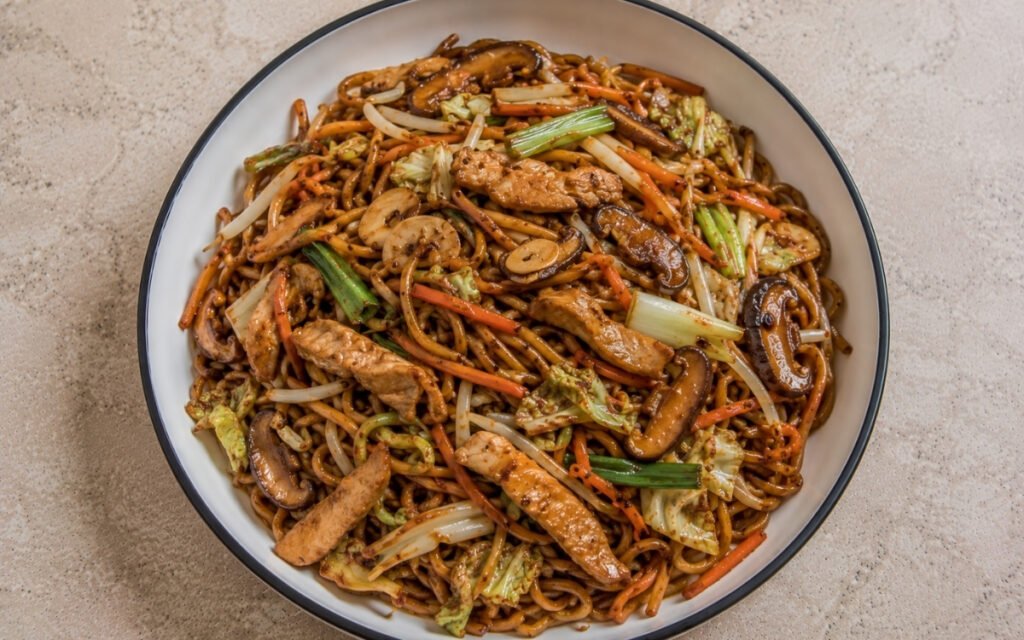
Easy Chicken Chow Mein Noodles
Hong Kong egg noodles crisped in a smoking-hot wok with seared chicken and vegetables — four-component soy sauce, cornstarch glaze, 35 minutes.
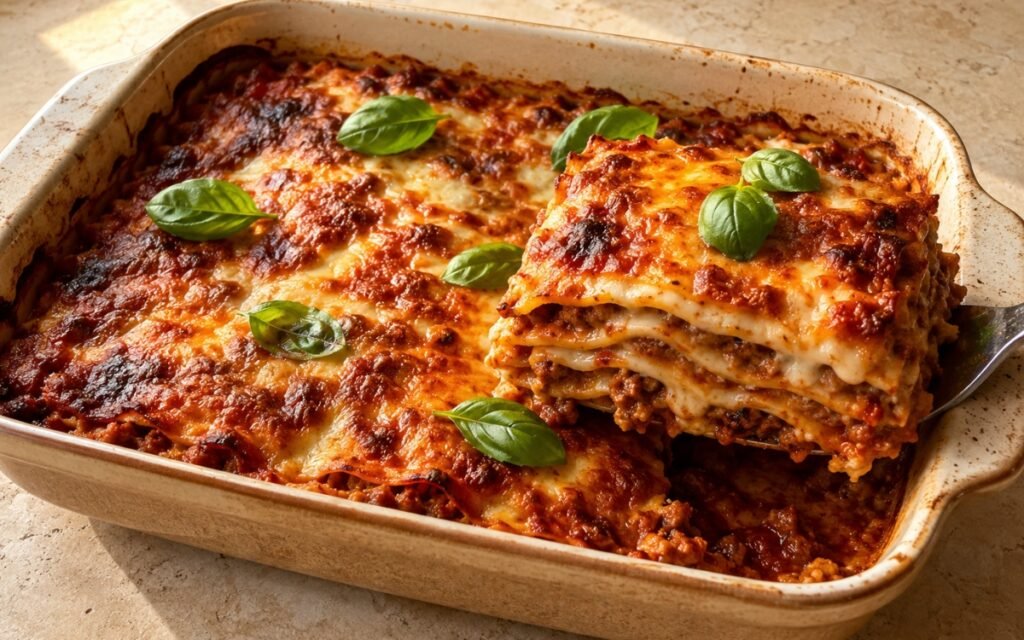
Lasagne alla Bolognese
Beef and veal Bolognese slow-braised 3 hours on pancetta fat and soffritto — layered with ricotta, mozzarella, and Parmesan, baked golden. The weekend lasagne worth every hour.
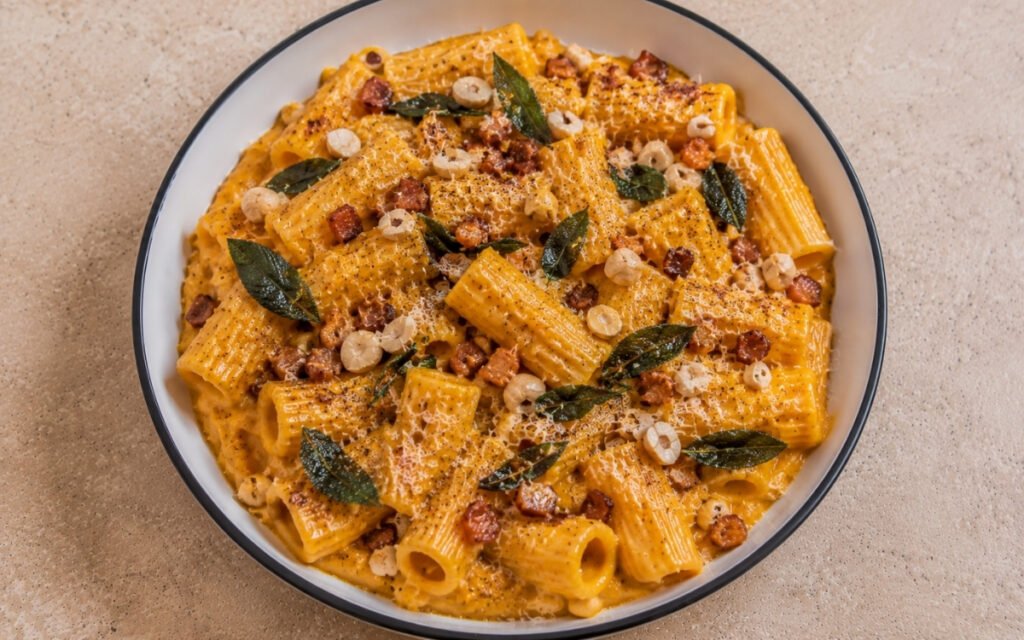
Creamy Pumpkin Sauce Pasta with Pancetta
Pumpkin cream sauce in pancetta fat, topped with crispy pancetta, fried sage, and hazelnuts — 40 minutes.
You might also like
You might also like
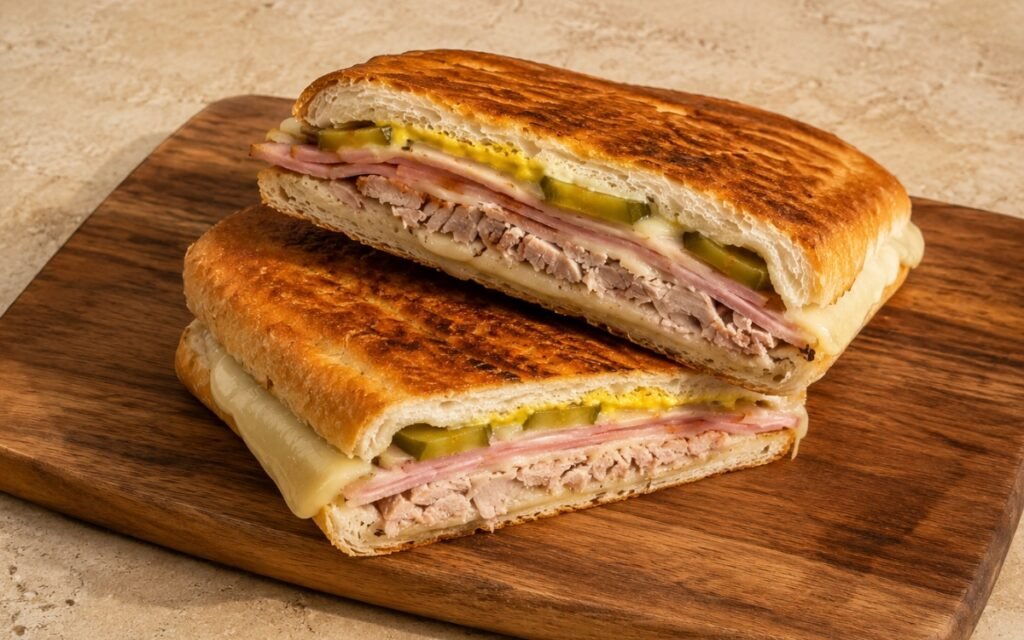
Cuban Sandwich (Cubano)
Citrus-marinated pork roasted in its own mojo marinade, layered with ham, Swiss cheese, and pickles on homemade Cuban bread, pressed until crisp and golden.
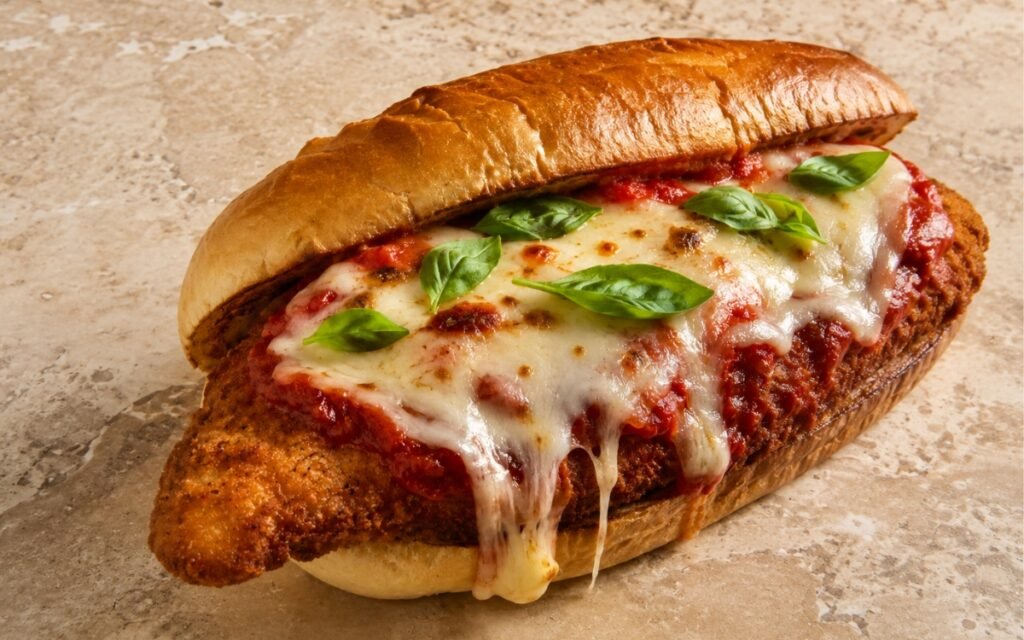
Chicken Parm Hero
A golden fried chicken cutlet in a toasted hoagie roll, topped with thick marinara, melted mozzarella, Parmesan, and fresh basil.
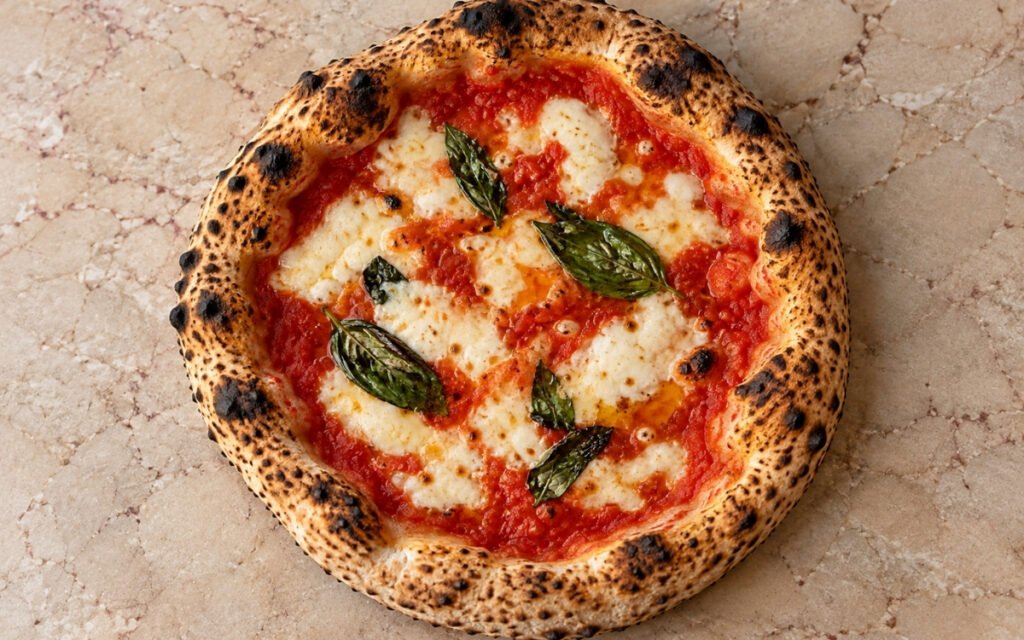
Neapolitan-Style Margherita Pizza
Puffy, leopard-spotted Neapolitan crust with bright uncooked tomato sauce, melted fresh mozzarella, and basil, made from half a batch of pizza dough.
Spaghetti all’Amatriciana
Ingredients
Method
- Place the guanciale strips and olive oil in a large, cold skillet — stainless steel or carbon steel for maximum fond development. Start with the pan cold and bring the heat up together to medium-low, exactly as you would for carbonara. The cold-start method allows the guanciale’s fat to render gradually from inside each strip, producing pieces that are completely rendered, golden and crispy at the edges, but still slightly tender and yielding at the centre — rather than the uniformly hard, dry result of a hot-pan start that browns the exterior before the interior fat can melt. Cook slowly for 8–10 minutes, stirring occasionally, until the strips are deeply golden at their edges, the fat has rendered fully into the pan — approximately 3–4 tablespoons of clear, sweet pork fat — and the pieces are crispy at the tips but still have some texture. The guanciale’s rendered fat is not just a cooking medium — it is an active flavour component of the sauce. Every drop stays in the pan and becomes part of the finished amatriciana. Add the crushed dried chili pepper or red pepper flakes to the rendered fat and toast for 30 seconds, stirring continuously, until intensely fragrant. At low heat the chili’s aromatic compounds and fat-soluble capsaicin bloom into the surrounding guanciale fat rather than burning — this blooming step infuses the fat that will subsequently coat every component of the sauce with a pervasive, even heat rather than delivering concentrated chili flavour only when a flake is encountered directly.
- Increase the heat to medium-high and pour in the 150ml of dry white wine. The wine will sizzle and steam immediately on contact with the hot rendered fat and fond. Let it bubble vigorously for 2–3 minutes without stirring initially — the violent reduction is partly what lifts the fond from the pan surface. After 30 seconds of vigorous bubbling, scrape the bottom of the pan firmly with a wooden spoon or spatula to dissolve all browned bits into the wine. Continue cooking over medium-high heat until the wine is reduced by approximately half — the sharp, raw alcohol edge should be completely cooked off and the liquid should smell of concentrated wine rather than raw alcohol. The white wine serves three distinct functions in amatriciana: it deglazes the pan and incorporates the fond; it adds a secondary, more delicate acidity that bridges the guanciale’s sweetness and the tomato’s more direct acidic flavour; and it adds a slight fruity depth that you cannot add by any other means. Traditional Roman amatriciana does not always include wine — some recipes use only tomato — but the wine version produces a more layered, more complex sauce with noticeably better depth.
- Add the hand-crushed San Marzano tomatoes with all their juices to the skillet. Hand-crushing — squeezing each whole tomato over the pan until it breaks open — rather than using pre-crushed tomatoes gives you textural control: some sections remain as identifiable tomato pieces that provide distinct tomato bites in the finished dish, while the rest becomes sauce. The varied texture is more interesting and more visually appealing than uniformly crushed tomatoes. Reduce the heat to medium-low and simmer uncovered for 12–15 minutes, stirring occasionally, until the sauce has thickened noticeably and the fat from the guanciale has begun to separate slightly at the edges of the sauce — visible as small orange-red pools of enriched oil at the perimeter. This fat separation is not a flaw but the sign that the sauce has reached the correct concentration and that the guanciale’s fat has fully integrated and then re-emerged as a visible finishing element. The sauce should coat the back of a spoon clearly at this point. Season with salt very conservatively — taste first, because the guanciale’s salt and the Pecorino that will be added at the end are both very salty. The sauce may need no additional salt at all, or only the smallest pinch. Add black pepper to taste.
- While the sauce simmers, bring a large pot of water to a full rolling boil and add the 15g of fine sea salt. Add the spaghetti or bucatini and cook for 2 minutes less than the package directions indicate — the pasta will finish cooking in the sauce. Bucatini — the thick, hollow spaghetti shape — is the most traditional format for amatriciana, originating from the town of Amatrice from which the sauce takes its name. Its hollow core traps sauce and guanciale pieces inside, delivering a concentrated burst of flavour from the interior of each piece alongside the sauce-coated exterior. Thick spaghetti is equally traditional and more widely available. Standard spaghetti produces an excellent result. Before transferring the pasta, reserve at least 200ml of the starchy pasta cooking water in a heatproof jug and keep it warm.
- Using tongs, transfer the underdrained pasta directly from the pot to the skillet with the amatriciana sauce — bringing approximately 60ml of pasta water with it in the transfer. Return the heat to medium. Toss the pasta vigorously in the sauce for 1–2 minutes, turning continuously to coat every strand. The pasta finishes cooking in the sauce during this time — absorbing the tomato, guanciale fat, and wine into the pasta itself rather than being simply coated externally. Add reserved pasta water in 30ml increments if the sauce tightens — the starchy water loosens it immediately while the starch also contributes to the emulsification. After 1–2 minutes the pasta should be at perfect al dente, coated in a glossy, slightly thickened tomato-guanciale sauce with the pasta water’s starch having partially emulsified the fat into the sauce.
- Remove the skillet from the heat completely. Allow to rest for 30 seconds — this brief cooling is important because Pecorino Romano, like all high-protein hard cheeses, seizes and clumps when added to liquid that is at a full boil. The 30-second rest brings the sauce to the temperature range where the cheese proteins remain pliable and melt smoothly rather than seizing. Add 80g of the finely grated Pecorino Romano to the pasta and toss energetically — lift from the bottom and fold over the top in continuous motion. The residual heat of the pasta, sauce, and pan is precisely sufficient to melt the Pecorino smoothly into a creamy, coating emulsion that combines with the fat and starch in the sauce into a unified, glossy finish. Add small amounts of the reserved pasta water if needed to maintain a flowing consistency — the sauce should coat each strand without pooling at the bottom of the pan. Divide immediately among four warm bowls. Top each portion with a portion of the remaining 40g of Pecorino Romano and a generous crack of fresh black pepper. Serve without delay.