
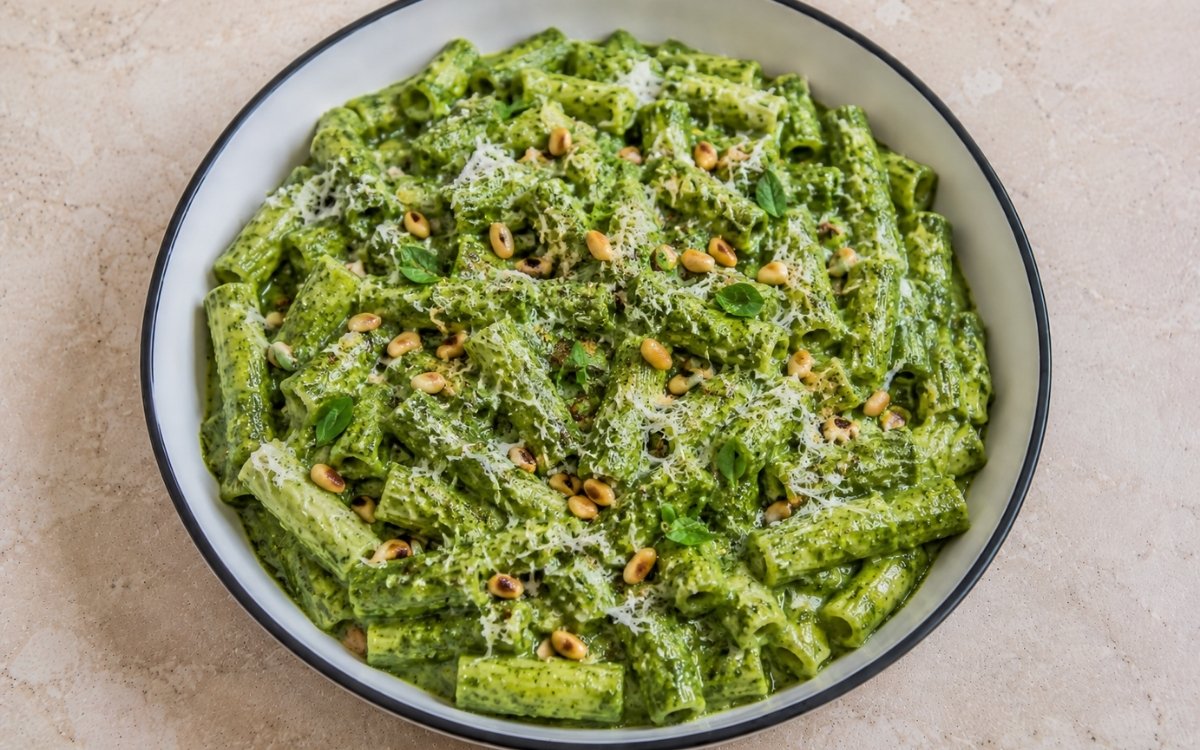
Creamy Spinach & Herb Green Sauce Pasta
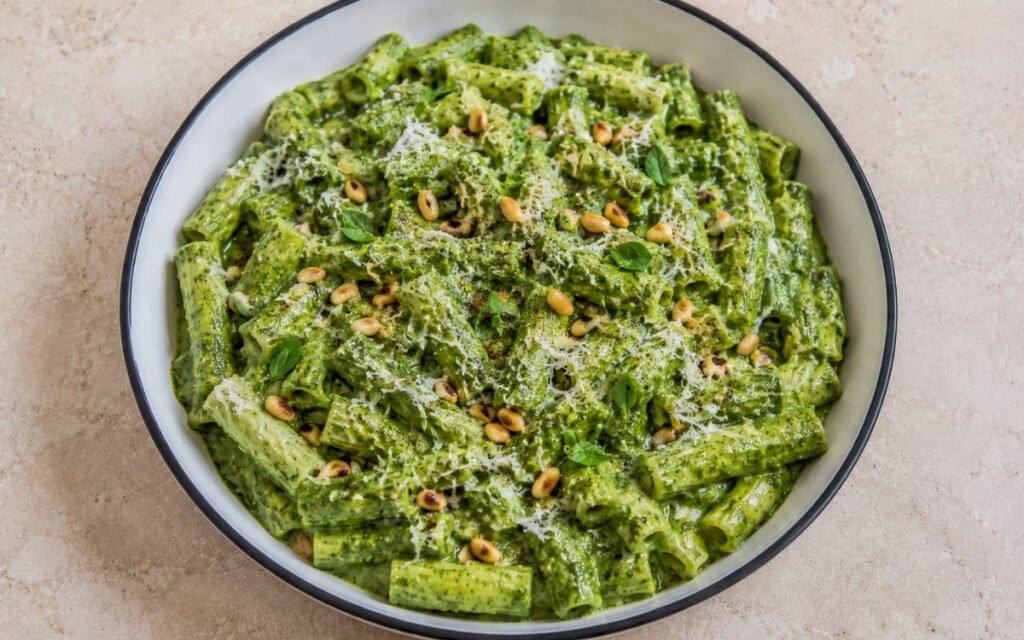
A vibrantly green, herb-forward cream sauce built from blended spinach, basil, parsley, and mint combined with cream cheese, Parmigiano, and lemon — then warmed through with garlic and finished with heavy cream before the rigatoni goes in. The result is a pasta that is simultaneously rich and fresh: the cream cheese provides the coating body, the herbs provide the vivid colour and aromatic complexity, and the lemon’s brightness keeps the richness from feeling heavy. Toasted pine nuts finish each bowl with nutty crunch against the smooth green sauce. Thirty-five minutes and a dish that looks more sophisticated than the effort involved.
Prep Time : 15 min
Cook Time : 20 min
Servings : 4
15 min
20 min
4
Ingredients
For the Pasta
• 400g rigatoni or penne pasta — this one on Amazon
• 6g salt for pasta water
• 240ml pasta cooking water, reserved
For the Green Herb Sauce
• 200g fresh baby spinach
• 40g fresh basil leaves
• 25g fresh parsley leaves
• 15g fresh mint leaves
• 180g cream cheese, softened at room temperature
• 80g Parmesan cheese, finely grated — this one on Amazon
• 120ml reserved pasta water (for blending)
• Zest of 1 lemon (about 2g)
• 15ml fresh lemon juice
• 2g salt
• 3g black pepper, freshly ground
For Cooking and Finishing
• 60g pine nuts — this one on Amazon
• 45ml extra-virgin olive oil
• 4 garlic cloves, approximately 20g, minced
• 2g red pepper flakes
• 120ml heavy cream (35% fat)
• Extra Parmesan cheese for serving
• Extra black pepper for serving
This post may contain affiliate links. As an Amazon Associate I earn from qualifying purchases, at no additional cost to you.
Directions
- Toast the Pine Nuts
Place the 60g of pine nuts in a large, dry skillet over medium heat with no oil. Toast for 3–4 minutes, stirring or shaking the pan every 30–45 seconds throughout. Pine nuts’ very high polyunsaturated fat content makes them the fastest-burning of all commonly toasted nuts — the transition from pale and raw to golden and fragrant to burnt and acrid happens in rapid succession, with each stage taking only 30–60 seconds at medium heat. Watch continuously from the 2-minute mark. The target is a consistent light golden-brown across the surface of most nuts — not pale and raw, not deeply browned. Transfer immediately to a plate the moment this colour is achieved, as the residual heat of even a removed-from-burner pan can carry them from correctly toasted to over-toasted. Set aside for finishing. - Cook the Pasta
Bring a large pot of water to a full rolling boil and add the 6g of salt. Add the rigatoni or penne and cook for 2 minutes less than the package’s al dente time — the pasta will continue warming through when added to the green sauce in the skillet. Before draining, reserve 240ml of the starchy pasta cooking water in a heatproof jug. The pasta water performs two functions: 120ml goes directly into the blender with the herb sauce components to achieve the correct blending consistency and to add pasta starch to the sauce at the blending stage; the remaining 120ml is held in reserve for adjusting the sauce’s consistency after the pasta is added to the pan. Drain without rinsing and set aside briefly. - Make the Green Herb Sauce
While the pasta cooks, prepare the green herb sauce — timing it so it is ready immediately when the pasta finishes. The sauce is blended raw rather than cooked before blending, which is the technique decision that preserves the vivid, bright green colour. Heat denatures chlorophyll progressively — brief cooking produces olive-green, extended cooking produces dark, dull green. Raw herbs blended immediately before use retain their most vibrant colour and their most intense, volatile aromatic compounds. To the food processor or high-powered blender, add the 200g of baby spinach, 40g of basil leaves, 25g of parsley, and 15g of mint. Pulse 8–10 times in 3-second bursts until the herbs are roughly chopped and beginning to break down — this initial pulsing prevents large herb pieces from remaining above the blade level and ensures even processing. Add the cream cheese in chunks rather than as a single mass — the cream cheese must be at room temperature, not cold. Cold cream cheese has a firm, dense protein structure that resists blending smoothly into the surrounding herb mixture, producing a grainy, slightly lumpy sauce rather than the completely smooth, uniform green coating the recipe requires. Room-temperature cream cheese’s softened structure blends immediately into the herbs without resistance. Add the 80g of grated Parmesan, the lemon zest, 15ml of lemon juice, 2g of salt, 3g of black pepper, and 120ml of the reserved pasta water. Blend on high speed for 45–60 seconds until completely smooth and uniformly vibrant green — no visible herb pieces, no cream cheese lumps, no variation in colour throughout the sauce. The pasta water’s starch combines with the cream cheese’s protein and fat during blending to produce a partially emulsified sauce with body that will coat the pasta rather than running off it. Taste the blended sauce — it should be bright, herbaceous, creamy, and well-seasoned before it ever reaches the pan. - Sauté the Aromatics
In the same large skillet used for the pine nuts, heat the 45ml of extra-virgin olive oil over medium heat. Add the minced garlic and red pepper flakes simultaneously. Cook for 45–60 seconds, stirring constantly — at medium heat, minced garlic moves from fragrant and pale to golden to browned in a short window. The constant stirring ensures even heat distribution and prevents any pieces from sitting against the hot pan surface long enough to brown. The garlic and red pepper bloom their aromatic and heat compounds into the surrounding oil during this 60 seconds, creating the flavoured cooking base that the green sauce will be added to next. Remove the pan from the heat immediately when the garlic is fragrant and just barely showing the faintest colour. - Warm the Green Sauce with Cream
Reduce the heat to medium-low. Pour the blended green herb sauce into the skillet with the garlic oil. Stir to combine and allow to warm through for 2 minutes, stirring occasionally. Do not allow to boil — extended heat causes the chlorophyll to dull and the herb’s volatile aromatic compounds to dissipate, gradually converting the vibrant sauce from vivid green to olive. The gentle 2-minute warming is sufficient to heat the sauce through and allow the garlic oil’s aromatic compounds to integrate, without long enough heat exposure to affect the colour or fragrance significantly. Add the 120ml of heavy cream and stir until fully incorporated. The cream adds the finishing richness that lightens the cream cheese’s somewhat dense body into a more fluid, more coating consistency — the combination of cream cheese’s structure and heavy cream’s flowing quality produces a sauce that is simultaneously rich and pourable. - Finish the Pasta in the Sauce
Add the drained pasta to the skillet and toss with tongs to coat every piece. Begin adding the remaining 120ml of reserved pasta water in 60ml increments — pour the first 60ml and toss vigorously for 30–45 seconds before assessing the consistency. The starchy pasta water loosens the cream cheese-and-cream sauce, distributes more evenly than adding all the water at once, and allows full control over the final consistency. Add the second 60ml if needed and toss again. The correct finished consistency is glossy and creamy — coating the back of a spoon clearly, flowing slowly when the pan is tilted, and clinging to every ridged surface and hollow interior of the rigatoni rather than pooling at the bottom. Taste and adjust with additional salt, lemon juice, or black pepper. - Serve
Divide among four warm bowls immediately — the green sauce continues its colour evolution toward olive as the temperature rises, and the dish is most vivid in the minutes immediately after leaving the pan. Scatter the toasted pine nuts generously over each bowl. Add a generous grating of fresh Parmesan over each portion. Finish with a confident crack of fresh black pepper. Serve immediately.
*Notes :
- The four-herb combination — spinach, basil, parsley, and mint — is a specific composition rather than an arbitrary selection. Each herb contributes a distinct aromatic character that no single herb could provide alone. Spinach provides the neutral, slightly earthy bulk and the green colour foundation without a strong flavour of its own, allowing the other herbs to define the sauce’s character without competition. Basil provides the sweet, slightly anise-like, specifically Italian aromatic note. Parsley provides clean, slightly grassy, herbal freshness. Mint provides the cooling, clean aromatic counterpoint that prevents the sauce from tasting heavy or one-dimensionally rich despite the cream cheese and Parmesan. The proportions — 200g spinach to 40g basil, 25g parsley, and 15g mint — are calibrated so spinach provides the volume while the more assertive herbs provide the flavour without any single note dominating.
- Cream cheese rather than ricotta or mascarpone is the dairy component specifically suited to this blended sauce because of its specific fat-and-protein balance. Cream cheese’s fat content is high enough to produce a coating, rich sauce, and its protein structure is firm enough when cold to hold the herbs in a coherent blended mass rather than separating into a watery herb juice with floating dairy. At room temperature, its proteins are sufficiently relaxed to blend smoothly. Mascarpone would produce a richer, more neutral-tasting sauce; ricotta would produce a slightly grainy texture from its higher moisture content and less completely emulsified fat structure.
Why This Recipe Works
This recipe works because it preserves the green herb colour and aromatic freshness by blending raw rather than cooking the herbs, then warms the sauce through briefly at the lowest temperature that achieves sauce integration without degrading the colour. The cream cheese provides the sauce’s body and coating quality without requiring a lengthy reduction. The cream loosens the cream cheese into the correct pourable consistency.
The pasta water starch at two stages — in the blender and in the pan — provides the emulsification that allows the fat-rich sauce to cling to the pasta uniformly. And the pine nuts at serving provide the specific textural contrast that the uniformly smooth sauce specifically needs.
Ingredient Breakdown
Fresh Baby Spinach (200g)
The colour and volume base — neutral-flavoured, vivid green, providing the bulk of the sauce without competing with the more assertive herbs.
Basil, Parsley, and Mint (In Ratio)
The flavour identity — basil for sweet Italian aromatics, parsley for clean herbal freshness, mint for cooling counterpoint. Each herb provides a dimension the others do not.
Cream Cheese (180g, Room Temperature)
The sauce body — soft enough at room temperature to blend smoothly, fat-rich enough to produce a coating, luxurious consistency, structured enough to hold the herb sauce together.
Parmesan (80g)
The savoury finishing element in the blended sauce — provides the umami depth and saltiness that prevents the herb sauce from tasting flat.
Lemon Zest and Juice
The brightening layer — zest for aromatic citrus oils, juice for clean acid that prevents the cream cheese’s richness from feeling heavy.
Heavy Cream
The consistency modifier — added after the blended sauce is in the pan to loosen the cream cheese into the correct pourable, coating consistency.
Pasta Water (Dual-Stage)
In the blender for emulsification and consistency during sauce creation; in the pan for final consistency adjustment during pasta tossing.
Toasted Pine Nuts
The essential textural contrast — crunchy, buttery, slightly sweet against the smooth, uniformly creamy green sauce.
Flavor Structure Explained
This pasta follows a layered balance model:
- Fresh herbal core (basil, parsley, mint, spinach)
- Creamy tangy richness (cream cheese, Parmesan)
- Bright citrus lift (lemon juice, zest)
- Savory warmth (garlic, red pepper)
- Nutty finish (pine nuts)
The herb blend defines the dominant character with layered freshness — sweet, green, and cooling all at once. Cream cheese and Parmesan build a rich, tangy base that carries and grounds the herbs. Lemon sharpens the entire profile, keeping it vivid rather than heavy. Garlic and chili provide subtle warmth underneath, adding depth without distracting. Pine nuts finish with toasted nuttiness and slight bitterness, completing the structure with contrast and balance.
Common Mistakes to Avoid
- Using Cold Cream Cheese – Cold cream cheese does not blend smoothly — it produces a grainy, lumpy sauce rather than the completely uniform green coating the recipe requires. Always bring to room temperature for at least 30 minutes before blending.
- Overheating the Green Sauce – Extended heat converts vivid green chlorophyll to dull olive. The gentle 2-minute warming is the maximum — watch the colour change and stop the moment the sauce begins to shift toward olive.
- Not Reserving Enough Pasta Water – The pasta water is used twice — 120ml in the blender and 120ml in the pan. Reserve the full 240ml minimum.
- Burning the Pine Nuts – Continuous stirring and immediate transfer to a plate when golden are both required. Pine nuts left on a hot pan after the burner is off continue toasting. Watch from the 2-minute mark onward.
- Blending Cold Herbs Straight from the Refrigerator – Herbs that have been refrigerated below about 8°C blend less smoothly and their aromatic compounds are less volatile. Allow to come to room temperature for 10–15 minutes before blending for the most vibrant result.
- Adding All Pasta Water at Once – Different pasta brands and pan temperatures affect how quickly the sauce absorbs the water. Add in 60ml increments and assess between additions for full consistency control.
Variations
Green Sauce Pasta With Chicken
Add 400g of thinly sliced chicken breast or thigh, seasoned with salt, pepper, and garlic powder, seared in the olive oil for 3–4 minutes per side before the garlic step. Set aside and return to the pan with the pasta during the tossing step.
With Walnuts Instead of Pine Nuts
Replace the 60g of pine nuts with 60g of roughly chopped toasted walnuts — more bitter, more assertively nutty, and slightly less sweet than pine nuts. Produces a more robust topping contrast against the delicate green sauce.
Extra Herb Version
Increase the mint to 25g and add 10g of fresh tarragon for a more complex, more distinctly aromatic herb sauce with a subtle anise note that is specifically well-suited to chicken or prawn additions.
Vegan Green Sauce Pasta
Replace the cream cheese with 180g of well-drained silken tofu blended until smooth, the Parmesan with 60g of nutritional yeast, and the heavy cream with full-fat coconut cream. The colour and herb character remain; the dairy richness is replaced by a lighter, slightly different richness.
Storage & Make-Ahead
The assembled pasta can be refrigerated for up to 3 days. During storage, the pasta will absorb some of the green sauce and the color will shift slightly toward olive. To reheat it, warm it gently in a pan over low heat with 2 to 3 tablespoons of cream or water per portion, stirring carefully. Add fresh toasted pine nuts and freshly grated Parmesan just before serving.
The green herb sauce on its own can be refrigerated for up to 3 days. Its color will darken slightly over time, but the flavor will remain excellent. This is the most practical make-ahead method: blend the sauce up to 2 days in advance, then cook the pasta fresh when you are ready to serve.
Toasted pine nuts can be stored in an airtight container at room temperature for up to 3 days and will still keep their quality well.
Frequently Asked Questions
Why is room-temperature cream cheese essential?
Cold cream cheese has a firm protein structure that resists smooth blending, producing a grainy, lumpy sauce that cannot be corrected once blended. Room-temperature cream cheese blends immediately and smoothly into the herbs, producing the uniformly silky sauce the recipe requires. Always allow at least 30 minutes at room temperature before blending.
Can I use frozen spinach?
Frozen spinach works but must be fully thawed and very thoroughly drained — pressed between paper towels until no visible moisture remains — before blending. Inadequately drained frozen spinach adds excess water that dilutes the sauce and prevents the cream cheese from producing the correct coating consistency.
Why four herbs rather than basil alone?
Each herb provides a specific aromatic dimension: basil for sweet Italian character, parsley for clean freshness, mint for cooling counterpoint, spinach for neutral green volume. Basil alone produces a pesto-adjacent sauce without the complexity and freshness that the four-herb combination achieves. Removing any single herb produces a noticeable change in the sauce’s aromatic character.
Can I use a different pasta shape?
Rigatoni is ideal — its ridged exterior and hollow interior both capture the smooth green sauce efficiently. Penne works equally well. Shorter, ridged formats are preferred for this sauce over long pasta — the smooth, flowing green sauce coats shorter formats more uniformly and the toppings distribute more evenly through the bowl.
Does the sauce turn brown over time?
Yes — the chlorophyll in the blended herbs converts progressively from vivid green to olive as time and heat exposure accumulate. The sauce is most vivid immediately after blending and begins its colour evolution during the warming step. The dish is best served immediately after finishing.
Nutrition Facts
( per serving )
Calories
~920 kcal
Protein
24 g
Fat
51 g
Carbs
81 g
Calories
~920 kcal
Protein
24 g
Fat
51 g
Carbs
81 g
Related Recipes
Related Recipes

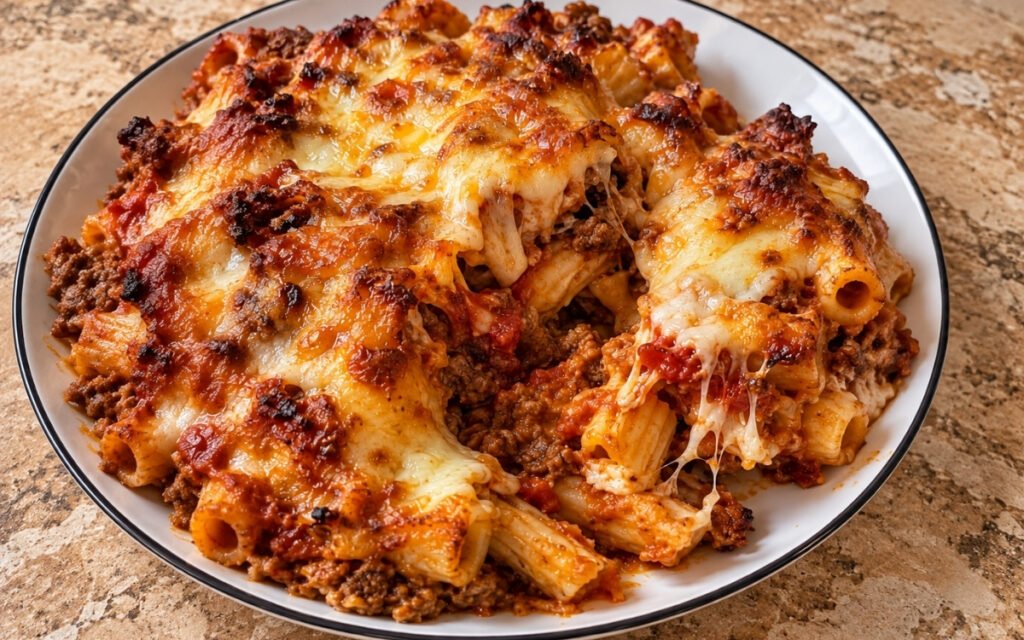
Pasta al Forno
Rigatoni or penne in a rich beef and pork tomato sauce with melted mozzarella and a browned cheesy top, baked until bubbling.
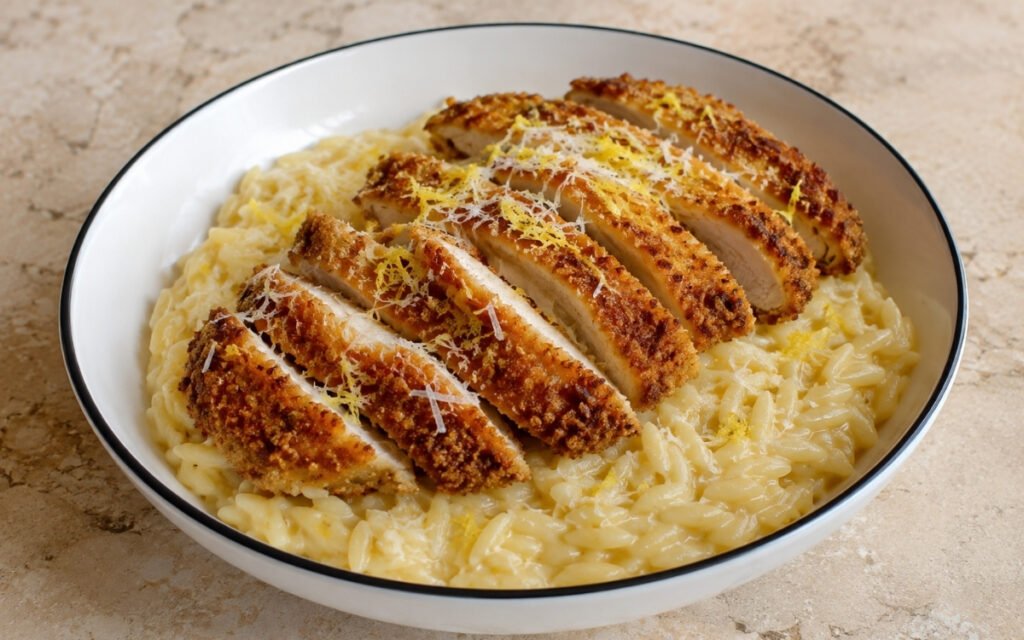
Lemon Chicken Cutlet Orzo
Crispy Parmesan-breaded cutlets sliced over creamy caramelised onion, double lemon, and ricotta orzo — 55 minutes.
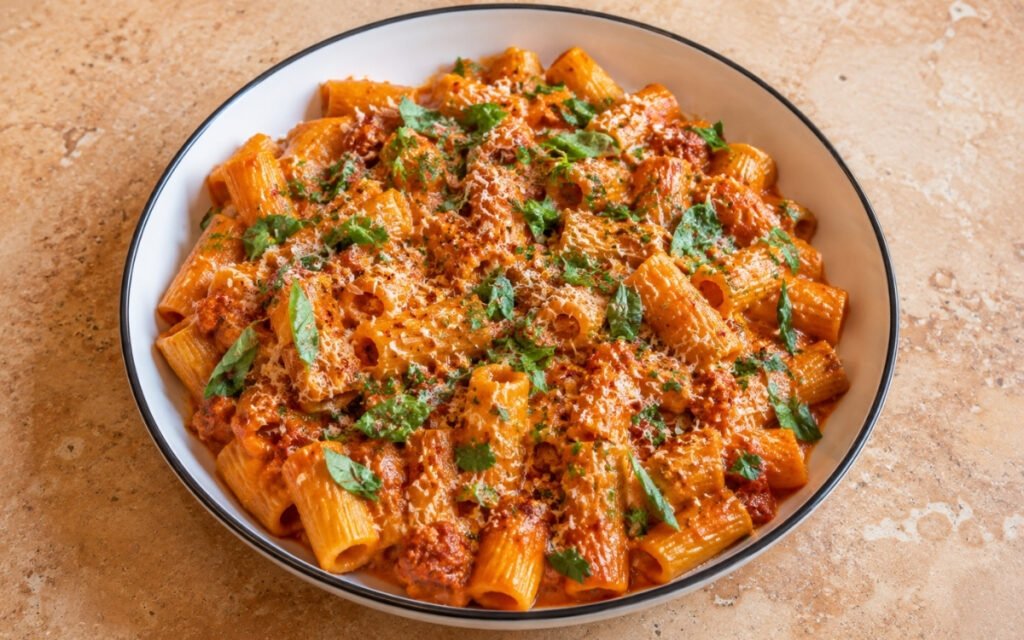
Spicy Italian ‘Nduja Pasta
Calabrian ‘nduja melted into olive oil until it becomes the sauce — mascarpone finish, 30 minutes.
You might also like
You might also like
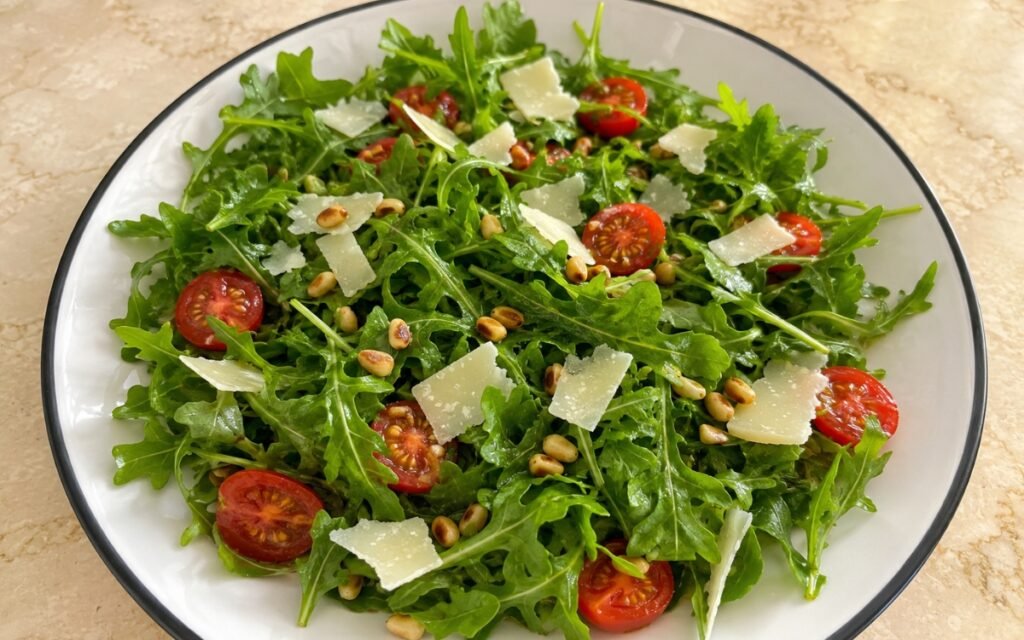
Simple Arugula Salad with Lemon Vinaigrette
Peppery arugula with lemon vinaigrette, cherry tomatoes, shaved Parmesan, and toasted pine nuts.
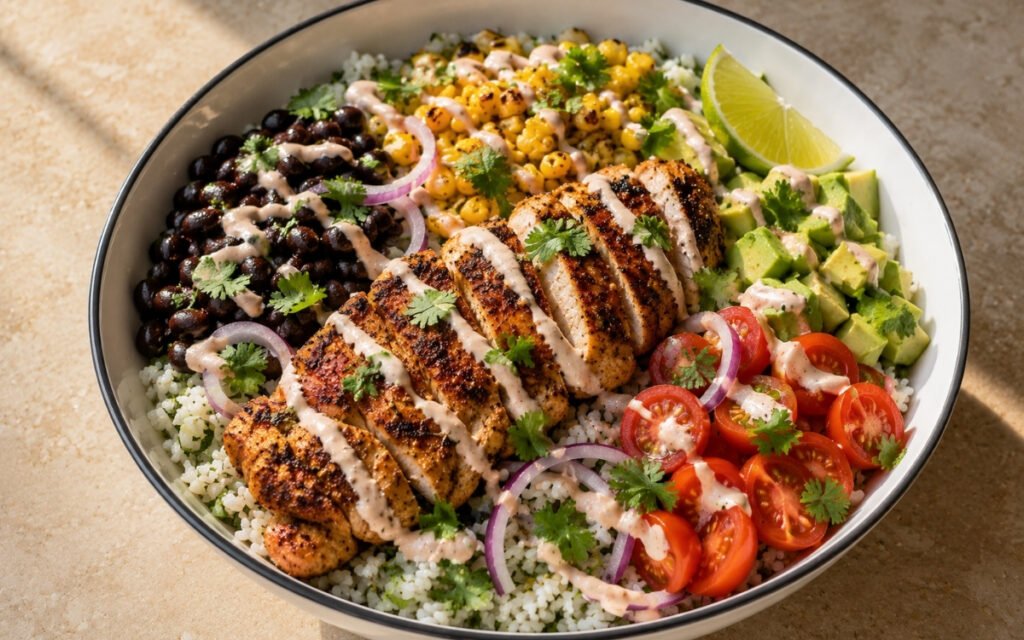
Chili Lime Chicken Rice Bowl
Chili-lime marinated chicken and charred corn over cilantro-lime rice with black beans, avocado, and Greek yogurt crema — vibrant, balanced, 45 minutes.
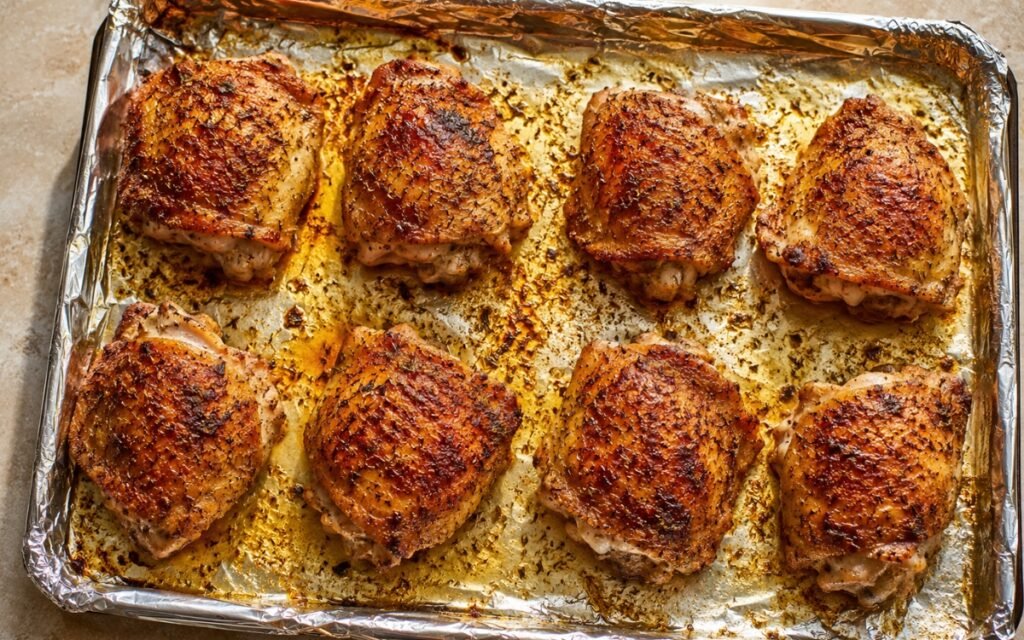
Cripsy Oven-Baked Chicken Thighs
Crispy-skinned chicken thighs baked with simple spices—the most forgiving and flavorful cut.
Creamy Spinach & Herb Green Sauce Pasta
Ingredients
Method
- Place the 60g of pine nuts in a large, dry skillet over medium heat with no oil. Toast for 3–4 minutes, stirring or shaking the pan every 30–45 seconds throughout. Pine nuts’ very high polyunsaturated fat content makes them the fastest-burning of all commonly toasted nuts — the transition from pale and raw to golden and fragrant to burnt and acrid happens in rapid succession, with each stage taking only 30–60 seconds at medium heat. Watch continuously from the 2-minute mark. The target is a consistent light golden-brown across the surface of most nuts — not pale and raw, not deeply browned. Transfer immediately to a plate the moment this colour is achieved, as the residual heat of even a removed-from-burner pan can carry them from correctly toasted to over-toasted. Set aside for finishing.
- Bring a large pot of water to a full rolling boil and add the 6g of salt. Add the rigatoni or penne and cook for 2 minutes less than the package’s al dente time — the pasta will continue warming through when added to the green sauce in the skillet. Before draining, reserve 240ml of the starchy pasta cooking water in a heatproof jug. The pasta water performs two functions: 120ml goes directly into the blender with the herb sauce components to achieve the correct blending consistency and to add pasta starch to the sauce at the blending stage; the remaining 120ml is held in reserve for adjusting the sauce’s consistency after the pasta is added to the pan. Drain without rinsing and set aside briefly.
- While the pasta cooks, prepare the green herb sauce — timing it so it is ready immediately when the pasta finishes. The sauce is blended raw rather than cooked before blending, which is the technique decision that preserves the vivid, bright green colour. Heat denatures chlorophyll progressively — brief cooking produces olive-green, extended cooking produces dark, dull green. Raw herbs blended immediately before use retain their most vibrant colour and their most intense, volatile aromatic compounds. To the food processor or high-powered blender, add the 200g of baby spinach, 40g of basil leaves, 25g of parsley, and 15g of mint. Pulse 8–10 times in 3-second bursts until the herbs are roughly chopped and beginning to break down — this initial pulsing prevents large herb pieces from remaining above the blade level and ensures even processing. Add the cream cheese in chunks rather than as a single mass — the cream cheese must be at room temperature, not cold. Cold cream cheese has a firm, dense protein structure that resists blending smoothly into the surrounding herb mixture, producing a grainy, slightly lumpy sauce rather than the completely smooth, uniform green coating the recipe requires. Room-temperature cream cheese’s softened structure blends immediately into the herbs without resistance. Add the 80g of grated Parmesan, the lemon zest, 15ml of lemon juice, 2g of salt, 3g of black pepper, and 120ml of the reserved pasta water. Blend on high speed for 45–60 seconds until completely smooth and uniformly vibrant green — no visible herb pieces, no cream cheese lumps, no variation in colour throughout the sauce. The pasta water’s starch combines with the cream cheese’s protein and fat during blending to produce a partially emulsified sauce with body that will coat the pasta rather than running off it. Taste the blended sauce — it should be bright, herbaceous, creamy, and well-seasoned before it ever reaches the pan.
- In the same large skillet used for the pine nuts, heat the 45ml of extra-virgin olive oil over medium heat. Add the minced garlic and red pepper flakes simultaneously. Cook for 45–60 seconds, stirring constantly — at medium heat, minced garlic moves from fragrant and pale to golden to browned in a short window. The constant stirring ensures even heat distribution and prevents any pieces from sitting against the hot pan surface long enough to brown. The garlic and red pepper bloom their aromatic and heat compounds into the surrounding oil during this 60 seconds, creating the flavoured cooking base that the green sauce will be added to next. Remove the pan from the heat immediately when the garlic is fragrant and just barely showing the faintest colour.
- Reduce the heat to medium-low. Pour the blended green herb sauce into the skillet with the garlic oil. Stir to combine and allow to warm through for 2 minutes, stirring occasionally. Do not allow to boil — extended heat causes the chlorophyll to dull and the herb’s volatile aromatic compounds to dissipate, gradually converting the vibrant sauce from vivid green to olive. The gentle 2-minute warming is sufficient to heat the sauce through and allow the garlic oil’s aromatic compounds to integrate, without long enough heat exposure to affect the colour or fragrance significantly. Add the 120ml of heavy cream and stir until fully incorporated. The cream adds the finishing richness that lightens the cream cheese’s somewhat dense body into a more fluid, more coating consistency — the combination of cream cheese’s structure and heavy cream’s flowing quality produces a sauce that is simultaneously rich and pourable.
- Add the drained pasta to the skillet and toss with tongs to coat every piece. Begin adding the remaining 120ml of reserved pasta water in 60ml increments — pour the first 60ml and toss vigorously for 30–45 seconds before assessing the consistency. The starchy pasta water loosens the cream cheese-and-cream sauce, distributes more evenly than adding all the water at once, and allows full control over the final consistency. Add the second 60ml if needed and toss again. The correct finished consistency is glossy and creamy — coating the back of a spoon clearly, flowing slowly when the pan is tilted, and clinging to every ridged surface and hollow interior of the rigatoni rather than pooling at the bottom. Taste and adjust with additional salt, lemon juice, or black pepper.
- Divide among four warm bowls immediately — the green sauce continues its colour evolution toward olive as the temperature rises, and the dish is most vivid in the minutes immediately after leaving the pan. Scatter the toasted pine nuts generously over each bowl. Add a generous grating of fresh Parmesan over each portion. Finish with a confident crack of fresh black pepper. Serve immediately.