Ingredients
Method
Make the Toasted Rice Powder
- Add the 35g uncooked jasmine or glutinous rice to a dry skillet set over medium-low heat, with no oil at all. Toast for 8–10 minutes, stirring often and shaking the pan so the grains colour evenly, until every grain is a deep, even golden brown and the rice smells distinctly nutty. If some grains darken while others stay pale, lower the heat and keep stirring rather than rushing. Tip the rice onto a plate and let it cool completely while you prep the lettuce and herbs, then grind it in a spice grinder or with a mortar and pestle to a coarse, slightly sandy powder, stopping well before it turns to flour. That deliberately coarse grind is what gives larb its gentle grit and light crunch, since a fine powder dissolves into the dressing and turns the mixture pasty.
Prep the Lettuce and Herbs
- Separate the 16 large butter lettuce or little gem leaves, keeping each one whole and cup-shaped. Wash them gently, dry them thoroughly in a salad spinner or between clean towels, and refrigerate them until needed so they stay crisp. Slice the red onion or shallots very thinly, slice the 3 scallions, roughly chop the 15g cilantro and tear any large mint leaves. If the onion tastes very sharp, soak the slices in cold water for 5–10 minutes, then drain and dry them well. Squeeze the 5 tbsp lime juice and cut the 2 limes into wedges for serving. That careful drying genuinely matters, because water left on the leaves dilutes the dressing and lets the cups go limp under the warm pork.
Cook the Pork
- Place the 700g minced pork in a skillet or sauté pan with 60–80ml water and set it over medium heat, adding the ½ tsp neutral oil only if the pork is very lean. Break the meat up continuously with a spatula or wooden spoon as it heats, so it stays in fine, loose crumbles rather than setting into clumps. Cook for 5–7 minutes, until no pink remains and the pork is just done. If a lot of liquid remains, let it reduce briefly, but stop while a little juice still glistens in the pan, and never let the pork dry out or brown deeply. That gentle, moist cooking is what keeps the crumbles soft and juicy, and the small amount of liquid left behind helps carry the dressing through the meat.
Season the Larb
- Turn the heat to low or take the pan off the heat. Add the 4 tbsp fish sauce, 5 tbsp lime juice, 1½ tsp of the Thai chilli flakes and 1 tsp palm or brown sugar, if using, and mix well while the pork is still warm. Taste and adjust, then stir in about 2 tbsp of the toasted rice powder, followed by most of the sliced onion, the scallions and most of the mint and cilantro. Keep a little onion, a little of each herb and the remaining rice powder aside for garnish. The mixture should look loose, juicy and herb-speckled, with the onion still clearly visible. That timing matters because warm pork absorbs the dressing, while delicate herbs folded in last stay fresh and fragrant.
Taste and Adjust
- Taste the larb once more and aim for a balance that is clearly lime-forward, savoury from the fish sauce, lightly to moderately spicy and genuinely herb-heavy. Add more lime juice for brightness, more fish sauce for salt and savouriness, up to the remaining ½ tsp chilli flakes for heat, or up to 1 tsp more sugar if the lime tastes harsh. If it needs more nutty body, or looks wet enough to pool, stir in a little more toasted rice powder just before serving rather than a large amount early. The finished larb should be moist enough to spoon, but never watery. That restraint with the rice powder matters because too much, added too soon, swells in the dressing and turns the mixture heavy and pasty.
Assemble the Lettuce Cups
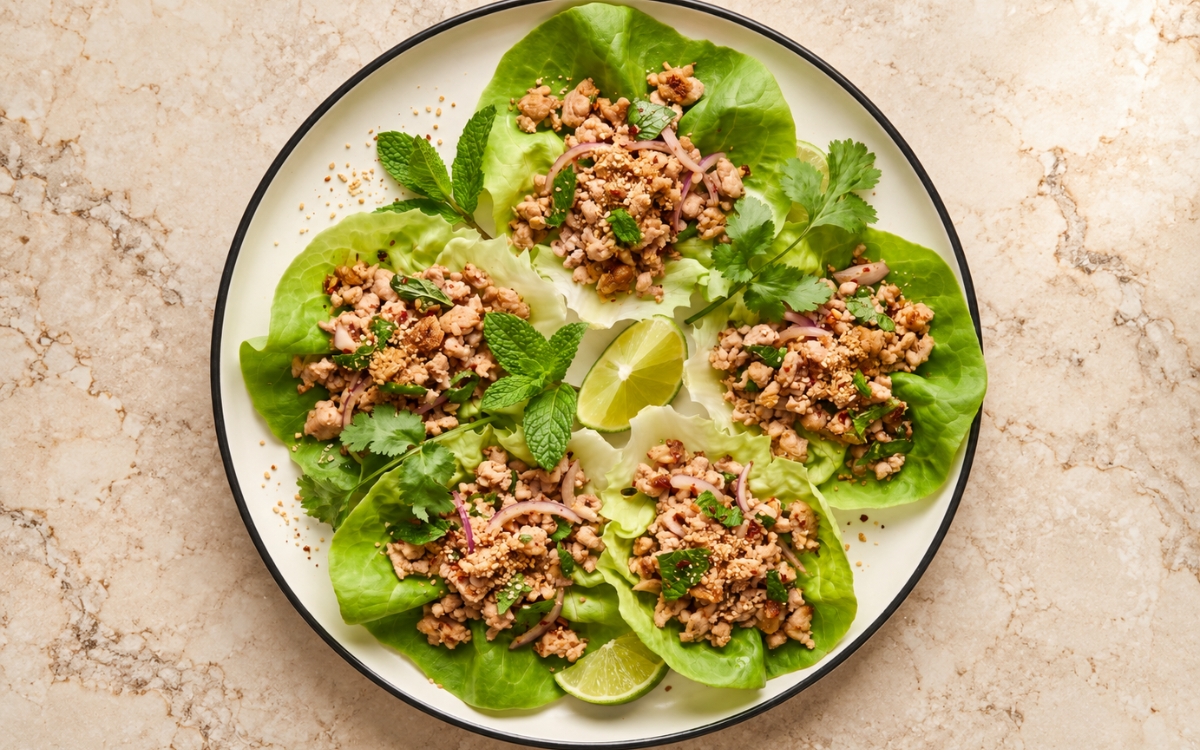
- Arrange the 16 chilled lettuce leaves on a platter. Spoon the warm larb moo evenly into the leaves, allowing about 4 cups per person for 4 servings. Garnish with the reserved onion, mint and cilantro, the extra mint and cilantro, and a light sprinkle of the remaining toasted rice powder, adding extra chilli flakes for anyone who wants more heat. Serve straight away with the lime wedges on the side, while the pork is warm or just slightly warm and the leaves are still cold and crisp. That contrast is what makes the dish, because pork left to go fridge-cold firms up and tastes muted, while leaves filled too early wilt under the warm meat.
Notes
Cooking the pork gently in water deserves genuine recognition as the technique most directly responsible for whether the larb tastes juicy or dry. The recipe's own instruction that "Classical larb moo should be juicy and softly crumbled, not crispy and not heavily seared" explains why — browned, crisp crumbles lose the moisture that carries the dressing, so the lime and fish sauce slide off rather than soaking in, and "Dry pork makes flat larb."
Toasting and grinding the rice deserves the same attention this technique receives throughout this collection's other Thai salad dishes, because it is the ingredient that makes larb taste like larb. The recipe's own warning "Do not grind it completely fine" reflects how a coarse, sandy powder keeps its nutty crunch and soaks up excess juice, while a fine flour dissolves straight into the dressing and turns the whole mixture heavy and pasty.
Folding in the herbs last and in generous quantity deserves genuine respect as the detail most directly responsible for the dish's fresh, aromatic character. The recipe's own note that "Mint should be noticeable, not just decorative" explains the full 20g measure — warm pork bruises mint and cilantro within seconds, so stirring them in only after the dressing keeps them green, fragrant and clearly present in every cup.
The look of the finished larb deserves attention as a genuine, checkable readiness cue rather than a loose approximation. The recipe's own target that it "should look loose, crumbly, juicy, and herb-speckled, with visible onion and a dusting of toasted rice" gives a clear test — clumped, dry meat means it was overcooked, while a puddle in the pan means it needs a little more rice powder before serving.