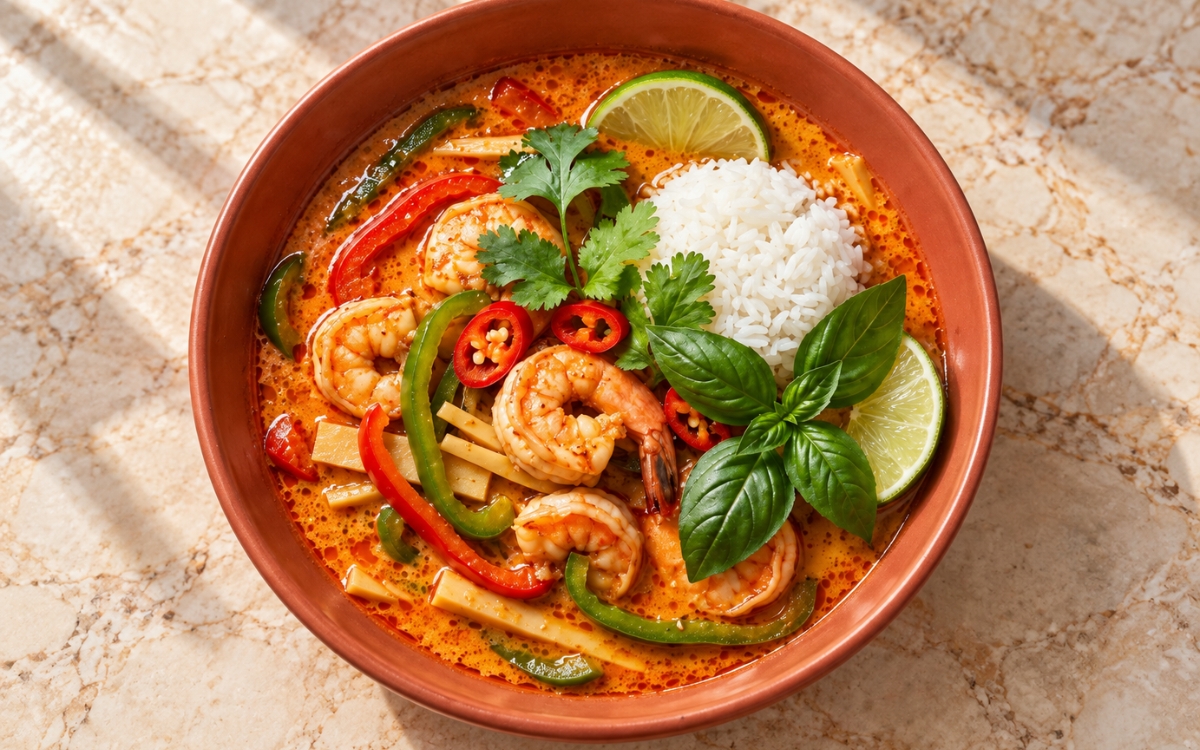
Ingredients
Method
Prep the Curry Components
- Pat the 600g shrimp genuinely dry with kitchen paper and season them with only a light pinch of salt and a light pinch of white pepper; do not salt them heavily or marinate them. Thinly slice the red and green bell peppers, drain and slice the 120–150g bamboo shoots, tear the 4 makrut lime leaves and bruise the trimmed lemongrass with the back of a knife before cutting it into 2–3 large pieces. Finely mince the 3 garlic cloves, thinly slice the shallot and the 1–2 red chillies, and pick the Thai basil and cilantro leaves. Keep the shrimp chilled until the moment they go in. That complete setup matters because once the paste starts frying the curry moves quickly, and the shrimp must go in late, with no pause to chop.
Cook the Jasmine Rice
- Rinse the 200g jasmine rice in cold water, swirling it with your fingers, until the water runs mostly clear, then drain it well. Combine the rice and 300ml water in a small saucepan with a pinch of salt, if using, and bring to a boil over medium-high heat. Stir once, cover tightly, reduce to the lowest heat and cook for 12 minutes. Turn off the heat and leave it to rest, still covered, for 10 minutes, then fluff gently with a fork just before serving. Start the curry as soon as the lid goes on, so both are ready at the same time, and do not lift the lid while the rice cooks or rests. That undisturbed resting time is what lets the trapped steam finish the grains evenly, keeping them tender and intact rather than wet or broken.
Fry the Curry Paste
- Open the 800ml coconut milk without shaking it, so any thick cream that has separated stays at the top. Heat a wok, sauté pan or medium pot over medium heat and add about 200ml of the coconut milk, taking the thick cream first. Simmer for 2–3 minutes, stirring, until slightly thickened and glossy. Add 4 tbsp red curry paste, or up to 5 tbsp for a stronger curry, and fry for 2–4 minutes, stirring constantly, until it is deep brick-red, very fragrant and the raw smell has gone. If the paste starts to catch rather than sizzle, add the 1 tbsp neutral oil. Add the garlic and shallot and cook for 30–60 seconds more, just until aromatic. That frying stage is what deepens the paste's colour and aroma, since under-fried paste tastes raw and flat in the finished curry.
Build the Curry Sauce
- Pour in the remaining 600ml coconut milk and 150ml of the chicken stock or water and stir until smooth, keeping the rest of the stock aside. Add 1½ tbsp fish sauce, the 2 tsp palm sugar, the torn lime leaves and the lemongrass pieces. Bring to a gentle simmer over medium heat — small bubbles breaking steadily at the surface, never a hard boil — and cook for 5 minutes so the aromatics infuse the sauce. Taste the base now: it should already taste rich, savoury, slightly sweet and aromatic, and still a little strong, because the vegetables and shrimp will soften it. Lower the heat if it begins to bubble hard. That steady, gentle simmer is what keeps the coconut sauce smooth and creamy rather than letting it break into a grainy, oily surface.
Cook the Vegetables
- Add the sliced bamboo shoots and the red and green bell peppers and stir them into the sauce. Simmer gently for 3–5 minutes, until the peppers are just tender but still bright and holding their shape, with a little bite left in each slice. If the curry looks too thick, add the remaining stock or water, up to 50ml, a little at a time; it should be spoonable and silky, closer to a rich broth than a heavy gravy. A red-orange sheen of oil on the surface is a good sign. That short simmer is what keeps the peppers softened but never limp, so they still give texture against the creamy sauce and the tender shrimp.
Poach the Shrimp
- Add the shrimp and stir gently to submerge them in the sauce. Keep the curry at a gentle simmer and cook for 2–4 minutes, depending on their size, until every shrimp has turned fully opaque and pink and curled into a loose C shape, reaching about 63°C / 145°F at the thickest point. Lift one out and check it if unsure. Take the pan off the heat as soon as they are cooked, because they keep cooking in the hot sauce. Shrimp curled into a tight O are already overcooked. That brief, gentle cooking is what keeps the shrimp genuinely plump, sweet and juicy instead of shrunken, tight and rubbery.
Finish the Curry
- With the heat off, remove the lemongrass pieces if you prefer easier serving. Stir in most of the Thai basil and a little of the sliced chilli, keeping the rest for garnish, just until the leaves wilt lightly. Taste and adjust: add up to ½ tbsp more fish sauce if it needs salt or savouriness, and a little more sugar if it tastes too sharp. Keep the lime for the table rather than squeezing it into the pot, so the curry keeps its clean coconut balance. Fold in a few cilantro leaves, or reserve all of them for the garnish. That off-heat finish is what lets the basil wilt while keeping its sweet, anise-scented aroma genuinely vivid.
Serve
- Fluff the rested jasmine rice and divide it among 4 bowls, about 50g of dry rice per serving. Spoon the red curry shrimp around or beside the rice, giving each bowl about 150g of shrimp and an even share of peppers, bamboo shoots and sauce. Garnish with the remaining Thai basil, the cilantro leaves and the rest of the sliced red chillies, and set the lime wedges on the side for squeezing at the table. The sauce should pool loosely around the rice with a glossy, red-orange sheen. Serve immediately, while the curry is hot. That quick finish is what puts the shrimp on the table at their peak texture, before the residual heat of the sauce can tighten them.
Notes
Frying the red curry paste in coconut cream deserves genuine recognition as the technique most directly responsible for whether this curry tastes deep and rounded or raw and flat. The recipe's own turning point that "The paste must be fried enough to deepen in aroma and color" reflects how a few minutes in hot fat cook out the chillies, garlic and shrimp paste in the blend — simply stirred into liquid, they never fully develop.
Keeping the curry at a gentle simmer deserves the same attention this technique receives throughout this collection's other coconut-based curries, because it decides the texture of the finished sauce. The recipe's own instruction to "keep it at a steady gentle simmer so the sauce stays smooth and creamy" explains why the heat stays low for the 5-minute infusion and the vegetable stage — a hard boil breaks the coconut fat into a grainy, oily surface.
Adding the shrimp only at the very end deserves genuine respect as the detail most directly responsible for whether they arrive plump or rubbery. The recipe's own note that "shrimp must always be added last" matters because shrimp proteins tighten within minutes, so 2–4 minutes at a gentle simmer cooks them through, while every extra minute squeezes out moisture and curls them into a tight, chewy O.
The loose C shape deserves attention as a genuine, checkable readiness cue rather than a loose approximation of time. Shrimp sizes vary, so the opaque flesh and loose curl, checked by lifting one out, tell you when to pull the pan off the heat far more reliably than the clock, and catching that moment keeps the residual heat from overcooking them.