
Lemongrass Pork Vermicelli Bowl
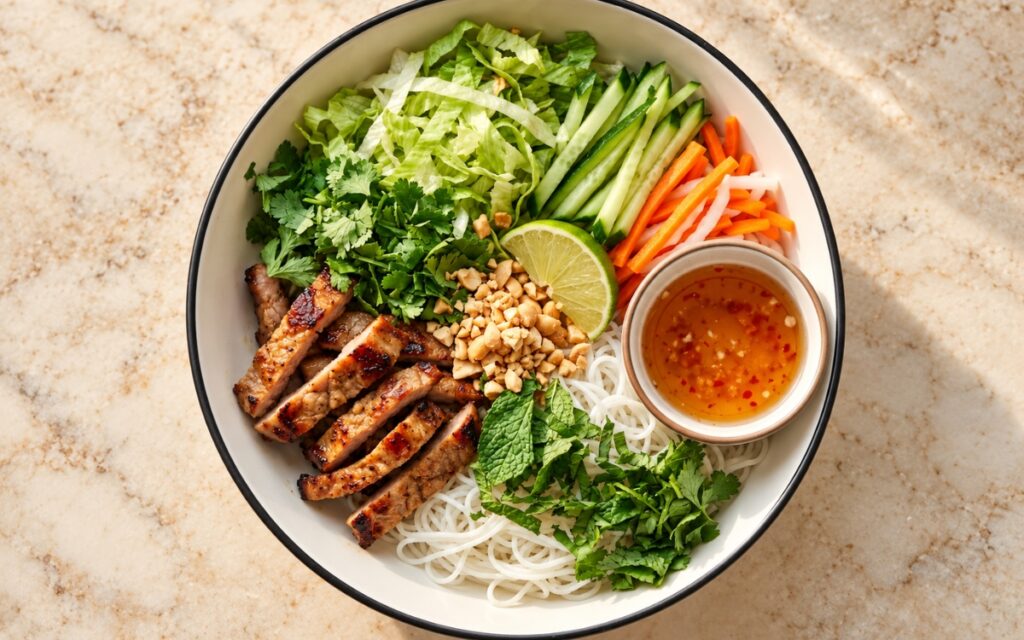
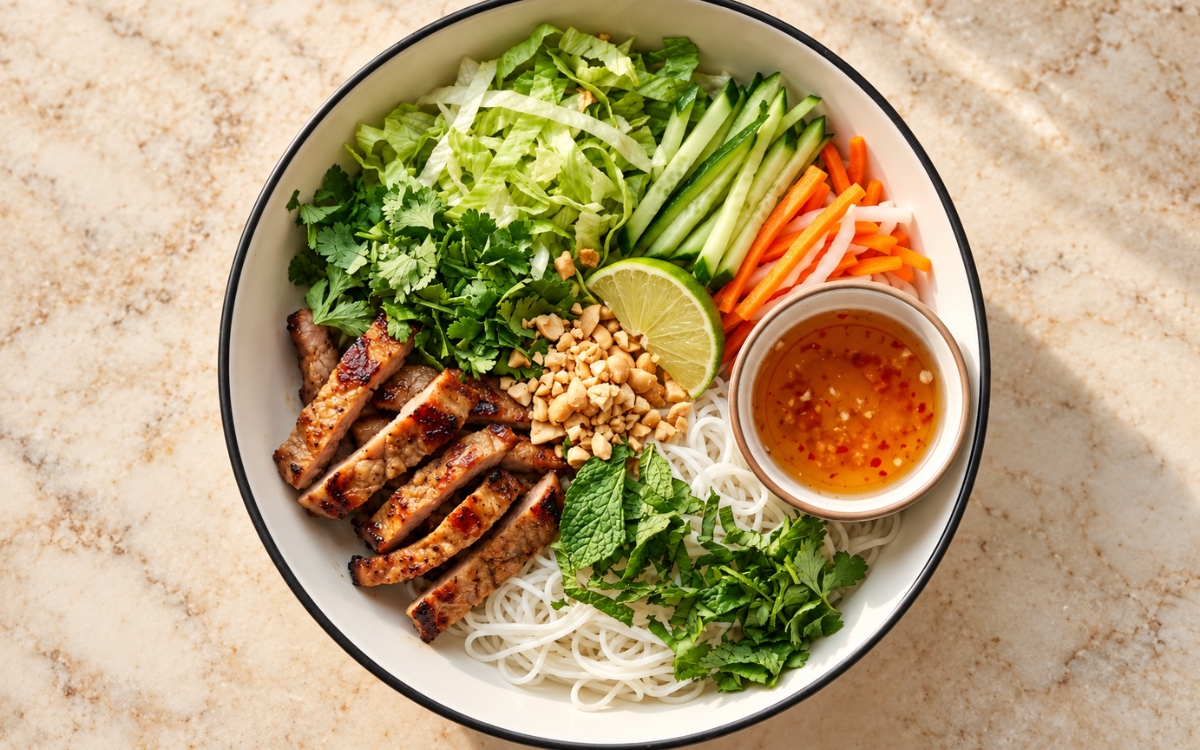
A classic Vietnamese-style vermicelli bowl of thin, grilled lemongrass pork over cool rice noodles with shredded lettuce, cucumber, pickled carrot and daikon, cilantro, mint, chopped peanuts and lime, the key being charred, caramelised pork set against crisp, sweet-sour vegetables and a light nuoc cham served on the side. Cooking the thinly sliced pork in uncrowded batches over high heat, rather than piling it into the pan at once, is the technique this whole bowl depends on for its browned, lightly charred edges — crowded pork releases its juices and steams grey before the sugar in the marinade can caramelise, the same sear-in-a-single-layer principle used elsewhere in this collection whenever a sweet marinade needs fierce heat to colour rather than stew. Mincing the lemongrass very finely is what lets its citrusy fragrance cling to every strip of pork without fibrous pieces burning first. Draining the quick pickles and rinsed vermicelli thoroughly is what keeps the bowl clean and crisp rather than watery. The payoff is a bowl with real, layered contrast — genuinely juicy, smoky-edged pork, springy noodles, crunchy sweet-sour pickles, cool herbs and a bright, salty-sour dressing added just before eating.
Prep Time : 35 min
Total Time : 1 hr 55 min
Servings : 4
35 min
1 hr 55 min
4
Ingredients
For the Lemongrass Pork
• 600g boneless pork shoulder or pork neck, sliced into thin 5–7mm strips or thin cutlets
• 2 stalks lemongrass, tender inner part only, very finely minced
• 4 garlic cloves, finely grated or minced
• 2 small shallots, finely minced
• 2 tbsp fish sauce
• 1 tbsp light soy sauce
• 1 tbsp oyster sauce
• 1½ tbsp sugar
• 1 tbsp neutral oil, plus 1–2 tsp extra for the pan, only if needed
• ½ tsp black pepper
For the Pickled Carrot and Daikon
• 120g carrot, cut into thin matchsticks
• 120g daikon, cut into thin matchsticks
• 120ml warm water, about 40°C
• 60ml rice vinegar
• 1½ tbsp sugar
• ½ tsp salt
For the Nuoc Cham
• 80ml warm water
• 2 tbsp sugar, plus a little extra to adjust
• 3 tbsp fish sauce, plus a little extra to adjust
• 3 tbsp fresh lime juice, from about 2 limes, plus a little extra to adjust
• 1 small garlic clove, finely minced
• 1 small red chilli, finely sliced
For the Noodles and Bowls
• 300g dried rice vermicelli
• 180–220g shredded lettuce, romaine or iceberg
• 1 large cucumber, cut into thin batons
• 60g roasted peanuts, roughly chopped
• 1 large handful cilantro leaves and tender stems, roughly chopped
• 1 large handful mint leaves, roughly torn or chopped
• 1 lime, cut into 4 wedges
Directions
- Marinate the Pork
Slice the 600g pork shoulder or neck across the grain into thin strips or cutlets about 5–7mm thick. Peel away the tough outer layers of the 2 lemongrass stalks and mince only the pale, tender inner part as finely as possible, almost to a paste. In a large bowl, combine the lemongrass with the 4 grated garlic cloves, 2 minced shallots, 2 tbsp fish sauce, 1 tbsp light soy sauce, 1 tbsp oyster sauce, 1½ tbsp sugar, 1 tbsp neutral oil and ½ tsp black pepper, stirring until the sugar starts to dissolve. Add the pork and mix with your hands until every piece is evenly coated, with no dry patches. Do not add any salt; the three sauces already season the meat fully. Cover and refrigerate for at least 1 hour. That very fine mince is what lets the lemongrass coat the pork as a fragrant paste rather than as fibrous shreds that scorch on the grill. - Make the Pickles
As soon as the pork is in the fridge, stir the 120ml warm water, at about 40°C, with the 60ml rice vinegar, 1½ tbsp sugar and ½ tsp salt until fully dissolved. Add the 120g carrot and 120g daikon matchsticks, pressing them under the liquid, and leave them to stand at room temperature for 30–45 minutes. Taste a piece at 30 minutes: it should be lightly sweet-sour and still crisp, never soft or harshly vinegary. If the vegetables still taste raw, give them the full 45 minutes. Keep them in the brine until assembly, then drain them lightly in a sieve. That short stand in a mild brine is what seasons the vegetables right through while keeping their crunch genuinely intact. - Make the Nuoc Cham
Stir the 80ml warm water with the 2 tbsp sugar until the sugar has completely dissolved, then add the 3 tbsp fish sauce, 3 tbsp lime juice, the minced garlic clove and the sliced chilli. Taste and adjust: add a little extra lime juice for brightness, a little extra sugar if it tastes too sharp, or a little extra fish sauce if it tastes flat. The finished dressing should be salty, sour, lightly sweet and bright all at once, and thin enough to pour freely, never syrupy. Divide it among 4 small dipping bowls and leave it to stand while everything else is prepared, so the garlic and chilli infuse. That balance-by-tasting step is what keeps a dressing this simple from leaning too salty or too sour. - Prepare the Vegetables and Herbs
While the pickles stand, finely shred the 180–220g lettuce and cut the cucumber into thin batons about the length of a finger. Roughly chop the cilantro leaves and tender stems, roughly tear or chop the mint, roughly chop the 60g roasted peanuts and cut the lime into 4 wedges. Keep each element in its own pile or small bowl, and keep the lettuce and cucumber in the fridge so they stay cold and crisp. Dry the herbs thoroughly if they were washed, since wet leaves bruise quickly and dilute the dressing. Everything should be ready before the pork goes on the heat. That advance preparation is what lets the pork go straight from the pan into the bowls while it is still hot and fragrant. - Cook the Vermicelli
About 15 minutes before the marinating time ends, bring a large pot of water to a rolling boil. Add the 300g rice vermicelli and cook according to the packet directions, usually 3–5 minutes for thin noodles, stirring gently once or twice so the strands do not clump. Taste a strand: it should be just tender with a slight spring, never soft or mushy. Drain, rinse briefly under cool running water to stop the cooking, then shake the colander and leave the noodles to drain very well for a few minutes. Loosen them lightly with your fingers before portioning. That brief rinse and thorough drain is what keeps the noodles springy and stops them watering down the nuoc cham. - Cook the Pork
Heat a grill pan, large heavy skillet or outdoor grill over medium-high to high heat for 2–3 minutes, until a drop of water sizzles away instantly, brushing it with the 1–2 tsp extra oil only if the surface looks dry. Lay the pork in a single layer with space between the pieces, working in 2–3 batches, and cook for about 2–3 minutes per side, until browned, caramelised and lightly charred at the edges and cooked through to 63°C. Lower the heat slightly if the lemongrass starts to blacken before the pork is done. Transfer each batch to a plate, rest the pork for 5 minutes, then slice any larger cutlets into thin strips. That single-layer cooking is what gives the pork visible searing instead of grey, steamed edges. - Assemble the Bowls
Divide the vermicelli among 4 bowls. Arrange the shredded lettuce, cucumber batons and drained pickled carrot and daikon in separate sections around the noodles, then place a quarter of the pork over one side of each bowl rather than scattering it throughout. Add the cilantro and mint last, then scatter over the chopped peanuts and tuck a lime wedge into each bowl. Serve the nuoc cham on the side, so everyone can spoon a little over the noodles or pour it in and toss just before eating. Serve straight away, while the pork is warm and the vegetables are still cold. That composed, dressing-on-the-side assembly is what keeps the herbs, peanuts and vegetables genuinely crisp until the very first bite.
*Notes :
- Cooking the pork in uncrowded batches deserves genuine recognition as the technique most directly responsible for whether the meat browns or stews. The recipe’s own warning that “crowded pork steams instead of browning” reflects simple heat physics — too many cold, wet strips drop the pan temperature below the point where the marinade’s sugar can caramelise, so the juices pool and the pork turns grey and chewy instead of charred.
- Mincing the lemongrass almost to a paste deserves the same attention this technique receives throughout this collection’s other lemongrass-marinated dishes, because its texture decides how the pork cooks. The recipe’s own instruction to “Mince the lemongrass very finely; large fibrous pieces burn before the pork cooks” is the key — coarse shreds cling loosely, char black within a minute on a hot pan and leave tough, bitter splinters in every bite.
- Draining both the pickles and the vermicelli deserves genuine respect as the detail most directly responsible for a clean, crisp bowl. The recipe’s own note to “Drain before assembly so the bowl stays clean and not watery” matters because every spoonful of leftover brine or rinsing water dilutes the nuoc cham and softens the lettuce, leaving the dressing tasting thin and the bottom of the bowl soggy.
- The browned, lightly charred edge on each strip deserves attention as a genuine, checkable readiness cue rather than a loose approximation. Thin pork reaches 63°C in about 2–3 minutes per side, just as the edges caramelise, and the recipe’s own note that pork shoulder or neck “stays juicier after grilling” than lean loin explains why the cut forgives this short, fierce cooking — its marbling keeps every strip moist.
Why This Recipe Works
This recipe works because every component is prepared to protect its own texture before it meets the others in the bowl. Finely minced lemongrass, garlic and shallot cling to thin strips of pork shoulder, and an hour in the fridge lets the fish sauce, soy and oyster sauce season the meat right through without extra salt. Cooking the pork in single-layer batches over high heat caramelises the marinade’s sugar into charred edges while the marbling keeps it juicy. Lightly pickled carrot and daikon, well-drained vermicelli and cold herbs then meet a bright nuoc cham served on the side, so every bite stays genuinely crisp and balanced.
Ingredient Breakdown
Single-Layer Batch Cooking
The critical technique — uncrowded pork over high heat browns and chars at the edges instead of steaming in its own juices.
Finely Minced Lemongrass (Inner Part Only)
The defining flavour ingredient — the tender core, minced almost to a paste, perfumes the pork without fibrous pieces burning.
Pork Shoulder or Neck (Not Loin)
The critical ingredient choice — natural marbling keeps thin 5–7mm strips genuinely juicy through fast, fierce grilling.
Fish Sauce, Soy and Oyster Sauce
The flavour foundation — three savoury sauces season the marinade fully, so no extra salt is ever needed.
Quick Pickled Carrot and Daikon
The critical technique — 30–45 minutes in a mild sweet-sour brine seasons the matchsticks while keeping them crisp.
Balanced Nuoc Cham (Served on the Side)
The finishing technique — salty, sour, lightly sweet and bright, it dresses each bite without drowning the bowl.
Fresh Herbs and Chopped Peanuts
The finishing touch — cilantro, mint and peanuts added last bring cool lift and a genuine, nutty crunch.
Flavor Structure Explained
This lemongrass pork vermicelli bowl follows a layered balance model:
- Soft, neutral foundation (springy rice vermicelli)
- Savoury, caramelised centrepiece (grilled pork, fish sauce, oyster sauce, sugar)
- Fragrant aromatic backbone (lemongrass, garlic, shallots, black pepper)
- Crisp, sweet-sour contrast (pickled carrot and daikon, cucumber, lettuce)
- Fresh herbal lift (cilantro, mint)
- Bright, crunchy finish (nuoc cham, lime, chopped peanuts)
Springy rice vermicelli forms the soft, neutral foundation that carries every other element. Grilled pork seasoned with fish sauce, oyster sauce and sugar builds the savoury, caramelised centrepiece, while lemongrass, garlic, shallots and black pepper give it a fragrant aromatic backbone. Pickled carrot and daikon, cucumber and lettuce bring crisp, sweet-sour contrast, and cilantro and mint add a genuinely fresh herbal lift. Nuoc cham, lime and chopped peanuts then deliver the bright, crunchy finish that ties this vermicelli bowl together.
Common Mistakes to Avoid
- Crowding the Pan With Pork – This drops the pan temperature so the pork steams grey in its own juices instead of browning. Always cook it in a single layer, in 2–3 batches.
- Leaving the Lemongrass in Coarse Pieces – This leaves fibrous shreds that burn black before the pork is cooked through. Always use only the tender inner part, minced very finely.
- Adding Salt to the Marinade – This oversalts the pork, because the fish sauce, soy sauce and oyster sauce already season it fully. Always let the three sauces do the seasoning.
- Overcooking the Vermicelli – This turns the noodles soft and mushy, so they clump and break apart in the bowl. Always taste a strand early and drain the moment it is just tender.
- Skipping the Drain Before Assembly – This lets pickle brine and rinsing water pool in the bowl and dilute the nuoc cham. Always drain the pickles and noodles thoroughly first.
Variations
Charcoal Grill Version
Cook the marinated pork over a hot outdoor charcoal grill instead of a grill pan, turning it after 2–3 minutes, for a deeper smoky char that brings the bowl closer to street-style grilled pork.
Pork Loin Version
Use thinly sliced boneless pork loin for a leaner bowl, cooking it for only 1½–2 minutes per side, since lean loin dries out much faster than the juicier shoulder or neck.
Extra Chilli Version
Add a second sliced red chilli to the nuoc cham and a pinch of chilli flakes to the marinade for a sharper, hotter bowl that still keeps the sweet-sour balance intact.
Chicken Thigh Version
Swap the pork for 600g thinly sliced boneless chicken thighs in the same lemongrass marinade, cooking them for 3–4 minutes per side until they reach 74°C at the thickest point.
Storage & Make-Ahead
Choose pork shoulder or pork neck with visible marbling rather than lean loin, and buy lemongrass with firm, pale, heavy stalks, since dry, woody stalks give little fragrance and never mince down finely enough.
The pork can be sliced and marinated up to 1 day ahead in a covered container in the fridge, which deepens the lemongrass flavour, then cooked in batches just before serving.
The pickled carrot and daikon keep in their brine in a sealed jar in the fridge for up to 1 week, and the nuoc cham keeps for up to 3 days, though the garlic grows genuinely stronger over time.
Leftover cooked pork keeps in an airtight container in the fridge for up to 3 days, and it is best reheated briefly in a hot skillet for 1–2 minutes rather than microwaved, which toughens the thin strips.
Cook the vermicelli and cut the lettuce, cucumber and herbs as close to serving as possible, because rinsed noodles firm up and stick together when chilled, though a quick rinse under warm water will loosen them.
Frequently Asked Questions
Why does the pork need to be sliced so thinly?
Thin 5–7mm strips cook through in about 2–3 minutes per side, so the edges caramelise and char in the same time the centre reaches 63°C. Thicker pieces need longer, letting the sugary marinade burn before the middle is done.
Why is only the inner part of the lemongrass used?
The tough outer layers stay woody and fibrous however finely they are chopped. The pale, tender core minces down almost to a paste, clinging to the pork and releasing its citrusy fragrance without burning or leaving chewy splinters.
Why is the nuoc cham served on the side rather than poured over?
Pouring it over in advance soaks the noodles, wilts the herbs and softens the peanuts before the bowl reaches the table. Serving it separately lets everyone dress their bowl just before eating, so every component stays genuinely crisp and distinct.
Why is the vermicelli rinsed only briefly under cool water?
A quick rinse stops the cooking and washes away loose surface starch, so the noodles stay springy and separate. The bowl is served at room temperature, and noodles rinsed until icy cold firm up and stick together instead of staying soft.
Are there other classic Southeast Asian noodle bowl, dipping sauce, or lemongrass recipes worth trying?
Jeow Som – Lao Sour Dipping Sauce offers another classic dipping sauce direction worth exploring. Bún Chả — Vietnamese Grilled Pork Noodle Bowl and Vietnamese Lemongrass Chicken Rice Bowl are also worth trying for other Vietnamese bowls, and Fresh Spring Roll Bowls with Peanut Sauce and Lemongrass Lime Green Tea Cooler offer a fresh noodle bowl and a cooling drink.
Nutrition Facts
( Per Serving — 1 bowl )
Calories
~840 kcal
Protein
36 g
Fat
37 g
Carbs
88 g
Calories
~840 kcal
Protein
36 g
Fat
37 g
Carbs
88 g
Related Recipes
Related Recipes
-

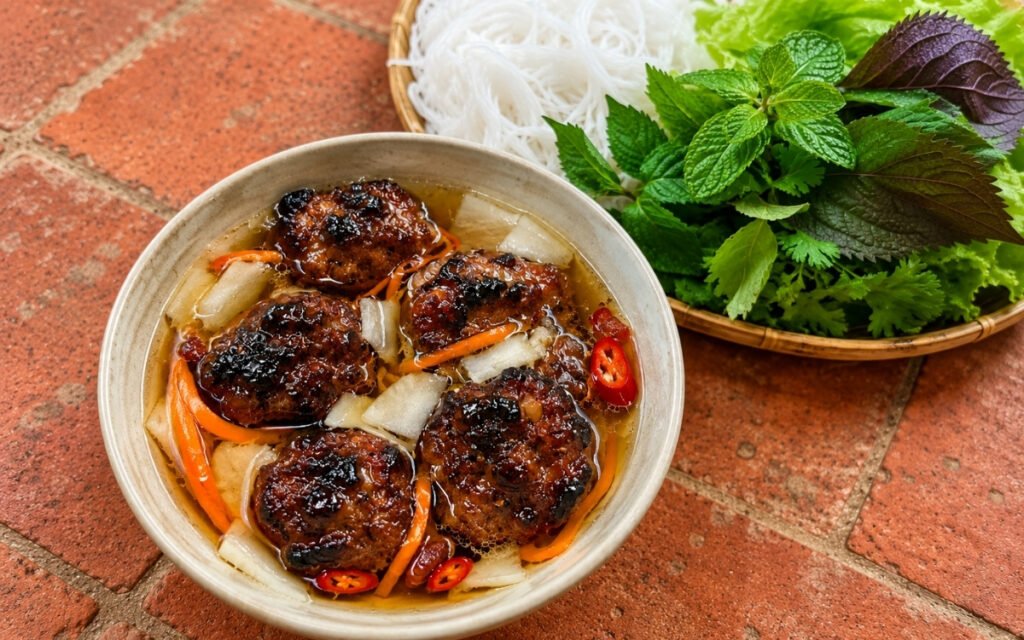
Bún Chả — Vietnamese Grilled Pork Noodle Bowl
Charred grilled pork patties in a warm sweet-sour-salty nước chấm broth with quick pickled carrot and daikon, cold rice vermicelli, and fresh herbs.
-
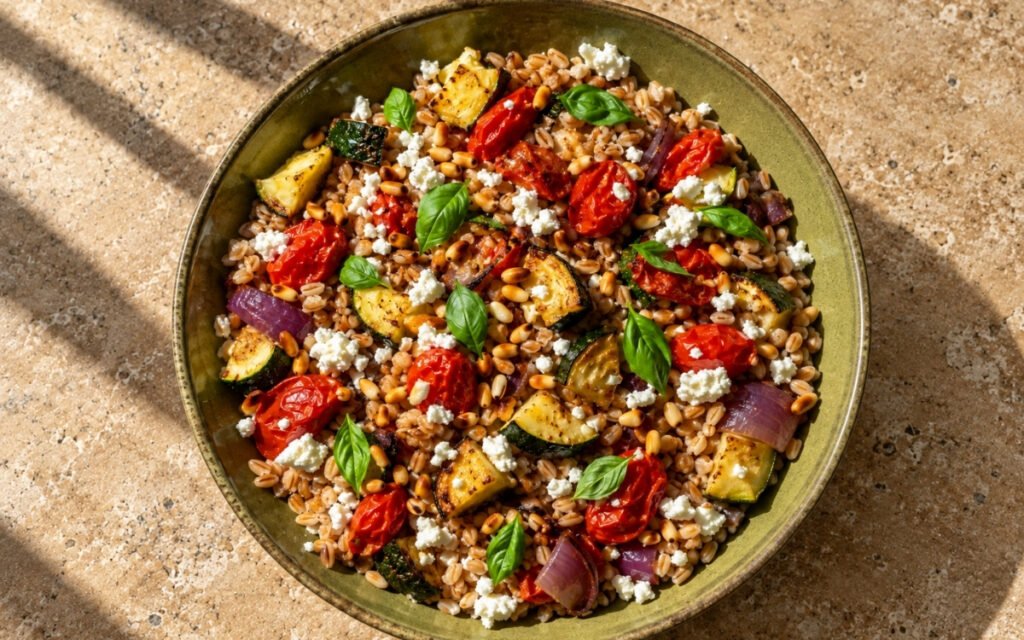
Italian Farro Salad with Roasted Vegetables
Chewy nutty farro with roasted zucchini, burst cherry tomatoes, roasted red onion, fresh basil, toasted pine nuts, and crumbled ricotta salata.
-
Pork Tamales with Salsa Verde
Red chile pork wrapped in tender masa and steamed in corn husks, served with a bright, tangy salsa verde.

You might also like
You might also like
-
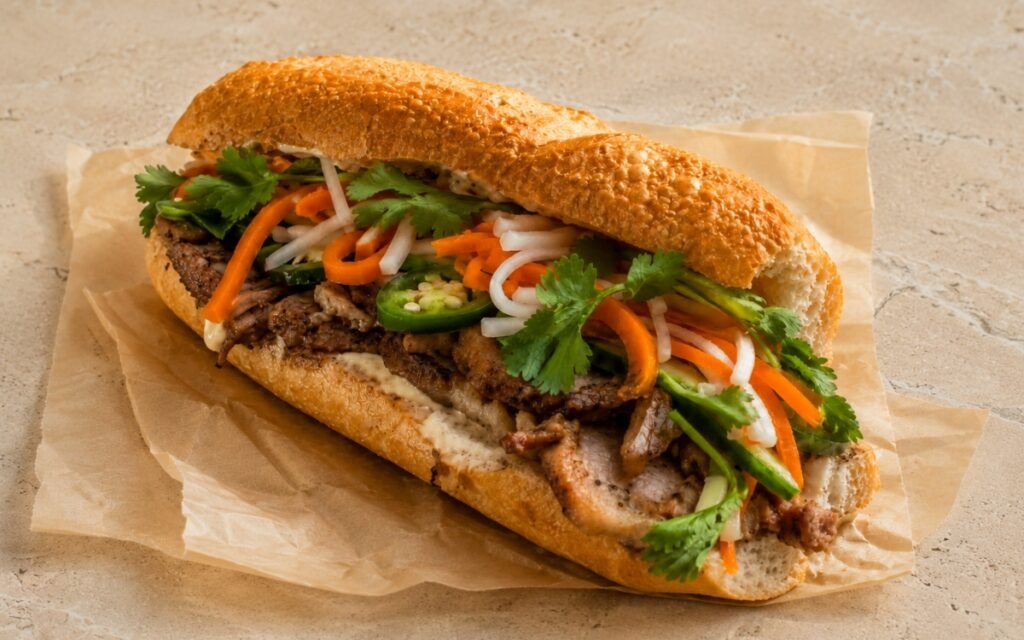
Crispy Pork Bánh Mì Sandwich
Roasted skin-on pork belly with crackling crisp skin, piled into a crusty baguette with pickled carrot and daikon, cucumber, and fresh herbs.
-
Yaki Udon Stir-Fry Noodles
Pork belly, shiitake, and udon in a smoking-hot wok — soy-mirin sauce, bonito flakes, pickled ginger, 27 minutes.
-
Asian Pulled Pork Rice Bowl
Pork shoulder braised 3 hours in soy-star anise-ginger, shredded, and tossed in its own reduced braising glaze — over jasmine rice with pickled vegetables and sriracha mayo.
Lemongrass Pork Vermicelli Bowl
Ingredients
Method
- Slice the 600g pork shoulder or neck across the grain into thin strips or cutlets about 5–7mm thick. Peel away the tough outer layers of the 2 lemongrass stalks and mince only the pale, tender inner part as finely as possible, almost to a paste. In a large bowl, combine the lemongrass with the 4 grated garlic cloves, 2 minced shallots, 2 tbsp fish sauce, 1 tbsp light soy sauce, 1 tbsp oyster sauce, 1½ tbsp sugar, 1 tbsp neutral oil and ½ tsp black pepper, stirring until the sugar starts to dissolve. Add the pork and mix with your hands until every piece is evenly coated, with no dry patches. Do not add any salt; the three sauces already season the meat fully. Cover and refrigerate for at least 1 hour. That very fine mince is what lets the lemongrass coat the pork as a fragrant paste rather than as fibrous shreds that scorch on the grill.
- As soon as the pork is in the fridge, stir the 120ml warm water, at about 40°C, with the 60ml rice vinegar, 1½ tbsp sugar and ½ tsp salt until fully dissolved. Add the 120g carrot and 120g daikon matchsticks, pressing them under the liquid, and leave them to stand at room temperature for 30–45 minutes. Taste a piece at 30 minutes: it should be lightly sweet-sour and still crisp, never soft or harshly vinegary. If the vegetables still taste raw, give them the full 45 minutes. Keep them in the brine until assembly, then drain them lightly in a sieve. That short stand in a mild brine is what seasons the vegetables right through while keeping their crunch genuinely intact.
- Stir the 80ml warm water with the 2 tbsp sugar until the sugar has completely dissolved, then add the 3 tbsp fish sauce, 3 tbsp lime juice, the minced garlic clove and the sliced chilli. Taste and adjust: add a little extra lime juice for brightness, a little extra sugar if it tastes too sharp, or a little extra fish sauce if it tastes flat. The finished dressing should be salty, sour, lightly sweet and bright all at once, and thin enough to pour freely, never syrupy. Divide it among 4 small dipping bowls and leave it to stand while everything else is prepared, so the garlic and chilli infuse. That balance-by-tasting step is what keeps a dressing this simple from leaning too salty or too sour.
- While the pickles stand, finely shred the 180–220g lettuce and cut the cucumber into thin batons about the length of a finger. Roughly chop the cilantro leaves and tender stems, roughly tear or chop the mint, roughly chop the 60g roasted peanuts and cut the lime into 4 wedges. Keep each element in its own pile or small bowl, and keep the lettuce and cucumber in the fridge so they stay cold and crisp. Dry the herbs thoroughly if they were washed, since wet leaves bruise quickly and dilute the dressing. Everything should be ready before the pork goes on the heat. That advance preparation is what lets the pork go straight from the pan into the bowls while it is still hot and fragrant.
- About 15 minutes before the marinating time ends, bring a large pot of water to a rolling boil. Add the 300g rice vermicelli and cook according to the packet directions, usually 3–5 minutes for thin noodles, stirring gently once or twice so the strands do not clump. Taste a strand: it should be just tender with a slight spring, never soft or mushy. Drain, rinse briefly under cool running water to stop the cooking, then shake the colander and leave the noodles to drain very well for a few minutes. Loosen them lightly with your fingers before portioning. That brief rinse and thorough drain is what keeps the noodles springy and stops them watering down the nuoc cham.
- Heat a grill pan, large heavy skillet or outdoor grill over medium-high to high heat for 2–3 minutes, until a drop of water sizzles away instantly, brushing it with the 1–2 tsp extra oil only if the surface looks dry. Lay the pork in a single layer with space between the pieces, working in 2–3 batches, and cook for about 2–3 minutes per side, until browned, caramelised and lightly charred at the edges and cooked through to 63°C. Lower the heat slightly if the lemongrass starts to blacken before the pork is done. Transfer each batch to a plate, rest the pork for 5 minutes, then slice any larger cutlets into thin strips. That single-layer cooking is what gives the pork visible searing instead of grey, steamed edges.
- Divide the vermicelli among 4 bowls. Arrange the shredded lettuce, cucumber batons and drained pickled carrot and daikon in separate sections around the noodles, then place a quarter of the pork over one side of each bowl rather than scattering it throughout. Add the cilantro and mint last, then scatter over the chopped peanuts and tuck a lime wedge into each bowl. Serve the nuoc cham on the side, so everyone can spoon a little over the noodles or pour it in and toss just before eating. Serve straight away, while the pork is warm and the vegetables are still cold. That composed, dressing-on-the-side assembly is what keeps the herbs, peanuts and vegetables genuinely crisp until the very first bite.