Ingredients
Method
Marinate the Pork
- Slice the 600g pork shoulder or neck across the grain into thin strips or cutlets about 5–7mm thick. Peel away the tough outer layers of the 2 lemongrass stalks and mince only the pale, tender inner part as finely as possible, almost to a paste. In a large bowl, combine the lemongrass with the 4 grated garlic cloves, 2 minced shallots, 2 tbsp fish sauce, 1 tbsp light soy sauce, 1 tbsp oyster sauce, 1½ tbsp sugar, 1 tbsp neutral oil and ½ tsp black pepper, stirring until the sugar starts to dissolve. Add the pork and mix with your hands until every piece is evenly coated, with no dry patches. Do not add any salt; the three sauces already season the meat fully. Cover and refrigerate for at least 1 hour. That very fine mince is what lets the lemongrass coat the pork as a fragrant paste rather than as fibrous shreds that scorch on the grill.
Make the Pickles
- As soon as the pork is in the fridge, stir the 120ml warm water, at about 40°C, with the 60ml rice vinegar, 1½ tbsp sugar and ½ tsp salt until fully dissolved. Add the 120g carrot and 120g daikon matchsticks, pressing them under the liquid, and leave them to stand at room temperature for 30–45 minutes. Taste a piece at 30 minutes: it should be lightly sweet-sour and still crisp, never soft or harshly vinegary. If the vegetables still taste raw, give them the full 45 minutes. Keep them in the brine until assembly, then drain them lightly in a sieve. That short stand in a mild brine is what seasons the vegetables right through while keeping their crunch genuinely intact.
Make the Nuoc Cham
- Stir the 80ml warm water with the 2 tbsp sugar until the sugar has completely dissolved, then add the 3 tbsp fish sauce, 3 tbsp lime juice, the minced garlic clove and the sliced chilli. Taste and adjust: add a little extra lime juice for brightness, a little extra sugar if it tastes too sharp, or a little extra fish sauce if it tastes flat. The finished dressing should be salty, sour, lightly sweet and bright all at once, and thin enough to pour freely, never syrupy. Divide it among 4 small dipping bowls and leave it to stand while everything else is prepared, so the garlic and chilli infuse. That balance-by-tasting step is what keeps a dressing this simple from leaning too salty or too sour.
Prepare the Vegetables and Herbs
- While the pickles stand, finely shred the 180–220g lettuce and cut the cucumber into thin batons about the length of a finger. Roughly chop the cilantro leaves and tender stems, roughly tear or chop the mint, roughly chop the 60g roasted peanuts and cut the lime into 4 wedges. Keep each element in its own pile or small bowl, and keep the lettuce and cucumber in the fridge so they stay cold and crisp. Dry the herbs thoroughly if they were washed, since wet leaves bruise quickly and dilute the dressing. Everything should be ready before the pork goes on the heat. That advance preparation is what lets the pork go straight from the pan into the bowls while it is still hot and fragrant.
Cook the Vermicelli
- About 15 minutes before the marinating time ends, bring a large pot of water to a rolling boil. Add the 300g rice vermicelli and cook according to the packet directions, usually 3–5 minutes for thin noodles, stirring gently once or twice so the strands do not clump. Taste a strand: it should be just tender with a slight spring, never soft or mushy. Drain, rinse briefly under cool running water to stop the cooking, then shake the colander and leave the noodles to drain very well for a few minutes. Loosen them lightly with your fingers before portioning. That brief rinse and thorough drain is what keeps the noodles springy and stops them watering down the nuoc cham.
Cook the Pork
- Heat a grill pan, large heavy skillet or outdoor grill over medium-high to high heat for 2–3 minutes, until a drop of water sizzles away instantly, brushing it with the 1–2 tsp extra oil only if the surface looks dry. Lay the pork in a single layer with space between the pieces, working in 2–3 batches, and cook for about 2–3 minutes per side, until browned, caramelised and lightly charred at the edges and cooked through to 63°C. Lower the heat slightly if the lemongrass starts to blacken before the pork is done. Transfer each batch to a plate, rest the pork for 5 minutes, then slice any larger cutlets into thin strips. That single-layer cooking is what gives the pork visible searing instead of grey, steamed edges.
Assemble the Bowls
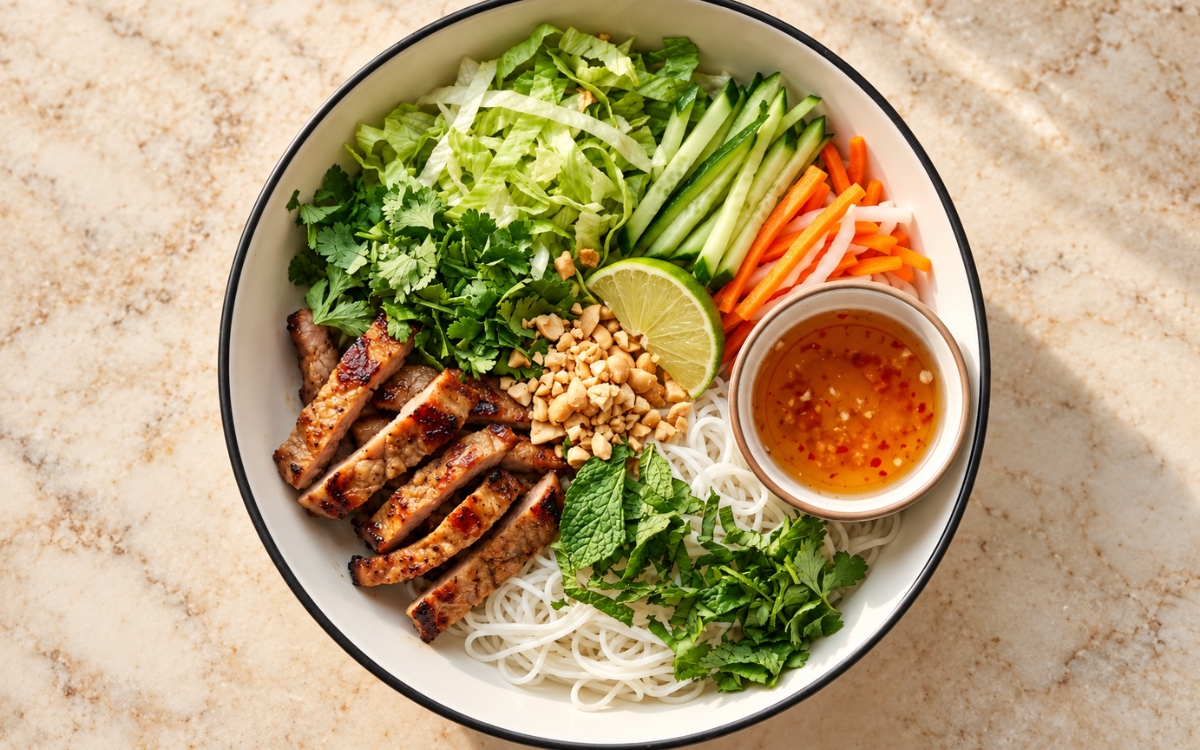
- Divide the vermicelli among 4 bowls. Arrange the shredded lettuce, cucumber batons and drained pickled carrot and daikon in separate sections around the noodles, then place a quarter of the pork over one side of each bowl rather than scattering it throughout. Add the cilantro and mint last, then scatter over the chopped peanuts and tuck a lime wedge into each bowl. Serve the nuoc cham on the side, so everyone can spoon a little over the noodles or pour it in and toss just before eating. Serve straight away, while the pork is warm and the vegetables are still cold. That composed, dressing-on-the-side assembly is what keeps the herbs, peanuts and vegetables genuinely crisp until the very first bite.
Notes
Cooking the pork in uncrowded batches deserves genuine recognition as the technique most directly responsible for whether the meat browns or stews. The recipe's own warning that "crowded pork steams instead of browning" reflects simple heat physics — too many cold, wet strips drop the pan temperature below the point where the marinade's sugar can caramelise, so the juices pool and the pork turns grey and chewy instead of charred.
Mincing the lemongrass almost to a paste deserves the same attention this technique receives throughout this collection's other lemongrass-marinated dishes, because its texture decides how the pork cooks. The recipe's own instruction to "Mince the lemongrass very finely; large fibrous pieces burn before the pork cooks" is the key — coarse shreds cling loosely, char black within a minute on a hot pan and leave tough, bitter splinters in every bite.
Draining both the pickles and the vermicelli deserves genuine respect as the detail most directly responsible for a clean, crisp bowl. The recipe's own note to "Drain before assembly so the bowl stays clean and not watery" matters because every spoonful of leftover brine or rinsing water dilutes the nuoc cham and softens the lettuce, leaving the dressing tasting thin and the bottom of the bowl soggy.
The browned, lightly charred edge on each strip deserves attention as a genuine, checkable readiness cue rather than a loose approximation. Thin pork reaches 63°C in about 2–3 minutes per side, just as the edges caramelise, and the recipe's own note that pork shoulder or neck "stays juicier after grilling" than lean loin explains why the cut forgives this short, fierce cooking — its marbling keeps every strip moist.