
Lebanese Chicken Shawarma Rice Bowl
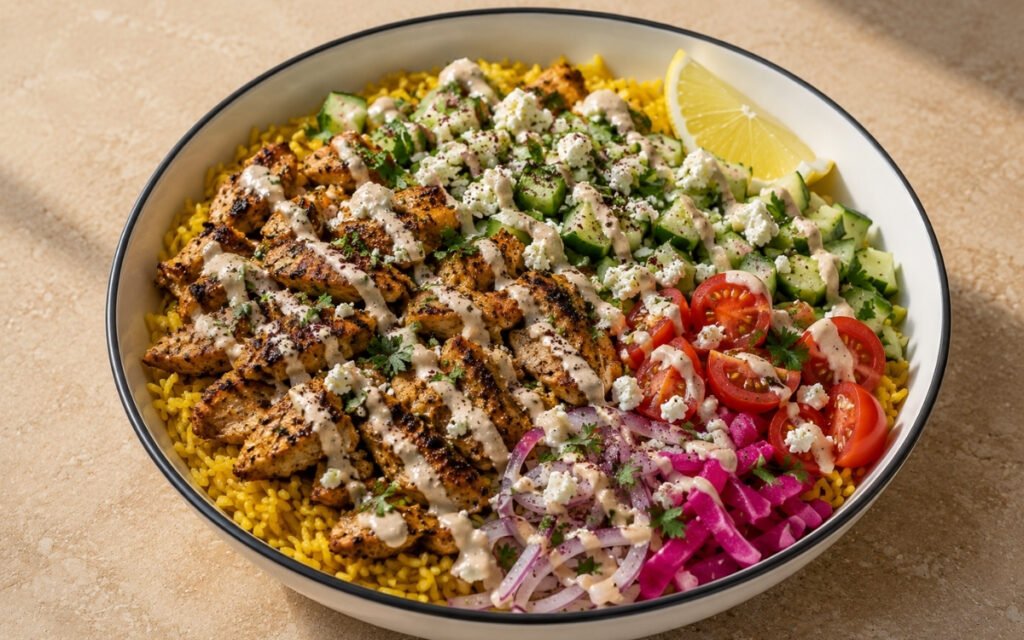
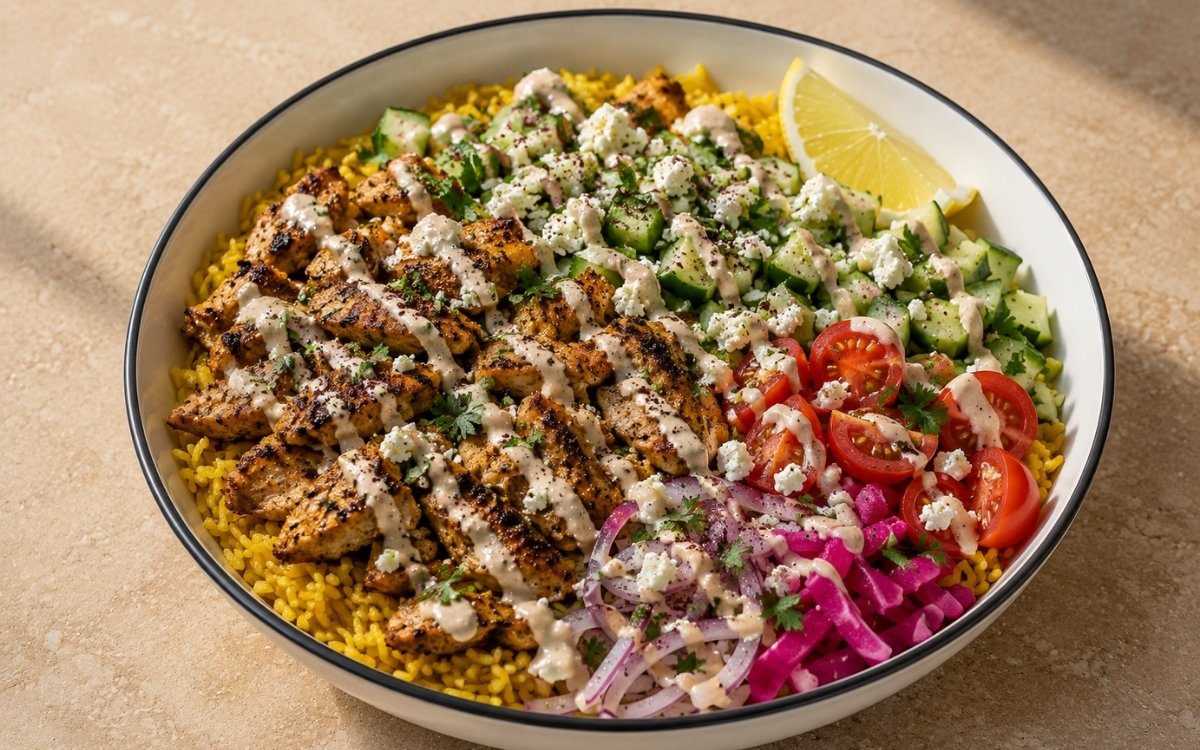
A yogurt-and-spice marinade — cumin, paprika, coriander, turmeric, cinnamon, and black pepper combined with lemon, garlic, and olive oil — massaged into chicken thigh strips and left for at least 15 minutes while the turmeric rice and tahini sauce are prepared. The chicken goes into a hot cast iron skillet and is left completely undisturbed for 4–5 minutes so the yogurt’s sugars char against the surface and the spice crust develops its specific slightly blackened, deeply aromatic character. Turmeric rice bloomed in olive oil before the water is added, tahini sauce whisked with cold water and lemon until it transforms from seized paste to smooth, pourable cream. Pickled turnips, sumac, and feta as optional garnishes that are worth including. Forty-five minutes and a bowl that tastes of Beirut’s street food.
Prep Time : 20 min
Cook Time : 25 min
Servings : 4
20 min
25 min
4
Ingredients
For the Shawarma Chicken
• 600g boneless skinless chicken thighs, cut into 1cm thick strips
• 60g plain whole milk yogurt
• 30ml extra-virgin olive oil
• 15ml fresh lemon juice
• 4g garlic cloves, minced — about 2 cloves
• 3g ground cumin
• 3g paprika
• 2g ground coriander
• 2g ground turmeric
• 1g ground cinnamon
• 1g black pepper
• 4g salt
• 20ml olive oil, for cooking
For the Turmeric Rice
• 280g basmati rice, rinsed
• 420ml water
• 15g olive oil
• 3g ground turmeric
• 3g salt
For the Tahini Sauce
• 80g tahini paste — this one on Amazon
• 60ml cold water
• 30g fresh lemon juice
• 2g garlic, approximately 1 small clove, minced
• 2g fine salt
For the Bowl Toppings
• 200g cucumber, diced
• 200g cherry tomatoes, halved
• 80g red onion, thinly sliced
• 40g fresh flat-leaf parsley, roughly chopped
• Lemon wedges, for serving
Optional Garnishes
• 160g pickled turnips
• Sumac for sprinkling
• 120g crumbled feta cheese
This post may contain affiliate links. As an Amazon Associate I earn from qualifying purchases, at no additional cost to you.
Directions
- Marinate the Chicken
In a large bowl, whisk together the 60g of plain whole milk yogurt, 30ml of olive oil, 15ml of fresh lemon juice, 4g of minced garlic, 3g of cumin, 3g of paprika, 2g of coriander, 2g of turmeric, 1g of cinnamon, 1g of black pepper, and 4g of salt until fully combined and uniform. The yogurt-based marinade is the specifically Lebanese approach to shawarma — the yogurt’s lactic acid gently tenderises the chicken’s surface during marinating while simultaneously providing a protein-rich coating that adheres the spices to the meat and caramelises into the characteristic charred crust during high-heat cooking. The seven-spice combination produces the composite aromatic that identifies Lebanese shawarma specifically: cumin for earthy warmth, paprika for colour and mild sweetness, coriander for citrusy floral depth, turmeric for the golden colour and slightly bitter earthiness, cinnamon for the warm, sweet aromatic background that is distinctly Middle Eastern rather than Mediterranean or South Asian. Add the 600g of chicken thigh strips and use your hands to massage the marinade thoroughly into every surface — working it into all the cut surfaces of the strips where it adheres most effectively. Allow to marinate for a minimum of 15 minutes at room temperature while the rice and tahini sauce are prepared. For the deepest flavour penetration, marinate for 2–4 hours or overnight refrigerated — bringing the chicken to room temperature for 10 minutes before cooking regardless of marination length. - Cook the Turmeric Rice
In a medium saucepan, heat the 15ml of olive oil over medium heat. Add the rinsed 280g of basmati rice to the hot olive oil and stir for 1 minute — coating each grain in the warm oil and allowing the rice’s exterior starch to toast very slightly in the oil. This brief toasting step is the technique decision that makes the turmeric rice specifically more flavourful than simply cooking rice in turmeric water: the oil-coated grains absorb the aromatic compounds of the turmeric more completely during subsequent cooking, producing a more evenly golden and more aromatic rice. Add the 420ml of water, 3g of turmeric, and 3g of salt. The turmeric dissolves into the water and turns the cooking liquid a vivid golden-yellow — during the 15-minute simmer the rice absorbs this coloured, lightly spiced water completely, producing the characteristic golden basmati with a faint, warm turmeric aroma that characterises Lebanese rice dishes. Bring to a full boil, then reduce immediately to the lowest possible heat, cover tightly, and cook for 15 minutes without lifting the lid. Remove from heat and allow to stand covered for 5 minutes. Uncover and fluff gently with a fork — the grains should be separate and fluffy with an even, deep golden colour throughout. - Make the Tahini Sauce
Place the 80g of tahini paste in a medium bowl. Add the 30ml of fresh lemon juice and 2g of minced garlic and begin whisking. The tahini will immediately seize — this is the expected and characteristic behaviour of pure sesame paste when it first contacts an acidic liquid. The sesame proteins contract rapidly, causing the tahini to thicken dramatically and sometimes appear to curdle or become grainy. Continue whisking firmly — the seized texture is temporary. Begin adding the 60ml of cold water in small increments while whisking continuously. Cold water is specified because the temperature differential helps the seized proteins relax and re-emulsify more smoothly than warm or hot water. With each small addition of cold water and continuous whisking, the seized tahini progressively loosens and transforms — from a stiff, grainy mass to a pale, smooth, uniformly creamy sauce. By the time all 60ml of cold water has been incorporated the sauce should have the consistency of pourable cream — thick enough to drizzle in a controlled stream rather than running freely, smooth enough to show no grain or lumpiness. Season with the 2g of salt and taste — the sauce should be simultaneously rich from the sesame, bright from the lemon, and gently sharp from the garlic. Adjust with additional lemon juice for brightness or additional water for a looser consistency. - Cook the Shawarma Chicken
Heat the 20ml of olive oil in a large cast iron skillet or heavy-bottomed pan over medium-high heat until shimmering. Remove the chicken strips from the marinade and allow the thick excess to drip off briefly — any very thick clumps of yogurt marinade will steam rather than char and should be shaken off. Add the chicken in a single layer with space between pieces — work in two batches if the skillet cannot accommodate all 600g without crowding. Leave completely undisturbed for 4–5 minutes. The yogurt’s milk sugars and the paprika and cumin’s heat-reactive compounds caramelise simultaneously against the hot cast iron surface, developing the deeply browned, slightly charred crust that is the signature of authentic shawarma’s char-cooked character. The undisturbed contact is essential — any movement during this period breaks the developing crust and prevents the charring that makes shawarma specifically distinctive from any other spiced chicken preparation. After 4–5 minutes the chicken strips should be releasing naturally from the pan surface with deeply browned and slightly blackened patches visible on the bottom. Flip and cook for a further 3–4 minutes on the second side until cooked through to 75°C internal temperature throughout. Remove from heat. - Assemble the Bowls
Divide the turmeric rice among four wide bowls. Top each bowl with equal portions of the shawarma chicken strips, arranging them so the charred surfaces are visible. Distribute the bowl toppings in distinct sections around the chicken: 50g of diced cucumber, 50g of halved cherry tomatoes, 20g of thinly sliced red onion, and 10g of chopped flat-leaf parsley per bowl. The vegetables are served raw — their fresh crunch and clean, bright flavour characters provide the specific contrast that the warm, spiced, charred chicken requires. Drizzle the tahini sauce generously over each bowl — extending it across both the chicken and the rice so every component is reached. Serve lemon wedges alongside each bowl for squeezing at the table. Add the optional garnishes if using: 40g of pickled turnips per bowl, a pinch of sumac sprinkled over the entire surface, and 30g of crumbled feta cheese. The pickled turnips — vivid magenta from their beet-pickling liquid — provide the sharp, vinegary acidity that is a hallmark of Lebanese street food accompaniments and which cuts through the tahini’s richness and the chicken’s spiced warmth with a specific, irreplaceable character. The sumac’s tart, fruity acid adds its specific top note of citrus-adjacent sourness that neither lemon juice nor the pickles provide exactly. The feta adds a salty, creamy counterpoint to the tahini’s nuttiness.
*Notes :
- The yogurt marinade’s function in this recipe extends beyond flavour into cooking technique. Yogurt’s protein and fat content produces a coating on the chicken that adheres the spices physically to the surface rather than allowing them to be washed away when the chicken is moved in the pan. During cooking, the yogurt’s proteins set against the hot pan surface and its milk sugars caramelise, producing a cohesive, slightly sticky crust that locks the spice flavours against the meat. This is the same principle used in tandoori preparations — yogurt as both a flavour vehicle and a crust-forming agent.
- Basmati rice toasted briefly in olive oil before the water is added produces a specific aromatic result that plain water-cooked basmati does not achieve. The oil-coating of each grain during the toasting minute creates a barrier that slows water absorption slightly during cooking, producing more separate, more distinct grains rather than grains that absorb water too rapidly and stick together. The toasting also develops very mild nutty, toasted aromatic compounds on the rice’s outer surface that complement the turmeric’s warmth.
- The optional pickled turnips deserve specific mention: Lebanese pickled turnips — lift’it — are specifically pickled with beet, which turns the white turnip flesh a vivid magenta-pink. They provide a vinegary sharpness and a specific slightly earthy, beet-adjacent flavour that is one of the most characteristic accompaniments of Lebanese street food. Available at Middle Eastern grocery stores, they are worth seeking out specifically for this bowl. Their absence is not catastrophic but their presence is transformative.
Why This Recipe Works
This recipe works because each component is technically prepared for its specific role: the yogurt marinade is the crust-forming adhesive that makes the spice char adhere; the oil-toasted turmeric rice absorbs the spice more completely than water-only rice; the cold-water tahini technique resolves the inevitable seizure into a smooth sauce; and the undisturbed high-heat sear produces the char that is the shawarma’s signature. Every preparation decision serves the specific authentic character of Lebanese shawarma.
Ingredient Breakdown
Yogurt Marinade
The crust-forming adhesive — lactic acid tenderises the surface, milk protein and sugar produce the charred crust during searing, fat carries the spices against the meat.
Seven-Spice Combination (Cumin, Paprika, Coriander, Turmeric, Cinnamon, Black Pepper)
The Lebanese shawarma spice identity — each spice provides a distinct aromatic note that no single spice produces alone; cinnamon specifically is the marker of Middle Eastern rather than other regional spiced chicken.
Oil-Toasted Turmeric Basmati
The flavoured base — olive oil toasting distributes turmeric more evenly through the grain structure; separate, golden, and aromatically warm.
Cold-Water Tahini Technique
The sauce preparation method — cold water resolves tahini’s characteristic seizure into a smooth, pourable, pale cream.
Pickled Turnips (Optional but Transformative)
The specifically Lebanese acidic accompaniment — vinegary sharpness and the characteristic beet-pink colour of lift’it.
Sumac (Optional)
The tart citrus-acid top note — provides a sourness different in character from lemon or vinegar, specifically Middle Eastern.
Flavor Structure Explained
This chicken shawarma rice bowl follows a layered balance model:
- Warm spiced core (shawarma chicken, seven-spice blend)
- Nutty rich layer (tahini sauce)
- Bright acidic contrast (lemon, pickled turnips, sumac)
- Fresh vegetal lift (cucumber, tomato, parsley)
- Charred aromatic depth (caramelised chicken surface)
Shawarma chicken defines the foundation with deep spice, earthy warmth, slight sweetness, and charred aromatic complexity from the blended seasoning. Tahini adds a rich sesame layer that coats and unifies the bowl with nutty depth. Lemon, sumac, and pickled turnips cut through the richness with sharp acidity and brightness. Fresh vegetables and herbs provide crunch, sweetness, and herbal freshness that keep the bowl lively rather than heavy. The structure relies on constant contrast — rich against bright, warm against fresh — in every bite.
Common Mistakes to Avoid
- Not Allowing the Tahini to Seize – The seizure is expected and temporary. Do not panic and add too much water immediately — add in small increments while whisking continuously and trust the process.
- Moving the Chicken During the First 4–5 Minutes – The crust requires sustained contact. Any movement prevents the yogurt’s caramelisation. Leave undisturbed for the full time.
- Using Pre-Ground Stale Spices – The seven-spice combination’s aromatic complexity depends on the volatile compounds in fresh, recently ground spices. Spices older than 6 months produce a flat, muted shawarma without the vivid warm spice character.
- Not Toasting the Rice in Oil Before Adding Water – The oil-toasting step is what produces the specific separate, golden, aromatically turmeric basmati. Skipping it produces a less fragrant, slightly stickier result.
- Skipping the Pickled Turnips – While listed as optional they are the specifically Lebanese accompaniment that most authentically completes the bowl. Seek them out — they are available at any Middle Eastern grocery store.
- Adding Warm Water to Seized Tahini – Cold water is essential for smooth resolution of the seizure. Warm water produces a less completely emulsified result.
Variations
With Lamb
Replace the chicken with 600g of boneless lamb shoulder cut into thin strips — the same marinade and cooking technique apply. Lamb’s richer, more assertive flavour is specifically well-suited to the Lebanese spice profile.
With Cauliflower (Vegetarian)
Replace the chicken with 600g of cauliflower florets cut into thick slices — roast at 220°C for 20–25 minutes until deeply golden, then finish in the hot cast iron skillet for 2 minutes per side to develop char. The same marinade applied before roasting.
With Garlic Sauce (Toum) Instead of Tahini
Replace the tahini sauce with Lebanese toum — a whipped garlic and lemon sauce with a consistency between mayonnaise and cream — for the more traditional shawarma accompaniment in Lebanese street food.
With Fattoush Salad
Replace the simple cucumber and tomato toppings with a proper Fattoush Salad — cucumber, tomato, radish, parsley, and toasted pita pieces dressed with lemon, olive oil, and sumac — for a more complete Lebanese meal-in-a-bowl presentation.
Storage & Make-Ahead
Marinated raw chicken can be refrigerated for up to 24 hours, and the overnight version is strongly preferred because it gives the chicken much deeper flavor.
Cooked shawarma chicken can be refrigerated for up to 3 days. To bring back some of its char, reheat it in a hot, dry skillet for about 2 minutes per side.
Turmeric rice can be refrigerated for up to 4 days. Reheat it covered with a splash of water over low heat.
Tahini sauce can be refrigerated in a sealed jar for up to 5 days. It will thicken during storage, so add a small amount of cold water and whisk it before serving to bring it back to a pourable consistency.
Frequently Asked Questions
What is tahini and why does it seize when mixed?
Tahini is ground sesame seeds — a pure, dense paste of fat and protein. When an acidic liquid (lemon juice) contacts the sesame proteins directly, the proteins contract rapidly and the emulsion breaks, causing the paste to thicken and appear curdled. This is a standard tahini behaviour — adding cold water while whisking continuously reverses the seizure as the proteins re-emulsify with the water present.
What are pickled turnips and where do I find them?
Lebanese pickled turnips — lift’it — are white turnips pickled in a brine with beet, which dyes them vivid magenta-pink. They are available at Middle Eastern grocery stores. Their combination of sharp vinegary acidity and the beet’s earthy sweetness is specifically characteristic of Lebanese street food accompaniments.
What is sumac?
Sumac is a dried and ground berry widely used in Middle Eastern cooking for its tart, fruity, citrus-adjacent acidity. It provides a sourness with a different aromatic character from lemon juice or vinegar — more floral and fruity. Available at Middle Eastern grocery stores and many mainstream supermarkets.
Why whole milk yogurt rather than low-fat?
The fat content in whole milk yogurt is what produces the smooth, adherent marinade coating and the correct caramelised crust during cooking. Low-fat yogurt has a lower fat content and higher water content, producing a thinner marinade that does not adhere as effectively and a less cohesive crust.
Can I use a regular pan instead of cast iron?
Yes — a heavy-bottomed stainless steel pan produces a comparable result. Non-stick is specifically not recommended as it does not reach the temperature required for the char and its surface prevents the Maillard caramelisation that produces the shawarma crust.
Nutrition Facts
( per serving )
Calories
~890 kcal
Protein
41 g
Fat
44 g
Carbs
78 g
Calories
~890 kcal
Protein
41 g
Fat
44 g
Carbs
78 g
Related Recipes
Related Recipes

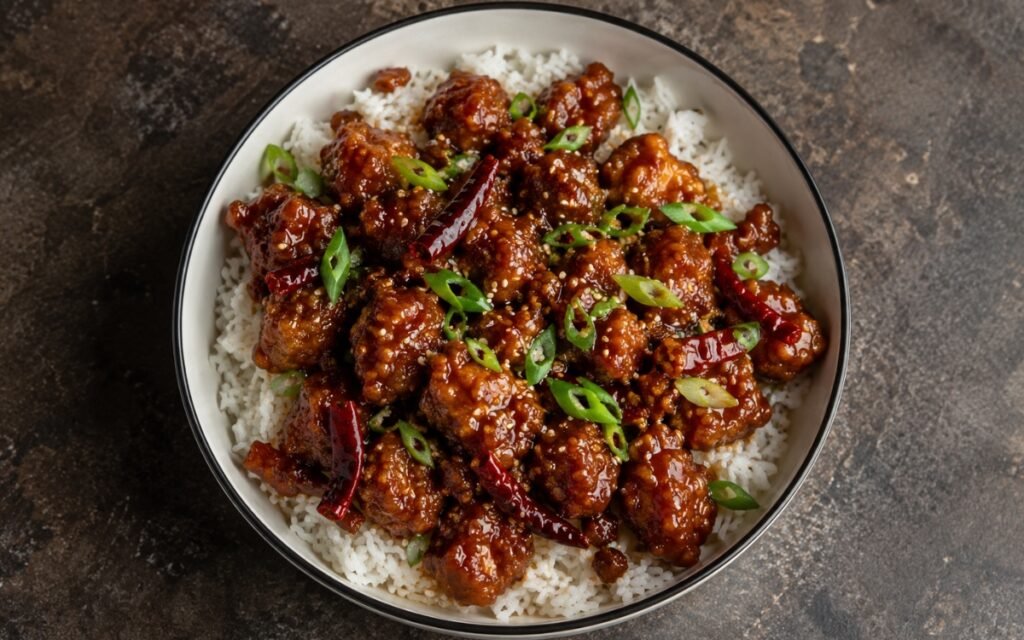
General Tso’s Chicken Rice Bowl
Golden fried chicken coated in sticky sweet-spicy General Tso’s sauce, served over jasmine rice with scallions and sesame.
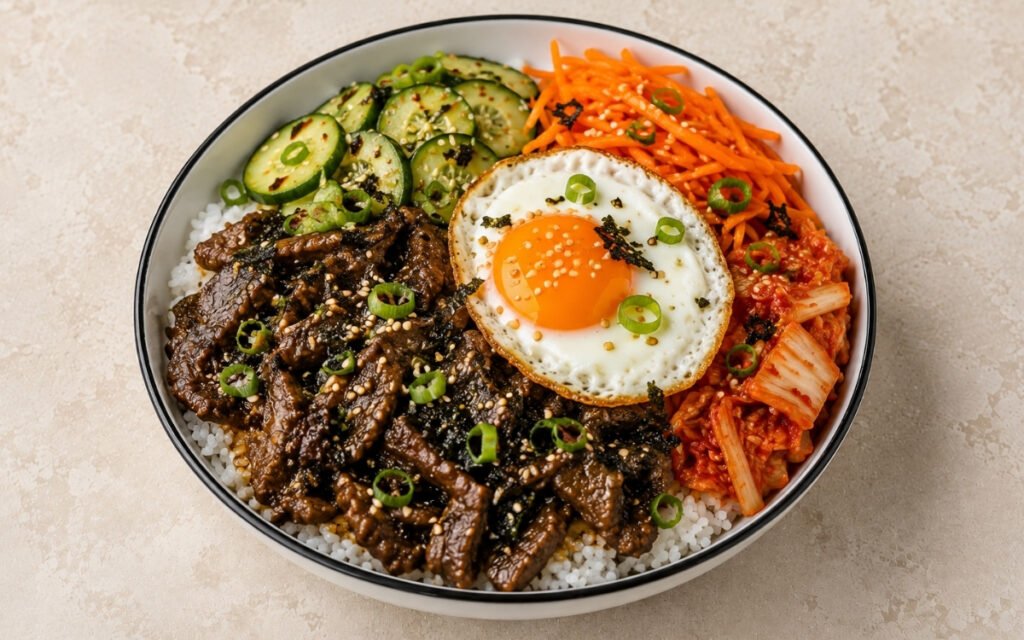
Korean Beef Bulgogi Rice Bowl
Caramelized beef bulgogi over rice with kimchi, pickled cucumber, carrots, a fried egg, scallions, and sesame.
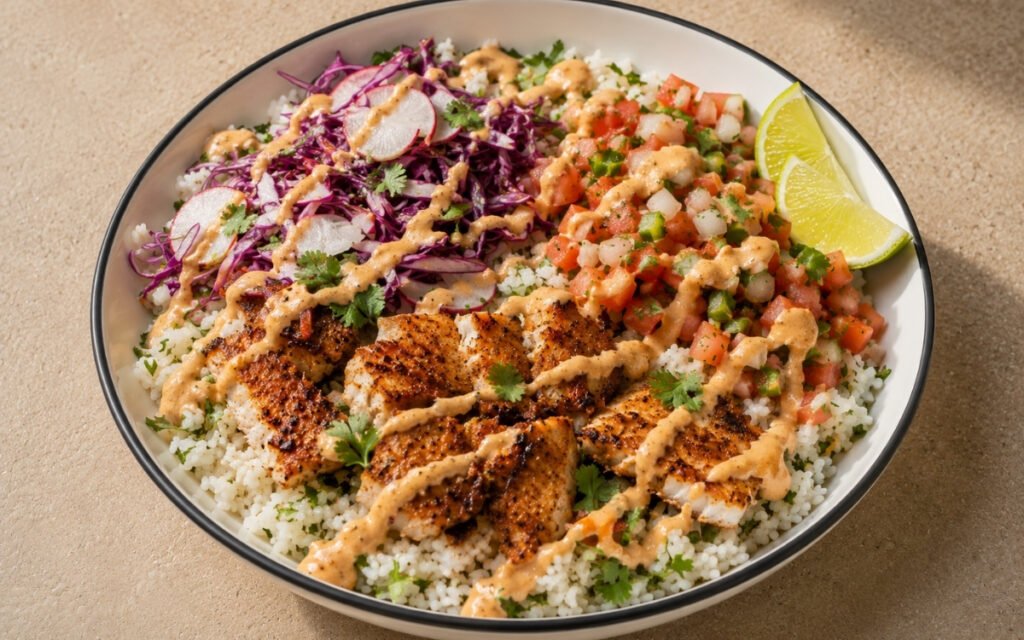
Fish Taco-Style Bowl
White fish seared golden with cumin and smoked paprika — over cilantro-lime rice with chipotle crema, purple cabbage slaw, pico de gallo, and guacamole. 40 minutes.
You might also like
You might also like
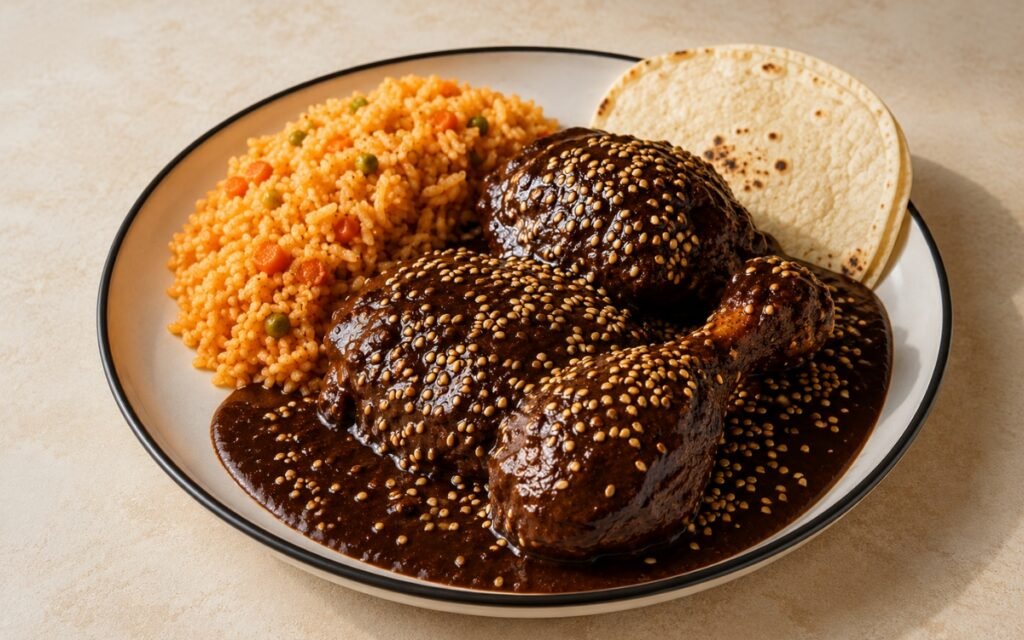
Chicken Mole Poblano
Gently poached chicken finished in deep, glossy mole poblano sauce, topped with toasted sesame seeds, served with Mexican rice and warm tortillas.
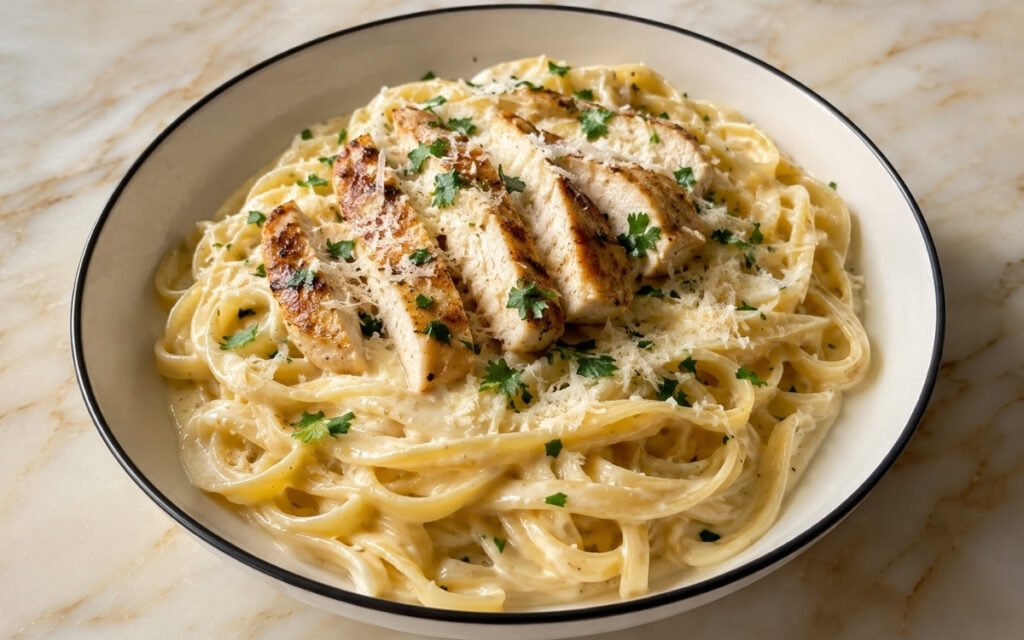
Chicken Fettuccine Alfredo
Seared chicken over fettuccine emulsified with butter, Parmigiano, and pasta water — the authentic no-cream Alfredo, 40 minutes.
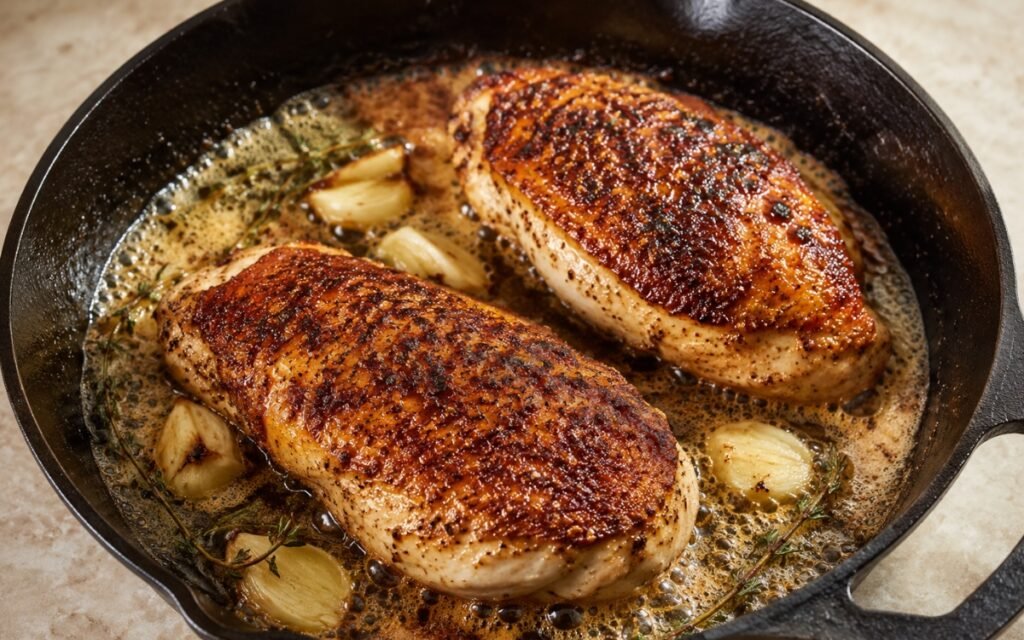
Pan-Seared Chicken Breast (Skin on)
Chicken breast pounded even, dried thoroughly, seared skin-side down undisturbed — finished with garlic thyme butter basting. Crispy skin, juicy meat.
Lebanese Chicken Shawarma Rice Bowl
Ingredients
Method
- In a large bowl, whisk together the 60g of plain whole milk yogurt, 30ml of olive oil, 15ml of fresh lemon juice, 4g of minced garlic, 3g of cumin, 3g of paprika, 2g of coriander, 2g of turmeric, 1g of cinnamon, 1g of black pepper, and 4g of salt until fully combined and uniform. The yogurt-based marinade is the specifically Lebanese approach to shawarma — the yogurt’s lactic acid gently tenderises the chicken’s surface during marinating while simultaneously providing a protein-rich coating that adheres the spices to the meat and caramelises into the characteristic charred crust during high-heat cooking. The seven-spice combination produces the composite aromatic that identifies Lebanese shawarma specifically: cumin for earthy warmth, paprika for colour and mild sweetness, coriander for citrusy floral depth, turmeric for the golden colour and slightly bitter earthiness, cinnamon for the warm, sweet aromatic background that is distinctly Middle Eastern rather than Mediterranean or South Asian. Add the 600g of chicken thigh strips and use your hands to massage the marinade thoroughly into every surface — working it into all the cut surfaces of the strips where it adheres most effectively. Allow to marinate for a minimum of 15 minutes at room temperature while the rice and tahini sauce are prepared. For the deepest flavour penetration, marinate for 2–4 hours or overnight refrigerated — bringing the chicken to room temperature for 10 minutes before cooking regardless of marination length.
- In a medium saucepan, heat the 15ml of olive oil over medium heat. Add the rinsed 280g of basmati rice to the hot olive oil and stir for 1 minute — coating each grain in the warm oil and allowing the rice’s exterior starch to toast very slightly in the oil. This brief toasting step is the technique decision that makes the turmeric rice specifically more flavourful than simply cooking rice in turmeric water: the oil-coated grains absorb the aromatic compounds of the turmeric more completely during subsequent cooking, producing a more evenly golden and more aromatic rice. Add the 420ml of water, 3g of turmeric, and 3g of salt. The turmeric dissolves into the water and turns the cooking liquid a vivid golden-yellow — during the 15-minute simmer the rice absorbs this coloured, lightly spiced water completely, producing the characteristic golden basmati with a faint, warm turmeric aroma that characterises Lebanese rice dishes. Bring to a full boil, then reduce immediately to the lowest possible heat, cover tightly, and cook for 15 minutes without lifting the lid. Remove from heat and allow to stand covered for 5 minutes. Uncover and fluff gently with a fork — the grains should be separate and fluffy with an even, deep golden colour throughout.
- Place the 80g of tahini paste in a medium bowl. Add the 30ml of fresh lemon juice and 2g of minced garlic and begin whisking. The tahini will immediately seize — this is the expected and characteristic behaviour of pure sesame paste when it first contacts an acidic liquid. The sesame proteins contract rapidly, causing the tahini to thicken dramatically and sometimes appear to curdle or become grainy. Continue whisking firmly — the seized texture is temporary. Begin adding the 60ml of cold water in small increments while whisking continuously. Cold water is specified because the temperature differential helps the seized proteins relax and re-emulsify more smoothly than warm or hot water. With each small addition of cold water and continuous whisking, the seized tahini progressively loosens and transforms — from a stiff, grainy mass to a pale, smooth, uniformly creamy sauce. By the time all 60ml of cold water has been incorporated the sauce should have the consistency of pourable cream — thick enough to drizzle in a controlled stream rather than running freely, smooth enough to show no grain or lumpiness. Season with the 2g of salt and taste — the sauce should be simultaneously rich from the sesame, bright from the lemon, and gently sharp from the garlic. Adjust with additional lemon juice for brightness or additional water for a looser consistency.
- Heat the 20ml of olive oil in a large cast iron skillet or heavy-bottomed pan over medium-high heat until shimmering. Remove the chicken strips from the marinade and allow the thick excess to drip off briefly — any very thick clumps of yogurt marinade will steam rather than char and should be shaken off. Add the chicken in a single layer with space between pieces — work in two batches if the skillet cannot accommodate all 600g without crowding. Leave completely undisturbed for 4–5 minutes. The yogurt’s milk sugars and the paprika and cumin’s heat-reactive compounds caramelise simultaneously against the hot cast iron surface, developing the deeply browned, slightly charred crust that is the signature of authentic shawarma’s char-cooked character. The undisturbed contact is essential — any movement during this period breaks the developing crust and prevents the charring that makes shawarma specifically distinctive from any other spiced chicken preparation. After 4–5 minutes the chicken strips should be releasing naturally from the pan surface with deeply browned and slightly blackened patches visible on the bottom. Flip and cook for a further 3–4 minutes on the second side until cooked through to 75°C internal temperature throughout. Remove from heat.
- Divide the turmeric rice among four wide bowls. Top each bowl with equal portions of the shawarma chicken strips, arranging them so the charred surfaces are visible. Distribute the bowl toppings in distinct sections around the chicken: 50g of diced cucumber, 50g of halved cherry tomatoes, 20g of thinly sliced red onion, and 10g of chopped flat-leaf parsley per bowl. The vegetables are served raw — their fresh crunch and clean, bright flavour characters provide the specific contrast that the warm, spiced, charred chicken requires. Drizzle the tahini sauce generously over each bowl — extending it across both the chicken and the rice so every component is reached. Serve lemon wedges alongside each bowl for squeezing at the table. Add the optional garnishes if using: 40g of pickled turnips per bowl, a pinch of sumac sprinkled over the entire surface, and 30g of crumbled feta cheese. The pickled turnips — vivid magenta from their beet-pickling liquid — provide the sharp, vinegary acidity that is a hallmark of Lebanese street food accompaniments and which cuts through the tahini’s richness and the chicken’s spiced warmth with a specific, irreplaceable character. The sumac’s tart, fruity acid adds its specific top note of citrus-adjacent sourness that neither lemon juice nor the pickles provide exactly. The feta adds a salty, creamy counterpoint to the tahini’s nuttiness.