
Creamy Scalloped Potatoes
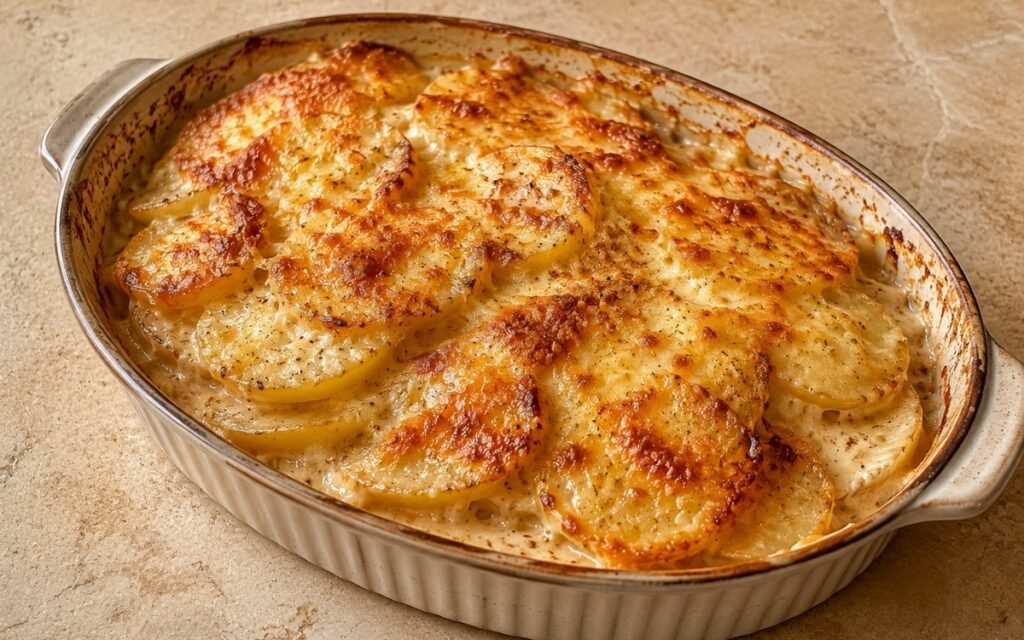
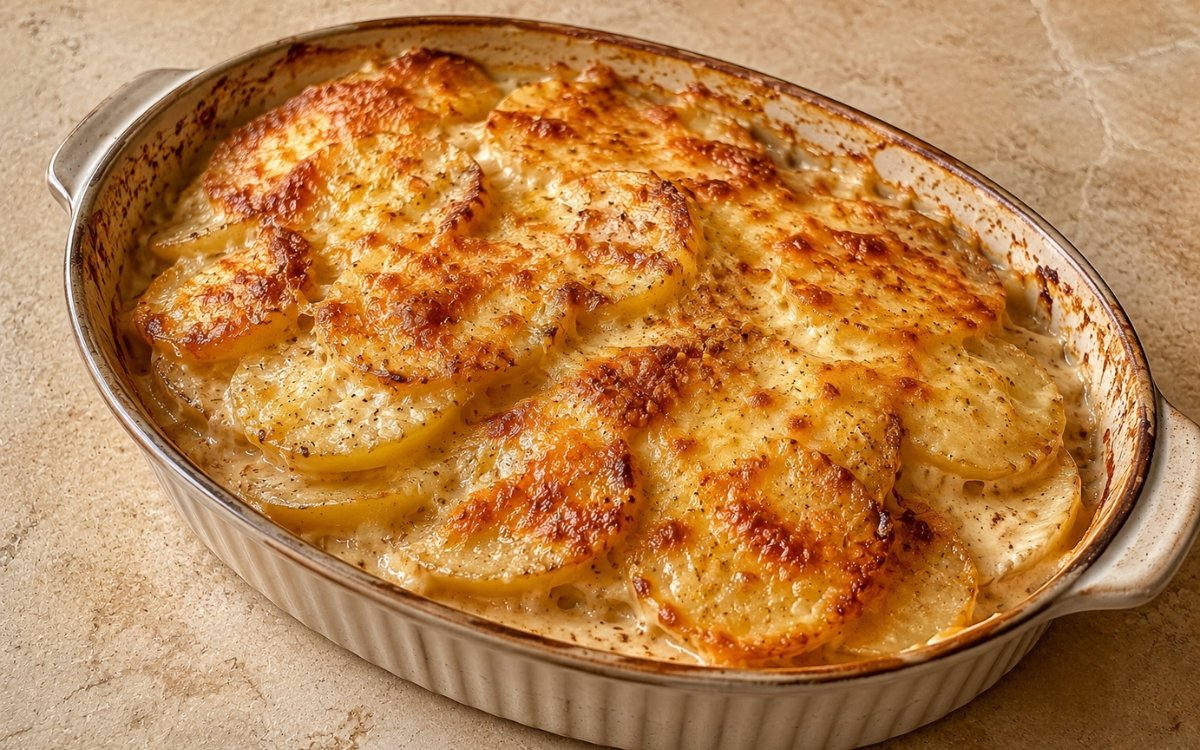
Creamy Scalloped Potatoes features layers of thinly sliced potatoes baked in a rich, creamy sauce until tender and golden. This classic comfort side dish features a velvety texture with crispy top edges, making it perfect for holiday meals or special family dinners. The cream sauce is built on a genuine roux — butter and flour whisked together and cooked briefly before any liquid is added — which is what allows the finished sauce to thicken properly rather than staying thin and separating during the long bake ahead. Slicing the potatoes to a consistent 3mm thickness is essential for even cooking through all three layers; slices of varying thickness would leave thinner pieces overdone while thicker ones remained underdone by the time the dish finishes baking. Covering tightly with foil for the first stage of baking traps steam and heat evenly around the layered potatoes, allowing them to cook through gently before the foil comes off and the final uncovered stage develops genuine golden color and bubbling around the edges. Resting for a full 10 minutes after baking lets the sauce set and thicken, which is specifically what allows clean slices to hold their shape when served rather than collapsing into a puddle. The result is a genuinely velvety, tender dish with real textural contrast at the top.
Prep Time : 20 min
Cook Time : 60 min
Servings : 4
20 min
60 min
4
Ingredients
For the Scalloped Potatoes
• 900g russet potatoes, thinly sliced
• 300ml heavy cream — this one on Amazon
• 150ml whole milk
• 30g unsalted butter — this one on Amazon
• 20g all-purpose flour
• 4g salt
• 2g black pepper
• 2g garlic powder
• 1g nutmeg
• 50g gruyere cheese, grated — this one on Amazon
This post may contain affiliate links. As an Amazon Associate I earn from qualifying purchases, at no additional cost to you.
Directions
- Prepare the Cream Sauce
Use a medium saucepan (2L) over medium heat. Melt the 30g butter, add the 20g flour, and whisk constantly for 1 minute to cook out raw flour taste (you want a smooth paste, not browning). Gradually pour in the 300ml cream and 150ml milk while whisking continuously to prevent lumps; once fully added, cook 3–4 minutes until the sauce thickens enough to lightly coat the back of a spoon. - Season the Sauce
Season with the 4g salt, 2g black pepper, 2g garlic powder, and 1g nutmeg. Stir in the 50g gruyere until melted and smooth, then remove from heat; keeping it off high heat prevents separation. If the sauce looks too thick, whisk in a small splash of milk (use milk from the recipe) until it’s pourable but still creamy. - Layer the Potatoes
Preheat oven to 180°C (350°F). Butter a 20x25cm baking dish. Slice potatoes thinly and evenly (about 900g total) — aim for ~3mm slices so they cook through at the same time; overlap slightly in each layer so there are no gaps. Pour one-third of the sauce over the first layer, pressing gently with a spoon so sauce slips between slices, then repeat for a total of three layers, finishing with sauce on top. - Bake Until Golden
Cover tightly with foil and bake 45 minutes until potatoes are close to tender (a knife should slide in with only slight resistance). Remove foil and bake 15 minutes more until the top is golden and the sauce bubbles around the edges. Rest 10 minutes before serving — this allows the sauce to thicken and set so slices don’t collapse when served.
*Notes :
- The roux — butter and flour cooked together briefly before liquid is added — is the technical foundation this entire sauce depends on. Skipping it, or rushing the one-minute cook time, leaves raw flour taste in the finished sauce and produces a thinner, less stable result that’s more prone to breaking apart during the long baking time ahead.
- Consistent 3mm slicing matters more here than in almost any other potato preparation in this collection, since these potatoes are baked stacked in three distinct layers rather than spread in a single layer on a tray. Uneven slices compound their inconsistency across each layer, meaning some sections of the finished dish could be notably softer or firmer than others by the time it comes out of the oven.
- The covered-then-uncovered baking sequence serves two distinct purposes. The foil-covered stage traps steam and heat, cooking the potatoes through gently and evenly; removing it for the final stage allows direct oven heat to develop genuine color and bubbling on top, which covered baking alone would never achieve.
Why This Recipe Works
This recipe works because the roux-based sauce is built to thicken properly and hold together through a long bake. Consistent potato slicing ensures even cooking across all three stacked layers.
The covered-then-uncovered baking sequence cooks the potatoes through gently before developing genuine golden color on top. And the final rest allows the sauce to set, which is what lets the dish hold clean, structured slices when served.
Ingredient Breakdown
Russet Potatoes, Sliced to Consistent 3mm
The foundation — even thickness across three stacked layers is essential for uniform cooking.
Butter-and-Flour Roux
The sauce’s structural base — cooked briefly before liquid is added, allowing proper thickening.
Heavy Cream, Milk, Gruyere
The rich, velvety sauce — thickened and enriched, finished with cheese for depth.
Covered-Then-Uncovered Baking
The two-stage technique — gentle, even cooking followed by genuine surface browning.
Flavor Structure Explained
This Creamy Scalloped Potatoes follows a rich layered balance model:
- Tender potato core (thin potato layers)
- Velvety cream base (roux-thickened sauce)
- Savory cheese depth (gruyere)
- Warm aromatic nuance (garlic powder and nutmeg)
- Golden crisp finish (uncovered final bake)
The potato layers define the foundation with a tender, starchy structure that absorbs the sauce as the dish bakes. The cream and gruyere sauce provides the main flavor identity, bringing richness, savory depth, and a smooth velvety texture held together by a proper roux. Garlic powder adds quiet savory warmth, while nutmeg gives the sauce a subtle aromatic lift that keeps the richness from feeling flat. Baking allows the potatoes and sauce to meld into soft, cohesive layers. The final uncovered stage develops a golden, slightly crisp top that contrasts with the creamy interior beneath. The result is a scalloped potato preparation built around richness, structure, and contrast, where tender potatoes, velvety sauce, and a browned cheese finish remain deeply comforting but balanced.
Common Mistakes to Avoid
- Skipping or Rushing the Roux – Leaves raw flour taste and produces a thinner, less stable sauce. Always whisk for the full minute before adding liquid.
- Slicing the Potatoes Unevenly – Compounds inconsistency across three stacked layers. Always aim for a consistent 3mm thickness.
- Skipping the Foil-Covered Baking Stage – Prevents even, gentle cooking through the potato layers. Always cover tightly for the first 45 minutes.
- Cutting Into the Dish Before Resting – Causes the sauce to run and slices to collapse. Always rest for the full 10 minutes.
- Cooking the Sauce Over Excessively High Heat After Adding Cheese – Risks the sauce separating. Always keep the heat gentle once the gruyere is stirred in.
Variations
With Bacon
Layer crumbled cooked bacon between the potato layers for added smoky richness.
With Gruyère Substitution
Substitute sharp cheddar or a comparable melting cheese for a different flavor profile.
As a Salad Alternative
For a lighter, room-temperature potato side dish, see the Greek-Style Potato Salad.
With Fresh Thyme
Add a small amount of fresh thyme leaves to the sauce for additional herbal depth.
Storage & Make-Ahead
The cream sauce can be made up to 1 day in advance and refrigerated, then gently rewarmed before layering with the potatoes.
Baked scalloped potatoes can be refrigerated for up to 3 days. Reheat them gently in the oven, covered, to avoid drying out the top layer.
Frequently Asked Questions
Why does the sauce need a proper roux instead of just mixing everything together?
A roux — butter and flour cooked together briefly before liquid is added — is what gives the sauce its thickening structure. Without it, or with a rushed roux that hasn’t cooked long enough, the finished sauce stays thin, tastes of raw flour, and is more likely to separate or thin out further during the long baking time this dish requires.
Why does slice consistency matter so much for this particular dish?
Because the potatoes are stacked in three distinct layers rather than spread in a single layer, any inconsistency in slice thickness compounds across the layers rather than staying isolated to one spot. Consistent 3mm slicing ensures every layer, top to bottom, reaches the same level of doneness by the time the dish comes out of the oven.
Why cover the dish for part of the baking time and leave it uncovered for the rest?
Covering traps steam and heat evenly around the potatoes, cooking them through gently without risking a burnt or overly dry top before the interior is done. Removing the foil for the final stage lets direct oven heat develop genuine golden color and the characteristic bubbling around the edges that covered baking alone can’t produce.
What should I serve alongside these potatoes?
These pair naturally with the Grilled Salmon Fillets or Pan-Seared Cod, and for a lighter, room-temperature potato side dish, try the Greek-Style Potato Salad.
Nutrition Facts
( per serving )
Calories
~420 kcal
Protein
9 g
Fat
28 g
Carbs
34 g
Calories
~420 kcal
Protein
9 g
Fat
28 g
Carbs
34 g
Related Recipes
Related Recipes

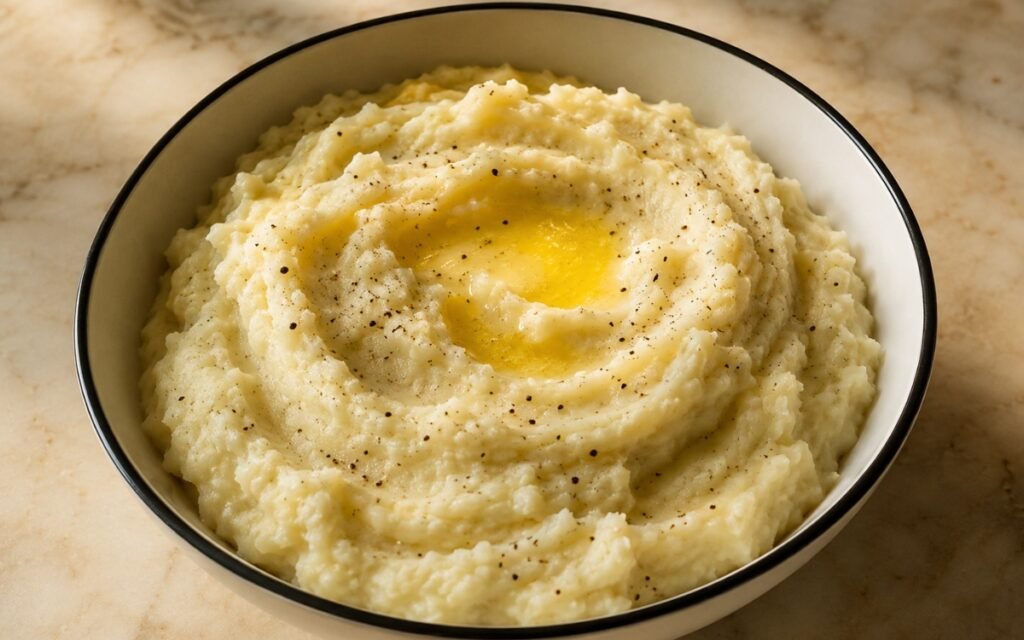
Classic Mashed Potatoes
Creamy, buttery mashed potatoes with perfectly smooth texture – the ultimate comfort food side dish.
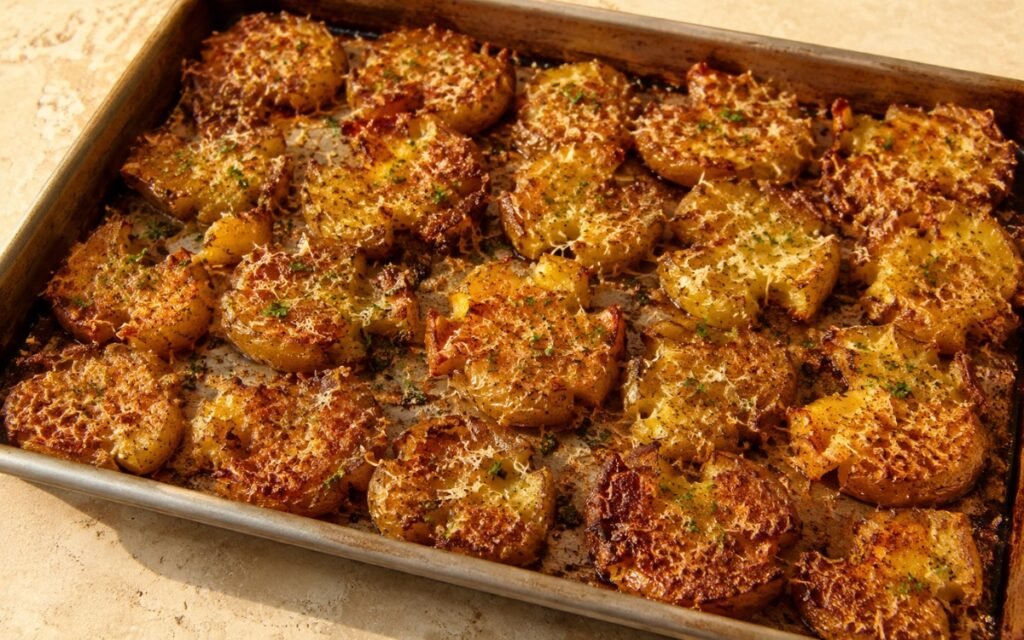
Crispy Parmesan Smashed Potatoes
Ultra-crispy smashed potatoes roasted with Parmesan cheese – crunchy outside, fluffy inside perfection.
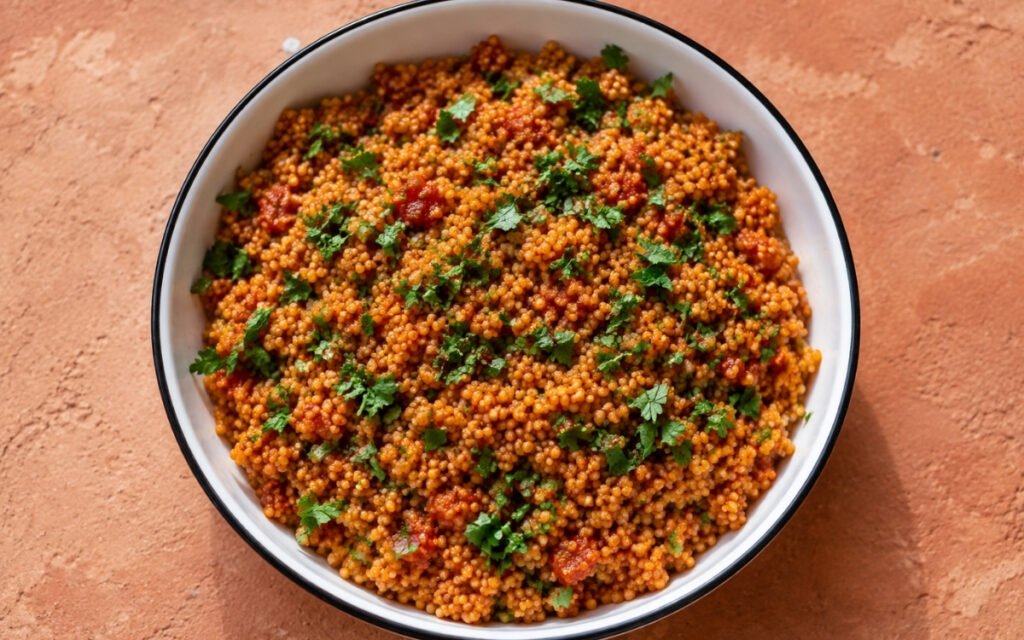
Moroccan-Style Tomato Couscous
Golden, fragrant couscous with bloomed Moroccan spices and tomato-garlic broth — a 15-minute side dish and versatile bowl base.
You might also like
You might also like
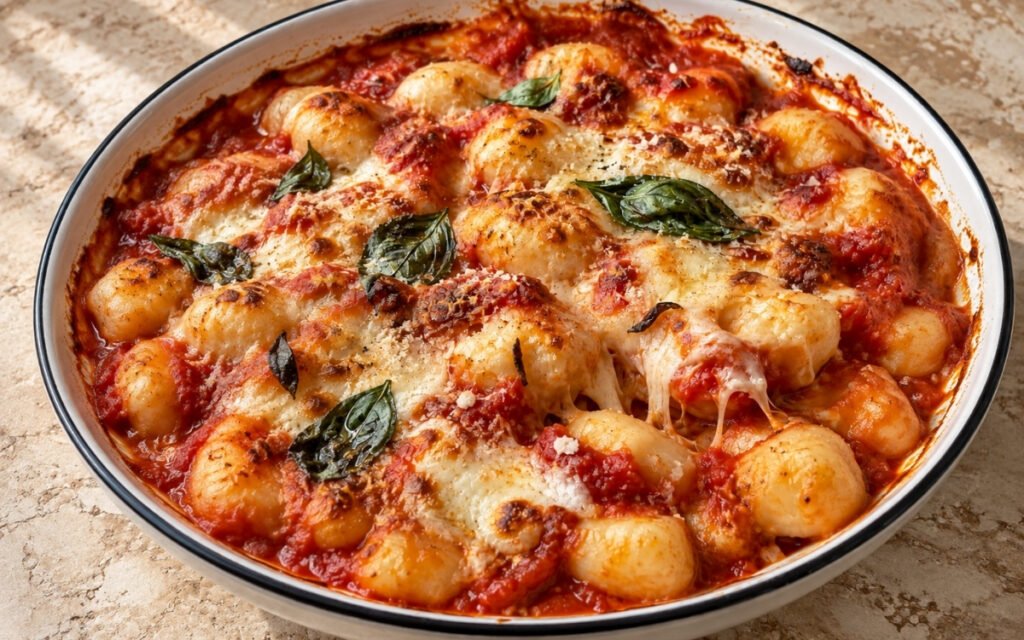
Gnocchi alla Sorrentina
Soft potato gnocchi baked in a simple tomato basil sauce with melted mozzarella, Parmesan, and bubbling browned cheese on top.
Mexican Street Corn Elotes
Corn cobs grilled dry until deeply charred, coated hot in creamy lime-mayonnaise, then covered in finely crumbled cotija and a dusting of chilli powder.
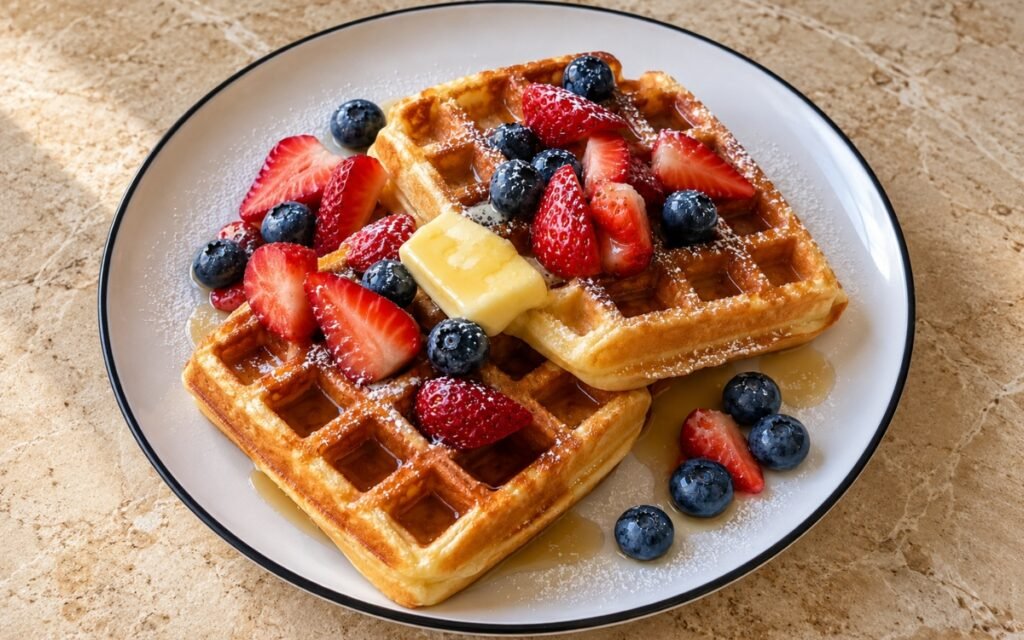
Classic Belgian Waffles with Berries
Thick Belgian-style waffles with crisp golden edges, fluffy interiors, deep square pockets, fresh berries, melting butter, and maple syrup.

Creamy Scalloped Potatoes
Ingredients
Method
- Use a medium saucepan (2L) over medium heat. Melt 30g butter, add 20g flour, and whisk constantly for 1 minute to cook out raw flour taste (you want a smooth paste, not browning). Gradually pour in 300ml cream and 150ml milk while whisking continuously to prevent lumps; once fully added, cook 3–4 minutes until the sauce thickens enough to lightly coat the back of a spoon.
- Season with 4g salt, 2g black pepper, 2g garlic powder, and 1g nutmeg. Stir in 50g gruyere until melted and smooth, then remove from heat; keeping it off high heat prevents separation. If the sauce looks too thick, whisk in a small splash of milk (use milk from the recipe) until it’s pourable but still creamy.
- Preheat oven to 180°C (350°F). Butter a 20x25cm baking dish. Slice potatoes thinly and evenly (about 900g total)—aim for ~3mm slices so they cook through at the same time; overlap slightly in each layer so there are no gaps. Pour one-third of the sauce over the first layer, pressing gently with a spoon so sauce slips between slices, then repeat for a total of three layers, finishing with sauce on top.
- Cover tightly with foil and bake 45 minutes until potatoes are close to tender (a knife should slide in with only slight resistance). Remove foil and bake 15 minutes more until the top is golden and the sauce bubbles around the edges. Rest 10 minutes before serving—this allows the sauce to thicken and set so slices don’t collapse when served.