Ingredients
Method
Prepare the Cream Sauce
- Use a medium saucepan (2L) over medium heat. Melt 30g butter, add 20g flour, and whisk constantly for 1 minute to cook out raw flour taste (you want a smooth paste, not browning). Gradually pour in 300ml cream and 150ml milk while whisking continuously to prevent lumps; once fully added, cook 3–4 minutes until the sauce thickens enough to lightly coat the back of a spoon.
Season the Sauce
- Season with 4g salt, 2g black pepper, 2g garlic powder, and 1g nutmeg. Stir in 50g gruyere until melted and smooth, then remove from heat; keeping it off high heat prevents separation. If the sauce looks too thick, whisk in a small splash of milk (use milk from the recipe) until it’s pourable but still creamy.
Layer the Potatoes
- Preheat oven to 180°C (350°F). Butter a 20x25cm baking dish. Slice potatoes thinly and evenly (about 900g total)—aim for ~3mm slices so they cook through at the same time; overlap slightly in each layer so there are no gaps. Pour one-third of the sauce over the first layer, pressing gently with a spoon so sauce slips between slices, then repeat for a total of three layers, finishing with sauce on top.
Bake Until Golden
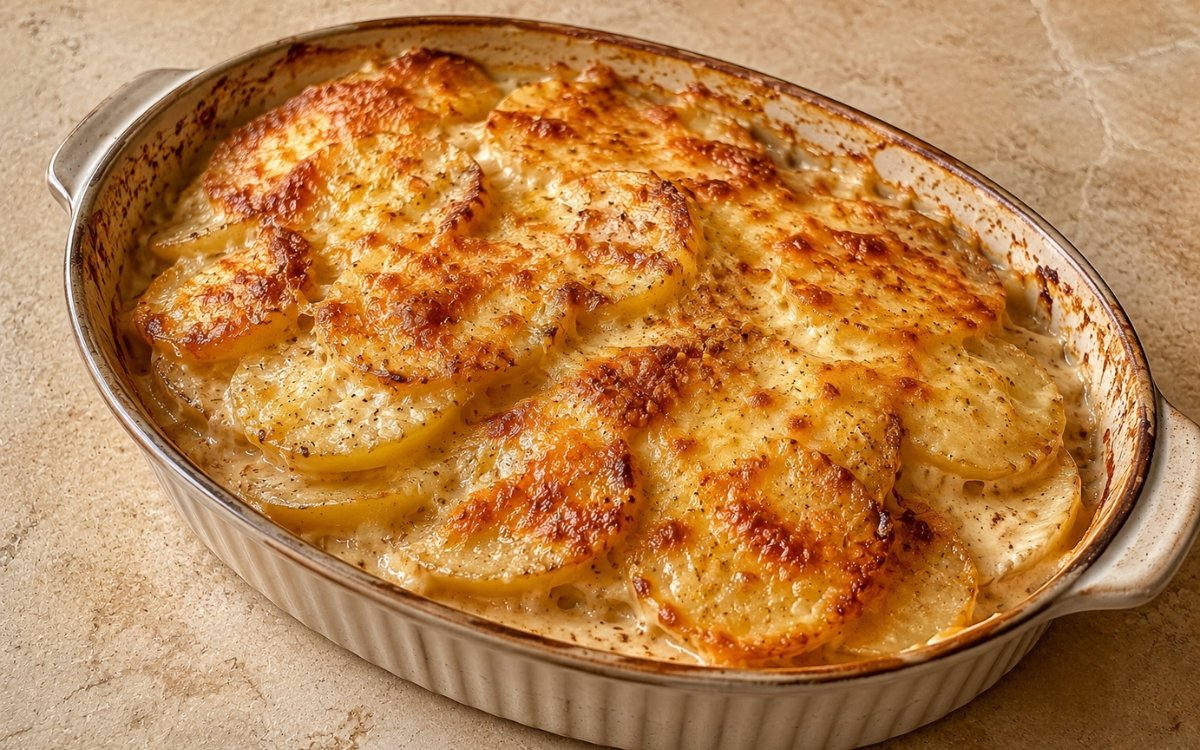
- Cover tightly with foil and bake 45 minutes until potatoes are close to tender (a knife should slide in with only slight resistance). Remove foil and bake 15 minutes more until the top is golden and the sauce bubbles around the edges. Rest 10 minutes before serving—this allows the sauce to thicken and set so slices don’t collapse when served.
Notes
The roux — butter and flour cooked together briefly before liquid is added — is the technical foundation this entire sauce depends on. Skipping it, or rushing the one-minute cook time, leaves raw flour taste in the finished sauce and produces a thinner, less stable result that's more prone to breaking apart during the long baking time ahead.
Consistent 3mm slicing matters more here than in almost any other potato preparation in this collection, since these potatoes are baked stacked in three distinct layers rather than spread in a single layer on a tray. Uneven slices compound their inconsistency across each layer, meaning some sections of the finished dish could be notably softer or firmer than others by the time it comes out of the oven.
The covered-then-uncovered baking sequence serves two distinct purposes. The foil-covered stage traps steam and heat, cooking the potatoes through gently and evenly; removing it for the final stage allows direct oven heat to develop genuine color and bubbling on top, which covered baking alone would never achieve.