
Grilled Salmon Fillets
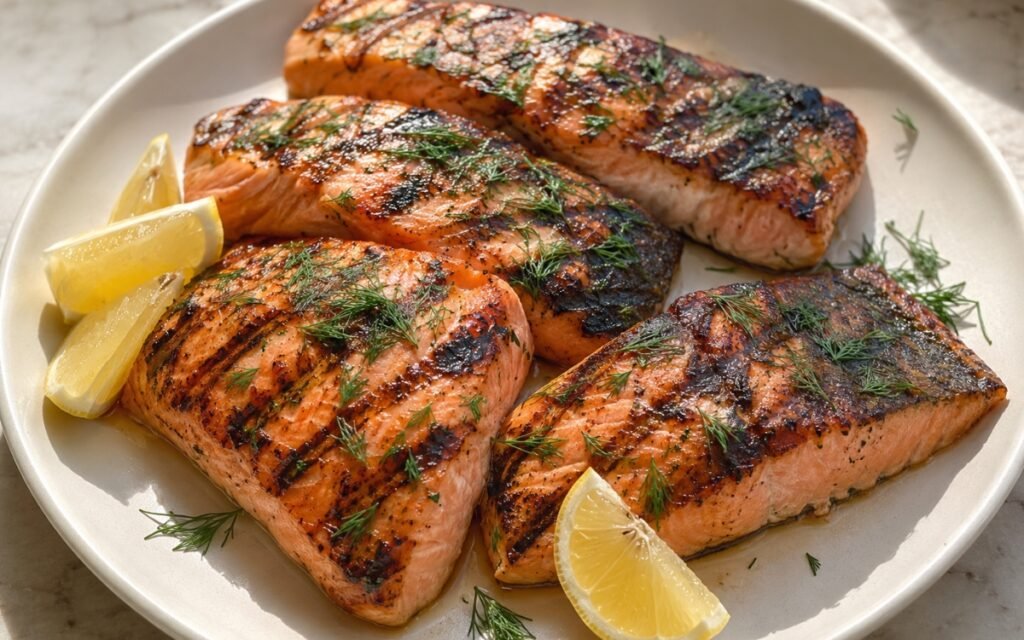
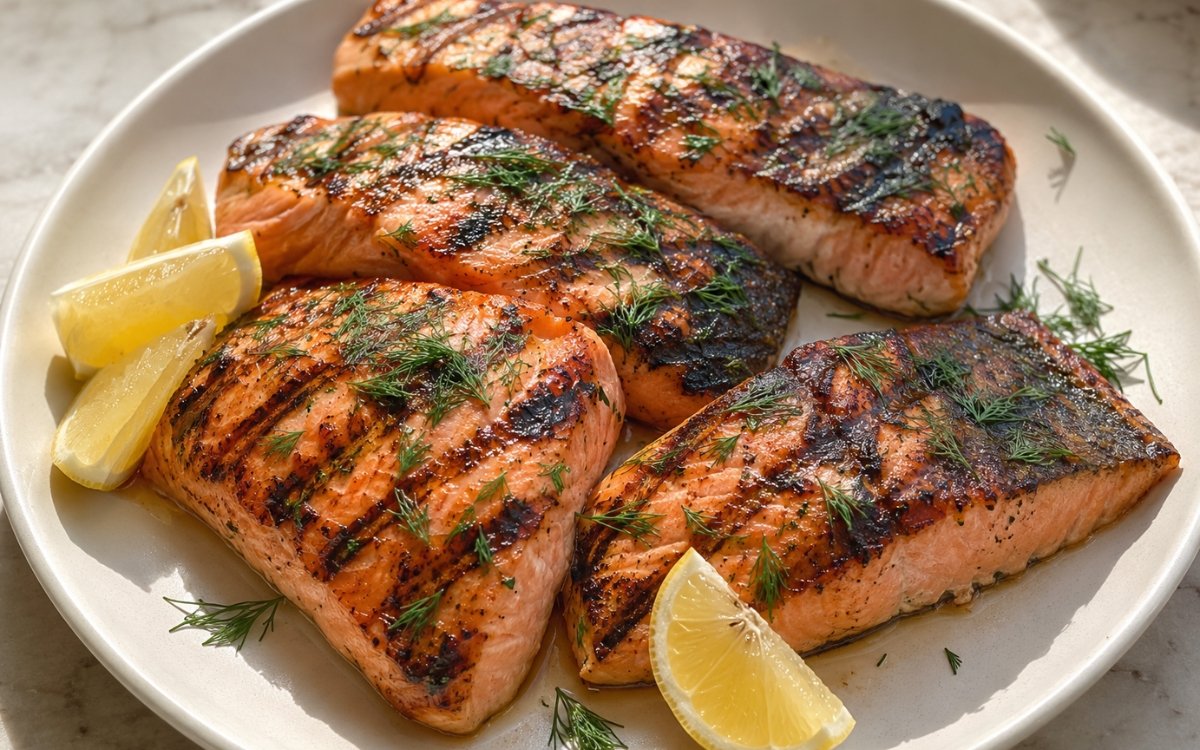
Grilled Salmon Fillets delivers perfectly grilled salmon with crisp, golden skin and a moist, flaky interior that holds together cleanly. This method relies on controlled heat, dry surface preparation, and one-sided cooking to protect the delicate flesh while building texture underneath. Done properly, salmon becomes consistent, clean, and deeply satisfying without needing heavy sauces. Thoroughly drying the skin before it ever touches the grill is the single most consequential step here — salmon skin naturally holds both moisture and fat, and any residual surface water steams rather than crisps the moment it meets heat, undermining the entire technique before it starts. Seasoning is deliberately confined to the flesh side alone, leaving the skin bare so it makes maximum, unobstructed contact with the grill grates. Cooking skin-side down for the entire time, without flipping, uses the skin itself as a protective barrier — it shields the delicate flesh from direct heat while rendering its own fat and crisping slowly underneath, and heat travels upward through the fillet gradually rather than attacking the flesh from both sides at once. The result is salmon that’s consistent, clean, and genuinely satisfying on its own.
Prep Time : 10 min
Cook Time : 10 min
Servings : 4
10 min
10 min
4
Ingredients
For the Salmon
• 800g skin-on salmon fillets (4 portions, about 200g each)
• 30ml olive oil — this one on Amazon
• 10g fine sea salt — this one on Amazon
• 4g freshly ground black pepper
• 4g garlic powder
• 1 lemon, zested
For Serving
• 1 lemon, cut into wedges
• 20g fresh dill, chopped
This post may contain affiliate links. As an Amazon Associate I earn from qualifying purchases, at no additional cost to you.
Directions
- Prepare the Salmon
Remove the salmon from the refrigerator 15 minutes before cooking and place it uncovered on a tray. Pat the skin side completely dry using paper towels, repeating if necessary until no visible moisture remains. This step is critical because salmon skin contains moisture and fat — if not dried properly, it will steam instead of crisp when it hits the grill. - Season the Fillets
Brush the flesh side lightly with olive oil, then season evenly with salt, black pepper, garlic powder, and lemon zest. Focus the seasoning on the flesh side only — the skin is left unseasoned to maximize direct contact with the grill and allow proper crisping. The seasoning should form a light, even layer, not clumps. - Preheat the Grill
Preheat the grill to high heat and allow it to fully stabilize before cooking. Clean and oil the grates thoroughly to reduce sticking. The grill must be hot enough to create immediate searing contact — if it is underheated, the fish will stick and break before it releases naturally. - Grill Skin-Side Down
Place the salmon fillets skin-side down on the hottest part of the grill and close the lid. Do not move, press, or flip the fish. The skin acts as a protective barrier, shielding the delicate flesh from direct heat while slowly crisping and rendering fat underneath. Movement at this stage will tear the skin and disrupt the structure. - Cook to Perfect Doneness
Cook for 6–8 minutes without disturbance, allowing heat to travel upward through the fish. As it cooks, the flesh will gradually turn opaque from the bottom up. Remove the salmon when the internal temperature reaches approximately 52°C (125°F) for medium doneness, where the texture is still moist and slightly translucent in the center. - Remove and Serve
Slide a thin spatula between the skin and grill grates to lift the fillets. If parts of the skin stick slightly, leave them behind — forcing removal will damage the flesh. Transfer to a plate, finish with fresh dill, and serve immediately with lemon wedges.
*Notes :
- Thoroughly drying the skin is not a step that can be rushed or approximated. Salmon skin’s natural moisture and fat content means even a seemingly dry surface can carry enough residual water to cause steaming rather than crisping on contact with the grill — repeating the pat-dry process until genuinely no moisture remains is worth the extra minute it takes.
- Leaving the skin unseasoned is a deliberate choice rather than an oversight. Salt and other seasonings on the skin side would sit between the fish and the grill grates, interfering with the direct, unobstructed contact that produces genuine crisping — all the seasoning goes onto the flesh side instead, where it will be tasted directly.
- Cooking skin-side down for the entire process, without ever flipping, is what protects the delicate flesh from the grill’s direct, aggressive heat. The skin itself absorbs that heat first and transmits it upward more gently, which is why the fillet cooks evenly from the bottom rather than being seared harshly on both sides.
- Temperature is the control point. Salmon at around 50–52°C remains moist and tender, while pushing it further leads quickly to dryness due to protein contraction.
Why This Recipe Works
This recipe works because thorough drying makes genuine skin crisping physically possible. Confining seasoning to the flesh side preserves the skin’s direct grill contact.
Cooking skin-side down for the full duration uses the skin as a protective, heat-moderating barrier for the delicate flesh above it.
And pulling the salmon at the correct, slightly-below-fully-opaque temperature preserves the moist, flaky texture that overcooked salmon loses entirely.
Ingredient Breakdown
Skin-On Salmon Fillets
The foundation — the skin’s presence is structural, not incidental, protecting the flesh throughout cooking.
Olive Oil
Light coating that improves heat transfer and helps seasoning adhere to the flesh.
Thoroughly Dried Skin
The crisping requirement — any residual moisture steams rather than crisps on contact with the grill.
Flesh-Side-Only Seasoning
The contact-preservation technique — keeping the skin bare for maximum, unobstructed grill contact.
Skin-Side-Down, Undisturbed Cooking
The protective method — the skin shields the delicate flesh while rendering fat and crisping slowly beneath.
Fresh Dill
Finishing herb that reinforces freshness and complements the richness of salmon.
Lemon Wedges
Provide acidity that cuts through fat and resets the palate.
Flavor Structure Explained
This Grilled Salmon Fillets follows a technique-driven balance model:
- Rich fish core (salmon fillets)
- Crisp rendered exterior (salmon skin)
- Moist flaky interior (controlled grilling)
- Light seasoning base (salt, pepper, garlic powder, lemon zest)
- Fresh bright finish (dill and lemon)
Salmon defines the foundation with its naturally rich, oily flesh and clean, full flavor. The crisp rendered skin provides the main textural contrast, adding savory depth and a satisfying edge against the moist, flaky interior. Salt, pepper, garlic powder, and lemon zest support the fish directly, enhancing its flavor without turning the preparation into a marinade-heavy dish. Careful grilling is essential because it allows the skin to crisp while protecting the flesh from drying out. Fresh dill adds a clean herbal note, while lemon cuts through the richness of the skin and brightens the finish. The result is a salmon preparation built around simplicity, texture, and precision, where crisp skin, moist fish, and restrained brightness remain in clear balance.
Common Mistakes to Avoid
- Not Drying the Skin Thoroughly – Causes steaming instead of crisping. Always pat dry repeatedly until no moisture remains.
- Seasoning the Skin Side – Interferes with direct grill contact needed for crisping. Always season the flesh side only.
- Grilling on an Underheated Grill – Causes the fish to stick and break before it releases naturally. Always let the grill fully stabilize at high heat first.
- Moving or Flipping the Salmon During Cooking – Tears the skin and disrupts its protective structure. Always leave it undisturbed skin-side down.
- Forcing the Fillet Off the Grill if Skin Sticks – Damages the flesh. Always leave any stuck skin behind rather than forcing removal.
Variations
Cast Iron Skin-Crisp Method
Cook skin-side down in a hot pan instead of a grill for more controlled, even crisping.
With Teriyaki Glaze
For a sweeter, glazed version of grilled salmon, see the Teriyaki Glazed Salmon.
With Herb Butter
Top the finished salmon with a small pat of compound herb butter instead of dill and lemon for a richer finish.
With Blackened Seasoning
Replace the garlic powder and pepper with a Cajun-style blackening spice blend for a bolder, spicier crust.
Storage & Make-Ahead
Cooked salmon can be refrigerated for up to 2 days. It is best eaten fresh, as reheating tends to soften the crisp skin.
Raw salmon fillets can be seasoned up to 2 hours in advance and refrigerated uncovered before grilling.
Frequently Asked Questions
Why is drying the salmon skin so critical to this technique?
Salmon skin naturally contains moisture and fat, and any residual surface water steams the skin the moment it contacts the hot grill instead of allowing it to crisp. Thoroughly patting the skin dry, repeating the process if needed, removes that moisture so the skin can render its fat and crisp properly rather than staying soft and rubbery.
Why does the seasoning only go on the flesh side?
The skin side needs maximum, unobstructed contact with the hot grill grates to crisp properly. Seasoning on that side would sit between the fish and the heat source, interfering with that direct contact — all the seasoning instead goes onto the flesh side, where it will actually be tasted.
Why cook the salmon only skin-side down without ever flipping it?
The skin acts as a protective barrier that shields the delicate flesh from the grill’s direct, aggressive heat while it renders its own fat and crisps underneath. Cooking this way lets heat travel upward through the fillet more gently and evenly than flipping and searing both sides directly would allow.
What should I serve alongside this salmon?
Garlic Butter Roasted Potatoes or Paprika Roasted Baby Potatoes both make satisfying sides, and a parsley lemon herb sauce spooned over the top adds brightness without overwhelming the fish’s clean flavor. For a different salmon preparation, try the Teriyaki Glazed Salmon.
Nutrition Facts
( per serving )
Calories
~360 kcal
Protein
38 g
Fat
22 g
Carbs
1 g
Calories
~360 kcal
Protein
38 g
Fat
22 g
Carbs
1 g
Related Recipes
Related Recipes

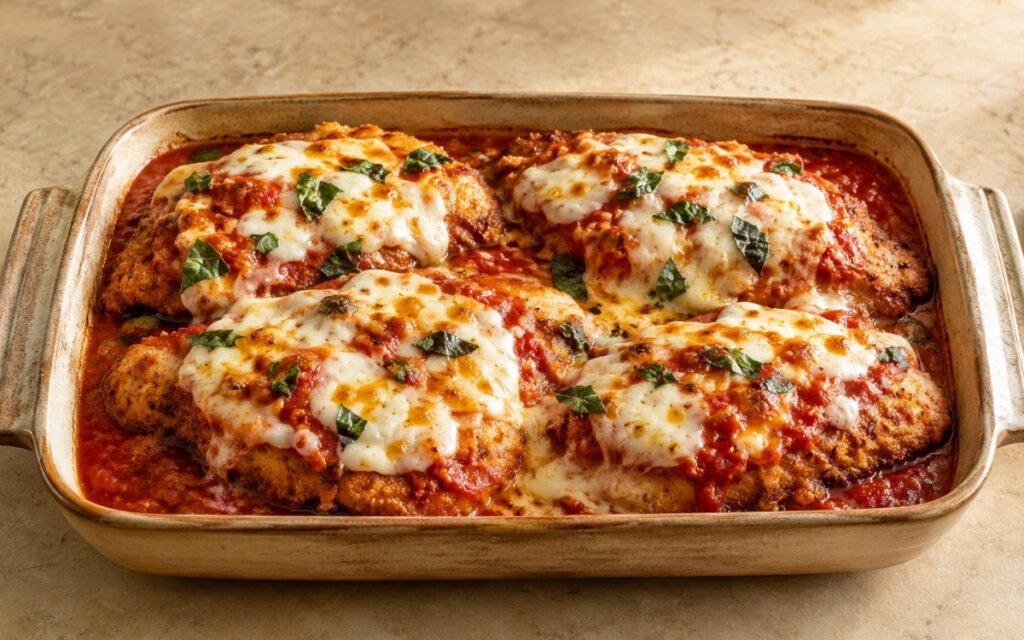
Chicken Parmigiana
Crispy fried cutlets topped with homemade marinara, fresh mozzarella, and Parmesan, baked until bubbling and golden — the complete American-Italian classic from scratch in 55 minutes.
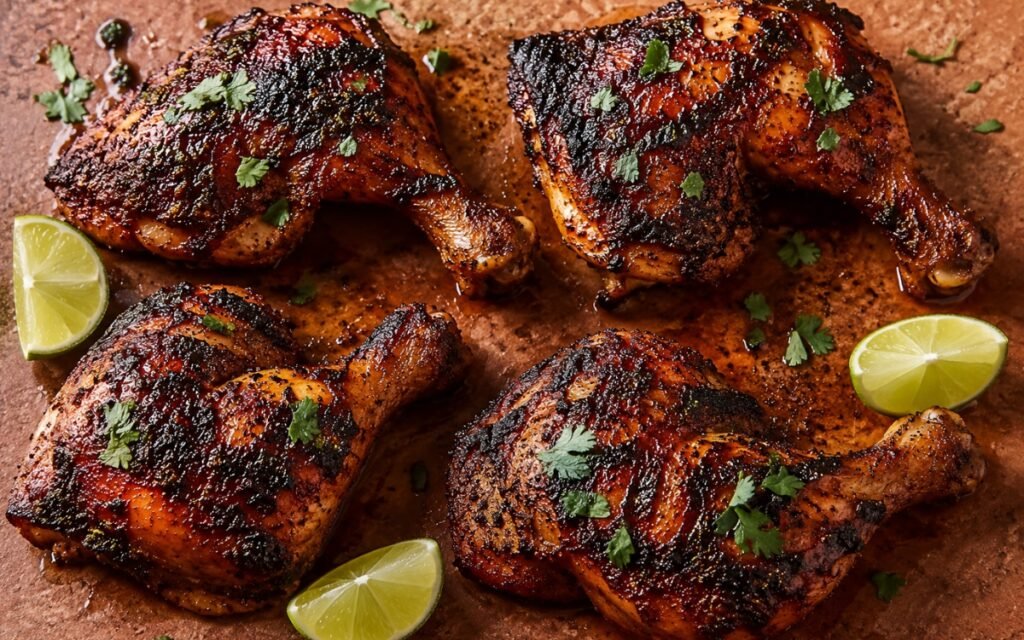
Chipotle Grilled Chicken Legs
Chicken leg quarters deeply scored and marinated in thick chipotle adobo paste — grilled two-zone style, rested, finished with cilantro and lime. Smoky and deeply charred.
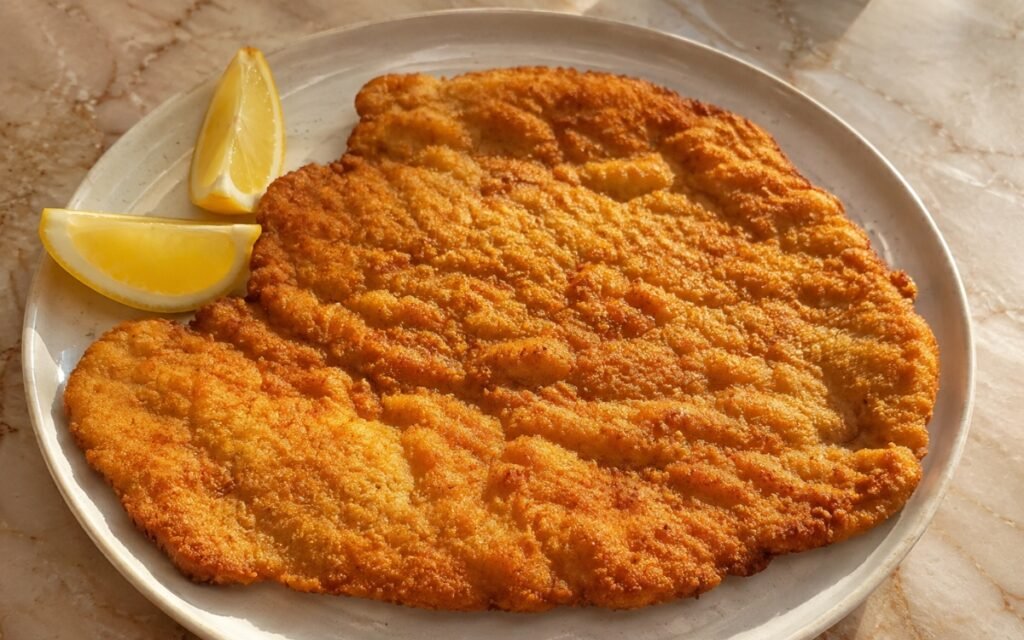
Austrian Pork Schnitzel
Pork loin pounded uniformly, breaded loosely for a wavy crust, fried in floating fat until golden — served immediately with lemon. Light and crispy.
You might also like
You might also like
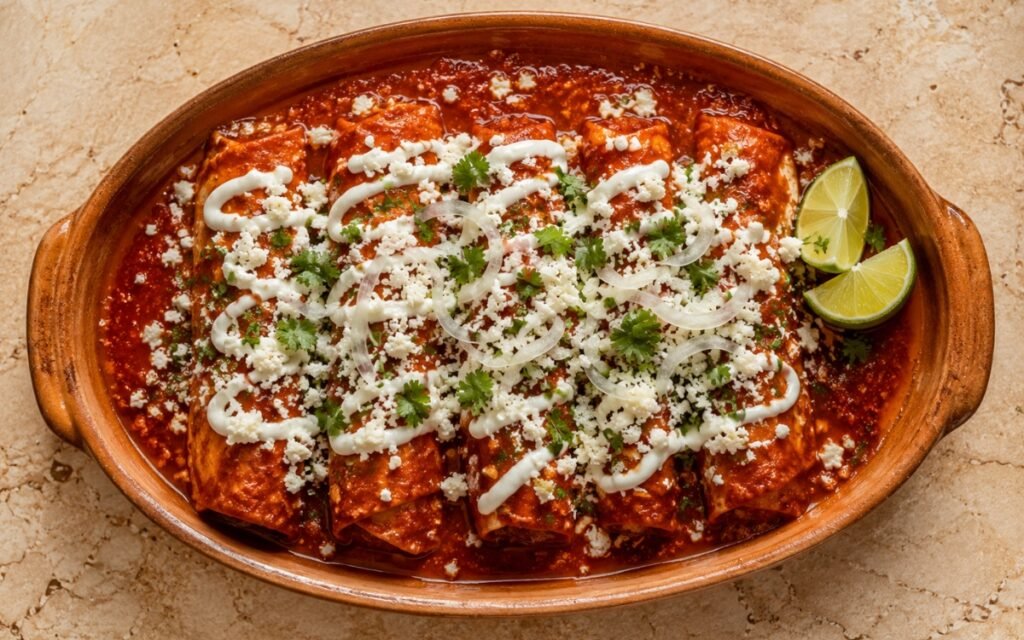
Enchiladas Rojas
Corn tortillas rolled with spiced ground beef and creamy black beans, coated in a glossy toasted-chile red sauce, and topped with queso fresco and crema.
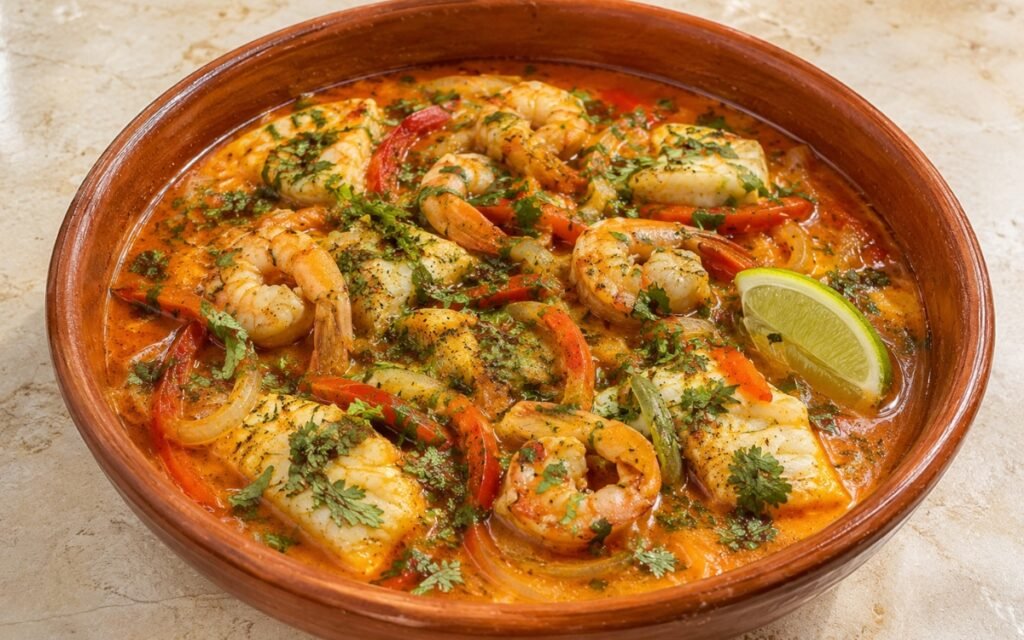
Brazilian Moqueca (Bahian Fish Stew)
White fish and shrimp simmered gently in a vivid orange coconut-tomato broth enriched with dendê palm oil, onion, and pepper.
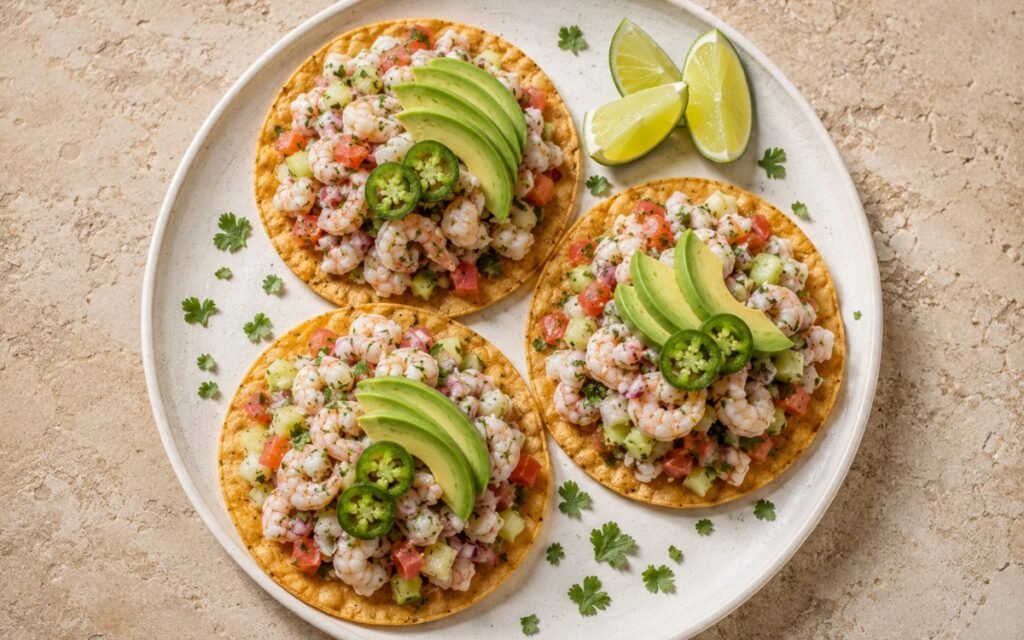
Shrimp Ceviche Tostadas
Tart hibiscus white tea with fresh ginger and orange, delicately spiced, bright, and elegantly balanced for warm days.
Grilled Salmon Fillets
Ingredients
Method
- Remove the salmon from the refrigerator 15 minutes before cooking and place it uncovered on a tray. Pat the skin side completely dry using paper towels, repeating if necessary until no visible moisture remains. This step is critical because salmon skin contains moisture and fat — if not dried properly, it will steam instead of crisp when it hits the grill.
- Brush the flesh side lightly with olive oil, then season evenly with salt, black pepper, garlic powder, and lemon zest. Focus the seasoning on the flesh side only — the skin is left unseasoned to maximize direct contact with the grill and allow proper crisping. The seasoning should form a light, even layer, not clumps.
- Preheat the grill to high heat and allow it to fully stabilize before cooking. Clean and oil the grates thoroughly to reduce sticking. The grill must be hot enough to create immediate searing contact — if it is underheated, the fish will stick and break before it releases naturally.
- Place the salmon fillets skin-side down on the hottest part of the grill and close the lid. Do not move, press, or flip the fish. The skin acts as a protective barrier, shielding the delicate flesh from direct heat while slowly crisping and rendering fat underneath. Movement at this stage will tear the skin and disrupt the structure.
- Cook for 6–8 minutes without disturbance, allowing heat to travel upward through the fish. As it cooks, the flesh will gradually turn opaque from the bottom up. Remove the salmon when the internal temperature reaches approximately 52°C (125°F) for medium doneness, where the texture is still moist and slightly translucent in the center.
- Slide a thin spatula between the skin and grill grates to lift the fillets. If parts of the skin stick slightly, leave them behind — forcing removal will damage the flesh. Transfer to a plate, finish with fresh dill, and serve immediately with lemon wedges.