Ingredients
Method
Prepare the Salmon
- Remove the salmon from the refrigerator 15 minutes before cooking and place it uncovered on a tray. Pat the skin side completely dry using paper towels, repeating if necessary until no visible moisture remains. This step is critical because salmon skin contains moisture and fat — if not dried properly, it will steam instead of crisp when it hits the grill.
Season the Fillets
- Brush the flesh side lightly with olive oil, then season evenly with salt, black pepper, garlic powder, and lemon zest. Focus the seasoning on the flesh side only — the skin is left unseasoned to maximize direct contact with the grill and allow proper crisping. The seasoning should form a light, even layer, not clumps.
Preheat the Grill
- Preheat the grill to high heat and allow it to fully stabilize before cooking. Clean and oil the grates thoroughly to reduce sticking. The grill must be hot enough to create immediate searing contact — if it is underheated, the fish will stick and break before it releases naturally.
Grill Skin-Side Down
- Place the salmon fillets skin-side down on the hottest part of the grill and close the lid. Do not move, press, or flip the fish. The skin acts as a protective barrier, shielding the delicate flesh from direct heat while slowly crisping and rendering fat underneath. Movement at this stage will tear the skin and disrupt the structure.
Cook to Proper Doneness
- Cook for 6–8 minutes without disturbance, allowing heat to travel upward through the fish. As it cooks, the flesh will gradually turn opaque from the bottom up. Remove the salmon when the internal temperature reaches approximately 52°C (125°F) for medium doneness, where the texture is still moist and slightly translucent in the center.
Remove and Serve
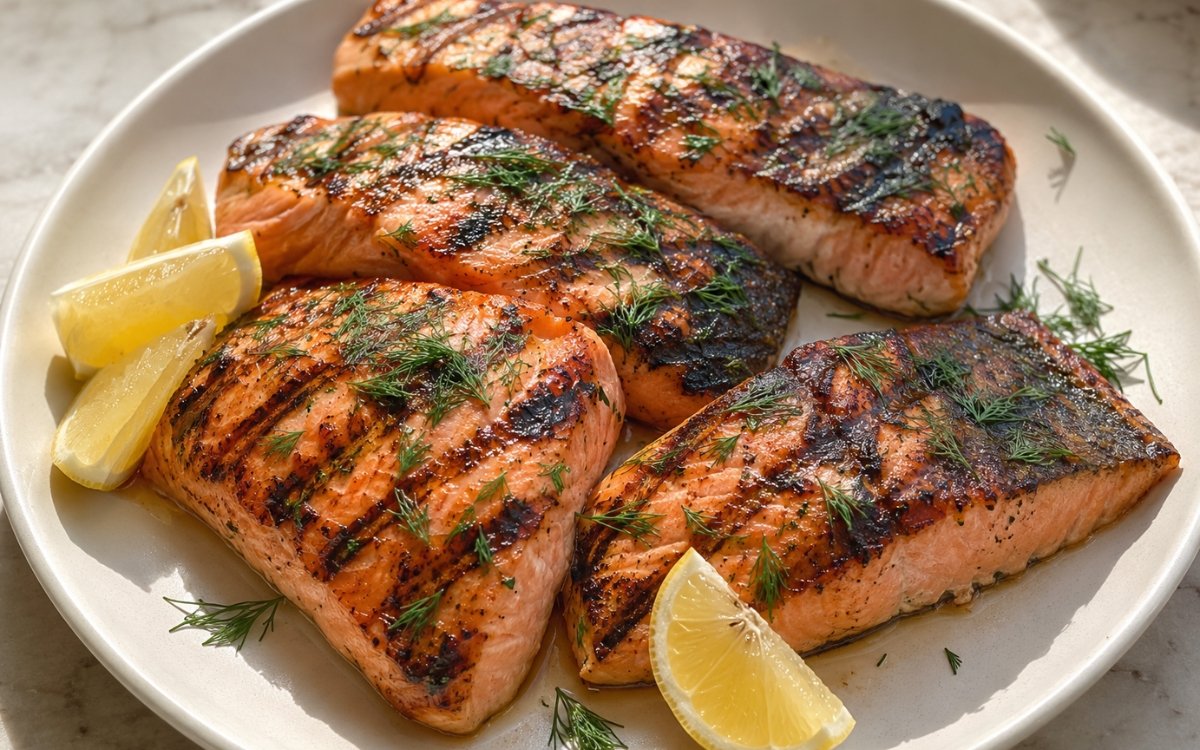
- Slide a thin spatula between the skin and grill grates to lift the fillets. If parts of the skin stick slightly, leave them behind — forcing removal will damage the flesh. Transfer to a plate, finish with fresh dill, and serve immediately with lemon wedges.
Notes
Thoroughly drying the skin is not a step that can be rushed or approximated. Salmon skin's natural moisture and fat content means even a seemingly dry surface can carry enough residual water to cause steaming rather than crisping on contact with the grill — repeating the pat-dry process until genuinely no moisture remains is worth the extra minute it takes.
Leaving the skin unseasoned is a deliberate choice rather than an oversight. Salt and other seasonings on the skin side would sit between the fish and the grill grates, interfering with the direct, unobstructed contact that produces genuine crisping — all the seasoning goes onto the flesh side instead, where it will be tasted directly.
Cooking skin-side down for the entire process, without ever flipping, is what protects the delicate flesh from the grill's direct, aggressive heat. The skin itself absorbs that heat first and transmits it upward more gently, which is why the fillet cooks evenly from the bottom rather than being seared harshly on both sides.