
Warm Roasted Vegetable Salad
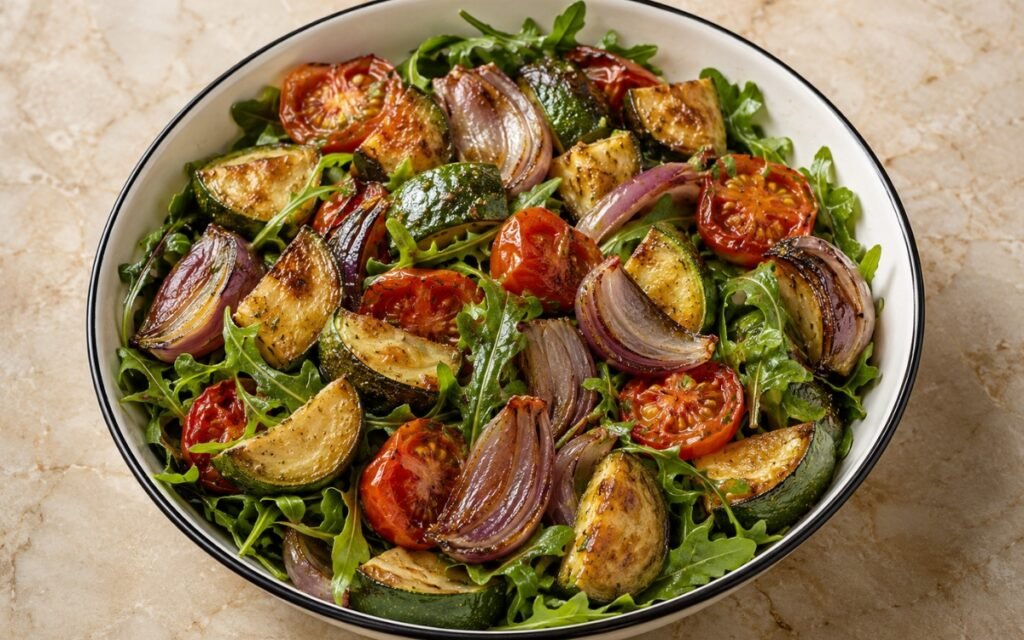
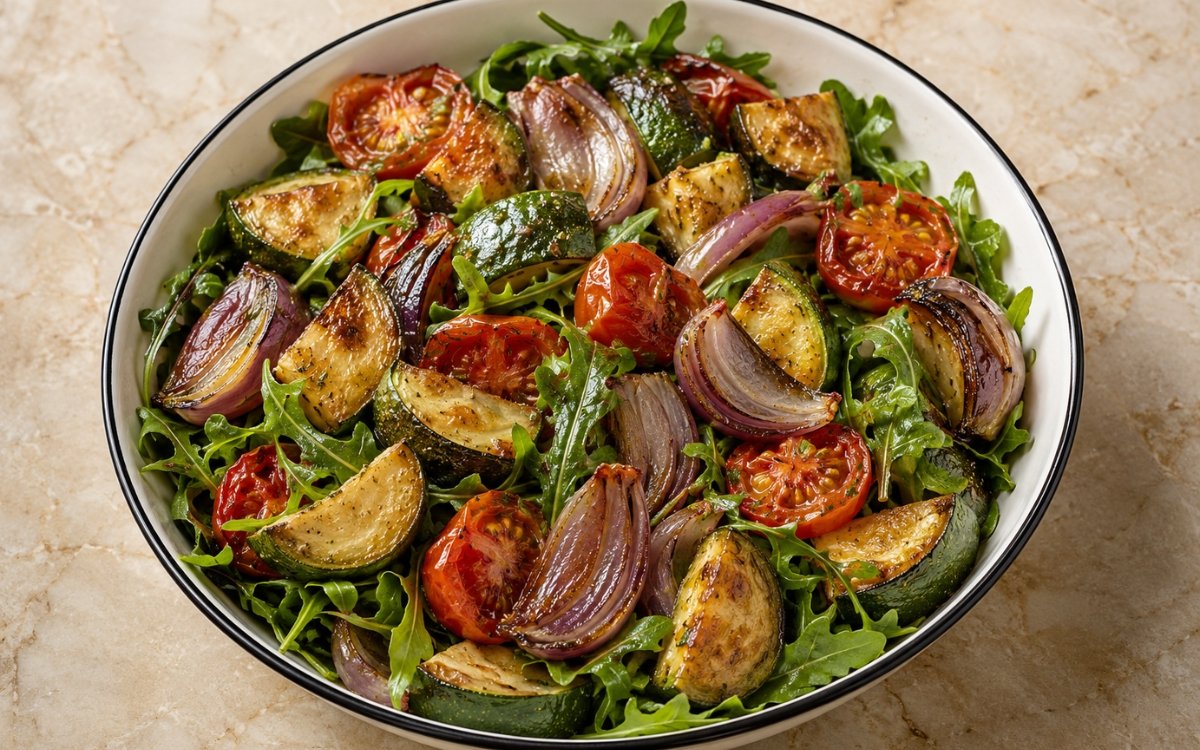
A warm roasted vegetable salad of caramelised zucchini, red and yellow bell peppers, blistered cherry tomatoes and red onion wedges, spooned over peppery baby arugula and finished with torn basil and a bright lemon Dijon dressing, the key being the contrast between hot, sweet vegetables and cool, crisp greens. Roasting the vegetables in a single, uncrowded layer at a high 220°C, rather than piling them onto a small tray, is the technique this whole salad depends on for its depth of flavour — crowded pieces trap the moisture they release and steam into soft, pale chunks, while well-spaced pieces lose that moisture fast enough for their natural sugars to caramelise at the edges, the same give-it-room principle that applies whenever vegetables are meant to roast rather than stew. Cutting every vegetable to roughly the same 2cm size is what lets the zucchini, peppers and onion turn tender together instead of some scorching while others stay raw. Resting the tray for just 2–3 minutes before spooning the vegetables onto the arugula is what softens the greens slightly without collapsing them. The payoff is a salad with real, layered contrast — sweet charred peppers, soft zucchini, jammy tomatoes, peppery arugula and a sharp, garlicky lemon finish.
Prep Time : 15 min
Cook Time : 25 min
Servings : 4
15 min
25 min
4
Ingredients
For the Roasted Vegetables
• 2 medium zucchini, cut into 2cm pieces
• 1 red bell pepper, cut into 2cm pieces
• 1 yellow bell pepper, cut into 2cm pieces
• 200g cherry tomatoes, halved
• 1 small red onion, cut into wedges
For the Dressing and Base
• 3 tablespoons olive oil, divided — this one on Amazon
• 2 tablespoons lemon juice
• 1 teaspoon Dijon mustard — this one on Amazon
• 1 clove garlic, minced
• 120g baby arugula
• 2 tablespoons fresh basil, torn
• Salt and black pepper to taste
This post may contain affiliate links. As an Amazon Associate I earn from qualifying purchases, at no additional cost to you.
Directions
- Prepare the Oven and Baking Tray
Preheat the oven to 220°C / 425°F and give it the full preheat, since the vegetables need strong heat from the moment they go in. Line a large baking sheet with parchment paper to prevent sticking and help the vegetables release cleanly when turned. Choose the largest tray that fits your oven, because all of the vegetables must lie flat in a single layer with a little space around each piece. If one tray cannot hold them without stacking, line a second tray now rather than squeezing everything onto one. That tray size is what decides whether the vegetables roast or steam — overcrowding traps the moisture they release, and trapped moisture prevents caramelisation entirely. - Cut the Vegetables
Wash all the vegetables and pat them thoroughly dry, since surface water slows browning in the oven. Cut the 2 zucchini into 2cm chunks, keeping the pieces as even as possible. Remove the seeds and pale inner membranes from the red and yellow bell peppers and cut them into 2cm squares. Halve the 200g of cherry tomatoes and cut the small red onion into wedges about the same size as the other pieces, keeping a little of the root end on each wedge so the layers hold together. That uniform 2cm size is what lets every vegetable turn tender and brown in the same 25 minutes, with no small pieces burning while larger ones stay firm. - Season and Arrange the Vegetables
Place the cut vegetables in a large mixing bowl, drizzle with 2 tablespoons of the olive oil and season with salt and black pepper. Toss thoroughly with your hands or a large spoon until every piece carries a light, even coating of oil and seasoning. Spread the vegetables across the prepared baking sheet in a single layer, cut sides of the tomatoes facing up, making sure nothing is stacked on top of anything else. If you are using two trays, divide the vegetables evenly between them. That light, even coating of oil is what conducts the oven’s heat into every surface and lets the edges caramelise rather than dry out. - Roast the Vegetables
Place the tray in the preheated oven and roast for 25 minutes. About halfway through, at roughly 12 minutes, use a spatula to turn the vegetables gently so they brown on more than one side; if you are using two trays, swap their shelf positions and rotate them front to back at the same time. The vegetables are ready when the zucchini is tender when pierced with a knife, the peppers and onion show lightly browned edges and the tomatoes have slightly blistered and softened. If the edges are still pale at 25 minutes, the tray was most likely too crowded. That halfway turn is what exposes a second face of each piece to the hot tray, giving even colour instead of one browned side and one pale side. - Make the Lemon Dressing
While the vegetables roast, combine the remaining 1 tablespoon of olive oil, the 2 tablespoons of lemon juice, the 1 teaspoon of Dijon mustard and the minced garlic in a small bowl. Whisk vigorously for 20–30 seconds until the dressing turns smooth, slightly thickened and lightly emulsified. Taste and season with salt and black pepper, adjusting a little at a time. The dressing should taste bright, distinctly tangy and lightly garlicky. If it separates while standing, whisk it again just before using. That Dijon mustard is what holds the lemon juice and olive oil together long enough to coat the salad evenly instead of pooling at the bottom of the platter. - Prepare the Arugula Base
Rinse the 120g of baby arugula under cold water and dry it thoroughly in a salad spinner or with a clean towel, since water left on the leaves dilutes the dressing and makes them limp under the warm vegetables. Spread the arugula evenly across a large serving platter or wide, shallow bowl so it forms a broad, even bed rather than a deep mound. That wide, shallow bed is what lets the warm vegetables sit in a single layer over the greens, so the heat softens only the leaves they touch rather than steaming the whole pile. - Assemble, Dress and Serve
Once the vegetables are fully roasted, remove the tray from the oven and let them cool for 2–3 minutes. Spoon the warm vegetables evenly over the bed of arugula, letting the heat lightly soften the greens without wilting them completely. Scatter the 2 tablespoons of torn basil across the salad, then drizzle the lemon dressing evenly over everything. Serve immediately, while the vegetables are still warm and the arugula keeps its crisp, peppery texture. That brief cooling time is what takes the sharpest heat off the tray, so the vegetables are warm enough to soften the arugula slightly but no longer hot enough to collapse it.
*Notes :
- Roasting in a single, uncrowded layer at 220°C deserves genuine recognition as the technique most directly responsible for whether this salad tastes sweet and caramelised or flat and watery. Zucchini, peppers and tomatoes all release a surprising amount of moisture in the oven — with space around each piece that water evaporates quickly and the surfaces brown, but on a crowded tray it collects and the vegetables simply stew.
- Cutting every vegetable to an even 2cm size deserves the same attention as the oven temperature, because the two work together to set the finished texture. Zucchini softens quickly, peppers take a little longer and onion wedges need the most time to turn sweet, so matching their size is the only way all of them arrive tender, browned and still holding their shape in the same 25 minutes.
- The 2–3 minute cool before assembly deserves genuine respect as the detail most directly responsible for how the arugula behaves under the vegetables. Straight from a 220°C oven, the vegetables carry enough heat to collapse the leaves into a dark, soggy layer, while a brief pause leaves them warm enough to soften the greens gently and keep most of their peppery crunch.
- The lightly emulsified lemon dressing deserves attention as a genuine, checkable sign of readiness rather than a loose approximation of whisking. With 2 tablespoons of lemon juice to only 1 tablespoon of oil, the dressing is deliberately sharp, and the Dijon mustard is what holds that lean ratio together — if it still looks thin and separated, keep whisking until it turns slightly opaque and smooth.
Why This Recipe Works
This recipe works because every step protects the contrast between warm, caramelised vegetables and cool, peppery greens. Even 2cm pieces let the zucchini, peppers, tomatoes and onion cook at the same pace, while a single, spaced layer at 220°C drives off their moisture so the edges brown instead of steaming.
Turning the vegetables halfway gives colour on more than one side. A short 2–3 minute cool means the warm vegetables soften the arugula only slightly, and a sharp, Dijon-bound lemon dressing with basil cuts through the roasted sweetness, leaving the finished salad bright, light and genuinely satisfying.
Ingredient Breakdown
Single-Layer Roasting at 220°C
The critical technique — high heat and real space let the vegetables’ moisture escape, so their natural sugars caramelise instead of stewing.
Even 2cm Cuts
The critical timing technique — matching every vegetable’s size means zucchini, peppers and onion all turn tender and browned together.
Halfway Turn
The core flavour-building stage — flipping the vegetables at about 12 minutes exposes a second face to the hot tray for even colour.
Lemon Juice and Dijon Dressing
The defining flavour ingredient — 2 tablespoons of lemon juice bound with Dijon give the sharp, tangy lift that balances roasted sweetness.
Baby Arugula Base
The structural foundation — 120g of peppery leaves gives the warm vegetables a cool, crisp bed and a distinct bitter contrast.
Torn Fresh Basil
The finishing touch — scattered over the warm vegetables at the end, it releases a fresh, aromatic lift without wilting into the salad.
Flavor Structure Explained
This warm roasted vegetable salad follows a layered balance model:
- Sweet, caramelised foundation (roasted zucchini, bell peppers, red onion)
- Juicy, bright accent (blistered cherry tomatoes)
- Peppery, crisp contrast (baby arugula)
- Sharp, tangy finish (lemon juice, Dijon mustard, garlic)
- Fresh herbal lift (torn basil)
Roasted zucchini, red and yellow peppers and red onion lay down a sweet, caramelised foundation with gently charred edges. Blistered cherry tomatoes add bursts of juicy acidity that keep the roasted base from tasting heavy. Baby arugula brings a cool, peppery bite and crisp texture underneath the warm vegetables. The lemon, Dijon and garlic dressing sharpens everything with bright tang, and a final scatter of torn basil adds the fresh, fragrant lift that ties this warm salad together.
Common Mistakes to Avoid
- Overcrowding the Baking Sheet – This traps the moisture the vegetables release, so they steam into soft, pale pieces instead of caramelising. Always spread them in a single layer, using a second tray if needed.
- Cutting the Vegetables to Uneven Sizes – This leaves small pieces scorched while larger chunks of onion or pepper stay firm and raw. Always cut everything to roughly the same 2cm size.
- Skimping on the Roasting Oil – This leaves the vegetables dry and leathery, with little browning at the edges. Always toss them with the full 2 tablespoons of olive oil until every piece is coated.
- Spooning the Vegetables on Straight From the Oven – This collapses the arugula into a dark, soggy layer under the hot vegetables. Always let the tray cool for 2–3 minutes first.
- Dressing the Salad Too Early – This wilts the arugula and dulls the basil long before the salad reaches the table. Always drizzle the dressing just before serving.
Variations
Mediterranean Version
Scatter crumbled feta cheese and olives over the warm vegetables after roasting for a briny, salty layer that sits naturally alongside the lemon dressing and fresh basil.
Nutty Version
dd toasted pine nuts or almonds just before serving for extra crunch and a gentle, rich nuttiness that contrasts with the soft roasted vegetables and tender greens.
Grain Bowl Version
Serve the roasted vegetables and arugula over cooked quinoa or farro for a heartier, more filling dish that still keeps the warm-and-fresh contrast at its centre.
Balsamic Version
Replace the lemon juice in the dressing with balsamic vinegar for a deeper, sweeter finish that leans into the caramelised flavour of the roasted vegetables.
Storage & Make-Ahead
The vegetables can be roasted up to 2 days ahead, cooled completely and kept in an airtight container in the fridge, ready to reheat or serve cold when needed.
Reheat refrigerated roasted vegetables gently on a tray in a hot oven or in a skillet until just warmed through, which revives their edges far better than a microwave, before assembling them over fresh arugula.
The lemon dressing can be made 1–2 days in advance and refrigerated in a sealed jar, then shaken or whisked again before use, since it separates as it stands.
For a cold version, cool the roasted vegetables completely and spoon them over the arugula straight from the fridge, then dress and serve as a chilled salad.
Assembled leftovers keep in the fridge for up to 1 day, although the arugula wilts noticeably once dressed, so assemble only what will be eaten and store the components separately whenever possible.
Frequently Asked Questions
Why do the vegetables need a large tray and a single layer?
Zucchini, peppers and tomatoes release a lot of moisture as they roast, and crowded pieces trap it and steam. A single layer with space around each piece lets that moisture escape so the edges can properly caramelise.
Why is the oven set as high as 220°C?
A high temperature browns the vegetables’ surfaces quickly while their centres turn tender, all within 25 minutes. At a lower temperature they would soften fully and start to turn mushy long before they developed real colour.
Why do the vegetables cool for 2–3 minutes before going on the arugula?
Straight from the oven they are hot enough to collapse the leaves completely. A short rest keeps them warm enough to soften the arugula slightly while leaving most of its crisp, peppery texture intact.
Why does the dressing use Dijon mustard with the lemon juice?
The dressing uses twice as much lemon juice as olive oil, which would separate quickly on its own. A teaspoon of Dijon mustard emulsifies the two and adds a mild tang, so the dressing coats the vegetables evenly.
Are there other classic roasted vegetable salad, grain bowl, or vinaigrette dishes worth trying?
Roasted Cauliflower and Chickpea Salad with Tahini offers another classic roasted salad direction worth exploring. Italian Farro Salad with Roasted Vegetables and Roasted Veggie Quinoa Bowl are also worth trying for heartier grain-based directions, and Simple Lemon Vinaigrette and Grilled Mediterranean Veggie Bowl offer other bright, vegetable-forward dishes worth exploring.
Nutrition Facts
( per serving )
Calories
~150 kcal
Protein
3 g
Fat
11 g
Carbs
12 g
Calories
~150 kcal
Protein
3 g
Fat
11 g
Carbs
12 g
Related Recipes
Related Recipes

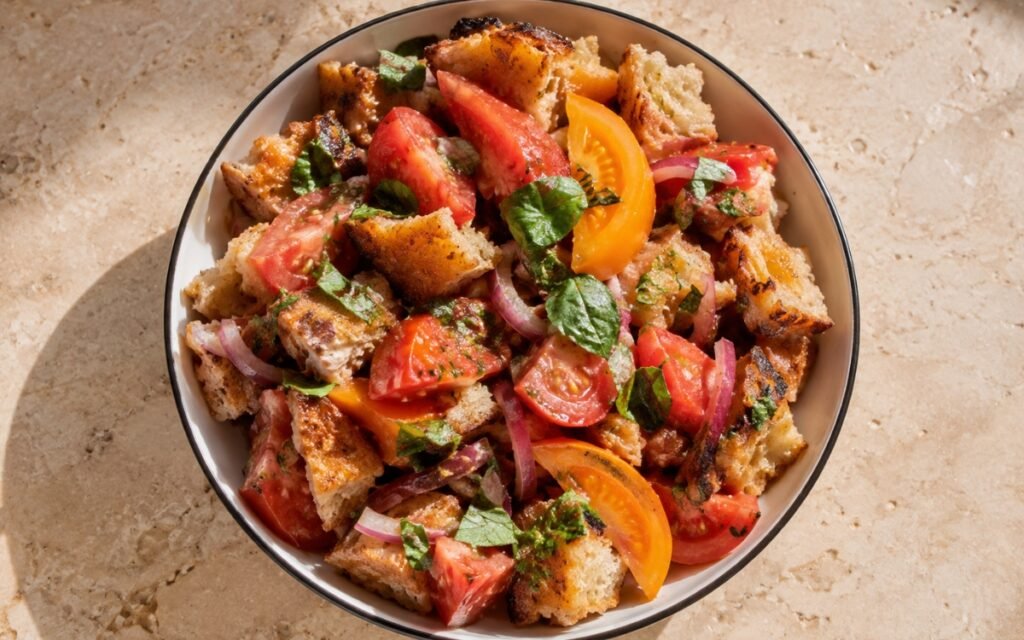
Panzanella Salad
Heirloom tomatoes salted for juice, torn sourdough toasted to crust-and-chew, red onion macerated in red wine vinegar — assembled and rested 10 minutes. The Tuscan summer salad built on timing.
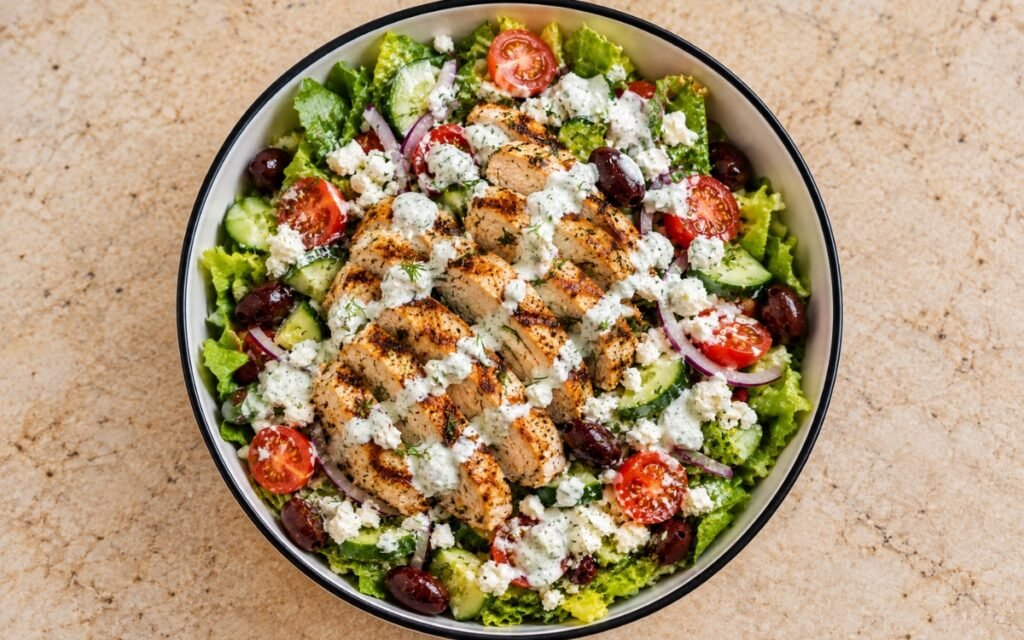
Greek Chicken Salad with Tzatziki Dressing
Grilled Greek-marinated chicken breast over crisp greens with cucumber, cherry tomatoes, Kalamata olives, feta, and creamy tzatziki dressing.
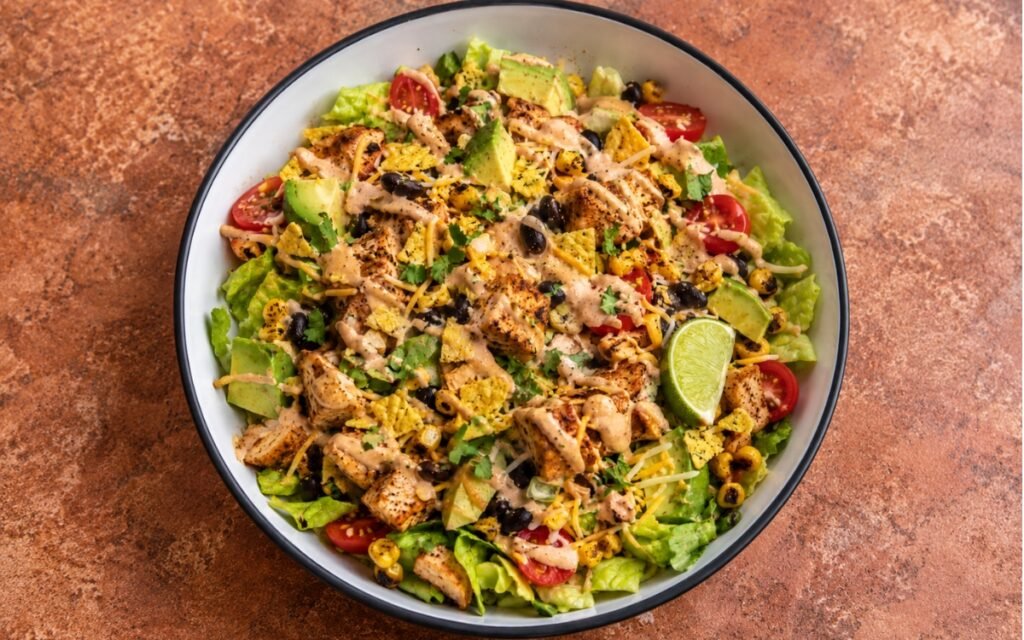
Mexican Chicken Taco Salad
Seasoned chicken breast, chopped lettuce, black beans, charred corn, cherry tomatoes, avocado, shredded cheese, and crushed tortilla chips with chipotle crema.
You might also like
You might also like
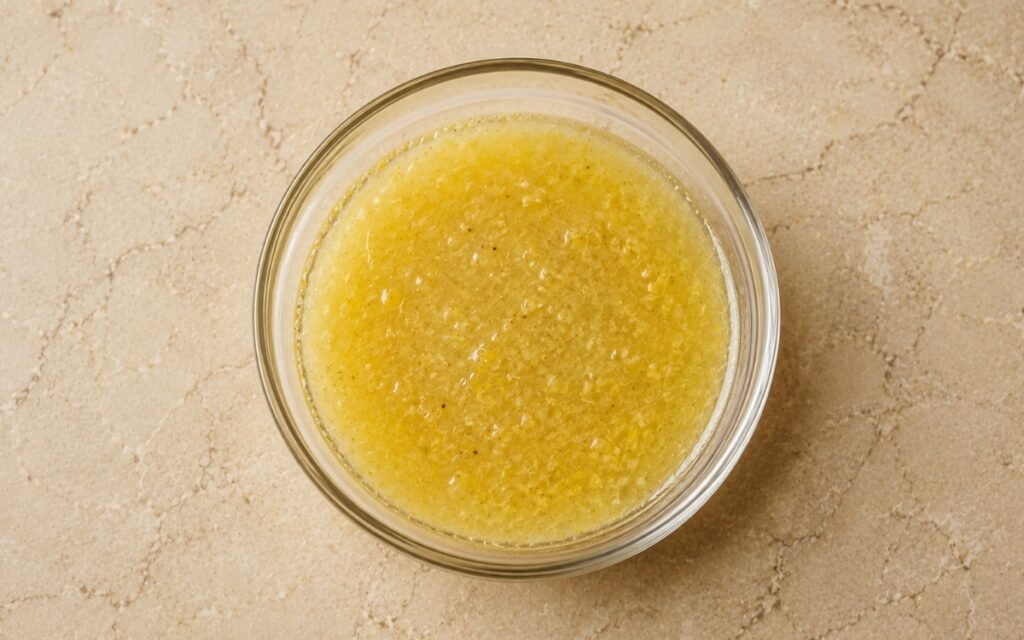
Simple Lemon Vinaigrette
Bright lemon and Dijon emulsify into a perfectly balanced 5-minute vinaigrette for any salad.
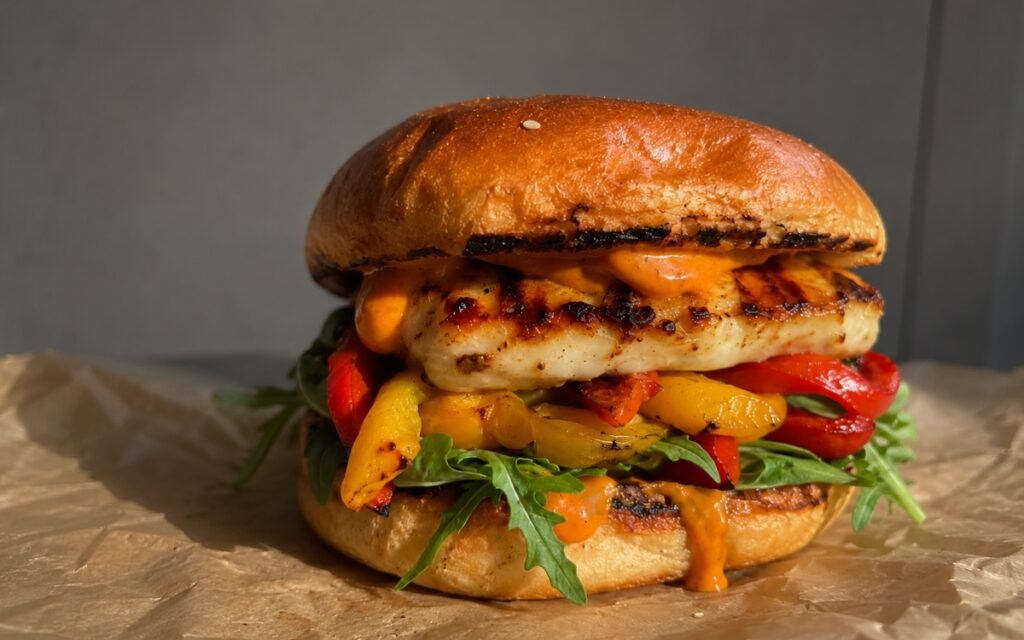
Grilled Halloumi Burger with Roasted Peppers
Golden grilled halloumi in a toasted brioche bun with caramelized peppers, peppery rocket, and creamy harissa-lime mayo.
Strawberry Rhubarb Lemonade
Cold-extracted lemon zest and juice combined with a gently cooked strawberry-rhubarb base for a bright pink-red, vivid, tart lemonade.

Warm Roasted Vegetable Salad
Ingredients
Method
- Preheat the oven to 220°C / 425°F and give it the full preheat, since the vegetables need strong heat from the moment they go in. Line a large baking sheet with parchment paper to prevent sticking and help the vegetables release cleanly when turned. Choose the largest tray that fits your oven, because all of the vegetables must lie flat in a single layer with a little space around each piece. If one tray cannot hold them without stacking, line a second tray now rather than squeezing everything onto one. That tray size is what decides whether the vegetables roast or steam — overcrowding traps the moisture they release, and trapped moisture prevents caramelisation entirely.
- Wash all the vegetables and pat them thoroughly dry, since surface water slows browning in the oven. Cut the 2 zucchini into 2cm chunks, keeping the pieces as even as possible. Remove the seeds and pale inner membranes from the red and yellow bell peppers and cut them into 2cm squares. Halve the 200g of cherry tomatoes and cut the small red onion into wedges about the same size as the other pieces, keeping a little of the root end on each wedge so the layers hold together. That uniform 2cm size is what lets every vegetable turn tender and brown in the same 25 minutes, with no small pieces burning while larger ones stay firm.
- Place the cut vegetables in a large mixing bowl, drizzle with 2 tablespoons of the olive oil and season with salt and black pepper. Toss thoroughly with your hands or a large spoon until every piece carries a light, even coating of oil and seasoning. Spread the vegetables across the prepared baking sheet in a single layer, cut sides of the tomatoes facing up, making sure nothing is stacked on top of anything else. If you are using two trays, divide the vegetables evenly between them. That light, even coating of oil is what conducts the oven’s heat into every surface and lets the edges caramelise rather than dry out.
- Place the tray in the preheated oven and roast for 25 minutes. About halfway through, at roughly 12 minutes, use a spatula to turn the vegetables gently so they brown on more than one side; if you are using two trays, swap their shelf positions and rotate them front to back at the same time. The vegetables are ready when the zucchini is tender when pierced with a knife, the peppers and onion show lightly browned edges and the tomatoes have slightly blistered and softened. If the edges are still pale at 25 minutes, the tray was most likely too crowded. That halfway turn is what exposes a second face of each piece to the hot tray, giving even colour instead of one browned side and one pale side.
- While the vegetables roast, combine the remaining 1 tablespoon of olive oil, the 2 tablespoons of lemon juice, the 1 teaspoon of Dijon mustard and the minced garlic in a small bowl. Whisk vigorously for 20–30 seconds until the dressing turns smooth, slightly thickened and lightly emulsified. Taste and season with salt and black pepper, adjusting a little at a time. The dressing should taste bright, distinctly tangy and lightly garlicky. If it separates while standing, whisk it again just before using. That Dijon mustard is what holds the lemon juice and olive oil together long enough to coat the salad evenly instead of pooling at the bottom of the platter.
- Rinse the 120g of baby arugula under cold water and dry it thoroughly in a salad spinner or with a clean towel, since water left on the leaves dilutes the dressing and makes them limp under the warm vegetables. Spread the arugula evenly across a large serving platter or wide, shallow bowl so it forms a broad, even bed rather than a deep mound. That wide, shallow bed is what lets the warm vegetables sit in a single layer over the greens, so the heat softens only the leaves they touch rather than steaming the whole pile.
- Once the vegetables are fully roasted, remove the tray from the oven and let them cool for 2–3 minutes. Spoon the warm vegetables evenly over the bed of arugula, letting the heat lightly soften the greens without wilting them completely. Scatter the 2 tablespoons of torn basil across the salad, then drizzle the lemon dressing evenly over everything. Serve immediately, while the vegetables are still warm and the arugula keeps its crisp, peppery texture. That brief cooling time is what takes the sharpest heat off the tray, so the vegetables are warm enough to soften the arugula slightly but no longer hot enough to collapse it.