
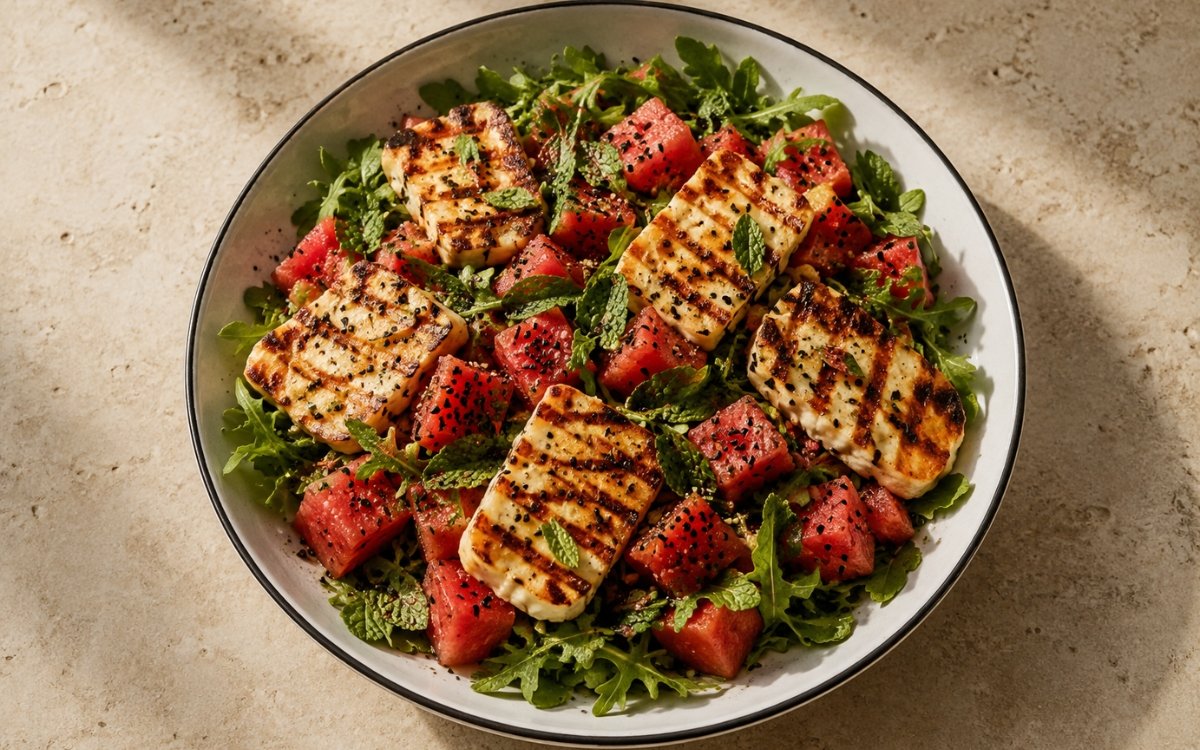
Grilled Halloumi & Watermelon Salad
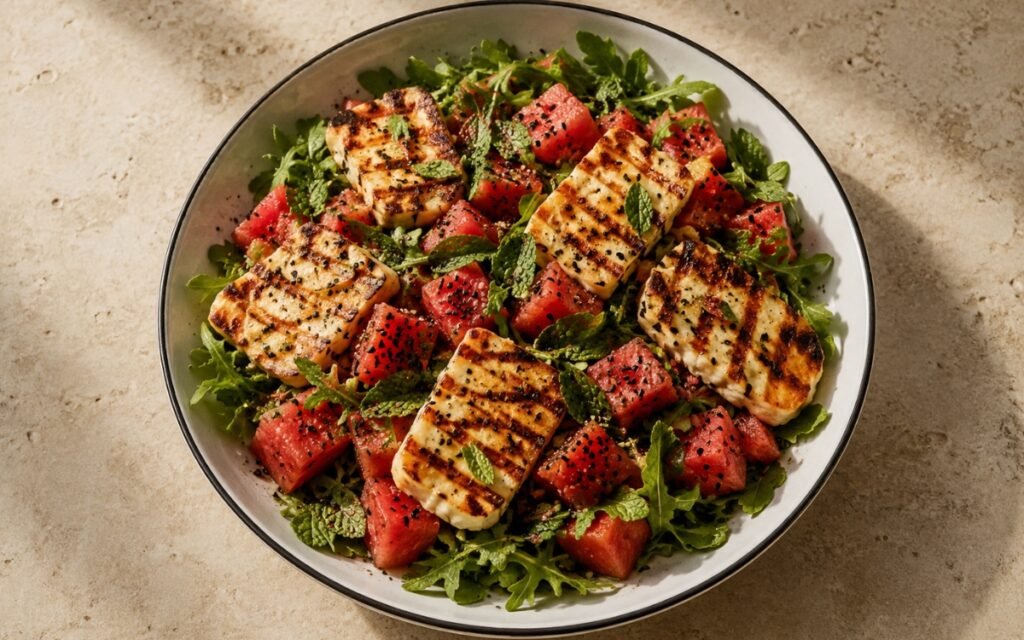
Halloumi’s specific cooking quality — its high melting point produced by the whey-washing process during production that drives off the lactic acid responsible for standard cheese’s softening under heat — makes it the only cheese that can be placed directly on a screaming-hot grill pan and produce a deeply golden, slightly crisped exterior while remaining soft, elastic, and yielding inside rather than melting into the pan. One to two minutes per side without moving, so the crust develops completely before the slice is lifted. Watermelon drained for 5–10 minutes before dressing — the same technique as the Panzanella and the Watermelon Tajín Salad — because undrained watermelon’s surface liquid dilutes every dressing component from the first toss. The sesame-lime-honey dressing containing toasted sesame oil alongside the olive oil for the nutty, slightly smoky aromatic depth that plain olive oil-and-lime cannot provide. The halloumi arranged warm on the dressed salad immediately before serving so the contrast between the warm, slightly charred salty cheese and the cold, sweet watermelon, peppery arugula, and cooling mint exists at its most vivid. The salad that disappears immediately.
Prep Time : 15 min
Cook Time : 5 min
Servings : 4
15 min
5 min
4
Ingredients
For the Salad
• 225g halloumi cheese, sliced approximately 8mm (⅓ inch) thick
• 700g watermelon, rind removed and cut into medium rustic cubes
• 120g arugula — rocket
• Small handful fresh mint leaves
• 2 tsp black sesame seeds — this one on Amazon
For the Dressing
• 2 tbsp extra-virgin olive oil — this one on Amazon
• 2 tsp toasted sesame oil — this one on Amazon
• 20–30ml fresh lime juice — start with 20ml, adjust to taste
• 1–2 tsp honey — start with 1 tsp, adjust to taste — this one on Amazon
• Fine sea salt — only if needed after tasting
• Freshly cracked black pepper, to taste
This post may contain affiliate links. As an Amazon Associate I earn from qualifying purchases, at no additional cost to you.
Directions
- Make the Dressing
In a small bowl, whisk together the 2 tbsp of olive oil, 2 tsp of toasted sesame oil, 20ml of lime juice, 1 tsp of honey, and a generous crack of black pepper until combined. The toasted sesame oil’s contribution to this dressing is specifically important and is not a substitute for additional olive oil. Toasted sesame oil — produced by pressing roasted sesame seeds — has a concentrated, nutty, slightly smoky aromatic character produced during the roasting of the seeds, completely different from the neutral, raw sesame oil used for cooking. At only 2 tsp its character is present as a background aromatic depth in every spoonful of the dressed salad — amplifying the black sesame seeds’ visual and flavour contribution. Taste the dressing and adjust: more lime juice if the brightness is insufficient; more honey if it needs sweetness to balance the lime’s acidity. Do not add salt before tasting the dressing with the halloumi in mind — halloumi is considerably salty and the finished salad’s salt level must be assessed after the cheese is included, not before. Set aside. - Drain the Watermelon
Cut the 700g of watermelon into medium rustic cubes — roughly 3–4cm pieces with irregular rather than uniform shapes. Place in a colander or fine-mesh strainer set over a bowl and allow to drain at room temperature for 5–10 minutes. The watermelon’s surface moisture, if undrained, dilutes the sesame-lime dressing into a thin, flat liquid that pools at the bottom of the salad bowl rather than coating the arugula and watermelon. The 5–10 minute drain removes this surface liquid without affecting the watermelon’s internal juiciness — each cube remains completely cold, crisp, and sweet inside while its exterior is ready to hold the dressing. - Prepare the Halloumi
Slice the 225g of halloumi block into slices approximately 8mm (⅓ inch) thick — thick enough to develop a proper crust on each side during the 1–2 minute grill time without becoming rubbery throughout, and thin enough to develop clear char marks and caramelisation on both surfaces. Pat each slice thoroughly dry with paper towels on both sides. The halloumi is packed in brine and its surface carries residual moisture — this surface moisture, like wet steak or wet fish, prevents the Maillard crust from forming immediately on contact with the hot grill surface and produces a pale, steam-softened exterior rather than the golden, slightly crisped surface that makes grilled halloumi distinctly more appealing than simply heated halloumi. - Grill the Halloumi
Preheat a ridged grill pan, flat cast iron pan, or outdoor grill over medium-high heat until genuinely hot — a drop of water flicked onto the surface should evaporate immediately on contact. Lightly brush or wipe the surface with a neutral oil if needed. Place the halloumi slices flat on the hot surface. Leave completely undisturbed for 1–2 minutes — moving the cheese before the crust has set will tear the slice rather than flipping it cleanly. After 1–2 minutes the underside should show deep golden-brown colour with clear grill marks if using a ridged pan. Flip each slice with a thin spatula and grill the second side for 1–2 minutes. The correctly grilled halloumi should have a clearly caramelised, slightly crisped golden exterior and a warm, soft, slightly elastic interior — the squeaking texture that is halloumi’s characteristic eating quality. Transfer immediately to a plate — halloumi toughens and becomes rubbery if left on the heat or allowed to cool significantly before eating. - Assemble the Salad
In a large bowl, combine the 120g of arugula, the drained watermelon cubes, and the fresh mint leaves. Pour approximately two-thirds of the dressing over the components and toss gently — the arugula’s leaves are delicate and the watermelon cubes fragile, requiring light, confident turning rather than vigorous stirring. Transfer the dressed salad to shallow serving bowls or plates, spreading it out rather than mounding it so every component is visible and accessible. While the halloumi is still warm — within 2–3 minutes of leaving the grill — arrange the slices evenly across the salad surface. The warmth of the halloumi against the cold watermelon and arugula is the specific thermal contrast that makes this salad compelling; halloumi that has cooled to room temperature before being added produces a significantly less vivid eating experience. - Finish and Serve
Drizzle the remaining dressing over the halloumi and the salad. Scatter the 2 tsp of black sesame seeds across the finished salad — their dark colour against the pink watermelon and golden halloumi provides the visual contrast, and their faintly bitter, nutty character provides the subtle flavour contrast that white sesame seeds at the same quantity would not provide as distinctly. Finish with an extra crack of black pepper. Serve immediately.
*Notes :
- Halloumi’s unique grilling property — the high-melting-point cheese that produces a caramelised exterior without melting — is the product of its specific production process. During halloumi’s manufacture, the formed curd is cooked in whey at high temperature before being brined. This cooking step denatures the whey proteins and drives off the lactic acid responsible for standard cheese’s low melting point. The result is a cheese with a melting point significantly higher than most cheeses — approximately 100°C — that produces a firm, slightly rubbery texture when cold and a yielding, elastic, specifically squeaking texture when warm, and a golden, caramelised exterior when grilled without softening or melting.
- The arugula — rocket — is the specifically correct green for this salad rather than mixed greens, spinach, or romaine. Arugula’s specific peppery, slightly bitter, slightly mustardy character provides the contrast that makes the sweet watermelon, salty halloumi, and acidic lime dressing taste more vivid against it. A neutral green does not provide this contrast; arugula’s assertive flavour specifically complements each other component.
Why This Recipe Works
This recipe works because the halloumi is patted dry before grilling so the crust forms immediately on contact, the watermelon is drained before dressing so the sesame-lime dressing adheres rather than being diluted, and the halloumi is placed on the salad warm rather than cooled.
The dressing’s toasted sesame oil provides the aromatic depth that makes the combination taste specifically more sophisticated than a simple olive-oil-and-lime dressing. All decisions serve the same goal — the contrast between warm salty cheese and cold sweet fruit at its maximum vividness.
Ingredient Breakdown
Halloumi (Patted Dry, Undisturbed Grill)
The warm salty element — dry surface for immediate Maillard crust; undisturbed for 1–2 minutes so the crust sets before flipping; added to the salad while still warm.
Watermelon (Drained 5–10 Minutes)
The cold sweet juicy element — surface moisture removed for proper dressing adhesion; cold and crisp against the warm halloumi.
Toasted Sesame Oil in the Dressing
The aromatic depth addition — its roasted, nutty, slightly smoky character adding complexity that olive oil alone cannot provide.
Arugula (Peppery and Assertive)
The specific green — its bitterness and pepper providing the contrast that makes the sweet and salty components taste more vivid.
Black Sesame Seeds
The visual contrast and slightly bitter nutty finish — darker and more visually striking than white sesame; faintly more bitter in flavour.
Warm Halloumi Added Last
The temperature contrast technique — the warm cheese against cold watermelon and arugula producing the thermal contrast that makes the eating experience specifically more vivid.
Flavor Structure Explained
This Grilled halloumi watermelon salad follows a layered balance model:
- Sweet-salty core (watermelon and halloumi)
- Warm-cold contrast (grilled cheese, chilled fruit)
- Bright acidic dressing (lime, honey)
- Peppery green lift (arugula)
- Nutty aromatic finish (sesame oil, black sesame, mint)
The defining feature is the contrast between warm, golden halloumi and cold, juicy watermelon. Halloumi brings salty, lightly briny richness, while watermelon provides refreshing sweetness and moisture. Lime and honey create a bright dressing that connects the two without overpowering either. Arugula introduces peppery sharpness that prevents the sweet-salty pairing from feeling overly simple. Sesame oil, black sesame seeds, and mint finish the salad with nuttiness, bitterness, and cooling freshness, adding complexity that elevates it beyond a straightforward fruit-and-cheese combination.
Common Mistakes to Avoid
- Not Patting the Halloumi Dry – Surface moisture prevents the Maillard crust from forming and produces a pale, steam-softened slice. Always pat thoroughly before grilling.
- Moving the Halloumi Before 1–2 Minutes – Premature movement tears the slice before the crust has set. Always leave completely undisturbed for the full 1–2 minutes.
- Not Draining the Watermelon – Undrained watermelon dilutes the dressing from the first toss. Always drain 5–10 minutes before assembling.
- Adding the Halloumi Cold – Cooled halloumi loses the thermal contrast that makes this salad compelling. Always add warm — within 2–3 minutes of leaving the grill.
- Adding Salt Before Tasting – Halloumi is significantly salty. The dressing rarely needs additional salt. Always taste the finished salad before considering salt.
- Using White Sesame Instead of Black – White sesame provides less visual contrast and a slightly milder, less specific flavour. Black sesame’s slightly bitter, darker character is the correct garnish for this combination.
Variations
With Peach
Replace half the watermelon with 2 ripe peaches, halved, stone removed, and grilled cut-side down for 2–3 minutes until charred — the warm, caramelised peach alongside warm halloumi amplifies the warm-cold contrast and adds a specifically summery stone-fruit depth.
With Cucumber
Add 150g of thinly sliced cucumber to the arugula and watermelon — the cucumber’s cool, slightly bitter freshness amplifies the mint’s cooling register and adds a different textural crunch.
With Pomegranate Molasses
Replace the honey in the dressing with 1 tsp of pomegranate molasses for a deeper, more complex sweet-tart note that shifts the salad toward a Middle Eastern direction — specifically complementary to the halloumi’s Cypriot origin.
With Prosciutto
Drape 4–6 slices of very thinly sliced prosciutto over the finished salad — the paper-thin, slightly salty, slightly fatty cured meat provides a textural and flavour addition that specifically complements both the salty halloumi and the sweet watermelon.
Storage & Make-Ahead
The assembled salad is not suitable for storage. The arugula wilts within minutes, the halloumi loses its appealing warm-cold contrast, and the watermelon continues to release moisture. For the best texture and flavor, assemble only the amount that will be eaten immediately.
Some of the components can be prepared ahead of time. The watermelon can be cut, drained, and refrigerated up to 2 hours before serving. The dressing can be made up to 3 days in advance and stored in the refrigerator. The halloumi, however, should be grilled immediately before serving.
Frequently Asked Questions
Why does halloumi not melt on the grill?
Halloumi is produced by a process that includes cooking the formed curd in whey at high temperature before brining. This step denatures the whey proteins and removes the lactic acid responsible for most cheeses’ low melting point, raising halloumi’s melting point to approximately 100°C. At normal grill temperatures — 180–220°C surface — halloumi caramelises and develops a crust without softening.
Why undisturbed for 1–2 minutes before flipping?
The Maillard crust that produces the golden, slightly crisped exterior requires sustained contact between the dry cheese surface and the hot pan surface. Moving the halloumi before the crust has set removes it from contact with the heat source before caramelisation is complete and typically tears the slice — the partially set crust adhering to both the pan and the cheese simultaneously.
Why toasted sesame oil in the dressing rather than plain olive oil?
Toasted sesame oil — produced from roasted seeds — has a concentrated, nutty, slightly smoky aromatic character that plain olive oil entirely lacks. At 2 tsp it is not dominant as a flavour but is present as an aromatic complexity that makes the dressing specifically more sophisticated. This is the same principle as using finishing olive oil at serving for its aromatic character rather than neutral oil.
Why arugula rather than mixed greens?
Arugula’s specific peppery, slightly bitter, mustardy character provides the contrast that makes the sweet watermelon, salty halloumi, and acidic lime dressing taste more vivid against it. A neutral green blends into the background rather than contributing a distinct flavour dimension.
Why serve immediately?
Three simultaneous contrasts make this salad compelling: warm versus cold, salty versus sweet, and peppery-bitter versus fresh-sweet. All three exist at maximum vividness only in the window immediately after assembly — the halloumi cools, the watermelon warms, the arugula wilts progressively after contact with the warm cheese and dressing. The salad is designed to be eaten immediately.
Nutrition Facts
( per serving )
Calories
~320 kcal
Protein
14 g
Fat
20 g
Carbs
24 g
Calories
~320 kcal
Protein
14 g
Fat
20 g
Carbs
24 g
Related Recipes
Related Recipes

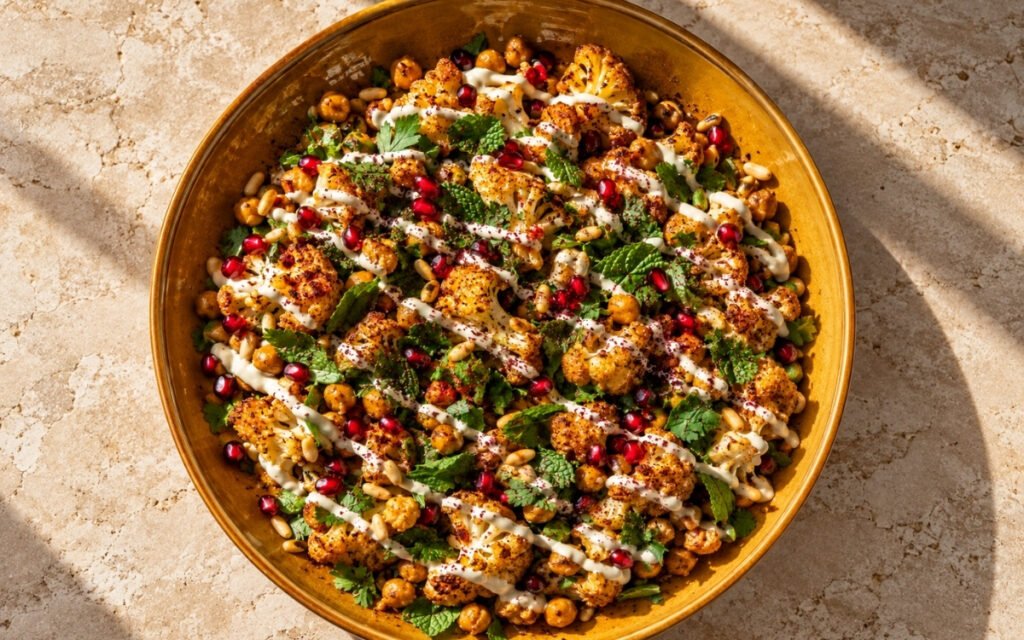
Roasted Cauliflower and Chickpea Salad with Tahini
Golden roasted cauliflower and crisp chickpeas with lemon-tahini sauce, fresh herbs, pomegranate, and toasted pine nuts.
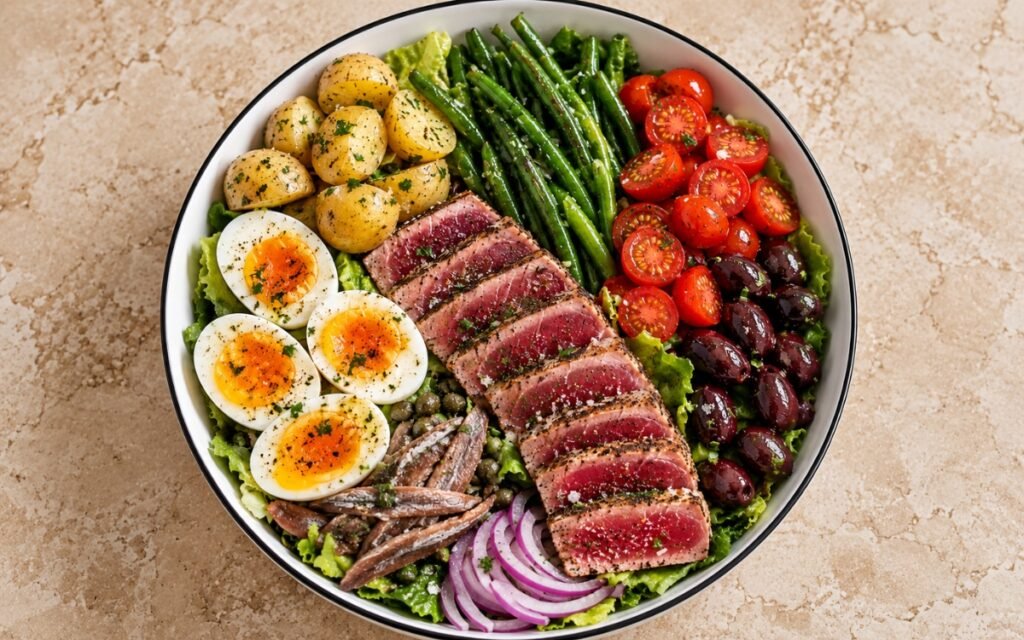
Tuna Niçoise Salad
Seared rare tuna, jammy eggs, haricots verts, baby potatoes, olives, and anchovies composed over crisp greens with a sharp mustard vinaigrette.
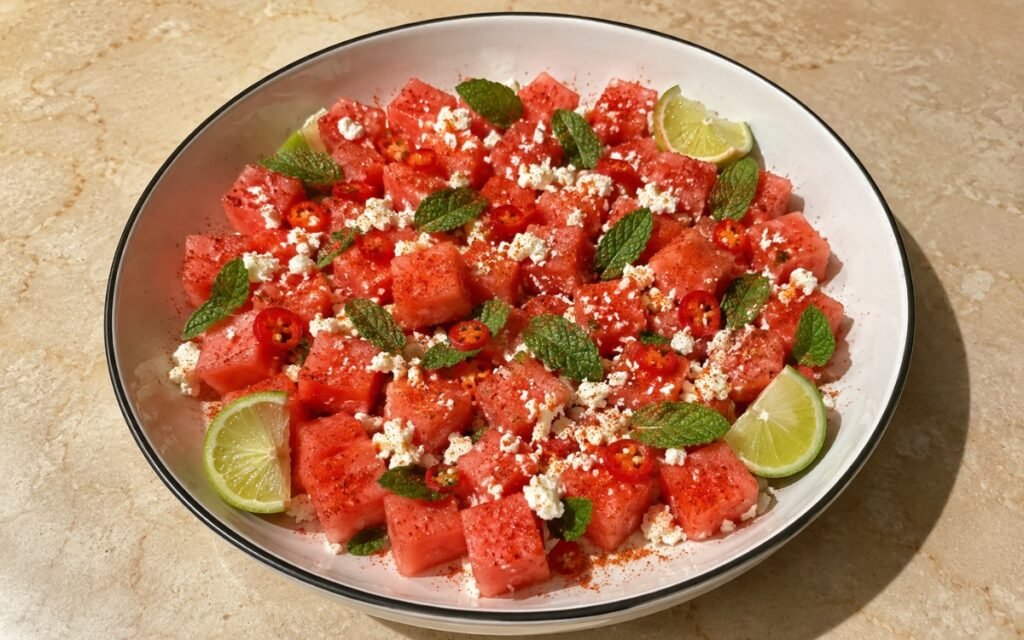
Watermelon Tajín Salad
Watermelon drained 5 minutes, tossed with Tajín, lime, and olive oil — cotija crumbled over the top with fresno chili, fresh mint, and an extra Tajín dusting. The summer salad in 25 minutes.
You might also like
You might also like
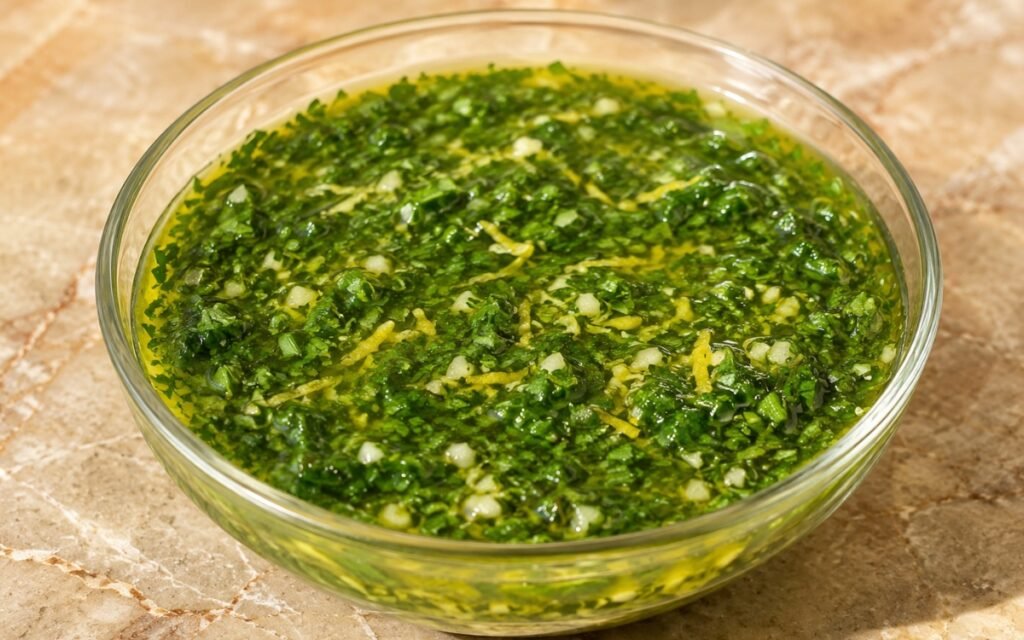
Parsley Lemon Herb Sauce
Bright parsley, lemon zest, and garlic in olive oil — a 10-minute sauce that goes on everything.
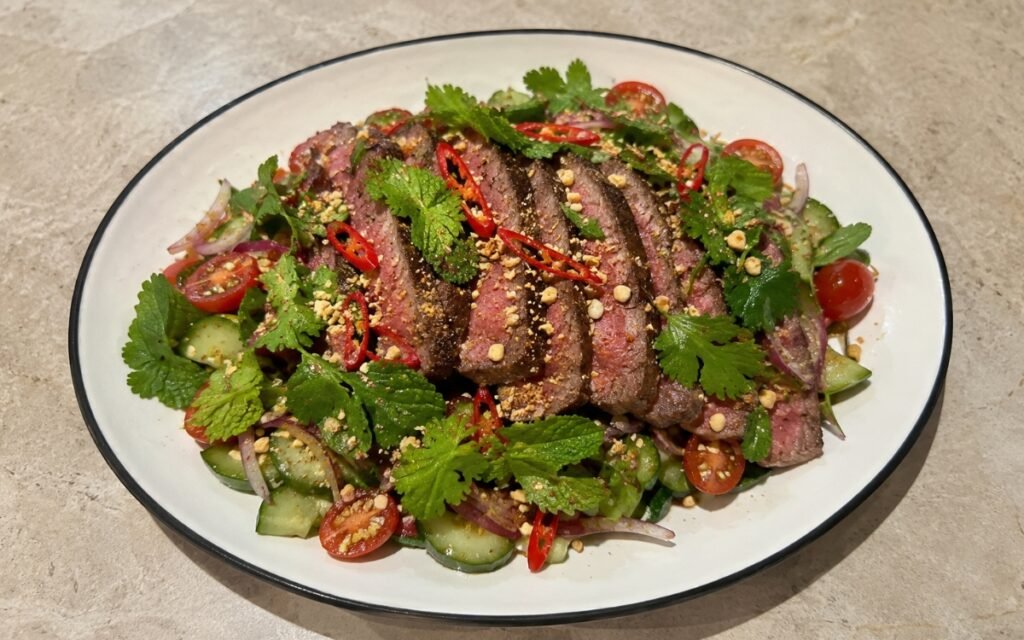
Spicy Thai Beef Salad (Yam Neua)
Sliced seared beef tossed with crisp vegetables, fresh herbs, and a punchy Thai lime-chili dressing.
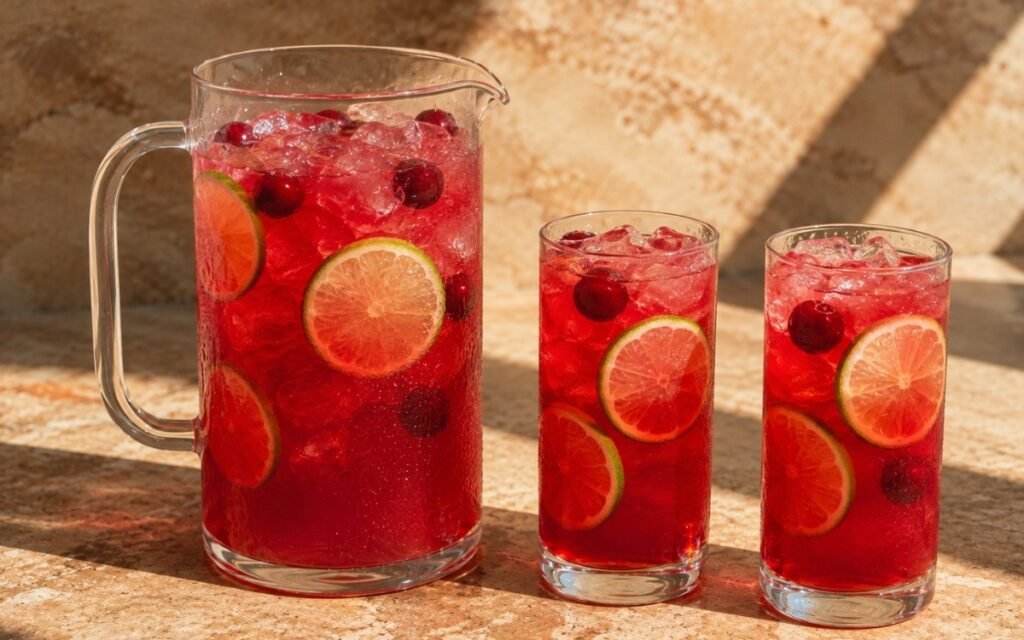
Cherry Limeade Pitcher Drink
Macerated, strained cherry-lime base combined with fresh lime juice and a second infusion of whole cherries and lime slices for a vivid red limeade.
Grilled Halloumi & Watermelon Salad
Ingredients
Method
- In a small bowl, whisk together the 2 tbsp of olive oil, 2 tsp of toasted sesame oil, 20ml of lime juice, 1 tsp of honey, and a generous crack of black pepper until combined. The toasted sesame oil’s contribution to this dressing is specifically important and is not a substitute for additional olive oil. Toasted sesame oil — produced by pressing roasted sesame seeds — has a concentrated, nutty, slightly smoky aromatic character produced during the roasting of the seeds, completely different from the neutral, raw sesame oil used for cooking. At only 2 tsp its character is present as a background aromatic depth in every spoonful of the dressed salad — amplifying the black sesame seeds’ visual and flavour contribution. Taste the dressing and adjust: more lime juice if the brightness is insufficient; more honey if it needs sweetness to balance the lime’s acidity. Do not add salt before tasting the dressing with the halloumi in mind — halloumi is considerably salty and the finished salad’s salt level must be assessed after the cheese is included, not before. Set aside.
- Cut the 700g of watermelon into medium rustic cubes — roughly 3–4cm pieces with irregular rather than uniform shapes. Place in a colander or fine-mesh strainer set over a bowl and allow to drain at room temperature for 5–10 minutes. The watermelon’s surface moisture, if undrained, dilutes the sesame-lime dressing into a thin, flat liquid that pools at the bottom of the salad bowl rather than coating the arugula and watermelon. The 5–10 minute drain removes this surface liquid without affecting the watermelon’s internal juiciness — each cube remains completely cold, crisp, and sweet inside while its exterior is ready to hold the dressing.
- Slice the 225g of halloumi block into slices approximately 8mm (⅓ inch) thick — thick enough to develop a proper crust on each side during the 1–2 minute grill time without becoming rubbery throughout, and thin enough to develop clear char marks and caramelisation on both surfaces. Pat each slice thoroughly dry with paper towels on both sides. The halloumi is packed in brine and its surface carries residual moisture — this surface moisture, like wet steak or wet fish, prevents the Maillard crust from forming immediately on contact with the hot grill surface and produces a pale, steam-softened exterior rather than the golden, slightly crisped surface that makes grilled halloumi distinctly more appealing than simply heated halloumi.
- Preheat a ridged grill pan, flat cast iron pan, or outdoor grill over medium-high heat until genuinely hot — a drop of water flicked onto the surface should evaporate immediately on contact. Lightly brush or wipe the surface with a neutral oil if needed. Place the halloumi slices flat on the hot surface. Leave completely undisturbed for 1–2 minutes — moving the cheese before the crust has set will tear the slice rather than flipping it cleanly. After 1–2 minutes the underside should show deep golden-brown colour with clear grill marks if using a ridged pan. Flip each slice with a thin spatula and grill the second side for 1–2 minutes. The correctly grilled halloumi should have a clearly caramelised, slightly crisped golden exterior and a warm, soft, slightly elastic interior — the squeaking texture that is halloumi’s characteristic eating quality. Transfer immediately to a plate — halloumi toughens and becomes rubbery if left on the heat or allowed to cool significantly before eating.
- In a large bowl, combine the 120g of arugula, the drained watermelon cubes, and the fresh mint leaves. Pour approximately two-thirds of the dressing over the components and toss gently — the arugula’s leaves are delicate and the watermelon cubes fragile, requiring light, confident turning rather than vigorous stirring. Transfer the dressed salad to shallow serving bowls or plates, spreading it out rather than mounding it so every component is visible and accessible. While the halloumi is still warm — within 2–3 minutes of leaving the grill — arrange the slices evenly across the salad surface. The warmth of the halloumi against the cold watermelon and arugula is the specific thermal contrast that makes this salad compelling; halloumi that has cooled to room temperature before being added produces a significantly less vivid eating experience.
- Drizzle the remaining dressing over the halloumi and the salad. Scatter the 1 tsp of black sesame seeds across the finished salad — their dark colour against the pink watermelon and golden halloumi provides the visual contrast, and their faintly bitter, nutty character provides the subtle flavour contrast that white sesame seeds at the same quantity would not provide as distinctly. Finish with an extra crack of black pepper. Serve immediately.