Ingredients
Method
Make the Dressing
- In a small bowl, whisk together the 2 tbsp of olive oil, 2 tsp of toasted sesame oil, 20ml of lime juice, 1 tsp of honey, and a generous crack of black pepper until combined. The toasted sesame oil's contribution to this dressing is specifically important and is not a substitute for additional olive oil. Toasted sesame oil — produced by pressing roasted sesame seeds — has a concentrated, nutty, slightly smoky aromatic character produced during the roasting of the seeds, completely different from the neutral, raw sesame oil used for cooking. At only 2 tsp its character is present as a background aromatic depth in every spoonful of the dressed salad — amplifying the black sesame seeds' visual and flavour contribution. Taste the dressing and adjust: more lime juice if the brightness is insufficient; more honey if it needs sweetness to balance the lime's acidity. Do not add salt before tasting the dressing with the halloumi in mind — halloumi is considerably salty and the finished salad's salt level must be assessed after the cheese is included, not before. Set aside.
Drain the Watermelon
- Cut the 700g of watermelon into medium rustic cubes — roughly 3–4cm pieces with irregular rather than uniform shapes. Place in a colander or fine-mesh strainer set over a bowl and allow to drain at room temperature for 5–10 minutes. The watermelon's surface moisture, if undrained, dilutes the sesame-lime dressing into a thin, flat liquid that pools at the bottom of the salad bowl rather than coating the arugula and watermelon. The 5–10 minute drain removes this surface liquid without affecting the watermelon's internal juiciness — each cube remains completely cold, crisp, and sweet inside while its exterior is ready to hold the dressing.
Prepare the Halloumi
- Slice the 225g of halloumi block into slices approximately 8mm (⅓ inch) thick — thick enough to develop a proper crust on each side during the 1–2 minute grill time without becoming rubbery throughout, and thin enough to develop clear char marks and caramelisation on both surfaces. Pat each slice thoroughly dry with paper towels on both sides. The halloumi is packed in brine and its surface carries residual moisture — this surface moisture, like wet steak or wet fish, prevents the Maillard crust from forming immediately on contact with the hot grill surface and produces a pale, steam-softened exterior rather than the golden, slightly crisped surface that makes grilled halloumi distinctly more appealing than simply heated halloumi.
Grill the Halloumi
- Preheat a ridged grill pan, flat cast iron pan, or outdoor grill over medium-high heat until genuinely hot — a drop of water flicked onto the surface should evaporate immediately on contact. Lightly brush or wipe the surface with a neutral oil if needed. Place the halloumi slices flat on the hot surface. Leave completely undisturbed for 1–2 minutes — moving the cheese before the crust has set will tear the slice rather than flipping it cleanly. After 1–2 minutes the underside should show deep golden-brown colour with clear grill marks if using a ridged pan. Flip each slice with a thin spatula and grill the second side for 1–2 minutes. The correctly grilled halloumi should have a clearly caramelised, slightly crisped golden exterior and a warm, soft, slightly elastic interior — the squeaking texture that is halloumi's characteristic eating quality. Transfer immediately to a plate — halloumi toughens and becomes rubbery if left on the heat or allowed to cool significantly before eating.
Assemble the Salad
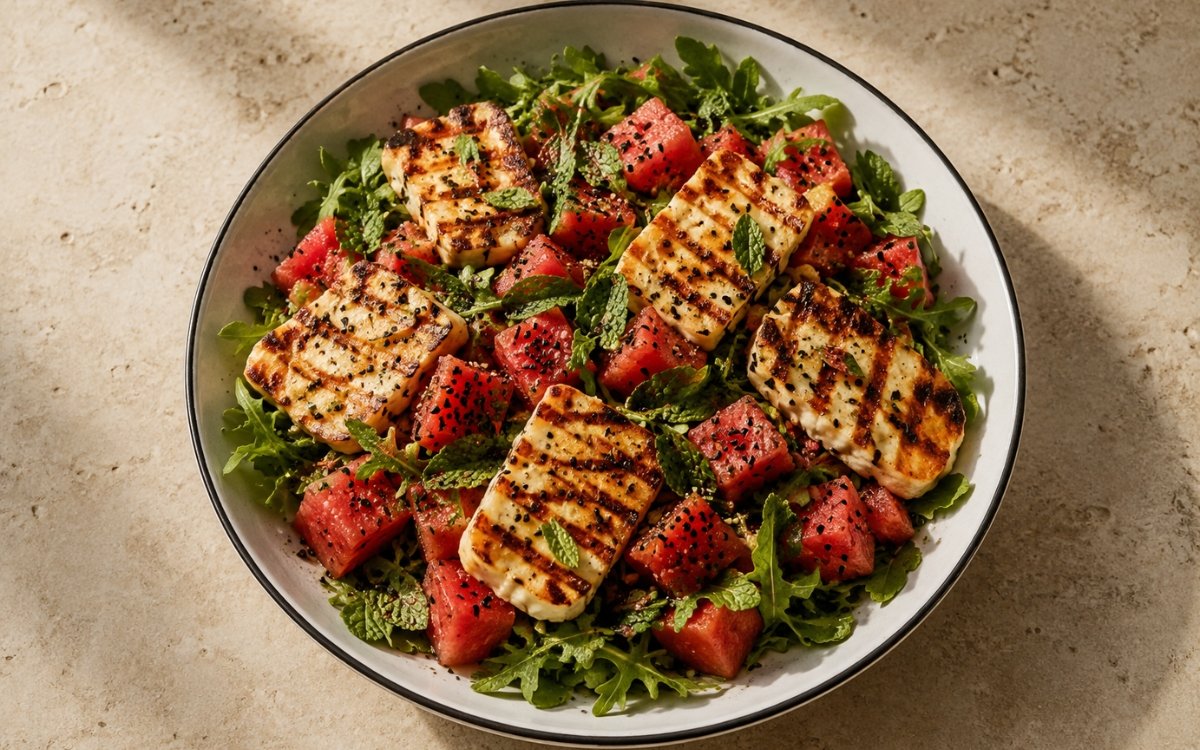
- In a large bowl, combine the 120g of arugula, the drained watermelon cubes, and the fresh mint leaves. Pour approximately two-thirds of the dressing over the components and toss gently — the arugula's leaves are delicate and the watermelon cubes fragile, requiring light, confident turning rather than vigorous stirring. Transfer the dressed salad to shallow serving bowls or plates, spreading it out rather than mounding it so every component is visible and accessible. While the halloumi is still warm — within 2–3 minutes of leaving the grill — arrange the slices evenly across the salad surface. The warmth of the halloumi against the cold watermelon and arugula is the specific thermal contrast that makes this salad compelling; halloumi that has cooled to room temperature before being added produces a significantly less vivid eating experience.
Finish and Serve
- Drizzle the remaining dressing over the halloumi and the salad. Scatter the 1 tsp of black sesame seeds across the finished salad — their dark colour against the pink watermelon and golden halloumi provides the visual contrast, and their faintly bitter, nutty character provides the subtle flavour contrast that white sesame seeds at the same quantity would not provide as distinctly. Finish with an extra crack of black pepper. Serve immediately.
Notes
Halloumi's unique grilling property — the high-melting-point cheese that produces a caramelised exterior without melting — is the product of its specific production process. During halloumi's manufacture, the formed curd is cooked in whey at high temperature before being brined. This cooking step denatures the whey proteins and drives off the lactic acid responsible for standard cheese's low melting point. The result is a cheese with a melting point significantly higher than most cheeses — approximately 100°C — that produces a firm, slightly rubbery texture when cold and a yielding, elastic, specifically squeaking texture when warm, and a golden, caramelised exterior when grilled without softening or melting.
The arugula — rocket — is the specifically correct green for this salad rather than mixed greens, spinach, or romaine. Arugula's specific peppery, slightly bitter, slightly mustardy character provides the contrast that makes the sweet watermelon, salty halloumi, and acidic lime dressing taste more vivid against it. A neutral green does not provide this contrast; arugula's assertive flavour specifically complements each other component.