
Greek Village Side Salad
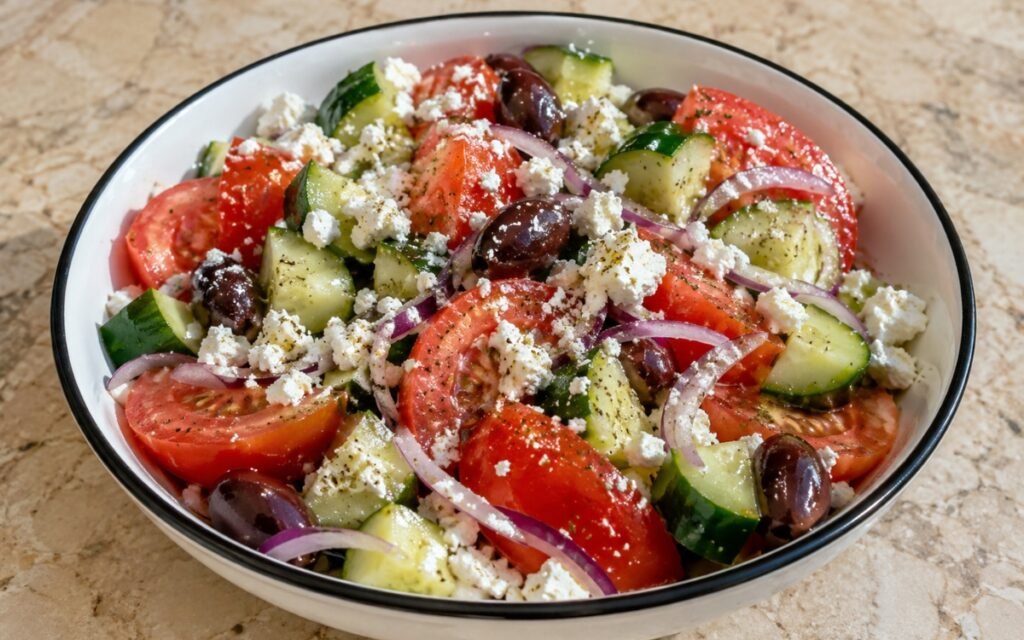
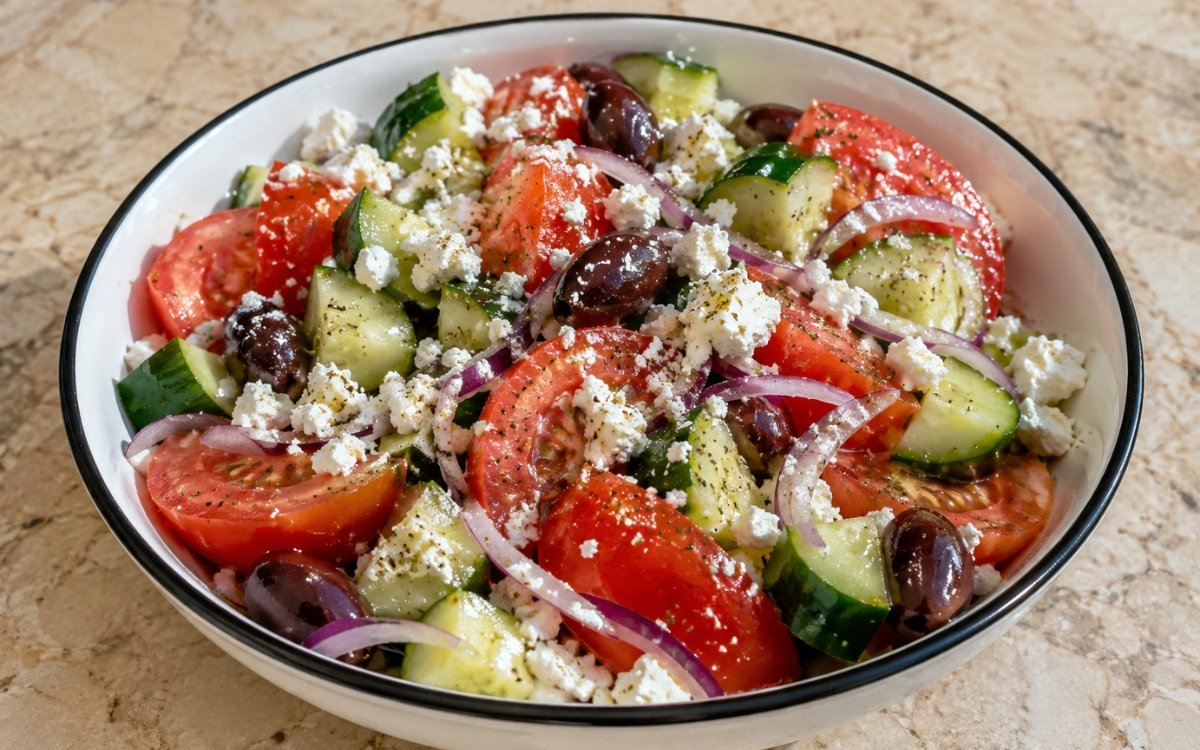
This authentic Greek village salad combines crisp cucumbers, juicy tomatoes, briny olives, and creamy feta cheese with a simple lemon-oregano dressing. Fresh, vibrant, and packed with Mediterranean flavors, it’s the perfect light side dish that comes together in just 10 minutes.
Prep Time : 10 min
Cook Time : 0 min
Servings : 4
10 min
0 min
4
Ingredients
Salad
• 2 large cucumbers, chopped into chunks
• 3 medium tomatoes, cut into wedges
• 1 small red onion, thinly sliced
• 60g Kalamata olives, pitted — this one on Amazon
• 40g feta cheese, crumbled — this one on Amazon
• 1 green bell pepper, chopped
Dressing
• 2 tablespoons extra virgin olive oil — this one on Amazon
• 1 tablespoon fresh lemon juice
• 1 teaspoon dried oregano
• 1/4 teaspoon sea salt
• 1/4 teaspoon black pepper
This post may contain affiliate links. As an Amazon Associate I earn from qualifying purchases, at no additional cost to you.
Directions
- Prepare the Cucumbers
Wash the cucumbers thoroughly and trim the ends. If using thick-skinned cucumbers, peel them partially or completely depending on preference. Cut the cucumbers lengthwise and then slice them into large rustic chunks approximately 2–3 cm in size. Greek village salads traditionally use chunky vegetables rather than finely chopped pieces. If the cucumbers contain large seeds, remove them before chopping to maintain a crisp texture. Place the cucumber pieces into a large mixing bowl. - Prepare the Tomatoes
Wash the tomatoes and pat them dry. Using a sharp knife, cut the tomatoes into large wedges, typically 6–8 pieces per tomato depending on size. Avoid cutting them too small so they maintain their structure when tossed with the other ingredients. If the tomatoes contain excess watery pulp, remove some of the interior seeds to prevent the salad from becoming overly watery. Add the tomato wedges to the bowl. - Prepare the Red Onion
Peel the red onion and slice it very thinly into half-moon slices about 2 mm thick. Thin slicing ensures the onion flavor blends evenly with the other vegetables without overpowering them. If the onion flavor is very strong, place the slices in a bowl of cold water for 5 minutes, then drain thoroughly and pat dry before adding to the salad. This step mellows the sharpness while keeping the onion crisp. - Prepare the Green Bell Pepper
Wash the green bell pepper and remove the stem, seeds, and internal membranes. Chop the pepper into medium-sized pieces roughly 1–2 cm wide so the flavor distributes evenly throughout the salad. Add the chopped bell pepper to the bowl with the other vegetables. - Add the Kalamata Olives
Ensure the Kalamata olives are pitted. If they are whole, they can be added directly to the salad or sliced in half lengthwise for easier distribution. Olives contribute the briny, salty flavor typical of Greek village salads. - Combine the Vegetables
Add the cucumbers, tomatoes, red onion, bell pepper, and olives to a large bowl. Toss the vegetables gently using a spoon or salad tongs to distribute them evenly before adding the dressing. - Prepare the Lemon-Oregano Dressing
In a small bowl combine the extra virgin olive oil, fresh lemon juice, dried oregano, sea salt, and black pepper. Whisk vigorously for about 15–20 seconds until the oil and lemon juice emulsify slightly. The dressing should taste bright, aromatic, and balanced with citrus and herbs. - Dress the Salad
Pour the prepared dressing evenly over the vegetables. Toss the salad gently until all ingredients are lightly coated with the vinaigrette. - Add the Feta Cheese
Sprinkle the crumbled feta cheese over the top of the salad. For a more traditional presentation, feta can also be added as larger chunks rather than small crumbles. - Serve
Serve the salad immediately at room temperature for the best flavor. Greek village salad is typically served as a refreshing side dish alongside grilled meats, seafood, or Mediterranean-style meals.
*Notes :
- Greek village salad, often known as Horiatiki, is one of the most iconic salads in Mediterranean cuisine.
- Unlike many salads, the vegetables are cut into larger pieces to highlight their natural texture and flavor.
- Authentic versions often include feta in large chunks rather than finely crumbled cheese.
- The dressing is intentionally simple, relying on high-quality olive oil, lemon, and oregano to complement the vegetables.
- Because tomatoes and cucumbers release moisture over time, the salad is best eaten shortly after dressing.
Why This Recipe Works
This recipe works because it balances fresh vegetables, briny olives, and creamy feta.
Tomatoes provide sweetness and acidity, cucumbers add refreshing crunch, and onions contribute mild sharpness. Kalamata olives bring salty depth, while feta adds creamy richness.
The lemon and olive oil dressing enhances the vegetables while oregano adds classic Mediterranean aroma.
Ingredient Breakdown
Cucumbers
Provide crisp texture and refreshing hydration.
Tomatoes
Add juiciness and natural sweetness.
Red Onion
Adds aromatic sharpness and depth.
Bell Pepper
Contributes subtle sweetness and crunch.
Kalamata Olives
Provide briny, salty flavor typical of Mediterranean dishes.
Feta Cheese
Adds creamy richness and tangy saltiness.
Lemon Juice
Provides bright citrus acidity that lifts the salad.
Olive Oil
Adds smooth richness and binds the dressing.
Oregano
Introduces classic Greek herbal aroma.
Flavor Structure Explained
The flavor profile of Greek village salad is built around fresh vegetable sweetness balanced with salty and acidic elements.
Tomatoes and cucumbers bring freshness, while olives and feta add savory depth. Lemon juice introduces acidity, while olive oil softens the sharpness and adds richness.
Oregano contributes an aromatic Mediterranean character.
Common Mistakes to Avoid
- Cutting Vegetables Too Small – Greek village salad should have large rustic pieces rather than finely chopped ingredients.
- Using Low-Quality Olive Oil – Because the dressing is simple, high-quality olive oil makes a noticeable difference.
- Overmixing After Adding Feta – Mix gently so the feta retains its shape rather than breaking down.
- Dressing Too Early – Vegetables release moisture over time, so the salad should be dressed just before serving.
Variations
Traditional Horiatiki Version
Add capers and omit the bell pepper for a more traditional Greek version.
Chickpea Greek Salad
Add cooked chickpeas for extra protein and texture.
Herb Variation
Add fresh dill or oregano leaves for stronger herbal flavor.
Grilled Vegetable Version
Add grilled zucchini or eggplant for a smoky Mediterranean twist.
Storage & Make-Ahead
The vegetables can be chopped and stored in the refrigerator for up to 24 hours before assembling.
The dressing can also be prepared ahead of time and refrigerated for 2–3 days.
Once dressed, the salad is best eaten within 4–6 hours, as the vegetables will release moisture and soften.
Frequently Asked Questions
What makes a Greek village salad authentic?
Authentic versions use simple ingredients: tomatoes, cucumbers, onions, olives, feta, olive oil, and oregano.
Can I use bottled lemon juice?
Fresh lemon juice is strongly recommended because it provides brighter flavor.
Can I substitute the feta cheese?
Yes. Goat cheese or a mild sheep’s milk cheese can work as substitutes.
What dishes pair best with this salad?
It pairs beautifully with grilled lamb, grilled chicken skewers, roasted vegetables, seafood, or Mediterranean meals.
Nutrition Facts
( per serving )
Calories
~145 kcal
Protein
4 g
Fat
11 g
Carbs
10 g
Calories
~145 kcal
Protein
4 g
Fat
11 g
Carbs
10 g
Related Recipes
Related Recipes

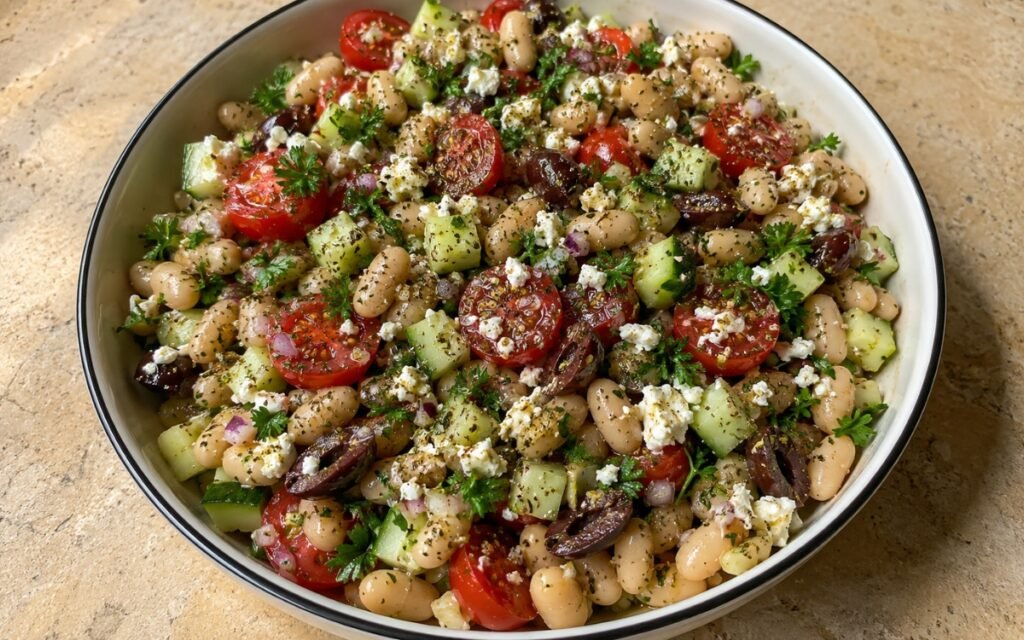
Za’atar White Bean Salad
Creamy white beans with za’atar, fresh vegetables, Kalamata olives, and tangy feta cheese.
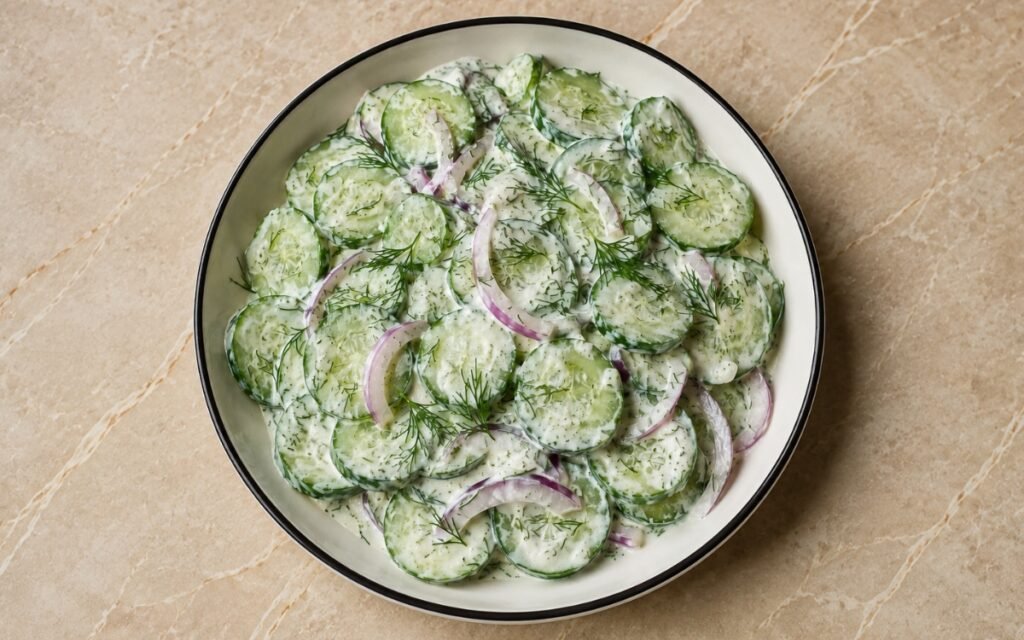
The Best Creamy Cucumber Salad
Crisp cucumbers tossed in tangy sour cream dressing with fresh dill, red onion, and garlic.
Salmon Cobb Salad
Chickpeas, cherry tomatoes, cucumber, red onion, parsley, and mint dressed with lemony olive oil, topped with warm grilled halloumi.

You might also like
You might also like
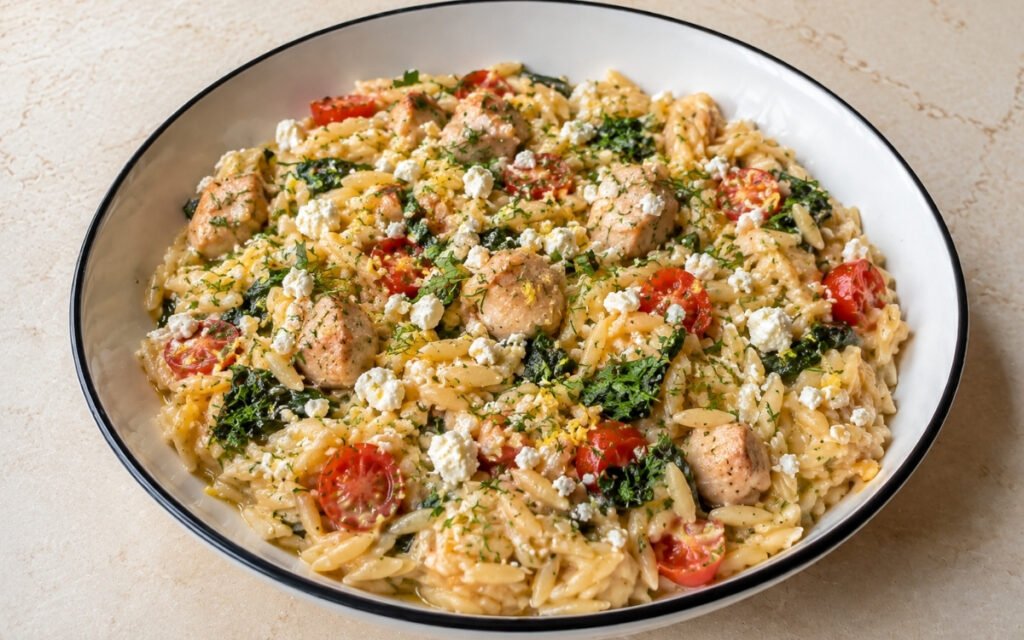
Fresh Lemon Chicken Orzo
Seared chicken thighs simmered in lemony stock with feta, spinach, and dill — one pan, 40 minutes.
Grilled Halloumi Burger with Roasted Peppers
Golden grilled halloumi in a toasted brioche bun with caramelized peppers, peppery rocket, and creamy harissa-lime mayo.
Raspberry Basil Limeade
Raspberries blended with lime juice, strained — honey no-cook syrup, basil and mint steeped cold 5–10 minutes, club soda right before serving. Vivid red and tart.


Greek Village Side Salad
Ingredients
Method
- Wash the cucumbers thoroughly and trim the ends. If using thick-skinned cucumbers, peel them partially or completely depending on preference. Cut the cucumbers lengthwise and then slice them into large rustic chunks approximately 2–3 cm in size. Greek village salads traditionally use chunky vegetables rather than finely chopped pieces. If the cucumbers contain large seeds, remove them before chopping to maintain a crisp texture. Place the cucumber pieces into a large mixing bowl.
- Wash the tomatoes and pat them dry. Using a sharp knife, cut the tomatoes into large wedges, typically 6–8 pieces per tomato depending on size. Avoid cutting them too small so they maintain their structure when tossed with the other ingredients. If the tomatoes contain excess watery pulp, remove some of the interior seeds to prevent the salad from becoming overly watery. Add the tomato wedges to the bowl.
- Peel the red onion and slice it very thinly into half-moon slices about 2 mm thick. Thin slicing ensures the onion flavor blends evenly with the other vegetables without overpowering them. If the onion flavor is very strong, place the slices in a bowl of cold water for 5 minutes, then drain thoroughly and pat dry before adding to the salad. This step mellows the sharpness while keeping the onion crisp.
- Wash the green bell pepper and remove the stem, seeds, and internal membranes. Chop the pepper into medium-sized pieces roughly 1–2 cm wide so the flavor distributes evenly throughout the salad. Add the chopped bell pepper to the bowl with the other vegetables.
- Ensure the Kalamata olives are pitted. If they are whole, they can be added directly to the salad or sliced in half lengthwise for easier distribution. Olives contribute the briny, salty flavor typical of Greek village salads.
- Add the cucumbers, tomatoes, red onion, bell pepper, and olives to a large bowl. Toss the vegetables gently using a spoon or salad tongs to distribute them evenly before adding the dressing.
- In a small bowl combine the extra virgin olive oil, fresh lemon juice, dried oregano, sea salt, and black pepper. Whisk vigorously for about 15–20 seconds until the oil and lemon juice emulsify slightly. The dressing should taste bright, aromatic, and balanced with citrus and herbs.
- Pour the prepared dressing evenly over the vegetables. Toss the salad gently until all ingredients are lightly coated with the vinaigrette.
- Sprinkle the crumbled feta cheese over the top of the salad. For a more traditional presentation, feta can also be added as larger chunks rather than small crumbles.
- Serve the salad immediately at room temperature for the best flavor. Greek village salad is typically served as a refreshing side dish alongside grilled meats, seafood, or Mediterranean-style meals.