
Oven Baked Chicken Thighs with Cheesy Spaghetti
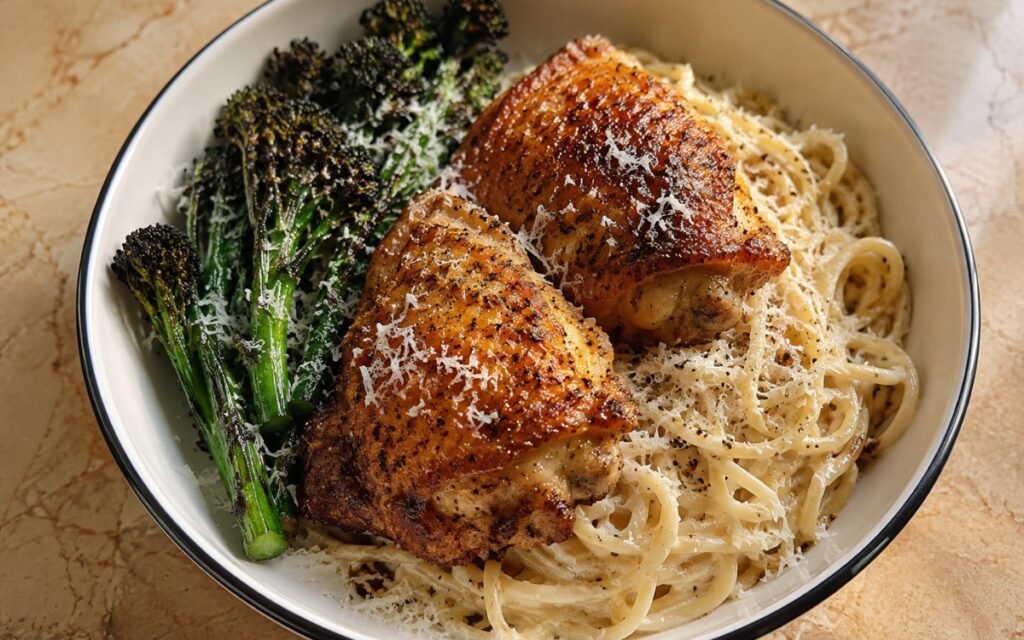
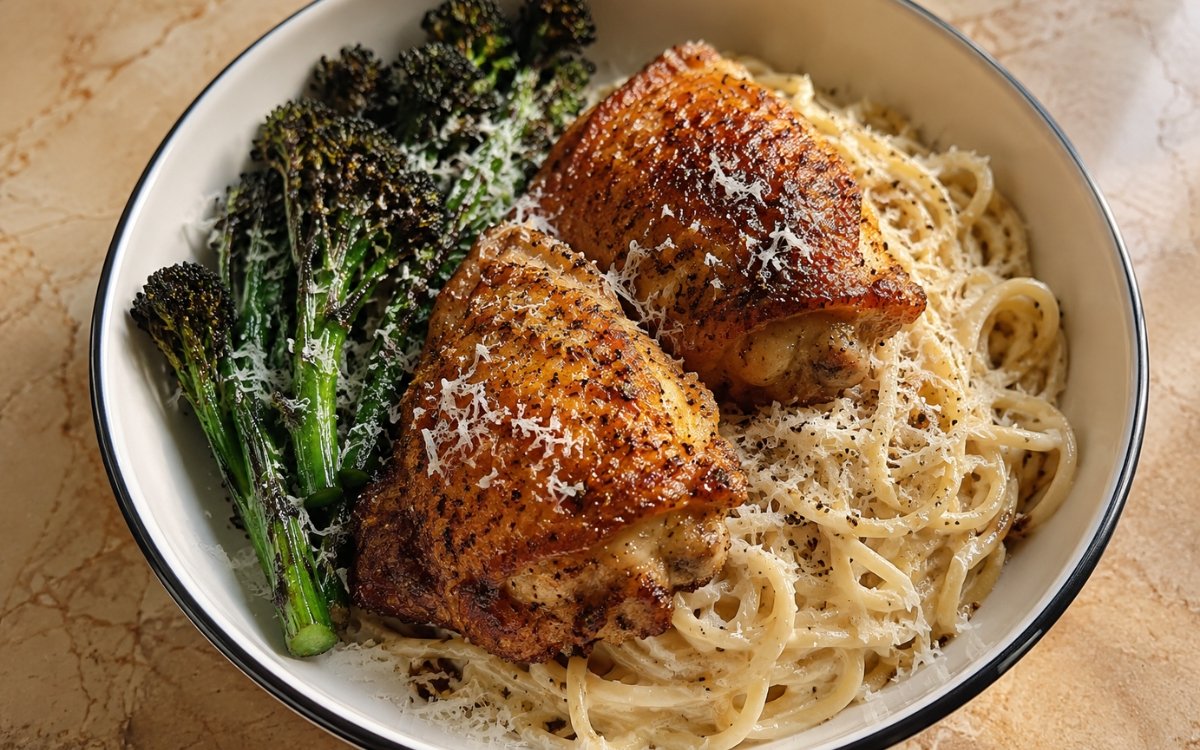
A complete weeknight bowl — smoked paprika and herb-seasoned bone-in chicken thighs roasted at 220°C until the skin is deeply golden and genuinely crispy, a simplified cacio e pepe spaghetti made with the tempered cheese paste technique that keeps it smooth rather than clumped, and pan-seared broccolini with char marks from being left undisturbed in a hot skillet. All three come together in one wide bowl with a heavy grating of Parmesan over everything. The components are straightforward individually; assembled together they produce the kind of bowl that looks like significantly more effort than forty minutes.
Prep Time : 15 min
Cook Time : 40 min
Servings : 4
15 min
40 min
4
Ingredients
For the Chicken Thighs
• 8 bone-in, skin-on chicken thighs
• 1½ tsp fine salt
• 1 tsp black pepper, freshly cracked
• 1½ tsp sweet smoked paprika
• ½ tsp hot paprika
• 1½ tsp garlic powder
• 1 tsp dried oregano
• 1 tsp dried basil
• 2 tbsp olive oil
For the Cacio e Pepe Spaghetti
• 240g spaghetti — this one on Amazon
• 60g Pecorino Romano, finely grated — this one on Amazon
• 60g Parmesan, finely grated, plus extra for serving — this one on Amazon
• 2 tsp freshly cracked black pepper
• 2 tbsp unsalted butter — this one on Amazon
• 120ml reserved pasta water
For the Pan-Seared Broccolini
• 400g broccolini, trimmed
• • 2 tbsp olive oil
• ½ tsp fine salt
• ½ tsp black pepper
This post may contain affiliate links. As an Amazon Associate I earn from qualifying purchases, at no additional cost to you.
Directions
- Season and Prepare the Chicken
Remove the chicken thighs from the refrigerator at least 20 minutes before cooking — cold chicken directly from the refrigerator has a large temperature gradient between its cold interior and the ambient surface that causes the exterior to cook significantly faster than the interior. Room-temperature chicken cooks more evenly. Pat every surface completely dry with paper towels — this is the single most important preparation step for crispy chicken skin. Any surface moisture present when the chicken enters the oven converts to steam rather than rendering and caramelising, preventing the Maillard reaction crust that makes roasted chicken skin satisfying. In a small bowl, combine the salt, black pepper, sweet smoked paprika, hot paprika, garlic powder, dried oregano, and dried basil — stir to distribute evenly so the seasoning is uniform rather than concentrated in any one spot. The two-paprika combination is deliberate: sweet smoked paprika provides the deep, russet-red colour and the characteristic sweet smokiness of properly seasoned roast chicken; hot paprika provides a background warmth without sharpness, amplifying the smoked paprika without introducing a separate spice character. Drizzle the olive oil over the chicken thighs and rub it across all surfaces — the oil ensures the spice mixture adheres completely rather than falling off during handling. Sprinkle the spice blend generously over the skin side and press firmly with fingertips so it adheres into the surface rather than sitting loosely on top. Flip each thigh and season the underside as well, then return skin-side up on a large rimmed baking sheet or oven-safe skillet. - Roast the Chicken
Preheat the oven to 220°C (425°F). Place the seasoned thighs skin-side up on the baking sheet, spacing them at least 2–3cm apart. Spacing matters for the same reason it matters when searing any protein in a pan: crowded chicken traps the steam released during cooking against the skin surfaces, producing pale, soft skin rather than the caramelised, deeply golden skin that the high oven temperature and dry heat are meant to create. Roast for 38–42 minutes until the skin is deeply golden and visibly crisped — the skin surface should look dry, firm, and dark golden-brown rather than pale or glossy. An instant-read thermometer inserted into the thickest part of the thigh away from the bone should read 74°C. For extra colour and crispness on the skin in the final moments, switch to the broiler setting for 2–3 minutes at the end of roasting — watching closely, as the spice crust can darken from golden to burnt in under a minute under a direct broiler. Remove from the oven and rest for 5 minutes before assembly — resting allows the juices that have been driven to the surface during roasting to redistribute through the meat. - Cook the Spaghetti
While the chicken roasts, bring a large pot of water to a full rolling boil and salt it generously — the water should taste clearly of salt throughout. Add the 240g of spaghetti and cook according to the package directions until al dente. Before draining, scoop out at least 120ml of pasta water in a heatproof measuring cup — the pasta water is the emulsifying agent for the cacio e pepe preparation and its starchy content is what allows the cheese to coat the pasta smoothly rather than clumping. Drain the spaghetti and return it immediately to the warm pot off the heat. - Make the Cacio e Pepe Sauce
While the pasta finishes cooking, combine the 60g of finely grated Pecorino Romano and 60g of finely grated Parmesan in a small bowl. Add 2–3 tablespoons of hot pasta water directly from the pot to the cheese and stir vigorously with a fork until a thick, smooth, uniform paste forms. This tempering step is the technique decision that makes the difference between cacio e pepe that is silky and smooth and cacio e pepe that clumps into grainy cheese lumps. When cold, finely grated cheese is added directly to hot pasta, the proteins on the cheese’s surface heat unevenly and seize simultaneously — the outer surface proteins set before the interior melts, producing clumps that no amount of subsequent tossing resolves. When the cheese is tempered in a small amount of hot pasta water first, the proteins warm gradually and evenly in a controlled environment, producing a smooth paste that has already begun its emulsification before it contacts the pasta. Add the 2 tbsp of butter to the drained spaghetti in the warm pot and toss until completely melted and coating every strand. Add the 2 tsp of freshly cracked black pepper and stir for 30 seconds — the pepper blooms slightly in the butter’s warmth. Add the cheese paste along with 60–80ml of additional pasta water and toss continuously with tongs, lifting and folding the pasta over the sauce. Continue tossing, adding small additional amounts of pasta water as needed, until the sauce is creamy, glossy, and clings to every strand without pooling at the bottom of the pot. - Sear the Broccolini
Trim the tough bottom ends from the 400g of broccolini and rinse under cold water. Pat completely dry with a kitchen towel — wet broccolini steams against its neighbours rather than searing, losing the char that makes it interesting. Heat a large skillet or cast iron pan over medium-high heat and add the 2 tablespoons of olive oil. Allow the oil to heat until shimmering. Add the broccolini in a single layer — crowded broccolini produces the same steaming problem as wet broccolini, and if needed, sear in two batches. Leave completely undisturbed for 2 minutes — the undisturbed contact produces the char marks at the floret tips and stem surfaces that add the slightly bitter, smoky character that contrasts specifically well with the rich cacio e pepe pasta and the savoury chicken. Season with the salt and black pepper, toss once, and cook for a further 2–3 minutes until the stems are just tender when pierced with the tip of a knife. Remove from the heat immediately — broccolini continues cooking from residual heat and should come off before it is fully soft. - Assemble and Serve
Divide the cacio e pepe spaghetti among four wide, shallow bowls — twirl into nests with tongs for the cleaner presentation. Place 2 roasted chicken thighs alongside each pasta portion. Arrange a portion of seared broccolini in the remaining bowl space. Finish with a heavy, generous grating of fresh Parmesan over the entire bowl — chicken, pasta, and broccolini alike. The Parmesan at serving is not optional decoration but the finishing element that ties all three components together under a common savoury, salty, nutty top note. Serve immediately while everything is hot.
*Notes :
- The combination of sweet smoked paprika and hot paprika in the chicken seasoning is worth maintaining rather than simplifying to a single paprika type. Sweet smoked paprika provides the colour — the deep, reddish-brown skin that makes roasted chicken visually appealing — and the characteristic aromatic smokiness. Hot paprika provides the heat, which at ½ tsp for 8 thighs produces a warm background note rather than perceptible spice — it amplifies the sweet paprika’s character without introducing a competing spice flavour. Using only sweet paprika produces a visually identical result with less flavour depth; using only hot paprika produces a less visually appealing, more aggressively spiced result.
- The cacio e pepe component in this bowl is a simplified version of the standalone Classic Cacio e Pepe Pasta — it uses butter as an additional emulsification aid rather than the chilled-butter bridge technique of the full recipe, which makes it more forgiving and faster to execute as a component in a multi-element bowl. The tempering step remains essential regardless of the simplified format.
- Broccolini — sometimes called baby broccoli or tender-stem broccoli — is specifically better suited to this high-heat searing preparation than standard broccoli because its thin, tender stems cook through at the same rate as the florets. Standard broccoli’s thick stems remain undercooked when the florets have reached the correct charred state. If only standard broccoli is available, cut into small florets with minimal stem length.
Why This Recipe Works
This recipe works because it sequences all three components to finish simultaneously around the 40-minute mark with the minimum of concurrent active cooking. The chicken goes in the oven and runs unattended for 38–42 minutes while the pasta and broccolini are prepared sequentially during that time.
The cacio e pepe’s tempered cheese paste makes the most technically demanding component of the bowl reliable and forgiving. The broccolini’s undisturbed sear is the single technique decision that takes it from a side vegetable to a specifically flavourful component that earns its space in the bowl alongside the rich pasta and the seasoned chicken.
Ingredient Breakdown
Bone-In, Skin-On Chicken Thighs (Dried, Spiced, Roasted at 220°C)
The bowl’s protein anchor — bone-in for flavour and moisture during roasting; skin-on and dried for the deeply golden, crispy skin.
Sweet Smoked Paprika and Hot Paprika
The two-paprika colour and flavour system — sweet smoked for colour, aroma, and the characteristic smokiness; hot paprika for background warmth and flavour depth.
Tempered Cheese Paste (Pecorino and Parmesan)
The cacio e pepe technique decision — pre-tempering with hot pasta water prevents clumping and produces smooth, even coating.
Cracked Black Pepper (Bloomed in Butter)
The cacio e pepe’s defining spice — bloomed in warm butter before the cheese paste is added for maximum aromatic presence.
Broccolini (Undisturbed Sear)
The charred, slightly bitter vegetable contrast — the 2-minute undisturbed contact produces the char that makes broccolini specifically interesting rather than simply present.
Parmesan at Serving
The unifying finish — grated over all three components, tying the bowl’s flavours together under a common savoury-salty top note.
Flavor Structure Explained
The flavor structure of this dish is built around contrasting richness and brightness across three components.
The chicken thighs are the boldest element, with deep savory flavor from the spice rub, rendered fat, and roasted skin. The cacio e pepe spaghetti is intentionally restrained — rich and peppery but not heavily seasoned, serving as a creamy, satisfying base that does not compete with the chicken. The broccolini introduces a third flavor note: lightly bitter, slightly charred, and fresh, which prevents the bowl from tasting uniformly heavy. Parmesan unifies all three elements by adding consistent saltiness and umami across the entire plate.
Flavor Structure Explained
This pasta follows a layered balance model:
- Savory spiced core (roasted chicken)
- Sharp creamy richness (cacio e pepe spaghetti)
- Bitter-charred vegetal contrast (broccolini)
- Aromatic heat (black pepper)
- Savory finishing depth (Parmesan)
Chicken defines the foundation with smoky, herbaceous, savory depth intensified by roasted skin and spice. The cacio e pepe layer adds sharp Pecorino richness and aromatic black pepper warmth, coating the pasta with concentrated dairy-savory flavor. Broccolini cuts through both with slight bitterness and charred freshness, preventing the bowl from becoming overly rich. Black pepper runs through the structure as a continuous aromatic heat. Parmesan at the finish ties all elements together with an additional savory-nutty layer, creating a balanced composition where richness, spice, and freshness coexist in every bite.
Common Mistakes to Avoid
- Not Drying the Chicken Before Roasting – Surface moisture prevents crispy skin. The Maillard reaction requires a dry surface — always pat completely dry before seasoning.
- Crowding the Chicken on the Baking Sheet – Crowded thighs trap steam and produce pale, soft skin. Space at least 2–3cm apart for proper air circulation.
- Adding Cold Cheese Directly to Hot Pasta – Clumping is instant and irreversible. Always make the tempered paste first.
- Not Leaving the Broccolini Undisturbed – The char requires 2 minutes of uninterrupted contact with the hot surface. Moving immediately produces pale, green broccolini without the char that earns its place in the bowl.
- Not Reserving Pasta Water – Without the starchy water, the cacio e pepe component cannot be emulsified — the cheese and butter separate rather than coating. Always scoop out water before draining.
- Serving the Bowl Cold – All three components should arrive at the table hot simultaneously — time the pasta and broccolini to coincide with the chicken’s resting completion.
Variations
Boneless Thighs Version
Use 8 boneless, skinless thighs with the same spice mixture — reduce the roasting time to 22–25 minutes at the same 220°C temperature. The skin-on flavour and crispness are absent but the seasoning still produces an excellent result.
Pasta Variation
Replace the cacio e pepe spaghetti with the Chicken Fettuccine Alfredo butter-and-Parmigiano emulsion technique — same concept, slightly different flavour character without the Pecorino’s assertive sharpness.
Broccoli Rabe Version
Replace the broccolini with 400g of broccoli rabe (rapini) for a more intensely bitter, more assertively flavoured green that provides stronger contrast against the rich pasta and seasoned chicken.
Broccoli Substitution
Regular broccoli florets, asparagus, or green beans can replace broccolini depending on availability. Adjust cooking time accordingly.
Lemon Finish
Add the zest of 1 lemon over the assembled bowl at serving — the citrus aromatic brightness against the rich pasta and seasoned chicken is an excellent addition that makes the bowl feel less heavy.
Storage & Make-Ahead
Roasted chicken thighs can be refrigerated for up to 4 days. To bring back some of the skin’s crispness, reheat them on a wire rack in a 200°C oven for 8 to 10 minutes. Microwaving will soften the skin permanently.
Cacio e pepe spaghetti can be refrigerated for up to 2 days. Reheat it gently in a pan over low heat with 2 to 3 tablespoons of water per portion, tossing until the sauce comes back together. The cheese emulsion may separate slightly during storage, but it will reform with gentle heat and movement.
Seared broccolini can be refrigerated for up to 3 days. Reheat it in a dry skillet over medium-high heat for about 2 minutes to restore its warmth and some of its charred character.
Frequently Asked Questions
Why bone-in, skin-on thighs rather than boneless?
Bone-in thighs are more difficult to overcook because the bone slows heat transfer and keeps the surrounding meat moist — the bone-in format is specifically forgiving for oven roasting. Skin-on provides the renderable fat that produces the crispy skin crust. Boneless, skinless thighs work but produce a different experience without the crispness.
Why 220°C rather than a lower temperature?
High roasting temperature is what produces crispy skin — at lower temperatures the fat renders too slowly and the skin remains soft rather than crisping. 220°C for 38–42 minutes produces the ideal combination of deep colour on the skin and fully cooked, juicy interior.
How do I prevent cacio e pepe from clumping?
Make the cheese paste first with hot pasta water before the cheese contacts the pasta. This tempering step is the only reliable prevention — cold cheese on hot pasta clumps regardless of other technique. See the Classic Cacio e Pepe Pasta recipe for the full standalone technique.
Can I cook all three components without any resting or waiting?
The 38–42 minute chicken roasting time is the production window for the pasta and broccolini. Start the pasta water and sear the broccolini during the chicken’s last 15 minutes — with this timing, all three components finish within 5 minutes of each other.
What bowl shape works best for assembly?
Wide, shallow bowls allow all three components to sit alongside each other without being stacked — each element visible and accessible without having to dig through the pasta to reach the chicken or broccolini.
Nutrition Facts
( per serving )
Calories
~990 kcal
Protein
63 g
Fat
61 g
Carbs
~47 g
Calories
~990 kcal
Protein
63 g
Fat
61 g
Carbs
~47 g
Related Recipes
Related Recipes

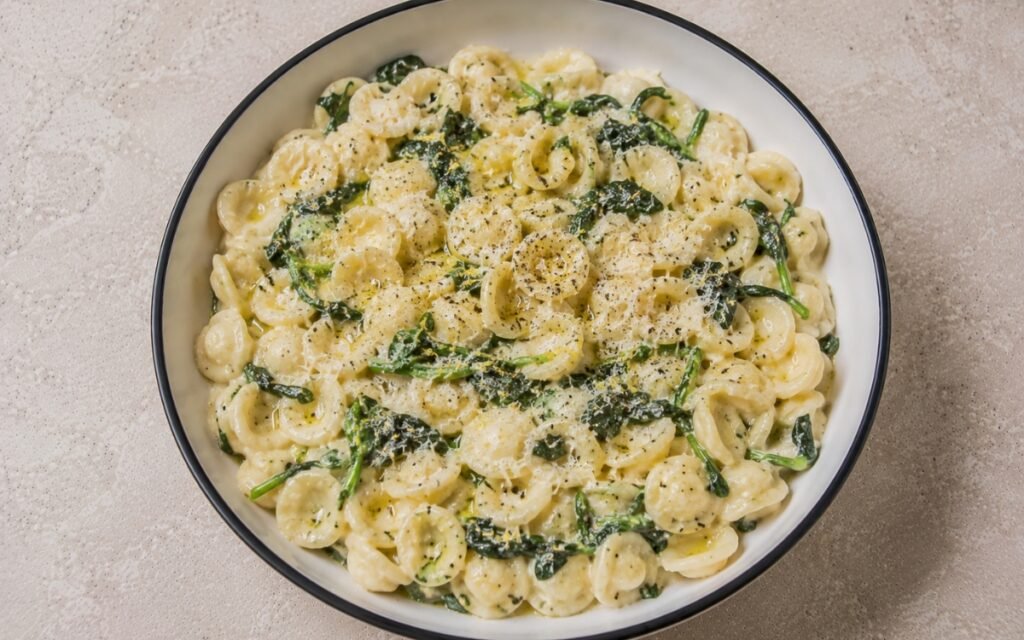
Lemon Ricotta Spinach Orecchiette
Ricotta whisked with Parmigiano, lemon, and warm pasta water — added off the heat to orecchiette and garlic spinach for silky sauce without cream. 30 minutes.
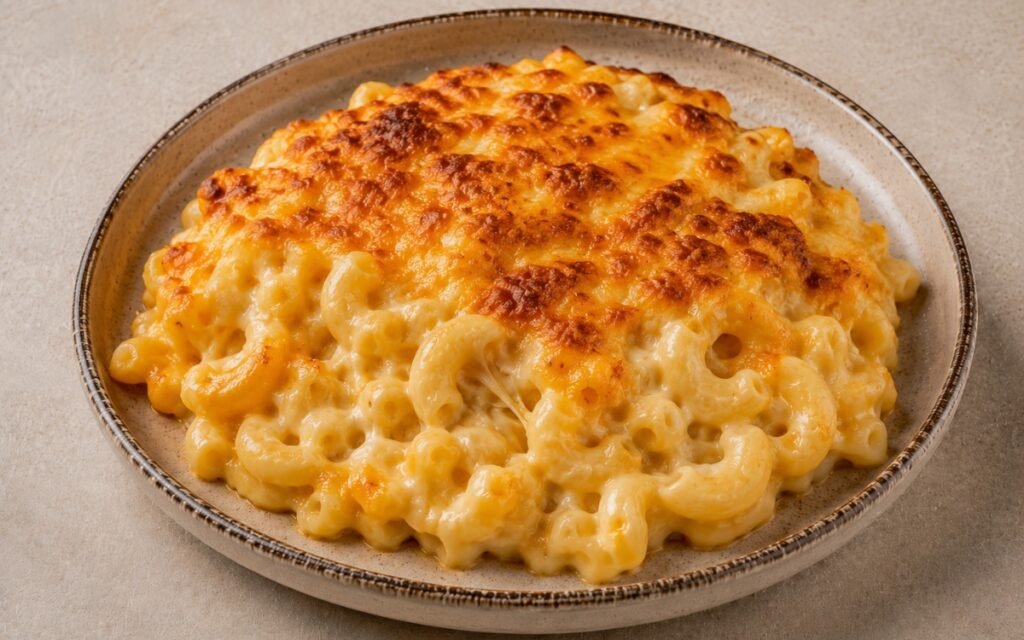
Baked Mac and Cheese
Cheddar, Gruyère, and mozzarella melted into a béchamel off the heat — layered with underdone macaroni, baked bubbling, broiled golden. Serves 12.
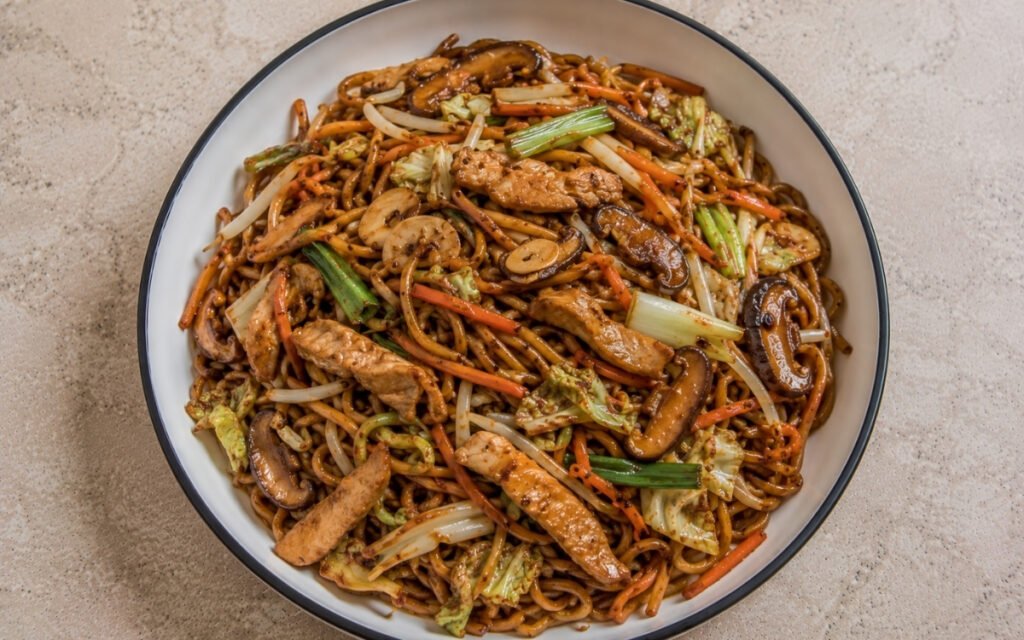
Easy Chicken Chow Mein Noodles
Hong Kong egg noodles crisped in a smoking-hot wok with seared chicken and vegetables — four-component soy sauce, cornstarch glaze, 35 minutes.
You might also like
You might also like
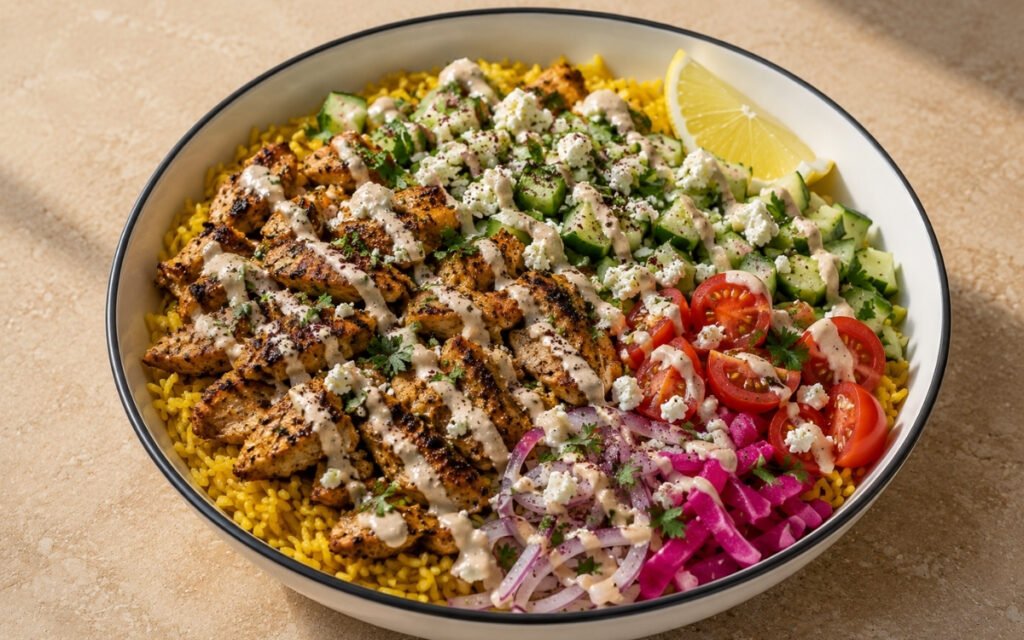
Lebanese Chicken Shawarma Rice Bowl
Chicken thighs marinated in yogurt and seven Lebanese spices, charred undisturbed in cast iron — over turmeric rice with cold-whisked tahini sauce and pickled turnips. 45 minutes.
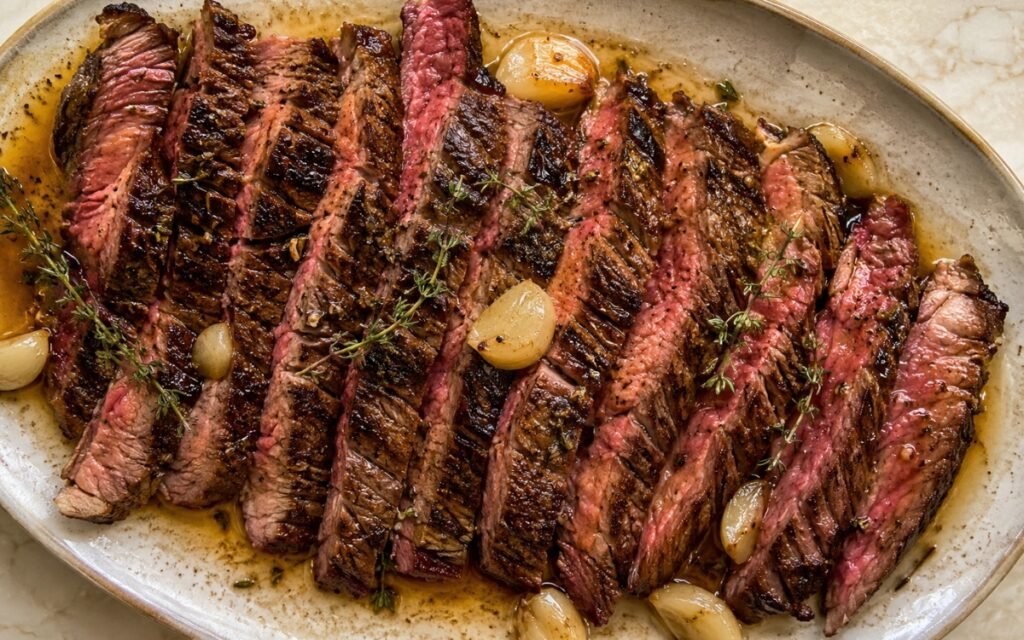
Pan-Seared Skirt Steak
Quick-seared skirt steak with garlic herb butter, sliced against the grain for maximum tenderness.
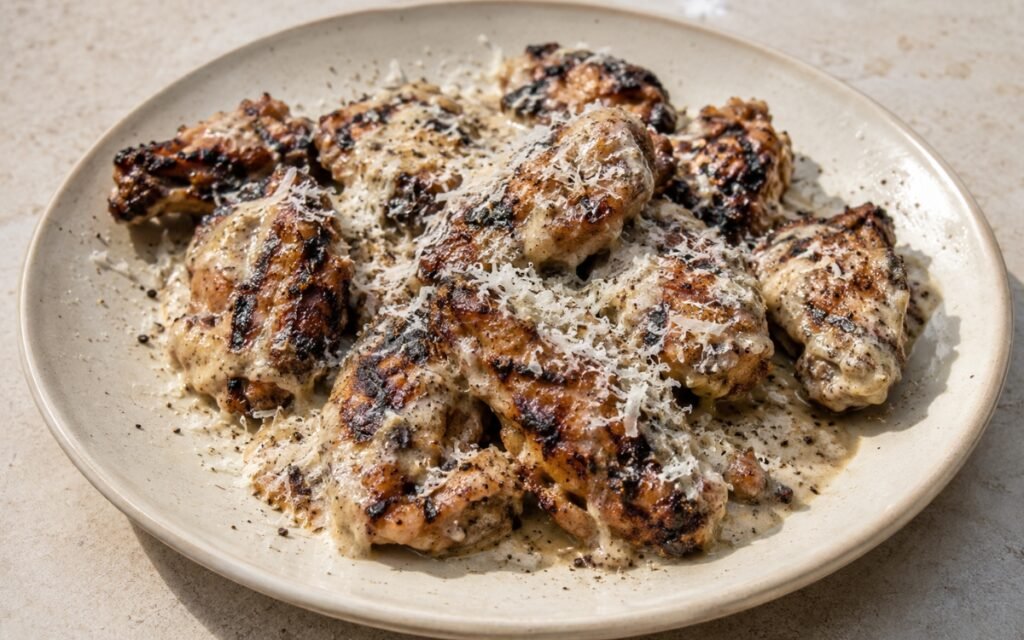
Grilled Cacio e Pepe Chicken Wings
Low-and-slow grilled chicken wings with crisp, rendered skin, tossed in a creamy off-heat Pecorino-Parmesan cacio e pepe sauce with black pepper.
Oven Baked Chicken Thighs with Cheesy Spaghetti
Ingredients
Method
- Remove the chicken thighs from the refrigerator at least 20 minutes before cooking — cold chicken directly from the refrigerator has a large temperature gradient between its cold interior and the ambient surface that causes the exterior to cook significantly faster than the interior. Room-temperature chicken cooks more evenly. Pat every surface completely dry with paper towels — this is the single most important preparation step for crispy chicken skin. Any surface moisture present when the chicken enters the oven converts to steam rather than rendering and caramelising, preventing the Maillard reaction crust that makes roasted chicken skin satisfying. In a small bowl, combine the salt, black pepper, sweet smoked paprika, hot paprika, garlic powder, dried oregano, and dried basil — stir to distribute evenly so the seasoning is uniform rather than concentrated in any one spot. The two-paprika combination is deliberate: sweet smoked paprika provides the deep, russet-red colour and the characteristic sweet smokiness of properly seasoned roast chicken; hot paprika provides a background warmth without sharpness, amplifying the smoked paprika without introducing a separate spice character. Drizzle the olive oil over the chicken thighs and rub it across all surfaces — the oil ensures the spice mixture adheres completely rather than falling off during handling. Sprinkle the spice blend generously over the skin side and press firmly with fingertips so it adheres into the surface rather than sitting loosely on top. Flip each thigh and season the underside as well, then return skin-side up on a large rimmed baking sheet or oven-safe skillet.
- Preheat the oven to 220°C (425°F). Place the seasoned thighs skin-side up on the baking sheet, spacing them at least 2–3cm apart. Spacing matters for the same reason it matters when searing any protein in a pan: crowded chicken traps the steam released during cooking against the skin surfaces, producing pale, soft skin rather than the caramelised, deeply golden skin that the high oven temperature and dry heat are meant to create. Roast for 38–42 minutes until the skin is deeply golden and visibly crisped — the skin surface should look dry, firm, and dark golden-brown rather than pale or glossy. An instant-read thermometer inserted into the thickest part of the thigh away from the bone should read 74°C. For extra colour and crispness on the skin in the final moments, switch to the broiler setting for 2–3 minutes at the end of roasting — watching closely, as the spice crust can darken from golden to burnt in under a minute under a direct broiler. Remove from the oven and rest for 5 minutes before assembly — resting allows the juices that have been driven to the surface during roasting to redistribute through the meat.
- While the chicken roasts, bring a large pot of water to a full rolling boil and salt it generously — the water should taste clearly of salt throughout. Add the 240g of spaghetti and cook according to the package directions until al dente. Before draining, scoop out at least 120ml of pasta water in a heatproof measuring cup — the pasta water is the emulsifying agent for the cacio e pepe preparation and its starchy content is what allows the cheese to coat the pasta smoothly rather than clumping. Drain the spaghetti and return it immediately to the warm pot off the heat.
- While the pasta finishes cooking, combine the 60g of finely grated Pecorino Romano and 60g of finely grated Parmesan in a small bowl. Add 2–3 tablespoons of hot pasta water directly from the pot to the cheese and stir vigorously with a fork until a thick, smooth, uniform paste forms. This tempering step is the technique decision that makes the difference between cacio e pepe that is silky and smooth and cacio e pepe that clumps into grainy cheese lumps. When cold, finely grated cheese is added directly to hot pasta, the proteins on the cheese’s surface heat unevenly and seize simultaneously — the outer surface proteins set before the interior melts, producing clumps that no amount of subsequent tossing resolves. When the cheese is tempered in a small amount of hot pasta water first, the proteins warm gradually and evenly in a controlled environment, producing a smooth paste that has already begun its emulsification before it contacts the pasta. Add the 2 tbsp of butter to the drained spaghetti in the warm pot and toss until completely melted and coating every strand. Add the 2 tsp of freshly cracked black pepper and stir for 30 seconds — the pepper blooms slightly in the butter’s warmth. Add the cheese paste along with 60–80ml of additional pasta water and toss continuously with tongs, lifting and folding the pasta over the sauce. Continue tossing, adding small additional amounts of pasta water as needed, until the sauce is creamy, glossy, and clings to every strand without pooling at the bottom of the pot.
- Trim the tough bottom ends from the 400g of broccolini and rinse under cold water. Pat completely dry with a kitchen towel — wet broccolini steams against its neighbours rather than searing, losing the char that makes it interesting. Heat a large skillet or cast iron pan over medium-high heat and add the 2 tablespoons of olive oil. Allow the oil to heat until shimmering. Add the broccolini in a single layer — crowded broccolini produces the same steaming problem as wet broccolini, and if needed, sear in two batches. Leave completely undisturbed for 2 minutes — the undisturbed contact produces the char marks at the floret tips and stem surfaces that add the slightly bitter, smoky character that contrasts specifically well with the rich cacio e pepe pasta and the savoury chicken. Season with the salt and black pepper, toss once, and cook for a further 2–3 minutes until the stems are just tender when pierced with the tip of a knife. Remove from the heat immediately — broccolini continues cooking from residual heat and should come off before it is fully soft.
- Divide the cacio e pepe spaghetti among four wide, shallow bowls — twirl into nests with tongs for the cleaner presentation. Place 2 roasted chicken thighs alongside each pasta portion. Arrange a portion of seared broccolini in the remaining bowl space. Finish with a heavy, generous grating of fresh Parmesan over the entire bowl — chicken, pasta, and broccolini alike. The Parmesan at serving is not optional decoration but the finishing element that ties all three components together under a common savoury, salty, nutty top note. Serve immediately while everything is hot.