
Classic Cacio e Pepe Pasta
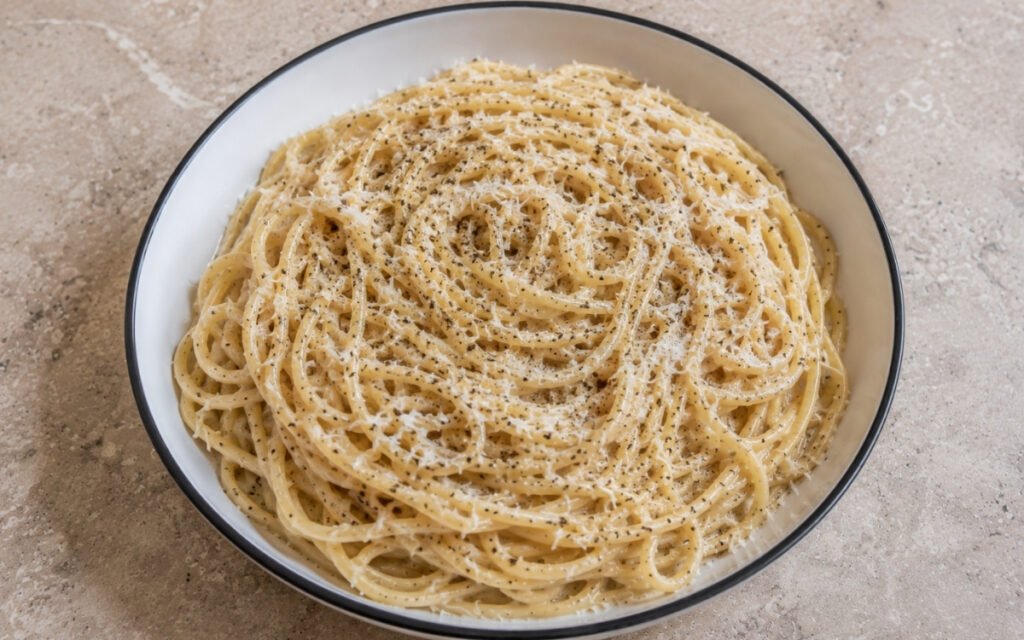
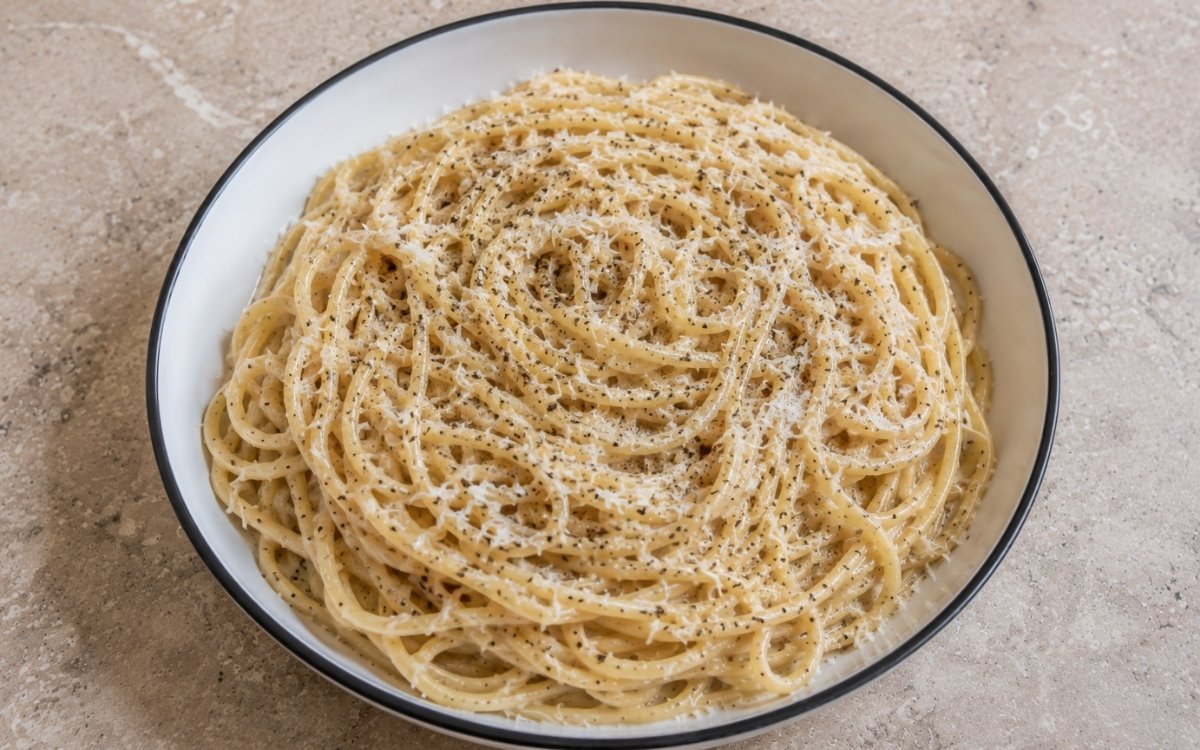
Four ingredients. Twenty minutes. One of the most technically demanding and most rewarding pasta dishes in Roman cooking. Cacio e pepe is the dish that exposes every shortcut — the pepper must be toasted and cracked to varied texture, the cheese must be whisked into a smooth paste before it touches the hot pan, the butter is the emulsification stabiliser, and the tossing motion is the technique that makes or breaks the sauce. Get the temperature and the motion right and the sauce transforms into a glossy, silky coating that clings to every strand with a specific weight and richness that four ingredients have no right to produce. This is the pasta to make when you want to understand what Italian cooking is actually about.
Prep Time : 5 min
Cook Time : 15 min
Servings : 4
5 min
15 min
4
Ingredients
For the Pasta
• 400g tonnarelli or spaghetti, bronze-die extruded preferred — this one on Amazon
• 20g coarse sea salt
• 4 liters water
For the Sauce
• 200g Pecorino Romano DOP, finely grated on a Microplane — this one on Amazon
• 50g Parmigiano-Reggiano, finely grated — this one on Amazon
• 8g freshly cracked black peppercorns, about 2½ tablespoons whole
• 30g unsalted butter, cubed and chilled
• 240ml pasta cooking water, reserved
This post may contain affiliate links. As an Amazon Associate I earn from qualifying purchases, at no additional cost to you.
Directions
- Toast and Crack the Black Pepper
Bring 4 litres of water to a full rolling boil in a large pot and add the 20g of coarse sea salt — the water should taste like the sea, noticeably salty but not overwhelmingly so. Do not over-salt the way you would for carbonara, where the sauce’s other components can absorb additional salt — cacio e pepe’s delicate cheese sauce is easily overpowered by an aggressively salted pasta water. While the water heats, place the whole black peppercorns in a large stainless steel or carbon steel skillet over medium heat. Toast for 2–3 minutes, stirring occasionally, until the peppercorns are intensely fragrant and have taken on a slightly darker, drier appearance. You should be able to smell the released aromatic oils clearly — the pepper’s heat compounds and volatile aromatic terpenes are activated by the dry heat in a way that is not achievable with pre-ground pepper. Remove from the heat and transfer to a mortar and pestle or spice grinder. Crush to a deliberately varied texture — the target is a mix of fine pepper powder, medium fragments, and a small number of larger chunks. This varied texture is not a compromise — it is the intended result. The fine powder distributes through the sauce and infuses it with pervasive heat; the medium fragments provide punctuated heat and crunch; the larger pieces provide occasional intense pepper encounters that make individual bites more interesting. Uniform fine grinding produces a flat, one-dimensional pepper presence. Return the crushed pepper to the pan. - Cook the Pasta and Build the Pepper Base
Add the pasta to the boiling salted water and cook for exactly 2 minutes less than the package directions indicate. The pasta must be pulled significantly before al dente because it will finish cooking in the skillet with the pepper water during the sauce-making step — under-done pasta entering the sauce step produces correctly textured pasta in the finished dish; al dente pasta entering the sauce step produces over-cooked, slightly soft pasta by the time the sauce is ready. While the pasta cooks, return the skillet with the crushed toasted pepper to medium heat and add 180ml of the pasta cooking water — taken from the pot while it is still cooking, at its most starchy after several minutes of pasta cooking. Bring to a gentle simmer, stirring to loosen the pepper from the pan surface. The pepper will bloom in the hot starchy water, releasing its oils and creating a spiced, aromatic base liquid that will become the foundation of the sauce. Allow to simmer gently for 1–2 minutes while the pasta finishes its water cooking. - Make the Cheese Paste
While the pasta cooks and the pepper base simmers, prepare the cheese paste in a large mixing bowl — large enough to eventually toss the pasta in if needed. Combine the 200g of finely grated Pecorino Romano and 50g of finely grated Parmigiano-Reggiano. Add 60ml of hot pasta water from the pot — ladle it directly from the boiling water — and immediately begin whisking vigorously with a fork until the mixture forms a completely smooth, thick, lump-free paste with a consistency similar to thick cream cheese. This paste-making step is the single technique decision that most determines whether the finished cacio e pepe is smooth and silky or grainy and clumped. When cheese is added directly to hot liquid without this pre-paste preparation, the cheese proteins heat unevenly and the fat separates from the protein before they can form a unified emulsion — producing the notorious cacio e pepe clumping that frustrates home cooks. The paste pre-emulsifies the cheese proteins and fat together in a controlled environment at a temperature where they remain pliable, meaning when the paste subsequently contacts the warm pasta, the emulsification is already partially established and the proteins melt smoothly rather than seizing. The paste should show no lumps and no dry patches — if lumps remain, add 10ml more hot water and whisk again. The Pecorino Romano is the primary cheese — its sharp, assertive, salty, slightly grassy flavour is the defining character of the dish. The Parmigiano-Reggiano is present specifically to moderate the Pecorino’s sharpness and improve the sauce’s creaminess and meltability — Pecorino alone produces a more intensely flavoured but slightly less smooth sauce than the blend. - Transfer Pasta to the Pepper Base
When the pasta has cooked for 2 minutes less than its package time, use tongs to transfer it directly from the boiling water to the skillet with the simmering pepper water — do not drain. The transfer with tongs rather than draining preserves the maximum starch content on the pasta’s surface and adds a small amount of pasta water to the skillet, maintaining the starchy cooking environment that the sauce depends on for emulsification. Toss the pasta in the pepper water over medium heat for 30 seconds — the pasta absorbs the spiced pepper water and continues cooking in this starchy, pepper-infused liquid. At this point the pasta should have reached just-al dente texture as it was underdone when it left the boiling water and the 30 seconds in the pepper base has completed the cooking. Remove the skillet from the heat completely. - Add the Butter
Immediately add the 30g of cubed, chilled butter to the pasta off the heat. Toss vigorously for 20 seconds until the butter is completely melted and emulsified into the pepper water and pasta starch. The butter’s role in cacio e pepe is specific and structural rather than purely flavour-adding — its fat content, when emulsified into the starchy pepper water, creates an intermediate medium that subsequently helps the cheese paste incorporate without seizing. The chilled butter is specified because cold butter emulsifies more effectively into warm liquid than room-temperature butter — the cold fat disperses into smaller droplets as it melts, producing a finer, more stable emulsion. The pan must be off heat during this step and must remain off heat through the cheese addition — butter added over direct heat breaks immediately into oil and milk solids rather than emulsifying. - Incorporate the Cheese Paste
Immediately after the butter is emulsified, add the cheese paste to the pasta. Begin tossing with rapid, continuous circular motions — lift the pasta from the bottom of the skillet and turn it over the top repeatedly, keeping every part of the pasta in constant motion. This is the moment where the dish succeeds or fails, and it is controlled entirely by motion and temperature. The pasta and pan must be warm enough for the cheese proteins to remain pliable and melt smoothly — too cool and they set before emulsifying. The pan must be off heat so the proteins do not reach the temperature at which they seize and clump — too hot is the more common failure mode. The constant tossing motion does three things simultaneously: it distributes the cheese paste evenly across every strand; it prevents any single point of contact between the cheese and the pan surface from becoming hot enough to clump; and it mechanically incorporates the pasta’s surface starch into the sauce, which is the starch-based emulsification that stabilises the sauce. Add reserved pasta water in 15ml increments if the sauce begins to tighten or looks dry — a small addition of starchy water immediately loosens the sauce back to the correct glossy, flowing consistency. Continue tossing for 90 seconds in total. The correct finished sauce should coat every strand with a glossy, slightly thickened coating that moves slowly when the pan is tilted but does not pool at the bottom and immediately clings back to the pasta. - Serve Immediately
Divide among four warm bowls without delay — cacio e pepe tightens and loses its flowing consistency within 2–3 minutes of leaving the pan as the residual heat dissipates and the cheese proteins progressively set. Create a small, neat portion in each bowl using tongs. Finish each bowl with a small additional amount of finely grated Pecorino Romano and a confident crack of fresh black pepper. Serve immediately with additional Pecorino and a pepper mill at the table.
*Notes :
- Tonnarelli — also known as spaghetti alla chitarra — is the traditional Roman pasta shape for cacio e pepe, slightly thicker and square in cross-section compared to standard spaghetti. Its shape was developed specifically for this sauce: the squared edges provide more surface area for the sauce to cling to and the slightly thicker format holds up well under the vigorous tossing motion without breaking. Standard spaghetti produces an excellent result. Bronze-die extruded pasta of either type is specified because the rough, slightly porous surface created by the traditional bronze die produces significantly better sauce adhesion than the smooth, glassy surface of Teflon-die extruded pasta — worth seeking out at Italian specialty stores.
- Pecorino Romano DOP aged 8–12 months is the specified cheese because the ageing period directly affects the flavour and textural properties required for this recipe. Younger Pecorino is too mild and too moist — it produces a less characterful sauce without the sharp, assertive flavour the dish requires. Older Pecorino becomes increasingly granular and difficult to incorporate smoothly into the sauce. The 8–12 month window produces the correct balance of sharp, salty, complex flavour and smooth melting behaviour.
- The reason cacio e pepe is considered technically difficult relative to its ingredient count is the narrow window between the two failure modes: too hot produces clumped, grainy, scrambled cheese; too cool produces a dry, paste-like sauce that does not emulsify. The chilled butter step is the technique addition that most widens this window — it provides an intermediate emulsification stage that makes the subsequent cheese incorporation more forgiving by creating the partially-emulsified fat environment that the cheese needs to melt smoothly into.
Why This Recipe Works
This recipe works because it addresses the cacio e pepe clumping problem at the point where it originates — before the cheese touches anything hot. The cheese paste preparation at a controlled temperature with a measured amount of hot water pre-emulsifies the proteins and fat in a way that makes the subsequent hot-pan incorporation dramatically more forgiving.
The butter step creates the intermediate emulsified fat medium that the cheese proteins melt into smoothly rather than seizing against bare starchy water. And the varied-texture pepper crush produces a more interesting, more complex pepper presence than uniform grinding. Each technique decision targets one of the three variables — temperature, emulsification, and pepper character — that determine cacio e pepe quality.
Ingredient Breakdown
Tonnarelli or Spaghetti (Bronze-Die)
The rough, porous surface created by bronze-die extrusion provides dramatically better sauce adhesion than smooth Teflon-die pasta — worth sourcing for a dish where sauce-to-pasta clinging is the entire technique goal.
Whole Black Peppercorns (Toasted and Varied-Crush)
Toasting activates aromatic oils that pre-ground pepper lacks; varied crushing produces a three-level pepper experience — fine heat throughout, medium fragments for punctuation, large pieces for intensity.
Pecorino Romano DOP (200g)
The primary cheese and the flavour identity of the dish — sharp, salty, slightly grassy, and assertive. 8–12 months aged for the correct balance of flavour intensity and melting behaviour.
Parmigiano-Reggiano (50g)
The moderating cheese — milder, creamier, and with better meltability than Pecorino alone, its addition produces a smoother, more balanced sauce without significantly altering the dish’s essential character.
Chilled Butter (30g)
The emulsification bridge — cold fat dispersing into warm starchy water creates the intermediate medium that makes cheese incorporation smooth rather than prone to clumping.
Reserved Pasta Water (240ml)
The starch-based emulsifier and consistency adjustment tool — the highest-starch pasta water, reserved from the cooking pot after several minutes of cooking.
Flavor Structure Explained
This Cacio e pepe follows a layered balance model:
- Sharp umami core (Pecorino Romano)
- Aromatic heat (black pepper)
- Smooth dairy richness (butter)
- Wheaty base (pasta)
- Minimalist concentration (overall structure)
Pecorino defines the entire profile with intense saltiness and sharp, slightly grassy umami that coats every strand. Black pepper cuts through with aromatic heat, creating contrast and lift. Butter softens the edges, adding a smooth richness that prevents harshness. The pasta provides a neutral, wheaty foundation that supports without interfering. The structure is stripped down to essentials — every element exposed, balanced, and working in tight integration.
Common Mistakes to Avoid
- Adding Cheese Directly to Hot Pan Without Making a Paste – The most common cause of grainy, clumped cacio e pepe. The paste preparation step is the technique that prevents this — it cannot be skipped.
- Keeping the Pan on Heat During Cheese Addition – Direct heat causes the cheese proteins to seize immediately. The pan must be completely off heat and must remain off heat through the entire cheese incorporation.
- Using Pre-Grated or Coarsely Grated Cheese – Pre-grated cheese has lost aromatic compounds and is often anti-caking coated. Coarse grating produces pieces that do not melt smoothly into the paste. Always use a Microplane or the finest grater setting immediately before use.
- Over-salting the Pasta Water – Cacio e pepe’s sauce is significantly saltier than carbonara’s — the Pecorino is very salty and the pasta water’s salt must be calibrated to not overpower the already-assertive cheese. Taste the water — seawater level, not aggressively salty.
- Stopping the Tossing Motion – Any pause allows direct contact between cheese and pan surface — even at off-heat temperature, a stationary pan’s residual warmth concentrated at contact points can cause clumping. Toss continuously for the full 90 seconds.
- Not Reserving Enough Pasta Water – Reserve 240ml minimum and keep it hot throughout the sauce-making step. Cold pasta water added to a warm sauce drops the temperature and can cause the cheese to tighten rather than loosen.
Variations
Extra Pepper Version
Increase the black pepper to 10–12g and toast more aggressively for a bolder, more heat-forward cacio e pepe that appeals to pepper enthusiasts. Traditional Roman recipes from specific trattorias use this higher quantity.
All-Pecorino Version
Omit the Parmigiano-Reggiano and use 250g of Pecorino Romano only — the sauce is sharper, more assertive, slightly less smooth, and more intensely Roman in character. Requires slightly more pasta water for the same emulsification.
Rigatoni Version
Use rigatoni rather than tonnarelli or spaghetti — the tubes trap pepper pieces and sauce inside, producing a different but equally valid Roman eating experience where the sauce-to-pasta ratio intensifies inside each tube.
Guanciale Addition
Add 100g of guanciale rendered from cold as in the carbonara recipe and toss with the pasta in the pepper water before the butter and cheese steps — this bridges cacio e pepe and carbonara into the dish known informally as carbonara e pepe, a Roman off-menu combination with a devoted following.
Storage & Make-Ahead
Cacio e pepe is even less suited to storage and reheating than carbonara — the cheese emulsion breaks completely during refrigeration and cannot be restored to its original silky consistency by any reheating method. The pasta absorbs all the sauce during storage and the result after refrigeration is dry, clumped pasta with a grainy cheese coating. Make only the quantity needed and serve immediately.
If leftovers must be reheated, add 3–4 tablespoons of water per portion in a pan over the absolute lowest possible heat, tossing very gently, with a small amount of freshly grated Pecorino added at the end — the result will be acceptable but fundamentally different from fresh.
Frequently Asked Questions
Why does my cacio e pepe always clump?
Almost certainly the cheese was added without the paste preparation step, or the pan was still on heat when the cheese was added. The paste step pre-emulsifies the cheese proteins and is non-negotiable. The pan must be completely off heat — not low heat — when the paste is added.
What is tonnarelli and where do I find it?
Tonnarelli is a thick, square-sectioned pasta from Rome — effectively a thick spaghetti with a squared rather than round cross-section. It was made on a traditional tool called a chitarra (guitar) whose metal strings cut the pasta into its characteristic shape. Available at Italian specialty grocery stores and increasingly online. Spaghetti is an excellent substitute.
What does “bronze-die extruded” mean and does it matter?
Pasta is extruded through a die — a shaped plate that forms the pasta’s cross-section. Traditional bronze dies produce a rough, slightly porous surface on the pasta that improves sauce adhesion dramatically compared to the smooth, glassy surface of modern Teflon-die pasta. For a dish where the sauce clinging to the pasta is the entire technique goal, bronze-die pasta produces a measurably better result.
Can I use a different aged cheese instead of Pecorino Romano?
Pecorino Romano DOP is specifically calibrated to this dish in Italian culinary tradition for its sharpness, salt level, and melting behaviour. Other aged sheep’s milk cheeses — Pecorino Sardo, Pecorino Toscano — produce a different result. Parmigiano-Reggiano alone produces a creamier, less sharp, less Roman sauce. The DOP Pecorino Romano is worth sourcing for the authentic result.
Why is the butter chilled rather than room temperature?
Cold butter disperses into warm liquid as smaller, more numerous fat droplets than room-temperature butter, producing a finer, more stable emulsion. This intermediate emulsification before the cheese is added provides a more receptive medium for the cheese proteins to melt into smoothly.
Nutrition Facts
( per serving )
Calories
~742 kcal
Protein
32 g
Fat
28 g
Carbs
87 g
Calories
~742 kcal
Protein
32 g
Fat
28 g
Carbs
87 g
Related Recipes
Related Recipes

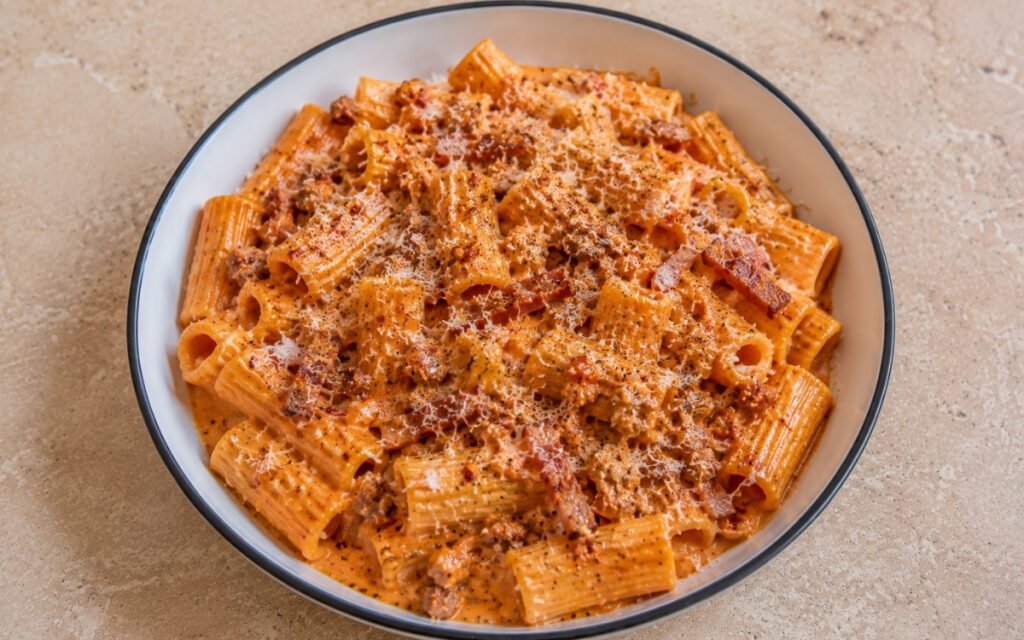
Authentic Pasta alla Zozzona
Glossy rigatoni with crisp guanciale, browned sausage and tomato in a creamy Pecorino sauce, finished with black pepper.
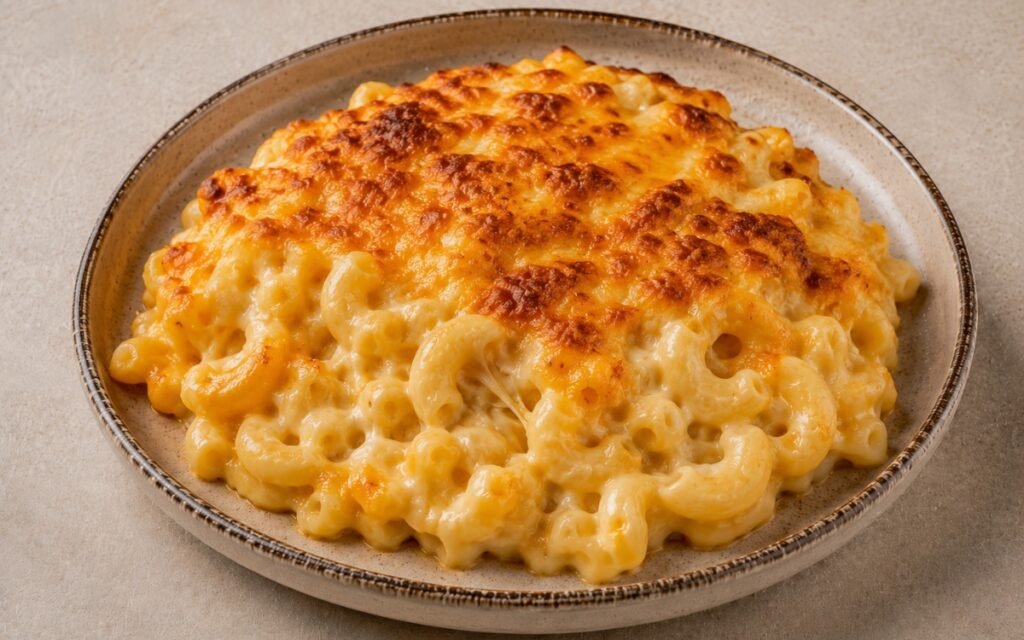
Baked Mac and Cheese
Cheddar, Gruyère, and mozzarella melted into a béchamel off the heat — layered with underdone macaroni, baked bubbling, broiled golden. Serves 12.
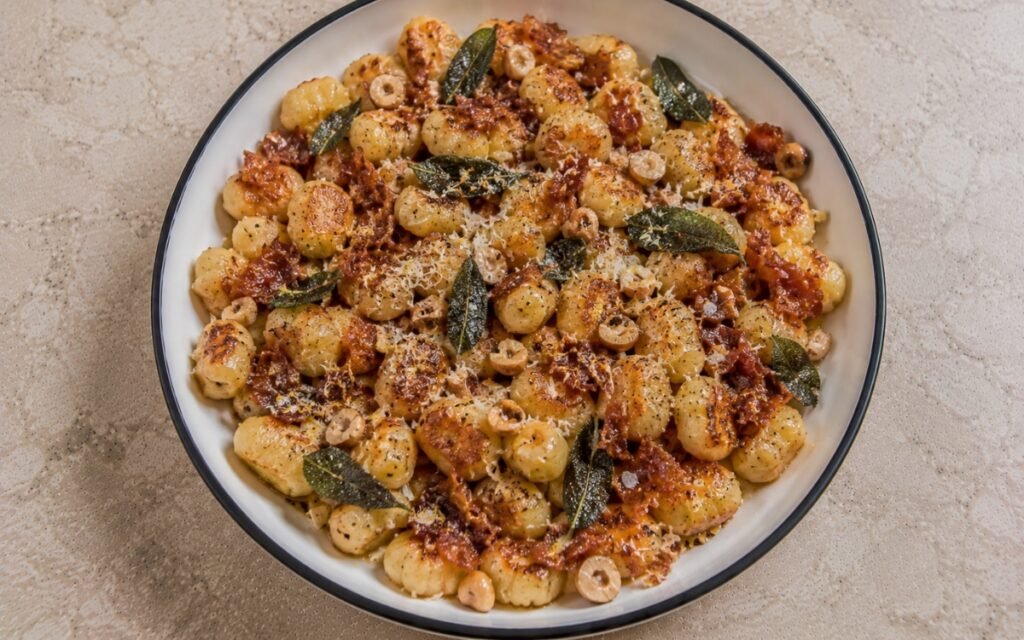
Brown Butter Sage Gnocchi
Pillowy gnocchi coated in nutty brown butter with fragrant sage leaves, golden edges, and a rich, buttery finish.
You might also like
You might also like
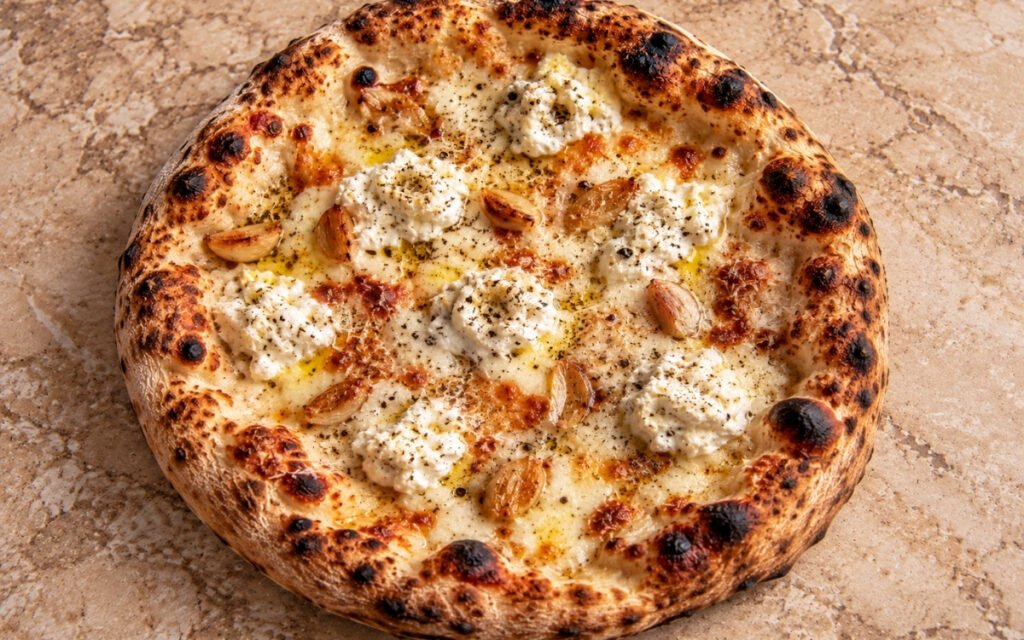
White Pizza with Ricotta and Garlic
Melted mozzarella, soft ricotta dollops, sweet mellow garlic, Parmesan, cracked black pepper, and olive oil over a blistered, airy crust.
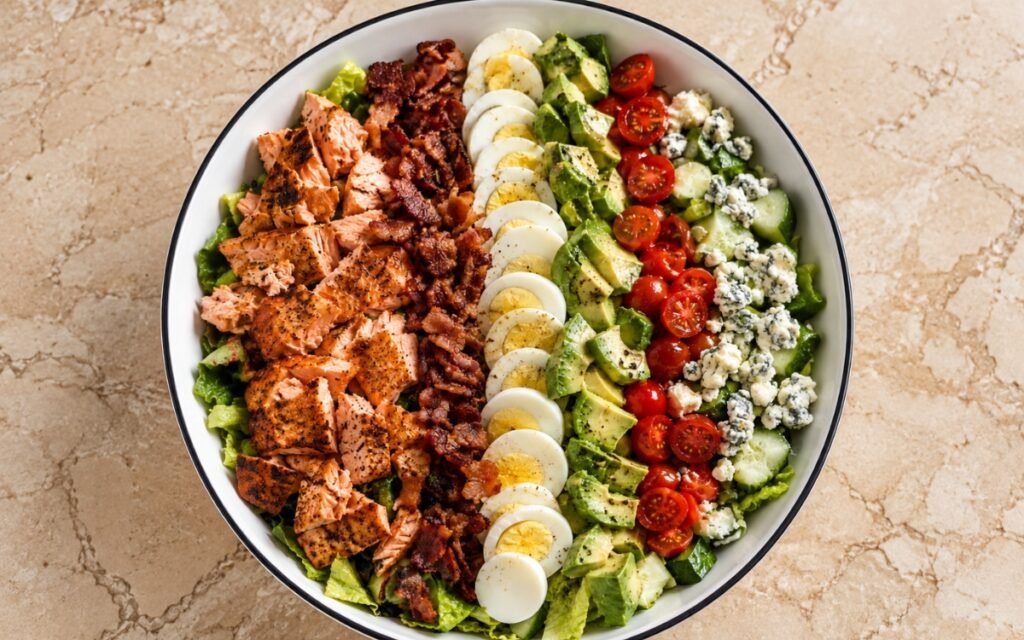
Salmon Cobb Salad
Chickpeas, cherry tomatoes, cucumber, red onion, parsley, and mint dressed with lemony olive oil, topped with warm grilled halloumi.
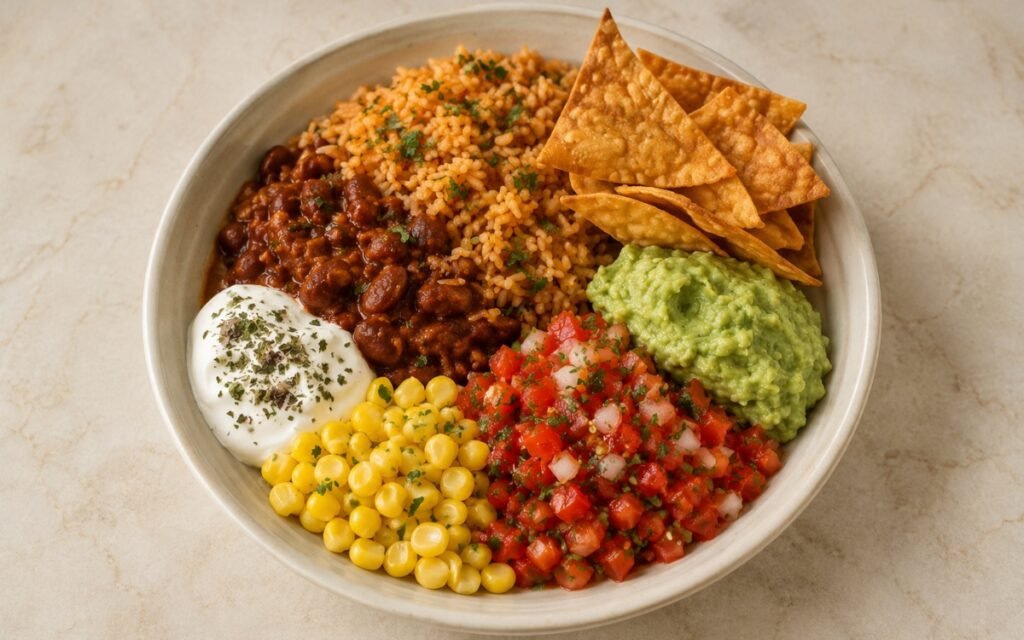
Loaded Mexican Taco Bowl
Toasted tomato rice, smoky chipotle red beans, fresh pico de gallo, plain guacamole, sour cream, and crispy tortilla chips, layered in one vibrant bowl.
Classic Cacio e Pepe Pasta
Ingredients
Method
- Bring 4 litres of water to a full rolling boil in a large pot and add the 20g of coarse sea salt — the water should taste like the sea, noticeably salty but not overwhelmingly so. Do not over-salt the way you would for carbonara, where the sauce’s other components can absorb additional salt — cacio e pepe’s delicate cheese sauce is easily overpowered by an aggressively salted pasta water. While the water heats, place the whole black peppercorns in a large stainless steel or carbon steel skillet over medium heat. Toast for 2–3 minutes, stirring occasionally, until the peppercorns are intensely fragrant and have taken on a slightly darker, drier appearance. You should be able to smell the released aromatic oils clearly — the pepper’s heat compounds and volatile aromatic terpenes are activated by the dry heat in a way that is not achievable with pre-ground pepper. Remove from the heat and transfer to a mortar and pestle or spice grinder. Crush to a deliberately varied texture — the target is a mix of fine pepper powder, medium fragments, and a small number of larger chunks. This varied texture is not a compromise — it is the intended result. The fine powder distributes through the sauce and infuses it with pervasive heat; the medium fragments provide punctuated heat and crunch; the larger pieces provide occasional intense pepper encounters that make individual bites more interesting. Uniform fine grinding produces a flat, one-dimensional pepper presence. Return the crushed pepper to the pan.
- Add the pasta to the boiling salted water and cook for exactly 2 minutes less than the package directions indicate. The pasta must be pulled significantly before al dente because it will finish cooking in the skillet with the pepper water during the sauce-making step — under-done pasta entering the sauce step produces correctly textured pasta in the finished dish; al dente pasta entering the sauce step produces over-cooked, slightly soft pasta by the time the sauce is ready. While the pasta cooks, return the skillet with the crushed toasted pepper to medium heat and add 180ml of the pasta cooking water — taken from the pot while it is still cooking, at its most starchy after several minutes of pasta cooking. Bring to a gentle simmer, stirring to loosen the pepper from the pan surface. The pepper will bloom in the hot starchy water, releasing its oils and creating a spiced, aromatic base liquid that will become the foundation of the sauce. Allow to simmer gently for 1–2 minutes while the pasta finishes its water cooking.
- While the pasta cooks and the pepper base simmers, prepare the cheese paste in a large mixing bowl — large enough to eventually toss the pasta in if needed. Combine the 200g of finely grated Pecorino Romano and 50g of finely grated Parmigiano-Reggiano. Add 60ml of hot pasta water from the pot — ladle it directly from the boiling water — and immediately begin whisking vigorously with a fork until the mixture forms a completely smooth, thick, lump-free paste with a consistency similar to thick cream cheese. This paste-making step is the single technique decision that most determines whether the finished cacio e pepe is smooth and silky or grainy and clumped. When cheese is added directly to hot liquid without this pre-paste preparation, the cheese proteins heat unevenly and the fat separates from the protein before they can form a unified emulsion — producing the notorious cacio e pepe clumping that frustrates home cooks. The paste pre-emulsifies the cheese proteins and fat together in a controlled environment at a temperature where they remain pliable, meaning when the paste subsequently contacts the warm pasta, the emulsification is already partially established and the proteins melt smoothly rather than seizing. The paste should show no lumps and no dry patches — if lumps remain, add 10ml more hot water and whisk again. The Pecorino Romano is the primary cheese — its sharp, assertive, salty, slightly grassy flavour is the defining character of the dish. The Parmigiano-Reggiano is present specifically to moderate the Pecorino’s sharpness and improve the sauce’s creaminess and meltability — Pecorino alone produces a more intensely flavoured but slightly less smooth sauce than the blend.
- When the pasta has cooked for 2 minutes less than its package time, use tongs to transfer it directly from the boiling water to the skillet with the simmering pepper water — do not drain. The transfer with tongs rather than draining preserves the maximum starch content on the pasta’s surface and adds a small amount of pasta water to the skillet, maintaining the starchy cooking environment that the sauce depends on for emulsification. Toss the pasta in the pepper water over medium heat for 30 seconds — the pasta absorbs the spiced pepper water and continues cooking in this starchy, pepper-infused liquid. At this point the pasta should have reached just-al dente texture as it was underdone when it left the boiling water and the 30 seconds in the pepper base has completed the cooking. Remove the skillet from the heat completely.
- Immediately add the 30g of cubed, chilled butter to the pasta off the heat. Toss vigorously for 20 seconds until the butter is completely melted and emulsified into the pepper water and pasta starch. The butter’s role in cacio e pepe is specific and structural rather than purely flavour-adding — its fat content, when emulsified into the starchy pepper water, creates an intermediate medium that subsequently helps the cheese paste incorporate without seizing. The chilled butter is specified because cold butter emulsifies more effectively into warm liquid than room-temperature butter — the cold fat disperses into smaller droplets as it melts, producing a finer, more stable emulsion. The pan must be off heat during this step and must remain off heat through the cheese addition — butter added over direct heat breaks immediately into oil and milk solids rather than emulsifying.
- Immediately after the butter is emulsified, add the cheese paste to the pasta. Begin tossing with rapid, continuous circular motions — lift the pasta from the bottom of the skillet and turn it over the top repeatedly, keeping every part of the pasta in constant motion. This is the moment where the dish succeeds or fails, and it is controlled entirely by motion and temperature. The pasta and pan must be warm enough for the cheese proteins to remain pliable and melt smoothly — too cool and they set before emulsifying. The pan must be off heat so the proteins do not reach the temperature at which they seize and clump — too hot is the more common failure mode. The constant tossing motion does three things simultaneously: it distributes the cheese paste evenly across every strand; it prevents any single point of contact between the cheese and the pan surface from becoming hot enough to clump; and it mechanically incorporates the pasta’s surface starch into the sauce, which is the starch-based emulsification that stabilises the sauce. Add reserved pasta water in 15ml increments if the sauce begins to tighten or looks dry — a small addition of starchy water immediately loosens the sauce back to the correct glossy, flowing consistency. Continue tossing for 90 seconds in total. The correct finished sauce should coat every strand with a glossy, slightly thickened coating that moves slowly when the pan is tilted but does not pool at the bottom and immediately clings back to the pasta.
- Divide among four warm bowls without delay — cacio e pepe tightens and loses its flowing consistency within 2–3 minutes of leaving the pan as the residual heat dissipates and the cheese proteins progressively set. Create a small, neat portion in each bowl using tongs. Finish each bowl with a small additional amount of finely grated Pecorino Romano and a confident crack of fresh black pepper. Serve immediately with additional Pecorino and a pepper mill at the table.