Ingredients
Method
Season and Prepare the Chicken
- Remove the chicken thighs from the refrigerator at least 20 minutes before cooking — cold chicken directly from the refrigerator has a large temperature gradient between its cold interior and the ambient surface that causes the exterior to cook significantly faster than the interior. Room-temperature chicken cooks more evenly. Pat every surface completely dry with paper towels — this is the single most important preparation step for crispy chicken skin. Any surface moisture present when the chicken enters the oven converts to steam rather than rendering and caramelising, preventing the Maillard reaction crust that makes roasted chicken skin satisfying. In a small bowl, combine the salt, black pepper, sweet smoked paprika, hot paprika, garlic powder, dried oregano, and dried basil — stir to distribute evenly so the seasoning is uniform rather than concentrated in any one spot. The two-paprika combination is deliberate: sweet smoked paprika provides the deep, russet-red colour and the characteristic sweet smokiness of properly seasoned roast chicken; hot paprika provides a background warmth without sharpness, amplifying the smoked paprika without introducing a separate spice character. Drizzle the olive oil over the chicken thighs and rub it across all surfaces — the oil ensures the spice mixture adheres completely rather than falling off during handling. Sprinkle the spice blend generously over the skin side and press firmly with fingertips so it adheres into the surface rather than sitting loosely on top. Flip each thigh and season the underside as well, then return skin-side up on a large rimmed baking sheet or oven-safe skillet.
Roast the Chicken
- Preheat the oven to 220°C (425°F). Place the seasoned thighs skin-side up on the baking sheet, spacing them at least 2–3cm apart. Spacing matters for the same reason it matters when searing any protein in a pan: crowded chicken traps the steam released during cooking against the skin surfaces, producing pale, soft skin rather than the caramelised, deeply golden skin that the high oven temperature and dry heat are meant to create. Roast for 38–42 minutes until the skin is deeply golden and visibly crisped — the skin surface should look dry, firm, and dark golden-brown rather than pale or glossy. An instant-read thermometer inserted into the thickest part of the thigh away from the bone should read 74°C. For extra colour and crispness on the skin in the final moments, switch to the broiler setting for 2–3 minutes at the end of roasting — watching closely, as the spice crust can darken from golden to burnt in under a minute under a direct broiler. Remove from the oven and rest for 5 minutes before assembly — resting allows the juices that have been driven to the surface during roasting to redistribute through the meat.
Cook the Spaghetti
- While the chicken roasts, bring a large pot of water to a full rolling boil and salt it generously — the water should taste clearly of salt throughout. Add the 240g of spaghetti and cook according to the package directions until al dente. Before draining, scoop out at least 120ml of pasta water in a heatproof measuring cup — the pasta water is the emulsifying agent for the cacio e pepe preparation and its starchy content is what allows the cheese to coat the pasta smoothly rather than clumping. Drain the spaghetti and return it immediately to the warm pot off the heat.
Make the Cacio e Pepe Sauce
- While the pasta finishes cooking, combine the 60g of finely grated Pecorino Romano and 60g of finely grated Parmesan in a small bowl. Add 2–3 tablespoons of hot pasta water directly from the pot to the cheese and stir vigorously with a fork until a thick, smooth, uniform paste forms. This tempering step is the technique decision that makes the difference between cacio e pepe that is silky and smooth and cacio e pepe that clumps into grainy cheese lumps. When cold, finely grated cheese is added directly to hot pasta, the proteins on the cheese's surface heat unevenly and seize simultaneously — the outer surface proteins set before the interior melts, producing clumps that no amount of subsequent tossing resolves. When the cheese is tempered in a small amount of hot pasta water first, the proteins warm gradually and evenly in a controlled environment, producing a smooth paste that has already begun its emulsification before it contacts the pasta. Add the 2 tbsp of butter to the drained spaghetti in the warm pot and toss until completely melted and coating every strand. Add the 2 tsp of freshly cracked black pepper and stir for 30 seconds — the pepper blooms slightly in the butter's warmth. Add the cheese paste along with 60–80ml of additional pasta water and toss continuously with tongs, lifting and folding the pasta over the sauce. Continue tossing, adding small additional amounts of pasta water as needed, until the sauce is creamy, glossy, and clings to every strand without pooling at the bottom of the pot.
Sear the Broccolini
- Trim the tough bottom ends from the 400g of broccolini and rinse under cold water. Pat completely dry with a kitchen towel — wet broccolini steams against its neighbours rather than searing, losing the char that makes it interesting. Heat a large skillet or cast iron pan over medium-high heat and add the 2 tablespoons of olive oil. Allow the oil to heat until shimmering. Add the broccolini in a single layer — crowded broccolini produces the same steaming problem as wet broccolini, and if needed, sear in two batches. Leave completely undisturbed for 2 minutes — the undisturbed contact produces the char marks at the floret tips and stem surfaces that add the slightly bitter, smoky character that contrasts specifically well with the rich cacio e pepe pasta and the savoury chicken. Season with the salt and black pepper, toss once, and cook for a further 2–3 minutes until the stems are just tender when pierced with the tip of a knife. Remove from the heat immediately — broccolini continues cooking from residual heat and should come off before it is fully soft.
Assemble and Serve
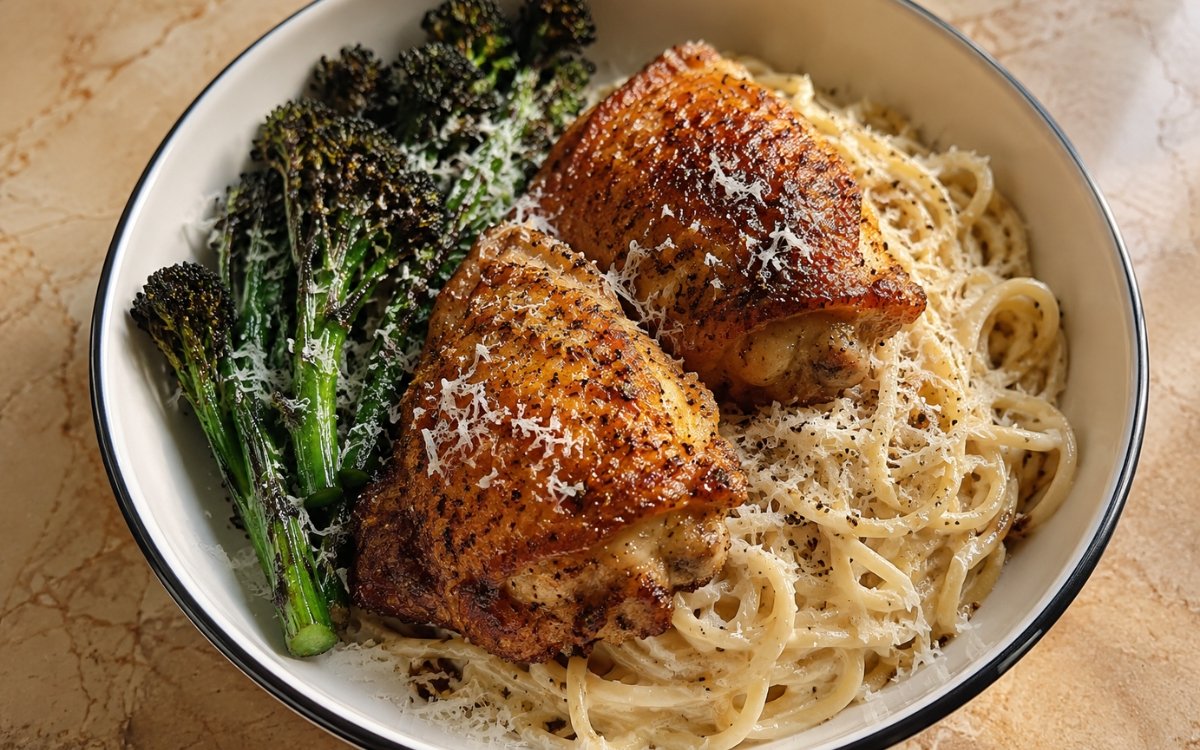
- Divide the cacio e pepe spaghetti among four wide, shallow bowls — twirl into nests with tongs for the cleaner presentation. Place 2 roasted chicken thighs alongside each pasta portion. Arrange a portion of seared broccolini in the remaining bowl space. Finish with a heavy, generous grating of fresh Parmesan over the entire bowl — chicken, pasta, and broccolini alike. The Parmesan at serving is not optional decoration but the finishing element that ties all three components together under a common savoury, salty, nutty top note. Serve immediately while everything is hot.
Notes
The combination of sweet smoked paprika and hot paprika in the chicken seasoning is worth maintaining rather than simplifying to a single paprika type. Sweet smoked paprika provides the colour — the deep, reddish-brown skin that makes roasted chicken visually appealing — and the characteristic aromatic smokiness. Hot paprika provides the heat, which at ½ tsp for 8 thighs produces a warm background note rather than perceptible spice — it amplifies the sweet paprika's character without introducing a competing spice flavour. Using only sweet paprika produces a visually identical result with less flavour depth; using only hot paprika produces a less visually appealing, more aggressively spiced result.
The cacio e pepe component in this bowl is a simplified version of the standalone Classic Cacio e Pepe Pasta — it uses butter as an additional emulsification aid rather than the chilled-butter bridge technique of the full recipe, which makes it more forgiving and faster to execute as a component in a multi-element bowl. The tempering step remains essential regardless of the simplified format.
Broccolini — sometimes called baby broccoli or tender-stem broccoli — is specifically better suited to this high-heat searing preparation than standard broccoli because its thin, tender stems cook through at the same rate as the florets. Standard broccoli's thick stems remain undercooked when the florets have reached the correct charred state. If only standard broccoli is available, cut into small florets with minimal stem length.