
Red Zhoug
The darker, more complex, more intensely spiced sibling of Green Zhoug — where the green version is fresh, bright, and herbaceous, red zhoug is deep, earthy, and warmly assertive. Dried red chilies or chili flakes blended with a full bunch of cilantro, garlic, cumin, coriander, lime, and olive oil into a thick, slightly coarse sauce with a slow-building heat that deepens over the first 30 minutes after making. The same applications as the green version — drizzled over Classic Hummus or Authentic Labneh, spooned alongside Greek Chicken Souvlaki, Beef Kofta Skewers, and Chicken Shawarma, with fried eggs, and with warm Homemade Lavash or Fresh Pita Flatbread — but a completely different flavour experience.
Prep Time : 10 min
Cook Time : 0 min
Servings : 8
10 min
0 min
8
Ingredients
For The Red Zhoug
• 3–4 dried red chilies, or 1½–2 tsp chili flakes — this one on Amazon
• 1 whole bunch fresh cilantro, leaves and stems included
• 3 garlic cloves, smashed with a knife
• 1 tsp ground cumin — this one on Amazon
• ½ tsp ground coriander
• Juice of ½ lime
• Zest of ½ lime, outer green layer only
• 60–80ml extra-virgin olive oil — this one on Amazon
• Fine sea salt to taste
This post may contain affiliate links. As an Amazon Associate I earn from qualifying purchases, at no additional cost to you.
Directions
- Prepare the Dried Chilies
If using whole dried red chilies, break them open and shake out the seeds to remove most of them — this moderates the heat level similarly to deseeding a fresh jalapeño. The dried flesh and skin contribute the complex, fruity, slightly smoky depth of the dried chili without the concentrated seed capsaicin making the sauce aggressively hot. Tear or roughly break the deseeded dried chilies into smaller pieces — approximately 2–3cm — so the food processor can work them down evenly during blending. If using chili flakes, they can be added directly without any preparation. The choice between whole dried chilies and flakes is primarily a matter of what is available. Whole dried chilies — ancho, guajillo, New Mexico, or any mild-to-medium dried red chili — produce a more complex, fruitier, deeper heat with specific aromatic characteristics that flakes lack. Chili flakes are more consistent in heat level and widely available, producing a clean, direct heat without the specific character of a particular dried chili variety. Both are entirely valid. - Prepare the Remaining Ingredients
Smash the three garlic cloves with the flat side of a knife — a firm press that opens each clove without fully flattening it. Smashing produces even garlic distribution during processing without the sharp, concentrated pockets that whole cloves can leave. Wash the cilantro bunch under cold running water and shake dry. The stems are included — the thin upper stems of cilantro hold the same aromatic compounds as the leaves and contribute herb intensity rather than texture in a blended sauce. Only the very lowest, thickest hollow base stems should be discarded. Zest the half lime before juicing it, taking only the outermost coloured layer and avoiding the white pith. Juice the same half lime after zesting. - Process in Controlled Pulses
Add all the ingredients to the food processor in the following order: the prepared dried chili pieces or flakes, the smashed garlic cloves, the cilantro with stems, the ground cumin, the ground coriander, the lime juice, the lime zest, and the olive oil. Begin processing using the pulse technique — 5 seconds on, 2 seconds off, repeating the cycle. The pulse approach is the defining technique decision for both zhoug versions. Continuous blending at high speed produces a smooth, uniform paste that loses the coarse, rustic texture that gives zhoug its character and the slight visual distinction between herb pieces, chili, and oil that makes it recognisable. Pulsing gives you control over the stopping point — assess the texture after every 2–3 pulse cycles and stop when the sauce is smooth overall but still has visible small pieces of cilantro and chili distributed throughout. The red zhoug’s texture should be slightly looser and finer than the green version because the dried chili breaks down more completely than fresh jalapeño — the result is a sauce that looks more like a thick, herb-flecked paste than the coarser green version. After approximately 6–8 pulse cycles, check the consistency. If the processor is struggling to move the mixture evenly, add additional olive oil one tablespoon at a time and pulse briefly after each addition until the sauce moves fluidly. - Taste and Calibrate — With Time in Mind
Stop the processor and taste carefully, keeping the heat development characteristic specifically in mind. Evaluate acidity, salt, and heat separately. Acidity: if the sauce tastes heavy or the citrus brightness is absent, add an additional small squeeze of lime juice. Salt: if the sauce tastes flat despite having all ingredients, add salt in small pinches, processing briefly between additions. Heat: if the chili warmth is not yet present, this may simply mean the capsaicin has not yet fully migrated into the olive oil — before adding more chili, allow the sauce to rest for 5 minutes and taste again. If after resting it still seems too mild, add a small additional amount of chili flakes — ¼ tsp at a time — and pulse briefly. Earthiness: the cumin’s warm, earthy depth deepens significantly in the olive oil over the first 15–30 minutes after making, just as it does with the green version. Do not adjust the cumin immediately after blending — wait and taste again before the sauce is served. - Rest Before Serving
Transfer the blended red zhoug to a serving bowl or storage jar and allow it to rest for a minimum of 15–30 minutes before serving. This resting period is more important for red zhoug than for the green version specifically because of the dried chili’s progressive heat release into the olive oil. A sauce tasted and calibrated at zero minutes and then served at 30 minutes may be significantly hotter than expected — always allow the rest and taste one final time immediately before serving to confirm the heat level is at the right point. During the rest the cumin also blooms further into the oil, the garlic’s sharpness mellows slightly, and all the flavour components begin to integrate into a more cohesive, unified sauce. - Serve
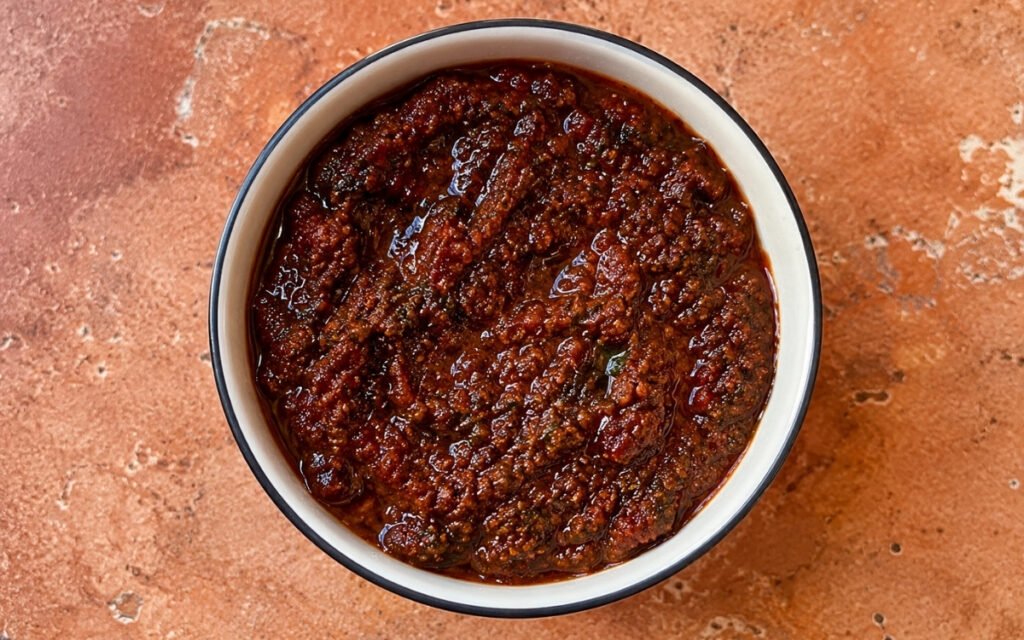
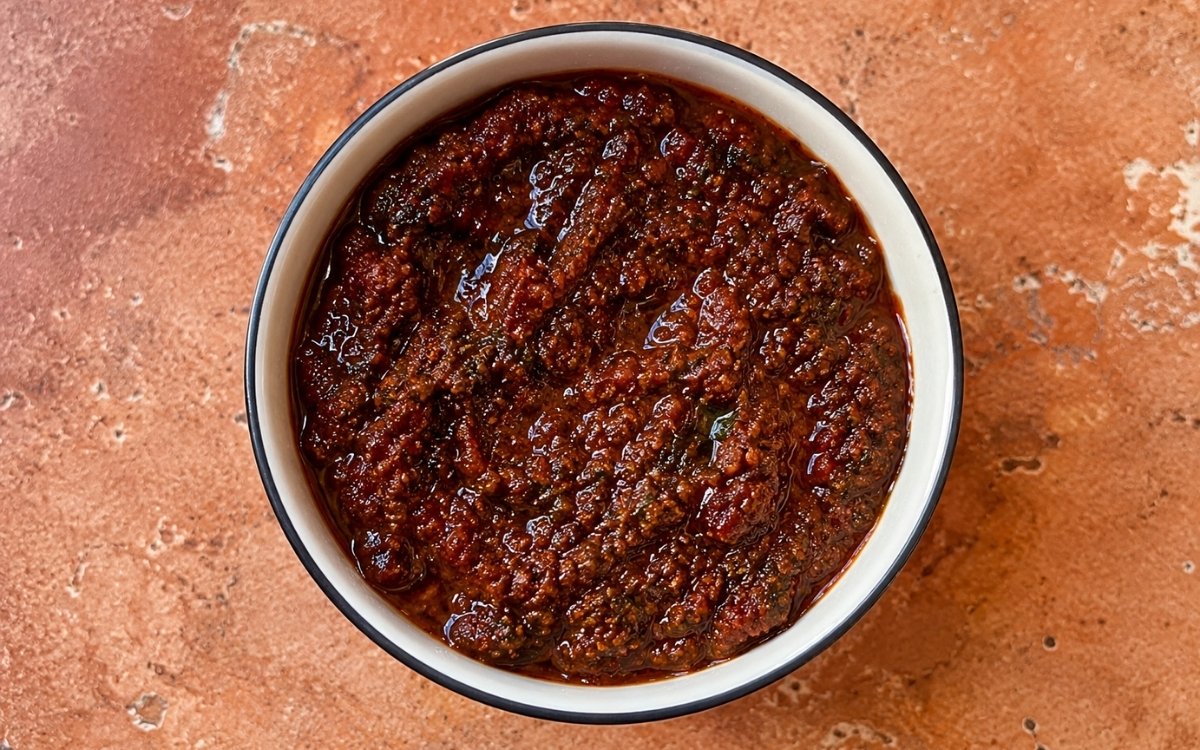
Transfer to a small serving bowl or pour into a small jar for table service. Red zhoug does not need garnish — its deep brick-red to dark reddish-brown colour with flecks of green cilantro visible throughout is its visual identity and requires no addition. Serve alongside warm Homemade Lavash or Fresh Pita Flatbread, drizzle over Classic Hummus or Authentic Labneh, or spoon alongside any grilled protein.
*Notes :
- Red zhoug is less widely known outside its region of origin than the green version — in most international contexts, green zhoug is the version that has achieved wider recognition. Within Yemeni cooking however, both versions are foundational table condiments with equal standing, each suited to different occasions and different dishes based on their flavour profiles rather than one being simply a variation of the other. The two are genuinely distinct preparations with different techniques, different primary ingredients, and different flavour characters — the name is the shared element, not the recipe.
- Red zhoug’s heat evolves over time in a way that green zhoug’s does not. Dried chilies and chili flakes release their capsaicin gradually into the olive oil over the first 20–30 minutes after blending — a sauce that tastes moderately spiced immediately after making can be noticeably hotter 30 minutes later. This is not a flaw but a characteristic of oil-extracted dried chili heat: the capsaicin is fat-soluble and migrates into the olive oil progressively after processing. Always season for heat conservatively at the tasting step and allow the sauce to rest before final assessment. Adding dried chili to reach the desired heat level immediately will almost certainly produce an overly hot sauce by the time it is served.
- The choice of dried chili variety, if using whole dried chilies rather than flakes, has a significant impact on the finished sauce’s specific character. Guajillo chilies produce a fruity, slightly tangy heat with a characteristic earthy depth. Ancho chilies produce a darker, more chocolatey, sweeter heat with mild spice. New Mexico or California chilies produce a clean, moderate heat with a bright red colour. Any mild-to-medium dried red chili produces an excellent red zhoug — the variety chosen simply shifts the specific aromatic character in different directions within the same framework.
- The olive oil is a more prominent flavour presence in red zhoug than in the green version because the dried chilies and ground spices are less vivid in flavour than the fresh herbs and jalapeños that dominate green zhoug. Use the best quality extra-virgin olive oil available for this recipe — its fruity, slightly peppery character contributes noticeably to the finished sauce’s depth.
Why This Recipe Works
This recipe works because it treats dried chili differently from fresh chili — understanding that dried chili’s heat and flavour release into oil progressively over time, and calibrating the preparation and serving accordingly. The cilantro provides the fresh, green aromatic counterpoint that prevents the sauce from being purely spiced and oily. The cumin and coriander provide the specifically Yemeni spice character.
The lime provides the acid brightness that makes the oil-extracted dried chili flavours vivid rather than heavy. And the resting period is built into the instructions as a required step rather than a suggestion, accounting for the heat development that would otherwise catch the cook by surprise at serving.
Ingredient Breakdown
Dried Red Chilies or Chili Flakes
The defining ingredient — dried chili’s fat-soluble capsaicin releases progressively into the olive oil after blending, producing a heat that develops over the first 30 minutes and requires conservative initial calibration.
Fresh Cilantro with Stems
The fresh herb counterpoint — provides the clean, citrusy, aromatic freshness that bridges the sauce between its dried spice character and a fresh herb condiment.
Smashed Garlic
Savory depth — integrates evenly during processing, providing background allium warmth.
Ground Cumin
The primary earthy spice — blooms in olive oil over time, deepening the warm background character of the sauce progressively after blending.
Ground Coriander
Secondary spice — slightly citrusy warmth that complements the cumin and the cilantro’s own aromatic profile.
Lime Juice and Zest
The brightening acid and aromatic citrus — less lime than the green version, calibrated for a sauce where the dried chili and spice character is the dominant note.
Extra-Virgin Olive Oil
The carrier medium and a prominent flavour presence — use the highest quality available as its character is more detectable in this sauce than in the green version.
Flavor Structure Explained
This sauce follows a layered balance model:
- Fruity-spiced heat core (dried chili)
- Fresh herbal lift (cilantro)
- Warm earthy spice (cumin, coriander)
- Bright acidity (lime)
- Smooth fat medium (olive oil)
Dried chili defines the core with a warm, fruity heat that builds gradually rather than spiking. Cilantro cuts through that intensity with fresh, green brightness, keeping the sauce lifted. Cumin and coriander add a deeper, earthy layer that develops over time, reinforcing the spice profile. Lime sharpens and brightens all elements, preventing heaviness. Olive oil carries and integrates the entire composition, ensuring the heat, aromatics, and acidity read as a cohesive, layered whole.
Common Mistakes to Avoid
- Over-seasoning for Heat Immediately After Blending – The most specific error for this recipe — the dried chili’s heat increases significantly over the first 30 minutes in oil. Always calibrate heat conservatively and rest before final assessment.
- Over-blending – Continuous blending produces a smooth, featureless paste. Always pulse in 5-second intervals to preserve the slightly coarse, rustic texture that gives zhoug its character.
- Adding More Cumin Before Resting – Cumin blooms in oil over time — the earthiness increases significantly during the resting period. Do not adjust cumin immediately after blending; wait and taste after the rest.
- Under-salting – Salt amplifies every other flavour in the sauce. Flat red zhoug is almost always under-seasoned. Add incrementally and taste attentively.
- Not Resting Before Final Serving – The resting period is a functional requirement for this specific recipe, not an optional step. Always rest a minimum of 15–30 minutes and taste immediately before serving.
Variations
Green Zhoug
The fresher, brighter, more herbaceous sibling — made from fresh green jalapeños rather than dried red chilies, with fresh mint added alongside the cilantro, and lime playing a larger role. Where red zhoug is deep and earthy, green zhoug is vivid and immediately herbal. Same versatile applications, completely different character. Full recipe at Green Zhoug.
Extra Smoky Version
Add 1 tsp of smoked paprika to the processor alongside the dried chili for an additional smoky dimension beyond the dried chili’s own slight smokiness.
Tomato Version
Add 2 sun-dried tomatoes to the processor for a slightly richer, sweeter, more complex sauce with a deeper colour and a character that bridges zhoug and muhammara.
Preserved Lemon Version
Replace the lime juice and zest with ½ preserved lemon quarter, rinsed and roughly chopped, for a more specifically North African citrus character with deeper, more fermented brightness.
Storage & Make-Ahead
Store in an airtight jar in the refrigerator for up to 1 week. Unlike the green version, red zhoug’s colour does not fade significantly during storage — the dried chili pigments are stable and the sauce retains its deep brick-red colour. The flavour continues to develop and the heat continues to deepen over the first 24–48 hours of refrigeration as the capsaicin and cumin continue blooming into the olive oil — red zhoug is genuinely better on day 2 than on the day of making. Shake or stir well before serving from the refrigerator as the oil and herb solids separate during storage. Bring to room temperature for 10 minutes and stir before serving. Not suitable for freezing — the fresh cilantro loses all textural and colour quality when frozen and thawed.
Frequently Asked Questions
What is the difference between red and green zhoug?
Green zhoug is made from fresh green jalapeños, fresh mint, and cilantro with lime — bright, vivid, immediately herbaceous and moderately spicy with fresh chili heat that is fully developed immediately after making. Red zhoug is made from dried red chilies and cilantro — deeper, earthier, and warmly complex, with a heat that develops progressively over 30 minutes as the dried chili’s capsaicin migrates into the olive oil. They are not interchangeable — they have different flavour characters suited to different moments and different moods. Full green version atGreen Zhoug.
Which dried chili should I use?
Any mild-to-medium dried red chili works — guajillo for fruity depth, ancho for sweeter darkness, New Mexico or California for clean moderate heat. Generic mixed chili flakes produce consistent results without a specific variety’s character. Avoid very hot dried chilies like arbol or habanero unless you specifically want an extremely hot sauce.
Why is the sauce hotter after resting than immediately after making?
Dried chili’s capsaicin is fat-soluble — it migrates from the chili solids into the olive oil over time. The longer the dried chili sits in the oil, the more capsaicin is extracted. This is why calibrating heat conservatively at the tasting step and resting before final assessment is essential.
What should I serve red zhoug with?
Drizzled over Classic Hummus or Authentic Labneh as a finishing sauce. Alongside Greek Chicken Souvlaki, Beef Kofta Skewers, and Chicken Shawarma — the dried chili’s earthy warmth is specifically compatible with spiced Middle Eastern grilled proteins. With fried eggs for a bold, spiced breakfast. With warm Homemade Lavash or Fresh Pita Flatbread.
Can I use fresh red chilies instead of dried?
Fresh red chilies produce a different sauce — closer to a red version of green zhoug in texture and heat behaviour. The sauce will be brighter and more immediately spicy without the depth, fruitiness, and progressive heat development that dried chilies produce. Both are valid but they are different preparations.
Nutrition Facts
( per serving )
Calories
~80 kcal
Protein
1 g
Fat
8 g
Carbs
2 g
Calories
~80 kcal
Protein
1 g
Fat
8 g
Carbs
2 g
Related Recipes
Related Recipes

Miso Butter Sauce
Silky white miso and butter with lemon — a 10-minute umami-rich finishing sauce for everything.
Cilantro Lime Drizzle
Blended cilantro with garlic, lime, and jalapeño — a punchy 10-minute drizzle for everything.
Authentic Tzatziki
Thick, creamy Greek tzatziki with squeezed cucumber, fresh dill, mint, and lemon — the real thing in 30 minutes.
You might also like
You might also like
Strawberry Lime Infused Water
Strawberries lightly mashed and cold-infused with lime slices in 3L water — removed after 4 hours before lime peel turns bitter. Fresh, vivid, and hydrating.
Lebanese Chicken Shawarma Rice Bowl
Chicken thighs marinated in yogurt and seven Lebanese spices, charred undisturbed in cast iron — over turmeric rice with cold-whisked tahini sauce and pickled turnips. 45 minutes.
Thyme Orange Iced Tea
Black tea at 90–95°C for 2½–3 minutes, thyme clapped and infused cold, orange peel and fresh orange juice — chilled. Dry-leaning, aromatic, lightly sweet.

Red Zhoug
Ingredients
Method
- If using whole dried red chilies, break them open and shake out the seeds to remove most of them — this moderates the heat level similarly to deseeding a fresh jalapeño. The dried flesh and skin contribute the complex, fruity, slightly smoky depth of the dried chili without the concentrated seed capsaicin making the sauce aggressively hot. Tear or roughly break the deseeded dried chilies into smaller pieces — approximately 2–3cm — so the food processor can work them down evenly during blending. If using chili flakes, they can be added directly without any preparation. The choice between whole dried chilies and flakes is primarily a matter of what is available. Whole dried chilies — ancho, guajillo, New Mexico, or any mild-to-medium dried red chili — produce a more complex, fruitier, deeper heat with specific aromatic characteristics that flakes lack. Chili flakes are more consistent in heat level and widely available, producing a clean, direct heat without the specific character of a particular dried chili variety. Both are entirely valid.
- Smash the three garlic cloves with the flat side of a knife — a firm press that opens each clove without fully flattening it. Smashing produces even garlic distribution during processing without the sharp, concentrated pockets that whole cloves can leave. Wash the cilantro bunch under cold running water and shake dry. The stems are included — the thin upper stems of cilantro hold the same aromatic compounds as the leaves and contribute herb intensity rather than texture in a blended sauce. Only the very lowest, thickest hollow base stems should be discarded. Zest the half lime before juicing it, taking only the outermost coloured layer and avoiding the white pith. Juice the same half lime after zesting.
- Add all the ingredients to the food processor in the following order: the prepared dried chili pieces or flakes, the smashed garlic cloves, the cilantro with stems, the ground cumin, the ground coriander, the lime juice, the lime zest, and the olive oil. Begin processing using the pulse technique — 5 seconds on, 2 seconds off, repeating the cycle. The pulse approach is the defining technique decision for both zhoug versions. Continuous blending at high speed produces a smooth, uniform paste that loses the coarse, rustic texture that gives zhoug its character and the slight visual distinction between herb pieces, chili, and oil that makes it recognisable. Pulsing gives you control over the stopping point — assess the texture after every 2–3 pulse cycles and stop when the sauce is smooth overall but still has visible small pieces of cilantro and chili distributed throughout. The red zhoug’s texture should be slightly looser and finer than the green version because the dried chili breaks down more completely than fresh jalapeño — the result is a sauce that looks more like a thick, herb-flecked paste than the coarser green version. After approximately 6–8 pulse cycles, check the consistency. If the processor is struggling to move the mixture evenly, add additional olive oil one tablespoon at a time and pulse briefly after each addition until the sauce moves fluidly.
- Stop the processor and taste carefully, keeping the heat development characteristic specifically in mind. Evaluate acidity, salt, and heat separately. Acidity: if the sauce tastes heavy or the citrus brightness is absent, add an additional small squeeze of lime juice. Salt: if the sauce tastes flat despite having all ingredients, add salt in small pinches, processing briefly between additions. Heat: if the chili warmth is not yet present, this may simply mean the capsaicin has not yet fully migrated into the olive oil — before adding more chili, allow the sauce to rest for 5 minutes and taste again. If after resting it still seems too mild, add a small additional amount of chili flakes — ¼ tsp at a time — and pulse briefly. Earthiness: the cumin’s warm, earthy depth deepens significantly in the olive oil over the first 15–30 minutes after making, just as it does with the green version. Do not adjust the cumin immediately after blending — wait and taste again before the sauce is served.
- Transfer the blended red zhoug to a serving bowl or storage jar and allow it to rest for a minimum of 15–30 minutes before serving. This resting period is more important for red zhoug than for the green version specifically because of the dried chili’s progressive heat release into the olive oil. A sauce tasted and calibrated at zero minutes and then served at 30 minutes may be significantly hotter than expected — always allow the rest and taste one final time immediately before serving to confirm the heat level is at the right point. During the rest the cumin also blooms further into the oil, the garlic’s sharpness mellows slightly, and all the flavour components begin to integrate into a more cohesive, unified sauce.
- Transfer to a small serving bowl or pour into a small jar for table service. Red zhoug does not need garnish — its deep brick-red to dark reddish-brown colour with flecks of green cilantro visible throughout is its visual identity and requires no addition. Serve alongside warm Homemade Lavash or Fresh Pita Flatbread, drizzle over Classic Hummus or Authentic Labneh, or spoon alongside any grilled protein.