
Grilled Asparagus & Corn Salad
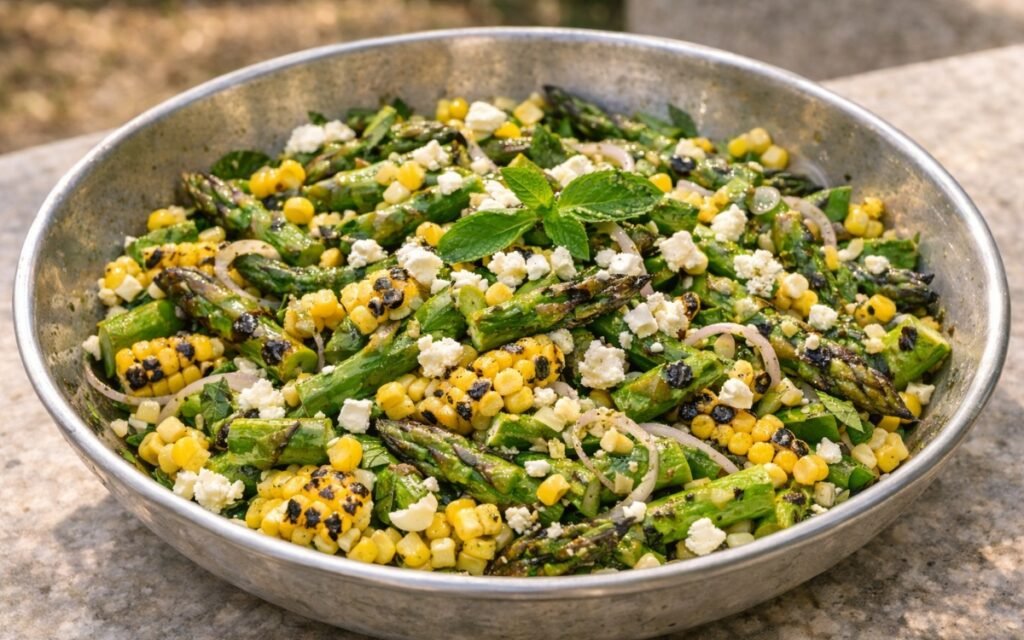
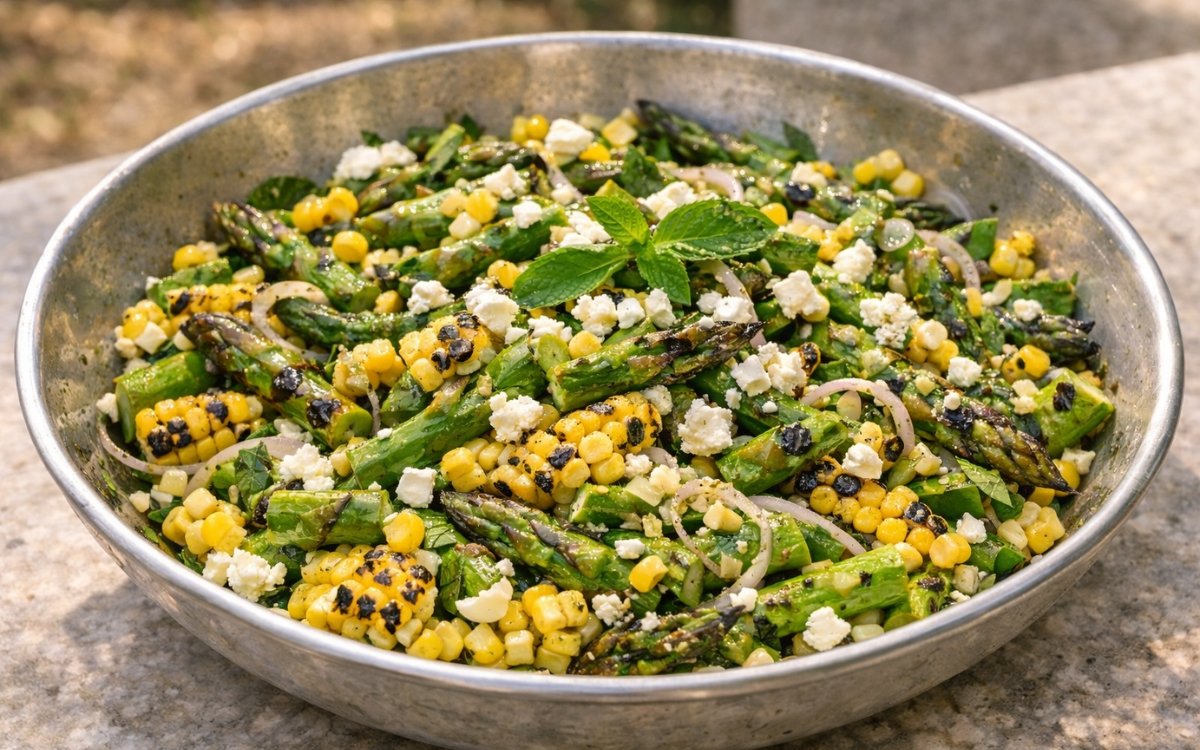
Charred asparagus spears and caramelised corn cut from the cob, tossed with crispy ice-water shallots, fresh mint, basil, and a bright Simple Lemon Vinaigrette, then finished with crumbled feta folded through in two stages for creamy pockets throughout. This is a warm-weather salad with genuine character — smoky, bright, herby, and salty, with the contrast of charred vegetables against the cool, fresh shallot and lemon dressing making every forkful genuinely interesting.
Prep Time : 20 min
Cook Time : 15 min
Servings : 8
20 min
15 min
8
Ingredients
For the Asparagus and Corn Salad
• 900g asparagus, woody stems trimmed, cut into 2–3 inch pieces
• 2 corn cobs, husked and cleaned
• 3 medium shallots, halved and sliced into thin semicircles
• 20 fresh mint leaves, plus extra whole leaves for garnish
• 20 fresh basil leaves
• 200g feta cheese in brine, drained and crumbled — this one on Amazon
• 2 tbsp extra-virgin olive oil, for brushing
For the Lemon Vinaigrette (Simple Lemon Vinaigrette — full recipe here)
• 45ml fresh lemon juice
• 5g lemon zest
• 10g Dijon mustard — this one on Amazon
• 5g honey
• 5g garlic, 1 small clove, finely grated
• 90ml extra-virgin olive oil — this one on Amazon
• Salt and freshly ground black pepper to taste
This post may contain affiliate links. As an Amazon Associate I earn from qualifying purchases, at no additional cost to you.
Directions
- Prepare the Shallots in Ice Water
Before turning on the grill or doing anything else, prepare the shallots first — they need the most passive time. Peel the shallots, slice them in half from root to tip, then cut each half into thin semicircles — as thin as possible, ideally on a mandoline set to the thinnest setting. At paper-thin thickness, the shallot has an almost translucent delicacy that is visually striking in the finished salad and provides a crisp, clean bite rather than the assertive crunch of thicker-cut raw onion. Fill a large bowl with cold water and add a generous handful of ice cubes. Submerge all the sliced shallots in the ice water and leave them there for the entire duration of the grill preparation and cooking. This technique — soaking raw onion or shallot in ice water — is one of the most useful in fresh salad preparation. The ice-cold water draws out the most pungent, sharp sulfurous compounds from the cut shallot cells — the same compounds responsible for the eye-watering intensity of raw onion — and replaces the cell fluid with clean, cold water. After 15–20 minutes, the shallot rings taste remarkably milder, sweeter, and more pleasant than they did raw, while becoming noticeably crisper in texture. They retain all the shallot flavour without any harsh edge. When ready to use, drain the shallots and dry them gently but thoroughly with a clean kitchen towel — excess water would dilute the vinaigrette and produce a watery dressing pool in the salad bowl. - Heat the Grill and Prep the Vegetables
Light the grill and allow it to reach a medium-high temperature — hot enough to develop visible char marks and caramelise the vegetable surfaces, but not so aggressively hot that the outside chars instantly before the interior has a chance to cook and soften. Asparagus specifically benefits from a temperature that allows some internal steaming while the exterior chars — too intense a heat produces beautifully charred asparagus spears that are still raw and fibrous in the centre. Trim the woody bottom ends from the asparagus stalks — bend each spear gently near the base and it will snap naturally at the point where the tender stalk meets the fibrous woody end. Once trimmed, cut the asparagus into 2–3 inch pieces — this length fits comfortably on a grill without falling through the grates, provides a good char-to-surface-area ratio, and produces pieces that are the right size for a forkful salad rather than requiring additional cutting. Husk the corn cobs completely and remove all silk strands. Brush all surfaces of both corn cobs and all the asparagus pieces generously with olive oil, turning to coat every angle. The oil coating serves as both a charring agent — fat conducts heat efficiently and helps the vegetables’ natural sugars caramelise rapidly on contact with the hot grates — and a sticking preventive that allows the vegetables to be flipped and turned without tearing against the metal. - Make the Lemon Vinaigrette
While the grill heats, make the vinaigrette so it has time to rest and the flavours can incorporate while you grill. In a small bowl or jar, combine the lemon juice, lemon zest, Dijon mustard, honey, and grated garlic. Whisk together until fully combined. Add the olive oil in a thin, steady stream while whisking continuously, or seal in a jar and shake vigorously for 20–30 seconds until lightly emulsified. Season with salt and freshly ground black pepper. Taste — the vinaigrette should be bright and clean with the lemon as the primary character, the Dijon providing fermented sharpness, and the honey providing just enough sweetness to round the acidity without making the dressing sweet. The full recipe technique is detailed at Simple Lemon Vinaigrette. This recipe uses the full single-batch quantity to dress 8 servings of grilled vegetables rather than the original 4 servings of salad greens — grilled vegetables absorb dressing differently from delicate greens and benefit from the full quantity. Set aside at room temperature. - Grill the Corn
Place the whole corn cobs on the hottest section of the grill. The corn requires the most time and the least intervention of all the vegetables — it needs to rotate slowly around its circumference so every section of the cob develops char marks and the kernels caramelise. Leave each cob undisturbed for 2–3 minutes until the side facing down has developed clearly visible char marks and the kernels at the grill contact points have darkened to a deep golden-brown. Rotate a quarter turn and repeat, working around the circumference until every angle of the cob is lightly charred and caramelised — approximately 10–12 minutes total for a full rotation. The target for the corn is kernels that have gone from raw yellow to golden-charred with some deep brown spots, and a smell of sweet, caramelised corn rather than raw or burnt. Remove when charred all around and allow to cool slightly on a board. Using a sharp knife, cut the kernels from the cob: stand the cob upright on one end and cut downward with long, firm strokes along the cob, cutting deep enough to take the full kernel without going all the way to the cob core. Rotate and repeat until all kernels are removed. The cut kernels will have a mix of individual grains and small attached clusters — this variation in piece size adds textural interest to the salad. - Grill the Asparagus
Place the oiled asparagus pieces on the grill in a single layer — perpendicular to the grill grates rather than parallel, so they rest across multiple grate bars and cannot fall through. Leave undisturbed for 2 minutes until char marks develop on the bottom surface, then turn each piece with tongs and char for a further 1–2 minutes. Give one more turn and char for a final 1 minute so the asparagus has visible char marks from multiple angles rather than only on two flat sides. The correctly grilled asparagus should have dark, caramelised char marks on several surfaces, be slightly flexible and softened when gently pressed — not floppy or mushy, and not still-firm and raw — and smell of caramelised, slightly grassy, smoky green vegetable. Total grilling time for asparagus pieces at this size is approximately 5–7 minutes. Watch the thinnest tips of the cut pieces closely — they are the first to over-char. If any tips are becoming very dark while the rest of the piece is still firm, move them to a cooler zone of the grill. - Prepare the Herbs
Stack all the mint leaves and basil leaves together into two separate stacks. Roll each stack tightly lengthwise into a compact cylinder — the chiffonade technique — and slice through the rolled stack in thin, perpendicular cuts to produce fine herb ribbons. The cut should be made with a sharp knife in smooth, clean strokes without pressing down onto the herbs, which would bruise and darken them. This chiffonade cut releases the herbs’ aromatic oils along the cut edge while keeping the ribbons intact and visually beautiful in the finished salad. Mint and basil both darken rapidly once their cells are cut and exposed to air — prepare them at the last possible moment before the final assembly stage. - Assemble in Two Stages
Transfer all the warm grilled asparagus pieces and corn kernels to a large salad bowl. Drain the ice-water shallots, squeeze gently, and dry thoroughly with a clean towel. Add the dried shallots to the bowl with the warm vegetables. Pour the lemon vinaigrette over everything and toss with two large salad spoons using a lifting and turning motion, distributing the dressing evenly across all vegetables. The warm vegetables will absorb the dressing more readily than cold — this warm-dressing contact is what allows the lemon and Dijon flavours to penetrate the asparagus and corn rather than simply sitting on the surface. Add approximately two-thirds of the crumbled feta and all of the chiffonade-cut mint and basil. Fold these additions through the salad with 4–5 very gentle strokes — lifting from the bottom and laying over the top without pressing or compressing. The goal is even distribution of herb and feta through the salad without mashing the feta into a creamy paste that coats everything or bruising the herb ribbons into dark, crushed fragments. Taste and adjust salt and lemon at this stage. Transfer to a serving platter or serve directly from the bowl. Crumble the remaining one-third of the feta across the top surface and scatter extra whole mint leaves over the top. Serve immediately while the vegetables are still warm.
*Notes :
- The two-stage feta addition is a deliberate technique that produces two different feta experiences in the same salad. The feta folded in during assembly is exposed to the lemon vinaigrette and the warmth of the grilled vegetables — it softens slightly, absorbs some of the dressing’s acidity, and some pieces begin to break down at their edges into the surrounding liquid, contributing creaminess to the dressing. The feta crumbled over the surface at the end retains its full texture — firm, distinctly salty, dry-crumbled — and is experienced as a separate textural element rather than one incorporated into the salad. Together they give the salad a layered feta presence: the creamy, dressing-integrated interior version and the firm, texturally distinct surface version.
- The ice-water shallot technique produces results that are immediately apparent in the finished salad and takes 15 minutes of passive time with zero active effort. Raw shallot in a warm salad without this treatment can be aggressively sharp and dominate the more delicate flavours of the lemon dressing and fresh herbs. Ice-water treated shallot provides onion complexity, slight sweetness, and pleasant crunch as a background note rather than a foreground one. This technique applies equally well to red onion in any preparation where raw allium presence is desired without harshness.
- Using the full lemon vinaigrette batch for 8 servings rather than the original 4 is a conscious choice based on the absorbency of the components. Grilled vegetables have more textured, somewhat porous surfaces from the charring process compared to the smooth-surfaced salad greens the vinaigrette was originally developed for. They benefit from a more generous dressing quantity to achieve the same level of coating and flavour penetration.
Why This Recipe Works
This salad works because it layers three distinct flavor and texture registers that contrast and complement each other throughout. The grilled vegetables provide warmth, char, smokiness, and sweetness from caramelisation. The ice-water shallots and lemon vinaigrette provide crispness, sharpness, and bright acidity that cuts through the char and the feta’s richness.
The feta and fresh herbs provide creamy saltiness and aromatic freshness that tie the warm and bright elements together into a cohesive, interesting whole. The two-stage feta addition ensures the cheese contributes at both a textural and a flavour-integration level simultaneously.
Ingredient Breakdown
Asparagus (Grilled)
The primary vegetable — charred, slightly smoky, and tender. Cut into pieces for easy fork-eating and uniform charring across all surfaces.
Corn (Grilled, Cut from Cob)
Sweet, caramelised, slightly smoky kernels — the natural sugar content of corn caramelises extremely well on a grill, producing a deep golden sweetness that anchors the salad’s flavour.
Ice-Water Shallots
Crispy, mild, sweet — the allium element that provides savory depth without harshness after ice-water treatment.
Lemon Vinaigrette
The bright, emulsified dressing — lemon acidity and Dijon complexity that cuts through the char and the feta’s richness and ties all components together.
Feta in Brine
Salty, creamy, slightly tangy — used in two stages for both incorporated creaminess and surface texture.
Mint and Basil (Chiffonade)
The aromatic top notes — cooling mint and sweet, slightly peppery basil cut into fine ribbons for visual appeal and aromatic freshness.
Flavor Structure Explained
This salad follows a layered balance model:
- Warm charred base (grilled asparagus, caramelised corn)
- Bright acidic layer (lemon vinaigrette, shallots)
- Rich salty depth (feta, olive oil)
- Sweet vegetal contrast (corn)
- Fresh herbal lift (mint, basil)
Grilled vegetables establish the foundation with smoky char and concentrated sweetness, giving the salad depth and warmth. Lemon vinaigrette and shallots cut through that richness with sharp, clean acidity and mild allium bite. Feta and olive oil add creamy, salty richness that rounds and balances the sharper elements. Corn reinforces sweetness, contrasting both acidity and salt. Mint and basil run across all layers, delivering a cooling, aromatic freshness that keeps the entire profile light, clean, and cohesive despite the warm components.
Common Mistakes to Avoid
- Skipping the Ice-Water Shallot Soak – Raw shallot without this treatment can overpower the delicate lemon and herb character. The 15 minutes of passive soaking transforms the shallot from aggressive to pleasant.
- Not Drying the Shallots Before Adding – Wet shallots from the ice bath dilute the vinaigrette and pool water in the salad bowl. Dry thoroughly with a kitchen towel before adding.
- Over-charring the Asparagus – Very thin tips and cut ends burn before the thicker stalks have cooked through. Watch continuously and move any pieces that are darkening too quickly to a cooler zone.
- Adding Feta All at Once – Adding all the feta during the initial toss produces a uniformly coated, creamy-everywhere result without any of the firm, textural surface crumble that makes the finished dish visually striking and texturally interesting.
- Mushing the Herbs – Pressing or stirring the chiffonade herbs rather than folding gently darkens them immediately. Always fold with the lightest possible touch after adding herbs.
- Not Tasting After Dressing – Grilled vegetables absorb salt during cooking and feta contributes its own significant salt — the salad may need considerably less additional salt than expected, or it may need more depending on your specific feta. Always taste after dressing and before serving.
Variations
Halloumi Version
Replace the feta with 200g of grilled halloumi sliced into strips and grilled alongside the vegetables for a richer, meatier cheese component with its own char marks.
Added Protein
Slice 400g of grilled chicken thighs or a grilled skirt steak thinly and add alongside the vegetables for a complete meal rather than a side salad.
Za’atar Version
Add 2 tbsp of za’atar seasoning to the warm vegetables immediately after grilling and before dressing for a Middle Eastern-spiced variation that pairs particularly well with the lemon vinaigrette.
Grain Base Version
Serve over 300g of cooked and cooled freekeh or farro for a more substantial grain salad where the grilled vegetables and feta sit on a nutty, textured grain base.
Storage & Make-Ahead
Grilled vegetables can be cooked up to 4 hours in advance and kept at room temperature, loosely covered. Do not refrigerate them before assembling the salad, since cold grilled vegetables do not absorb dressing well and lose the warm character that makes the salad work.
Ice-water shallots can be prepared up to 2 hours ahead and kept submerged in ice water in the refrigerator until needed. Drain and dry them just before using.
Lemon vinaigrette can be made up to 3 days in advance and stored in a sealed jar in the refrigerator. Shake it vigorously before using so it emulsifies again.
The assembled salad is best served immediately, while the grilled vegetables are still warm. Leftovers can be refrigerated for up to 24 hours. The asparagus will soften and the herbs may darken, but the flavor will still be good. Bring the salad back to room temperature before serving any leftovers.
Frequently Asked Questions
Can I make this without a grill?
Yes — a cast iron grill pan at maximum heat produces excellent char marks and near-identical results for both the asparagus and the corn. For the corn on a grill pan, use the broiler method instead: halve the cobs lengthwise and place cut-side down under a very hot broiler for 5–7 minutes until deeply caramelised.
How do I know when the asparagus is properly grilled?
It should yield when gently bent — not snap, which indicates it is still raw; not collapse, which indicates it is over-cooked. It should have visible char marks on at least two surfaces and a slightly softened, yielding texture with a grassy, slightly smoky aroma.
Can I use frozen corn instead of fresh?
Fresh corn on the cob is far superior for grilling — the kernels have the right moisture content to caramelise cleanly on the grill. Frozen corn thaws with too much surface moisture and is too small and soft to grill properly. If fresh corn is unavailable, char canned corn briefly in a very hot dry cast iron pan until the kernels develop some browning.
What dressing can I use if I want to change the vinaigrette?
Honey Shallot Vinaigrette works beautifully here for a sweeter, more mellow dressing. Champagne Vinegar Dressing produces a more delicate, elegant result for a dinner party presentation.
Nutrition Facts
( per serving )
Calories
~285 kcal
Protein
8 g
Fat
21 g
Carbs
18 g
Calories
~285 kcal
Protein
8 g
Fat
21 g
Carbs
18 g
Related Recipes
Related Recipes

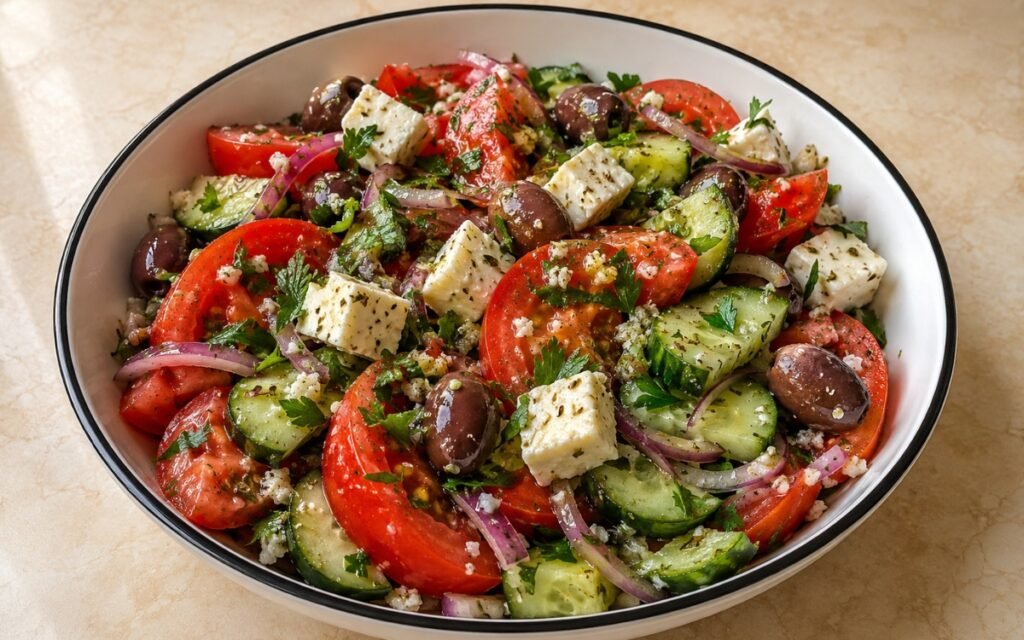
Greek Tomato Cucumber Salad
Fresh tomatoes and cucumbers with feta, olives, and lemon-oregano dressing in Mediterranean style.
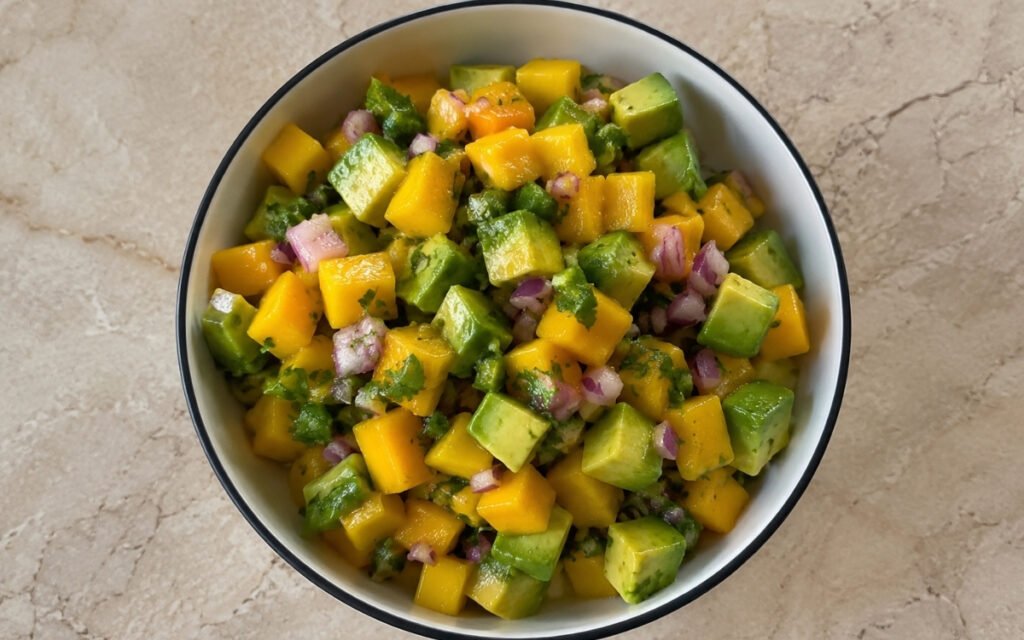
Avocado & Mango Salsa
Sweet mango, creamy avocado, sharp red onion, and jalapeño in a lime-herb dressing — the condiment that makes every Mexican and South American dish taste complete.
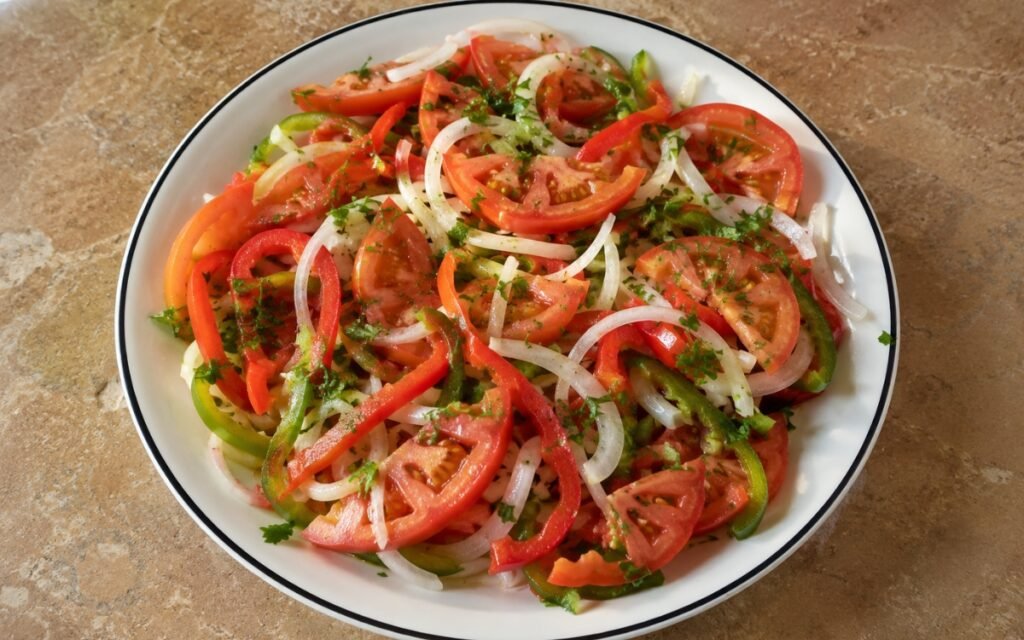
Authentic Argentine Criolla Salad
Classic Argentine salad with sliced tomatoes, onions, and peppers dressed in olive oil and vinegar.
You might also like
You might also like
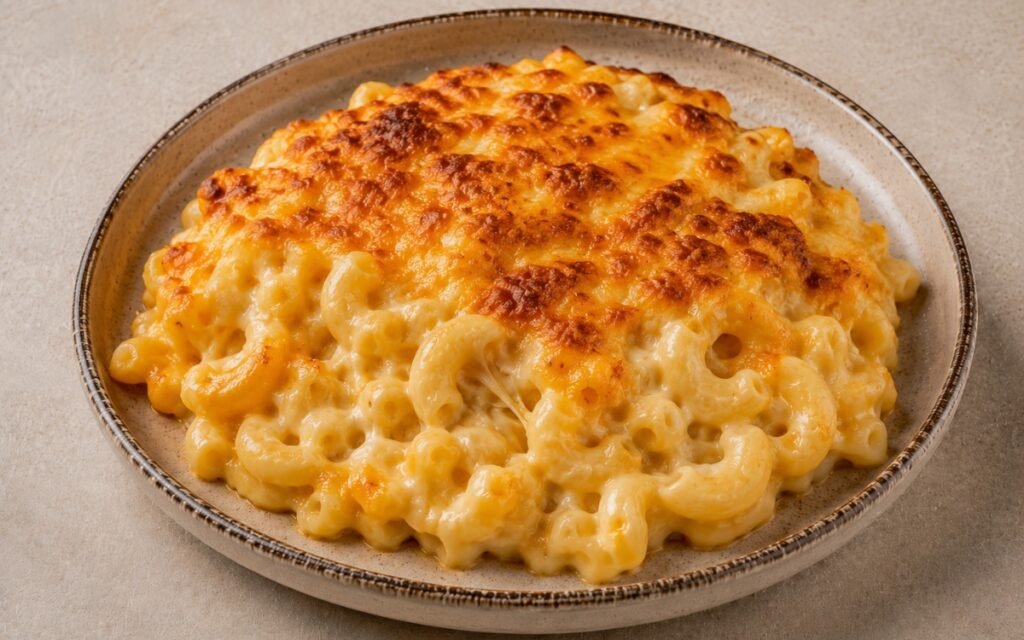
Baked Mac and Cheese
Cheddar, Gruyère, and mozzarella melted into a béchamel off the heat — layered with underdone macaroni, baked bubbling, broiled golden. Serves 12.
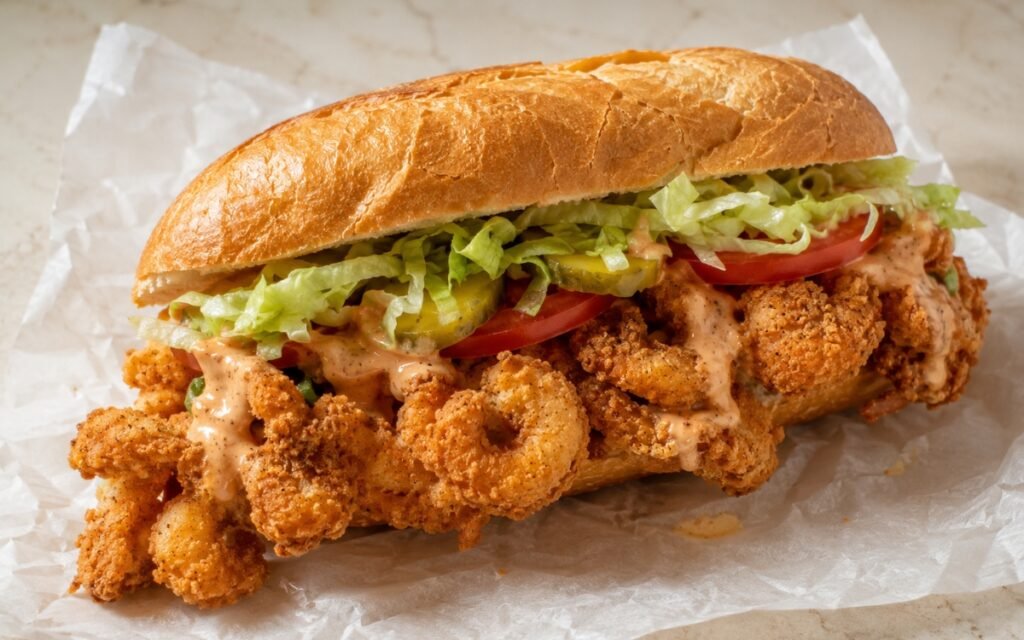
Po’ Boy Sandwich
Crisp, well-seasoned fried shrimp piled generously into crusty French bread with shredded lettuce, tomato, and a tangy remoulade.
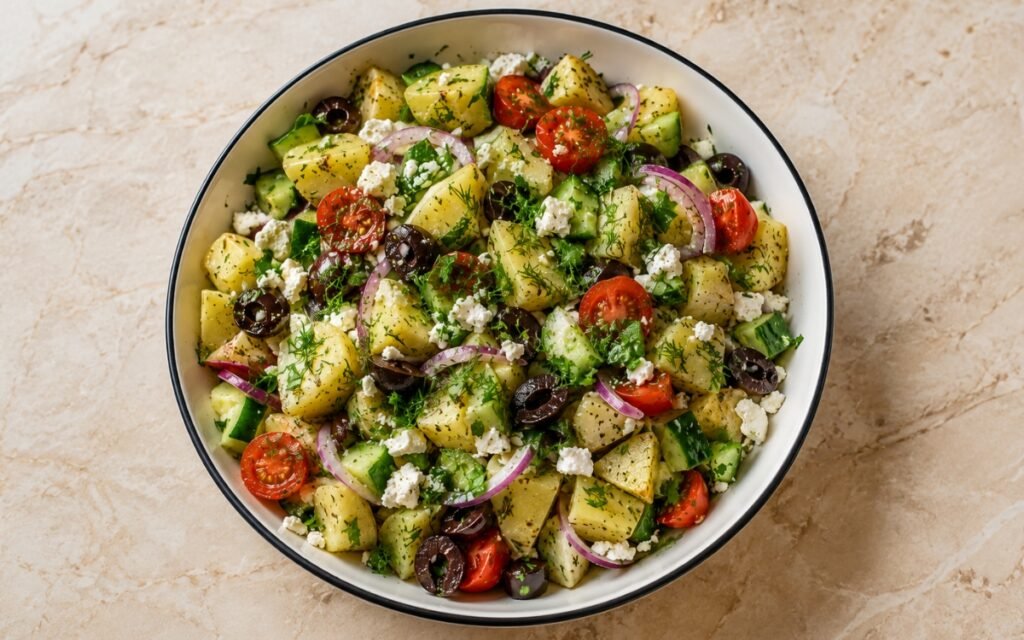
Greek-Style Potato Salad
Potatoes dressed warm for absorption, vegetables added once cooled, feta folded in gently, chilled to integrate. Bright and briny.
Grilled Asparagus & Corn Salad
Ingredients
Method
- Before turning on the grill or doing anything else, prepare the shallots first — they need the most passive time. Peel the shallots, slice them in half from root to tip, then cut each half into thin semicircles — as thin as possible, ideally on a mandoline set to the thinnest setting. At paper-thin thickness, the shallot has an almost translucent delicacy that is visually striking in the finished salad and provides a crisp, clean bite rather than the assertive crunch of thicker-cut raw onion. Fill a large bowl with cold water and add a generous handful of ice cubes. Submerge all the sliced shallots in the ice water and leave them there for the entire duration of the grill preparation and cooking. This technique — soaking raw onion or shallot in ice water — is one of the most useful in fresh salad preparation. The ice-cold water draws out the most pungent, sharp sulfurous compounds from the cut shallot cells — the same compounds responsible for the eye-watering intensity of raw onion — and replaces the cell fluid with clean, cold water. After 15–20 minutes, the shallot rings taste remarkably milder, sweeter, and more pleasant than they did raw, while becoming noticeably crisper in texture. They retain all the shallot flavour without any harsh edge. When ready to use, drain the shallots and dry them gently but thoroughly with a clean kitchen towel — excess water would dilute the vinaigrette and produce a watery dressing pool in the salad bowl.
- Light the grill and allow it to reach a medium-high temperature — hot enough to develop visible char marks and caramelise the vegetable surfaces, but not so aggressively hot that the outside chars instantly before the interior has a chance to cook and soften. Asparagus specifically benefits from a temperature that allows some internal steaming while the exterior chars — too intense a heat produces beautifully charred asparagus spears that are still raw and fibrous in the centre. Trim the woody bottom ends from the asparagus stalks — bend each spear gently near the base and it will snap naturally at the point where the tender stalk meets the fibrous woody end. Once trimmed, cut the asparagus into 2–3 inch pieces — this length fits comfortably on a grill without falling through the grates, provides a good char-to-surface-area ratio, and produces pieces that are the right size for a forkful salad rather than requiring additional cutting. Husk the corn cobs completely and remove all silk strands. Brush all surfaces of both corn cobs and all the asparagus pieces generously with olive oil, turning to coat every angle. The oil coating serves as both a charring agent — fat conducts heat efficiently and helps the vegetables’ natural sugars caramelise rapidly on contact with the hot grates — and a sticking preventive that allows the vegetables to be flipped and turned without tearing against the metal.
- While the grill heats, make the vinaigrette so it has time to rest and the flavours can incorporate while you grill. In a small bowl or jar, combine the lemon juice, lemon zest, Dijon mustard, honey, and grated garlic. Whisk together until fully combined. Add the olive oil in a thin, steady stream while whisking continuously, or seal in a jar and shake vigorously for 20–30 seconds until lightly emulsified. Season with salt and freshly ground black pepper. Taste — the vinaigrette should be bright and clean with the lemon as the primary character, the Dijon providing fermented sharpness, and the honey providing just enough sweetness to round the acidity without making the dressing sweet. The full recipe technique is detailed at Simple Lemon Vinaigrette. This recipe uses the full single-batch quantity to dress 8 servings of grilled vegetables rather than the original 4 servings of salad greens — grilled vegetables absorb dressing differently from delicate greens and benefit from the full quantity. Set aside at room temperature.
- Place the whole corn cobs on the hottest section of the grill. The corn requires the most time and the least intervention of all the vegetables — it needs to rotate slowly around its circumference so every section of the cob develops char marks and the kernels caramelise. Leave each cob undisturbed for 2–3 minutes until the side facing down has developed clearly visible char marks and the kernels at the grill contact points have darkened to a deep golden-brown. Rotate a quarter turn and repeat, working around the circumference until every angle of the cob is lightly charred and caramelised — approximately 10–12 minutes total for a full rotation. The target for the corn is kernels that have gone from raw yellow to golden-charred with some deep brown spots, and a smell of sweet, caramelised corn rather than raw or burnt. Remove when charred all around and allow to cool slightly on a board. Using a sharp knife, cut the kernels from the cob: stand the cob upright on one end and cut downward with long, firm strokes along the cob, cutting deep enough to take the full kernel without going all the way to the cob core. Rotate and repeat until all kernels are removed. The cut kernels will have a mix of individual grains and small attached clusters — this variation in piece size adds textural interest to the salad.
- Place the oiled asparagus pieces on the grill in a single layer — perpendicular to the grill grates rather than parallel, so they rest across multiple grate bars and cannot fall through. Leave undisturbed for 2 minutes until char marks develop on the bottom surface, then turn each piece with tongs and char for a further 1–2 minutes. Give one more turn and char for a final 1 minute so the asparagus has visible char marks from multiple angles rather than only on two flat sides. The correctly grilled asparagus should have dark, caramelised char marks on several surfaces, be slightly flexible and softened when gently pressed — not floppy or mushy, and not still-firm and raw — and smell of caramelised, slightly grassy, smoky green vegetable. Total grilling time for asparagus pieces at this size is approximately 5–7 minutes. Watch the thinnest tips of the cut pieces closely — they are the first to over-char. If any tips are becoming very dark while the rest of the piece is still firm, move them to a cooler zone of the grill.
- Stack all the mint leaves and basil leaves together into two separate stacks. Roll each stack tightly lengthwise into a compact cylinder — the chiffonade technique — and slice through the rolled stack in thin, perpendicular cuts to produce fine herb ribbons. The cut should be made with a sharp knife in smooth, clean strokes without pressing down onto the herbs, which would bruise and darken them. This chiffonade cut releases the herbs’ aromatic oils along the cut edge while keeping the ribbons intact and visually beautiful in the finished salad. Mint and basil both darken rapidly once their cells are cut and exposed to air — prepare them at the last possible moment before the final assembly stage.
- Transfer all the warm grilled asparagus pieces and corn kernels to a large salad bowl. Drain the ice-water shallots, squeeze gently, and dry thoroughly with a clean towel. Add the dried shallots to the bowl with the warm vegetables. Pour the lemon vinaigrette over everything and toss with two large salad spoons using a lifting and turning motion, distributing the dressing evenly across all vegetables. The warm vegetables will absorb the dressing more readily than cold — this warm-dressing contact is what allows the lemon and Dijon flavours to penetrate the asparagus and corn rather than simply sitting on the surface. Add approximately two-thirds of the crumbled feta and all of the chiffonade-cut mint and basil. Fold these additions through the salad with 4–5 very gentle strokes — lifting from the bottom and laying over the top without pressing or compressing. The goal is even distribution of herb and feta through the salad without mashing the feta into a creamy paste that coats everything or bruising the herb ribbons into dark, crushed fragments. Taste and adjust salt and lemon at this stage. Transfer to a serving platter or serve directly from the bowl. Crumble the remaining one-third of the feta across the top surface and scatter extra whole mint leaves over the top. Serve immediately while the vegetables are still warm.