
Green Zhoug
Zhoug is the Yemeni herb sauce that travels — found across Israeli, Lebanese, and wider Middle Eastern cooking as the condiment that makes everything it touches more alive. Blended green jalapeños, a full bunch of cilantro with stems, fresh mint, garlic, cumin, coriander, lime, and enough olive oil to make it pourable — pulsed rather than blended into a thick, coarse, herbaceous sauce with real heat and real freshness simultaneously. It takes ten minutes and improves virtually every dish it contacts: drizzled over Classic Hummus or Authentic Labneh, spooned over Greek Chicken Souvlaki, Beef Kofta Skewers, or Chicken Shawarma, with fried eggs, or alongside warm Homemade Lavash or Fresh Pita Flatbread.
Prep Time : 10 min
Cook Time : 0 min
Servings : 8
10 min
0 min
8
Ingredients
For The Green Zhoug
• 3 green jalapeños, deseeded — seeds reserved separately for heat adjustment
• 1 whole bunch fresh cilantro, leaves and stems included
• 6 fresh mint leaves
• 3 medium garlic cloves, smashed with a knife
• 1 tsp ground cumin — this one on Amazon
• ½–1 tsp ground coriander, to taste
• Fine sea salt to taste
• Juice of 1 lime
• Zest of half a lime, outer green layer only
• 60–80ml extra-virgin olive oil, plus more for consistency adjustment — this one on Amazon
This post may contain affiliate links. As an Amazon Associate I earn from qualifying purchases, at no additional cost to you.
Directions
- Prepare the Jalapeños
Slice each jalapeño in half lengthwise and use a small spoon or the tip of a paring knife to scrape out the seeds and the white membrane. Place the seeds in a small separate bowl and set aside — do not discard them. The deseeded jalapeños provide the green, slightly vegetal, moderately warm heat that defines zhoug’s character without tipping into aggressive spice. The reserved seeds become your heat calibration tool in the tasting step: adding a small amount back into the processor gives you precise, incremental control over the final heat level in a way that adding additional jalapeño pieces cannot. Having the seeds available also means that if two members of a household prefer different heat levels, the zhoug can be split from the processor at the baseline level and additional seeds added to one portion only. Cut the deseeded jalapeño halves into roughly 3–4cm pieces — large enough to process efficiently but small enough to distribute evenly through the finished sauce without any one piece remaining intact. - Prepare the Remaining Ingredients
Smash the three garlic cloves with the flat side of a knife — a single firm press that cracks each clove open without fully flattening it. Smashing rather than mincing is the correct preparation for this application: smashed garlic releases its aromatic compounds into the surrounding ingredients during processing and produces a more even, integrated garlic presence than whole cloves, while being less likely to create concentrated sharp garlic pockets than finely minced garlic. Wash the cilantro thoroughly under cold running water and shake dry — the stems are included intentionally and completely. Cilantro stems, particularly the thinner upper stems attached to the leaves, contain essentially the same volatile aromatic compounds as the leaves and add intensity to the sauce’s herbaceous character without any textural downside in a blended preparation. Only the very lowest, thickest hollow stems of the bunch should be discarded. Zest the half lime before juicing it — the zest is always taken from the outer green layer only, not the white pith beneath which is bitter. A Microplane or fine grater produces the cleanest zest without taking the bitter pith. - Process in Controlled Pulses
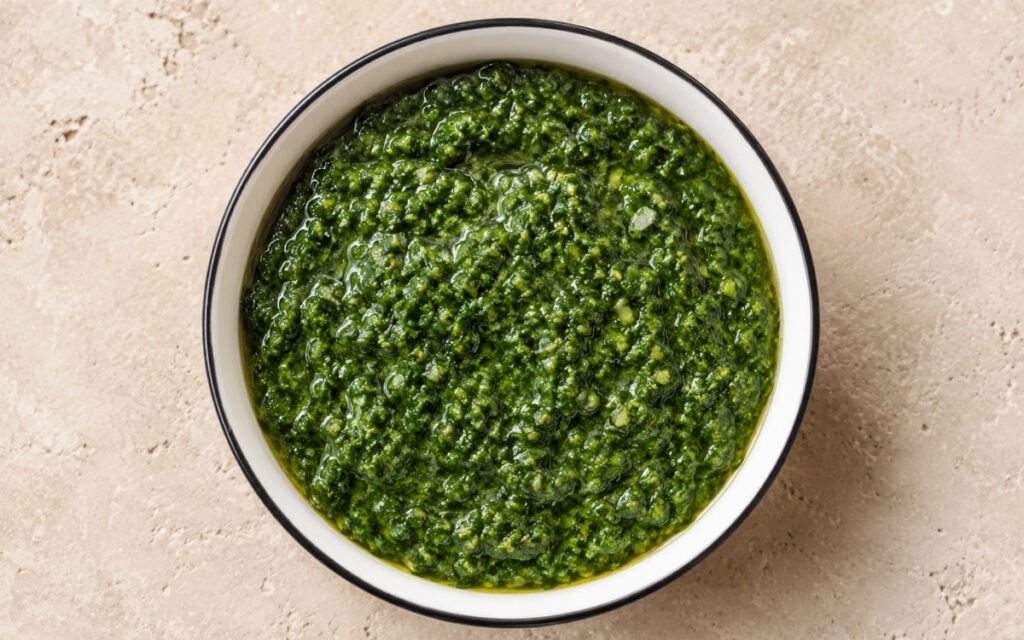
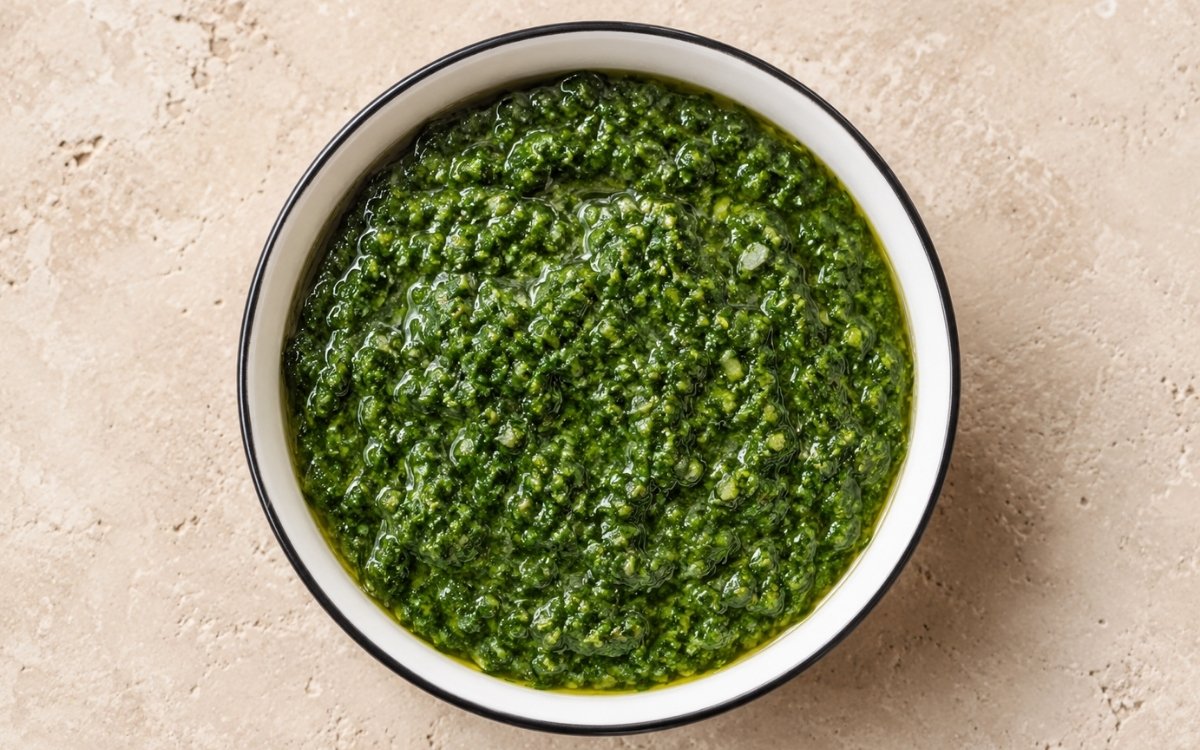
Add all the prepared ingredients to the food processor in the following order: jalapeño pieces, smashed garlic, cilantro with stems, mint leaves, ground cumin, ground coriander, lime juice, lime zest, and olive oil. The order is not critical for the flavour of the finished sauce but loading the harder ingredients — jalapeño and garlic — at the bottom of the processor ensures they are in contact with the blade from the first pulse, while the delicate herbs on top are processed by the blade as it works through the harder ingredients below. Begin processing using the pulse technique — 5 seconds on, 2 seconds off, repeating the cycle. This pulse approach is the single most important technique decision in the recipe. Continuous blending at high speed produces a smooth, homogeneous green liquid — effectively a green herb oil without textural character. Pulsing allows you to assess the texture after each cycle and stop the moment the sauce reaches the correct consistency: smooth overall with small, distinct pieces of herb and jalapeño still visible at the surface, and a body that is thick enough to mound slightly rather than pooling flat. After approximately 6–8 pulse cycles, check the consistency by stopping the processor and examining the texture. If it is already at the correct slightly coarse, pesto-like consistency, stop. If it still has large visible pieces, continue pulsing 2–3 more cycles and check again. If the sauce is too thick to move freely in the processor, add additional olive oil one tablespoon at a time and pulse briefly after each addition until it reaches a pourable consistency. - Taste and Calibrate
Remove the lid and taste the zhoug carefully. The calibration of this sauce is straightforward but important: evaluate heat, acidity, and salt as three independent dimensions. Heat: if the deseeded jalapeño baseline is too mild for your preference, add a small pinch of the reserved seeds to the processor and pulse twice, taste again, and repeat until the heat level is right. The seeds contain the concentrated capsaicin of the jalapeño and a small quantity makes a perceptible difference — add conservatively and taste between additions. Acidity: if the sauce tastes heavy or the citrus brightness is not clearly present, add an additional squeeze of lime juice — the freshness of the lime is what makes zhoug feel alive rather than simply herby. Salt: if the sauce tastes flat or one-dimensional despite having all ingredients present, it needs more salt — add in small pinches, process briefly, and taste after each addition. A note on cumin: the ground cumin’s earthy warmth takes a few minutes after blending to fully bloom in the olive oil — do not add more cumin immediately if it is not yet prominent. Allow the sauce to rest for 5 minutes, then taste again and the cumin’s presence will have deepened noticeably. - Serve
Transfer the zhoug to a serving bowl. Zhoug does not require a garnish — its vivid deep green colour from the blended herbs is the visual statement, and adding additional garnish competes with rather than complements it. Serve immediately for the freshest possible herb character, or rest for 5–10 minutes to allow the flavours to integrate. The sauce is at its most herbaceously vivid within the first hour of making.
*Notes :
- Zhoug — also spelled zhug, skhug, or s’hug — originates in Yemen and is one of the most widely distributed condiments in Middle Eastern cooking, having traveled with Yemeni Jewish communities to Israel where it became a ubiquitous table condiment found in shawarma shops, falafel stands, and home kitchens throughout the country. Its two primary forms — green zhoug made from fresh green chilies and herbs, and red zhoug made from dried red chilies and spices — have distinct characters. Green zhoug is the fresher, more herbaceous, more immediately vibrant version; red zhoug is deeper, more complex, and more warming in character.
- The cilantro stems are included in this recipe with specific intention and are worth emphasising because many recipes instruct the removal of stems as a default without consideration of context. In a raw blended preparation where the final texture is a coarse paste rather than a delicate garnish, the stems’ aromatic contribution — which is equal to the leaves in flavour compound content — is pure added value with no textural cost. A whole bunch with stems produces a more intensely cilantro-flavoured zhoug than leaves alone. Removing the stems would reduce the herb yield and the flavour intensity without improving anything in the finished sauce.
- The olive oil quantity range — 60–80ml — is given as a range because the moisture content of the cilantro and the juiciness of the jalapeños both affect how much oil the processor needs to move the mixture smoothly. Start with 60ml and assess after the initial pulse cycles; add additional oil only if the processor is struggling to move the mixture evenly.
Why This Recipe Works
This recipe works because it applies the correct technique — pulsing rather than continuous blending — to a sauce whose value lies entirely in its textural and flavour freshness. The pulse method preserves the distinct herb pieces and jalapeño bits that give zhoug its character. The reserved seeds provide heat calibration without requiring additional whole jalapeño. The lime zest adds aromatic citrus oils that juice alone cannot provide.
The cilantro stems increase the herb intensity beyond what leaves alone produce. And the cumin-coriander combination provides the specifically Middle Eastern spice character that distinguishes zhoug from a generic green herb sauce — present as a warm background note rather than a prominent flavour, identifiable on tasting but not announced.
Ingredient Breakdown
Green Jalapeños (Deseeded, Seeds Reserved)
The primary heat and green chili character — deseeded for moderate warmth, seeds reserved for precise heat adjustment at the tasting stage.
Fresh Cilantro with Stems
The dominant herb — the full bunch including stems provides maximum herb intensity and the specifically citrusy, floral aromatic character that defines zhoug’s identity.
Fresh Mint
The secondary herb — 6 leaves provide a cooling, clean aromatic counterpoint to the cilantro’s intensity without competing with it.
Smashed Garlic
Savory depth — integrates evenly through the sauce during processing, providing background allium warmth without sharp raw garlic pockets.
Ground Cumin
The primary spice — earthy, warm, and the most identifiable Middle Eastern spice note in the sauce. Blooms in the olive oil over the first 5–10 minutes after blending.
Ground Coriander
Secondary spice — slightly citrusy, warm, and specifically complementary to the cilantro’s own aromatic profile.
Lime Juice and Zest
The brightening acid and aromatic citrus layer — juice for clean sharpness, zest for the concentrated aromatic oils that make the citrus character more complex.
Extra-Virgin Olive Oil
The carrier medium — distributes all aromatic compounds throughout the sauce, provides smooth body, and allows the sauce to be poured and drizzled.
Flavor Structure Explained
This sauce follows a layered balance model:
- Fresh herbal core (cilantro, mint)
- Building heat (jalapeño)
- Warm spice depth (cumin, coriander)
- Bright citrus lift (lime juice, zest)
- Cohesive aromatic balance (combined registers)
Cilantro and mint define the dominant layer with vivid, green freshness — citrusy and bright with a cooling edge. Jalapeño adds a steady, building heat that gives the sauce structure and intensity. Cumin and coriander create the warm, earthy backbone that grounds the herbs. Lime sharpens and lifts the entire profile, adding clarity and brightness. All elements work simultaneously, creating a balanced, high-impact sauce where no single note dominates but all are clearly present.
Common Mistakes to Avoid
- Over-blending – The most consequential error — continuous high-speed blending produces a smooth, flavour-flattened green liquid without textural character. Always pulse in 5-second intervals and stop at the correct slightly coarse consistency.
- Discarding the Seeds Before Tasting – The reserved seeds are the heat calibration tool. Never discard them before the tasting step — add back incrementally if more heat is needed.
- Using Only Cilantro Leaves and Discarding All Stems – The stems contain the same aromatic compounds as the leaves and add flavour intensity without textural downside in a blended sauce. Include the thin upper stems throughout.
- Adding More Cumin Immediately After Blending – Cumin blooms in oil over time — the earthy warmth is not fully developed immediately after blending. Wait 5 minutes, taste again, and the cumin’s presence will have deepened.
- Under-salting – Zhoug needs assertive salt to make the herbs’ volatile aromatics come forward clearly. Flat zhoug is almost always under-seasoned. Add salt incrementally and taste attentively.
Variations
Red Zhoug
The dramatically different sister sauce — made from dried red chilies, roasted spices, and garlic rather than fresh green herbs, producing a deep, dark, intensely spiced paste with a completely different character from the green version. Where green zhoug is fresh, bright, and herbaceous, red zhoug is complex, earthy, and warming with a more concentrated, slow-building heat. The same versatile application — grilled meats, eggs, flatbreads, and dips — but an entirely different flavour identity. Full recipe at Red Zhoug.
Extra Spicy Version
Leave the seeds in all three jalapeños before processing for a significantly hotter sauce. Alternatively, replace one or two jalapeños with a serrano chili — serranos are 3–5 times hotter and produce a sharper, more immediate heat.
Lemon Version
Replace the lime juice and zest with the equivalent amount of fresh lemon — the more common citrus in Yemeni and Israeli preparations of zhoug. Lemon produces a slightly softer, less tropical acidity that gives the sauce a more classically Middle Eastern character.
Extra Minty Version
Increase the mint leaves to 15–20 for a sauce where the mint plays an equal role to the cilantro — cooling, aromatic, and particularly well-suited to pairing with lamb preparations.
Storage & Make-Ahead
Store in an airtight jar in the refrigerator for up to 5 days. Press plastic wrap directly onto the surface of the sauce before sealing to slow oxidation — the herbs darken slightly over time due to enzymatic browning, which does not affect flavour but reduces the vivid green colour that makes freshly made zhoug so visually striking. The flavour deepens over the first 24 hours as the cumin and coriander fully bloom in the olive oil. Shake or stir well before serving from the refrigerator as the oil and herb solids separate during storage. Not suitable for freezing — the fresh herbs lose all their texture and vivid colour when frozen and thawed.
Frequently Asked Questions
What is zhoug?
Zhoug is a Yemeni herb condiment — one of the most widely used sauces in Israeli and broader Middle Eastern cooking. It comes in two primary forms: green (made from fresh chilies and herbs) and red (made from dried chilies and spices). It is used as a table condiment, a marinade component, a dip accompaniment, and a finishing sauce across an enormous range of applications. Full recipe for the red version at Red Zhoug.
Can I make zhoug without a food processor?
Yes — use a mortar and pestle to pound the ingredients progressively from hardest to softest: garlic and salt first, then jalapeño, then herbs, then spices. Finish with the oil and lime. The mortar method produces a more rustic, coarser texture and requires more physical effort but produces an excellent result with arguably more character than the processor version.
How spicy is this recipe?
With three deseeded jalapeños, the heat level is moderate — clearly present and building, but accessible for most palates. Adding the seeds back in — even half of them — produces a noticeably hotter sauce. For a very mild version, use only one deseeded jalapeño. For very hot, use all seeds or replace one jalapeño with a serrano.
What does zhoug go with?
Almost everything. It is specifically excellent drizzled over Classic Hummus or Authentic Labneh as a finishing drizzle on the mezze table. As a sauce alongside Greek Chicken Souvlaki, Beef Kofta Skewers, and Chicken Shawarma — the fresh, spiced herb character is specifically compatible with the spice profiles of these grilled proteins. With fried or scrambled eggs for a Middle Eastern-inspired breakfast. With warm Homemade Lavash or Fresh Pita Flatbread.
Why are the cilantro stems included?
The thin, upper cilantro stems contain the same volatile aromatic compounds as the leaves. Including them in a blended sauce increases the herb’s intensity and character without any textural downside. Removing all stems reduces both the yield and the flavour impact of the herb component.
Nutrition Facts
( per serving )
Calories
~85 kcal
Protein
1 g
Fat
8 g
Carbs
3 g
Calories
~85 kcal
Protein
1 g
Fat
8 g
Carbs
3 g
Related Recipes
Related Recipes

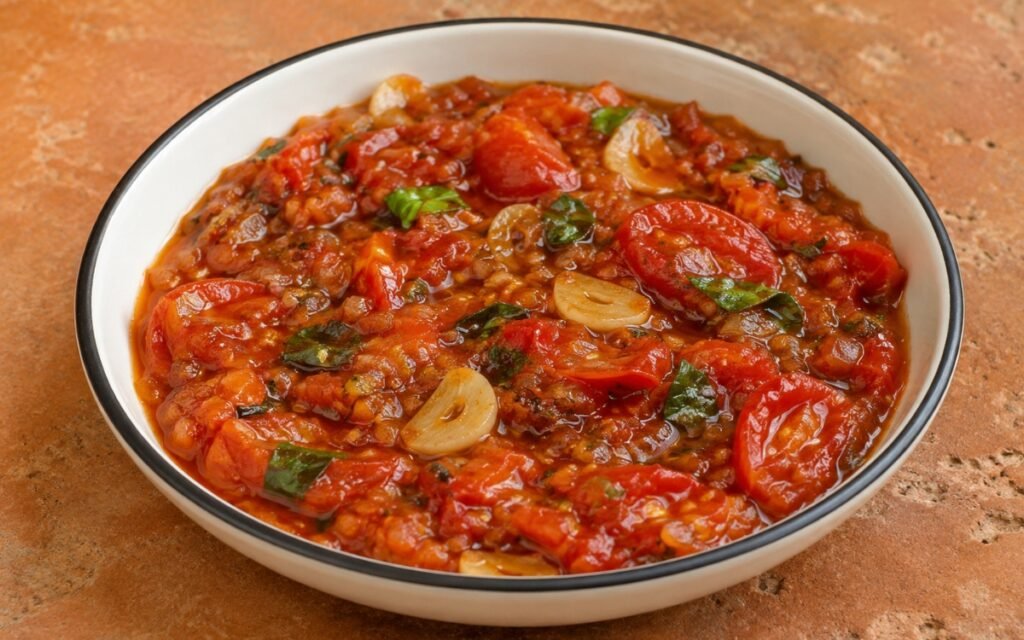
Quick Warm Tomato Garlic Sauce
Fresh cherry tomatoes simmer with garlic and basil. Versatile warm sauce ready in just 15 minutes.
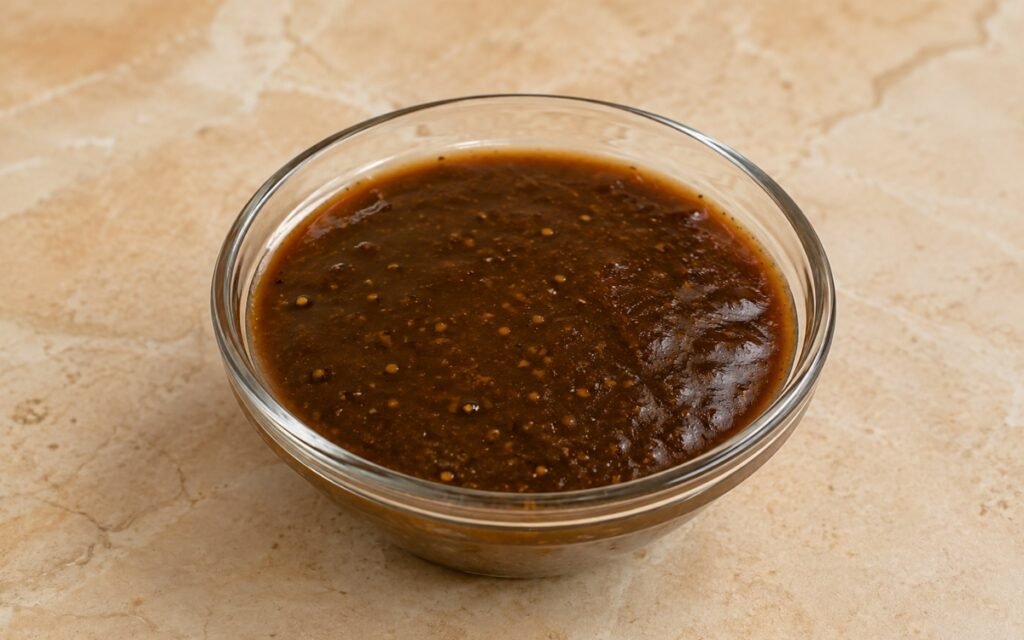
Balsamic Dijon Dressing
Rich aged balsamic and sharp Dijon emulsify into a bold, timeless 5-minute dressing.
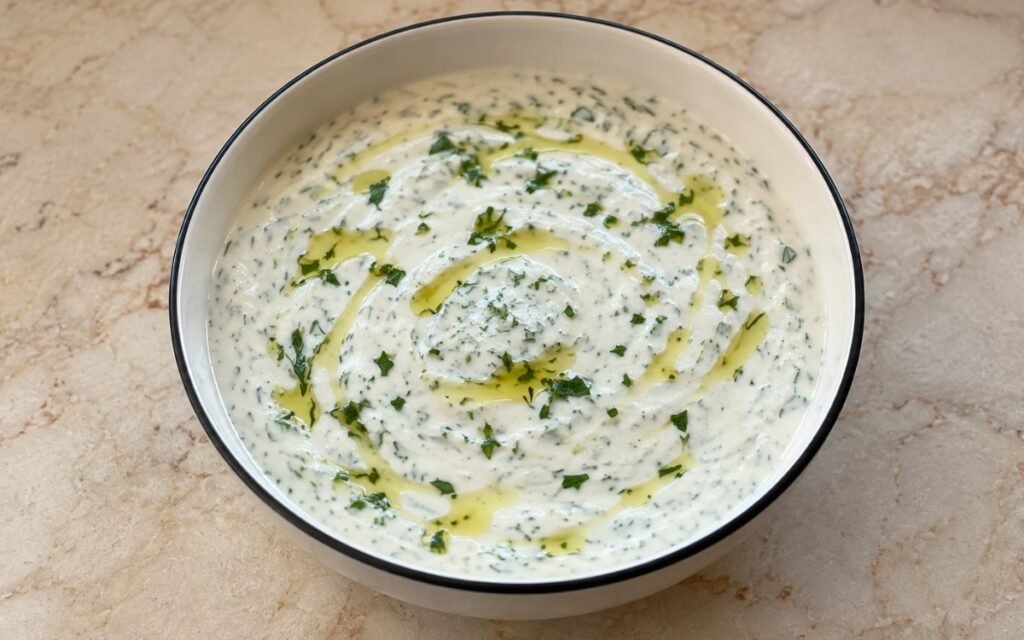
Creamy Lemon Herb Yogurt Sauce
Fresh Greek yogurt sauce with lemon, dill, parsley, and garlic ready in 10 minutes—no cooking!
You might also like
You might also like
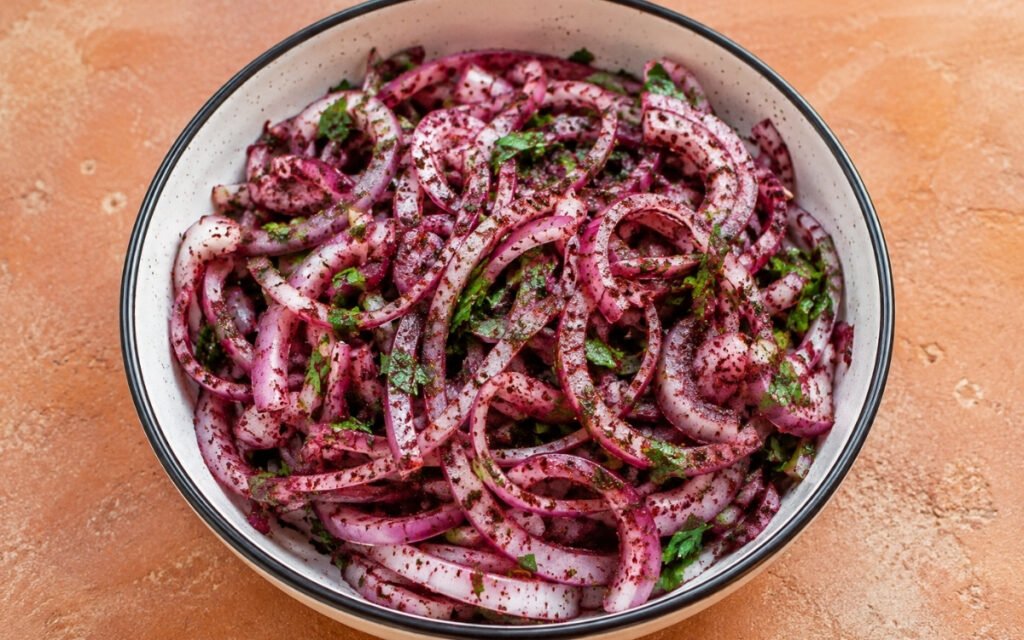
Sumac Onions Salad
Paper-thin red onions in sumac-lemon dressing with fresh parsley — the Middle Eastern condiment salad that completes every grilled meat and flatbread.
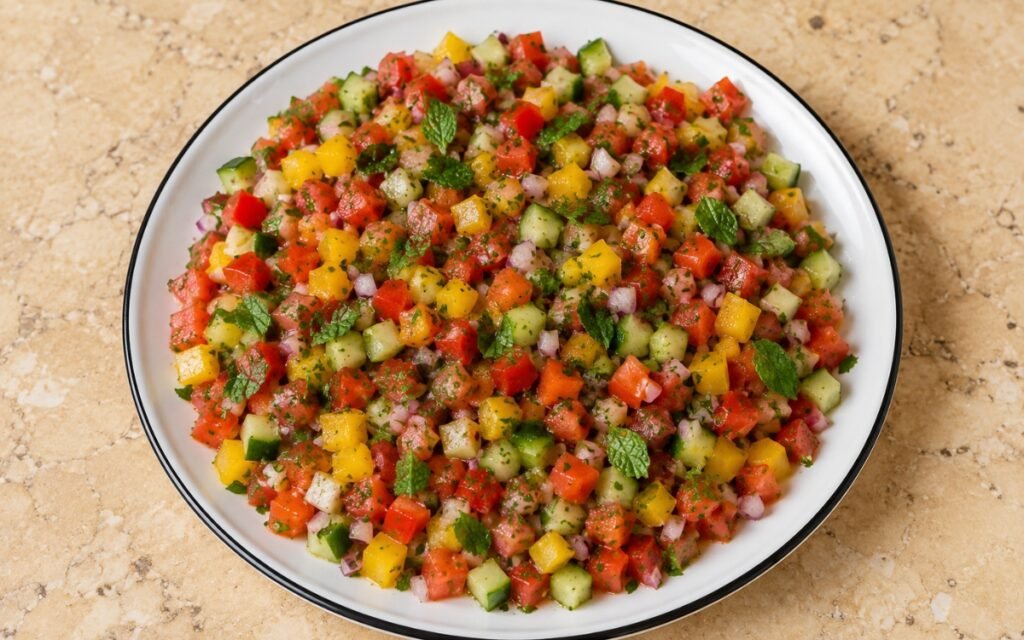
Light Chopped Vegetable Salad
Crisp chopped vegetables with cucumbers, bell peppers, tomatoes, and herbs in lemon vinaigrette.
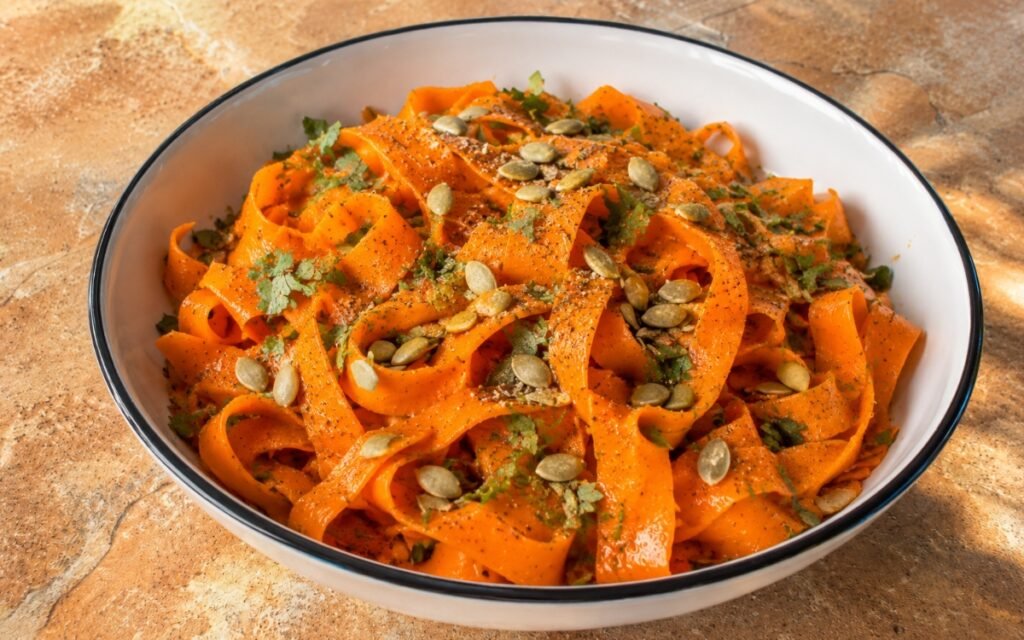
Carrot Cumin Salad
Ribboned carrots tossed with toasted cumin, lemon, and pumpkin seeds for earthy, bright flavors.
Green Zhoug
Ingredients
Method
- Slice each jalapeño in half lengthwise and use a small spoon or the tip of a paring knife to scrape out the seeds and the white membrane. Place the seeds in a small separate bowl and set aside — do not discard them. The deseeded jalapeños provide the green, slightly vegetal, moderately warm heat that defines zhoug’s character without tipping into aggressive spice. The reserved seeds become your heat calibration tool in the tasting step: adding a small amount back into the processor gives you precise, incremental control over the final heat level in a way that adding additional jalapeño pieces cannot. Having the seeds available also means that if two members of a household prefer different heat levels, the zhoug can be split from the processor at the baseline level and additional seeds added to one portion only. Cut the deseeded jalapeño halves into roughly 3–4cm pieces — large enough to process efficiently but small enough to distribute evenly through the finished sauce without any one piece remaining intact.
- Smash the three garlic cloves with the flat side of a knife — a single firm press that cracks each clove open without fully flattening it. Smashing rather than mincing is the correct preparation for this application: smashed garlic releases its aromatic compounds into the surrounding ingredients during processing and produces a more even, integrated garlic presence than whole cloves, while being less likely to create concentrated sharp garlic pockets than finely minced garlic. Wash the cilantro thoroughly under cold running water and shake dry — the stems are included intentionally and completely. Cilantro stems, particularly the thinner upper stems attached to the leaves, contain essentially the same volatile aromatic compounds as the leaves and add intensity to the sauce’s herbaceous character without any textural downside in a blended preparation. Only the very lowest, thickest hollow stems of the bunch should be discarded. Zest the half lime before juicing it — the zest is always taken from the outer green layer only, not the white pith beneath which is bitter. A Microplane or fine grater produces the cleanest zest without taking the bitter pith.
- Add all the prepared ingredients to the food processor in the following order: jalapeño pieces, smashed garlic, cilantro with stems, mint leaves, ground cumin, ground coriander, lime juice, lime zest, and olive oil. The order is not critical for the flavour of the finished sauce but loading the harder ingredients — jalapeño and garlic — at the bottom of the processor ensures they are in contact with the blade from the first pulse, while the delicate herbs on top are processed by the blade as it works through the harder ingredients below. Begin processing using the pulse technique — 5 seconds on, 2 seconds off, repeating the cycle. This pulse approach is the single most important technique decision in the recipe. Continuous blending at high speed produces a smooth, homogeneous green liquid — effectively a green herb oil without textural character. Pulsing allows you to assess the texture after each cycle and stop the moment the sauce reaches the correct consistency: smooth overall with small, distinct pieces of herb and jalapeño still visible at the surface, and a body that is thick enough to mound slightly rather than pooling flat. After approximately 6–8 pulse cycles, check the consistency by stopping the processor and examining the texture. If it is already at the correct slightly coarse, pesto-like consistency, stop. If it still has large visible pieces, continue pulsing 2–3 more cycles and check again. If the sauce is too thick to move freely in the processor, add additional olive oil one tablespoon at a time and pulse briefly after each addition until it reaches a pourable consistency.
- Remove the lid and taste the zhoug carefully. The calibration of this sauce is straightforward but important: evaluate heat, acidity, and salt as three independent dimensions. Heat: if the deseeded jalapeño baseline is too mild for your preference, add a small pinch of the reserved seeds to the processor and pulse twice, taste again, and repeat until the heat level is right. The seeds contain the concentrated capsaicin of the jalapeño and a small quantity makes a perceptible difference — add conservatively and taste between additions. Acidity: if the sauce tastes heavy or the citrus brightness is not clearly present, add an additional squeeze of lime juice — the freshness of the lime is what makes zhoug feel alive rather than simply herby. Salt: if the sauce tastes flat or one-dimensional despite having all ingredients present, it needs more salt — add in small pinches, process briefly, and taste after each addition. A note on cumin: the ground cumin’s earthy warmth takes a few minutes after blending to fully bloom in the olive oil — do not add more cumin immediately if it is not yet prominent. Allow the sauce to rest for 5 minutes, then taste again and the cumin’s presence will have deepened noticeably.
- Transfer the zhoug to a serving bowl. Zhoug does not require a garnish — its vivid deep green colour from the blended herbs is the visual statement, and adding additional garnish competes with rather than complements it. Serve immediately for the freshest possible herb character, or rest for 5–10 minutes to allow the flavours to integrate. The sauce is at its most herbaceously vivid within the first hour of making.