
Creamy Mushroom Garlic Pasta
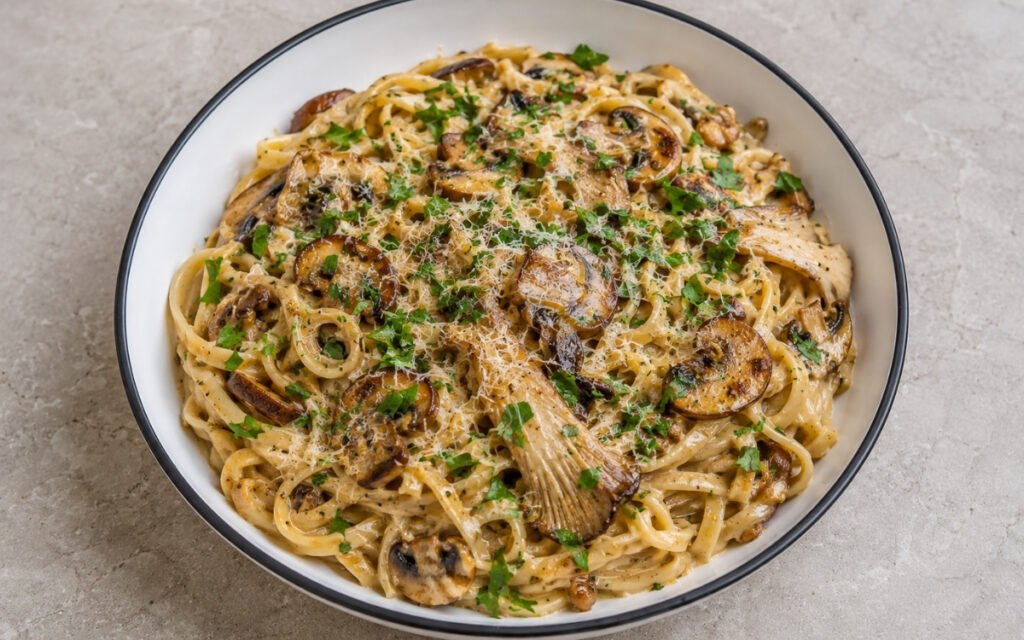
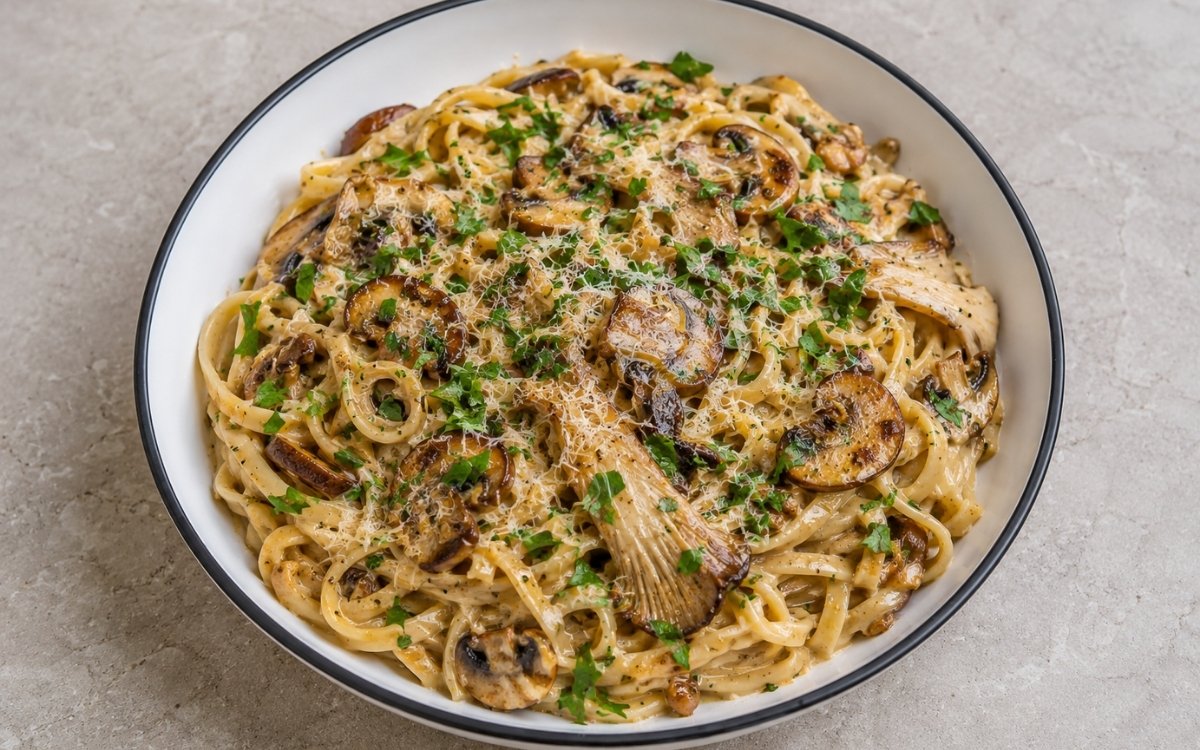
Two kinds of mushroom treatment in one sauce — 500g of mixed cremini, shiitake, and oyster mushrooms seared in batches at high heat for the golden, caramelised exterior that texture and flavour require, and 200g of finely chopped white mushrooms cooked down slowly in butter until they release all their liquid, concentrate entirely, and become a dense, paste-like umami base that disappears into the sauce and gives it the kind of depth that makes people ask what is in this. White wine, garlic, thyme, rosemary, cream, and nutmeg build the sauce in the same pan. Pappardelle or fettuccine finish cooking in the sauce. The reserved caramelised mushrooms fold back in at the end. Thirty-five minutes and a pasta that tastes like considerably more effort than it required.
Prep Time : 15 min
Cook Time : 20 min
Servings : 4
15 min
250 min
4
Ingredients
For the Pasta
• 400g pappardelle or fettuccine pasta — this one on Amazon
• 8g salt, divided (6g for pasta water, 2g for mushrooms)
• 240ml reserved pasta water
For the Mushrooms
• 500g mixed mushrooms — cremini, shiitake, and oyster — sliced
• 200g white button mushrooms, finely chopped
• 45ml extra-virgin olive oil, divided — this one on Amazon
• 60g unsalted butter, divided
For the Sauce
• 8 garlic cloves, approximately 40g, thinly sliced
• 15g fresh thyme leaves
• 10g fresh rosemary, finely minced
• 120ml dry white wine
• 200ml heavy cream (35% fat)
• 1/4 teaspoon freshly grated nutmeg
• 100g Parmigiano-Reggiano, finely grated, plus extra for serving — this one on Amazon
• Zest of 1 lemon
• 3g freshly cracked black pepper
• 20g fresh Italian parsley, roughly chopped
This post may contain affiliate links. As an Amazon Associate I earn from qualifying purchases, at no additional cost to you.
Directions
- Cook the Pasta
Bring a large pot of water to a full rolling boil and add the 6g of salt. Add the pappardelle or fettuccine and cook until exactly 2 minutes shy of the package’s al dente time. The wide, flat format of pappardelle is the specific pasta choice for this sauce — its large surface area maximises contact with the creamy mushroom coating, and its slight thickness holds up through the finishing step in the sauce without becoming soft. Fettuccine is an equally valid narrower alternative with a comparable surface-area advantage over spaghetti or short pasta. Before draining, reserve 240ml of the starchy pasta water in a heatproof jug and keep it warm throughout. Drain without rinsing — the surface starch is an emulsification component in the final sauce. - Sear the Mixed Mushrooms in Two Batches
Heat a large, deep skillet over medium-high heat until properly hot — a drop of water should evaporate immediately on contact. Add 30ml of the olive oil and immediately add approximately half the 500g of sliced mixed mushrooms in a single, even layer with space between each piece. This single-layer, uncrowded placement is the technique prerequisite for proper mushroom searing. Crowded mushrooms — stacked on top of each other or pressed together — create a sealed steam environment: the moisture released from each mushroom is trapped against its neighbours, the pan temperature drops dramatically, and the mushrooms steam in their own liquid rather than caramelising at the pan surface. The result is pale, wet, soft mushrooms rather than the deeply golden, slightly firm, caramelised mushrooms that provide the dish’s textural contrast. With space between pieces, the released moisture evaporates immediately into the open air above the pan and the mushroom’s surface makes direct contact with the hot oil and pan — the correct conditions for Maillard reaction browning. Leave completely undisturbed for 3–4 minutes. Do not stir, do not shake the pan. After 3–4 minutes the underside of each piece should show deep golden-brown colour. Toss once and cook for another 2 minutes until the second side shows comparable colour. Transfer to a plate. Add the remaining 15ml of olive oil and repeat with the second batch. These caramelised mushrooms are the textural element of the finished dish — they are set aside now and returned to the pasta at the final step, maintaining their seared character rather than softening into the sauce during the subsequent cooking stages. - Build the Umami Mushroom Base
Reduce the heat to medium and add 40g of the butter to the same skillet without cleaning it — the fond from the mushroom sear contributes flavour to everything subsequently cooked in the pan. Add the 200g of finely chopped white button mushrooms and the 2g of salt. Cook, stirring frequently, for 8–10 minutes. This is the most patience-dependent and most flavour-generative step in the recipe. The white button mushrooms at this stage follow a predictable three-phase cooking arc: first they release their moisture into the pan in a pool of liquid that makes the pan look wet and fully liquid; then the liquid progressively evaporates as cooking continues, the pan becoming increasingly dry and the mushrooms beginning to colour; finally, when all the moisture has evaporated, the mushrooms begin to fry in the residual butter fat and their cell walls fully collapse into a dense, concentrated, paste-like mass. By the time all liquid has evaporated and the mushrooms have reached this paste-like, golden state at the 8–10 minute mark, they contain all the concentrated umami compounds of 200g of raw mushrooms compressed into a small volume of intensely flavoured mass. This base dissolves almost invisibly into the cream sauce and provides the depth that makes the finished sauce taste more complex than its ingredient list explains. Add the thinly sliced garlic, fresh thyme leaves, and finely minced rosemary. Cook, stirring constantly, for 90 seconds until the garlic is fragrant and beginning to show very faint golden colour at the edges — the thyme and rosemary bloom their aromatic compounds into the mushroom-and-butter fat simultaneously. - Deglaze and Build the Cream Sauce
Pour in the 120ml of dry white wine and increase the heat to medium-high. The wine immediately sizzles and loosens the accumulated fond from the mushroom sear and the mushroom base from the pan surface — stir firmly to dissolve every bit into the wine. Allow to simmer vigorously for 2 minutes until the wine has reduced by approximately half and its sharp, raw alcohol edge has completely cooked off — the remaining wine should smell of concentrated fruit rather than raw spirit. The white wine provides the secondary acid note that prevents the cream sauce from tasting flat and one-dimensionally rich. Reduce the heat to medium-low and add the 240ml of heavy cream and the grated nutmeg. Stir to combine and bring to a very gentle simmer. Cook for 3 minutes, stirring occasionally, until the sauce has thickened enough to coat the back of a spoon — a line drawn through the sauce on the spoon’s surface should hold its edges rather than flowing back immediately. The nutmeg is the classic French and Italian seasoning for cream sauces containing mushrooms — at ¼ tsp it is not detectable as nutmeg but adds the characteristic warm, slightly sweet-spiced depth that makes cream mushroom sauces taste more complex. - Finish the Pasta in the Sauce
Add the drained, underdone pasta directly to the cream sauce in the skillet along with 180ml of the reserved pasta water. Increase the heat to medium. Toss continuously with tongs for 2–3 minutes — lifting the pasta from the bottom and folding it over the top in a constant circular motion. The pasta finishes cooking during this tossing period, absorbing the mushroom cream sauce’s flavour directly into its structure. The surface starch from the pasta and the starch already dissolved in the pasta water combine with the cream’s fat to produce the progressive thickening and emulsification that makes the sauce cling to each strand rather than pooling at the bottom. The sauce should be visibly coating the pasta after 2–3 minutes — glossy, slightly thickened, and flowing when the pan is tilted rather than dry or stiff. - Emulsify with Butter and Parmigiano, Fold in Mushrooms
Remove the pan from the heat completely. Add the remaining 20g of butter and toss until melted and incorporated — the cold butter disperses into the warm sauce as fine droplets, creating the smooth, emulsified finish that makes the sauce glossy rather than greasy. Add the 100g of Parmigiano-Reggiano in two or three additions, tossing vigorously between each addition. The off-heat addition prevents the proteins from seizing and ensures smooth melting into the sauce. Add the lemon zest and toss to distribute. Add the 3g of freshly cracked black pepper. If the sauce has tightened beyond the correct flowing consistency, add the remaining pasta water in 30ml increments, tossing after each addition. Fold in the reserved caramelised mushroom slices gently — a lifting and folding motion rather than vigorous stirring, which would break the seared mushrooms into small pieces rather than preserving them as identifiable, texturally distinct pieces distributed throughout the pasta. Taste and adjust with additional salt if needed. - Serve
Divide among four warm bowls immediately. Scatter the 20g of roughly chopped fresh parsley over each bowl — its clean, slightly bitter herbal freshness provides the aromatic counterpoint that the richness of the cream and mushrooms specifically needs. Scatter additional finely grated Parmigiano-Reggiano over each portion. Serve immediately while the pasta is at maximum creaminess.
*Notes :
- The two-mushroom approach — seared mixed mushrooms for texture and a concentrated white button mushroom base for depth — is the structural innovation that makes this pasta significantly more complex than a standard cream mushroom pasta where all the mushrooms are simply sautéed and added to cream. The finely chopped base mushrooms undergo a complete transformation during their 8–10 minutes of cooking: they lose all their water, concentrate their glutamates and other umami compounds into a small, dense volume, and essentially become a mushroom paste that dissolves into the cream sauce and flavours it from within. This is the technique that makes tasters describe the sauce as tasting of something they cannot identify — the concentrated mushroom base is present everywhere in the sauce rather than in discrete mushroom pieces.
- The variety combination — cremini, shiitake, and oyster — matters more for flavour complexity than for visual appeal. Cremini mushrooms provide the familiar, slightly earthy, round mushroom flavour. Shiitake mushrooms contribute a specifically woodsy, slightly smoky depth and a firm, chewy texture that holds up better through searing than button mushrooms. Oyster mushrooms provide a delicate, mildly sweet, almost seafood-adjacent note and a thin, frilly texture that chars at the edges during high-heat searing in a visually appealing way. Together they produce a seared mushroom component with more variation in flavour and texture than any single variety.
Why This Recipe Works
This recipe works because it treats the mushrooms as two different ingredients in service of two different functions rather than simply cooking all the mushrooms together. The seared mixed mushrooms provide texture, colour, and visual identity. The concentrated white button base provides invisible depth and flavour complexity throughout the sauce.
Neither alone produces what the combination achieves. Every other technique decision — the pasta water as emulsifier, the off-heat Parmigiano addition, the butter finishing — is in service of producing the correct silky, coating, glossy sauce that the concentrated mushroom base deserves.
Ingredient Breakdown
Mixed Mushrooms (Seared in Batches)
The textural and visual element — seared at high heat with space between pieces for genuine caramelisation; set aside and returned at the finish to preserve their golden crust.
White Button Mushrooms (Concentrated Base)
The invisible flavour foundation — cooked down for 8–10 minutes until completely paste-like, producing the concentrated umami depth that makes the sauce taste more complex than the ingredient list explains.
Garlic (8 Cloves, Thinly Sliced)
The primary aromatic — a larger quantity than most pasta dishes because the mushrooms’ earthiness can absorb garlic’s sharpness and require more to register clearly.
Thyme and Rosemary
The specific herb pair for mushrooms — thyme’s floral, slightly citrusy warmth and rosemary’s pine-like resinous depth both amplify mushroom’s earthiness.
White Wine
The deglaze and secondary acid — lifts the fond, adds fruity depth, and provides the acidity that prevents the cream sauce from being one-dimensionally rich.
Nutmeg
The background warmth — classic in cream mushroom sauces, present as depth rather than a detectable flavour at ¼ tsp.
Parmigiano-Reggiano (Off-Heat)
The savoury emulsifying finish — added in increments off heat for smooth incorporation without seizing.
Lemon Zest
The aromatic brightener added at the finish — its volatile oils lift the cream’s richness without adding perceived acidity.
Flavor Structure Explained
This pasta follows a layered balance model:
- Deep umami core (mushrooms)
- Creamy rich base (cream, butter)
- Aromatic herbal warmth (garlic, thyme, rosemary)
- Bright acidic lift (white wine, lemon zest)
- Savory finish (Parmesan)
Mushrooms define the foundation with concentrated umami and earthy depth, reinforced by both blended and seared textures. Cream and butter build a smooth, coating richness that carries that intensity across the dish. Garlic and herbs layer in warmth and aromatic complexity, preventing monotony. Wine and lemon cut through the richness with acidity, keeping the profile lifted. Parmesan finishes with sharp, savory depth, while pepper and parsley add subtle heat and freshness to complete the balance.
Common Mistakes to Avoid
- Crowding the Mushrooms During Searing – The single most consequential error — crowded mushrooms steam rather than sear, producing pale, wet, flavourless pieces without the caramelised crust that makes them worth including as the dish’s textural element.
- Rushing the White Button Mushroom Base – 8–10 minutes is the minimum for full liquid evaporation and paste formation. Stopping at 5 minutes leaves a wet, less concentrated base without the full depth its proper completion produces.
- Adding Parmigiano Over Direct Heat – Parmesan added to a boiling sauce seizes into clumps. Always remove the pan from heat before adding.
- Not Returning the Seared Mushrooms Until the Very End – The seared mushrooms added too early will soften and lose their textural identity during the pasta tossing step. Always fold in gently at the last moment.
- Using Pre-Grated Parmigiano – The anti-caking agents in pre-grated Parmesan prevent smooth melting into the cream sauce. Always grate from a wedge immediately before use.
- Not Using Enough Pasta Water – The starch from the pasta water is the emulsifying agent that makes the cream sauce cling to the pasta rather than pooling at the bottom. Reserve the full 240ml and keep it warm throughout.
Variations
With Truffle Oil
Add 8ml of white truffle oil to the pasta during the final off-heat toss alongside the lemon zest. The truffle’s earthy, intensely aromatic character amplifies the mushroom’s natural earthiness — one of the most natural flavour pairings in Italian cooking. Use sparingly — truffle oil is easy to overdo.
Porcini Version
Replace the white button mushroom base with 20g of dried porcini mushrooms soaked in 200ml of warm water for 20 minutes, then drained (reserve the soaking liquid), finely chopped, and cooked in place of the fresh white mushrooms. Add the strained porcini soaking liquid instead of the white wine for deglazing. Produces a dramatically more intense, more specifically woodsy mushroom depth.
Vegan Version
Replace the butter with a good quality plant-based butter, the heavy cream with full-fat oat or cashew cream, and the Parmigiano with 60g of nutritional yeast. The texture and richness are comparable; the flavour is slightly different but still excellent.
With Poached Egg
Serve each bowl with a poached egg placed in the centre — broken at the table so the yolk runs into the mushroom cream sauce, adding additional richness and a golden, slightly custardy element that works particularly well with the earthy mushroom character.
Storage & Make-Ahead
The assembled pasta can be refrigerated for up to 3 days. During storage, the pasta will absorb the cream sauce and thicken quite a bit. To reheat it, warm it gently in a pan over very low heat with 2 to 3 tablespoons of cream or water per portion, stirring carefully. Add fresh parsley and a little extra Parmigiano after reheating.
The mushroom cream sauce on its own can be refrigerated for up to 4 days. In fact, the concentrated mushroom base deepens in flavor and improves overnight. Reheat it gently over low heat while cooking the pasta fresh in a separate pot.
The caramelized seared mushrooms can be prepared up to 2 hours ahead and kept at room temperature. Before folding them into the finished pasta, reheat them briefly in a dry skillet for about 60 seconds.
Frequently Asked Questions
Why two types of mushroom preparation?
The seared mixed mushrooms provide textural contrast — identifiable, golden-crusted pieces visible throughout the finished dish. The concentrated white button base dissolves invisibly into the sauce and provides the deep, pervasive umami that makes the sauce taste more complex than its visible components would suggest. Neither preparation alone produces what the combination achieves.
What mushroom varieties are best for this dish?
Cremini for familiar, round mushroom flavour; shiitake for woodsy depth and firm texture; oyster for delicate sweetness and visual texture with frilled edges that char attractively. The combination provides more flavour complexity than any single variety. Button mushrooms alone for the seared component produce an acceptable but less interesting result.
Why is the garlic quantity so large — 8 cloves?
The mushrooms’ dense, earthy, umami character absorbs garlic’s flavour more completely than lighter vegetables — at 4 or 5 cloves the garlic is barely perceptible against the mushroom’s assertive depth. 8 cloves produces a clearly present, savoury garlic character that complements rather than disappears into the mushrooms.
Can I make this without wine?
Yes — replace the 120ml of white wine with 60ml of additional chicken or vegetable stock and 15ml of white wine vinegar or a small squeeze of lemon juice. The acidity is necessary; the wine’s specific fruity character is less so, and the substitution produces a very good result without alcohol.
Why pappardelle or fettuccine rather than shorter pasta?
Wide, flat pasta formats provide maximum surface area for the creamy mushroom sauce to coat, producing a sauce-to-pasta ratio in each forkful that shorter, tubular pasta cannot match. The sauce’s smooth, creamy character is also better showcased by long, ribbon pasta than by ridged tubes.
Nutrition Facts
( per serving )
Calories
~1030 kcal
Protein
29 g
Fat
54 g
Carbs
91 g
Calories
~1030 kcal
Protein
29 g
Fat
54 g
Carbs
91 g
Related Recipes
Related Recipes

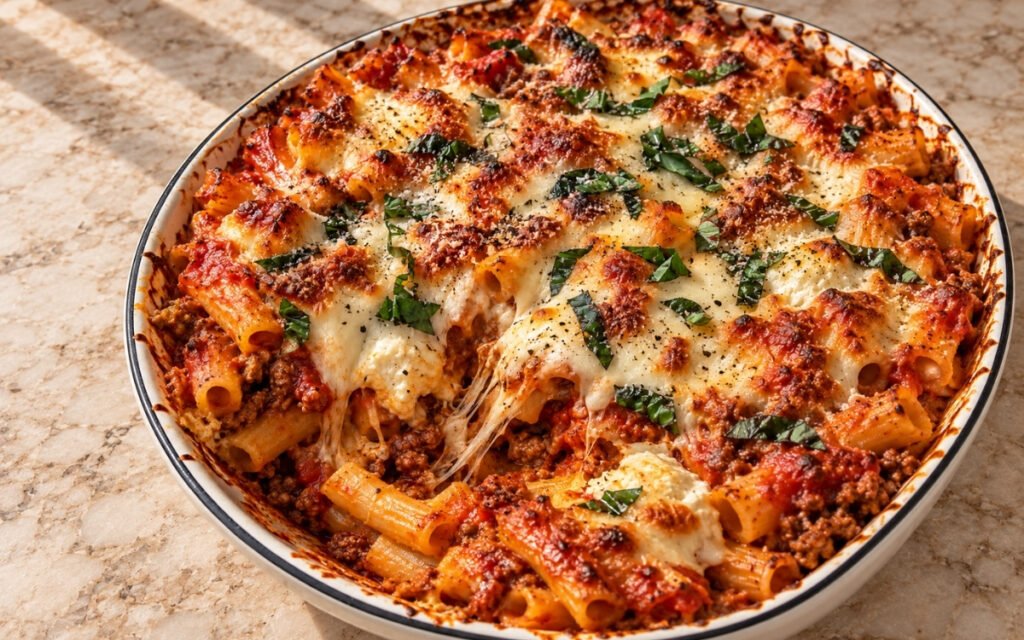
Baked Ziti
Ziti tossed in a rich beef and pork tomato sauce, layered with creamy ricotta pockets, mozzarella, and Parmesan, baked until bubbling.
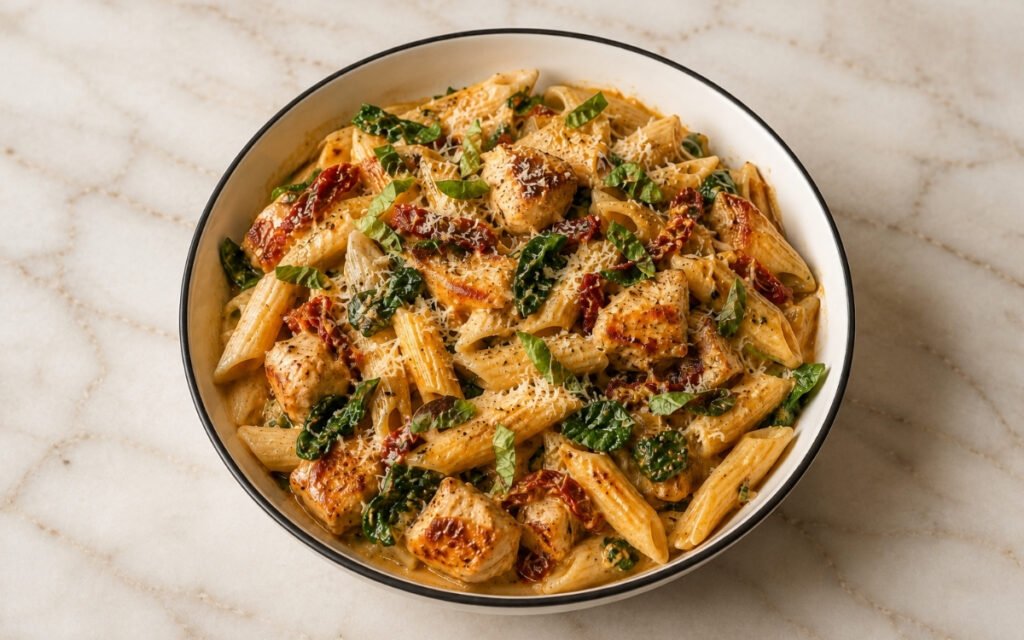
Tuscan Chicken Cream Pasta
Seared chicken, sun-dried tomatoes, spinach, and Parmigiano cream in one pan — finished with the tomato jar oil. 40 minutes.
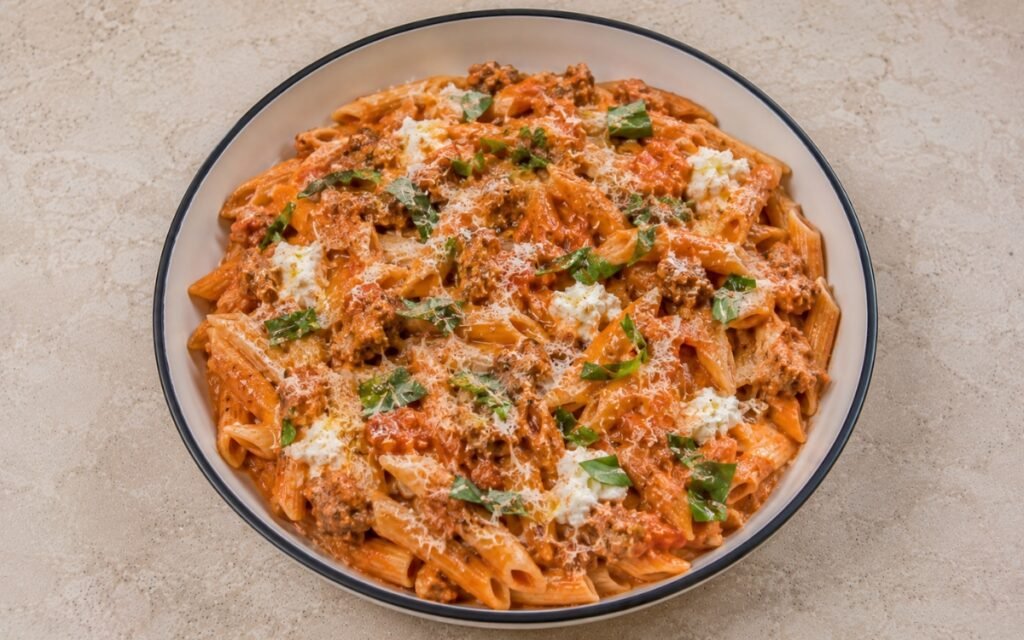
Tomato Pasta with Ricotta & Italian Sausage
Deeply browned sausage, caramelised tomato paste, and crushed tomatoes — whole milk ricotta folded in off the heat for creamy finish without cream. 40 minutes.
You might also like
You might also like
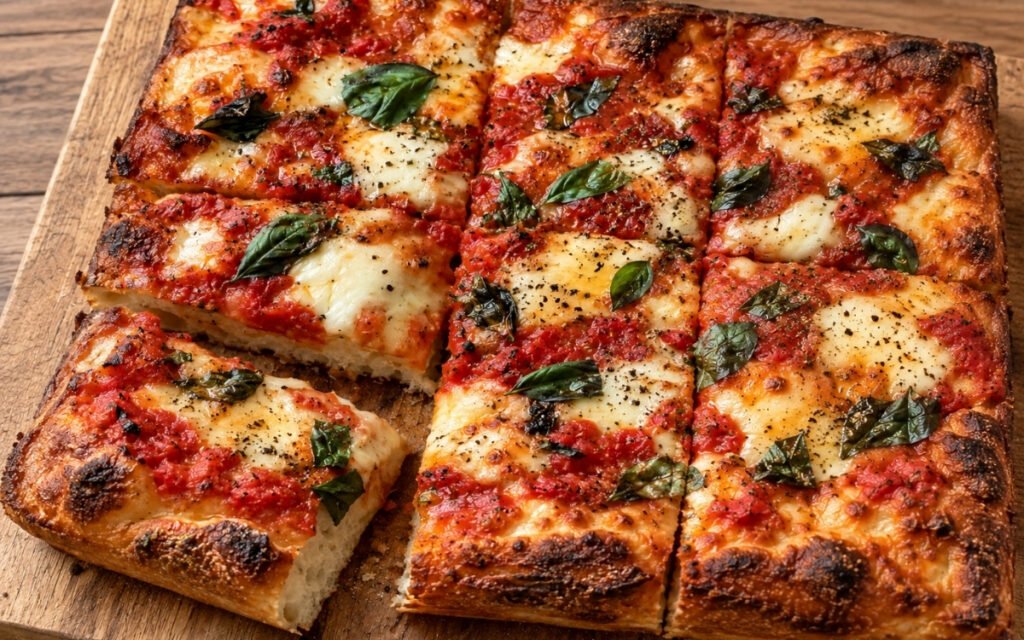
Focaccia Pizza with Tomato and Mozzarella
Thick, airy focaccia-style pizza with a crisp, olive-oil-rich bottom, soft cloud-like interior, thick tomato sauce, melted mozzarella, and fresh basil.
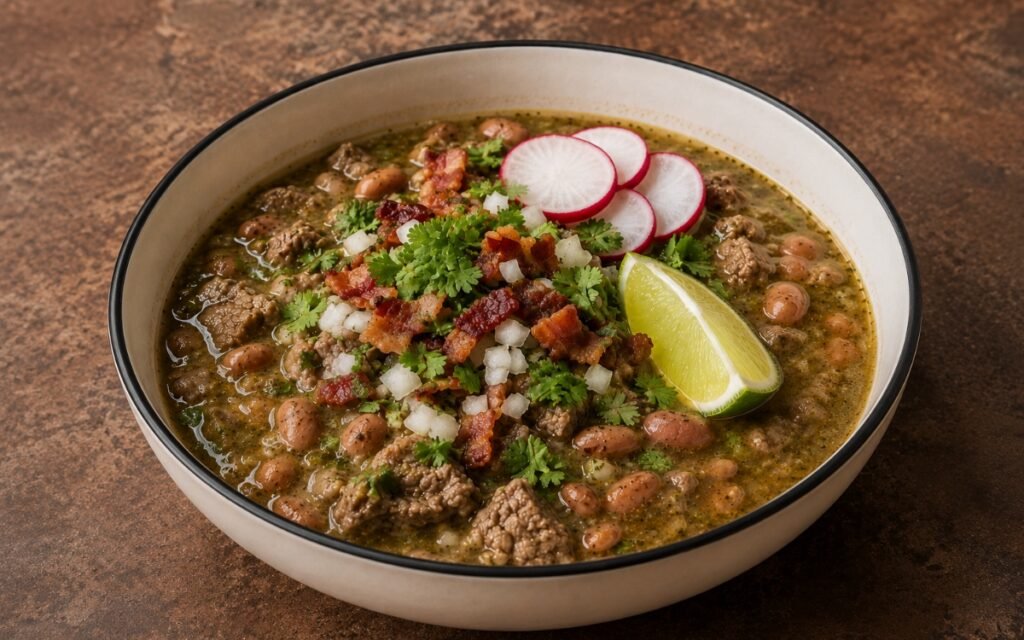
Carne en su Jugo
Finely chopped, batch-browned beef simmered briefly in a savory tomatillo broth with pinto beans, topped with crispy bacon and fresh garnishes.
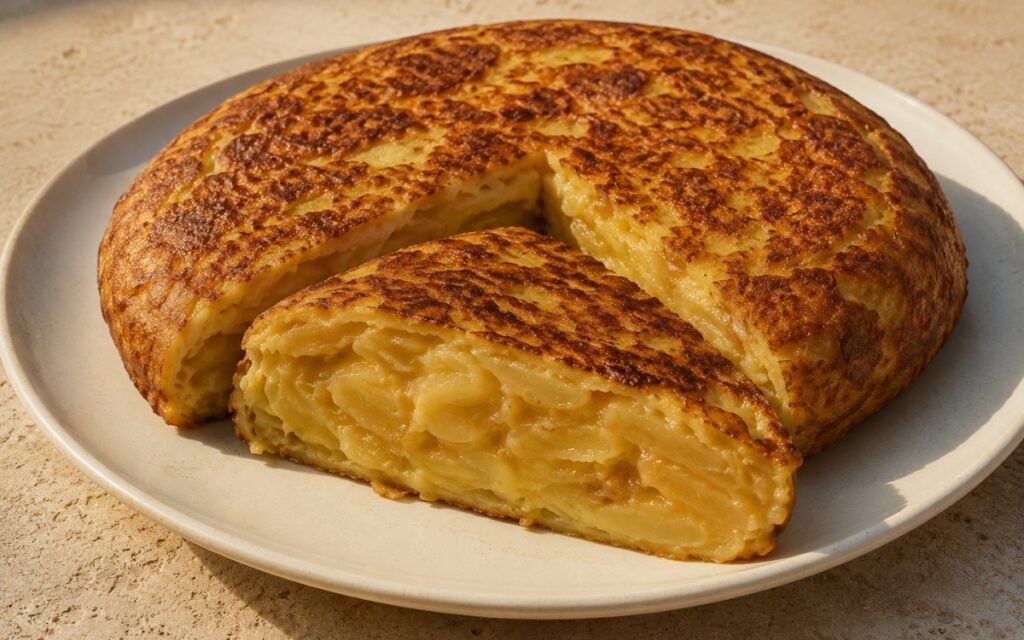
Spanish Tortilla / Tortilla Española
Thin potato slices gently cooked in olive oil, folded into beaten eggs, and cooked slowly for a golden exterior and soft, custardy centre.
Creamy Mushroom Garlic Pasta
Ingredients
Method
- Bring a large pot of water to a full rolling boil and add the 6g of salt. Add the pappardelle or fettuccine and cook until exactly 2 minutes shy of the package’s al dente time. The wide, flat format of pappardelle is the specific pasta choice for this sauce — its large surface area maximises contact with the creamy mushroom coating, and its slight thickness holds up through the finishing step in the sauce without becoming soft. Fettuccine is an equally valid narrower alternative with a comparable surface-area advantage over spaghetti or short pasta. Before draining, reserve 240ml of the starchy pasta water in a heatproof jug and keep it warm throughout. Drain without rinsing — the surface starch is an emulsification component in the final sauce.
- Heat a large, deep skillet over medium-high heat until properly hot — a drop of water should evaporate immediately on contact. Add 30ml of the olive oil and immediately add approximately half the 500g of sliced mixed mushrooms in a single, even layer with space between each piece. This single-layer, uncrowded placement is the technique prerequisite for proper mushroom searing. Crowded mushrooms — stacked on top of each other or pressed together — create a sealed steam environment: the moisture released from each mushroom is trapped against its neighbours, the pan temperature drops dramatically, and the mushrooms steam in their own liquid rather than caramelising at the pan surface. The result is pale, wet, soft mushrooms rather than the deeply golden, slightly firm, caramelised mushrooms that provide the dish’s textural contrast. With space between pieces, the released moisture evaporates immediately into the open air above the pan and the mushroom’s surface makes direct contact with the hot oil and pan — the correct conditions for Maillard reaction browning. Leave completely undisturbed for 3–4 minutes. Do not stir, do not shake the pan. After 3–4 minutes the underside of each piece should show deep golden-brown colour. Toss once and cook for another 2 minutes until the second side shows comparable colour. Transfer to a plate. Add the remaining 15ml of olive oil and repeat with the second batch. These caramelised mushrooms are the textural element of the finished dish — they are set aside now and returned to the pasta at the final step, maintaining their seared character rather than softening into the sauce during the subsequent cooking stages.
- Reduce the heat to medium and add 40g of the butter to the same skillet without cleaning it — the fond from the mushroom sear contributes flavour to everything subsequently cooked in the pan. Add the 200g of finely chopped white button mushrooms and the 2g of salt. Cook, stirring frequently, for 8–10 minutes. This is the most patience-dependent and most flavour-generative step in the recipe. The white button mushrooms at this stage follow a predictable three-phase cooking arc: first they release their moisture into the pan in a pool of liquid that makes the pan look wet and fully liquid; then the liquid progressively evaporates as cooking continues, the pan becoming increasingly dry and the mushrooms beginning to colour; finally, when all the moisture has evaporated, the mushrooms begin to fry in the residual butter fat and their cell walls fully collapse into a dense, concentrated, paste-like mass. By the time all liquid has evaporated and the mushrooms have reached this paste-like, golden state at the 8–10 minute mark, they contain all the concentrated umami compounds of 200g of raw mushrooms compressed into a small volume of intensely flavoured mass. This base dissolves almost invisibly into the cream sauce and provides the depth that makes the finished sauce taste more complex than its ingredient list explains. Add the thinly sliced garlic, fresh thyme leaves, and finely minced rosemary. Cook, stirring constantly, for 90 seconds until the garlic is fragrant and beginning to show very faint golden colour at the edges — the thyme and rosemary bloom their aromatic compounds into the mushroom-and-butter fat simultaneously.
- Pour in the 120ml of dry white wine and increase the heat to medium-high. The wine immediately sizzles and loosens the accumulated fond from the mushroom sear and the mushroom base from the pan surface — stir firmly to dissolve every bit into the wine. Allow to simmer vigorously for 2 minutes until the wine has reduced by approximately half and its sharp, raw alcohol edge has completely cooked off — the remaining wine should smell of concentrated fruit rather than raw spirit. The white wine provides the secondary acid note that prevents the cream sauce from tasting flat and one-dimensionally rich. Reduce the heat to medium-low and add the 240ml of heavy cream and the grated nutmeg. Stir to combine and bring to a very gentle simmer. Cook for 3 minutes, stirring occasionally, until the sauce has thickened enough to coat the back of a spoon — a line drawn through the sauce on the spoon’s surface should hold its edges rather than flowing back immediately. The nutmeg is the classic French and Italian seasoning for cream sauces containing mushrooms — at ¼ tsp it is not detectable as nutmeg but adds the characteristic warm, slightly sweet-spiced depth that makes cream mushroom sauces taste more complex.
- Add the drained, underdone pasta directly to the cream sauce in the skillet along with 180ml of the reserved pasta water. Increase the heat to medium. Toss continuously with tongs for 2–3 minutes — lifting the pasta from the bottom and folding it over the top in a constant circular motion. The pasta finishes cooking during this tossing period, absorbing the mushroom cream sauce’s flavour directly into its structure. The surface starch from the pasta and the starch already dissolved in the pasta water combine with the cream’s fat to produce the progressive thickening and emulsification that makes the sauce cling to each strand rather than pooling at the bottom. The sauce should be visibly coating the pasta after 2–3 minutes — glossy, slightly thickened, and flowing when the pan is tilted rather than dry or stiff.
- Remove the pan from the heat completely. Add the remaining 20g of butter and toss until melted and incorporated — the cold butter disperses into the warm sauce as fine droplets, creating the smooth, emulsified finish that makes the sauce glossy rather than greasy. Add the 100g of Parmigiano-Reggiano in two or three additions, tossing vigorously between each addition. The off-heat addition prevents the proteins from seizing and ensures smooth melting into the sauce. Add the lemon zest and toss to distribute. Add the 3g of freshly cracked black pepper. If the sauce has tightened beyond the correct flowing consistency, add the remaining pasta water in 30ml increments, tossing after each addition. Fold in the reserved caramelised mushroom slices gently — a lifting and folding motion rather than vigorous stirring, which would break the seared mushrooms into small pieces rather than preserving them as identifiable, texturally distinct pieces distributed throughout the pasta. Taste and adjust with additional salt if needed.
- Divide among four warm bowls immediately. Scatter the 20g of roughly chopped fresh parsley over each bowl — its clean, slightly bitter herbal freshness provides the aromatic counterpoint that the richness of the cream and mushrooms specifically needs. Scatter additional finely grated Parmigiano-Reggiano over each portion. Serve immediately while the pasta is at maximum creaminess.