
Lemon Garlic Shrimp Pasta
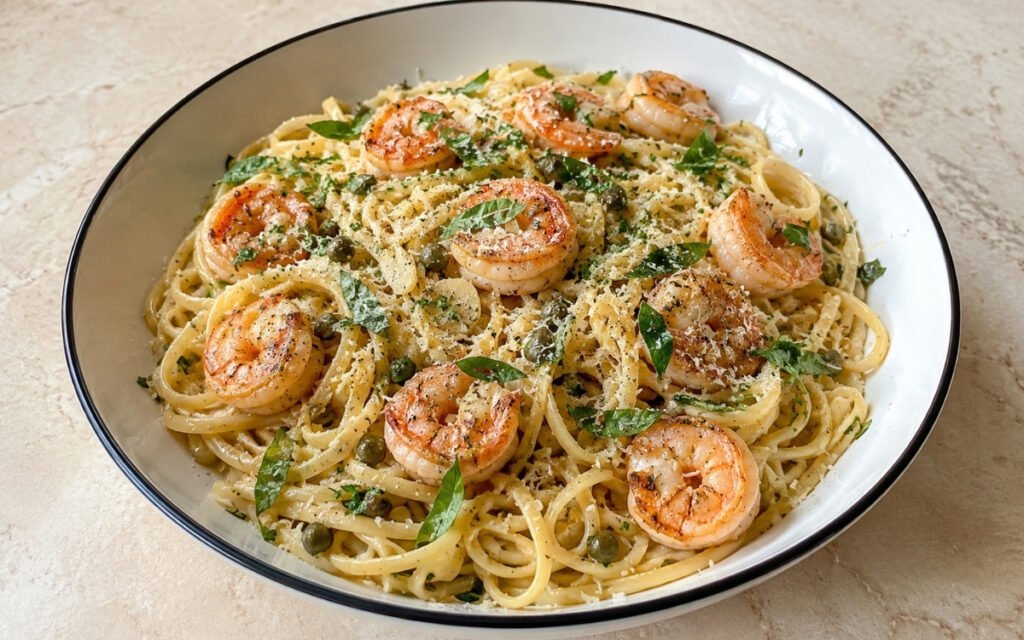
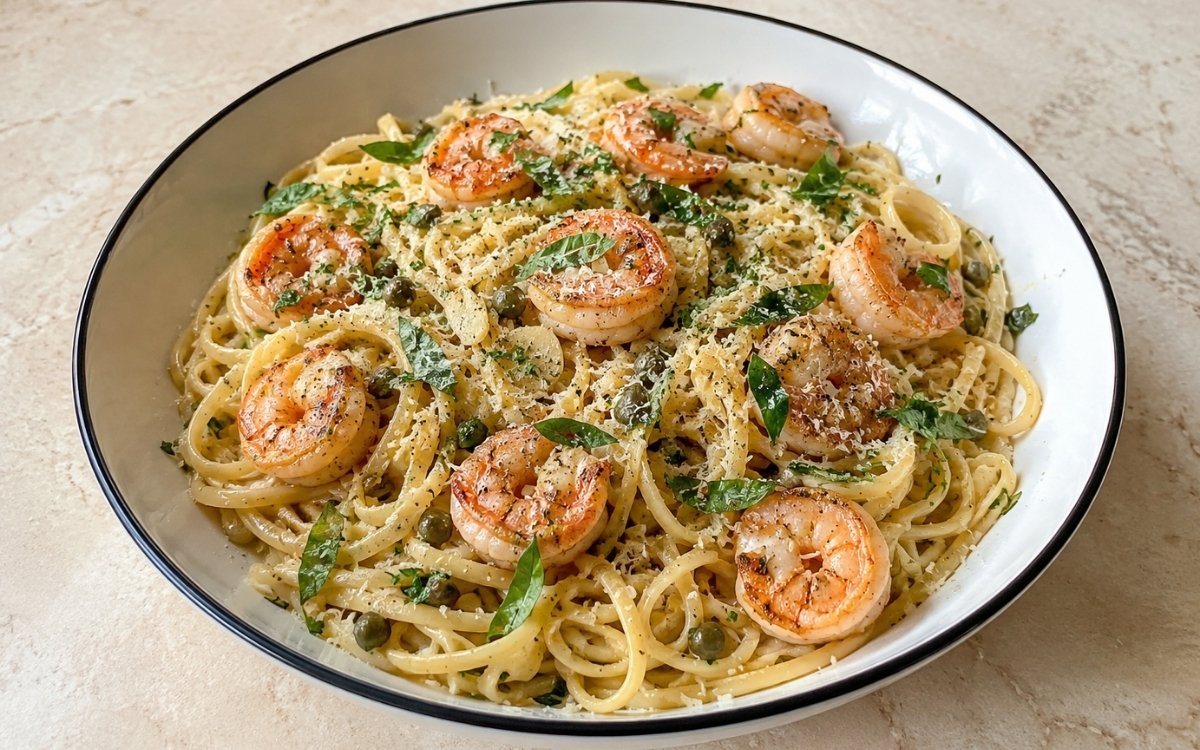
Large shrimp seared to a golden crust in a screaming-hot skillet, set aside while a garlic-white wine-lemon butter sauce is built in the same pan, then returned at the end so their accumulated resting juices go directly into the sauce. The linguine finishes cooking in the sauce rather than separately, absorbing the white wine, lemon, and garlic-infused butter into every strand rather than simply being coated at the surface. Capers add the briny, salty counterpoint. Fresh parsley and basil add the herbal brightness. Parmigiano finishes it. Thirty minutes, one pan, and a plate that would be at home in any Italian coastal restaurant.
Prep Time : 15 min
Cook Time : 15 min
Servings : 4
15 min
15 min
4
Ingredients
For the Pasta
• 400g linguine pasta — this one on Amazon
• 12g kosher salt (1.5 teaspoons), for pasta water
• 240ml reserved pasta water
For the Shrimp
• 600g large shrimp, peeled and deveined (16/20 count)
• 3g kosher salt (1/2 teaspoon)
• 1g freshly ground black pepper (1/2 teaspoon)
For the Lemon Butter Sauce
• 80ml extra virgin olive oil, divided
• 60g unsalted butter
• 40g garlic cloves (8 cloves), thinly sliced
• 1g red pepper flakes (1/2 teaspoon)
• 180ml dry white wine
• Zest of 2 large lemons
• 60ml fresh lemon juice, from approximately 1½ lemons
• 20g capers, drained and rinsed (2 tablespoons) — this one on Amazon
For Finishing
• 40g fresh parsley, roughly chopped
• 15g fresh basil leaves, torn
• 50g Parmigiano-Reggiano, finely grated — this one on Amazon
• 1g freshly ground black pepper (1/2 teaspoon)
This post may contain affiliate links. As an Amazon Associate I earn from qualifying purchases, at no additional cost to you.
Directions
- Cook the Pasta
Bring a large pot of water to a full rolling boil and add the 12g of kosher salt. Add the linguine and cook, stirring occasionally, until exactly 2 minutes shy of the package directions’ al dente time. The pasta must be pulled significantly underdone because it will finish cooking in the sauce during the final tossing step — absorbing the white wine, lemon, garlic, and butter directly into the pasta’s structure rather than simply being coated on the outside. Before draining, reserve 240ml of the starchy pasta cooking water in a heatproof jug and keep it warm throughout. The pasta water is the emulsifying agent that allows the butter, olive oil, and lemon juice to combine into a unified, glossy sauce rather than separating into oil floating on lemon juice. Drain the linguine without rinsing and set aside briefly. - Dry and Season the Shrimp
Pat the shrimp completely dry on both sides with several layers of paper towels. The drying step is the most important preparation for achieving a proper sear — any surface moisture on the shrimp turns to steam the moment it contacts the hot oil, dropping the pan temperature and producing grey, steamed shrimp rather than the golden-crusted sear that gives this dish its flavour foundation. Season with the 3g of salt and 1g of black pepper on both sides. The 16/20 count shrimp — meaning 16 to 20 shrimp per pound — are specified because their larger size allows a 90-second sear on the first side to develop genuine golden colour before the shrimp is cooked through. Smaller shrimp cook through before any significant browning can occur. If only smaller shrimp are available, reduce the first-side sear to 60 seconds. - Sear the Shrimp
Heat a large skillet — stainless steel or carbon steel for maximum fond development — over medium-high heat until genuinely hot. Add 40ml of the olive oil and allow to heat until shimmering. Place the shrimp in the pan in a single layer without overlapping — work in two batches if the pan cannot accommodate all 600g with space between each piece. Crowded shrimp release moisture against their neighbours and steam rather than sear. Place each shrimp flat and leave completely undisturbed for 90 seconds. The sear requires sustained, uninterrupted contact between the shrimp’s surface and the hot pan — any movement before the crust has set prevents the golden caramelisation from developing. After 90 seconds the underside should show a deep golden sear. Flip each shrimp and cook for 60 seconds on the second side — the shrimp should be just barely cooked through, still slightly translucent at the very centre, because they will finish warming through when returned to the pan at the end. Transfer to a plate immediately and allow to rest — the accumulated juices on the resting plate will be added to the sauce later and carry significant concentrated shrimp and olive oil flavour. - Build the Garlic Base
Without cleaning the skillet — the fond from the shrimp sear is the flavour foundation of the sauce — reduce the heat to medium and add the remaining 40ml of olive oil. Add the thinly sliced garlic and red pepper flakes simultaneously. Cook for 45–60 seconds, stirring constantly — the thin garlic slices need attentive, continuous movement at medium heat because the residual heat from the shrimp searing means the pan is still warmer than the burner setting suggests. The garlic should reach pale golden with slightly crisped edges without any slice darkening to brown — at this point its flavour is sweet, toasted, and fragrant rather than the sharp, slightly bitter character that browning produces. Pour in the 180ml of dry white wine immediately when the garlic reaches this point — the wine contact with the hot pan creates a vigorous sizzle and immediate deglazing action that lifts all the fond from the shrimp sear and dissolves it into the wine. Scrape the bottom of the pan firmly with a wooden spoon to incorporate every bit of this fond into the sauce. Allow the wine to bubble vigorously for approximately 2 minutes, reducing by approximately half — the sharp, raw alcohol edge should cook off completely, leaving the wine’s fruity acidity and depth as its contribution to the sauce. - Make the Lemon Butter Sauce
Add the 60g of butter to the reduced wine, cut into cubes for faster, more even melting. Add the zest of both lemons and the 60ml of lemon juice simultaneously. Swirl the pan continuously as the butter melts — the swirling motion emulsifies the melting butter fat into the wine and lemon juice, creating the beginning of the glossy, cohesive sauce base. The double lemon application — zest and juice together — is the technique that produces a lemon character that is both bright and acidic from the juice and deeply aromatic and complex from the zest’s volatile oils. Add 180ml of the reserved pasta water and bring to a gentle simmer. Add the drained linguine and the rinsed capers to the simmering sauce. Toss vigorously with tongs for 2–3 minutes over medium heat, turning the linguine continuously through the sauce. The pasta finishes cooking during this tossing — absorbing the sauce and releasing additional starch into the liquid, progressively thickening and emulsifying the sauce further. Add reserved pasta water in 30ml increments if the pan looks dry at any point — the sauce should remain fluid and glossy throughout the tossing period. - Return the Shrimp and Finish
Pour any accumulated resting juices from the shrimp plate directly into the pasta — these juices contain rendered shrimp fat, olive oil, and protein that add concentrated seafood-forward flavour to the sauce with zero additional effort. Return the seared shrimp to the pan. Add the roughly chopped parsley, torn basil leaves, and remaining 1g of black pepper. Toss gently for 30 seconds — enough to distribute the herbs and rewarm the shrimp without overcooking them. The residual heat of the pasta and sauce warms the shrimp through without additional cooking time. Remove from heat. Add the finely grated Parmigiano-Reggiano and toss quickly to incorporate — the cheese melts into the hot sauce and adds a savoury, slightly creamy depth that is not traditionally Italian for a seafood pasta but works exceptionally well with the lemon-butter character of this specific sauce. Divide immediately among four warm shallow bowls, distributing the shrimp evenly among portions. Spoon any remaining pan sauce over each bowl.
*Notes :
- The shrimp size specification — 16/20 count — is worth understanding because it affects the entire cooking approach. The count refers to the number of shrimp per pound: 16/20 means between 16 and 20 shrimp in a pound, which works out to 4–5 shrimp per person in this recipe’s 600g quantity. These are large shrimp — each one is substantial enough to provide genuine presence in the finished bowl and large enough to develop a golden sear in 90 seconds without cooking through. Smaller shrimp (31/40 or 41/50 count) cook through in under a minute at the same temperature and produce pale, uncaramelised surfaces — acceptable flavour but without the colour and crust that contributes to the dish’s visual and flavour identity.
- The capers are a small addition that produces a disproportionately large flavour impact in this specific sauce. Their briny, slightly pungent saltiness provides a counterpoint to the lemon’s brightness and the butter’s richness — making each bite slightly different from the last depending on whether a caper is present. Rinsing reduces the intensity of the brine without eliminating the caper’s character — rinse briefly rather than soaking.
- The question of Parmigiano on a seafood pasta is genuinely contested in Italian cooking tradition — Italian culinary convention holds that cheese should not accompany seafood, a principle observed in most traditional Italian coastal cooking. This recipe includes it because the specific flavour combination of lemon, butter, white wine, and garlic is rich enough to carry the Parmigiano’s savoury addition without any flavour conflict, and because the cheese contributes to the sauce’s emulsification at the end. Consider it a deliberate departure from strict tradition in service of a better finished dish.
Why This Recipe Works
This recipe works because it sequences the flavour-building steps to make every component contribute to the same sauce. The shrimp sear creates fond. The fond dissolves into the white wine deglaze. The white wine reduces with the garlic’s aromatic oil. The butter emulsifies with the wine and lemon into the sauce base.
The pasta water starch completes the emulsification and allows the pasta to finish cooking in the sauce rather than alongside it. The shrimp resting juices go back into the sauce at the end. Every step is in service of the same goal: a single, unified, deeply flavoured sauce rather than separate components assembled on a plate.
Ingredient Breakdown
Large Shrimp (Dried, Seared Undisturbed)
The protein anchor — completely dry for a golden sear, 90 seconds undisturbed for the crust, set aside so their resting juices return to the sauce at the end.
Garlic (Thinly Sliced, Medium Heat)
he aromatic foundation — thin slices for even cooking, medium heat for sweet toasted character rather than bitter browning.
Dry White Wine
The deglaze and fond integrator — reduces by half, lifts all the shrimp sear fond, and adds fruity secondary acidity.
Lemon Zest and Juice (Both)
The dual citrus application — juice for clean acid brightness, zest for aromatic volatile oils that heat partially destroys when added too early.
Unsalted Butter
The emulsification base and richness — swirled into the wine and lemon reduction to create the cohesive sauce foundation.
Capers
The briny counterpoint — small in quantity but significant in flavour contrast, providing occasional salty, pungent notes against the butter and lemon’s richness.
Reserved Pasta Water
The starch-based emulsifier and cooking medium for the linguine’s final stage — maintains the sauce at the correct glossy, flowing consistency throughout.
Flavor Structure Explained
This pasta follows a layered balance model:
- Bright citrus core (lemon, white wine)
- Rich fat base (butter, olive oil, shrimp juices)
- Savory umami depth (garlic, shrimp crust, capers, Parmesan)
- Fresh herbal lift (parsley, basil)
- Balanced integration (all registers combined)
Citrus and wine define the lead with vivid acidity and freshness that hit first. Butter, oil, and shrimp juices build a rounded richness underneath, ensuring the brightness feels satisfying rather than sharp. Garlic, seared shrimp, capers, and Parmesan add savory depth and umami, grounding the profile. Herbs finish the structure with clean aromatics that keep each bite lifted. The dish depends on all layers landing together — contrast and balance, not dominance.
Common Mistakes to Avoid
- Not Drying the Shrimp Before Searing – Wet shrimp steam rather than sear — pale, grey surfaces without any of the golden caramelisation that contributes flavour and visual appeal. Always dry thoroughly with paper towels.
- Moving the Shrimp Before the Crust Sets – The 90-second undisturbed sear requires patience — any movement before the crust has formed tears it from the surface. Leave completely undisturbed.
- Browning the Garlic – Medium heat and constant stirring for 45–60 seconds produces pale golden, fragrant garlic. Any slice that goes brown adds bitterness to the entire sauce. Reduce heat immediately if the garlic is colouring too quickly.
- Discarding the Shrimp Resting Juices – The accumulated juices on the resting plate are concentrated shrimp and olive oil flavour — always pour them back into the sauce.
- Not Reserving Enough Pasta Water – Reserve the full 240ml and keep it warm — cold pasta water cools the sauce and can break the butter emulsion when added.
- Overcooking the Shrimp at the Return Step – The shrimp are almost cooked through when removed from the pan — the 30-second return step is only for rewarming. More than 60 seconds makes them rubbery.
Variations
Cream Version
Add 60ml of heavy cream after the white wine reduction and before the butter for a richer, less acidic sauce that has less Italian coastal authenticity but considerable crowd appeal — particularly suited to those who prefer a less lemon-forward result.
Chili and Garlic Version
Double the red pepper flakes to 2g and add 1 whole dried chili to the oil alongside the garlic for a more assertively spiced sauce where the heat is a prominent note rather than background warmth.
Clam Substitution
Replace the shrimp with 800g of fresh clams — rinse well, discard any open ones that do not close when tapped. Add the clams in place of the shrimp after the white wine reduction, cover the pan, and steam for 3–4 minutes until all clams have opened. Discard any that remain closed. Proceed with the remaining sauce steps. The clam juices released during steaming substitute for the shrimp resting juices.
No-Wine Version
Replace the white wine with an additional 60ml of pasta water and the juice of half a lemon — the sauce will be slightly less complex and less deep but still excellent for those who prefer to cook without wine.
Storage & Make-Ahead
Cooked and assembled pasta can be refrigerated for up to 2 days, although the shrimp will continue to firm slightly during storage. To reheat it, warm it gently in a pan over very low heat with 2 to 3 tablespoons of water, tossing carefully so the shrimp do not break apart. Do not use a microwave, since it will make the shrimp rubbery and cause the butter sauce to separate.
The shrimp can be seared up to 4 hours in advance and stored in the refrigerator. Before using, let them come back to room temperature, then reheat them briefly in the finished sauce.
The sauce base, made with garlic, white wine, lemon, and butter but without the shrimp or pasta, can be prepared up to 24 hours ahead and refrigerated. When ready to serve, reheat it gently and continue from the pasta step with freshly cooked linguine and freshly seared shrimp.
Frequently Asked Questions
What count size shrimp is best?
16/20 count — large shrimp that provide 4–5 pieces per person and are large enough to develop a golden sear in 90 seconds without cooking through. Smaller counts produce less visually impactful portions and cook through before any meaningful caramelisation can develop.
Can I use frozen shrimp?
Yes — thaw completely overnight in the refrigerator or under cold running water, then dry extremely thoroughly before seasoning and searing. Frozen shrimp release more moisture during thawing than fresh, making the drying step even more critical.
Why white wine specifically?
White wine’s fruity acidity and depth add a secondary flavour dimension that lemon juice alone cannot provide — the two acids work together rather than simply producing double lemon. Dry white wine only — sweet or off-dry wine makes the sauce unpleasantly sweet. A wine you would drink rather than a generic cooking wine produces a noticeably better result.
Is Parmigiano on seafood pasta acceptable?
Traditionally in Italy, no — the convention is no cheese with seafood. In this specific recipe it works well because the lemon-butter-white wine sauce has sufficient richness and body to carry the Parmigiano’s savoury addition without conflict. Consider it a deliberate departure from strict tradition.
What should I serve with lemon garlic shrimp pasta?
The dish is complete as a standalone pasta but a simple green salad dressed with lemon vinaigrette or a few slices of good bread to absorb the remaining pan sauce both work excellently alongside it. Avoid heavily seasoned or spiced sides that would compete with the lemon and garlic’s clean, bright character.
Nutrition Facts
( per serving )
Calories
~742 kcal
Protein
39 g
Fat
42 g
Carbs
72 g
Calories
~752 kcal
Protein
39 g
Fat
423 g
Carbs
72 g
Related Recipes
Related Recipes

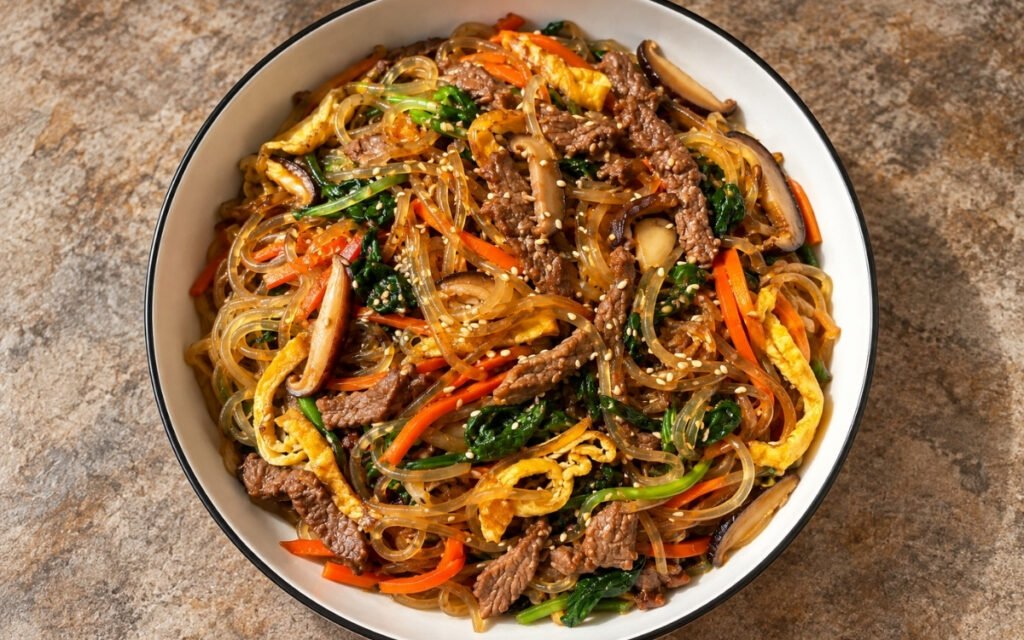
Japchae — Korean Glass Noodle Stir-Fry
Chewy sweet potato glass noodles, thin strips of beef, spinach, shiitake mushrooms, carrot, onion, and egg ribbons in glossy soy-sesame seasoning.
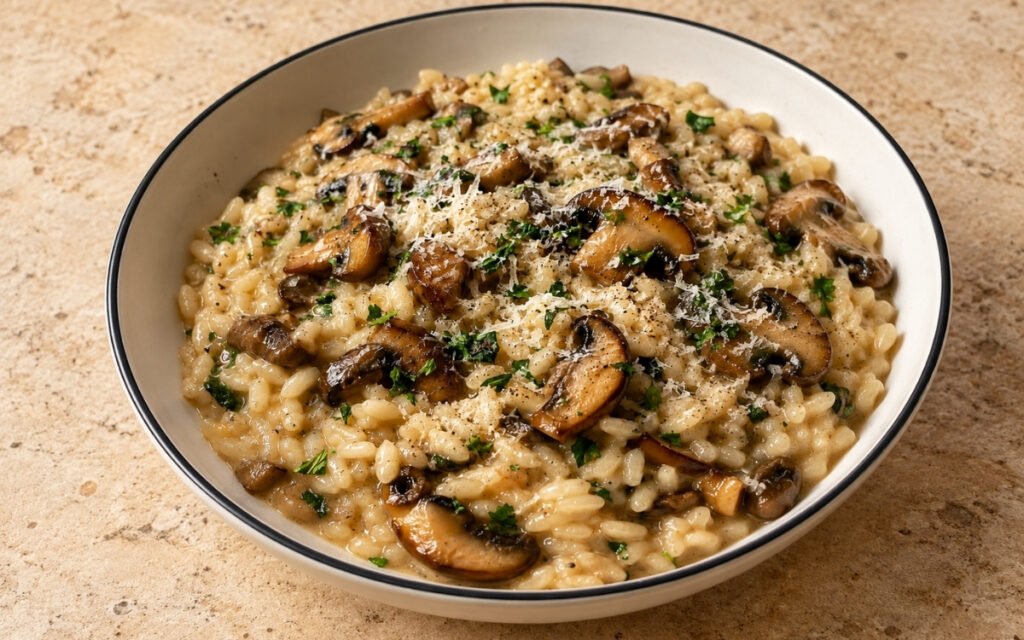
Mushroom Risotto
Creamy Arborio or Carnaroli rice with browned meaty mushrooms, white wine, shallot, and Parmesan, finished loose and silky.
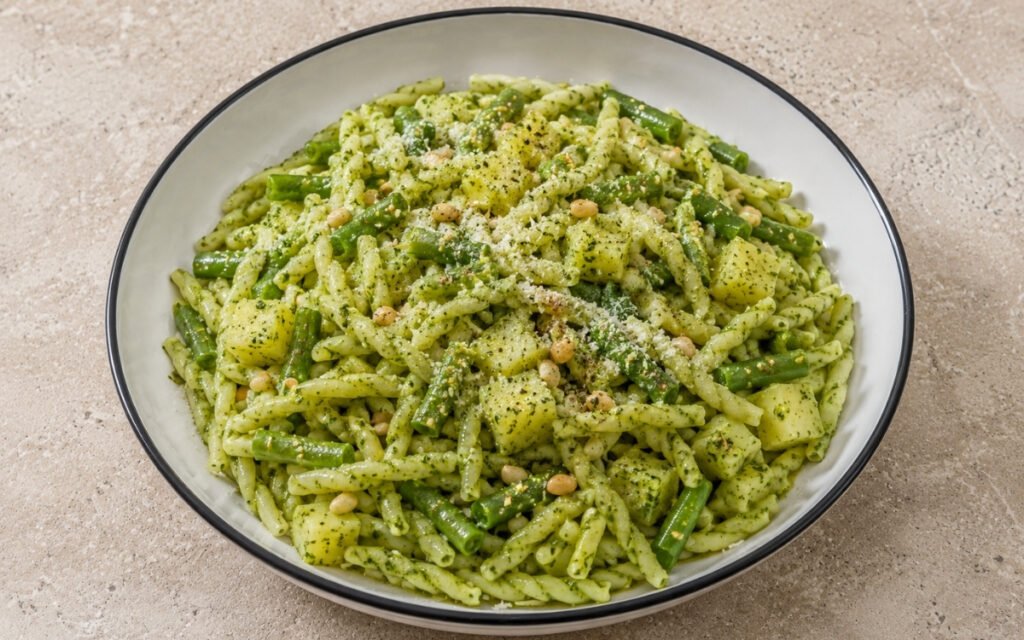
Fresh Homemade Basil Pesto Pasta
Fresh basil pesto with the traditional Ligurian potato and green bean combination — better than any jar.
You might also like
You might also like
Sicilian Orange and Fennel Salad
Sweet navel and blood oranges with thinly shaved fennel, olives, mint, olive oil, flaky salt, and black pepper.
Sloppy Joe Sandwich
Well-seared 85/15 ground beef finished in a glossy, tangy tomato-based sauce, piled generously into soft toasted burger buns.
Greek Chicken Souvlaki
Yogurt-marinated chicken thighs with Za’atar, cumin, and fresh herbs — cooked hot for real char and served with pita and tzatziki or as a bowl protein.
Lemon Garlic Shrimp Pasta
Ingredients
Method
- Bring a large pot of water to a full rolling boil and add the 12g of kosher salt. Add the linguine and cook, stirring occasionally, until exactly 2 minutes shy of the package directions’ al dente time. The pasta must be pulled significantly underdone because it will finish cooking in the sauce during the final tossing step — absorbing the white wine, lemon, garlic, and butter directly into the pasta’s structure rather than simply being coated on the outside. Before draining, reserve 240ml of the starchy pasta cooking water in a heatproof jug and keep it warm throughout. The pasta water is the emulsifying agent that allows the butter, olive oil, and lemon juice to combine into a unified, glossy sauce rather than separating into oil floating on lemon juice. Drain the linguine without rinsing and set aside briefly.
- Pat the shrimp completely dry on both sides with several layers of paper towels. The drying step is the most important preparation for achieving a proper sear — any surface moisture on the shrimp turns to steam the moment it contacts the hot oil, dropping the pan temperature and producing grey, steamed shrimp rather than the golden-crusted sear that gives this dish its flavour foundation. Season with the 3g of salt and 1g of black pepper on both sides. The 16/20 count shrimp — meaning 16 to 20 shrimp per pound — are specified because their larger size allows a 90-second sear on the first side to develop genuine golden colour before the shrimp is cooked through. Smaller shrimp cook through before any significant browning can occur. If only smaller shrimp are available, reduce the first-side sear to 60 seconds.
- Heat a large skillet — stainless steel or carbon steel for maximum fond development — over medium-high heat until genuinely hot. Add 40ml of the olive oil and allow to heat until shimmering. Place the shrimp in the pan in a single layer without overlapping — work in two batches if the pan cannot accommodate all 600g with space between each piece. Crowded shrimp release moisture against their neighbours and steam rather than sear. Place each shrimp flat and leave completely undisturbed for 90 seconds. The sear requires sustained, uninterrupted contact between the shrimp’s surface and the hot pan — any movement before the crust has set prevents the golden caramelisation from developing. After 90 seconds the underside should show a deep golden sear. Flip each shrimp and cook for 60 seconds on the second side — the shrimp should be just barely cooked through, still slightly translucent at the very centre, because they will finish warming through when returned to the pan at the end. Transfer to a plate immediately and allow to rest — the accumulated juices on the resting plate will be added to the sauce later and carry significant concentrated shrimp and olive oil flavour.
- Without cleaning the skillet — the fond from the shrimp sear is the flavour foundation of the sauce — reduce the heat to medium and add the remaining 40ml of olive oil. Add the thinly sliced garlic and red pepper flakes simultaneously. Cook for 45–60 seconds, stirring constantly — the thin garlic slices need attentive, continuous movement at medium heat because the residual heat from the shrimp searing means the pan is still warmer than the burner setting suggests. The garlic should reach pale golden with slightly crisped edges without any slice darkening to brown — at this point its flavour is sweet, toasted, and fragrant rather than the sharp, slightly bitter character that browning produces. Pour in the 180ml of dry white wine immediately when the garlic reaches this point — the wine contact with the hot pan creates a vigorous sizzle and immediate deglazing action that lifts all the fond from the shrimp sear and dissolves it into the wine. Scrape the bottom of the pan firmly with a wooden spoon to incorporate every bit of this fond into the sauce. Allow the wine to bubble vigorously for approximately 2 minutes, reducing by approximately half — the sharp, raw alcohol edge should cook off completely, leaving the wine’s fruity acidity and depth as its contribution to the sauce.
- Add the 60g of butter to the reduced wine, cut into cubes for faster, more even melting. Add the zest of both lemons and the 60ml of lemon juice simultaneously. Swirl the pan continuously as the butter melts — the swirling motion emulsifies the melting butter fat into the wine and lemon juice, creating the beginning of the glossy, cohesive sauce base. The double lemon application — zest and juice together — is the technique that produces a lemon character that is both bright and acidic from the juice and deeply aromatic and complex from the zest’s volatile oils. Add 180ml of the reserved pasta water and bring to a gentle simmer. Add the drained linguine and the rinsed capers to the simmering sauce. Toss vigorously with tongs for 2–3 minutes over medium heat, turning the linguine continuously through the sauce. The pasta finishes cooking during this tossing — absorbing the sauce and releasing additional starch into the liquid, progressively thickening and emulsifying the sauce further. Add reserved pasta water in 30ml increments if the pan looks dry at any point — the sauce should remain fluid and glossy throughout the tossing period.
- Pour any accumulated resting juices from the shrimp plate directly into the pasta — these juices contain rendered shrimp fat, olive oil, and protein that add concentrated seafood-forward flavour to the sauce with zero additional effort. Return the seared shrimp to the pan. Add the roughly chopped parsley, torn basil leaves, and remaining 1g of black pepper. Toss gently for 30 seconds — enough to distribute the herbs and rewarm the shrimp without overcooking them. The residual heat of the pasta and sauce warms the shrimp through without additional cooking time. Remove from heat. Add the finely grated Parmigiano-Reggiano and toss quickly to incorporate — the cheese melts into the hot sauce and adds a savoury, slightly creamy depth that is not traditionally Italian for a seafood pasta but works exceptionally well with the lemon-butter character of this specific sauce. Divide immediately among four warm shallow bowls, distributing the shrimp evenly among portions. Spoon any remaining pan sauce over each bowl.