
Chipotle and Lime Hummus
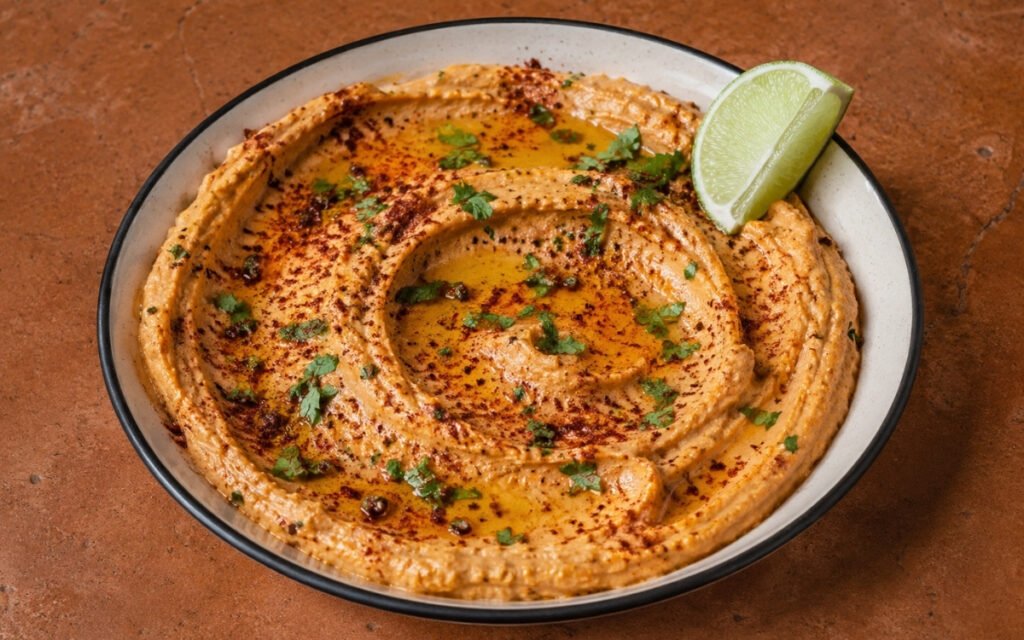
The smoky, heat-forward variation of the Classic Hummus base — chipotle pepper in adobo blended directly into the chickpea-tahini mass, with lime replacing lemon and the adobo sauce adding its own concentrated sweetness, smokiness, and depth. The flavour profile sits between Middle Eastern and Mexican: the tahini and cumin keep it grounded in the hummus tradition, while the chipotle, lime, and adobo push it toward something bolder and more assertive. Rich, slightly spicy, smoky, and bright all at once. Serve with warm Homemade Lavash, fresh pita, or tortilla chips — it works with everything.
Prep Time : 10 min
Cook Time : 35 min
Servings : 8
10 min
35 min
8
Ingredients
For the Chickpeas
• 225g (8oz) dried chickpeas
• 1 tsp baking soda, divided — ½ tsp for soaking, ½ tsp for cooking
For the Hummus
• 140g tahini paste — this one on Amazon
• Juice of 1½ lemons
• 1 chipotle pepper in adobo, from a can — this one on Amazon
• 2 tsp adobo sauce from the can, plus more to taste
• Juice of ½ lime
• Zest of 1 lime
• 2 medium garlic cloves, smashed with a knife
• 1 tsp ground cumin — this one on Amazon
• Fine sea salt to taste, starting conservatively
• Freshly ground black pepper to taste
• 100ml ice-cold water, added gradually — amount varies by preferred consistency
For Serving
• Fresh cilantro, roughly chopped
• Za’atar seasoning or sumac, for garnish — this one on Amazon
This post may contain affiliate links. As an Amazon Associate I earn from qualifying purchases, at no additional cost to you.
Directions
- Soak the Chickpeas Overnight
Place the dried chickpeas in a large bowl and cover generously with cold water — by at least 5–6cm, as they will absorb a significant volume and roughly double in size during the soak. Add ½ tsp of baking soda and stir briefly to dissolve. The baking soda begins the softening process before cooking by raising the water’s pH, which progressively weakens the pectin matrix in the chickpea skins and cell walls. Soak for 8 hours at room temperature or overnight. Drain and discard the soaking water completely — it contains released starches, oligosaccharides, and the spent baking soda solution. Do not retain it. - Cook the Chickpeas with Baking Soda
Transfer the soaked, drained chickpeas to a large pot. Cover with fresh cold water by approximately 5cm and add the remaining ½ tsp of baking soda. Bring to a boil over medium-high heat. As the water approaches the boil, skim off any grey foam that accumulates at the surface — this is coagulated protein and starch foam, and removing it produces a cleaner-tasting finished hummus. Once fully boiling, reduce to medium-low heat, cover with a lid, and cook for approximately 30 minutes. Check for doneness at the 25-minute mark: remove a single chickpea and press it firmly between your fingers or with the back of a fork. It should crush immediately and completely with no resistance whatsoever. Any firmness means the chickpea needs more cooking time. The double baking soda method — soak and cook — produces chickpeas soft enough that their skins blend invisibly into the final hummus rather than creating the flecked, slightly gritty texture that insufficiently softened skins produce. When completely tender, drain and proceed to processing immediately while the chickpeas are still warm. - Process the Warm Chickpeas
Transfer the drained warm chickpeas to a food processor. Begin processing immediately, stopping every 30–45 seconds to scrape down the sides and bottom of the bowl — any mass stuck to the sides is not being processed and will remain as coarser fragments in the finished hummus. Process for 2–3 minutes until the chickpeas have broken down into a thick, dry-looking paste. This initial stage without liquid looks unfinished — the paste will appear stiff and slightly granular, which is normal and expected before the tahini, lime, and water are incorporated. - Add the Tahini, Chipotle, Adobo, Lime, and Spices
With the food processor running, add the tahini paste in a steady stream. Add the lemon juice, the whole chipotle pepper, the 2 tsp of adobo sauce, the lime juice, lime zest, smashed garlic cloves, ground cumin, a conservative starting amount of sea salt, and freshly ground black pepper. The chipotle pepper in adobo is the defining ingredient of this variation — a smoke-dried jalapeño that has been reconstituted and packed in a spiced tomato-vinegar sauce. Its flavour is simultaneously fruity, smoky, warm with moderate heat, and slightly sweet from the adobo — a complexity that makes it the most distinctive single-ingredient addition in the hummus variation collection. One pepper at this quantity produces a hummus with a clearly present but not aggressive heat level. The adobo sauce adds sweetness, additional smokiness, and body without as much direct heat as the pepper itself. The lime — juice and zest together — replaces the lemon of the classic version for a reason: lime’s more tropical, slightly floral acidity has a specific affinity with chipotle that lemon lacks, and the two together produce the Mexican-inflected citrus character that completes the flavour profile. Process everything for 2–3 minutes, scraping down the sides frequently, until as smooth as the dry base will become before water is added. - Emulsify with Ice-Cold Water
With the food processor running, begin adding the ice-cold water one tablespoon at a time. Allow each addition to fully incorporate before adding the next. The cold water emulsifies with the tahini’s fat during processing — cold temperature stabilises the fat dispersion and produces the characteristically light, creamy, aerated texture that distinguishes well-made hummus from a dense paste. Warm water does not create the same emulsification effect. Continue adding water and processing until the hummus reaches your preferred consistency. With chipotle and adobo already contributing liquid to the mixture, you may find slightly less additional water is needed compared to the classic version — assess after each tablespoon and stop when the texture is right rather than at a predetermined volume. - Taste and Calibrate
Stop the processor and taste carefully. The chipotle hummus has more variables to calibrate than the classic version — evaluate heat, smokiness, acidity, and salt simultaneously. If the heat level is too low, add a small additional amount of adobo sauce — it adds heat, smokiness, and sweetness together. If it is already hot enough but needs more smokiness, add adobo sauce only in small quantities and blend again. If it needs more acidity and brightness, add additional lime juice. If it tastes flat despite all other seasonings being present, it needs salt. If the smokiness is not pronounced enough, a small pinch of smoked paprika can amplify it without adding heat. If it is too spicy, the only effective correction is to blend in additional chickpea or tahini — additional water will thin it without reducing the heat. - Serve
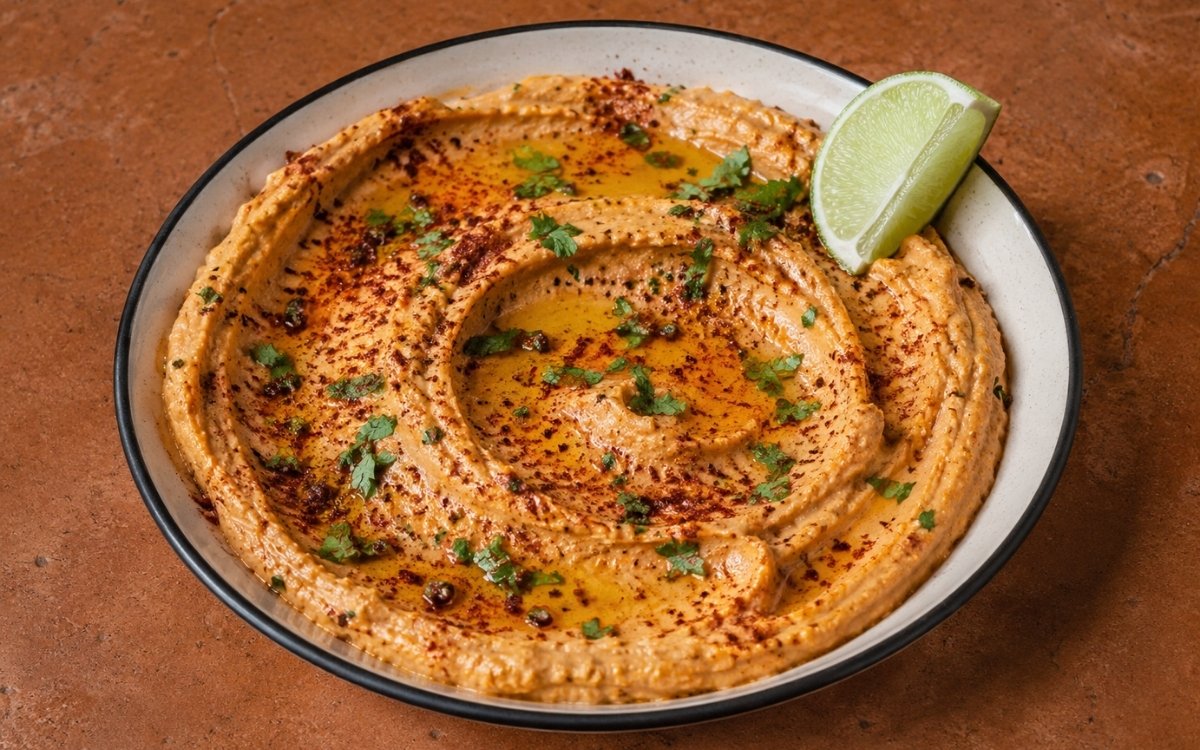
Transfer to a wide, shallow serving bowl and create the characteristic hummus well by sweeping the back of a spoon from the centre outward in a circular motion. Drizzle generously with extra-virgin olive oil. Scatter za’atar or sumac across the surface — sumac’s fruity tartness is particularly well-suited to this variation, its acidity providing contrast to the chipotle’s smoky richness. Scatter the chopped fresh cilantro generously — cilantro’s citrusy, aromatic freshness is the specific herb pairing for chipotle preparations, providing the clean counterpoint that makes the smokiness taste even more vibrant by contrast. Serve with warm Homemade Lavash, fresh pita bread, or tortilla chips for a Mexican-inspired dip application.
*Notes :
- The chipotle and lime hummus is the variation that most clearly demonstrates how a single well-chosen ingredient can completely reframe the classic base’s flavour identity. The tahini, chickpea, cumin, and garlic framework is identical to the Classic Hummus — but the chipotle and lime transform the character from Middle Eastern to something that works simultaneously in both culinary contexts. This makes it uniquely versatile: it serves equally well as a classic flatbread dip alongside Homemade Lavash and as a Tex-Mex condiment alongside tortilla chips, fajitas, and burrito bowls.
- Adobo sauce should always be used as the secondary fine-tuning tool after the chipotle pepper provides the primary heat and smoke. The sauce is more concentrated in sweetness and tomato depth and less in direct heat than the pepper itself — adding small amounts of sauce allows you to increase the smokiness and complexity without proportionally increasing the spice level, giving you more control over the final balance.
- If the finished hummus is deeper red-orange than the pale beige of the classic version, this is correct — the chipotle and adobo’s red pigments distribute through the entire hummus during processing, producing the characteristic warm, deep-orange colour of this variation that makes it visually immediately distinguishable from the classic at a serving table.
Why This Recipe Works
This recipe works because the chipotle and adobo occupy the same functional role as the garlic and cumin in the classic version — providing the savory, warm depth that prevents the hummus from tasting one-dimensionally bland — while also contributing the specific smoky heat and Mexican citrus character that transform the dish’s identity.
The lime replaces lemon at every stage rather than supplementing it, producing a cohesive citrus profile rather than a conflicted mixture of two different acids. The cilantro garnish completes the flavour identity at serving in the same way that parsley completes the classic — the herb specifically suited to the variation’s flavour character rather than a generic finishing green.
Ingredient Breakdown
Chipotle Pepper in Adobo
The defining ingredient — smoke-dried jalapeño with fruity, moderate heat and deep smoky character that transforms the hummus’s entire flavour identity.
Adobo Sauce
The fine-tuning liquid — concentrated sweetness, tomato depth, and additional smokiness, used both in the blend and as the post-taste calibration tool for balance.
Lime Juice and Zest
The citrus replacement for lemon — lime’s tropical, floral acidity has specific affinity with chipotle and produces a more cohesive Mexican-inflected character than lemon would alongside the same ingredients.
Tahini (140g)
The fat and flavour backbone — unchanged from the classic, providing the sesame depth and emulsifying fat that produces smooth texture with ice water.
Ice-Cold Water
The emulsification agent — identical role to the classic version, producing the light, creamy texture through cold-fat dispersion.
Fresh Cilantro
The finishing herb specific to this variation — citrusy, aromatic, and specifically compatible with chipotle in a way that parsley is not.
Flavor Structure Explained
This hummus follows a layered balance model:
- Earthy nutty base (chickpeas, tahini)
- Smoky dominant core (chipotle, adobo)
- Bright acidic lift (lime juice, zest, adobo vinegar)
- Aromatic top layer (cilantro, cumin, garlic)
- Balanced integration (all registers combined)
Chickpeas and tahini establish the foundation with smooth, neutral earthiness that supports stronger elements. Chipotle and adobo define the core, delivering smoky, slightly sweet heat that dominates the profile. Lime and vinegar cut through that smokiness with bright acidity, keeping the flavor lifted and clear. Cilantro, cumin, and garlic build the aromatic layer, adding freshness and depth at the top. The structure relies on all layers hitting simultaneously, creating a balanced, multi-dimensional flavor rather than a linear progression.
Common Mistakes to Avoid
- Under-cooking the Chickpeas – The same as the classic version — any residual firmness produces graininess that no amount of processing eliminates. Crush-test thoroughly before draining.
- Processing Cold Chickpeas – Always process immediately while warm for the smoothest possible result.
- Adding All the Adobo at Once – The adobo sauce is intense and significantly affects both flavour and consistency. Add in measured amounts and taste between additions.
- Not Using Lime Zest – The zest contributes aromatic lime oils that the juice alone cannot — it makes the citrus character more complex and fragrant. Do not skip it.
- Forgetting to Scrape the Bowl – Any unprocessed mass stuck to the sides remains coarser than the rest. Scrape every 30–45 seconds.
- Over-adding Water – With chipotle and adobo already contributing liquid, the water requirement may be lower than expected. Add slowly, assess constantly.
Variations
Classic Hummus
The base recipe this variation is built on — chickpeas, tahini, lemon, garlic, and cumin producing the clean, neutral, deeply flavoured hummus that all four variations derive from. Master this one first. Full recipe at Classic Hummus.
Harissa and Mint Hummus
Warm, complex, and distinctly North African — harissa paste blended into the base and finished with fresh mint, producing a spiced, fragrant hummus with both building heat and herbal freshness. A different kind of spiced hummus from the chipotle version — earthier and more aromatic, less smoky. Full recipe at Harissa and Mint Hummus.
Sun-Dried Tomato and Basil Hummus
Rich, sweet-acidic, and unmistakably Mediterranean — oil-packed sun-dried tomatoes and fresh basil blended into the base, producing a vibrant deep-red hummus with Italian character. Excellent as a bruschetta spread, alongside crostini, and as a pasta sauce base. Full recipe at Sun-Dried Tomato and Basil Hummus.
Roasted Garlic Hummus
Deep, mellow, and sweet-savory — a full head of roasted garlic replacing the raw garlic of the classic base, transforming sharp pungency into caramelised, deeply savory warmth. The most universally appealing variation in the collection. Full recipe at Roasted Garlic Hummus.
Storage & Make-Ahead
Store in an airtight container in the refrigerator for up to 5 days. Press plastic wrap directly onto the surface before sealing to slow oxidation — the chipotle’s colour makes surface darkening less visible than in the classic version, but the direct-contact plastic still protects the surface moisture and prevents the top layer from drying. Bring to room temperature for 20–30 minutes before serving and stir in a small amount of cold water if needed to restore the original consistency. Re-garnish with fresh cilantro and a drizzle of olive oil before serving. Freezes adequately for up to 2 months — freeze without garnish and thaw overnight in the refrigerator.
Frequently Asked Questions
How spicy is this hummus?
With one chipotle pepper and 2 tsp of adobo sauce, the heat level is moderate — clearly present and warm with a building finish, but not aggressively spicy for most palates. For milder, use only half the pepper and 1 tsp adobo. For spicier, add a second chipotle or increase the adobo sauce significantly.
Can I use chipotles en adobo from a jar rather than a can?
Yes — both are the same product in different packaging. The quality varies by brand: look for chipotles with a deep red-brown colour and a thick, sauce that coats each pepper rather than a thin, watery liquid.
Why lime instead of lemon?
Lime’s flavour profile — more tropical, slightly floral, with a less sharp acidity than lemon — has a specific affinity with chipotle and Mexican-style preparations. Using lemon alongside chipotle produces a slightly conflicted citrus character; lime produces a cohesive one.
What should I serve chipotle hummus with?
Warm Homemade Lavash or Fresh Pita for a classic dip application. Tortilla chips for a Tex-Mex angle. As a spread in burritos and wraps alongside Chicken Fajita or Skirt Steak Fajita. As a dip alongside fresh vegetables for a lighter application.
How is this different from the Classic Hummus?
The chickpea preparation and processing technique are identical to the Classic Hummus — the difference is entirely in the flavour additions. Chipotle, adobo, lime, and cilantro replace the parsley and za’atar finish of the classic, transforming the hummus from Middle Eastern in character to something that bridges Middle Eastern and Mexican cooking simultaneously.
Nutrition Facts
( per serving — approximately 4 tbsp )
Calories
~190 kcal
Protein
8 g
Fat
10 g
Carbs
20 g
Calories
~190 kcal
Protein
8 g
Fat
10 g
Carbs
20 g
Related Recipes
Related Recipes

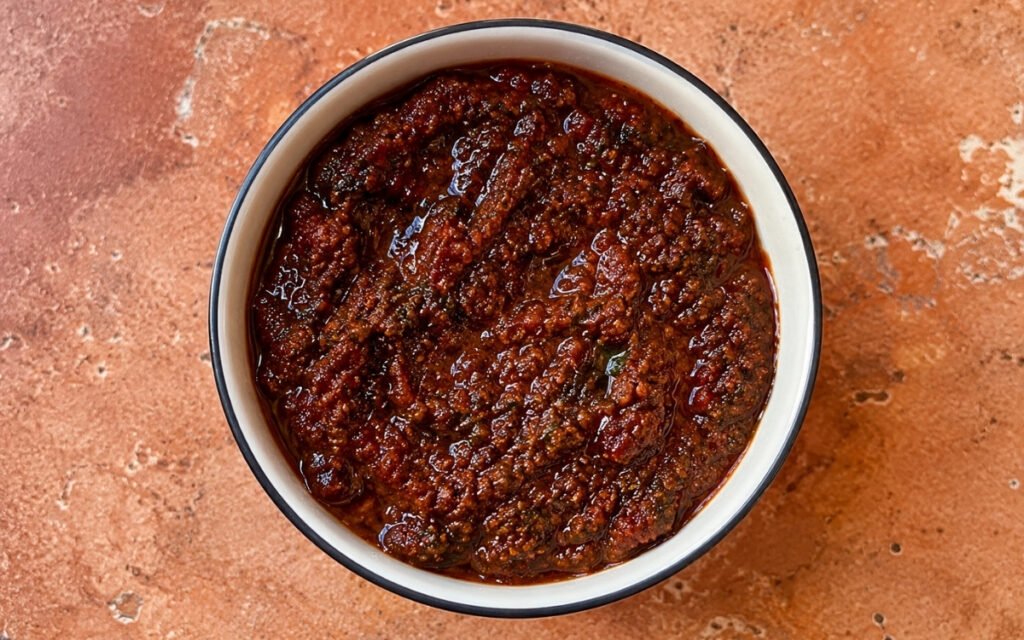
Red Zhoug
Dried red chilies, cilantro, garlic, and cumin pulsed into a deep, earthy Yemeni sauce — ten minutes to make, 30 minutes for the heat to fully develop, and the boldest condiment on any mezze table.
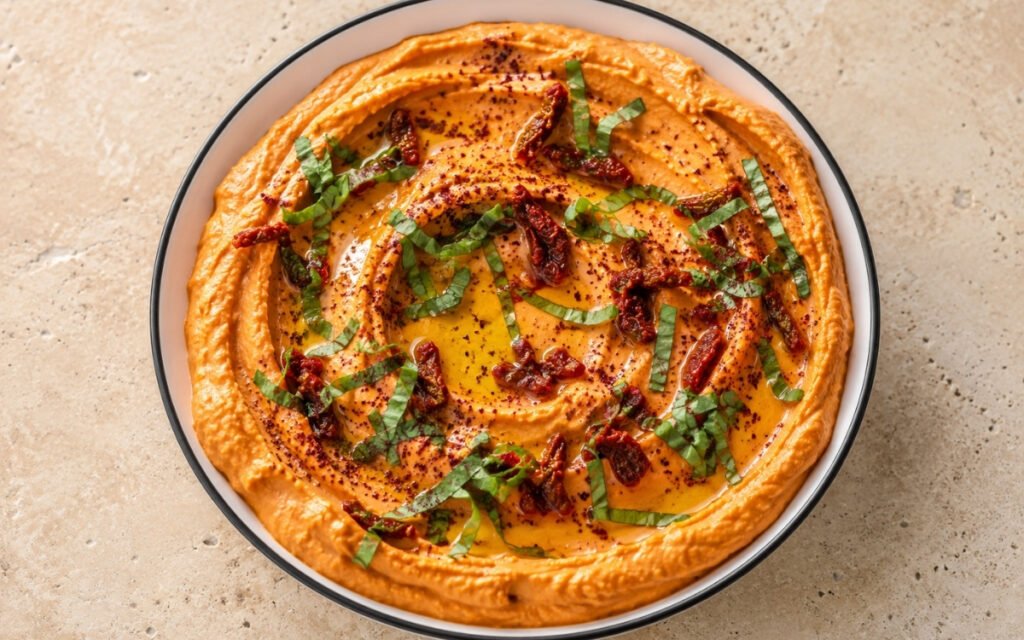
Sun-Dried Tomato & Basil Hummus
Oil-packed sun-dried tomatoes and fresh basil blended into the classic chickpea-tahini base — deep red-orange, sweet-acidic, and unmistakably Mediterranean Italian.
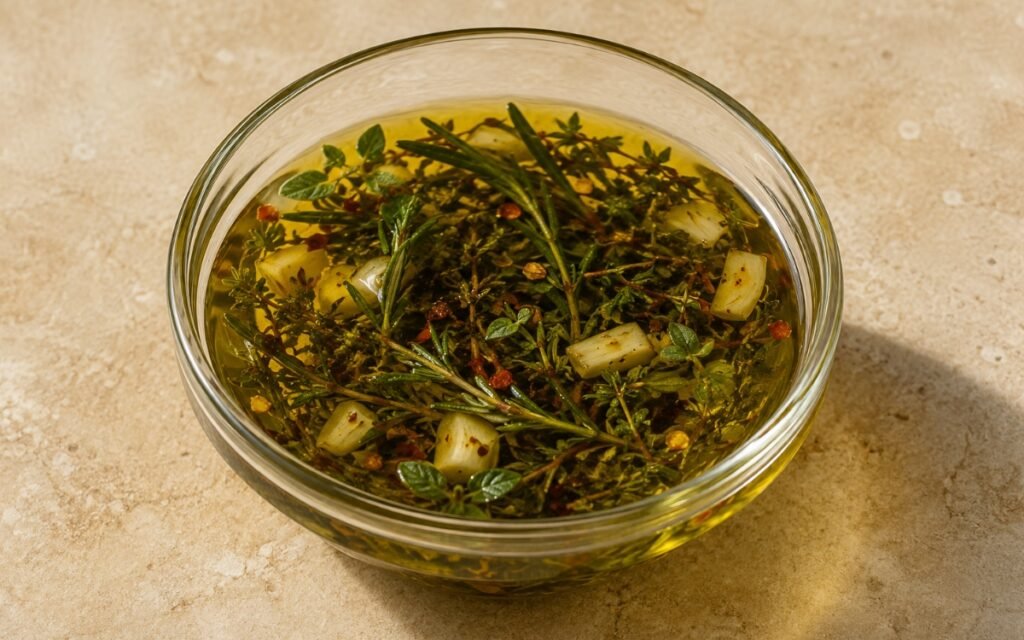
Italian Herb Olive Oil Drizzle
Rosemary, thyme, and garlic infused in warm olive oil — an elegant 10-minute Italian finishing drizzle.
You might also like
You might also like
Green Tea Citrus Pitcher
Green tea at 75–80°C for 2–2½ minutes, dual citrus zest off heat — 500ml orange juice for body, lemon juice, salt, cold water, chilled. Delicate and citrus-bright.
Authentic Persian Shirazi Salad
Traditional Iranian salad with finely diced cucumbers, tomatoes, onions, herbs, and lime-sumac dressing.
Thyme Orange Iced Tea
Black tea at 90–95°C for 2½–3 minutes, thyme clapped and infused cold, orange peel and fresh orange juice — chilled. Dry-leaning, aromatic, lightly sweet.


Chipotle and Lime Hummus
Ingredients
Method
- Place the dried chickpeas in a large bowl and cover generously with cold water — by at least 5–6cm, as they will absorb a significant volume and roughly double in size during the soak. Add ½ tsp of baking soda and stir briefly to dissolve. The baking soda begins the softening process before cooking by raising the water’s pH, which progressively weakens the pectin matrix in the chickpea skins and cell walls. Soak for 8 hours at room temperature or overnight. Drain and discard the soaking water completely — it contains released starches, oligosaccharides, and the spent baking soda solution. Do not retain it.
- Transfer the soaked, drained chickpeas to a large pot. Cover with fresh cold water by approximately 5cm and add the remaining ½ tsp of baking soda. Bring to a boil over medium-high heat. As the water approaches the boil, skim off any grey foam that accumulates at the surface — this is coagulated protein and starch foam, and removing it produces a cleaner-tasting finished hummus. Once fully boiling, reduce to medium-low heat, cover with a lid, and cook for approximately 30 minutes. Check for doneness at the 25-minute mark: remove a single chickpea and press it firmly between your fingers or with the back of a fork. It should crush immediately and completely with no resistance whatsoever. Any firmness means the chickpea needs more cooking time. The double baking soda method — soak and cook — produces chickpeas soft enough that their skins blend invisibly into the final hummus rather than creating the flecked, slightly gritty texture that insufficiently softened skins produce. When completely tender, drain and proceed to processing immediately while the chickpeas are still warm.
- Transfer the drained warm chickpeas to a food processor. Begin processing immediately, stopping every 30–45 seconds to scrape down the sides and bottom of the bowl — any mass stuck to the sides is not being processed and will remain as coarser fragments in the finished hummus. Process for 2–3 minutes until the chickpeas have broken down into a thick, dry-looking paste. This initial stage without liquid looks unfinished — the paste will appear stiff and slightly granular, which is normal and expected before the tahini, lime, and water are incorporated.
- With the food processor running, add the tahini paste in a steady stream. Add the lemon juice, the whole chipotle pepper, the 2 tsp of adobo sauce, the lime juice, lime zest, smashed garlic cloves, ground cumin, a conservative starting amount of sea salt, and freshly ground black pepper. The chipotle pepper in adobo is the defining ingredient of this variation — a smoke-dried jalapeño that has been reconstituted and packed in a spiced tomato-vinegar sauce. Its flavour is simultaneously fruity, smoky, warm with moderate heat, and slightly sweet from the adobo — a complexity that makes it the most distinctive single-ingredient addition in the hummus variation collection. One pepper at this quantity produces a hummus with a clearly present but not aggressive heat level. The adobo sauce adds sweetness, additional smokiness, and body without as much direct heat as the pepper itself. The lime — juice and zest together — replaces the lemon of the classic version for a reason: lime’s more tropical, slightly floral acidity has a specific affinity with chipotle that lemon lacks, and the two together produce the Mexican-inflected citrus character that completes the flavour profile. Process everything for 2–3 minutes, scraping down the sides frequently, until as smooth as the dry base will become before water is added.
- With the food processor running, begin adding the ice-cold water one tablespoon at a time. Allow each addition to fully incorporate before adding the next. The cold water emulsifies with the tahini’s fat during processing — cold temperature stabilises the fat dispersion and produces the characteristically light, creamy, aerated texture that distinguishes well-made hummus from a dense paste. Warm water does not create the same emulsification effect. Continue adding water and processing until the hummus reaches your preferred consistency. With chipotle and adobo already contributing liquid to the mixture, you may find slightly less additional water is needed compared to the classic version — assess after each tablespoon and stop when the texture is right rather than at a predetermined volume.
- Stop the processor and taste carefully. The chipotle hummus has more variables to calibrate than the classic version — evaluate heat, smokiness, acidity, and salt simultaneously. If the heat level is too low, add a small additional amount of adobo sauce — it adds heat, smokiness, and sweetness together. If it is already hot enough but needs more smokiness, add adobo sauce only in small quantities and blend again. If it needs more acidity and brightness, add additional lime juice. If it tastes flat despite all other seasonings being present, it needs salt. If the smokiness is not pronounced enough, a small pinch of smoked paprika can amplify it without adding heat. If it is too spicy, the only effective correction is to blend in additional chickpea or tahini — additional water will thin it without reducing the heat.
- Transfer to a wide, shallow serving bowl and create the characteristic hummus well by sweeping the back of a spoon from the centre outward in a circular motion. Drizzle generously with extra-virgin olive oil. Scatter za’atar or sumac across the surface — sumac’s fruity tartness is particularly well-suited to this variation, its acidity providing contrast to the chipotle’s smoky richness. Scatter the chopped fresh cilantro generously — cilantro’s citrusy, aromatic freshness is the specific herb pairing for chipotle preparations, providing the clean counterpoint that makes the smokiness taste even more vibrant by contrast. Serve with warm Homemade Lavash, fresh pita bread, or tortilla chips for a Mexican-inspired dip application.