Ingredients
Method
Soak the Chickpeas Overnight
- Place the dried chickpeas in a large bowl and cover generously with cold water — by at least 5–6cm, as they will absorb a significant volume and roughly double in size during the soak. Add ½ tsp of baking soda and stir briefly to dissolve. The baking soda begins the softening process before cooking by raising the water's pH, which progressively weakens the pectin matrix in the chickpea skins and cell walls. Soak for 8 hours at room temperature or overnight. Drain and discard the soaking water completely — it contains released starches, oligosaccharides, and the spent baking soda solution. Do not retain it.
Cook the Chickpeas with Baking Soda
- Transfer the soaked, drained chickpeas to a large pot. Cover with fresh cold water by approximately 5cm and add the remaining ½ tsp of baking soda. Bring to a boil over medium-high heat. As the water approaches the boil, skim off any grey foam that accumulates at the surface — this is coagulated protein and starch foam, and removing it produces a cleaner-tasting finished hummus. Once fully boiling, reduce to medium-low heat, cover with a lid, and cook for approximately 30 minutes. Check for doneness at the 25-minute mark: remove a single chickpea and press it firmly between your fingers or with the back of a fork. It should crush immediately and completely with no resistance whatsoever. Any firmness means the chickpea needs more cooking time. The double baking soda method — soak and cook — produces chickpeas soft enough that their skins blend invisibly into the final hummus rather than creating the flecked, slightly gritty texture that insufficiently softened skins produce. When completely tender, drain and proceed to processing immediately while the chickpeas are still warm.
Process the Warm Chickpeas
- Transfer the drained warm chickpeas to a food processor. Begin processing immediately, stopping every 30–45 seconds to scrape down the sides and bottom of the bowl — any mass stuck to the sides is not being processed and will remain as coarser fragments in the finished hummus. Process for 2–3 minutes until the chickpeas have broken down into a thick, dry-looking paste. This initial stage without liquid looks unfinished — the paste will appear stiff and slightly granular, which is normal and expected before the tahini, lime, and water are incorporated.
Add the Tahini, Chipotle, Adobo, Lime, and Spices
- With the food processor running, add the tahini paste in a steady stream. Add the lemon juice, the whole chipotle pepper, the 2 tsp of adobo sauce, the lime juice, lime zest, smashed garlic cloves, ground cumin, a conservative starting amount of sea salt, and freshly ground black pepper. The chipotle pepper in adobo is the defining ingredient of this variation — a smoke-dried jalapeño that has been reconstituted and packed in a spiced tomato-vinegar sauce. Its flavour is simultaneously fruity, smoky, warm with moderate heat, and slightly sweet from the adobo — a complexity that makes it the most distinctive single-ingredient addition in the hummus variation collection. One pepper at this quantity produces a hummus with a clearly present but not aggressive heat level. The adobo sauce adds sweetness, additional smokiness, and body without as much direct heat as the pepper itself. The lime — juice and zest together — replaces the lemon of the classic version for a reason: lime's more tropical, slightly floral acidity has a specific affinity with chipotle that lemon lacks, and the two together produce the Mexican-inflected citrus character that completes the flavour profile. Process everything for 2–3 minutes, scraping down the sides frequently, until as smooth as the dry base will become before water is added.
Emulsify with Ice-Cold Water
- With the food processor running, begin adding the ice-cold water one tablespoon at a time. Allow each addition to fully incorporate before adding the next. The cold water emulsifies with the tahini's fat during processing — cold temperature stabilises the fat dispersion and produces the characteristically light, creamy, aerated texture that distinguishes well-made hummus from a dense paste. Warm water does not create the same emulsification effect. Continue adding water and processing until the hummus reaches your preferred consistency. With chipotle and adobo already contributing liquid to the mixture, you may find slightly less additional water is needed compared to the classic version — assess after each tablespoon and stop when the texture is right rather than at a predetermined volume.
Taste and Calibrate
- Stop the processor and taste carefully. The chipotle hummus has more variables to calibrate than the classic version — evaluate heat, smokiness, acidity, and salt simultaneously. If the heat level is too low, add a small additional amount of adobo sauce — it adds heat, smokiness, and sweetness together. If it is already hot enough but needs more smokiness, add adobo sauce only in small quantities and blend again. If it needs more acidity and brightness, add additional lime juice. If it tastes flat despite all other seasonings being present, it needs salt. If the smokiness is not pronounced enough, a small pinch of smoked paprika can amplify it without adding heat. If it is too spicy, the only effective correction is to blend in additional chickpea or tahini — additional water will thin it without reducing the heat.
Serve
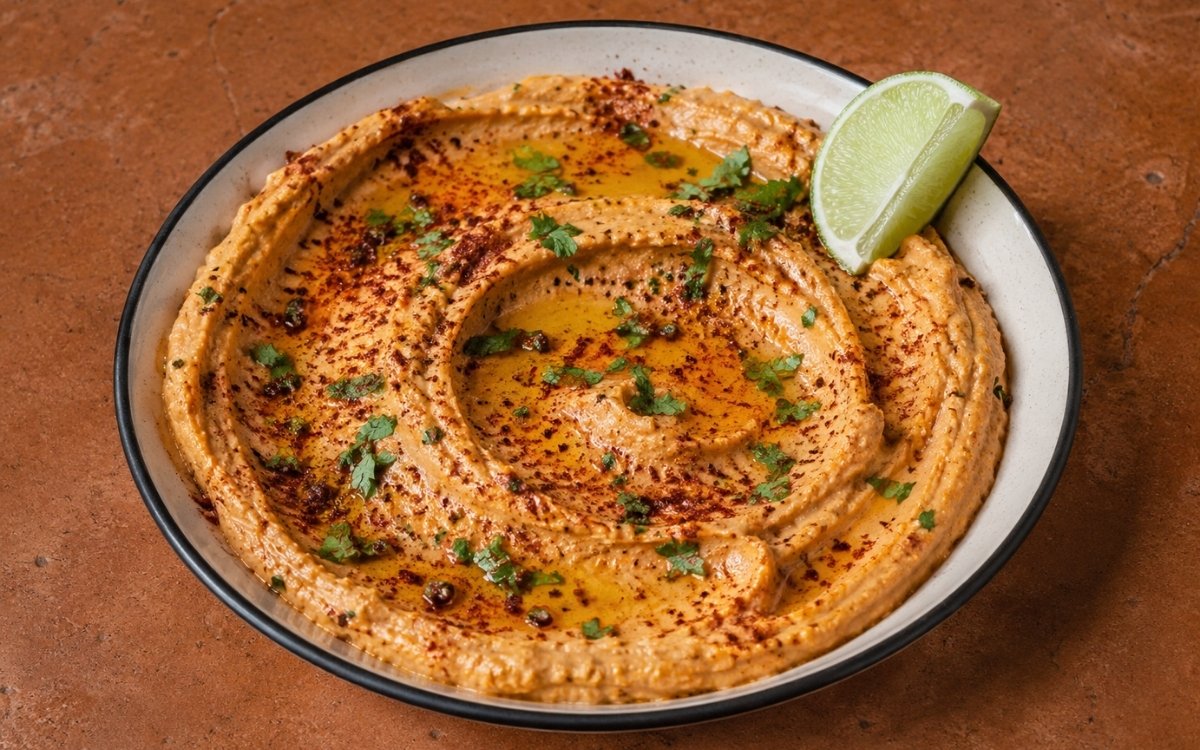
- Transfer to a wide, shallow serving bowl and create the characteristic hummus well by sweeping the back of a spoon from the centre outward in a circular motion. Drizzle generously with extra-virgin olive oil. Scatter za'atar or sumac across the surface — sumac's fruity tartness is particularly well-suited to this variation, its acidity providing contrast to the chipotle's smoky richness. Scatter the chopped fresh cilantro generously — cilantro's citrusy, aromatic freshness is the specific herb pairing for chipotle preparations, providing the clean counterpoint that makes the smokiness taste even more vibrant by contrast. Serve with warm Homemade Lavash, fresh pita bread, or tortilla chips for a Mexican-inspired dip application.
Notes
The chipotle and lime hummus is the variation that most clearly demonstrates how a single well-chosen ingredient can completely reframe the classic base's flavour identity. The tahini, chickpea, cumin, and garlic framework is identical to the Classic Hummus — but the chipotle and lime transform the character from Middle Eastern to something that works simultaneously in both culinary contexts. This makes it uniquely versatile: it serves equally well as a classic flatbread dip alongside Homemade Lavash and as a Tex-Mex condiment alongside tortilla chips, fajitas, and burrito bowls.
Adobo sauce should always be used as the secondary fine-tuning tool after the chipotle pepper provides the primary heat and smoke. The sauce is more concentrated in sweetness and tomato depth and less in direct heat than the pepper itself — adding small amounts of sauce allows you to increase the smokiness and complexity without proportionally increasing the spice level, giving you more control over the final balance.
If the finished hummus is deeper red-orange than the pale beige of the classic version, this is correct — the chipotle and adobo's red pigments distribute through the entire hummus during processing, producing the characteristic warm, deep-orange colour of this variation that makes it visually immediately distinguishable from the classic at a serving table.