
Sándwich Ahogado (Torta Ahogada)
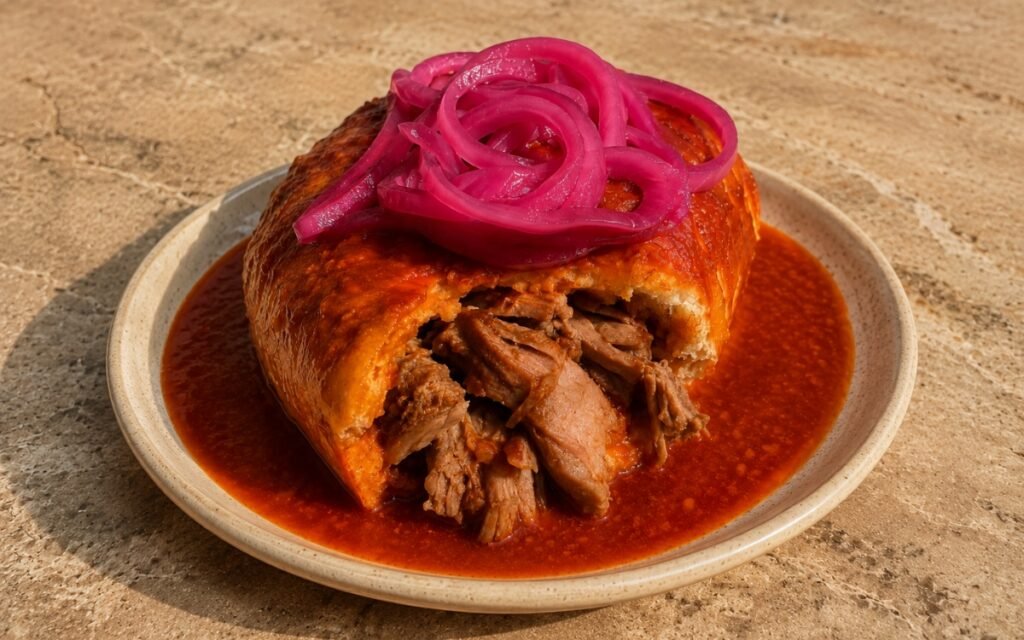
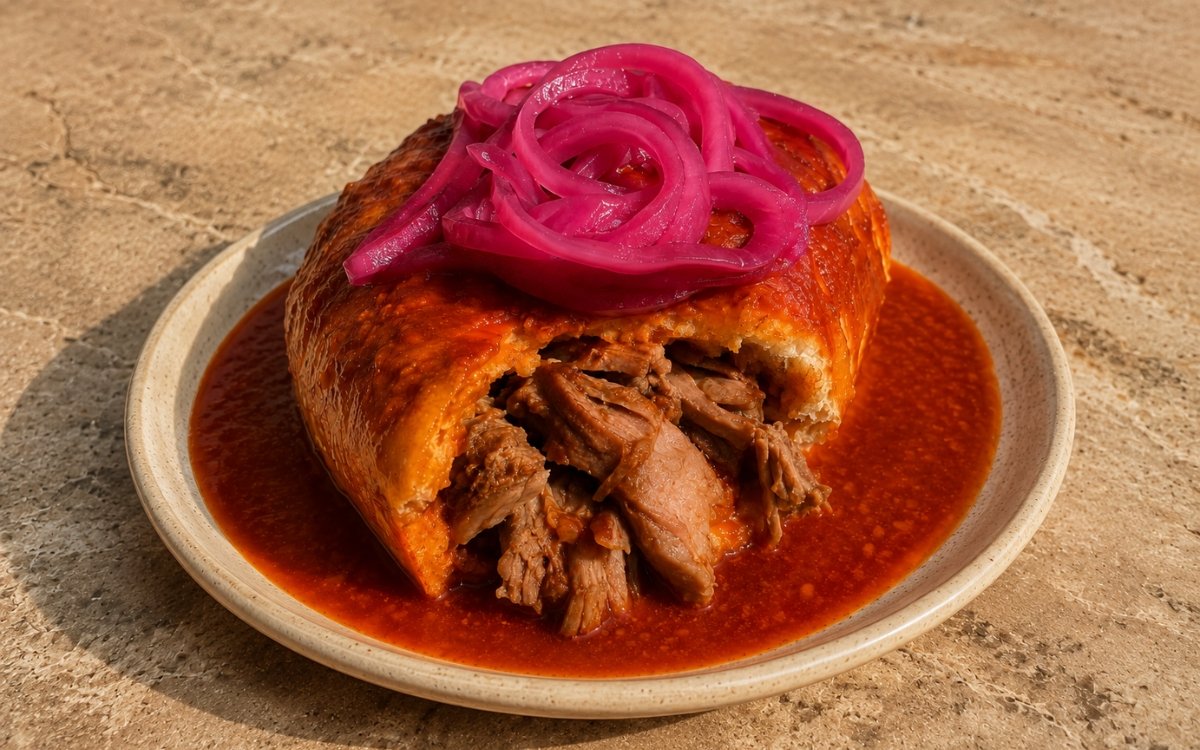
A classic Guadalajara-style torta ahogada made with crusty birote-style rolls filled with juicy carnitas, then drowned in a vivid red chile de árbol sauce and topped with bright quick-pickled red onion. The contrast is the whole point: rich pork, fiery broth-like salsa, sharp onion, and bread that softens at the edges while still holding some structure in the center. Keeping the chile de árbol sauce genuinely pourable, thinner than a standard taco salsa, is the technique this whole sandwich depends on — this sauce’s entire job is to soak the bread and pool around the sandwich on the plate, which a thick, pasty salsa simply couldn’t do, the same thin-and-pourable calibration used elsewhere in this collection whenever a sauce’s function is to saturate rather than cling. Browning the pork properly before it ever goes into the braising liquid is what builds the fond responsible for the carnitas’ deep flavour. Choosing a genuinely crusty roll, never hollowed out aggressively, is what gives the bread enough structure to absorb the sauce without collapsing before the sandwich even reaches the table. The payoff is a sandwich that’s meant to be eaten immediately and a little messily — bread actively soaking up sauce, chunky juicy pork, sharp pickled onion, and a fiery red pool spreading across the plate.
Prep Time : 35 min
Cook Time : 2 hr, 45 min
Servings : 4
35 min
2 hr, 45 min
4
Ingredients
For the Carnitas
• This is the pork filling used in the linked carnitas recipe, scaled here as the sandwich filling. For the full standalone recipe, see Carnitas Tacos with Pickled Onion.
• 1kg boneless pork shoulder, cut into 6–8cm chunks
• 12g kosher salt
• 3g freshly cracked black pepper
• 20ml neutral oil
• 120g white onion, roughly chopped
• 5 garlic cloves, peeled and lightly smashed
• 180ml fresh orange juice
• 45ml fresh lime juice
• 250ml water or chicken stock
• 2 bay leaves
• 4g dried Mexican oregano — this one on Amazon
• 4g ground cumin — this one on Amazon
• 1g ground cinnamon
• 60g lard or pork fat, plus more if needed for crisping — this one on Amazon
For the Quick Pickled Red Onion
• 1 large red onion, thinly sliced
• 120ml apple cider vinegar or white vinegar — this one on Amazon
• 120ml hot water
• 12g sugar
• 6g kosher salt
• 15ml fresh lime juice
For the Chile de Árbol Sauce
• 18–22g dried chile de árbol, stems removed — this one on Amazon
• 2 medium Roma tomatoes, roughly chopped
• 60g white onion, roughly chopped
• 2 garlic cloves
• 500ml hot water, light stock, or reserved pork cooking liquid
• 15ml white vinegar or apple cider vinegar
• 5g fine sea salt, plus more to taste
• 1 pinch dried Mexican oregano
For the Assembly
• 4 crusty birote rolls, or the closest possible substitute: very crusty small French rolls or firm semi-baguettes
• Warm carnitas from above
• Warm chile de árbol sauce
• Quick pickled red onion
• Extra lime wedges, optional
This post may contain affiliate links. As an Amazon Associate I earn from qualifying purchases, at no additional cost to you.
Directions
- Make the Quick Pickled Red Onion
Place the thinly sliced red onion in a bowl. In a separate bowl or jug, combine the vinegar, hot water, sugar, salt, and lime juice. Stir until the sugar and salt dissolve fully. Pour over the onion and toss well. Let the onion pickle for at least 30 minutes, stirring once or twice during that time. It can sit longer while the pork cooks. The onion should lose its harsh raw bite and turn bright pink while still keeping a light crunch. It should taste sharp, lightly sweet, and clean. Using hot water to dissolve the sugar and salt fully before it ever touches the onion is what allows both to distribute evenly through the brine — undissolved granules in a cold liquid would settle unevenly rather than seasoning the pickle consistently. - Braise the Carnitas
Season the pork shoulder pieces evenly with the salt and black pepper. Heat a heavy pot or Dutch oven over medium-high heat. Add the neutral oil and brown the pork in batches until it develops good golden-brown edges on multiple sides. Do not rush this step — the browned fond will deepen the final flavor. Return all the pork to the pot. Add the chopped white onion, smashed garlic, orange juice, lime juice, water or stock, bay leaves, oregano, cumin, cinnamon, and the 60g lard. Bring to a gentle simmer, then reduce the heat to low. Cover partially and cook for 1 hour 45 minutes to 2 hours, stirring once or twice, until the pork is fully tender. Transfer the pork to a tray or bowl once tender. Discard the bay leaves. Simmer the remaining liquid uncovered for 10–15 minutes until reduced and more concentrated. Shred or break the pork into chunky bite-size pieces — not too fine. Return it to a large skillet or wide pan with a few spoonfuls of the reduced cooking liquid and enough extra lard or pork fat as needed. Cook over medium-high heat until parts of the pork crisp lightly at the edges while the interior stays juicy. The pork should be tender enough to pull apart easily, but the best torta ahogada filling is not mushy. It should have juicy interior strands and browned crisp edges. Searing the pork thoroughly before it ever meets the braising liquid builds a genuine fond on the pot’s surface — that browned residue gets scraped up and dissolved back into the liquid as it braises, carrying concentrated flavour directly into the finished carnitas that pale, unseared pork simply wouldn’t produce. - Make the Chile de Árbol Sauce
Heat a dry skillet over medium heat. Toast the dried chiles de árbol for 10–20 seconds per side, just until fragrant and slightly deepened in color. Do not let them blacken or they will turn bitter. Place the toasted chiles in a bowl and cover with hot water. Let them soak for 10 minutes until softened. In the same skillet, char the Roma tomatoes, white onion, and garlic lightly until they show some blistering and softened edges. Drain the soaked chiles and add them to a blender with the charred tomatoes, onion, garlic, 500ml hot water or light stock or reserved pork liquid, vinegar, salt, and oregano. Blend until very smooth. Pour the sauce into a saucepan and simmer gently for 8–10 minutes. Adjust with a little more liquid if needed — this sauce should be thinner than a taco salsa because it needs to soak the bread and pool around the sandwich. Taste and adjust salt. The finished sauce should be vivid red, spicy, smooth, and pourable. It should taste bold and hot, but not raw, bitter, or too thick. Toasting the chiles only briefly, watching closely to avoid any blackening, protects the sauce’s flavour from the genuine bitterness scorched chile skins would introduce — that brief toast is meant to wake up aromatic oils, not char the chile. - Prepare the Rolls
If desired, warm the rolls briefly in the oven for 3–5 minutes so the crust refreshes and the interior softens slightly. Slice each roll lengthwise, keeping one side lightly hinged if possible. Do not hollow them out aggressively — the bread needs enough interior to absorb sauce without immediately collapsing. The ideal roll is crusty outside and still sturdy. A soft bun will fall apart too quickly and won’t give the proper torta ahogada texture. Leaving the roll’s interior crumb largely intact, rather than scooping it out, gives the bread genuine mass to absorb the sauce into — an aggressively hollowed roll would have far less structure left to hold together once that sauce starts soaking in. - Assemble the Torta Ahogada
Just before serving, pour in the chilled club soda. Stir very gently once or twice to combine without flattening the bubbles. Proper carbonation should feel lively and lift the citrus aromatics.
*Notes :
- The chile de árbol sauce’s deliberately thin, pourable consistency is worth understanding as a functional requirement rather than a style choice. This sauce is meant to genuinely soak into the bread and pool visibly around the finished sandwich on the plate — a thicker, more taco-salsa-style sauce simply couldn’t perform that job, sitting on top of the sandwich rather than saturating into it the way a proper torta ahogada calls for.
- Searing the pork thoroughly before it enters the braising liquid deserves the same attention given to it throughout this collection’s other braised meat preparations. The browned fond left on the pot’s surface after a proper sear is concentrated, developed flavour, and it’s specifically that fond, dissolved back into the braising liquid, that gives the finished carnitas real depth. Pork that goes into the braise pale, without a proper sear, produces a noticeably flatter result regardless of how carefully the rest of the braise is handled.
- Toasting the dried chiles only briefly, and watching closely to stop before any blackening occurs, protects the sauce from a genuine risk specific to dried chile preparation. Chile skins scorch quickly, and once blackened, they contribute a harsh, bitter note that no amount of subsequent blending or seasoning fully corrects. The brief toast specified here is calibrated to wake up the chiles’ aromatic oils without crossing into that bitter territory.
- Choosing bread with real crust and structure, and avoiding aggressive hollowing, reflects a genuine understanding of what this particular sandwich format demands. A torta ahogada’s bread has to survive an active soaking in warm sauce while still holding together enough to be picked up and eaten — a soft, hollowed-out roll would collapse almost immediately under that treatment, while a properly crusty, structurally intact roll can absorb real sauce while still functioning as a sandwich.
Why This Recipe Works
This recipe works because the pork is seared thoroughly before braising, building the fond that gives the finished carnitas real depth, then shredded chunky and re-crisped rather than left soft and mushy.
The chile de árbol sauce is deliberately kept thin and pourable, since its actual job is to soak the bread and pool around the sandwich rather than cling like a standard salsa.
The dried chiles are toasted only briefly to avoid bitterness, and a genuinely crusty, structurally intact roll is chosen and left largely unhollowed, giving it the resilience needed to survive an active soaking without collapsing.
Serving immediately captures the sandwich at the exact intended moment — actively absorbing sauce, still holding together enough to eat.
Ingredient Breakdown
Seared, Braised Pork Shoulder Carnitas
The filling’s foundation — thorough searing builds the fond that becomes the braise’s flavour base, later shredded chunky and re-crisped.
Thin, Pourable Chile de Árbol Sauce
The defining component — deliberately thinner than a standard salsa, built specifically to soak the bread and pool around the sandwich.
Briefly Toasted Dried Chiles
The sauce’s flavour source — toasted just enough to wake up aromatic oils without scorching into bitterness.
Crusty, Minimally Hollowed Birote Roll
The structural base — chosen and prepared specifically to survive an active soaking while still holding together as a sandwich.
Bright, Still-Crisp Pickled Red Onion
The finishing accent — sharp and lightly sweet, cutting through the rich pork and fiery sauce.
Flavor Structure Explained
This sándwich ahogado follows a layered balance model:
- Rich savoury foundation (seared, braised carnitas)
- Fiery, deeply savoury sauce (chile de árbol)
- Sturdy soaked base (crusty birote roll)
- Sharp bright finish (pickled red onion)
Seared, braised carnitas define the sandwich with rich, deeply savoury pork flavour and a genuine mix of juicy interior and crisped edges. The chile de árbol sauce layers in bold, fiery depth, its thin consistency letting it soak fully into both the pork and the bread. A crusty, structurally sound roll holds everything together even as it actively absorbs that sauce. Bright, sharp pickled red onion finishes the sandwich with clean acidity that cuts directly through the richness of the pork and the heat of the sauce.
Common Mistakes to Avoid
- Making the Chile Sauce Too Thick – This won’t soak the bread or pool properly around the sandwich. Always keep it genuinely thin and pourable, thinner than a standard salsa.
- Blackening the Dried Chiles While Toasting – This introduces harsh bitterness that carries through the whole sauce. Always toast only briefly, watching closely.
- Skipping or Rushing the Pork Sear – Pale, unseared pork produces a noticeably flatter final flavour. Always brown it thoroughly in batches before braising.
- Using a Soft, Hollowed-Out Roll – This collapses almost immediately once soaked in warm sauce. Always use a genuinely crusty roll, hollowed only minimally if at all.
- Shredding the Carnitas Too Finely – This produces a mushy filling rather than the juicy, chunky texture this sandwich depends on. Always break the pork into larger bite-size pieces.
Variations
Milder Version
Reduce the amount of chile de árbol slightly for a gentler heat, accepting a less traditionally fiery result.
Extra-Soaked Version
Ladle even more sauce over the sandwich for the fully drenched presentation some regional versions favour.
With Extra Lime
Serve with additional lime wedges alongside for those who want extra acidity squeezed directly over the top.
Chicken Version
Substitute braised, shredded chicken thigh for the pork, following an identical searing and braising method for a lighter alternative.
Storage & Make-Ahead
The carnitas can be made 2–3 days ahead and refrigerated in a sealed container with some of their cooking liquid; reheat and re-crisp in a skillet before assembling.
The chile de árbol sauce can be made a day or two ahead and refrigerated in a sealed container; reheat gently before serving. The pickled red onion can be refrigerated in its brine for up to 1 week.
Fully assembled, sauced sandwiches are not suitable for storage — assemble and sauce only what will be eaten immediately, given the sandwich’s entire format depends on being consumed while actively soaking.
Frequently Asked Questions
Why does the chile de árbol sauce need to be so much thinner than a normal salsa?
This sauce’s actual job is to soak into the bread and pool visibly around the sandwich on the plate. A thicker, salsa-like consistency would sit on top of the sandwich rather than saturating into it, missing the entire point of a properly made torta ahogada.
Why does the pork need to be seared thoroughly before it goes into the braising liquid?
The browned fond left on the pot’s surface after a proper sear is concentrated, developed flavour, and it’s specifically that fond, dissolved back into the liquid, that gives the finished carnitas real depth. Pale, unseared pork produces a noticeably flatter result.
Why do the dried chiles need such a brief toast rather than a longer one for more flavour?
Chile skins scorch quickly, and once blackened, they introduce a harsh bitterness that doesn’t fully correct even with careful blending and seasoning afterward. The brief toast wakes up aromatic oils without crossing into that bitter territory.
Why does the bread need to stay crusty and mostly unhollowed?
This sandwich is meant to survive an active soaking in warm sauce while still holding together enough to eat. A soft, hollowed-out roll would collapse almost immediately under that treatment, while a genuinely crusty, structurally intact roll can absorb real sauce while remaining a functional sandwich.
Are there other substantial pork sandwiches worth trying?
Torta de Milanesa Sandwich and Pambazo Sandwich both offer other classic Mexican sandwich formats worth exploring. Portuguese Pork Bifana and Italian Beef Sandwich are also worth trying if you enjoy this kind of hearty, sauce-soaked or juice-dipped sandwich built around richly braised meat.
Nutrition Facts
( per serving )
Calories
~880 kcal
Protein
46 g
Fat
46 g
Carbs
68 g
Calories
~880 kcal
Protein
46 g
Fat
46 g
Carbs
68 g
Related Recipes
Related Recipes

Pork Tamales with Salsa Verde
Braised, shredded pork in a glossy red chile sauce, wrapped in tender, broth-hydrated masa, and steamed in corn husks. Served with bright salsa verde.
Brie and Bacon Omelette
A soft folded omelette filled with creamy melted Brie and crispy bacon, served with golden breakfast potatoes and buttered toast.
Sopa de Tortilla (Tortilla Soup)
A roasted, toasted, and fried tomato-chipotle broth with tender shredded chicken, topped with crisp golden tortilla strips, avocado, and cotija.
You might also like
You might also like
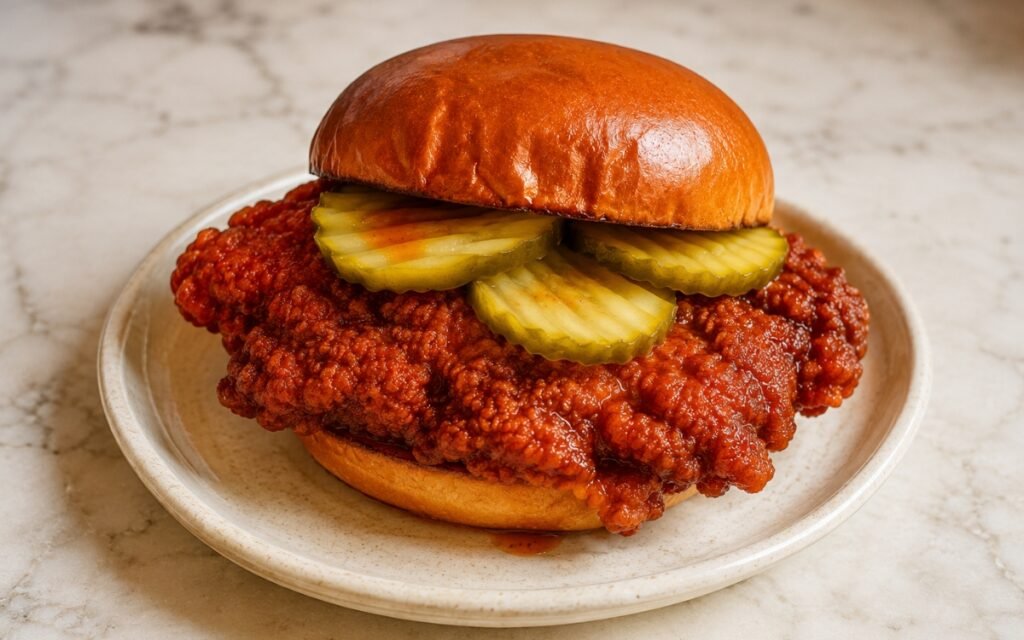
Nashville Hot Chicken Sandwich
Double-dredged, cold-water-rehydrated fried chicken coated in a fiery Nashville hot glaze, served on toasted brioche with mayonnaise and dill pickles.
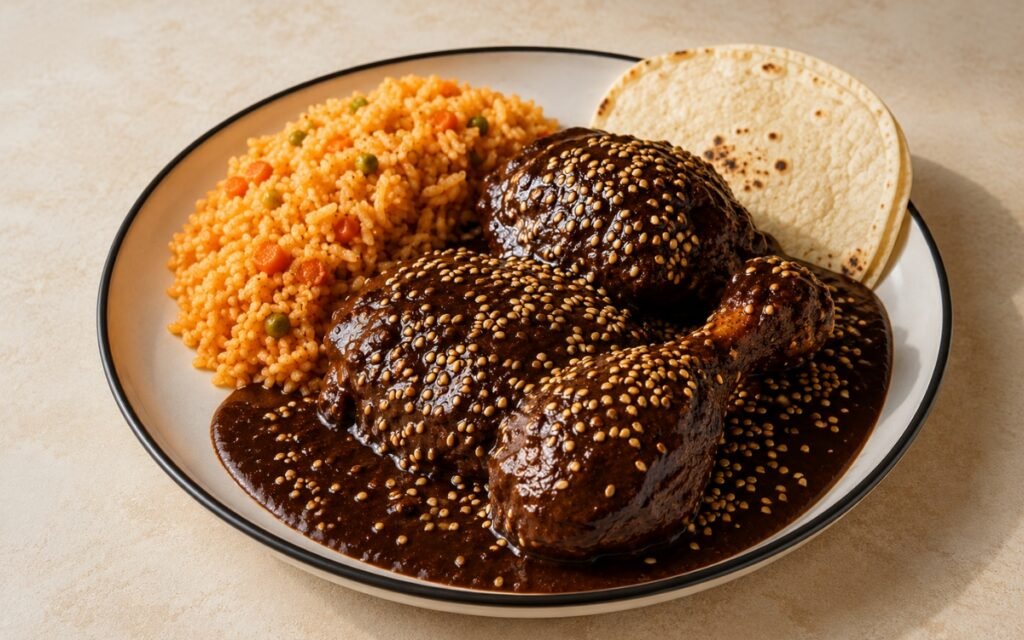
Chicken Mole Poblano
Gently poached chicken finished in deep, glossy mole poblano sauce, topped with toasted sesame seeds, served with Mexican rice and warm tortillas.
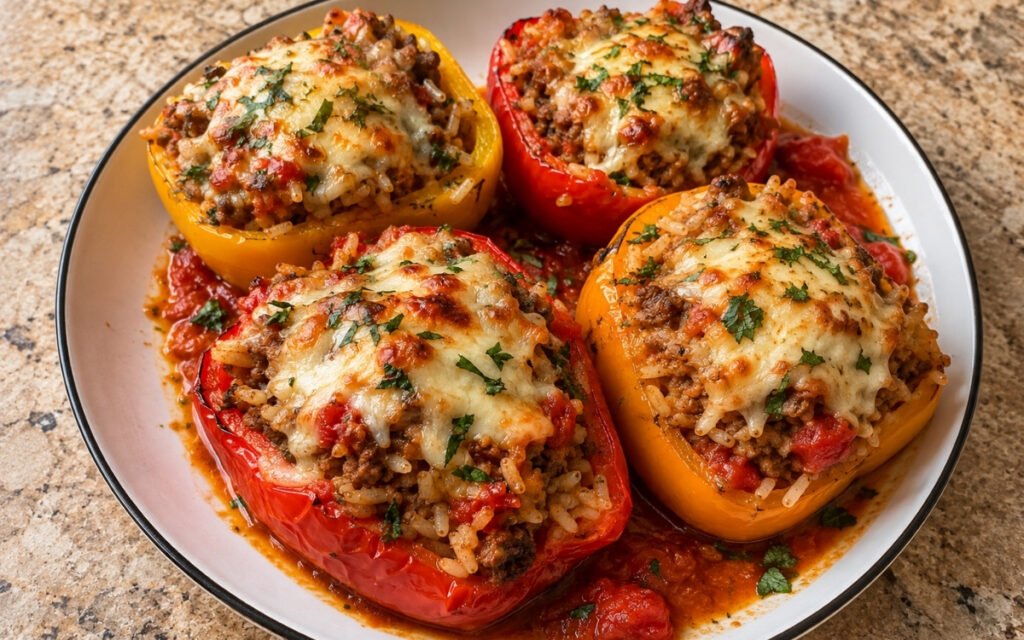
Italian Stuffed Peppers
Halved bell peppers filled with beef, pork, rice, onion, garlic, tomato sauce, herbs and cheese, baked over tomato sauce until tender.
Sándwich Ahogado (Torta Ahogada)
Ingredients
Method
- Place the thinly sliced red onion in a bowl. In a separate bowl or jug, combine the vinegar, hot water, sugar, salt, and lime juice. Stir until the sugar and salt dissolve fully. Pour over the onion and toss well. Let the onion pickle for at least 30 minutes, stirring once or twice during that time. It can sit longer while the pork cooks. The onion should lose its harsh raw bite and turn bright pink while still keeping a light crunch. It should taste sharp, lightly sweet, and clean. Using hot water to dissolve the sugar and salt fully before it ever touches the onion is what allows both to distribute evenly through the brine — undissolved granules in a cold liquid would settle unevenly rather than seasoning the pickle consistently.
- Season the pork shoulder pieces evenly with the salt and black pepper. Heat a heavy pot or Dutch oven over medium-high heat. Add the neutral oil and brown the pork in batches until it develops good golden-brown edges on multiple sides. Do not rush this step — the browned fond will deepen the final flavor. Return all the pork to the pot. Add the chopped white onion, smashed garlic, orange juice, lime juice, water or stock, bay leaves, oregano, cumin, cinnamon, and the 60g lard. Bring to a gentle simmer, then reduce the heat to low. Cover partially and cook for 1 hour 45 minutes to 2 hours, stirring once or twice, until the pork is fully tender. Transfer the pork to a tray or bowl once tender. Discard the bay leaves. Simmer the remaining liquid uncovered for 10–15 minutes until reduced and more concentrated. Shred or break the pork into chunky bite-size pieces — not too fine. Return it to a large skillet or wide pan with a few spoonfuls of the reduced cooking liquid and enough extra lard or pork fat as needed. Cook over medium-high heat until parts of the pork crisp lightly at the edges while the interior stays juicy. The pork should be tender enough to pull apart easily, but the best torta ahogada filling is not mushy. It should have juicy interior strands and browned crisp edges. Searing the pork thoroughly before it ever meets the braising liquid builds a genuine fond on the pot’s surface — that browned residue gets scraped up and dissolved back into the liquid as it braises, carrying concentrated flavour directly into the finished carnitas that pale, unseared pork simply wouldn’t produce.
- Heat a dry skillet over medium heat. Toast the dried chiles de árbol for 10–20 seconds per side, just until fragrant and slightly deepened in color. Do not let them blacken or they will turn bitter. Place the toasted chiles in a bowl and cover with hot water. Let them soak for 10 minutes until softened. In the same skillet, char the Roma tomatoes, white onion, and garlic lightly until they show some blistering and softened edges. Drain the soaked chiles and add them to a blender with the charred tomatoes, onion, garlic, 500ml hot water or light stock or reserved pork liquid, vinegar, salt, and oregano. Blend until very smooth. Pour the sauce into a saucepan and simmer gently for 8–10 minutes. Adjust with a little more liquid if needed — this sauce should be thinner than a taco salsa because it needs to soak the bread and pool around the sandwich. Taste and adjust salt. The finished sauce should be vivid red, spicy, smooth, and pourable. It should taste bold and hot, but not raw, bitter, or too thick. Toasting the chiles only briefly, watching closely to avoid any blackening, protects the sauce’s flavour from the genuine bitterness scorched chile skins would introduce — that brief toast is meant to wake up aromatic oils, not char the chile.
- If desired, warm the rolls briefly in the oven for 3–5 minutes so the crust refreshes and the interior softens slightly. Slice each roll lengthwise, keeping one side lightly hinged if possible. Do not hollow them out aggressively — the bread needs enough interior to absorb sauce without immediately collapsing. The ideal roll is crusty outside and still sturdy. A soft bun will fall apart too quickly and won’t give the proper torta ahogada texture. Leaving the roll’s interior crumb largely intact, rather than scooping it out, gives the bread genuine mass to absorb the sauce into — an aggressively hollowed roll would have far less structure left to hold together once that sauce starts soaking in.
- Fill each roll generously with warm carnitas. Pack the pork in generously, but avoid compressing it too tightly. Place each sandwich on a shallow plate or bowl. Spoon or ladle the warm chile de árbol sauce over the top and around the sides until the sandwich is well soaked and the sauce pools around it. You can lightly drown it or fully drench it depending on preference, but classical torta ahogada should be properly soaked. Top generously with the quick pickled red onion. Serve immediately. The outside of the roll should begin absorbing the sauce almost immediately, while the center still retains enough structure to hold the pork. The sandwich should be messy, juicy, and eaten right away. This dish’s very name, “drowned sandwich,” describes exactly the intended presentation — the sauce isn’t a light drizzle but a genuine soaking, which is precisely why a sturdy, crusty roll and a properly thin, pourable sauce both matter as much as they do.