Ingredients
Method
Make the Quick Pickled Red Onion
- Place the thinly sliced red onion in a bowl. In a separate bowl or jug, combine the vinegar, hot water, sugar, salt, and lime juice. Stir until the sugar and salt dissolve fully. Pour over the onion and toss well. Let the onion pickle for at least 30 minutes, stirring once or twice during that time. It can sit longer while the pork cooks. The onion should lose its harsh raw bite and turn bright pink while still keeping a light crunch. It should taste sharp, lightly sweet, and clean. Using hot water to dissolve the sugar and salt fully before it ever touches the onion is what allows both to distribute evenly through the brine — undissolved granules in a cold liquid would settle unevenly rather than seasoning the pickle consistently.
Braise the Carnitas
- Season the pork shoulder pieces evenly with the salt and black pepper. Heat a heavy pot or Dutch oven over medium-high heat. Add the neutral oil and brown the pork in batches until it develops good golden-brown edges on multiple sides. Do not rush this step — the browned fond will deepen the final flavor. Return all the pork to the pot. Add the chopped white onion, smashed garlic, orange juice, lime juice, water or stock, bay leaves, oregano, cumin, cinnamon, and the 60g lard. Bring to a gentle simmer, then reduce the heat to low. Cover partially and cook for 1 hour 45 minutes to 2 hours, stirring once or twice, until the pork is fully tender. Transfer the pork to a tray or bowl once tender. Discard the bay leaves. Simmer the remaining liquid uncovered for 10–15 minutes until reduced and more concentrated. Shred or break the pork into chunky bite-size pieces — not too fine. Return it to a large skillet or wide pan with a few spoonfuls of the reduced cooking liquid and enough extra lard or pork fat as needed. Cook over medium-high heat until parts of the pork crisp lightly at the edges while the interior stays juicy. The pork should be tender enough to pull apart easily, but the best torta ahogada filling is not mushy. It should have juicy interior strands and browned crisp edges. Searing the pork thoroughly before it ever meets the braising liquid builds a genuine fond on the pot's surface — that browned residue gets scraped up and dissolved back into the liquid as it braises, carrying concentrated flavour directly into the finished carnitas that pale, unseared pork simply wouldn't produce.
Make the Chile de Árbol Sauce
- Heat a dry skillet over medium heat. Toast the dried chiles de árbol for 10–20 seconds per side, just until fragrant and slightly deepened in color. Do not let them blacken or they will turn bitter. Place the toasted chiles in a bowl and cover with hot water. Let them soak for 10 minutes until softened. In the same skillet, char the Roma tomatoes, white onion, and garlic lightly until they show some blistering and softened edges. Drain the soaked chiles and add them to a blender with the charred tomatoes, onion, garlic, 500ml hot water or light stock or reserved pork liquid, vinegar, salt, and oregano. Blend until very smooth. Pour the sauce into a saucepan and simmer gently for 8–10 minutes. Adjust with a little more liquid if needed — this sauce should be thinner than a taco salsa because it needs to soak the bread and pool around the sandwich. Taste and adjust salt. The finished sauce should be vivid red, spicy, smooth, and pourable. It should taste bold and hot, but not raw, bitter, or too thick. Toasting the chiles only briefly, watching closely to avoid any blackening, protects the sauce's flavour from the genuine bitterness scorched chile skins would introduce — that brief toast is meant to wake up aromatic oils, not char the chile.
Prepare the Rolls
- If desired, warm the rolls briefly in the oven for 3–5 minutes so the crust refreshes and the interior softens slightly. Slice each roll lengthwise, keeping one side lightly hinged if possible. Do not hollow them out aggressively — the bread needs enough interior to absorb sauce without immediately collapsing. The ideal roll is crusty outside and still sturdy. A soft bun will fall apart too quickly and won't give the proper torta ahogada texture. Leaving the roll's interior crumb largely intact, rather than scooping it out, gives the bread genuine mass to absorb the sauce into — an aggressively hollowed roll would have far less structure left to hold together once that sauce starts soaking in.
Assemble the Torta Ahogada
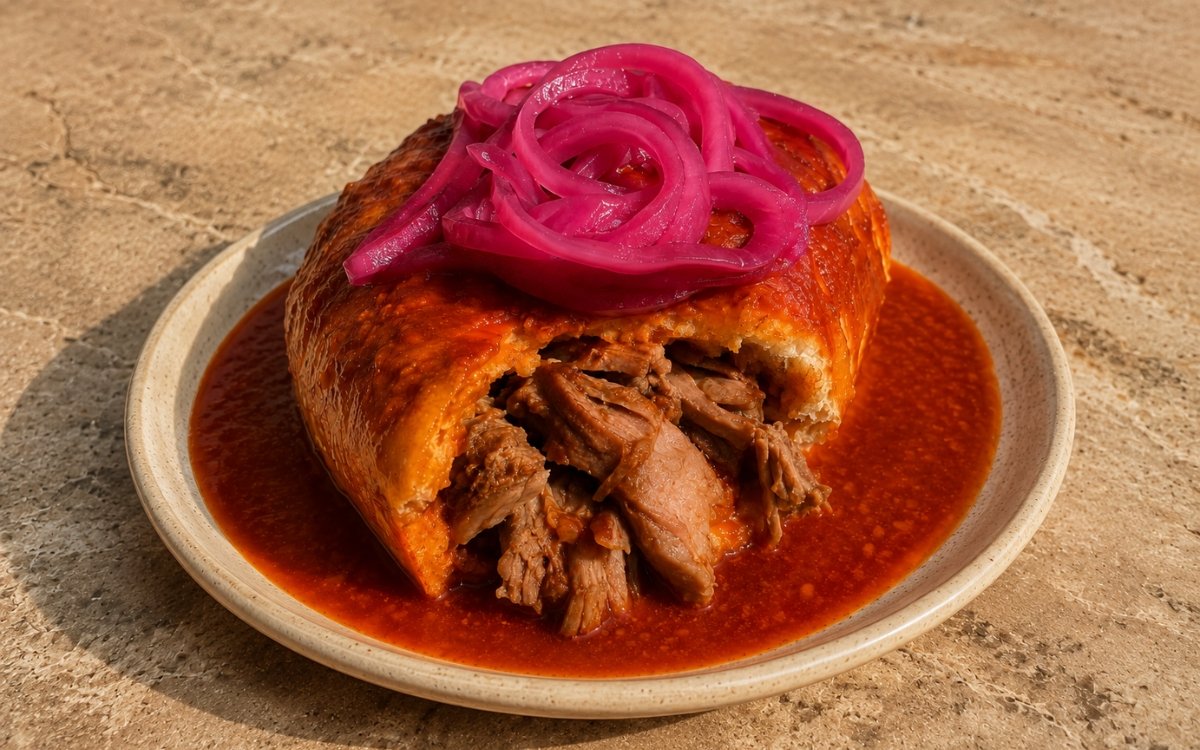
- Fill each roll generously with warm carnitas. Pack the pork in generously, but avoid compressing it too tightly. Place each sandwich on a shallow plate or bowl. Spoon or ladle the warm chile de árbol sauce over the top and around the sides until the sandwich is well soaked and the sauce pools around it. You can lightly drown it or fully drench it depending on preference, but classical torta ahogada should be properly soaked. Top generously with the quick pickled red onion. Serve immediately. The outside of the roll should begin absorbing the sauce almost immediately, while the center still retains enough structure to hold the pork. The sandwich should be messy, juicy, and eaten right away. This dish's very name, "drowned sandwich," describes exactly the intended presentation — the sauce isn't a light drizzle but a genuine soaking, which is precisely why a sturdy, crusty roll and a properly thin, pourable sauce both matter as much as they do.
Notes
Make the Quick Pickled Red Onion
Place the thinly sliced red onion in a bowl. In a separate bowl or jug, combine the vinegar, hot water, sugar, salt, and lime juice. Stir until the sugar and salt dissolve fully. Pour over the onion and toss well. Let the onion pickle for at least 30 minutes, stirring once or twice during that time. It can sit longer while the pork cooks. The onion should lose its harsh raw bite and turn bright pink while still keeping a light crunch. It should taste sharp, lightly sweet, and clean. Using hot water to dissolve the sugar and salt fully before it ever touches the onion is what allows both to distribute evenly through the brine — undissolved granules in a cold liquid would settle unevenly rather than seasoning the pickle consistently.
Braise the Carnitas
Season the pork shoulder pieces evenly with the salt and black pepper. Heat a heavy pot or Dutch oven over medium-high heat. Add the neutral oil and brown the pork in batches until it develops good golden-brown edges on multiple sides. Do not rush this step — the browned fond will deepen the final flavor. Return all the pork to the pot. Add the chopped white onion, smashed garlic, orange juice, lime juice, water or stock, bay leaves, oregano, cumin, cinnamon, and the 60g lard. Bring to a gentle simmer, then reduce the heat to low. Cover partially and cook for 1 hour 45 minutes to 2 hours, stirring once or twice, until the pork is fully tender. Transfer the pork to a tray or bowl once tender. Discard the bay leaves. Simmer the remaining liquid uncovered for 10–15 minutes until reduced and more concentrated. Shred or break the pork into chunky bite-size pieces — not too fine. Return it to a large skillet or wide pan with a few spoonfuls of the reduced cooking liquid and enough extra lard or pork fat as needed. Cook over medium-high heat until parts of the pork crisp lightly at the edges while the interior stays juicy. The pork should be tender enough to pull apart easily, but the best torta ahogada filling is not mushy. It should have juicy interior strands and browned crisp edges. Searing the pork thoroughly before it ever meets the braising liquid builds a genuine fond on the pot's surface — that browned residue gets scraped up and dissolved back into the liquid as it braises, carrying concentrated flavour directly into the finished carnitas that pale, unseared pork simply wouldn't produce.
Make the Chile de Árbol Sauce
Heat a dry skillet over medium heat. Toast the dried chiles de árbol for 10–20 seconds per side, just until fragrant and slightly deepened in color. Do not let them blacken or they will turn bitter. Place the toasted chiles in a bowl and cover with hot water. Let them soak for 10 minutes until softened. In the same skillet, char the Roma tomatoes, white onion, and garlic lightly until they show some blistering and softened edges. Drain the soaked chiles and add them to a blender with the charred tomatoes, onion, garlic, 500ml hot water or light stock or reserved pork liquid, vinegar, salt, and oregano. Blend until very smooth. Pour the sauce into a saucepan and simmer gently for 8–10 minutes. Adjust with a little more liquid if needed — this sauce should be thinner than a taco salsa because it needs to soak the bread and pool around the sandwich. Taste and adjust salt. The finished sauce should be vivid red, spicy, smooth, and pourable. It should taste bold and hot, but not raw, bitter, or too thick. Toasting the chiles only briefly, watching closely to avoid any blackening, protects the sauce's flavour from the genuine bitterness scorched chile skins would introduce — that brief toast is meant to wake up aromatic oils, not char the chile.
Prepare the Rolls
If desired, warm the rolls briefly in the oven for 3–5 minutes so the crust refreshes and the interior softens slightly. Slice each roll lengthwise, keeping one side lightly hinged if possible. Do not hollow them out aggressively — the bread needs enough interior to absorb sauce without immediately collapsing. The ideal roll is crusty outside and still sturdy. A soft bun will fall apart too quickly and won't give the proper torta ahogada texture. Leaving the roll's interior crumb largely intact, rather than scooping it out, gives the bread genuine mass to absorb the sauce into — an aggressively hollowed roll would have far less structure left to hold together once that sauce starts soaking in.
Assemble the Torta Ahogada
Fill each roll generously with warm carnitas. Pack the pork in generously, but avoid compressing it too tightly. Place each sandwich on a shallow plate or bowl. Spoon or ladle the warm chile de árbol sauce over the top and around the sides until the sandwich is well soaked and the sauce pools around it. You can lightly drown it or fully drench it depending on preference, but classical torta ahogada should be properly soaked. Top generously with the quick pickled red onion. Serve immediately. The outside of the roll should begin absorbing the sauce almost immediately, while the center still retains enough structure to hold the pork. The sandwich should be messy, juicy, and eaten right away. This dish's very name, "drowned sandwich," describes exactly the intended presentation — the sauce isn't a light drizzle but a genuine soaking, which is precisely why a sturdy, crusty roll and a properly thin, pourable sauce both matter as much as they do.