
Green Pesto Couscous
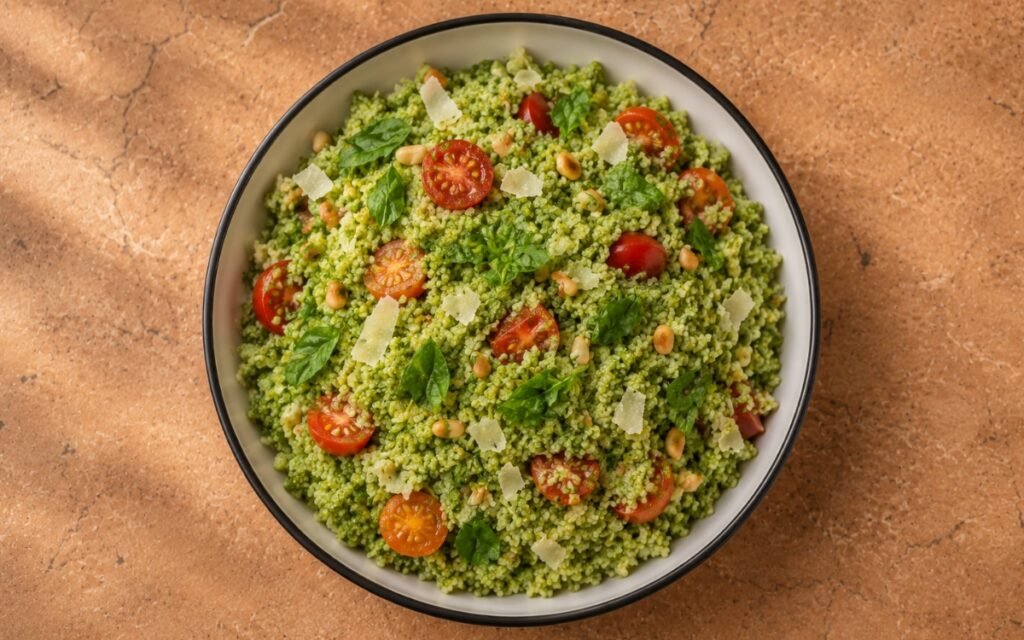
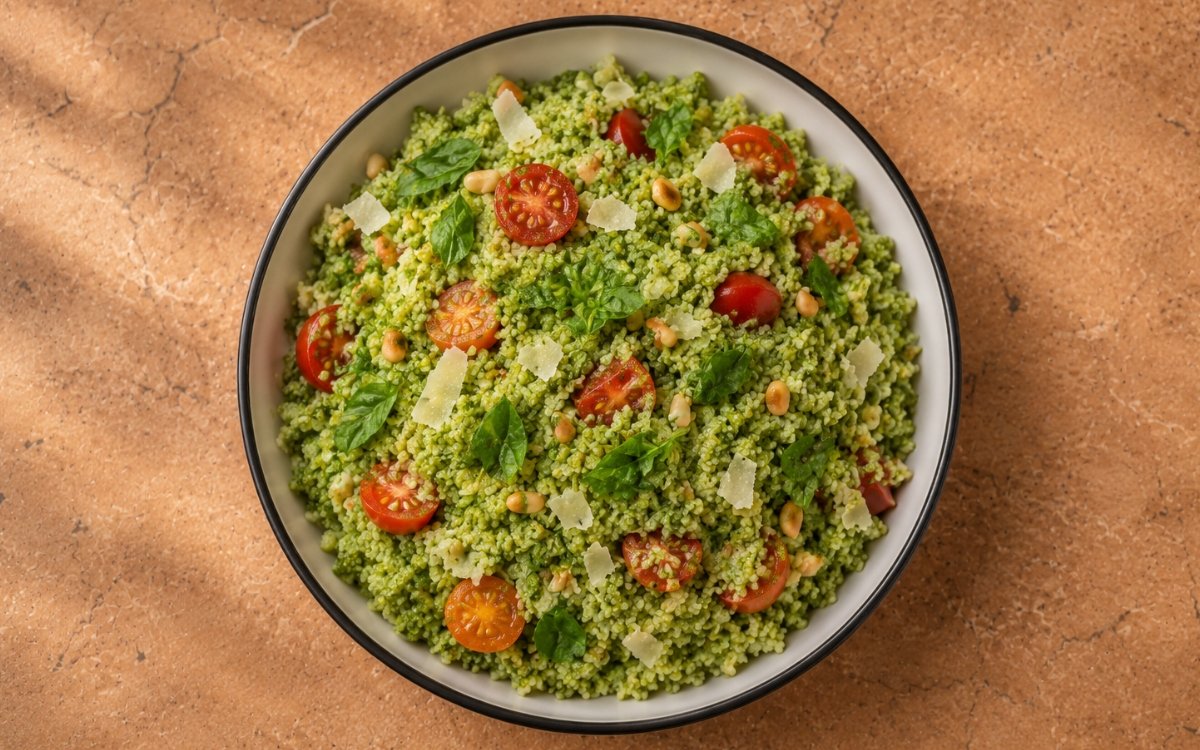
Green Pesto Couscous features delicate couscous pearls coated in vibrant basil pesto, creating a colorful, flavor-packed side dish with Italian flair. The combination of tender couscous and aromatic pesto with garlic, pine nuts, and Parmesan is both elegant and comforting. This beautiful green dish elevates any meal from simple to sophisticated. The pesto is built with genuine care around basil’s fragility — pulsed rather than run continuously, with oil added slowly while the processor works, and blending stopped the moment it’s smooth rather than continuing longer than necessary, since extended processing generates friction heat that warms the basil and dulls both its vivid green color and its bright, fresh flavor. The couscous itself follows the same core technique used in this collection’s other instant couscous preparations — genuinely boiling liquid, a single stir, and a passive 5-minute hydration off the heat entirely. Combining the pesto with the couscous while the grains are still warm, but not so hot that they’re actively steaming, is a genuinely careful balance: warmth helps the pesto spread and coat every grain evenly, but excessive heat would darken the basil and mute the pesto’s fresh character just as surely as overblending would. The result is a vividly green, richly flavored couscous that stays visually and flavorfully vibrant.
Prep Time : 10 min
Cook Time : 10 min
Servings : 4
10 min
10 min
4
Ingredients
For the Couscous
• 300g instant couscous
• 450ml vegetable stock — this one on Amazon
• 30ml olive oil
• 6g salt
For the Pesto
• 60g fresh basil leaves
• 30g pine nuts
• 40g Parmesan cheese, grated — this one on Amazon
• 2 garlic cloves
• 80ml extra virgin olive oil — this one on Amazon
• 3g salt
• 1g black pepper
• 15ml lemon juice
For Finishing
• 30g cherry tomatoes, halved
• 20g Parmesan cheese, shaved
• 15g fresh basil leaves, torn
This post may contain affiliate links. As an Amazon Associate I earn from qualifying purchases, at no additional cost to you.
Directions
- Make the Pesto
In a food processor, combine the 60g basil, 30g pine nuts, 40g Parmesan, 2 garlic cloves, 3g salt, and 1g black pepper. Pulse until finely chopped, using short bursts rather than running the machine continuously, then slowly drizzle in the 80ml olive oil while the processor runs until smooth. Add the 15ml lemon juice and pulse just to combine; don’t overblend, or the pesto can warm up and lose freshness. Extended blending generates real friction heat within the mixture, and that heat is specifically what causes basil to darken and lose some of its bright, grassy flavor, so stopping as soon as the pesto reaches a smooth consistency genuinely matters here. - Prepare Couscous
Bring the 450ml vegetable stock, 30ml olive oil, and 6g salt to a rolling boil in a medium saucepan, letting it reach a genuine, sustained boil rather than just a light simmer, since couscous needs truly hot liquid to properly hydrate during its brief resting period. Remove from heat, stir in the 300g couscous once, cover tightly, and let stand 5 minutes off heat. - Fluff Couscous
Uncover and fluff thoroughly with a fork, breaking clumps and separating grains. Pay attention to the edges, which can be drier — pull them into the center as you fluff, using a gentle lifting motion rather than pressing down, so you’re separating the grains rather than compacting them back together. - Combine with Pesto
Add the pesto to the warm couscous and toss gently but thoroughly until every grain is coated. The couscous should be warm enough to help the pesto spread evenly and cling to each grain, but not so hot that the basil in the pesto darkens on contact; if the couscous is steaming aggressively when you’re ready for this step, fluff it for an extra minute first to let some of that heat dissipate before adding the pesto. This timing genuinely matters for both the visual vibrancy and the fresh flavor of the finished dish. - Garnish and Serve
Transfer to a serving bowl and top with the 30g cherry tomatoes, 20g shaved Parmesan, and 15g torn basil. Serve warm or at room temperature.
*Notes :
- The pesto-making technique here specifically protects basil’s fragile character. Pulsing rather than running the processor continuously, and stopping the moment the mixture reaches a smooth consistency, both limit the amount of friction heat generated during blending — that heat is what causes basil to oxidize and darken more quickly, along with losing some of its brightest, most grassy-fresh flavor notes.
- Timing when the pesto meets the couscous is a genuine balancing act rather than a minor detail. Couscous that’s still actively steaming will visibly darken the pesto’s vivid green color on contact and dull its fresh flavor, while couscous that’s gone completely cold won’t allow the pesto to spread and coat the grains as evenly. The brief extra fluffing step, if the couscous seems too hot, is a simple and effective way to find that middle point.
- Slowly drizzling the olive oil into the processor while it runs, rather than dumping it in all at once, helps the pesto emulsify into a smoother, more cohesive texture rather than separating into an oily, grainy result.
Why This Recipe Works
This recipe works because the pesto is made with genuine care to protect basil’s fragile color and flavor, using short pulses and a slow oil addition rather than continuous blending. The couscous follows the reliable boiling-liquid, single-stir, passive-hydration technique used throughout this collection’s couscous preparations.
Combining the pesto with couscous at the right warmth — neither too hot nor too cold — ensures even coating without dulling the pesto’s vibrancy. And fresh garnishes at the very end add color, texture, and brightness on top of an already flavorful base.
Ingredient Breakdown
Instant Couscous
The foundation — cooked through the reliable boiling-liquid and passive-hydration method.
Fresh Basil Pesto, Pulsed With Care
The defining flavor — protected from friction heat that would dull its color and freshness.
Slowly Drizzled Olive Oil
The emulsification technique — producing a smoother, more cohesive pesto texture.
Warm (Not Hot) Couscous for Combining
The temperature balance — allowing even coating without darkening the pesto.
Flavor Structure Explained
This Green Pesto Couscous follows a vibrant herbaceous balance model:
- Mild grain core (couscous)
- Fresh basil foundation (green pesto)
- Nutty savory depth (pine nuts and Parmesan)
- Aromatic sharpness (garlic)
- Fresh finishing contrast (cherry tomatoes, shaved Parmesan, torn basil)
Couscous defines the foundation with a mild, absorbent structure that carries the pesto evenly through every grain. Fresh basil pesto provides the main flavor register, bringing bright grassy aromatics, savory richness, and a vivid green character. Garlic adds sharpness, while toasted pine nuts and Parmesan give the pesto nutty depth, saltiness, and body. Cherry tomatoes finish with juicy acidity and color, cutting through the richness of the pesto without overpowering it. Shaved Parmesan reinforces the savory register, while torn basil restores fresh herbal lift at the end. The result is a couscous preparation built around freshness, texture, and balance, where pesto richness, bright herbs, and clean vegetable contrast remain clearly defined.
Common Mistakes to Avoid
- Overblending the Pesto – Generates friction heat that darkens the basil and dulls its fresh flavor. Always pulse in short bursts and stop once smooth.
- Adding the Oil All at Once Instead of Drizzling – Risks a separated, oily texture rather than a smooth emulsion. Always drizzle slowly while the processor runs.
- Combining the Pesto With Couscous That’s Too Hot – Darkens the pesto’s vivid color and dulls its freshness. Always let overly steaming couscous cool slightly first.
- Using Liquid That Isn’t Fully Boiling for the Couscous – Prevents proper hydration during the brief resting period. Always bring the stock to a genuine boil.
- Overstirring the Couscous When Adding It to the Liquid – Causes clumping. Always stir just once.
Variations
With Tomato
For a warmer, tomato-based couscous direction, see the Moroccan Tomato Couscous.
With Lemon Herbs
For a brighter, citrus-and-herb couscous preparation, see the Lemon Herb Couscous.
With Sun-Dried Tomatoes
Fold in chopped sun-dried tomatoes along with the cherry tomatoes for deeper, more concentrated tomato flavor.
With Walnuts
Substitute walnuts for pine nuts in the pesto for a different, slightly more bitter nutty character.
Storage & Make-Ahead
Pesto can be refrigerated for up to 3 days in a sealed container, with a thin layer of olive oil on top to help prevent browning.
Assembled couscous is best eaten the same day for maximum colour and freshness. It can be refrigerated for up to 2 days, though the pesto’s vibrant green colour will dull somewhat over time.
Frequently Asked Questions
Why does the pesto need to be pulsed rather than blended continuously?
Continuous blending generates friction heat within the mixture, and that heat is specifically what causes basil to oxidize and darken more quickly while also dulling some of its brightest, freshest flavor notes. Short pulses, stopping as soon as the pesto reaches a smooth consistency, limit that heat buildup and preserve both the color and flavor.
Why does the temperature of the couscous matter so much when combining it with the pesto?
Couscous that’s still actively steaming will visibly darken the pesto’s vivid green color and dull its fresh flavor on contact, since that heat continues affecting the basil even after it’s already been processed. Couscous that’s cooled too much, on the other hand, won’t let the pesto spread and coat every grain as evenly. Finding that warm-but-not-hot middle point is what preserves both visual vibrancy and flavor.
Why drizzle the oil into the pesto slowly instead of adding it all at once?
Slowly drizzling the oil while the processor runs allows it to properly emulsify with the basil, garlic, pine nuts, and Parmesan, producing a smooth, cohesive texture. Adding all the oil at once risks the mixture separating into something oilier and grainier rather than achieving that same smooth consistency.
What should I serve alongside this couscous?
This pairs naturally with the Garlic Shrimp Skewers or Grilled Salmon Fillets, and for other couscous directions, try the Moroccan Tomato Couscous or Lemon Herb Couscous.
Nutrition Facts
( per serving )
Calories
~420 kcal
Protein
11 g
Fat
24 g
Carbs
43 g
Calories
~420 kcal
Protein
11 g
Fat
24 g
Carbs
43 g
Related Recipes
Related Recipes

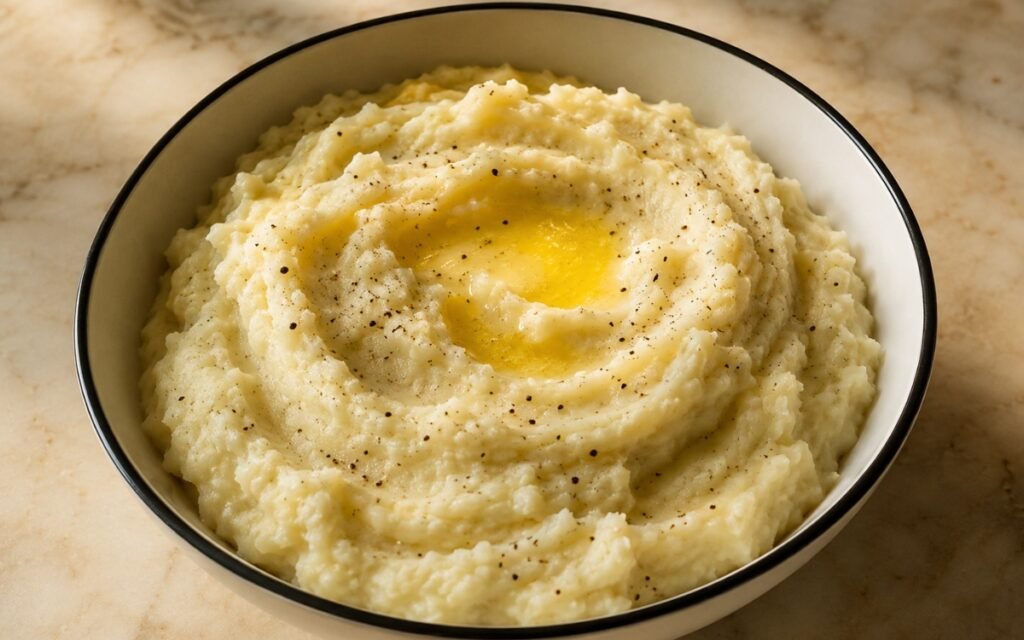
Classic Mashed Potatoes
Creamy, buttery mashed potatoes with perfectly smooth texture – the ultimate comfort food side dish.
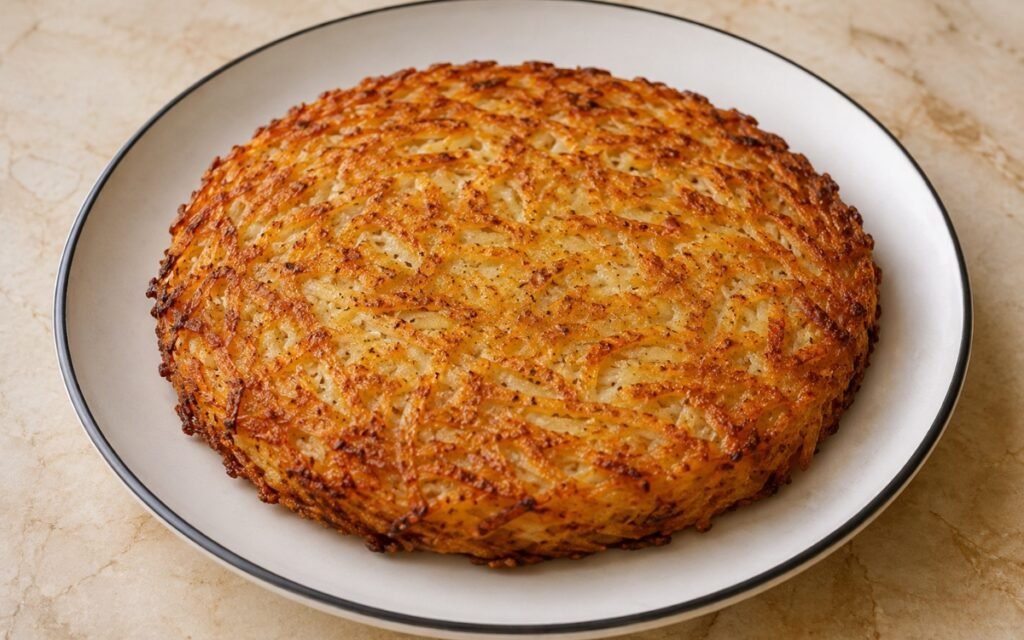
Crispy Hash Brown Potatoes
Shredded potatoes rinsed, wrung completely dry, seasoned, pressed into a cake, fried undisturbed until golden on both sides. Crisp and tender.
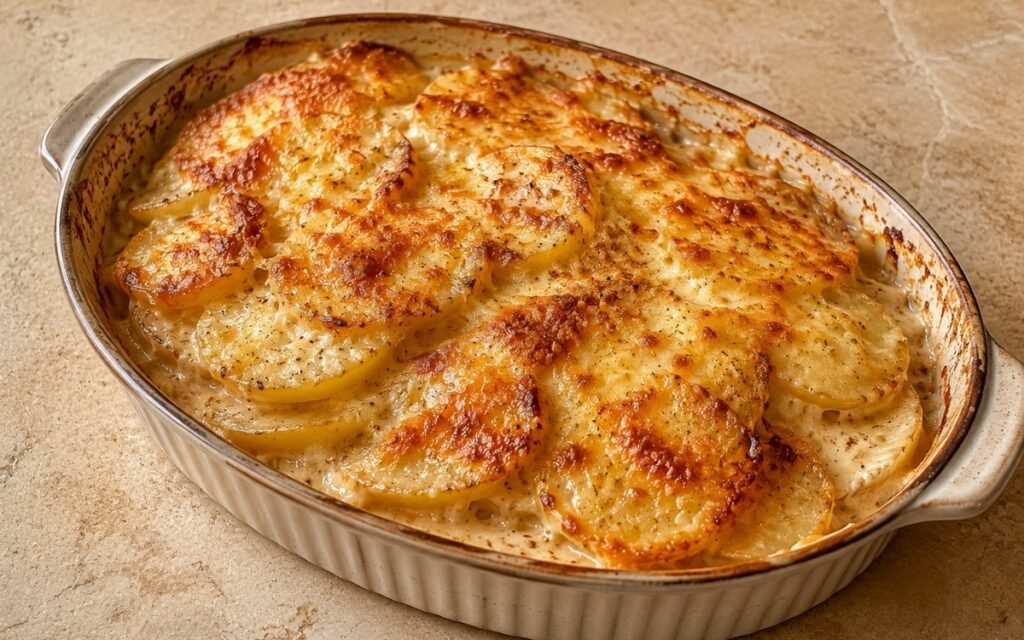
Creamy Scalloped Potatoes
Potatoes sliced evenly, layered with roux-based gruyere cream sauce, baked covered then uncovered until golden. Rested. Velvety and rich.
You might also like
You might also like
Tiramisu Iced Latte
Strong espresso and cold milk topped with a soft, flowing mascarpone cream cap and a light cocoa dusting.
Grilled Halloumi Burger with Roasted Peppers
Golden grilled halloumi in a toasted brioche bun with caramelized peppers, peppery rocket, and creamy harissa-lime mayo.
Spicy Italian ‘Nduja Pasta
Calabrian ‘nduja melted into olive oil until it becomes the sauce — mascarpone finish, 30 minutes.

Green Pesto Couscous
Ingredients
Method
- In a food processor, combine the 60g basil, 30g pine nuts, 40g Parmesan, 2 garlic cloves, 3g salt, and 1g black pepper. Pulse until finely chopped, using short bursts rather than running the machine continuously, then slowly drizzle in the 80ml olive oil while the processor runs until smooth. Add the 15ml lemon juice and pulse just to combine; don’t overblend, or the pesto can warm up and lose freshness. Extended blending generates real friction heat within the mixture, and that heat is specifically what causes basil to darken and lose some of its bright, grassy flavor, so stopping as soon as the pesto reaches a smooth consistency genuinely matters here.
- Bring the 450ml vegetable stock, 30ml olive oil, and 6g salt to a rolling boil in a medium saucepan, letting it reach a genuine, sustained boil rather than just a light simmer, since couscous needs truly hot liquid to properly hydrate during its brief resting period. Remove from heat, stir in the 300g couscous once, cover tightly, and let stand 5 minutes off heat.
- Uncover and fluff thoroughly with a fork, breaking clumps and separating grains. Pay attention to the edges, which can be drier — pull them into the center as you fluff, using a gentle lifting motion rather than pressing down, so you’re separating the grains rather than compacting them back together.
- Add the pesto to the warm couscous and toss gently but thoroughly until every grain is coated. The couscous should be warm enough to help the pesto spread evenly and cling to each grain, but not so hot that the basil in the pesto darkens on contact; if the couscous is steaming aggressively when you’re ready for this step, fluff it for an extra minute first to let some of that heat dissipate before adding the pesto. This timing genuinely matters for both the visual vibrancy and the fresh flavor of the finished dish.
- Transfer to a serving bowl and top with the 30g cherry tomatoes, 20g shaved Parmesan, and 15g torn basil. Serve warm or at room temperature.