Ingredients
Method
Make the Pesto
- In a food processor, combine the 60g basil, 30g pine nuts, 40g Parmesan, 2 garlic cloves, 3g salt, and 1g black pepper. Pulse until finely chopped, using short bursts rather than running the machine continuously, then slowly drizzle in the 80ml olive oil while the processor runs until smooth. Add the 15ml lemon juice and pulse just to combine; don't overblend, or the pesto can warm up and lose freshness. Extended blending generates real friction heat within the mixture, and that heat is specifically what causes basil to darken and lose some of its bright, grassy flavor, so stopping as soon as the pesto reaches a smooth consistency genuinely matters here.
Prepare Couscous
- Bring the 450ml vegetable stock, 30ml olive oil, and 6g salt to a rolling boil in a medium saucepan, letting it reach a genuine, sustained boil rather than just a light simmer, since couscous needs truly hot liquid to properly hydrate during its brief resting period. Remove from heat, stir in the 300g couscous once, cover tightly, and let stand 5 minutes off heat.
Fluff Couscous
- Uncover and fluff thoroughly with a fork, breaking clumps and separating grains. Pay attention to the edges, which can be drier — pull them into the center as you fluff, using a gentle lifting motion rather than pressing down, so you're separating the grains rather than compacting them back together.
Combine with Pesto
- Add the pesto to the warm couscous and toss gently but thoroughly until every grain is coated. The couscous should be warm enough to help the pesto spread evenly and cling to each grain, but not so hot that the basil in the pesto darkens on contact; if the couscous is steaming aggressively when you're ready for this step, fluff it for an extra minute first to let some of that heat dissipate before adding the pesto. This timing genuinely matters for both the visual vibrancy and the fresh flavor of the finished dish.
Garnish and Serve
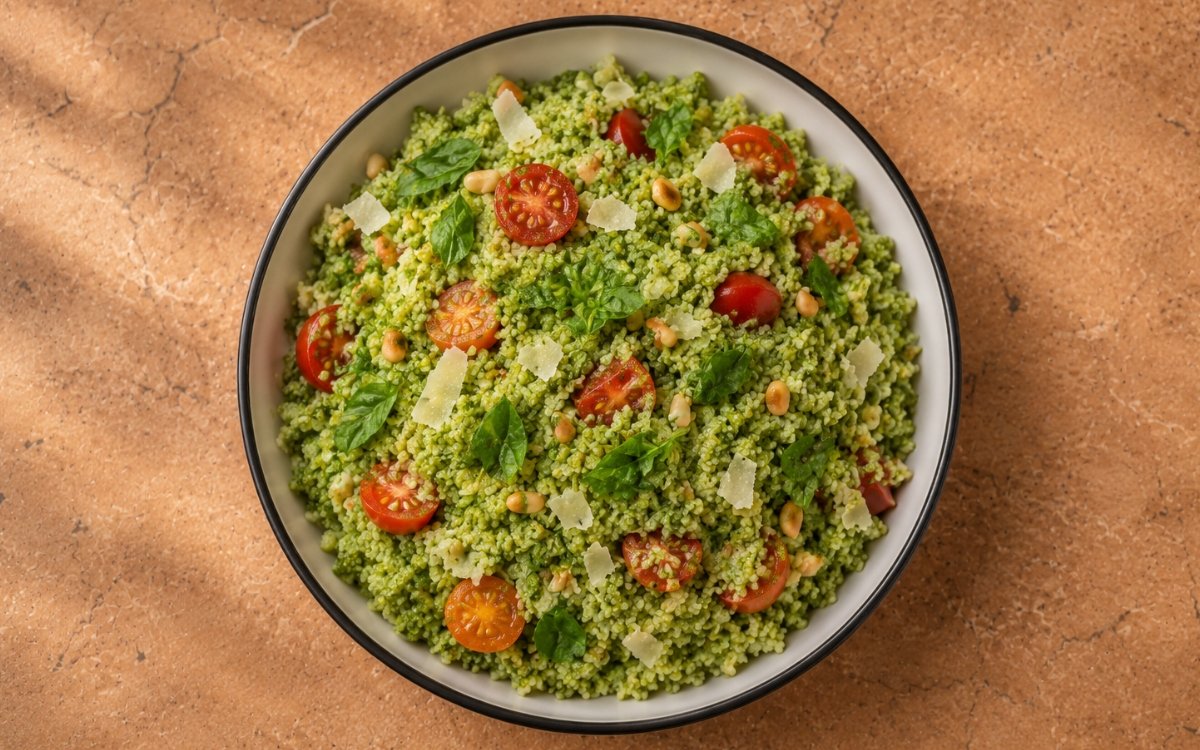
- Transfer to a serving bowl and top with the 30g cherry tomatoes, 20g shaved Parmesan, and 15g torn basil. Serve warm or at room temperature.
Notes
The pesto-making technique here specifically protects basil's fragile character. Pulsing rather than running the processor continuously, and stopping the moment the mixture reaches a smooth consistency, both limit the amount of friction heat generated during blending — that heat is what causes basil to oxidize and darken more quickly, along with losing some of its brightest, most grassy-fresh flavor notes.
Timing when the pesto meets the couscous is a genuine balancing act rather than a minor detail. Couscous that's still actively steaming will visibly darken the pesto's vivid green color on contact and dull its fresh flavor, while couscous that's gone completely cold won't allow the pesto to spread and coat the grains as evenly. The brief extra fluffing step, if the couscous seems too hot, is a simple and effective way to find that middle point.
Slowly drizzling the olive oil into the processor while it runs, rather than dumping it in all at once, helps the pesto emulsify into a smoother, more cohesive texture rather than separating into an oily, grainy result.