Manchego Stuffed Dates with Honey
Manchego stuffed dates with honey are an elegant Spanish-inspired tapa of 16 soft, plump Medjool dates opened along one side, pitted, and filled with a thick wedge of aged sheep’s milk Manchego, then warmed briefly in the oven until the fruit turns glossy and the cheese softens at the edges, and finished with golden honey, fresh thyme, and flakes of sea salt. Warming the dates only until the cheese just softens, rather than baking them until the Manchego melts, is the technique this whole tapa depends on for a firm, creamy wedge against a supple, caramel-like date — overheating toughens the skins and makes the cheese release oil, the same brief-heat principle used elsewhere in this collection whenever a cheese is warmed rather than melted. Choosing a Manchego Curado is what balances the sweetness of the fruit with a nutty, savoury edge. Adding the honey, thyme, and salt after the oven is what keeps their delicate flavours fresh. The payoff is a bite with real sweet-savoury contrast — rich dates, creamy ivory cheese, fragrant honey, and a salty finish.

- Prep Time : 15 min
- Total Time : 21 min
- Servings : 4
Ingredients
For the Stuffed Dates
- 16 large Medjool dates (about 400–480g), preferably soft and plump
- 200g Spanish Manchego cheese, preferably Manchego Curado aged 3–6 months, cut into 16 thick rectangular wedges (about 12–13g each)
For the Honey and Thyme Finish
- 45g mild Spanish honey, preferably orange blossom or wildflower honey
- 2g fresh thyme leaves
- 1g flaky sea salt
Directions
- Prepare and Pit the Dates
Preheat the oven to 170°C conventional or 160°C fan (340°F or 320°F) and line a baking tray with parchment. Choose 16 soft, plump Medjool dates with intact, naturally wrinkled skins, and with a small sharp knife cut a lengthwise slit along one side of each, deep enough only to expose the pit. Open each date gently with your fingers, lift out the pit without cutting through the opposite side, and check for any remaining fragments, leaving the date joined along its lower edge to form a natural pocket. Set them on the tray with the openings facing up. Whole dates are what hold the cheese securely. - Cut and Stuff the Manchego
Cut the rind from the 200g Manchego and slice the cheese into 16 thick rectangular wedges about 2.5–3cm long and 1–1.5cm thick, roughly 12–13g each. Press one wedge into each pitted date, letting the pale ivory cheese protrude slightly above the opening so it stays visible, and gently squeeze the sides of the date around it without hiding the top. Arrange the stuffed dates upright with a little space between them. Keeping the cheese in recognisable wedges rather than grating it is what preserves its firm, creamy contrast with the fruit. - Warm the Stuffed Dates
Slide the tray onto the middle rack of the preheated oven and warm the dates for 5–6 minutes, checking at 4 minutes, until the fruit turns soft and glossy and the cheese begins to soften at the edges while still holding its rectangular shape. Take the tray out as soon as the cheese is warmed through and the dates have a gentle sheen, then rest them for about 1 minute before moving them to a serving plate. Brief heat is what softens the cheese without melting it or letting it release oil. - Prepare the Honey and Thyme
Spoon the 45g honey into a small heatproof bowl and, if it is thick or crystallised, warm it gently over a bowl of warm water until it is fluid enough to fall in thin golden-amber ribbons without turning watery. Strip the 2g thyme leaves from their stems, keeping a few small tender sprigs for an optional natural presentation, and have the 1g flaky sea salt ready. Never boil or caramelise the honey. Its delicate floral flavour should stay fresh and distinct, which is what a gentle warm-water bath protects. - Drizzle, Garnish, and Serve
Move the 16 warm stuffed dates to an olive-green glazed serving plate, or divide them among four small plates, arranging them in a generous, slightly overlapping composition with the cheese-filled openings facing upward. Drizzle the warm honey over them in thin, irregular ribbons, about 11g per serving, letting a little settle into the wrinkles of the fruit and around the cheese, then scatter the thyme leaves lightly and finish with a few visible crystals of flaky salt. Serve at once while the dates are warm and the cheese is gently softened. Adding the finish last is what keeps each flavour distinct.
*Notes :
- Warming the dates for only 5–6 minutes deserves genuine recognition as the technique most directly responsible for the contrast between soft fruit and firm cheese. The oven softens the date and warms the Manchego through, whereas prolonged baking toughens the skins, makes the cheese release oil, and melts the wedge into the fruit, so the stuffed dates lose their distinct layers.
- Choosing Manchego Curado aged 3–6 months deserves the same attention this technique receives throughout this collection’s other cheese pairings. Its firm, nutty, relatively creamy texture holds its shape in the heat, whereas a very young Manchego is bland, and a Viejo is sharper, drier, and crumbly, and softens less evenly against the sweet date.
- Selecting soft, plump Medjool dates deserves genuine respect as the detail most directly responsible for a pocket that holds the cheese without tearing. Supple, slightly sticky fruit opens cleanly along one slit and heats into a glossy, caramel-like bite, whereas dry, hard dates split during stuffing and turn tough in the oven.
- Adding the honey, thyme, and salt after baking deserves attention as a genuine, checkable finishing cue rather than a casual flourish. A thin drizzle of mild honey keeps its floral aroma, thyme stays fragrant instead of scorched, and the flaky salt crystals remain crunchy, so the sweetness is balanced instead of cloying.
Why This Recipe Works
This recipe works because it keeps a very simple pairing in balance. Soft, plump Medjool dates supply caramel-like sweetness, and a firm wedge of Manchego Curado adds nutty, salty depth. A short warming of 5–6 minutes softens the fruit and takes the chill off the cheese without melting it or making it oily, so the wedge stays whole inside its pocket. Honey, thyme, and flaky salt added afterwards stay fresh and distinct. The result is a warm, glossy, sweet-savoury bite with a creamy, intact centre and a clean salty finish.
Ingredient Breakdown
Medjool Dates (16)
The sweet foundation — large, soft dates provide caramel-like flesh and a roomy pocket for a substantial wedge of cheese.
Manchego Curado (200g)
The savoury counterpoint — aged sheep’s milk cheese stays firm and nutty and balances the sweetness of the fruit.
Brief Warming (5–6 Minutes)
The critical technique — short oven heat softens the fruit and cheese edges without melting the wedge.
Mild Spanish Honey (45g)
The floral finish — orange blossom or wildflower honey adds a thin, glossy drizzle that does not overpower the sheep’s milk.
Fresh Thyme (2g)
The herbal accent — a light scatter adds a subtle aromatic note, used sparingly so that the cheese stays prominent.
Flaky Sea Salt (1g)
The finishing touch — a few crunchy crystals sharpen the sweetness of the dates and honey.
Flavor Structure Explained
This Manchego stuffed date follows a layered balance model:
- Rich, caramel foundation (soft Medjool dates)
- Nutty, savoury centre (aged sheep’s milk Manchego)
- Floral, golden sweetness (mild Spanish honey)
- Fragrant, herbal accent (fresh thyme)
- Sharp, salty finish (flaky sea salt)
The Medjool dates supply a rich, caramel foundation, while the Manchego sits in the centre as a nutty, savoury counterpoint with a creamy, softened edge. Golden honey adds a floral sweetness over the top, and fresh thyme brings a fragrant, herbal accent that keeps it from feeling heavy. A few flakes of salt give a sharp, salty finish that ties this sweet-savoury tapa together.
Common Mistakes to Avoid
- Overheating the Dates – This toughens the skins and makes the cheese release oil. Always warm them for only 5–6 minutes and check at 4 minutes.
- Using Dry Dates – These split while stuffing and turn leathery in the oven. Always choose supple, plump Medjool dates that feel slightly sticky.
- Cutting the Dates in Half – This destroys the pocket and lets the cheese fall out. Always cut one lengthwise slit and keep the date attached along its lower edge.
- Using Very Aged Manchego – This crumbles and softens unevenly against the sweet fruit. Always choose a firm Curado aged 3–6 months and cut it into wedges.
- Adding the Honey Before Baking – This scorches in the oven and dulls its floral flavour. Always drizzle the honey, thyme, and salt after the dates come out of the oven.
Variations
Manchego Viejo Version
Use an older, sharper Manchego Viejo for a firmer, more crumbly and more intensely savoury filling, though it softens less evenly against the dates than a Curado.
Young Manchego Version
Use a very young Manchego for a milder, creamier filling, which gives a gentler contrast and a less pronounced nutty flavour against the sweet fruit.
Make-Ahead Version
Pit and stuff the dates up to 24 hours in advance, cover, and refrigerate at 4°C or below, warming them shortly before serving and adding the honey, thyme, and salt afterwards.
Reheated Version
Warm leftover stuffed dates briefly at 150°C until just warm, then add fresh honey after reheating if needed, which restores their glossy surface without overheating the cheese.
Storage & Make-Ahead
The dates can be pitted and stuffed up to 24 hours ahead, then covered and refrigerated at 4°C or below, with the honey, thyme, and salt kept for the end.
Warm the stuffed dates shortly before serving rather than far in advance, since the cheese softens best when it is served warm and gently softened rather than reheated repeatedly.
Refrigerate leftovers in an airtight container at 4°C or below for up to 2 days, keeping the honey and thyme separate if they have not been added yet.
Reheat leftover dates briefly at 150°C until they are just warm, which warms them through without hardening the skins or making the Manchego release oil.
Add fresh honey after reheating if necessary, because the original drizzle will have soaked in, and finish with a few new thyme leaves and salt crystals.
Frequently Asked Questions
Why are the stuffed dates warmed for only 5–6 minutes?
Brief heat softens the fruit and takes the chill off the cheese, whereas longer baking toughens the date skins and makes the Manchego release oil and melt into the fruit.
Why is Manchego Curado recommended?
Aged 3–6 months, it is firm, nutty, and relatively creamy, so it softens at the edges and keeps its shape against the sweet dates, unlike very young or very old Manchego.
Why are the dates cut with a single lengthwise slit?
One slit exposes the pit and leaves the date attached along its lower edge, forming a natural pocket that holds the cheese wedge instead of letting it slide out.
Why are the honey, thyme, and salt added after warming?
Honey would scorch and lose its floral flavour in the oven, thyme would dry out, and the salt would dissolve, so adding them at the end keeps each one fresh and distinct.
Are there other classic cheese, honey, date, or Spanish tapas dishes worth trying?
Whipped Feta with Spiced Honey and Grilled Halloumi & Watermelon Salad both offer other sweet-and-savoury cheese directions worth exploring, and Tamarind Date Chutney is also worth trying for another way to use dates. Spanish Escalivada with Burrata & Capers and Spanish Tortilla / Tortilla Española are classic Spanish tapas that suit the same table.
Nutrition Facts
( Per Serving — 4 stuffed dates )
- Calories
- ~540 kcal
- Protein
- 15 g
- Fat
- 17 g
- Carbs
- 90 g
-

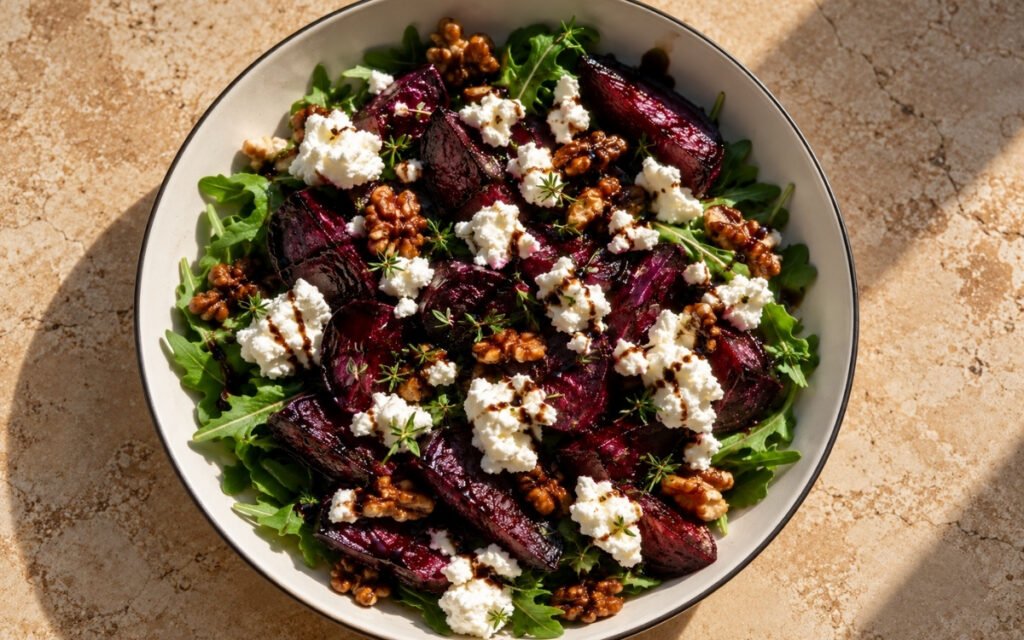
Roasted Beetroot and Goat Cheese Salad
Deep caramelized beet wedges with peppery rocket, creamy goat cheese, candied walnuts, thyme, and a dark balsamic reduction.
-
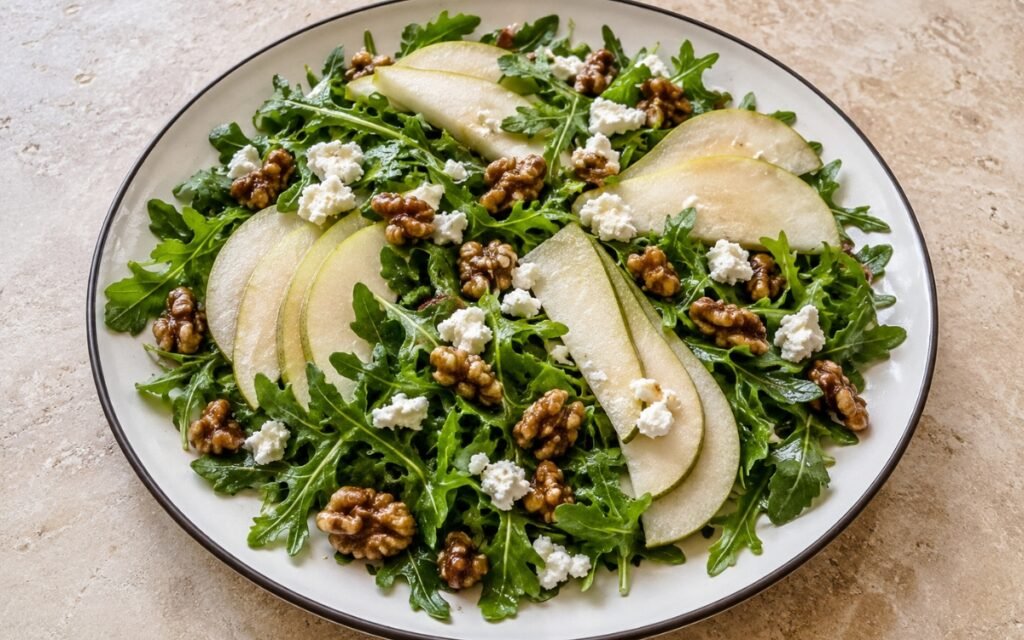
Arugula Pear Salad with Honey Vinaigrette
Peppery arugula with sliced pears, creamy goat cheese, candied walnuts and a light honey vinaigrette.
-
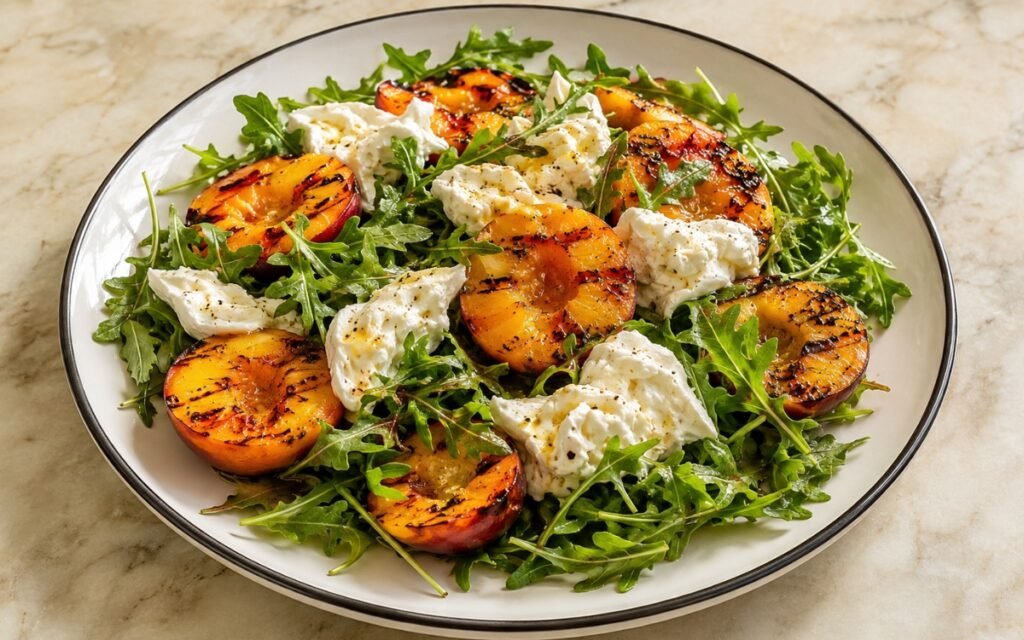
Grilled Peach and Burrata Salad
Caramelized grilled peaches with creamy burrata, arugula, and honey balsamic drizzle for summer.
-
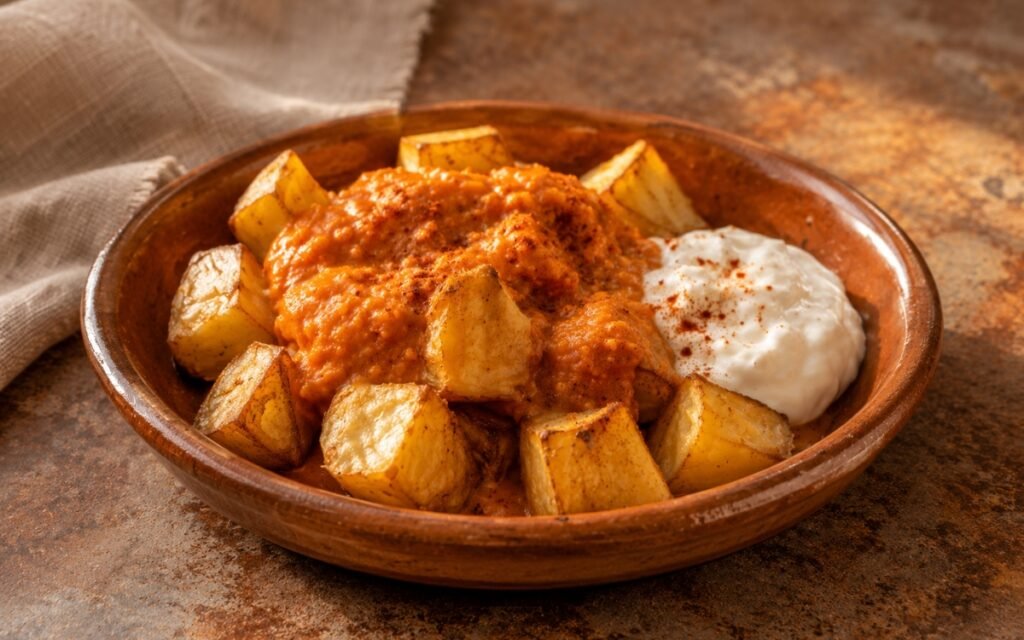
Patatas Bravas with Mayonnaise-Style Aioli
Potatoes parboiled, shaken rough, roasted on a preheated tray — smoky bravas sauce with sherry vinegar, creamy garlic aioli.
-
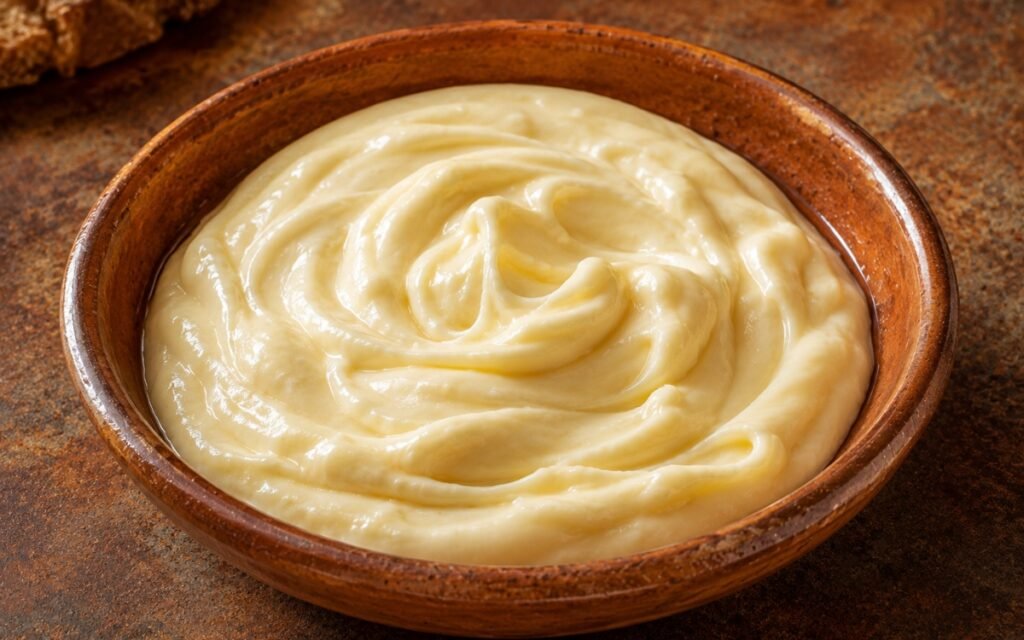
Spanish Alioli
Garlic ground completely smooth with salt — olive oil added drop by drop while grinding until thick, white, and soft-peaked. No egg yolk, no shortcuts. The traditional Catalan three-ingredient alioli.
-
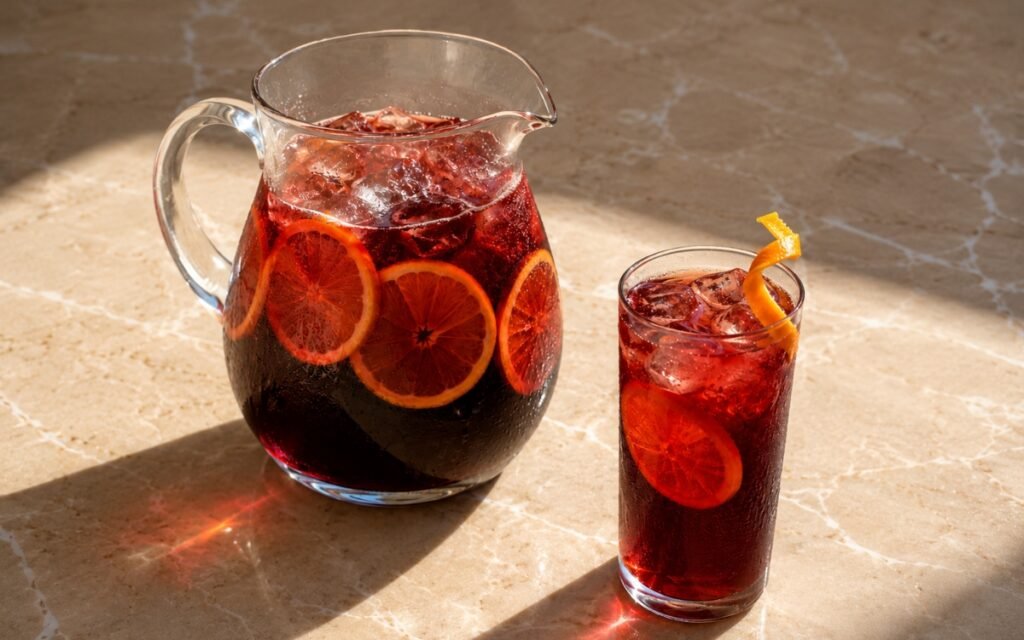
Virgin Spanish Sangria
Wine-like citrus mocktail with macerated fruit and verjus, lightly tannic, bright, festive, and convincingly grown-up.