
Tamarind Date Chutney
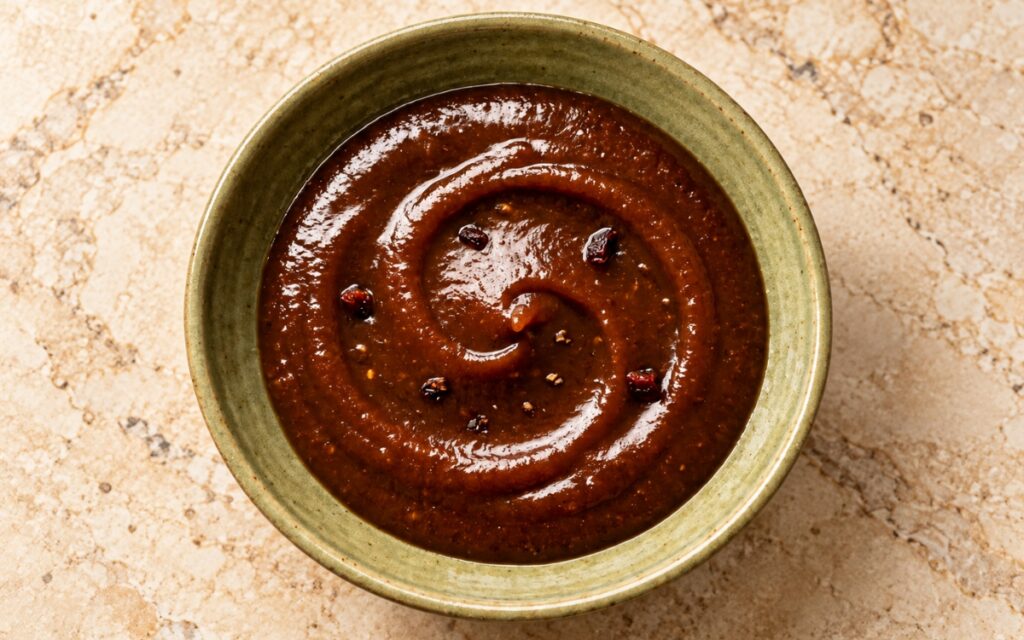
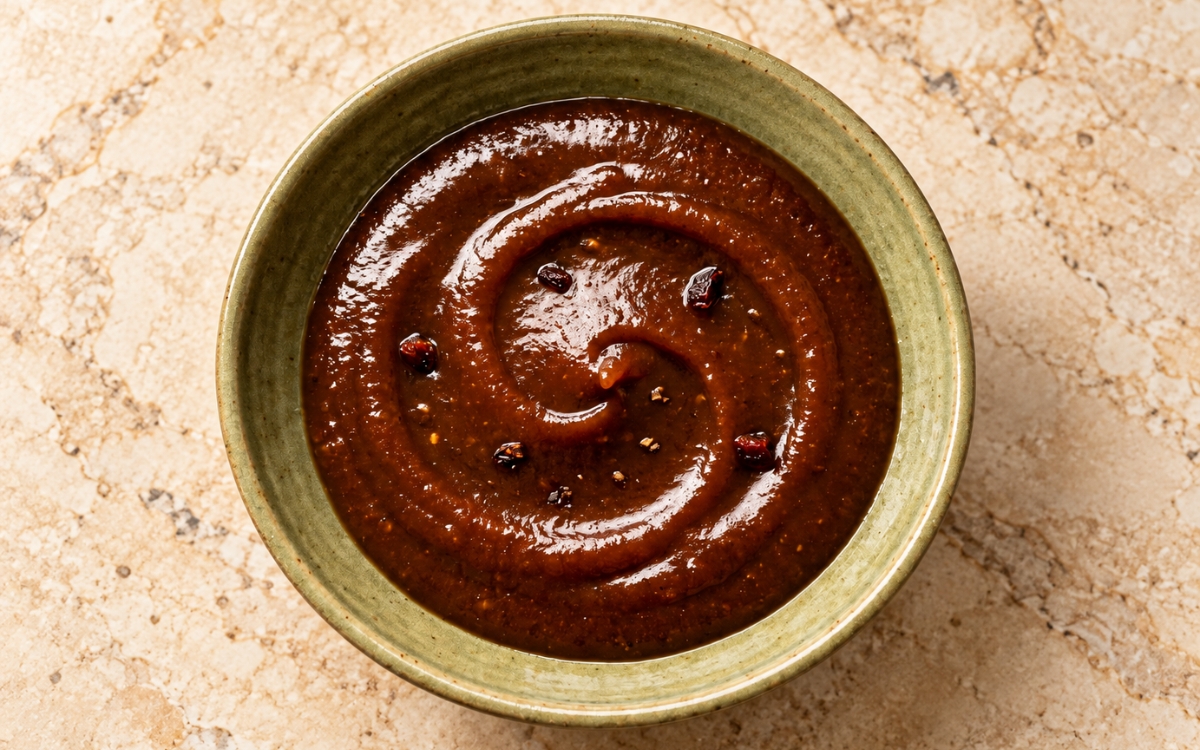
A classic sweet-tangy Indian chutney of seedless tamarind and soft dates simmered in water, blended, strained and gently reduced with jaggery, roasted cumin, dry ginger, Kashmiri chilli and black salt into a glossy, dark brown sauce, the key being a smooth, spoonable texture that still drizzles freely. Simmering the dates and tamarind gently, rather than at a hard rolling boil, is the technique this whole chutney depends on for its clean, rounded flavour and glossy finish — the natural fruit sugars settle on the bottom of a small pan and scorch quickly under fierce heat, adding a bitter, burnt edge that no amount of jaggery can cover, the same soften-slowly-then-reduce principle used elsewhere in this collection whenever a fruit-based sauce is cooked down. Blending the softened base thoroughly and pressing it through a fine sieve is what removes the tamarind fibres and date skins, giving the sticky, polished texture of a proper chaat chutney. Stopping the reduction while the chutney is still slightly loose is what keeps it pourable once it cools and thickens. The payoff is a tamarind date chutney with real, glossy balance — deep date sweetness, clear tamarind tang, warm cumin and ginger, a soft glow of chilli and a savoury black-salt finish.
Prep Time : 10 min
Total Time : 1 hr 5 min
Servings : 12
10 min
1 hr 5 min
12
Ingredients
For the Chutney Base
• 100g seedless dates, roughly chopped
• 50g seedless tamarind, roughly broken up
• 400ml water, plus extra as needed
• 80g jaggery, grated or chopped
For the Seasoning
• 1 tsp roasted cumin powder
• ½ tsp dry ginger powder
• ½ tsp Kashmiri chilli powder
• ½ tsp black salt
• ½ tsp fine salt, plus more to taste
Optional Date Garnish
• 2–3 dates, very thinly sliced
Directions
- Soften the Tamarind and Dates
Add the 100g chopped dates, the 50g broken-up tamarind and the 400ml water to a small saucepan. Bring to a gentle simmer over medium heat, then lower the heat so that only small, lazy bubbles break the surface. Cook for 10–12 minutes, stirring occasionally and scraping the bottom of the pan, until the dates are very soft and collapse when pressed against the side with a spoon, and the tamarind has loosened into the water as a thick, murky pulp. Do not let it boil hard; if it starts to bubble vigorously or catch on the base, turn the heat down at once. That gentle simmer is what fully softens the fruit and releases the tamarind without scorching the natural sugars on the bottom of the pan. - Blend Until Smooth
Take the pan off the heat and let the mixture cool for 5 minutes, so that it is safer to blend and does not force the blender lid up with steam. Transfer everything to a blender, scraping in every bit of pulp, and blend for 1–2 minutes until very smooth. If the mixture is too thick to move around the blades, add a splash of water, 1–2 tbsp at a time, using just enough to help it blend smoothly. The purée should look thick, even and dark brown, with no visible pieces of date or clumps of tamarind left. That thorough blending is what breaks the fruit down completely, so the sieve in the next stage can separate fine purée from fibre rather than hold back flavour. - Strain for a Glossy Finish
Set a fine sieve over the rinsed saucepan and pour in the blended mixture. Press it through firmly with the back of a spoon or a flexible spatula, working it against the mesh in circles and scraping the underside of the sieve into the pan as you go. Keep pressing until only a small amount of dry, fibrous paste remains in the sieve, then discard those solids. If the purée is too thick to pass through easily, loosen it with another 1 tbsp of water. That straining step is what removes the tamarind fibres and fragments of date skin, giving the chutney the smooth, sticky, polished texture of a classic chaat chutney. - Season and Reduce
Return the strained chutney to low heat. Stir in the 80g jaggery, the 1 tsp roasted cumin powder, the ½ tsp dry ginger powder, the ½ tsp Kashmiri chilli powder, the ½ tsp black salt and the ½ tsp fine salt. Simmer gently for 5–8 minutes, stirring often, until the jaggery has fully dissolved and the chutney thickens to a glossy, spoonable consistency. It should coat the back of a spoon and fall in a thick ribbon, but still be loose enough to drizzle. Stop cooking while it is slightly looser than you want, because it sets noticeably as it cools. That early stop is what keeps the cooled chutney pourable rather than turning it into a stiff, sticky paste. - Adjust, Cool and Store
Taste the chutney while it is still warm. Add a little more jaggery if it tastes too sharp, or a little more fine salt or black salt if it tastes flat, stirring until any extra jaggery has dissolved. Let the chutney cool completely at room temperature for about 30 minutes, then transfer it to a clean jar or container. If it has thickened too much once cool, stir in warm water 1 tbsp at a time until smooth; if it is still thin, return it to the pan and simmer for a few more minutes. Serve as needed, garnished with a few very thin slices of date if you like. That final taste and adjustment is what brings sweetness, acidity and spice into genuine balance.
*Notes :
- The gentle simmer deserves genuine recognition as the technique most directly responsible for whether this chutney tastes clean and rounded or faintly burnt. The recipe’s own instruction, “Do not boil hard,” reflects how quickly date and tamarind sugars settle and scorch on the base of a small pan — a hard boil also drives off water too fast, so the fruit catches before it has properly softened.
- Fine-sieve straining deserves the same attention this technique receives throughout this collection’s other smooth sauces and chutneys, because it decides the final texture more than any other step. Even a thoroughly blended base still carries tamarind fibres and date skins, which is why the recipe’s own note says, “For the smoothest result, do not skip straining” — those particles dull the gloss and leave a gritty finish.
- Adding the jaggery and spices only after straining deserves genuine respect as the detail most directly responsible for a bright, genuinely well-seasoned finish. Spices stirred in at the start would be partly trapped in the discarded solids, while jaggery added to the first simmer would raise the sugar content early and make scorching far more likely during the longer softening stage.
- The ribbon test deserves attention as a genuine, checkable readiness cue rather than a loose approximation. When the chutney coats the back of a spoon and falls in a thick ribbon that still drizzles, it is done; the recipe’s own reminder to “stop the cooking when the chutney is slightly looser than you want” matters because it keeps thickening as it cools.
Why This Recipe Works
This recipe works because it separates softening, smoothing and seasoning into distinct steps, so each one can be done genuinely well. A gentle simmer softens the dates and releases the tamarind without scorching their sugars, and a short rest before blending lets the base be puréed safely and completely. Straining through a fine sieve then removes every fibre and fragment of skin, leaving a clean purée that takes the jaggery and spices evenly during a short final reduction. Stopping while the chutney is still slightly loose allows for cooling, giving a glossy, balanced chutney that drizzles freely.
Ingredient Breakdown
Gentle Simmer (Never a Hard Boil)
The critical technique — low, steady bubbling softens the fruit fully without scorching its natural sugars.
Thorough Blending After a Short Rest
The critical technique — a short rest makes blending safer, and a full purée leaves no chunks.
Fine-Sieve Straining
The critical technique — pressing through mesh removes fibres and skins for a genuinely glossy finish.
Seedless Dates and Tamarind
The flavour foundation — dates bring deep sweetness while tamarind supplies the clear, fruity sourness.
Jaggery Added After Straining
The critical ingredient choice — its caramel sweetness rounds the acidity, and adding it late loses none to the sieve.
Stopping Slightly Loose
The critical finishing technique — the chutney thickens as it cools, so an early stop keeps it pourable.
Flavor Structure Explained
This tamarind date chutney follows a layered balance model:
- Sweet, fruity foundation (seedless dates, jaggery)
- Sharp, tangy core (seedless tamarind)
- Warm, earthy backbone (roasted cumin, dry ginger)
- Gentle, rosy heat (Kashmiri chilli powder)
- Savoury, mineral finish (black salt, fine salt)
Dates and jaggery build the sweet, fruity foundation, giving the chutney its depth and dark colour. Tamarind cuts straight through that sweetness with a sharp, tangy core that keeps every spoonful lively. Roasted cumin and dry ginger add a warm, earthy backbone, so the chutney tastes spiced rather than simply sweet and sour. Kashmiri chilli powder brings gentle, rosy heat, and black salt with fine salt adds the savoury, faintly sulphurous mineral finish that ties this tamarind date chutney together.
Common Mistakes to Avoid
- Boiling the Base Hard – This scorches the fruit sugars on the bottom of the pan and adds a bitter, burnt edge. Always keep the dates and tamarind at a gentle simmer.
- Blending Only Briefly – This leaves chunks of date and clumps of tamarind that clog the sieve and waste flavour. Always blend until the purée is completely smooth, adding water by the spoonful.
- Skipping the Straining – This leaves tamarind fibres and date skins in the chutney, so it looks dull and feels gritty. Always press the purée firmly through a fine sieve.
- Reducing Until Thick in the Pan – This produces a chutney that sets into a stiff, sticky paste once it cools. Always stop while it still falls in a loose, drizzling ribbon.
- Serving Without Tasting and Adjusting – This risks a chutney that is too sharp or tastes flat against chaat and snacks. Always taste while warm and adjust with jaggery or salt.
Variations
Thin Drizzling Version
Loosen the cooled chutney with warm water, 1 tbsp at a time, per the recipe’s own note, for a thinner, freely pouring sauce that spreads evenly over samosa chaat, aloo tikki chaat and dahi-based chaats.
Thick Dipping Sauce Version
Return the chutney to the pan and simmer for a few more minutes, per the recipe’s own note, for a thicker, clingy consistency that holds onto samosas, pakoras and other fried snacks.
Extra-Tangy Version
Reduce the jaggery to 60g and taste before adding more, for a sharper, more tamarind-forward chutney that cuts cleanly through rich, fried or yogurt-heavy chaat toppings while still finishing gently sweet.
Spicier Kashmiri Chilli Version
Increase the Kashmiri chilli powder to 1 tsp and the dry ginger powder to ¾ tsp, for a warmer, more assertive chutney with a deeper red glow and a longer, gently lingering heat.
Storage & Make-Ahead
Choose soft, moist seedless dates and a seedless tamarind block with a fruity, sour smell, since dry dates and old tamarind soften more slowly and give a duller, less balanced chutney.
Make the chutney up to several days ahead, because the cumin, ginger and black salt settle into the fruit overnight and the flavour becomes rounder and more even after a day in the fridge.
Refrigerate the cooled chutney in a sealed, clean glass jar for up to 2 weeks, always using a clean, dry spoon to serve so that no moisture or food crumbs shorten its life.
Freeze the chutney in small portions, such as an ice-cube tray, then transfer the cubes to a sealed bag for up to 3 months and thaw only what you need overnight in the fridge.
Loosen chilled or thawed chutney with warm water, 1 tbsp at a time, stirring until smooth, and serve it cool or at room temperature over chaat or as a sweet-tangy dipping sauce.
Frequently Asked Questions
Why do the dates and tamarind need a gentle simmer rather than a hard boil?
A gentle simmer softens the dates completely and releases the tamarind pulp without overheating the sugars settled on the pan base. A hard boil scorches them quickly, adding bitterness, and drives off water before the fruit has properly broken down.
Why does the mixture rest for 5 minutes before it is blended?
Blending very hot liquid builds steam that can push the blender lid up and splash scalding purée. A short rest off the heat makes blending safer while keeping the mixture warm and loose enough to purée completely smooth.
Why is the blended chutney strained when it already looks smooth?
Even a genuinely smooth-looking purée still holds fine tamarind fibres and fragments of date skin. Pressing it through a fine sieve removes them, giving the glossy, sticky, polished texture expected of a classic chaat chutney.
Why should the chutney come off the heat while it is still slightly loose?
Dissolved jaggery and fruit pectin keep setting as the chutney cools, so it thickens noticeably in the jar. Stopping at a loose ribbon means it stays drizzleable once cold instead of turning into a stiff paste.
Are there other classic chaat, raita, or tamarind-based recipes worth trying?
Samosa Chaat offers another classic chaat direction worth exploring, with this chutney drizzled generously over the top. Aloo Tikki Chaat and Cucumber Raita are also worth trying for other street-food and cooling yogurt directions, and Tamarind Lemonade and Vada Pav offer other tangy drink and Mumbai street-food recipes worth exploring.
Nutrition Facts
( Per Serving — 2 tbsp )
Calories
~60 kcal
Protein
0 g
Fat
0 g
Carbs
15 g
Calories
~60 kcal
Protein
0 g
Fat
0 g
Carbs
15 g
Related Recipes
Related Recipes
-

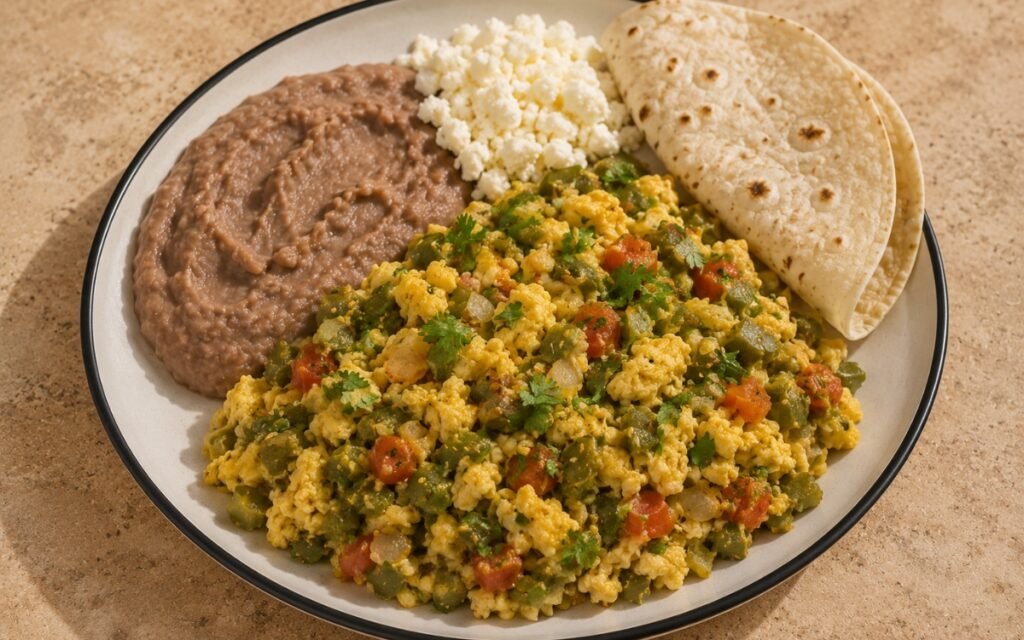
Nopales con Huevo
Scrambled eggs cooked with tender diced nopales, onion, tomato, and green chile, finished with fresh cilantro.
-
Yuzu Lemonade
Cold-extracted lemon zest and juice combined with yuzu juice and gently added sparkling water for a bright, lightly effervescent lemonade.
-
Fresh Pink Lemonade
Cranberries simmered for extraction, not reduction — vivid fluid syrup combined with fresh lemon juice and salt. Naturally pink, tart, and crisp.


You might also like
You might also like
-
Portuguese Custard Tarts (Pastéis de Nata)
Rolled, laminated puff pastry shells filled with a silky cinnamon-lemon custard, baked at extreme heat for signature dark caramelised spots.
-
Mexican Rajas con Crema
Fire-roasted poblano strips, sweet onions, and corn in a silky Mexican crema sauce with soft melted Oaxaca cheese and fresh cilantro.
-
Fresh Peach Green Iced Tea
Green tea at 75–80°C for 2–3 minutes, raw peach slices cold-infused 30–45 minutes — strained promptly, honey, chilled. Light, clean, delicately fruity.



Tamarind Date Chutney
Ingredients
Method
- Add the 100g chopped dates, the 50g broken-up tamarind and the 400ml water to a small saucepan. Bring to a gentle simmer over medium heat, then lower the heat so that only small, lazy bubbles break the surface. Cook for 10–12 minutes, stirring occasionally and scraping the bottom of the pan, until the dates are very soft and collapse when pressed against the side with a spoon, and the tamarind has loosened into the water as a thick, murky pulp. Do not let it boil hard; if it starts to bubble vigorously or catch on the base, turn the heat down at once. That gentle simmer is what fully softens the fruit and releases the tamarind without scorching the natural sugars on the bottom of the pan.
- Take the pan off the heat and let the mixture cool for 5 minutes, so that it is safer to blend and does not force the blender lid up with steam. Transfer everything to a blender, scraping in every bit of pulp, and blend for 1–2 minutes until very smooth. If the mixture is too thick to move around the blades, add a splash of water, 1–2 tbsp at a time, using just enough to help it blend smoothly. The purée should look thick, even and dark brown, with no visible pieces of date or clumps of tamarind left. That thorough blending is what breaks the fruit down completely, so the sieve in the next stage can separate fine purée from fibre rather than hold back flavour.
- Set a fine sieve over the rinsed saucepan and pour in the blended mixture. Press it through firmly with the back of a spoon or a flexible spatula, working it against the mesh in circles and scraping the underside of the sieve into the pan as you go. Keep pressing until only a small amount of dry, fibrous paste remains in the sieve, then discard those solids. If the purée is too thick to pass through easily, loosen it with another 1 tbsp of water. That straining step is what removes the tamarind fibres and fragments of date skin, giving the chutney the smooth, sticky, polished texture of a classic chaat chutney.
- Return the strained chutney to low heat. Stir in the 80g jaggery, the 1 tsp roasted cumin powder, the ½ tsp dry ginger powder, the ½ tsp Kashmiri chilli powder, the ½ tsp black salt and the ½ tsp fine salt. Simmer gently for 5–8 minutes, stirring often, until the jaggery has fully dissolved and the chutney thickens to a glossy, spoonable consistency. It should coat the back of a spoon and fall in a thick ribbon, but still be loose enough to drizzle. Stop cooking while it is slightly looser than you want, because it sets noticeably as it cools. That early stop is what keeps the cooled chutney pourable rather than turning it into a stiff, sticky paste.
- Taste the chutney while it is still warm. Add a little more jaggery if it tastes too sharp, or a little more fine salt or black salt if it tastes flat, stirring until any extra jaggery has dissolved. Let the chutney cool completely at room temperature for about 30 minutes, then transfer it to a clean jar or container. If it has thickened too much once cool, stir in warm water 1 tbsp at a time until smooth; if it is still thin, return it to the pan and simmer for a few more minutes. Serve as needed, garnished with a few very thin slices of date if you like. That final taste and adjustment is what brings sweetness, acidity and spice into genuine balance.