
Spanish Tortilla / Tortilla Española
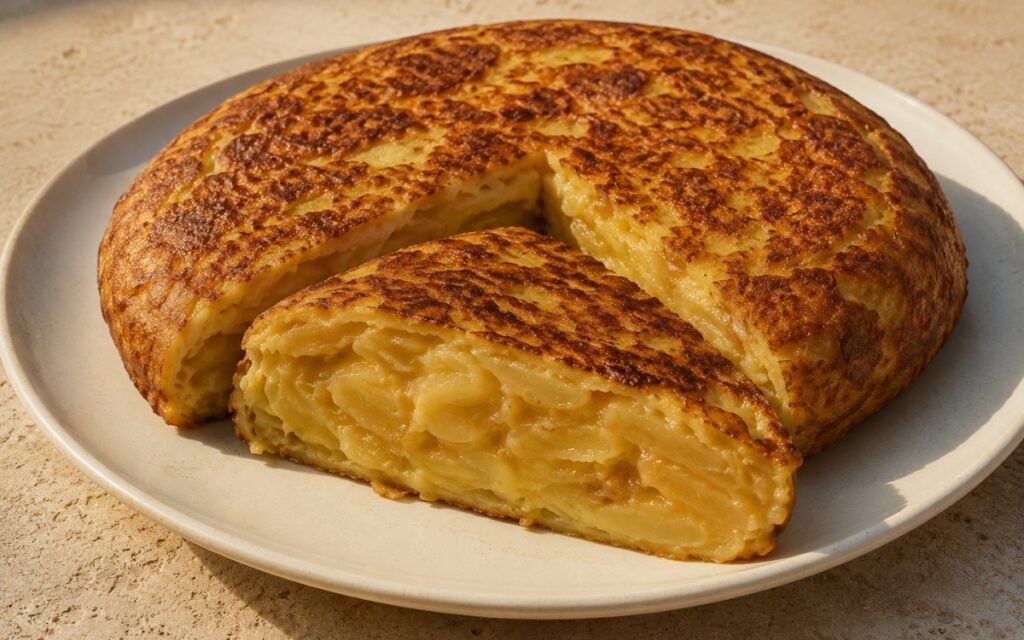
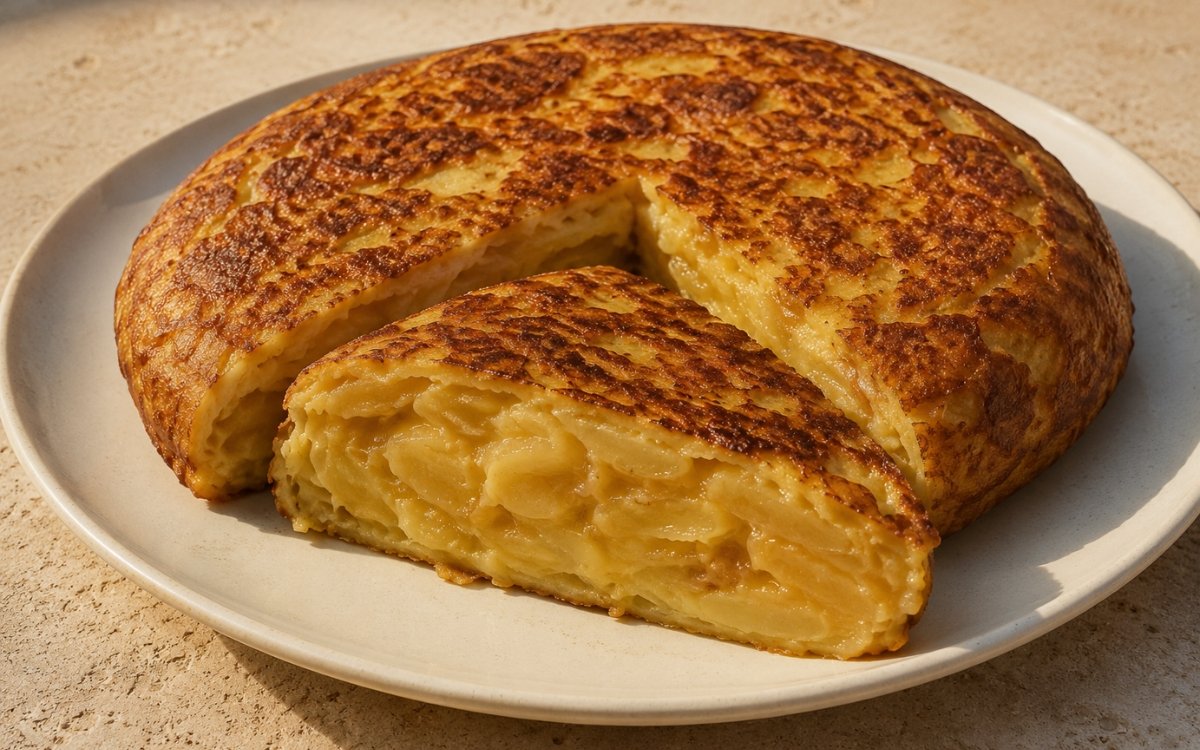
A classic thick Spanish tortilla made with thinly sliced potatoes, olive oil, eggs, salt, and optional onion. The potatoes are gently cooked in olive oil until tender, folded into beaten eggs, then cooked slowly in a skillet and flipped so the outside sets golden while the center stays soft, layered, and slightly custardy. Slow-cooking the potatoes in olive oil over medium-low heat, rather than frying them hard, is the technique this whole dish depends on — that gentle poach-like cook is what makes the potatoes tender all the way through without ever browning or crisping, the same low-and-patient principle used elsewhere in this collection whenever a vegetable needs to soften fully before it meets egg or heat again. Resting the combined egg-and-potato mixture for 10–15 minutes before it ever hits the pan is what lets the egg actually soak into the potato layers rather than simply surrounding them. Committing fully to the flip, with no hesitation, is what keeps the tortilla’s round shape intact rather than folding or tearing apart mid-air. The payoff is a tortilla with a genuinely golden, set exterior and a soft, custardy centre, sliced to reveal clear, distinct layers of potato bound in just-set egg.
Prep Time : 20 min
Cook Time : 35–45 min
Servings : 8
20 min
35–45 min
8
Ingredients
For the Tortilla
• 900g potatoes, peeled, preferably waxy or all-purpose potatoes
• 1 large yellow onion, about 220–250g, thinly sliced, optional but strongly recommended
• 8 large eggs
• 8–10g fine sea salt, divided, plus more to taste
• 400–500ml olive oil, for gently cooking the potatoes and onion — this one on Amazon
For Cooking the Tortilla
• 15ml olive oil, from the drained potato oil
This post may contain affiliate links. As an Amazon Associate I earn from qualifying purchases, at no additional cost to you.
Directions
- Slice the Potatoes and Onion
Slice the potatoes into thin half-moons, about 3mm thick. Slice the onion thinly if using. Do not cut the potatoes into thick chunks. That gives you a clumsy potato omelette, not tortilla española. The slices should be thin enough to soften fully in olive oil and layer naturally inside the egg, but not so thin that they dissolve into mash. Slicing to this specific thinness matters because it’s what allows the potato to become genuinely tender in a reasonable amount of time while still holding together as distinct, visible slices once the tortilla is cut — thicker pieces would need considerably longer to soften through, while paper-thin ones would break down and lose their layered structure entirely. - Gently Cook the Potatoes and Onion
Add the olive oil to a wide pan and heat over medium-low heat. Add the potatoes and onion, then season with about 6g fine sea salt. Cook gently for 20–25 minutes, turning occasionally, until the potatoes are fully tender and the onion is soft and sweet. The potatoes should not become crispy like fried potatoes. Drain the potatoes and onion through a sieve set over a bowl. Reserve the oil. The potatoes should bend and break easily when pressed with a spoon. They should be tender, glossy, and lightly golden in places, not browned and crunchy. This slow olive-oil cooking is the core technique. Rushing it with high heat gives you browned potatoes before the inside is tender, and the tortilla will eat dry. This gentle, oil-submerged cook behaves closer to poaching than frying — the potatoes soften evenly throughout without the surface ever drying out or crisping, which is exactly the texture that lets them fold seamlessly into the beaten egg afterward. - Beat the Eggs
Crack the eggs into a large bowl. Add the remaining 2–4g fine sea salt and beat just until the yolks and whites are fully combined. Do not whip the eggs aggressively. You want a cohesive custard, not a foamy omelette. Beating only until combined, rather than whisking air into the mixture, is what keeps the finished tortilla dense and custardy rather than light and airy — incorporating excess air here would work against the specific soft, set texture this dish is known for. - Combine the Potatoes with the Eggs
Add the warm drained potatoes and onion to the beaten eggs. Fold gently until everything is coated. Let the mixture rest for 10–15 minutes. After resting, the eggs should look slightly thicker and more integrated around the potatoes. This step helps the egg soak into the potato layers and gives the tortilla a better interior. Adding the potatoes while they’re still warm, rather than fully cooled, helps them integrate more readily with the egg from the very start, and the subsequent rest gives that combination genuine time to settle before any heat is applied — skipping this pause produces a less cohesive interior once the tortilla is sliced. - Cook the First Side
Heat a 24cm nonstick skillet over medium-low heat. Add about 15ml of the reserved olive oil. Pour in the egg-potato mixture and spread it evenly. Cook for 5–7 minutes, gently tucking the edges inward with a spatula as they set. Shake the pan occasionally to make sure the tortilla is not sticking. The edges should be set and rounded, the bottom golden, and the top still visibly soft. If the bottom browns too quickly before the center starts setting, the heat is too high. Tucking the edges inward as they set is what builds the tortilla’s characteristic rounded, domed profile rather than letting it spread flat and thin against the pan’s edges. - Flip the Tortilla
Place a large flat plate over the skillet. Hold it firmly and flip the tortilla onto the plate in one confident movement. Slide the tortilla back into the pan, uncooked side down. Tuck the edges again to keep the round shape. No hesitation here. A scared flip is how you make a mess. A single, decisive motion keeps the tortilla’s still-soft centre contained within its own structure — a slow or hesitant flip gives gravity more time to work against that soft centre, increasing the risk of it spilling or tearing at the edges. - Cook the Second Side
Cook for another 3–5 minutes for a soft, custardy center, or 6–8 minutes for a more fully set tortilla. Transfer to a plate and let rest for 10 minutes before slicing. For the classic soft center, the tortilla should feel set around the edges but still have a slight gentle give in the center. It should not be liquid, but it should not be dry and rubbery either. This second cook is genuinely shorter than the first, since the tortilla is already largely set — its only remaining job is finishing the second side’s exterior and settling the centre to the desired level of doneness. - Slice and Serve
Cut into 8 wedges. Serve warm, at room temperature, or slightly cooled. The cross-section should show clear layers of potato bound in just-set egg, with a golden exterior and a soft interior. The final 10-minute rest before slicing lets the custardy centre finish settling just enough to hold together cleanly under a knife, producing distinct wedges rather than a centre that spills or smears.
*Notes :
- The slow, oil-submerged cooking of the potatoes deserves to be understood as the single technique most responsible for this dish’s specific texture, more so than any other single step. Cooking potatoes this way — fully surrounded by gently heated olive oil rather than a dry pan or a smaller amount of fat — behaves closer to poaching than frying, softening the potato evenly throughout without ever drying or crisping the surface. That soft, oil-saturated texture is precisely what lets the potato slices fold seamlessly into the beaten egg rather than resisting or breaking apart.
- The resting period after combining the potatoes and eggs, though brief, does genuine work that’s easy to underestimate. Warm potatoes folded into beaten egg and then given time to sit allow the egg to begin soaking into the potato slices’ surface, rather than simply surrounding them as a separate liquid. Skipping this rest produces a tortilla with a less cohesive interior — one where the potato and egg read as more distinctly separate components rather than a unified custard.
- Committing fully to the flip, without hesitation, is a piece of advice worth taking literally rather than as encouragement. The tortilla’s centre is still genuinely soft and unset at this point in the cook, and a slow, tentative flip gives gravity considerably more time to work against that soft structure than a quick, decisive motion does — the physics here reward confidence specifically because they punish hesitation.
- The distinction between a soft, custardy centre and a more fully set one is worth treating as a genuine choice rather than a matter of doneness alone. Both are legitimate versions of tortilla española, and the difference comes down entirely to how long the second side cooks — a shorter second cook preserves that classic, elegant soft centre, while a longer one produces a firmer, more portable result better suited to something like a picnic.
Why This Recipe Works
This recipe works because the potatoes are cooked slowly and fully submerged in gently heated olive oil, softening them evenly throughout without ever crisping the surface — a texture that lets them integrate seamlessly with the beaten egg.
Resting the combined mixture before cooking allows the egg to actually soak into the potato layers, and gentle, patient heat during both sides of the cook protects the tortilla from setting too fast on the outside before the centre catches up.
A confident, decisive flip preserves the tortilla’s shape and soft centre, and a final rest before slicing lets that centre settle enough to hold together cleanly under a knife.
Ingredient Breakdown
Thinly Sliced Waxy or All-Purpose Potatoes
The base — sliced to about 3mm, thin enough to soften fully while still holding together as distinct, visible layers.
Oil-Submerged, Slow-Cooked Potatoes
The critical technique — a poach-like cook in olive oil softens the potatoes evenly without ever browning or crisping them.
Gently Beaten Eggs
The binding custard — combined only until smooth, never whipped aggressively, protecting the tortilla’s dense, custardy texture.
Rested Egg-Potato Mixture
The pre-cook step — a brief rest lets the egg begin soaking into the warm potato slices for a more cohesive interior.
Confident, Full Flip
The defining technique moment — a single decisive motion preserves the tortilla’s shape and keeps the still-soft centre contained.
Flavor Structure Explained
This tortilla follows a layered balance model:
- Rich savoury foundation (olive-oil-cooked potato)
- Soft custardy centre (gently set egg)
- Sweet aromatic depth (softened onion)
- Clean simple finish (salt, olive oil)
Olive-oil-cooked potato defines the tortilla with rich, tender, almost poached texture throughout. The gently beaten egg sets around it into a soft, custardy centre that binds every layer together. Softened, sweet onion, where used, adds a mild aromatic depth that rounds out the potato’s simplicity. With no additional seasoning beyond salt, this is a dish where the quality and technique of just a few ingredients carries the entire flavour.
Common Mistakes to Avoid
- Slicing the Potatoes Too Thick – This produces a clumsy potato omelette rather than a proper tortilla, and the potato won’t soften evenly. Always slice to about 3mm.
- Cooking the Potatoes Over High Heat – This browns and crisps the exterior before the inside becomes tender, leaving a dry tortilla. Always cook gently over medium-low heat, fully submerged in oil.
- Whipping the Eggs Aggressively – This incorporates air and produces a lighter, more omelette-like texture instead of a dense custard. Always beat just until combined.
- Hesitating During the Flip – A slow, uncertain flip gives the soft centre more time and opportunity to spill or tear. Always commit fully to one confident motion.
- Slicing Immediately After Cooking – The centre hasn’t had time to settle and will spill or smear under the knife. Always rest for 10 minutes before slicing.
Variations
Without Onion
Omit the onion entirely for a more austere, classically minimal version, accepting a less sweet, less visually varied result.
Firmer Picnic-Style Version
Cook the second side for the full 6–8 minutes for a more fully set tortilla that holds up better to being transported or eaten at room temperature.
With Chorizo
Add small diced chorizo to the pan alongside the onion during the slow cook for a smokier, more substantial version.
Mini Tortilla Bites
Cook the mixture in a smaller pan or individual small skillets for bite-sized portions, adjusting cook times down accordingly.
Storage & Make-Ahead
The tortilla can be made a few hours ahead and served at room temperature, which is traditional and doesn’t compromise the texture.
Refrigerate leftover tortilla in an airtight container for up to 3 days; bring to room temperature or gently rewarm before serving, since cold storage firms the centre considerably.
This dish is not well suited to freezing, as the egg’s texture changes considerably once thawed.
Frequently Asked Questions
Why cook the potatoes fully submerged in olive oil rather than in a smaller amount of fat?
This gentle, oil-submerged cook behaves closer to poaching than frying, softening the potato evenly throughout without ever drying or crisping the surface. That specific texture is what lets the potato slices fold seamlessly into the beaten egg afterward.
Why does the egg-potato mixture need to rest before cooking?
Warm potatoes folded into beaten egg and given time to sit allow the egg to actually begin soaking into the potato slices, rather than just surrounding them as a separate liquid. Skipping this rest produces a less cohesive interior once the tortilla is sliced.
Why is confidence during the flip emphasized so strongly?
The tortilla’s centre is still genuinely soft and unset at the flipping stage. A slow, hesitant flip gives gravity considerably more time to work against that soft structure than a quick, decisive motion does, increasing the risk of spilling or tearing.
Why does the tortilla need to rest again after cooking, before slicing?
The centre hasn’t fully settled the moment it comes off the heat. A final rest lets it firm up just enough to hold together cleanly under a knife, producing distinct wedges rather than a centre that spills or smears.
What pairs well with Spanish tortilla, and are there other Iberian recipes worth trying?
Spanish Alioli makes a classic accompaniment, spooned alongside a wedge of tortilla for a garlicky, creamy contrast. Patatas Bravas is another essential Spanish dish worth pairing this with for a full tapas spread. Pastel de Nata Blondies and Portuguese Pork Bifana are both worth exploring too if you’re building out a broader Iberian menu.
Nutrition Facts
( per serving )
Calories
~320 kcal
Protein
9 g
Fat
22 g
Carbs
22 g
Calories
~320 kcal
Protein
9 g
Fat
22 g
Carbs
22 g
Related Recipes
Related Recipes

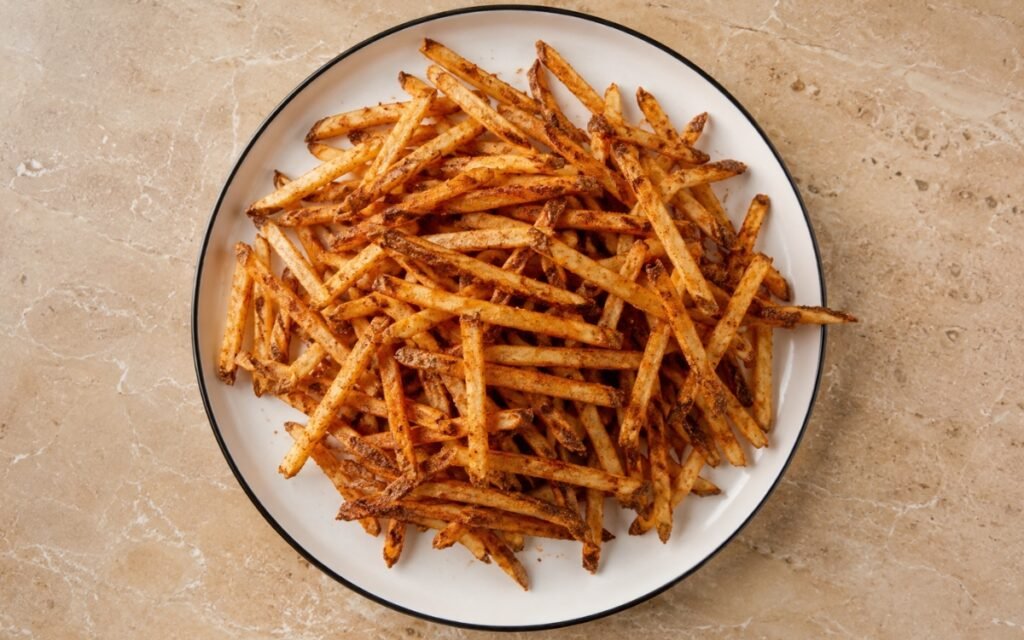
Thin & Crispy Baked Potato Fries
Potatoes cut uniformly, soaked to remove starch, dried thoroughly, lightly oiled, roasted uncrowded until golden. Crisp without deep frying.
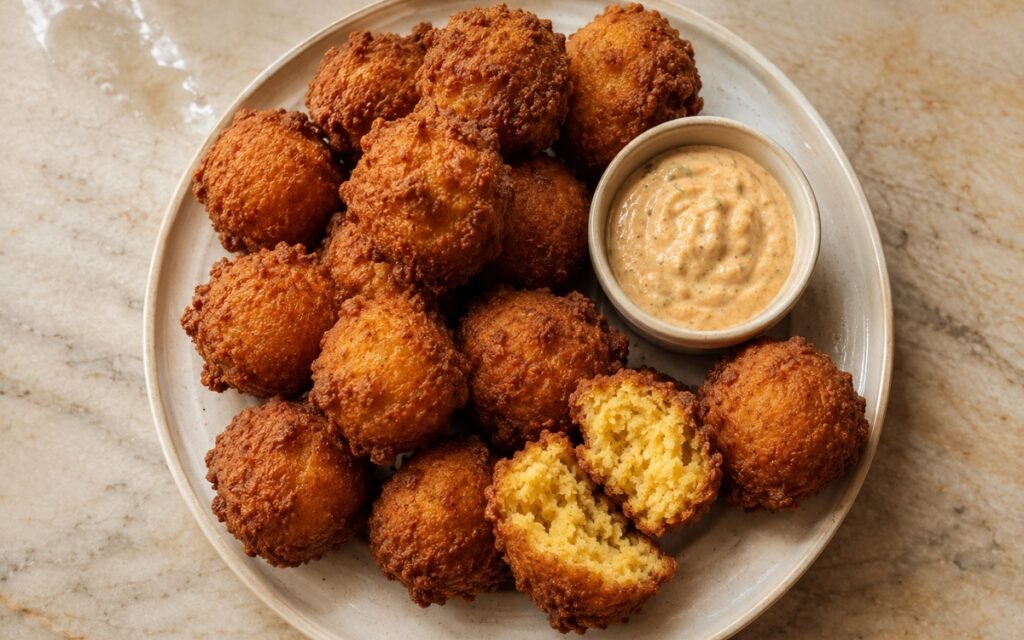
Hush Puppies
Thick cornmeal batter with finely minced onion, fried until deeply golden and crisp outside with a soft, steaming interior, served with tangy remoulade.
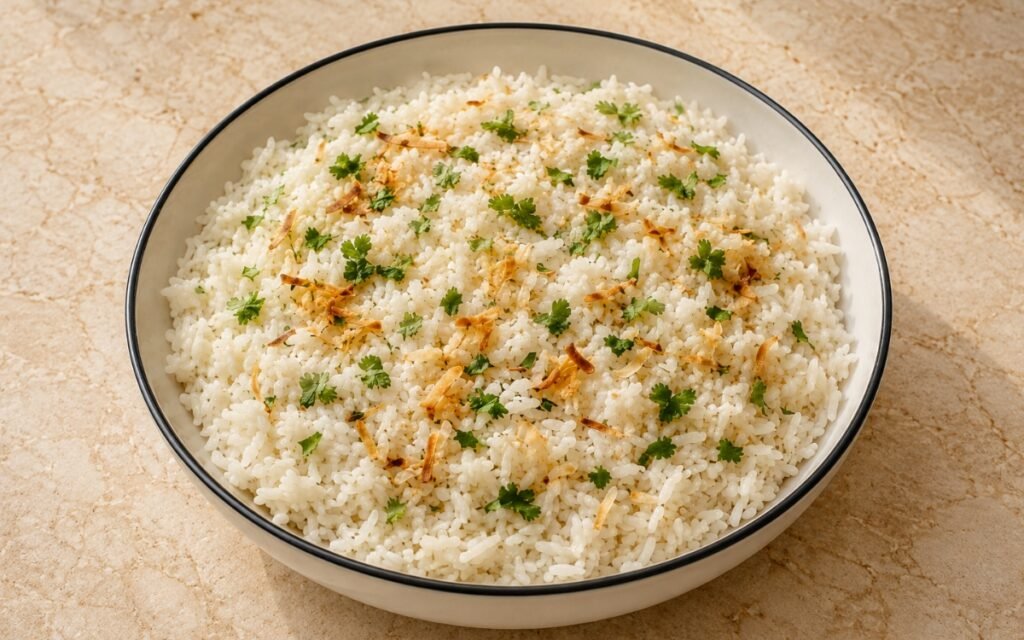
Coconut Rice
Jasmine rice rinsed thoroughly, cooked in fully whisked coconut milk over low heat, rested and fluffed, topped with toasted coconut and cilantro.
You might also like
You might also like
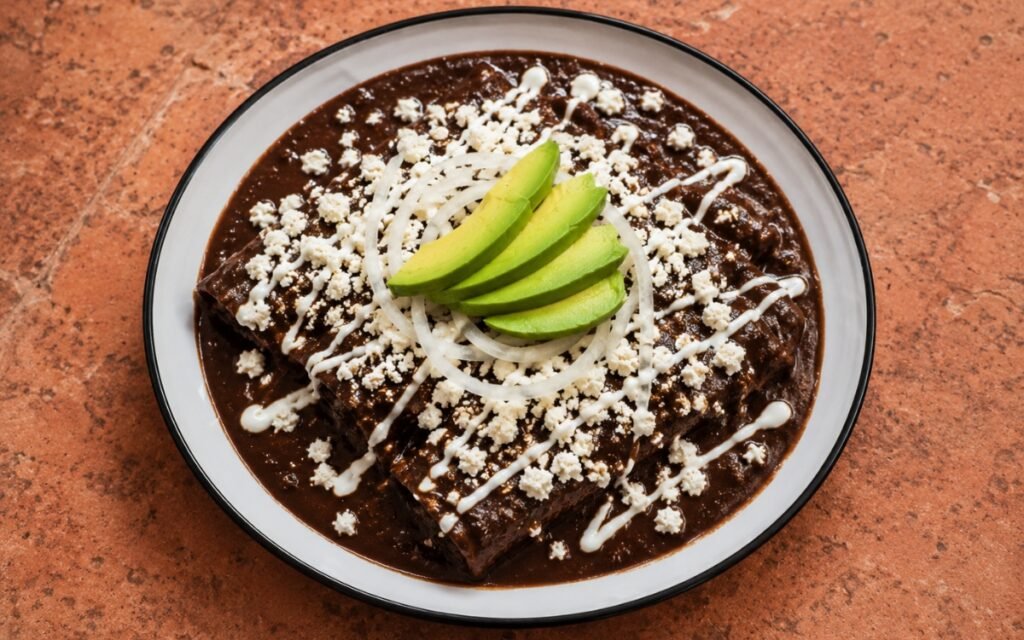
Enfrijoladas
Soft corn tortillas lightly fried, dipped in glossy black bean sauce, folded around queso fresco, and finished with more cheese, crema, onion, and avocado.
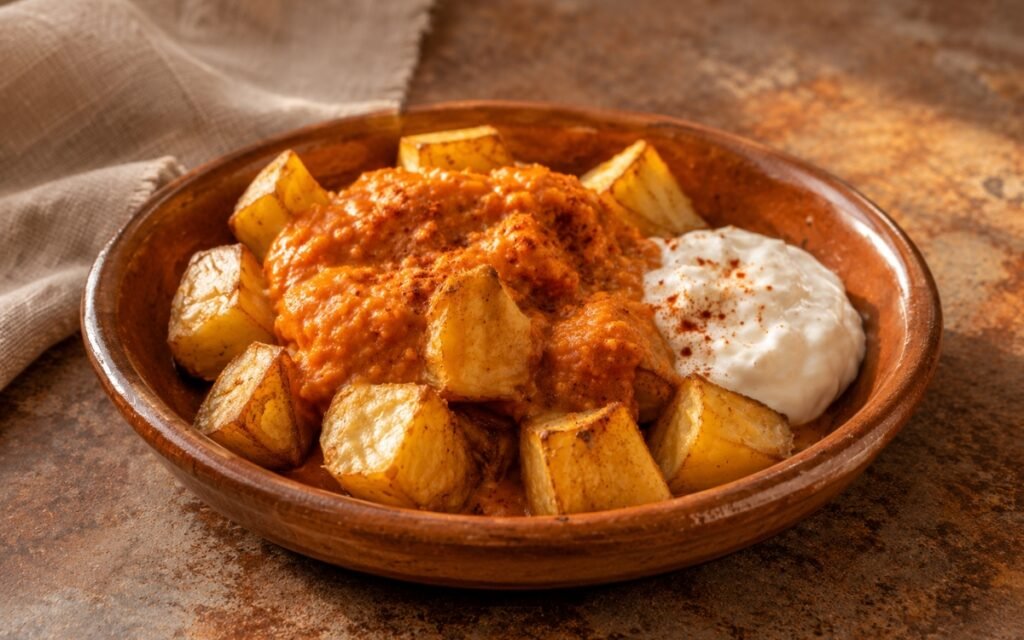
Patatas Bravas with Mayonnaise-Style Aioli
Potatoes parboiled, shaken rough, roasted on a preheated tray — smoky bravas sauce with sherry vinegar, creamy garlic aioli.
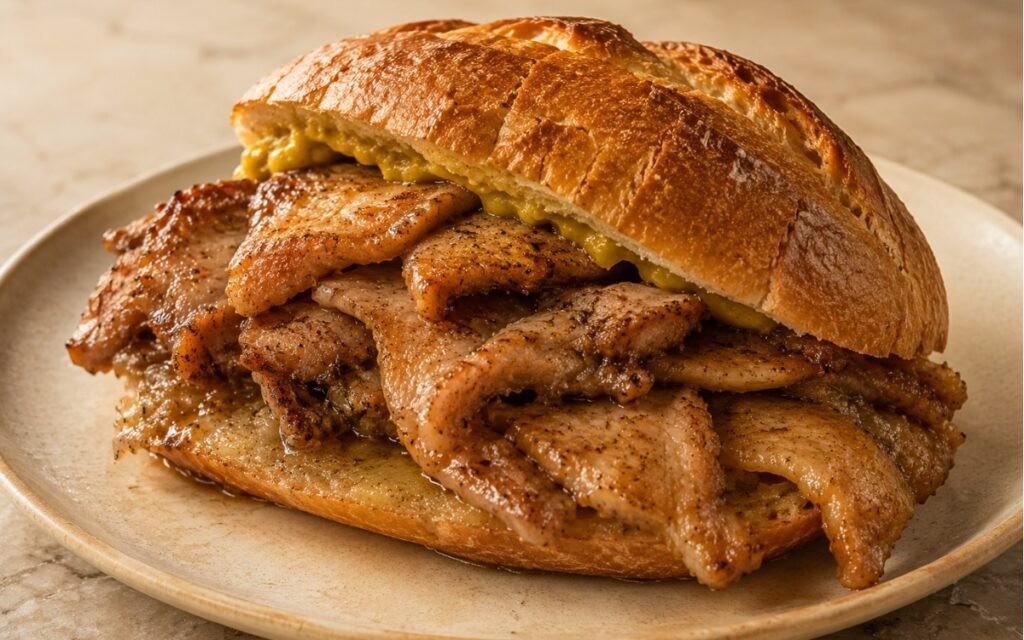
Portuguese Pork Bifana
Thin pork slices marinated in garlic and white wine, simmered until glossy and tender, piled into crusty homemade papo-seco rolls.
Spanish Tortilla / Tortilla Española
Ingredients
Method
- Slice the potatoes into thin half-moons, about 3mm thick. Slice the onion thinly if using. Do not cut the potatoes into thick chunks. That gives you a clumsy potato omelette, not tortilla española. The slices should be thin enough to soften fully in olive oil and layer naturally inside the egg, but not so thin that they dissolve into mash. Slicing to this specific thinness matters because it’s what allows the potato to become genuinely tender in a reasonable amount of time while still holding together as distinct, visible slices once the tortilla is cut — thicker pieces would need considerably longer to soften through, while paper-thin ones would break down and lose their layered structure entirely.
- Add the olive oil to a wide pan and heat over medium-low heat. Add the potatoes and onion, then season with about 6g fine sea salt. Cook gently for 20–25 minutes, turning occasionally, until the potatoes are fully tender and the onion is soft and sweet. The potatoes should not become crispy like fried potatoes. Drain the potatoes and onion through a sieve set over a bowl. Reserve the oil. The potatoes should bend and break easily when pressed with a spoon. They should be tender, glossy, and lightly golden in places, not browned and crunchy. This slow olive-oil cooking is the core technique. Rushing it with high heat gives you browned potatoes before the inside is tender, and the tortilla will eat dry. This gentle, oil-submerged cook behaves closer to poaching than frying — the potatoes soften evenly throughout without the surface ever drying out or crisping, which is exactly the texture that lets them fold seamlessly into the beaten egg afterward.
- Crack the eggs into a large bowl. Add the remaining 2–4g fine sea salt and beat just until the yolks and whites are fully combined. Do not whip the eggs aggressively. You want a cohesive custard, not a foamy omelette. Beating only until combined, rather than whisking air into the mixture, is what keeps the finished tortilla dense and custardy rather than light and airy — incorporating excess air here would work against the specific soft, set texture this dish is known for.
- Add the warm drained potatoes and onion to the beaten eggs. Fold gently until everything is coated. Let the mixture rest for 10–15 minutes. After resting, the eggs should look slightly thicker and more integrated around the potatoes. This step helps the egg soak into the potato layers and gives the tortilla a better interior. Adding the potatoes while they’re still warm, rather than fully cooled, helps them integrate more readily with the egg from the very start, and the subsequent rest gives that combination genuine time to settle before any heat is applied — skipping this pause produces a less cohesive interior once the tortilla is sliced.
- Heat a 24cm nonstick skillet over medium-low heat. Add about 15ml of the reserved olive oil. Pour in the egg-potato mixture and spread it evenly. Cook for 5–7 minutes, gently tucking the edges inward with a spatula as they set. Shake the pan occasionally to make sure the tortilla is not sticking. The edges should be set and rounded, the bottom golden, and the top still visibly soft. If the bottom browns too quickly before the center starts setting, the heat is too high. Tucking the edges inward as they set is what builds the tortilla’s characteristic rounded, domed profile rather than letting it spread flat and thin against the pan’s edges.
- Place a large flat plate over the skillet. Hold it firmly and flip the tortilla onto the plate in one confident movement. Slide the tortilla back into the pan, uncooked side down. Tuck the edges again to keep the round shape. No hesitation here. A scared flip is how you make a mess. A single, decisive motion keeps the tortilla’s still-soft centre contained within its own structure — a slow or hesitant flip gives gravity more time to work against that soft centre, increasing the risk of it spilling or tearing at the edges.
- Cook for another 3–5 minutes for a soft, custardy center, or 6–8 minutes for a more fully set tortilla. Transfer to a plate and let rest for 10 minutes before slicing. For the classic soft center, the tortilla should feel set around the edges but still have a slight gentle give in the center. It should not be liquid, but it should not be dry and rubbery either. This second cook is genuinely shorter than the first, since the tortilla is already largely set — its only remaining job is finishing the second side’s exterior and settling the centre to the desired level of doneness.
- Cut into 8 wedges. Serve warm, at room temperature, or slightly cooled. The cross-section should show clear layers of potato bound in just-set egg, with a golden exterior and a soft interior. The final 10-minute rest before slicing lets the custardy centre finish settling just enough to hold together cleanly under a knife, producing distinct wedges rather than a centre that spills or smears.