
Korean Bibimbap
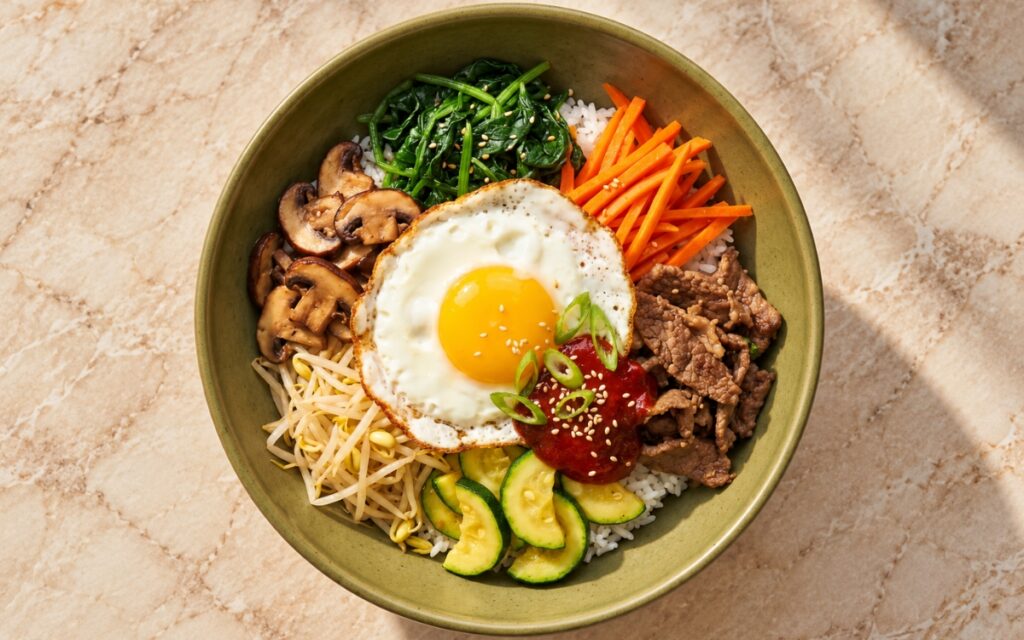
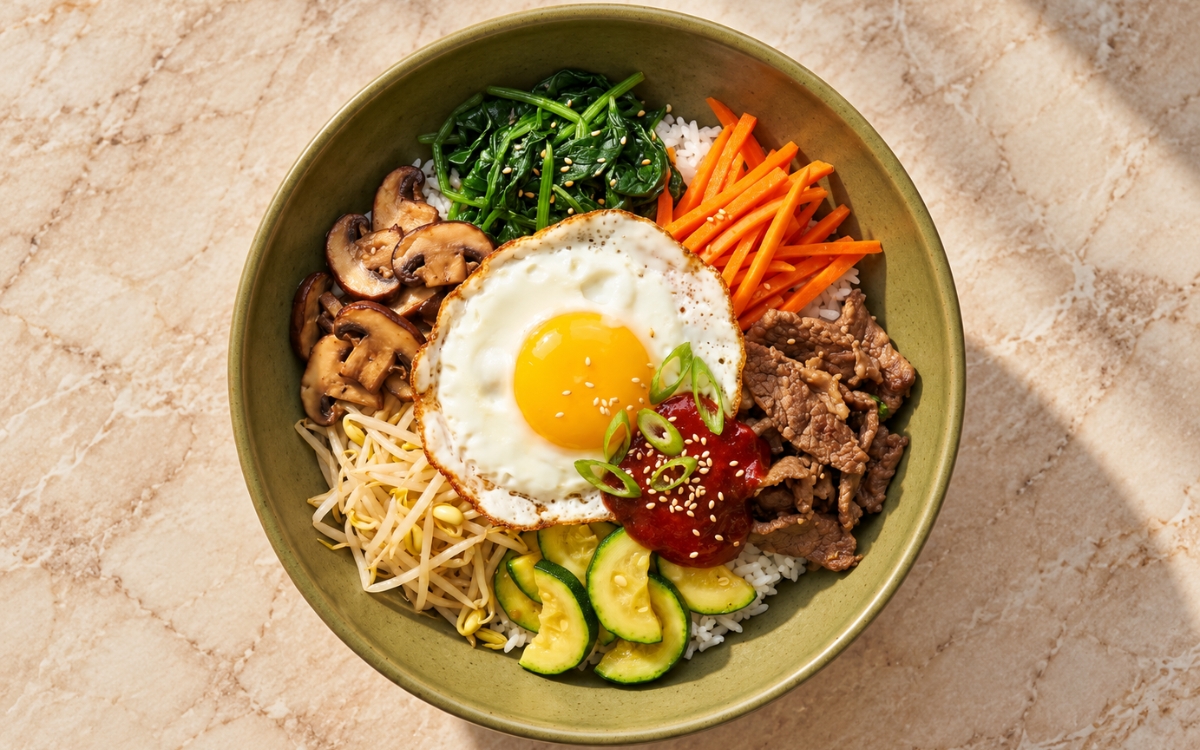
Korean bibimbap is a mixed rice bowl of hot short-grain rice topped with separately seasoned spinach, bean sprouts, carrots, zucchini, browned mushrooms, and thin marinated beef, crowned with a sunny-side-up egg and a spoonful of glossy gochujang sauce, the key being that every topping stays distinct until the bowl is mixed at the table. Cooking and seasoning each topping separately, rather than stir-frying everything together in one pan, is the technique this whole bibimbap depends on for clean colour, distinct textures, and a bowl that never turns watery — wet blanched vegetables or a crowded skillet dilute the rice and blur every flavour into one, the same keep-every-component-separate principle used elsewhere in this collection whenever a mixed bowl must taste layered. Squeezing the spinach and draining the sprouts thoroughly is what keeps the rice grains separate and the sauce concentrated. Searing the thinly sliced beef over high heat is what gives it browned edges instead of a gray, steamed texture. The payoff is a bowl with real, vivid contrast — crisp sprouts, sweet carrots, browned mushrooms, savoury beef, and a runny yolk that turns hot rice and spicy-sweet gochujang into one glossy mouthful.
Prep Time : 35 min
Total Time : 1 hr 25 min
Servings : 4
35 min
1 hr 25 min
4
Ingredients
For the Rice
• 300g short-grain or medium-grain white rice, rinsed
• Water, as needed for cooking the rice
For the Beef
• 450g beef sirloin, ribeye, or other tender beef for quick stir-frying, thinly sliced
• 2 tsp soy sauce
• 1 tsp sesame oil
• 1 tsp sugar
• 1 garlic clove, finely grated
• ¼ tsp black pepper
For the Spinach Namul
• 200g spinach
• 1 tsp sesame oil
• 1 tsp soy sauce
• 1 small garlic clove, finely grated
• 1 tsp toasted sesame seeds
• Salt, only if needed
For the Bean Sprouts
• 250g mung bean sprouts
• 1 tsp sesame oil
• 1 tsp soy sauce
• 1 small garlic clove, finely grated
• Salt, to taste
For the Carrots
• 180g carrots, julienned
• 1 tsp neutral oil
• A pinch of salt
For the Zucchini
• 180g zucchini, halved lengthwise and thinly sliced into half-moons
• 1 tsp neutral oil
• A pinch of salt
For the Mushrooms
• 200g shiitake or cremini mushrooms, sliced
• 1½ tsp neutral oil
• 1 tsp soy sauce
• ½ tsp sesame oil
For the Gochujang Sauce
• 4 tbsp gochujang
• 1 tbsp sesame oil
• 1 tbsp sugar or honey
• 1 tbsp water
• 1 tsp rice vinegar
• 1 tsp toasted sesame seeds
For the Eggs
• 4 large eggs
• 1 tbsp neutral oil, divided
For the Assembly and Garnish
• 2 scallions, thinly sliced
• 2 tsp toasted sesame seeds
• Sesame oil, a few drops per bowl, optional
Directions
- Cook the Rice
Rinse the 300g of rice in several changes of cold water until the water runs mostly clear, then drain well. Cook it in a rice cooker, or in a covered saucepan using your usual absorption ratio, ideally while the beef marinates so it is hot when the bowls are assembled. Rest it covered for 10 minutes, then fluff gently and keep it warm. The grains should be tender but hold their shape, never mushy. That covered rest is what lets residual steam settle evenly, so the grains stay separate and hot enough to warm the toppings through. - Marinate the Beef
Slice the 450g of beef as thinly as possible against the grain, then toss it with 2 tsp soy sauce, 1 tsp sesame oil, 1 tsp sugar, 1 grated garlic clove, and ¼ tsp black pepper until every slice is lightly coated. Cover and marinate for 20 minutes at room temperature while you prepare the remaining components. The surface should look just moist, not pooled with liquid. That short window is what seasons the meat without wetting its surface, which is what lets it brown instead of steam later. - Make the Gochujang Sauce
In a small bowl, stir together the 4 tbsp gochujang, 1 tbsp sesame oil, 1 tbsp sugar or honey, 1 tbsp water, 1 tsp rice vinegar, and 1 tsp toasted sesame seeds until completely smooth. The sauce should be thick and glossy, sitting in a spoonful rather than running; add a few drops of water only if it is too stiff to stir. Set it aside at room temperature. That thickness is what lets the sauce sit as a distinct red mound on the bowl, to be mixed in deliberately at the table. - Blanch and Season the Spinach
Bring a large pot of water to a boil, add the 200g of spinach, and blanch for 20–30 seconds, just until wilted and bright green. Drain, rinse briefly under cool water, then squeeze out as much water as you can with your hands and roughly cut any long strands. Toss with 1 tsp sesame oil, 1 tsp soy sauce, 1 small grated garlic clove, and 1 tsp toasted sesame seeds, adding salt only if needed. That thorough squeezing is what stops the spinach from leaking water into the rice and diluting the bowl. - Blanch and Season the Bean Sprouts
Return the same pot of water to a rolling boil, add the 250g of bean sprouts, and blanch for 1–2 minutes until just tender but still crisp. Drain very well, shaking the colander and letting the sprouts steam dry for a minute. Toss with 1 tsp sesame oil, 1 tsp soy sauce, 1 small grated garlic clove, and a little salt to taste. That short blanch and complete draining are what keep the sprouts crunchy and prevent a watery bibimbap. - Cook the Carrots
Heat 1 tsp neutral oil in a large skillet over medium heat until it shimmers. Add the 180g of julienned carrots and a pinch of salt, then stir-fry for 1–2 minutes until the strands are only slightly softened and still bright orange. Tip them onto a plate and keep them separate from the other toppings. That brief cooking is what keeps the carrots vivid and lightly crisp, so they read as their own colour block rather than limp strands. - Cook the Zucchini
Return the same skillet to medium heat with 1 tsp neutral oil, add the 180g of zucchini half-moons and a pinch of salt, and sauté for 1–2 minutes until lightly softened but not collapsed. Work in a single layer, cooking in two batches if the pan looks crowded, then move the zucchini to its own spot on the plate. That uncrowded cooking is what lets the slices sauté and stay fresh-looking instead of steaming into a watery pile. - Brown the Mushrooms
Heat 1½ tsp neutral oil in the skillet over medium-high heat and add the 200g of sliced mushrooms in a single layer. Cook, stirring only occasionally, until their moisture has evaporated and the edges turn golden brown, about 5–6 minutes. Season with 1 tsp soy sauce and ½ tsp sesame oil and cook for 30 seconds more. That full evaporation and browning is what concentrates their savoury depth and stops them leaking liquid into the finished bowl. - Sear the Beef
Heat a nonstick or cast-iron skillet over high heat until it is very hot, then add the marinated beef in a single layer, working in two batches if needed so the slices do not overlap. Stir-fry for 2–3 minutes until the meat is just cooked through and the edges are lightly browned. Transfer it to the plate straight away. That high heat and short cooking time are what give browned edges instead of gray, steamed beef, since thin slices turn tough within seconds of overcooking. - Fry the Eggs
Heat half of the 1 tbsp neutral oil in a nonstick or well-seasoned skillet over medium heat, then crack in 2 eggs and fry until the whites are fully set and the edges are lacy while the yolks stay runny, about 2–3 minutes. Slide them onto a plate, add the remaining oil, and fry the other 2 eggs the same way. That fluid yolk is what coats the rice in a rich sauce once the bowl is stirred. - Assemble the Bowls
Divide the hot rice among 4 bowls. Arrange the spinach, carrots, mushrooms, bean sprouts, zucchini, and beef in separate sections over the rice, like spokes around a wheel, leaving the centre free. Place 1 fried egg in the middle of each bowl and spoon the gochujang sauce beside it. Scatter with the sliced scallions and 2 tsp sesame seeds, adding a few drops of sesame oil if desired. That clean separation is what lets each topping stay distinct until everyone mixes their own bowl thoroughly just before eating.
*Notes :
- Cooking every topping separately deserves genuine recognition as the technique most directly responsible for the clear colour blocks and distinct textures that define bibimbap. Combining the vegetables in one pan would mix their moisture and flavours into a single muddy note, while separate cooking lets each one keep its own seasoning, doneness, and bite when the bowl is finally stirred together.
- Squeezing the spinach and draining the sprouts deserves the same attention this technique receives throughout this collection’s other mixed-bowl dishes where wet components threaten the base. Blanched vegetables hold a surprising amount of water — left wet, they pool beneath the toppings and turn the rice soggy and the gochujang sauce thin and pale.
- Searing the beef in a single layer over high heat deserves genuine respect as the detail most directly responsible for browned, tender meat rather than gray, chewy slices. Crowding the pan or cooking over low heat releases steam that stops browning, and just a few extra seconds turn thin beef from tender to tough.
- Keeping the yolk runny deserves attention as a genuine, checkable doneness cue rather than a loose approximation of how long to fry. A set white with a fluid yolk is what turns the hot rice and gochujang into a creamy, glossy coating when the bowl is stirred, while a hard yolk leaves the mixed bowl dry and heavy.
Why This Recipe Works
This recipe works because each vegetable is cooked and seasoned on its own, so every topping keeps its colour, crunch, and flavour instead of blurring into a single mix. Thorough squeezing and draining remove the water that would otherwise sog the rice, while the browned mushrooms and high-heat beef bring deeper savoury notes. A thick, glossy gochujang sauce adds sweet, tangy heat that stays concentrated rather than diluted, so each spoonful of the mixed bowl tastes balanced. Hot rice warms the toppings through, and the runny yolk binds everything into a rich, balanced mouthful once the bowl is mixed.
Ingredient Breakdown
Separate Topping Cooking
The critical technique — seasoning and cooking each vegetable on its own keeps colours vivid, textures distinct, and flavours clear in the finished bowl.
Squeezed Spinach and Drained Sprouts
The critical safeguard — removing excess water prevents the rice from turning soggy and keeps the gochujang sauce thick and concentrated.
Thinly Sliced Beef (Sirloin or Ribeye)
The critical ingredient choice — tender, thin slices sear in minutes over high heat and stay juicy rather than turning chewy.
Browned Mushrooms
The core flavour-building stage — cooking off their moisture until golden concentrates a deep, savoury note that balances the fresh vegetables.
Thick Gochujang Sauce
The defining flavour ingredient — fermented chilli paste, sesame oil, and a little sweetness give a glossy, spoonable heat that stays distinct on the bowl.
Runny Sunny-Side-Up Egg
The finishing touch — the fluid yolk coats the hot rice when stirred, binding the toppings and tempering the sauce’s heat.
Flavor Structure Explained
This Korean bibimbap follows a layered balance model:
- Neutral, fluffy foundation (hot short-grain rice)
- Fresh, crisp contrast (spinach, bean sprouts, carrots, zucchini)
- Savoury, browned depth (seared beef, browned mushrooms, soy sauce)
- Spicy, sweet punch (gochujang, sugar or honey, rice vinegar)
- Rich, nutty finish (runny egg yolk, sesame oil, sesame seeds, scallion)
Hot rice gives the bowl its soft, neutral base so every topping stays in focus. Spinach, sprouts, carrots, and zucchini bring clean, crisp freshness, while seared beef and browned mushrooms add savoury weight. Gochujang supplies sweet, tangy heat that is balanced by the rice, and the egg yolk, sesame oil, seeds, and scallion add the rich, nutty finish that ties the bowl together.
Common Mistakes to Avoid
- Leaving the Spinach and Sprouts Wet – This lets water seep into the rice, so the bowl turns soggy and the sauce thins. Always squeeze the spinach hard and drain the sprouts completely.
- Overcooking the Vegetables – This leaves limp, dull toppings that lose their crunch and clean colour. Always cook carrots and zucchini for only 1–2 minutes and blanch sprouts for 1–2 minutes.
- Crowding the Beef in the Pan – This releases steam, so the slices turn gray and tough instead of browned. Always cook in a single layer over high heat, in two batches if needed.
- Rushing the Mushrooms – This traps their liquid, so they steam and leak into the bowl without browning. Always cook until the moisture has fully evaporated and the edges turn golden.
- Using Lukewarm Rice – This fails to warm the toppings, so the bowl eats flat and the egg stays cool. Always assemble over hot rice straight after cooking the toppings.
Variations
Stone Bowl Version
Assemble the bowls in very hot, lightly oiled stone bowls so the rice crisps into a golden crust on the bottom, adding crunch and a sizzling table presentation.
Extra-Spicy Version
Serve additional gochujang sauce on the side rather than over-saucing at assembly, letting each person build a hotter bowl without drowning the delicate vegetable flavours.
Vegetarian Version
Leave out the beef and add extra sautéed mushrooms seasoned with soy sauce and sesame oil, keeping the savoury depth while making the bowl meat-free.
Honey-Sweet Version
Use honey instead of sugar in the gochujang sauce, giving the glaze a rounder, floral sweetness that softens the fermented heat without changing the bowl’s balance.
Storage & Make-Ahead
Prepare each topping separately and store them in individual airtight containers in the refrigerator for up to 2 days, so their textures and colours stay distinct until you assemble the bowls.
Assemble the bowls just before serving, because the toppings sit best apart from the rice until the last moment and the sunny-side-up eggs should always be fried fresh while the yolks are still runny.
Keep the gochujang sauce in a sealed jar in the refrigerator for up to 1 week, then stir it well and add a few drops of water if it has stiffened, which makes spooning it neatly easier.
Reheat the cooked beef and vegetables briefly in a hot skillet for 1–2 minutes, or until just warm, to avoid overcooking the thin beef slices and softening the carrots and zucchini.
Cool leftover rice quickly within an hour of cooking and refrigerate it for up to 2 days, then reheat it covered in the microwave with a splash of water until steaming hot.
Frequently Asked Questions
Why are the spinach and bean sprouts squeezed and drained so thoroughly before seasoning?
Blanched vegetables hold a lot of water, and removing it keeps the seasoning concentrated, the sprouts crisp, and the rice grains separate instead of soggy.
Why is each vegetable cooked separately rather than all together in one pan?
Cooking each topping on its own lets it reach the right doneness and keep its own colour and seasoning, whereas a combined pan steams everything into one muddy, watery mix.
Why is the beef sliced thinly and cooked over high heat for only 2–3 minutes?
Thin slices cook through almost instantly, and high heat browns the edges before the meat toughens, while a lower heat or longer cooking leaves it gray and chewy.
Why should the egg yolk stay runny in bibimbap?
The fluid yolk coats the hot rice and toppings when the bowl is stirred, creating a creamy, rich sauce that balances the heat of the gochujang.
Are there other classic Korean rice bowl, sauce, or noodle dishes worth trying?
Korean Beef Bulgogi Rice Bowl offers another classic Korean rice bowl direction worth exploring. Korean Kimchi Fried Rice and Korean Spicy Chicken Dakgalbi Bowls are also worth trying for other Korean rice dishes, and Gochujang Honey Sauce and Japchae — Korean Glass Noodle Stir-Fry offer other sauce and noodle dishes worth exploring.
Nutrition Facts
( Per Serving )
Calories
~720 kcal
Protein
38 g
Fat
25 g
Carbs
87 g
Calories
~720 kcal
Protein
38 g
Fat
25 g
Carbs
87 g
Related Recipes
Related Recipes
-

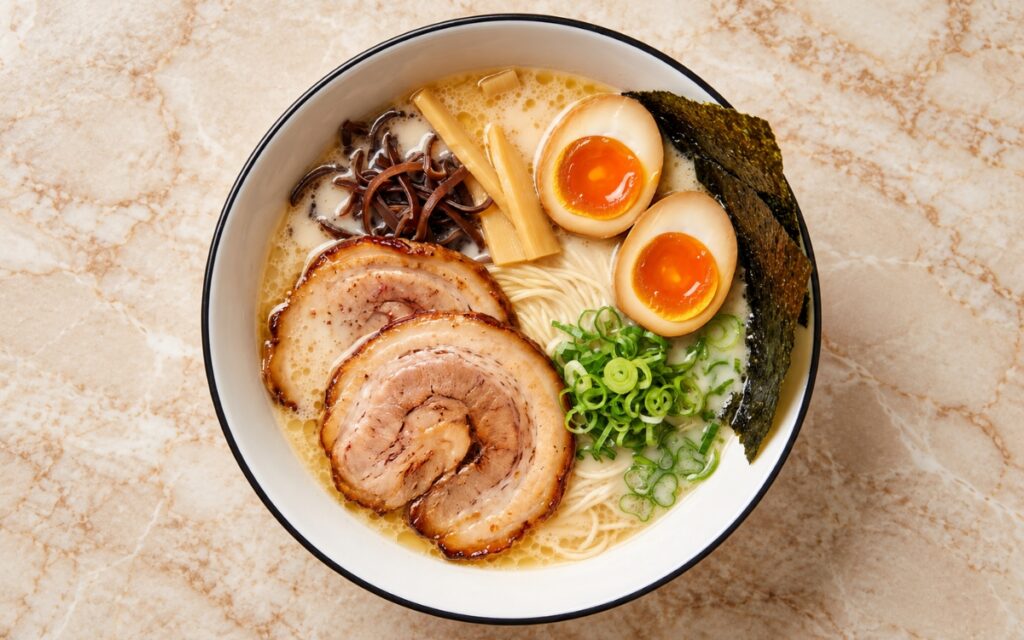
Tonkotsu Ramen
Thin Hakata-style noodles in creamy ivory pork bone broth with sliced chashu, a halved jammy egg, wood ear, bamboo shoots, scallions, and nori.
-
Japanese Katsudon
Crisp tonkatsu pork cutlet simmered briefly with soft onion in light soy-dashi broth, finished with softly set egg over short-grain rice.
-
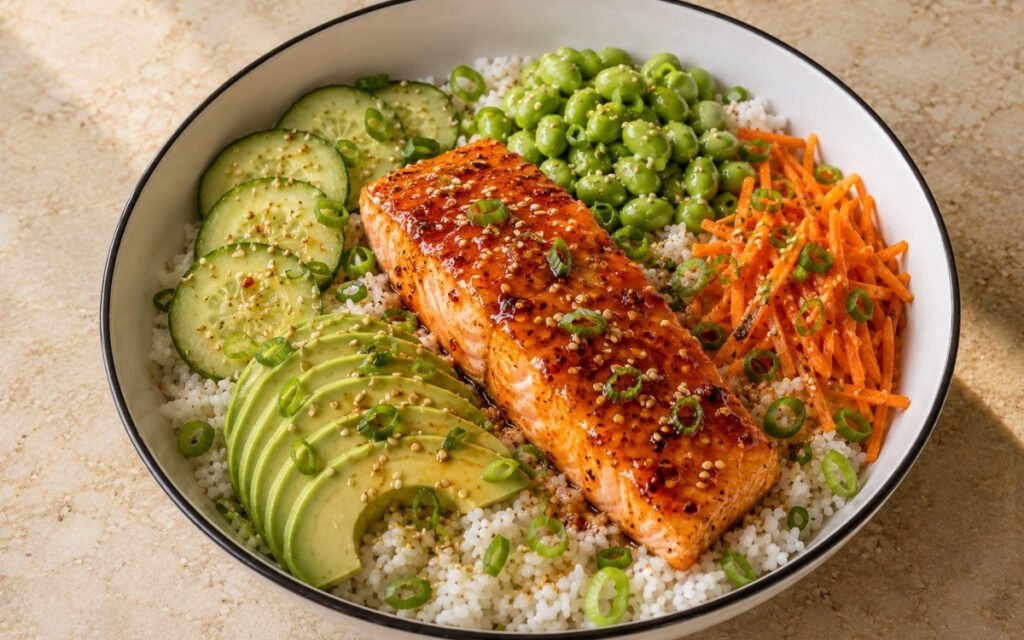
Hot Honey Salmon Rice Bowl
Salmon seared in sesame oil and glazed with gochugaru hot honey in the final minute — over jasmine rice with pickled carrots, avocado, and soy sauce. 35 minutes.

You might also like
You might also like
-
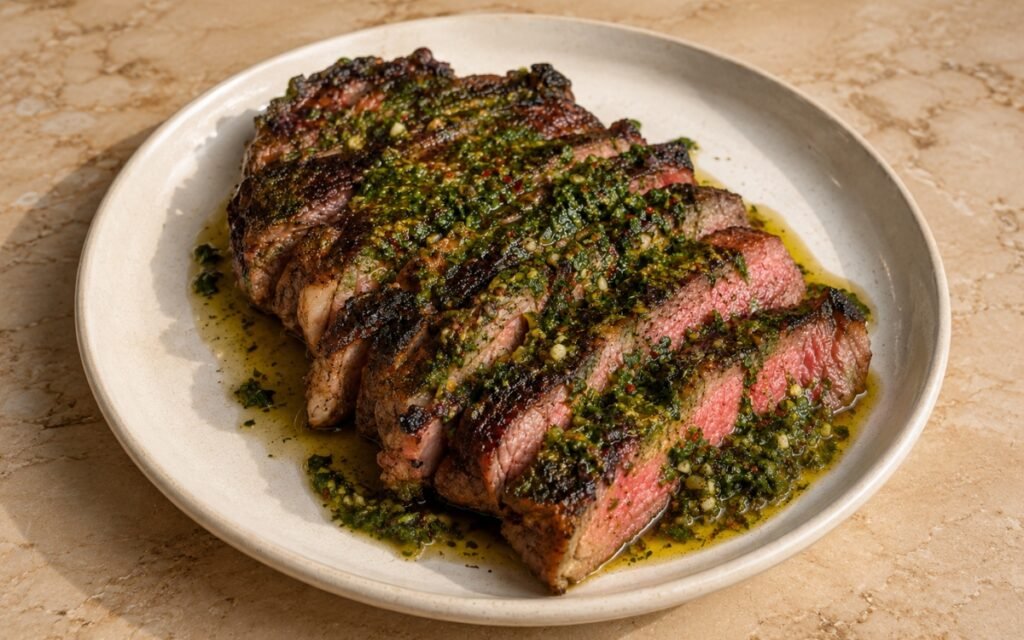
Argentine Chimichurri Steak
Thick, dry-brined steak grilled until deeply charred with a pink medium-rare centre, finished with loose, hand-chopped chimichurri.
-
Puerto Rican Arroz con Gandules
Golden-orange Puerto Rican rice cooked in one pot with pigeon peas, sofrito, green olives, red bell pepper, and browned pork shoulder cubes.
-
Beef Stroganoff
Tender seared beef, properly browned mushrooms, and a rich, glossy sour cream sauce over buttery egg noodles.

Korean Bibimbap
Ingredients
Method
- Rinse the 300g of rice in several changes of cold water until the water runs mostly clear, then drain well. Cook it in a rice cooker, or in a covered saucepan using your usual absorption ratio, ideally while the beef marinates so it is hot when the bowls are assembled. Rest it covered for 10 minutes, then fluff gently and keep it warm. The grains should be tender but hold their shape, never mushy. That covered rest is what lets residual steam settle evenly, so the grains stay separate and hot enough to warm the toppings through.
- Slice the 450g of beef as thinly as possible against the grain, then toss it with 2 tsp soy sauce, 1 tsp sesame oil, 1 tsp sugar, 1 grated garlic clove, and ¼ tsp black pepper until every slice is lightly coated. Cover and marinate for 20 minutes at room temperature while you prepare the remaining components. The surface should look just moist, not pooled with liquid. That short window is what seasons the meat without wetting its surface, which is what lets it brown instead of steam later.
- In a small bowl, stir together the 4 tbsp gochujang, 1 tbsp sesame oil, 1 tbsp sugar or honey, 1 tbsp water, 1 tsp rice vinegar, and 1 tsp toasted sesame seeds until completely smooth. The sauce should be thick and glossy, sitting in a spoonful rather than running; add a few drops of water only if it is too stiff to stir. Set it aside at room temperature. That thickness is what lets the sauce sit as a distinct red mound on the bowl, to be mixed in deliberately at the table.
- Bring a large pot of water to a boil, add the 200g of spinach, and blanch for 20–30 seconds, just until wilted and bright green. Drain, rinse briefly under cool water, then squeeze out as much water as you can with your hands and roughly cut any long strands. Toss with 1 tsp sesame oil, 1 tsp soy sauce, 1 small grated garlic clove, and 1 tsp toasted sesame seeds, adding salt only if needed. That thorough squeezing is what stops the spinach from leaking water into the rice and diluting the bowl.
- Return the same pot of water to a rolling boil, add the 250g of bean sprouts, and blanch for 1–2 minutes until just tender but still crisp. Drain very well, shaking the colander and letting the sprouts steam dry for a minute. Toss with 1 tsp sesame oil, 1 tsp soy sauce, 1 small grated garlic clove, and a little salt to taste. That short blanch and complete draining are what keep the sprouts crunchy and prevent a watery bibimbap.
- Heat 1 tsp neutral oil in a large skillet over medium heat until it shimmers. Add the 180g of julienned carrots and a pinch of salt, then stir-fry for 1–2 minutes until the strands are only slightly softened and still bright orange. Tip them onto a plate and keep them separate from the other toppings. That brief cooking is what keeps the carrots vivid and lightly crisp, so they read as their own colour block rather than limp strands.
- Return the same skillet to medium heat with 1 tsp neutral oil, add the 180g of zucchini half-moons and a pinch of salt, and sauté for 1–2 minutes until lightly softened but not collapsed. Work in a single layer, cooking in two batches if the pan looks crowded, then move the zucchini to its own spot on the plate. That uncrowded cooking is what lets the slices sauté and stay fresh-looking instead of steaming into a watery pile.
- Heat 1½ tsp neutral oil in the skillet over medium-high heat and add the 200g of sliced mushrooms in a single layer. Cook, stirring only occasionally, until their moisture has evaporated and the edges turn golden brown, about 5–6 minutes. Season with 1 tsp soy sauce and ½ tsp sesame oil and cook for 30 seconds more. That full evaporation and browning is what concentrates their savoury depth and stops them leaking liquid into the finished bowl.
- Heat a nonstick or cast-iron skillet over high heat until it is very hot, then add the marinated beef in a single layer, working in two batches if needed so the slices do not overlap. Stir-fry for 2–3 minutes until the meat is just cooked through and the edges are lightly browned. Transfer it to the plate straight away. That high heat and short cooking time are what give browned edges instead of gray, steamed beef, since thin slices turn tough within seconds of overcooking.
- Heat half of the 1 tbsp neutral oil in a nonstick or well-seasoned skillet over medium heat, then crack in 2 eggs and fry until the whites are fully set and the edges are lacy while the yolks stay runny, about 2–3 minutes. Slide them onto a plate, add the remaining oil, and fry the other 2 eggs the same way. That fluid yolk is what coats the rice in a rich sauce once the bowl is stirred.
- Divide the hot rice among 4 bowls. Arrange the spinach, carrots, mushrooms, bean sprouts, zucchini, and beef in separate sections over the rice, like spokes around a wheel, leaving the centre free. Place 1 fried egg in the middle of each bowl and spoon the gochujang sauce beside it. Scatter with the sliced scallions and 2 tsp sesame seeds, adding a few drops of sesame oil if desired. That clean separation is what lets each topping stay distinct until everyone mixes their own bowl thoroughly just before eating.