Ingredients
Method
Cook the Rice
- Rinse the 300g of rice in several changes of cold water until the water runs mostly clear, then drain well. Cook it in a rice cooker, or in a covered saucepan using your usual absorption ratio, ideally while the beef marinates so it is hot when the bowls are assembled. Rest it covered for 10 minutes, then fluff gently and keep it warm. The grains should be tender but hold their shape, never mushy. That covered rest is what lets residual steam settle evenly, so the grains stay separate and hot enough to warm the toppings through.
Marinate the Beef
- Slice the 450g of beef as thinly as possible against the grain, then toss it with 2 tsp soy sauce, 1 tsp sesame oil, 1 tsp sugar, 1 grated garlic clove, and ¼ tsp black pepper until every slice is lightly coated. Cover and marinate for 20 minutes at room temperature while you prepare the remaining components. The surface should look just moist, not pooled with liquid. That short window is what seasons the meat without wetting its surface, which is what lets it brown instead of steam later.
Make the Gochujang Sauce
- In a small bowl, stir together the 4 tbsp gochujang, 1 tbsp sesame oil, 1 tbsp sugar or honey, 1 tbsp water, 1 tsp rice vinegar, and 1 tsp toasted sesame seeds until completely smooth. The sauce should be thick and glossy, sitting in a spoonful rather than running; add a few drops of water only if it is too stiff to stir. Set it aside at room temperature. That thickness is what lets the sauce sit as a distinct red mound on the bowl, to be mixed in deliberately at the table.
Blanch and Season the Spinach
- Bring a large pot of water to a boil, add the 200g of spinach, and blanch for 20–30 seconds, just until wilted and bright green. Drain, rinse briefly under cool water, then squeeze out as much water as you can with your hands and roughly cut any long strands. Toss with 1 tsp sesame oil, 1 tsp soy sauce, 1 small grated garlic clove, and 1 tsp toasted sesame seeds, adding salt only if needed. That thorough squeezing is what stops the spinach from leaking water into the rice and diluting the bowl.
Blanch and Season the Bean Sprouts
- Return the same pot of water to a rolling boil, add the 250g of bean sprouts, and blanch for 1–2 minutes until just tender but still crisp. Drain very well, shaking the colander and letting the sprouts steam dry for a minute. Toss with 1 tsp sesame oil, 1 tsp soy sauce, 1 small grated garlic clove, and a little salt to taste. That short blanch and complete draining are what keep the sprouts crunchy and prevent a watery bibimbap.
Cook the Carrots
- Heat 1 tsp neutral oil in a large skillet over medium heat until it shimmers. Add the 180g of julienned carrots and a pinch of salt, then stir-fry for 1–2 minutes until the strands are only slightly softened and still bright orange. Tip them onto a plate and keep them separate from the other toppings. That brief cooking is what keeps the carrots vivid and lightly crisp, so they read as their own colour block rather than limp strands.
Cook the Zucchini
- Return the same skillet to medium heat with 1 tsp neutral oil, add the 180g of zucchini half-moons and a pinch of salt, and sauté for 1–2 minutes until lightly softened but not collapsed. Work in a single layer, cooking in two batches if the pan looks crowded, then move the zucchini to its own spot on the plate. That uncrowded cooking is what lets the slices sauté and stay fresh-looking instead of steaming into a watery pile.
Brown the Mushrooms
- Heat 1½ tsp neutral oil in the skillet over medium-high heat and add the 200g of sliced mushrooms in a single layer. Cook, stirring only occasionally, until their moisture has evaporated and the edges turn golden brown, about 5–6 minutes. Season with 1 tsp soy sauce and ½ tsp sesame oil and cook for 30 seconds more. That full evaporation and browning is what concentrates their savoury depth and stops them leaking liquid into the finished bowl.
Sear the Beef
- Heat a nonstick or cast-iron skillet over high heat until it is very hot, then add the marinated beef in a single layer, working in two batches if needed so the slices do not overlap. Stir-fry for 2–3 minutes until the meat is just cooked through and the edges are lightly browned. Transfer it to the plate straight away. That high heat and short cooking time are what give browned edges instead of gray, steamed beef, since thin slices turn tough within seconds of overcooking.
Fry the Eggs
- Heat half of the 1 tbsp neutral oil in a nonstick or well-seasoned skillet over medium heat, then crack in 2 eggs and fry until the whites are fully set and the edges are lacy while the yolks stay runny, about 2–3 minutes. Slide them onto a plate, add the remaining oil, and fry the other 2 eggs the same way. That fluid yolk is what coats the rice in a rich sauce once the bowl is stirred.
Assemble the Bowls
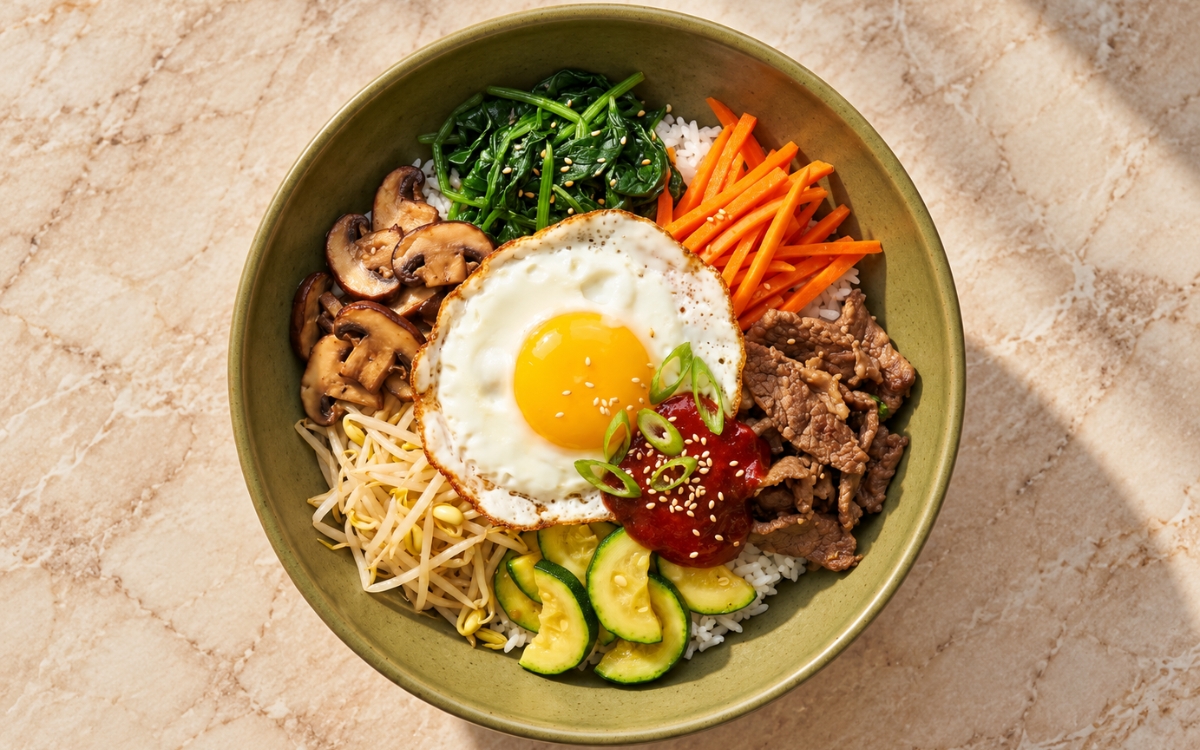
- Divide the hot rice among 4 bowls. Arrange the spinach, carrots, mushrooms, bean sprouts, zucchini, and beef in separate sections over the rice, like spokes around a wheel, leaving the centre free. Place 1 fried egg in the middle of each bowl and spoon the gochujang sauce beside it. Scatter with the sliced scallions and 2 tsp sesame seeds, adding a few drops of sesame oil if desired. That clean separation is what lets each topping stay distinct until everyone mixes their own bowl thoroughly just before eating.
Notes
Cooking every topping separately deserves genuine recognition as the technique most directly responsible for the clear colour blocks and distinct textures that define bibimbap. Combining the vegetables in one pan would mix their moisture and flavours into a single muddy note, while separate cooking lets each one keep its own seasoning, doneness, and bite when the bowl is finally stirred together.
Squeezing the spinach and draining the sprouts deserves the same attention this technique receives throughout this collection’s other mixed-bowl dishes where wet components threaten the base. Blanched vegetables hold a surprising amount of water — left wet, they pool beneath the toppings and turn the rice soggy and the gochujang sauce thin and pale.
Searing the beef in a single layer over high heat deserves genuine respect as the detail most directly responsible for browned, tender meat rather than gray, chewy slices. Crowding the pan or cooking over low heat releases steam that stops browning, and just a few extra seconds turn thin beef from tender to tough.
Keeping the yolk runny deserves attention as a genuine, checkable doneness cue rather than a loose approximation of how long to fry. A set white with a fluid yolk is what turns the hot rice and gochujang into a creamy, glossy coating when the bowl is stirred, while a hard yolk leaves the mixed bowl dry and heavy.