Korean BBQ Sauce
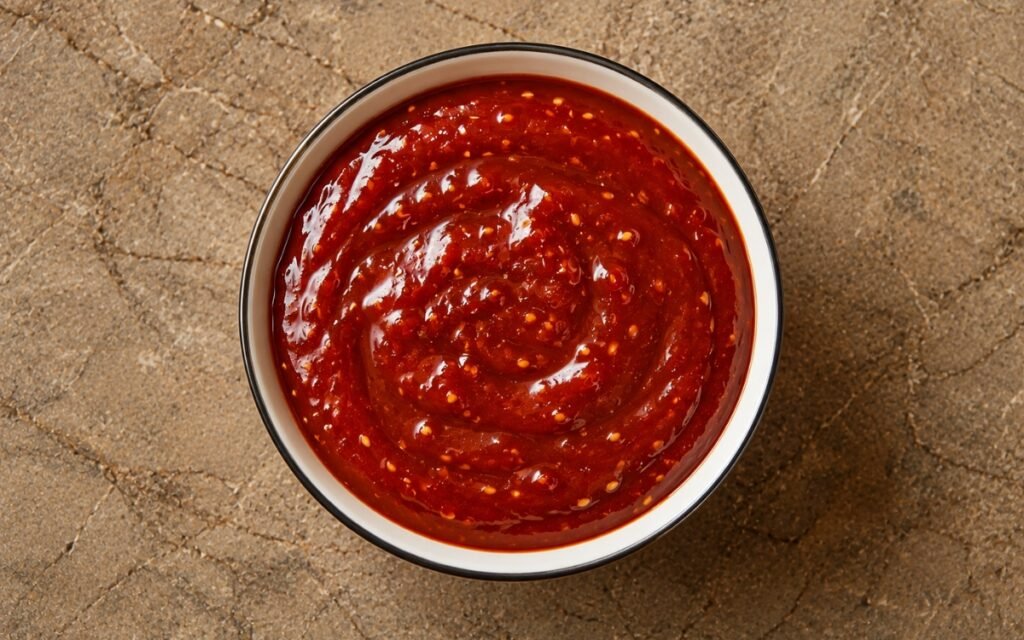
Korean BBQ sauce is a rich, glossy, savoury-sweet barbecue glaze made with soy sauce, gochujang, garlic, ginger, mirin, and toasted sesame oil, the key being a gentle simmer that turns it thick and lacquer-like with a deep reddish-mahogany colour, subtle chili warmth, fermented umami, and caramelized sweetness. Dispersing the gochujang completely before any heat goes on is the technique this whole recipe depends on, because concentrated pockets of chili paste leave uneven heat and gritty spots, the same thorough-mixing principle used throughout this collection whenever a dense paste goes into a hot sauce. Simmering gently, never boiling hard, dissolves the sugar and honey and reduces the sauce slightly without scorching them into bitterness, which is why the heat stays low from the first stir to the last. A smooth cornstarch slurry added to a gentle simmer gives the glossy, coating body, and the toasted sesame oil is stirred in at the very end to keep its nutty aroma intact. The payoff is a thick yet pourable sauce for Korean-style grilled beef, chicken, pork, ribs, wings, and rice bowls.

- Prep Time : 10 min
- Total Time : 25 min
- Servings : 12
Ingredients
For the Korean BBQ Sauce Base
- 120ml regular soy sauce
- 90ml water
- 40ml mirin
- 30ml unseasoned rice vinegar
- 45g Korean gochujang (fermented red chili paste)
- 40g light brown sugar
- 30g honey
- 4 garlic cloves (about 16g), very finely minced
- 10g fresh ginger, finely grated
- 10ml toasted sesame oil
For the Thickening Slurry
- 10g cornstarch
- 20ml cold water
For Finishing
- 1 tsp toasted white sesame seeds
- 1 small green scallion, thinly sliced diagonally
- A few drops toasted sesame oil, optional
Directions
- Prepare the Aromatics
Finely mince the garlic and grate the fresh ginger. In a medium saucepan, combine the soy sauce, water, mirin, rice vinegar, gochujang, brown sugar, and honey, and whisk thoroughly until the gochujang is dispersed and the sugar begins to dissolve, then add the garlic and ginger. The mixture should be a uniform deep reddish-brown with small pieces of garlic and ginger suspended through it. Break the gochujang up completely before heating. That full dispersal is what prevents concentrated pockets of chili paste in the finished sauce. - Simmer the Sauce
Set the saucepan over medium heat and bring it to a gentle simmer, then reduce the heat to medium-low and simmer uncovered for 8–10 minutes, stirring occasionally, until the sugar has fully dissolved and the flavours have combined. Let the sauce reduce slightly and deepen in colour. It should turn glossy, aromatic, and dark reddish-mahogany. Avoid a vigorous boil. That gentle simmer is what keeps the honey and sugar from scorching and turning the sauce bitter. - Thicken the Glaze
Stir the cornstarch and cold water together in a small bowl until completely smooth. Bring the sauce back to a gentle simmer, whisk the slurry again, then pour it in gradually while stirring constantly. Cook for 1–2 minutes, stirring, until the sauce thickens and turns glossy, then stir in the toasted sesame oil and remove it from the heat. It should coat the back of a spoon generously and fall in thick, slow ribbons. That brief cook after the slurry is what removes any raw starch taste. - Adjust the Flavour and Consistency
Taste the sauce. Add a little rice vinegar if it is too sweet, a small amount of honey if it is too sharp, or a little more gochujang for stronger fermented chili flavour. If the glaze is too thick, add warm water 1 tsp at a time, and for a smoother result blend it briefly with an immersion blender. Do not add salt before tasting, because soy sauce and gochujang already bring plenty. That tasting is what lets you correct the balance before it cools. - Cool and Finish
Transfer the sauce to a clean glass jar or heatproof container, let it cool for 10–15 minutes, then refrigerate promptly and stir before serving. For presentation, draw a broad, shallow spiral across the sauce with a spoon and finish with a restrained scattering of toasted white sesame seeds, thinly sliced scallion, and a few drops of sesame oil if you like. That cooling is what sets the final body, and the sauce thickens further as it cools.
*Notes :
- Using authentic Korean gochujang deserves genuine recognition as the choice most directly responsible for the sauce’s character and heat. This fermented red chili paste brings sweetness, saltiness, and gentle heat all at once, and because its balance varies by brand, tasting before adding any extra salt or sugar is the safest way to get a balanced glaze.
- Choosing regular soy sauce deserves the same attention as the gochujang, because it provides the main savoury foundation of the whole sauce and sets its colour. Dark soy sauce can make the glaze excessively dark and salty, so the regular kind keeps the colour deep but clear, and leaves room for the mirin and honey to round it.
- Adding the toasted sesame oil toward the end deserves honest explanation as the small detail that preserves its aroma in the glaze. Heat drives off the nutty, toasted fragrance quickly, so stirring it in after the slurry and removing the pan from the heat keeps that flavour bright and present in the finished glaze.
- Treating the sauce as a glaze deserves a clear and practical note about food safety and timing on the grill. Brush it on grilled beef, pork, or chicken only during the final 2–5 minutes over moderate or indirect heat, and never reuse marinade that touched raw meat unless it has been brought to a full boil.
Why This Recipe Works
This recipe works because the flavour is balanced before the sauce is thickened. Soy sauce brings savoury depth, gochujang adds chili heat and fermented umami, and mirin, brown sugar, and honey provide the caramelized sweetness. Rice vinegar lifts the sauce, and fresh garlic and ginger give the aroma that defines Korean barbecue. A short, gentle simmer melds everything, a smooth slurry gives the lacquered body, and the sesame oil goes in at the end, so the finished glaze is glossy, balanced, and thick enough to coat meat without turning sticky or heavy.
Ingredient Breakdown
Gochujang
The defining ingredient — this fermented red chili paste adds heat, sweetness, and deep umami, and it gives the sauce its red-brown colour.
Soy Sauce
The savoury foundation — regular soy sauce brings salt and umami without the heaviness of dark soy.
Mirin, Brown Sugar, and Honey
The sweetness — together they give caramelized, rounded sweetness and the glossy sheen of the glaze.
Fresh Garlic and Ginger
The aromatics — finely minced garlic and grated ginger give the characteristic Korean barbecue fragrance without chunks.
Toasted Sesame Oil
The finishing aroma — added at the end, it keeps its nutty, toasted flavour instead of cooking away.
Cornstarch Slurry
The thickener — a smooth slurry added to a gentle simmer gives a glossy, coating body without lumps.
Flavor Structure Explained
This Korean BBQ sauce follows a layered balance model:
- Savoury, salty foundation (regular soy sauce)
- Fermented chili warmth (gochujang)
- Caramelized sweetness (mirin, light brown sugar, and honey)
- Bright acidity (unseasoned rice vinegar)
- Fragrant aromatic finish (garlic, ginger, and toasted sesame oil)
Soy sauce provides the savoury, salty foundation of the glaze, while gochujang adds a fermented chili warmth and a deep umami. Mirin, brown sugar, and honey bring caramelized sweetness that rounds off the salt and the heat, and rice vinegar adds a bright acidity that keeps the glaze from feeling heavy or sticky. Garlic, ginger, and toasted sesame oil then finish the sauce with a fragrant aromatic note that ties every other flavour together.
Common Mistakes to Avoid
- Skipping the Gochujang Dispersal – This leaves concentrated pockets of chili paste in the sauce. Always whisk it completely into the liquid before heating.
- Boiling Hard – This scorches the honey and sugar, creating bitterness. Always keep the sauce at a gentle simmer and stir occasionally.
- Adding Dry Cornstarch – This clumps and leaves a raw starch taste. Always mix it with cold water first and simmer 1–2 minutes after adding it.
- Over-Thickening the Glaze – This makes the sauce stiff once cooled. Always stop while it is still pourable, because it thickens further.
- Salting Before Tasting – This risks an overly salty glaze. Always taste first, because soy sauce and gochujang already bring substantial sodium.
Variations
Marinade Version
Set aside a portion before adding the cornstarch slurry and thin it with a little water, which gives a looser marinade for beef, chicken, or pork.
Smoother Version
Blend the finished sauce briefly with an immersion blender for a smoother, more uniform glaze with very fine garlic and ginger flecks.
Extra-Spicy Version
Whisk in a little more gochujang a teaspoon at a time for stronger fermented chili flavour, tasting carefully so the heat stays balanced.
Thinner Version
Whisk in warm water 1 tsp at a time for a looser sauce that is easier to toss through wings, meatballs, or a rice bowl.
Storage & Make-Ahead
Refrigerate the sauce in a clean airtight container at 4°C or below for up to 5 days, because this homemade sauce is not shelf-stable and needs the cold to stay fresh and safe to eat.
Freeze the sauce for up to 2 months, then thaw it in the refrigerator and reheat gently, stirring, because freezing preserves the flavour while gentle reheating restores the smooth, glossy consistency.
Make the sauce a day ahead if you can, because a night in the refrigerator lets the soy, gochujang, garlic, and ginger settle together, and the flavour tastes deeper and more rounded.
Cool the sauce for 10–15 minutes before refrigerating, because sealing it while hot traps steam under the lid, which thins the surface and shortens how long the sauce stays at its best.
Never reuse sauce that touched raw meat, because it can carry bacteria, so keep a clean portion for finishing and brush the rest onto the meat while it grills.
Frequently Asked Questions
Why must the gochujang be dispersed before heating?
Gochujang is dense, so undissolved clumps leave concentrated pockets of heat and uneven texture, whereas whisking it fully into the liquid first gives a smooth, evenly flavoured sauce every time.
Why mix the cornstarch with cold water first?
Cold water separates the starch granules so they cannot clump together, whereas dry starch added to hot sauce forms lumps and leaves a raw, chalky taste in the glaze.
Why is the sesame oil added at the end?
Toasted sesame oil loses its nutty aroma quickly under heat, so adding it off the heat keeps the flavour bright, whereas long cooking dulls it and wastes its fragrance.
Why brush the glaze on only at the end of grilling?
The sauce contains sugar and honey that burn quickly over direct flame, so brushing during the last few minutes caramelizes it nicely, whereas early brushing chars the outside of the meat.
Are there other classic Korean glaze, grilled meat, or rice bowl dishes worth trying?
Korean BBQ Chicken Wings is also worth trying as a Korean-style wing that suits a sticky glaze, and Korean Beef Bulgogi Rice Bowl offers a classic Korean grilled-beef rice bowl worth exploring. Gochujang Honey Sauce and Soy Ginger Glaze are also worth trying for other glossy gochujang and soy glaze directions, while Korean Spicy Pork / Jeyuk Bokkeum offers another classic Korean pork dish built on gochujang.
Nutrition Facts
( Per Serving — 30ml )
- Calories
- ~55 kcal
- Protein
- 1 g
- Fat
- 1 g
- Carbs
- 11 g
-

Gochujang Honey Sauce
Korean fermented chili paste and honey create an addictive sweet-spicy glaze — ready in 10 minutes.
-
Korean Army Stew / Budae Jjigae
Spicy red kimchi stew with ramen, luncheon meat, sausages, tofu, and mushrooms, topped with a layer of melted cheese.
-
Korean BBQ Chicken Wings
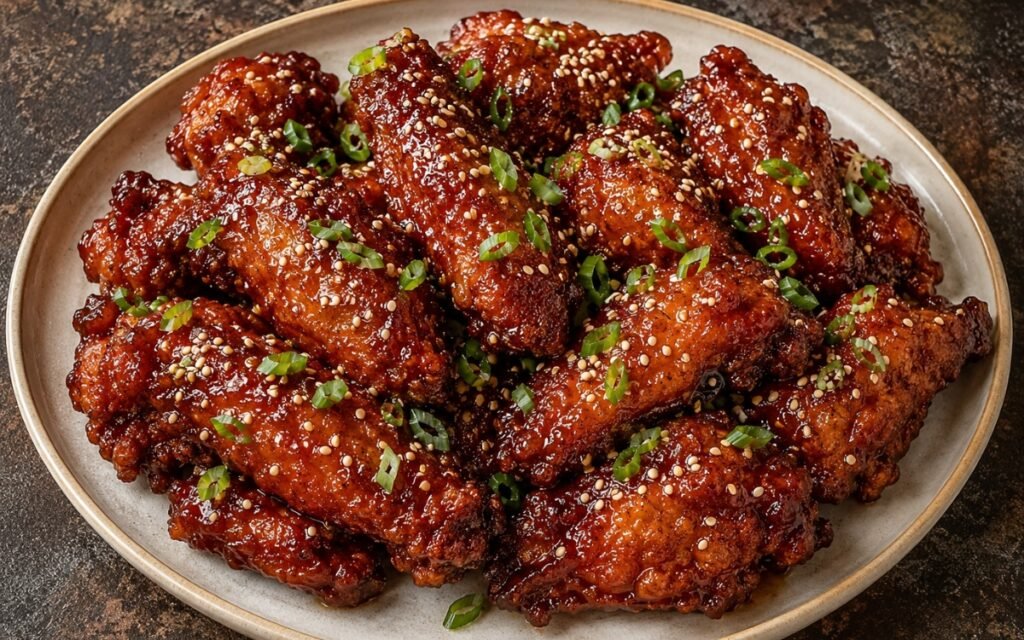
Double-fried wings glazed in sticky gochujang barbecue deliver shattering crunch with sweet-heat intensity and garlic depth.

-
Korean Bibimbap
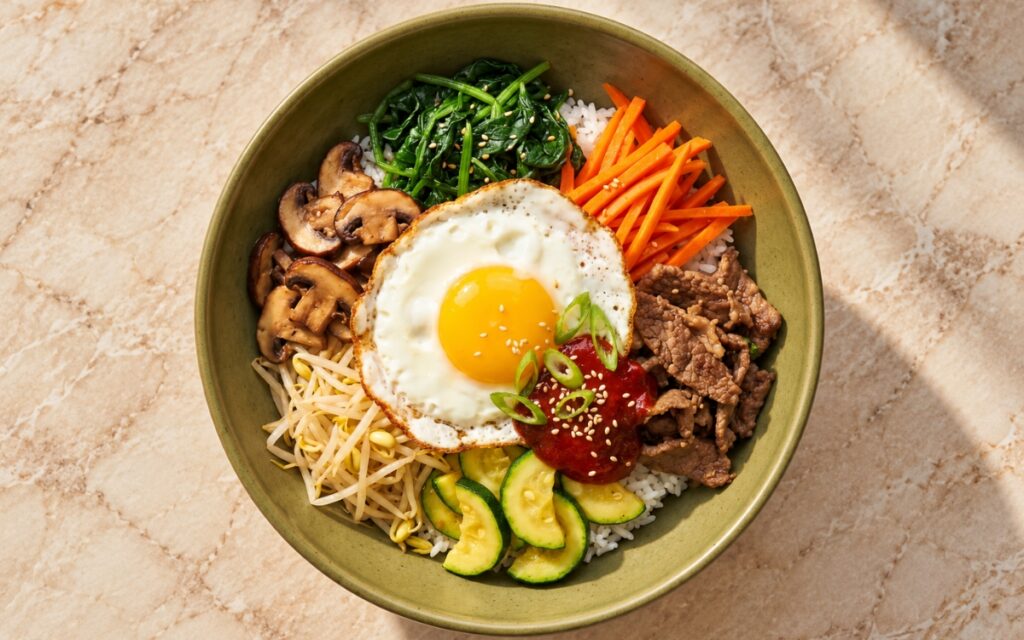
Hot rice topped with neat sections of seasoned vegetables and browned beef, finished with a sunny-side-up egg and gochujang.
-
Korean Corn Dogs
Yeasted batter, chilled potato cube crust, panko, and stretchy mozzarella — fried at 175°C with continuous rotation, finished with sugar and salt, drizzled with gochujang sauce.
-
Korean Soy Garlic Fried Chicken
Crisp double-fried Korean chicken wings and drumettes in a glossy dark amber soy-garlic glaze, finished with toasted sesame seeds and sliced scallions.