Dijon-Style Mustard
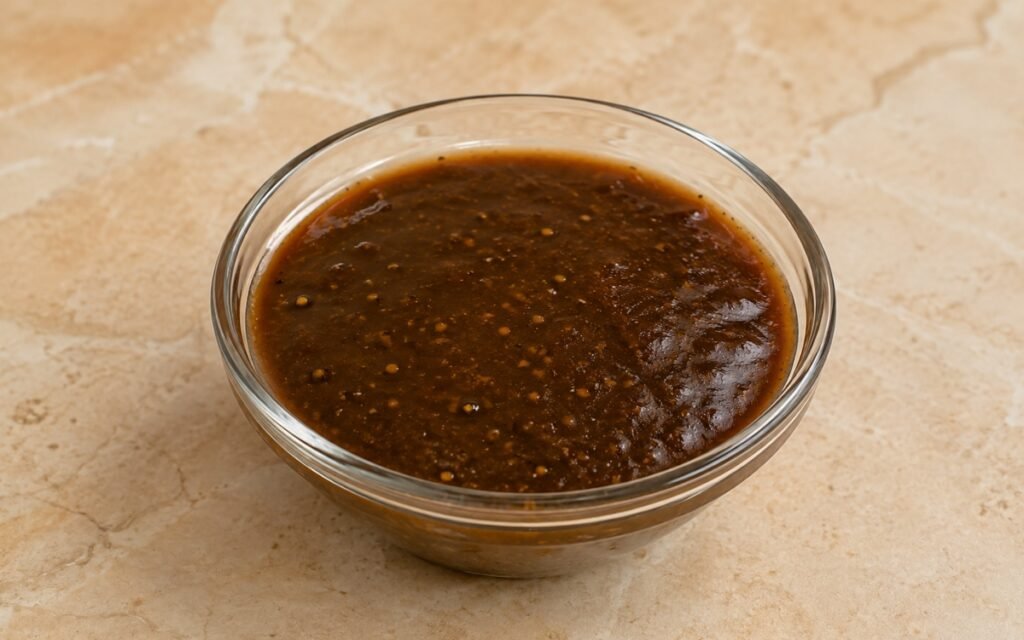
Classic homemade Dijon-style mustard is a traditional French-style condiment made with brown mustard seeds, dry white wine, white wine vinegar, and salt, smooth, sharp, and tangy, with a naturally golden-ochre colour, a dense, velvety texture, and a refined mustard flavour without added sugar or artificial colouring. Soaking the seeds cold in the wine and vinegar for a full 24 hours, rather than heating them, is the technique this whole mustard depends on for its pungency, because cold liquid softens the seeds while preserving the sharp heat that warmth would drive off, the same cold-preparation principle used elsewhere in this collection whenever a volatile flavour must survive. Blending for several minutes in short bursts is what turns the swollen seeds into a thick, creamy paste with no visible whole seeds. Pressing the mustard through a fine sieve is what removes the coarse husks and leaves a silky, spreadable finish. The payoff is a balanced, tangy mustard with real heat that mellows beautifully as it matures, and a clean, refined flavour — ready for French vinaigrettes, pan sauces, roast chicken, steak, pork, and sandwiches.

- Prep Time : 15 min
- Total Time : 48 hr 15 min
- Servings : 12
Ingredients
For the Mustard Base
- 50g brown mustard seeds
- 10g yellow mustard seeds
- 65ml dry white wine
- 55ml white wine vinegar, 5% acidity
- 30ml cold water
- 5g fine sea salt
For Consistency Adjustment
- 1–2 tbsp cold water, only if needed
Directions
- Soak the Mustard Seeds
Combine the brown and yellow mustard seeds in a nonreactive glass bowl or jar, then add the dry white wine, white wine vinegar, 30ml cold water, and salt and stir thoroughly. Cover the container and refrigerate it for 24 hours, stirring once or twice during that time. The seeds should end up swollen and softened, easy to crush between your fingers, with most of the liquid absorbed. Keep the mixture cold. That cold soak is what softens the seeds fully while protecting the pungency that warmth would weaken. - Blend Until Smooth
Transfer the soaked seeds and all the remaining liquid to a high-speed blender or a narrow blending container and blend for 2–4 minutes, pausing now and then to scrape down the sides. Add cold water 1 tsp at a time only if the mixture will not blend. Continue until it becomes a thick, creamy golden-ochre mustard with no visible whole seeds, forming smooth, dense folds. Work in short intervals. That pacing is what avoids overheating, which would weaken the sharp pungency of the mustard. - Refine the Texture
For an exceptionally smooth Dijon-style finish, press the mustard through a fine-mesh sieve using a flexible spatula, and discard the coarse seed husks left behind. Stir the strained mustard until it is uniform and creamy, then add a few drops of cold water if it feels excessively thick. The finished mustard should look silky, thick, and spreadable, with only extremely fine particles visible. Press patiently. That straining is what removes the gritty husks and gives the velvety, refined texture of a classic smooth mustard. - Mature the Mustard
Transfer the mustard to a clean airtight glass jar and refrigerate it for another 24 hours before serving. Stir it thoroughly, then taste it and adjust the salt if needed. Freshly blended mustard can taste harsh and bitter, but after a day in the cold the initial harshness should soften and let the mustard heat, wine acidity, and earthy seed flavour settle into balance. Do not skip this wait. That maturing is what turns a sharp, raw paste into a rounded, refined mustard. - Serve
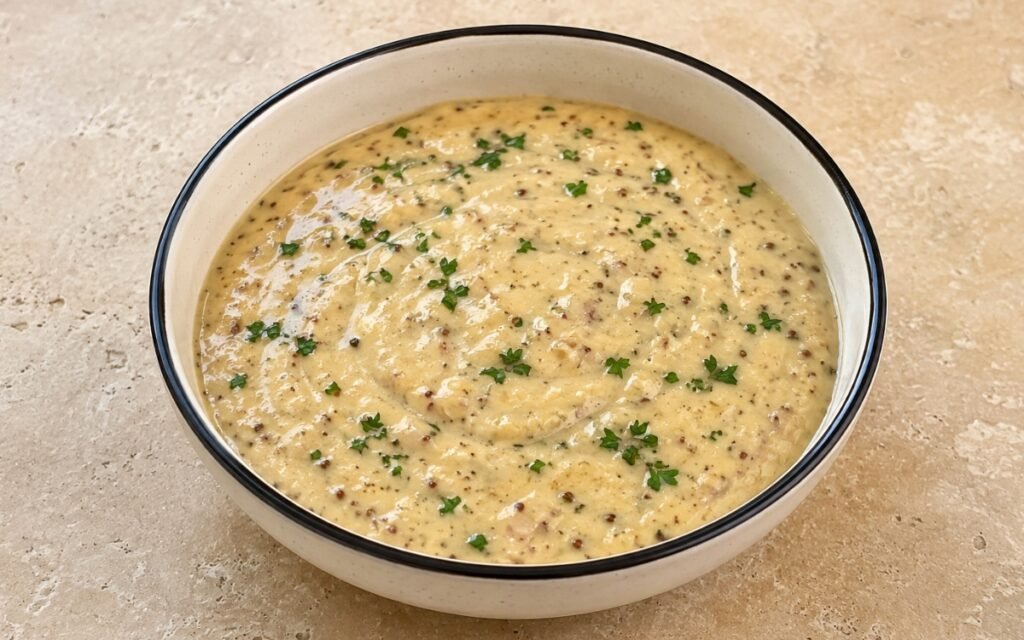
Spoon the mustard into a small glass serving jar or bowl, and draw a broad, curved swirl across the surface. Serve it chilled, or let it stand briefly at room temperature so the flavour opens up. The mustard should look dense, smooth, and golden-ochre with a subtle satin sheen and a thick, spoonable consistency that holds its swirl. That smooth, glossy surface is what shows the mustard is well blended, well strained, and properly matured.
*Notes :
- Soaking the seeds cold for a full 24 hours deserves genuine recognition as the technique most directly responsible for the flavour of this mustard. Cold liquid hydrates and softens the seeds slowly while keeping the volatile compounds that give mustard its heat, whereas warm or hot liquid drives them off and leaves a flatter, milder condiment that never develops the sharpness expected of Dijon.
- Choosing brown seeds with a little yellow deserves the same attention this collection gives to every spice-driven condiment. Brown mustard seeds provide the characteristic sharpness that defines Dijon, while a small proportion of yellow seeds rounds out the flavour and softens the edge, so together they give a more balanced result than either would alone.
- Using dry white wine and white wine vinegar deserves genuine respect as the detail most directly responsible for clean, balanced acidity. A dry, unoaked wine such as Sauvignon Blanc or Pinot Blanc adds fruit without sweetness, and white wine vinegar sharpens it cleanly, whereas strongly flavoured vinegars or sweet wines would take the mustard far away from its traditional character.
- Resting the finished mustard for another day deserves attention as a genuine, tasteable improvement rather than an optional extra. Freshly blended mustard is often harsh and slightly bitter, and the second day in the refrigerator allows those rough edges to mellow, so the heat, acidity, and earthy seed flavour come together into a rounder condiment.
Why This Recipe Works
This recipe works because the mustard is kept cold from start to finish. Soaking the seeds in the refrigerator softens them while protecting their pungency, and short blending bursts keep the mixture from heating up. Straining through a fine sieve removes the husks for a silky, velvety texture. A second day of cold maturing mellows the harsh, bitter edge that fresh mustard always has, so the heat, acidity, and earthy seed flavour settle together. The result is a smooth, dense, golden-ochre mustard with balanced heat, clean wine acidity, and real seed flavour.
Ingredient Breakdown
Brown Mustard Seeds
The sharpness — they give Dijon its characteristic heat and earthy depth, forming most of the mustard’s body.
Yellow Mustard Seeds
The roundness — a small proportion softens the sharpness and adds a gentler, slightly sweeter mustard flavour.
Dry White Wine
The fruity acidity — an unoaked white wine hydrates the seeds and adds clean fruit without any added sugar.
White Wine Vinegar
The clean tang — five percent acidity sharpens the flavour and keeps the mustard bright, balanced, and well preserved.
Cold Soak
The critical technique — twenty-four hours in the refrigerator softens the seeds while preserving their pungent heat.
Fine Straining
The finishing control — pressing through a sieve removes husks and leaves a silky, uniform, velvety texture.
Flavor Structure Explained
This Dijon-style mustard follows a layered balance model:
- Sharp, pungent heat (brown mustard seeds)
- Rounded mustard sweetness (yellow mustard seeds)
- Fruity acidity (dry white wine)
- Clean, bright tang (white wine vinegar)
- Savoury seasoning (fine sea salt)
Brown mustard seeds provide the sharp, pungent heat that leads, and yellow seeds soften it into a rounder mustard flavour. Dry white wine adds fruity acidity, while white wine vinegar keeps the tang clean and bright without any heavy flavour of its own. A measured amount of salt sharpens every other element, so the finished mustard tastes tangy, balanced, and refined, with a warm, earthy finish that ties this classic French condiment together.
Common Mistakes to Avoid
- Heating the Mixture – This drives off the volatile compounds that give mustard its heat. Always keep the seeds cold while soaking and blend in short bursts.
- Using a Reactive Container – This can taint the flavour and colour of the acidic mixture. Always soak and store the mustard in glass or another nonreactive container.
- Skipping the Straining Step – This leaves coarse husks that make the texture gritty rather than velvety. Always press the mustard through a fine-mesh sieve for a smooth finish.
- Serving It Immediately – This presents a harsh, bitter mustard before its flavour has settled. Always mature it for 24 hours in the refrigerator before tasting and serving.
- Adding Turmeric or Sugar – This moves the mustard away from the classic natural golden-ochre colour and sharp flavour. Always rely on the seeds, wine, and vinegar alone.
Variations
Verjuice Version
Replace the dry white wine with verjuice for a more traditional style of Dijon, which gives the mustard a bright, slightly grape-like acidity while keeping the same smooth texture.
Extra-Sharp Version
Use all brown mustard seeds in place of the yellow seeds for a hotter, more pungent mustard that stands up strongly to steak, pork, and rich bistro dishes.
Slightly Coarser Version
Skip the sieving step and blend for a little less time for a more rustic, textured mustard that still tastes tangy and refined on sandwiches and charcuterie.
Herb Version
Stir in a little finely chopped tarragon after maturing for a gently aromatic mustard that works especially well with roast chicken, fish, and creamy French sauces.
Storage & Make-Ahead
Refrigerate the mustard in a clean airtight glass jar at 4°C or below and use it within about 2 weeks, because this homemade version is not shelf-stable and needs the cold to stay fresh.
Make the mustard at least 2 days before you need it, because the 24-hour soak and the 24-hour rest together give the harshness time to mellow into a rounder, more balanced flavour.
Taste the mustard again after the maturing day, because the salt and acidity often seem different once the mixture has rested, and a small adjustment of salt then perfects the result.
Always use a clean, dry spoon to take mustard from the jar, because stray moisture and crumbs introduced from a used utensil can shorten its life and spoil the whole batch.
Let the chilled mustard stand at room temperature for a few minutes before serving, because cold dulls the aroma and thickens the texture, and a short wait opens up the flavour.
Frequently Asked Questions
Why are the mustard seeds soaked cold instead of warmed?
Cold liquid softens the seeds while preserving their volatile heat, whereas warm or hot liquid drives off those compounds, so the finished mustard would taste noticeably flatter, milder, and less like a sharp Dijon.
Why does the mustard need 24 hours of maturing?
Freshly blended mustard tastes harsh and slightly bitter, and a day in the refrigerator mellows those rough edges so the heat, acidity, and earthy seed flavour settle into a rounder, more balanced condiment.
Why is the mustard pressed through a fine sieve?
Straining removes the coarse seed husks that remain after blending, which gives a silky, velvety texture that spreads smoothly, whereas an unstrained mustard feels gritty and looks more rustic than Dijon-style.
Why is there no sugar, turmeric, or colouring in this mustard?
Classic Dijon-style mustard gets its muted golden-ochre colour and tang from the seeds, wine, and vinegar alone, whereas added sugar or turmeric would change both the colour and the sharp, savoury character.
Are there other classic Dijon, vinaigrette, or French bistro dishes worth trying?
Creamy Dijon Mustard Pan Sauce and Balsamic Dijon Dressing both show how Dijon builds a creamy sauce and a sharp dressing, and Pan-Seared Chicken Breast (Skin on) is also worth trying as a simple chicken dish that welcomes a mustard sauce. Paris Steak Frites offers a classic French bistro steak, while Croque Monsieur is a French sandwich that suits mustard.
Nutrition Facts
( Per Serving — 15ml )
- Calories
- ~25 kcal
- Protein
- 1 g
- Fat
- 1 g
- Carbs
- 1 g
-

Creamy Dijon Mustard Pan Sauce
Elegant French pan sauce with Dijon, cream, and shallots ready in 10 minutes for any protein!
-
Balsamic Dijon Dressing
Rich aged balsamic and sharp Dijon emulsify into a bold, timeless 5-minute dressing.
-
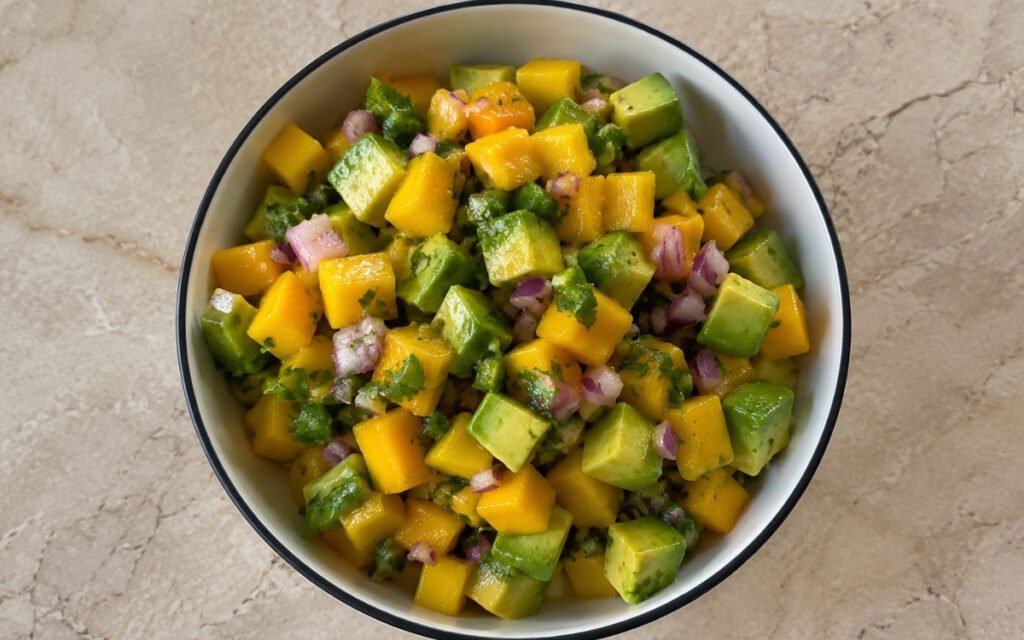
Avocado & Mango Salsa
Sweet mango, creamy avocado, sharp red onion, and jalapeño in a lime-herb dressing — the condiment that makes every Mexican and South American dish taste complete.
-
Argentine Chimichurri Steak
Thick, dry-brined steak grilled until deeply charred with a pink medium-rare centre, finished with loose, hand-chopped chimichurri.
-
Classic Ribeye Steak
Marbled ribeye seared to perfection and basted with garlic herb butter for steakhouse flavor.
-
Patatas Bravas with Mayonnaise-Style Aioli
Potatoes parboiled, shaken rough, roasted on a preheated tray — smoky bravas sauce with sherry vinegar, creamy garlic aioli.