
Croque Monsieur
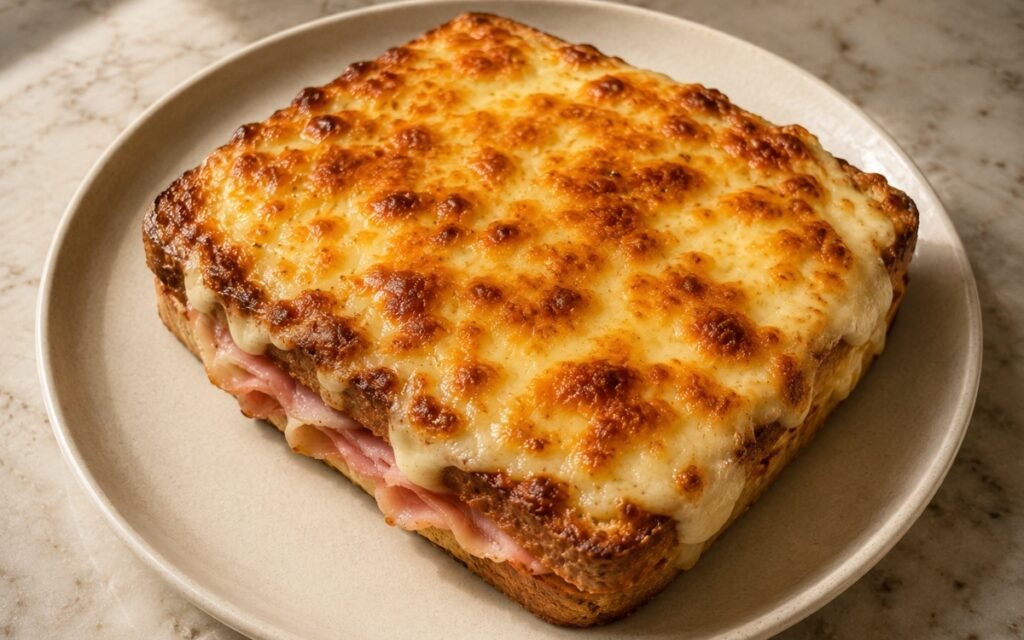
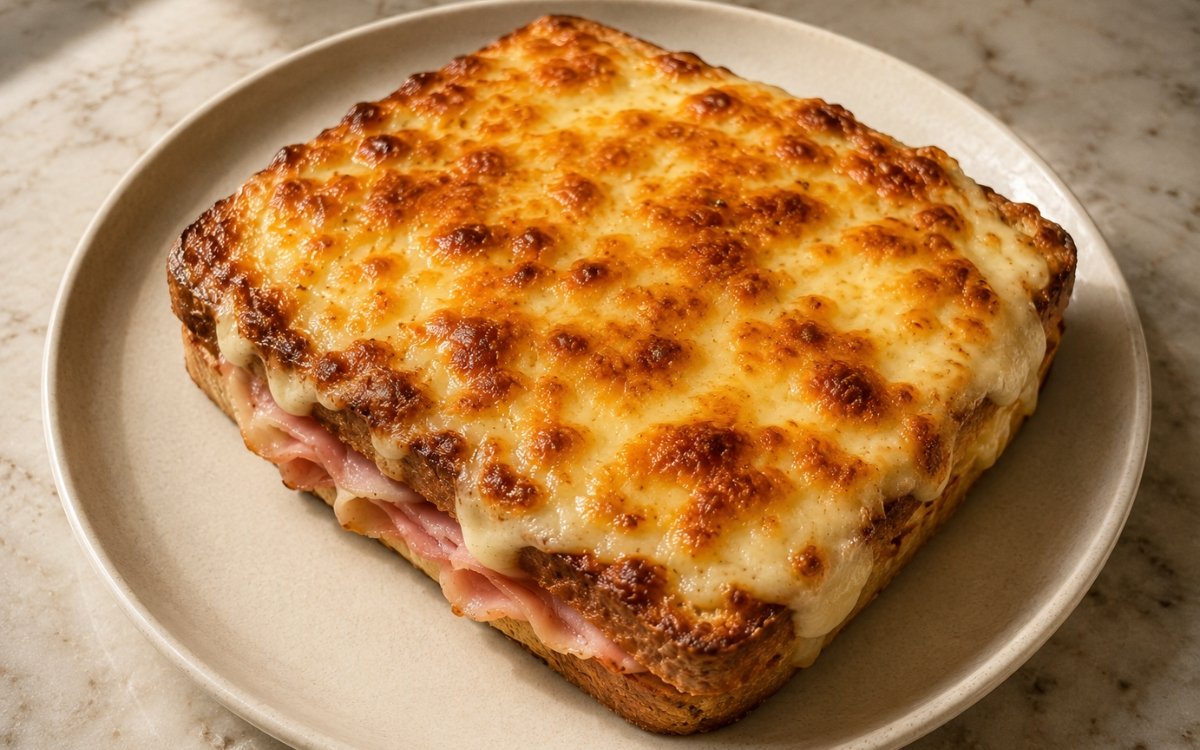
A classic French croque monsieur made with griddled white bread, thin ham, Dijon mustard, creamy béchamel, and Gruyère cheese, finished under the broiler until the béchamel and cheese form a bubbling golden-brown crust across the top, with ham visible at the edges and the bread crisp underneath. Griddling the sandwich fully before it ever meets the broiler is the technique that separates a proper croque monsieur from a merely dressed-up grilled cheese — skipping this step leaves soft, pale bread beneath a browned top, the same two-stage-heat principle used elsewhere in this collection whenever a sandwich needs both a crisp exterior and a fully melted interior. Keeping the béchamel genuinely thick, cooked until it visibly coats the back of a spoon, matters just as much, since a thin, loose sauce soaks straight into the bread instead of setting into the bubbling, browned crust that defines this dish’s top. Watching the broiler constantly during the final stage protects the whole sandwich from a very narrow margin — croque monsieur goes from perfectly bubbling and golden to burnt in a matter of moments. The payoff is a sandwich with genuine structural layers: crisp griddled bread, melted Gruyère, folded ham, and a bubbling, blistered béchamel crust on top.
Prep Time : 20 min
Cook Time : 25 min
Servings : 4
20 min
25 min
4
Ingredients
For the Béchamel
• 35g unsalted butter
• 35g all-purpose flour — this one on Amazon
• 450ml whole milk, warm
• 4g fine sea salt, plus more to taste
• 1g freshly ground black pepper
• 1g ground nutmeg — this one on Amazon
• 80g Gruyère cheese, finely grated
For the Sandwiches
• 8 slices white sandwich bread, pain de mie, or brioche-style sandwich bread
• 40g unsalted butter, softened, for griddling — this one on Amazon
• 20g Dijon mustard — this one on Amazon
• 240–280g good-quality sliced ham
• 220g Gruyère cheese, grated or thinly sliced — this one on Amazon
For Finishing
• Extra freshly ground black pepper
• Small pinch of nutmeg, optional
This post may contain affiliate links. As an Amazon Associate I earn from qualifying purchases, at no additional cost to you.
Directions
- Make the Béchamel
Melt the butter in a saucepan over medium heat. Add the flour and whisk constantly for 1–2 minutes until it forms a smooth pale roux. Do not brown the roux. Croque monsieur béchamel should stay creamy and pale, not taste like toasted flour. Slowly whisk in the warm milk in several additions, making sure each addition is smooth before adding more. Cook for 4–6 minutes, whisking often, until thick, glossy, and spoonable. Season with salt, black pepper, and nutmeg. Stir in 80g grated Gruyère until melted. The béchamel should be thick enough to sit on top of the sandwich without running straight off. If it is thin and loose, keep cooking. Runny béchamel ruins the whole structure. Using warm rather than cold milk, and adding it gradually in stages, is what keeps the roux from seizing or forming lumps — each addition needs to fully smooth out before the next goes in, giving the starch time to properly hydrate and thicken evenly. - Prepare the Bread
Spread a thin layer of softened butter on one side of each slice of bread. This buttered side will face the pan. Spread Dijon mustard lightly on the inside of 4 slices. Do not overdo it. Mustard should sharpen the sandwich, not dominate it. A restrained amount of mustard is meant to provide a background sharpness that cuts through the richness of the béchamel and cheese, rather than becoming its own dominant flavour note competing with everything else. - Assemble the Sandwiches
Place 4 slices of bread butter-side down. Add a layer of Gruyère, then the ham, then another light layer of Gruyère. Close with the remaining bread slices, butter-side facing out. Keep the ham folded neatly so it reaches the edges without hanging out too much. Messy overhang burns under the broiler. Cheese placed directly against both the bottom bread and again above the ham means the melting cheese binds the whole interior together from both directions once griddled and broiled, rather than leaving the ham as a loose, separate layer. - Griddle the Sandwiches
Heat a large skillet or griddle over medium-low to medium heat. Cook the sandwiches for 3–4 minutes on the first side until deeply golden and crisp. Flip and cook another 3–4 minutes until the second side is golden and the cheese inside starts melting. Do not use high heat. The bread will brown before the cheese melts, and then you are stuck with a pretty exterior and a cold centre. This griddling stage is doing real, separate work from the broiler that follows — it’s specifically what crisps the bread’s exterior and begins melting the interior cheese, tasks the broiler alone (focused entirely on the top) wouldn’t accomplish for the sandwich’s base and sides. - Top with Béchamel and Cheese
Transfer the griddled sandwiches to a baking tray. Spoon a generous layer of béchamel over the top of each sandwich, spreading it close to the edges. Scatter the remaining Gruyère over the béchamel. Finish with a little black pepper and a tiny pinch of nutmeg if using. Spreading the béchamel close to the edges, rather than leaving a wide bare border, ensures the whole top surface bubbles and browns evenly under the broiler rather than leaving dry, unsauced patches of bread exposed to direct heat. - Broil Until Golden
Place under a hot broiler for 3–5 minutes, until the top is bubbling, blistered, and deeply golden-brown in spots. Watch constantly. This goes from perfect to burnt fast. Walking away here is how you destroy it. The béchamel and cheese topping is thin enough, and broiler heat intense enough, that the gap between “just right” and “scorched” is genuinely only a matter of seconds — this is one step in the whole recipe that tolerates no distraction. - Serve
Let the sandwiches rest for 1–2 minutes, then serve hot while the top is bubbling, the cheese is melted, and the bread is still crisp underneath. This brief rest lets the molten béchamel and cheese firm just slightly so the sandwich holds together when cut or picked up, while everything is still fully melted and bubbling hot.
*Notes :
- The two-stage heat approach — griddling first, then broiling — is worth understanding as the single most important structural decision in this recipe rather than an extra step for convenience. Griddling alone would leave the top bare and unfinished; broiling alone, without first griddling, would leave soft, pale, unbrowned bread beneath a nicely bubbled top. Only the combination produces a sandwich that’s properly crisp on the outside and bottom, fully melted throughout, and bubbling and blistered on top — each stage doing a job the other genuinely can’t accomplish on its own.
- The béchamel’s thickness is worth monitoring carefully rather than trusting the clock alone, since flour’s thickening behaviour can vary slightly depending on how it was measured and how vigorously it was whisked. The visual and textural cue — coating the back of a spoon, holding its shape rather than running — is the more reliable indicator than a fixed cooking time, and it’s worth continuing to cook past the stated minimum if the sauce still looks loose.
- Restraint with the Dijon mustard reflects its intended role in this sandwich rather than an arbitrary limit. A generous, thick layer of mustard would compete directly with the béchamel and Gruyère for dominance, throwing off the sandwich’s balance. Used sparingly, mustard instead functions as a background sharpness that lifts and cuts through the richer components without ever becoming the most noticeable flavour.
- The final broiling stage’s narrow margin for error is a genuine characteristic of the technique, not an exaggeration. A thin layer of béchamel and cheese under intense, direct broiler heat moves from unmelted to perfectly bubbled and browned to burnt within a very short window — staying at the oven and watching continuously, rather than setting a timer and walking away, is the only reliable way to catch the sandwich at its ideal point.
Why This Recipe Works
This recipe works because it treats crisping and melting as two distinct jobs handled by two distinct heat sources: griddling first builds a properly crisp, golden exterior and begins melting the interior cheese, while the broiler afterward finishes the top into a bubbling, blistered crust that griddling alone couldn’t achieve.
The béchamel is cooked to a genuinely thick, spoonable consistency so it sets into a proper crust rather than soaking into the bread, and close attention during the brief, high-heat broiling stage protects the sandwich from the very narrow window between perfectly bubbled and burnt.
Ingredient Breakdown
Gradually Built Béchamel
The topping’s foundation — milk added warm and in stages to a butter-flour roux, producing a smooth, thick, glossy sauce without lumps.
Restrained Dijon Mustard
The background sharpness — used lightly so it lifts the sandwich’s richness without dominating the overall flavour.
Double-Layered Gruyère
The binding cheese — placed against both the bottom bread and above the ham, melting to hold the sandwich’s interior together.
Griddled-Then-Broiled Technique
The critical two-stage cooking method — griddling crisps the exterior and begins the interior melt, broiling finishes the top into a bubbling, browned crust.
Closely Watched Broiling Stage
The final, high-attention step — the thin béchamel-cheese topping moves from perfect to burnt within seconds under intense broiler heat.
Flavor Structure Explained
This croque monsieur follows a layered balance model:
- Crisp buttery foundation (griddled bread)
- Rich savoury centre (ham, Gruyère)
- Sharp background lift (Dijon mustard)
- Creamy bubbling topping (béchamel and cheese crust)
- Warm aromatic finish (nutmeg, black pepper)
The griddled bread provides a crisp, buttery base for everything above it. Ham and Gruyère define the sandwich’s rich, savoury centre, with the cheese melting throughout to bind the layers together. A restrained amount of Dijon mustard lifts that richness with sharp, background acidity. The thick béchamel and cheese topping, bubbled and browned under the broiler, adds a creamy, indulgent crust across the top. A final touch of nutmeg and black pepper rounds out the whole sandwich with warm, subtle aromatic depth.
Common Mistakes to Avoid
- Skipping the Griddling Step Before Broiling – This leaves soft, pale bread beneath a browned top rather than a properly crisp sandwich throughout. Always griddle fully first.
- Making the Béchamel Too Thin – A loose sauce soaks into the bread instead of setting into a proper bubbling crust. Always cook it until thick and spoonable, well past the point it looks merely combined.
- Overloading the Sandwich with Mustard – Too much Dijon competes with the béchamel and cheese rather than simply lifting them. Always use it sparingly.
- Walking Away During Broiling – The thin topping moves from perfect to burnt within seconds. Always watch constantly during this final stage.
- Letting Ham Hang Out Over the Bread’s Edges – Exposed ham burns and looks messy under the broiler. Always fold it neatly to stay within the bread’s boundaries.
Variations
Croque Madame
Top the finished, broiled sandwich with a fried egg, sunny-side up, for the classic egg-topped variation of the same dish.
With Emmental
Substitute or blend Emmental with the Gruyère for a slightly milder, still nutty melt.
Extra-Rich Version
Increase the béchamel’s Gruyère content to 100g for an even more pronounced cheese flavour throughout the topping.
Turkey Version
Substitute thinly sliced turkey breast for the ham, following the identical assembly, griddling, and broiling method.
Storage & Make-Ahead
The béchamel can be made 1–2 days ahead and refrigerated in a sealed container; gently rewarm and whisk before using, adding a splash of warm milk if it has thickened too much.
Griddled, unbroiled sandwiches can sit briefly at room temperature before the béchamel and broiling stage if timing needs staggering for multiple servings.
Fully finished, broiled croque monsieurs are not suitable for storage — the bread softens and the topping loses its bubbling, crisp quality quickly, so serve immediately.
Frequently Asked Questions
Why does the sandwich need to be griddled before going under the broiler?
Griddling first is what crisps the bread’s exterior and begins melting the interior cheese — jobs the broiler, which only heats the top surface, can’t accomplish. Skipping this step and broiling alone leaves soft, pale, unbrowned bread beneath a nicely bubbled top.
Why does the béchamel need to be so thick rather than a lighter, pourable sauce?
A thin béchamel soaks directly into the bread rather than sitting on top and setting into the bubbling, browned crust that’s central to how croque monsieur is meant to look and eat. Cooking it until it genuinely coats the back of a spoon is what allows it to hold its structure under the broiler.
Why watch the broiler so closely instead of setting a timer and stepping away?
The thin layer of béchamel and cheese under intense, direct broiler heat moves from unmelted to perfectly bubbled to burnt within a very narrow window, often just seconds. Continuous attention is the only reliable way to catch it at the right moment.
Why use only a light layer of Dijon mustard rather than a generous spread?
Mustard’s role here is to provide background sharpness that lifts the richness of the béchamel and cheese, not to compete with them for dominance. A heavier layer would throw off that balance and make the mustard the most noticeable flavour rather than a supporting one.
Are there other classic griddled or pressed sandwiches worth trying?
Reuben Sandwich follows a related griddled format with corned beef, Swiss cheese, and sauerkraut instead of ham and béchamel, and the Cuban Sandwich (Cubano) offers another pressed, layered sandwich built around citrus-marinated roast pork. French Dip Sandwich takes a different direction entirely, built around thinly sliced roast beef served with a side of jus for dipping rather than a griddled, cheese-topped format.
Nutrition Facts
( per serving )
Calories
~720 kcal
Protein
36 g
Fat
44 g
Carbs
42 g
Calories
~720 kcal
Protein
36 g
Fat
44 g
Carbs
42 g
Related Recipes
Related Recipes

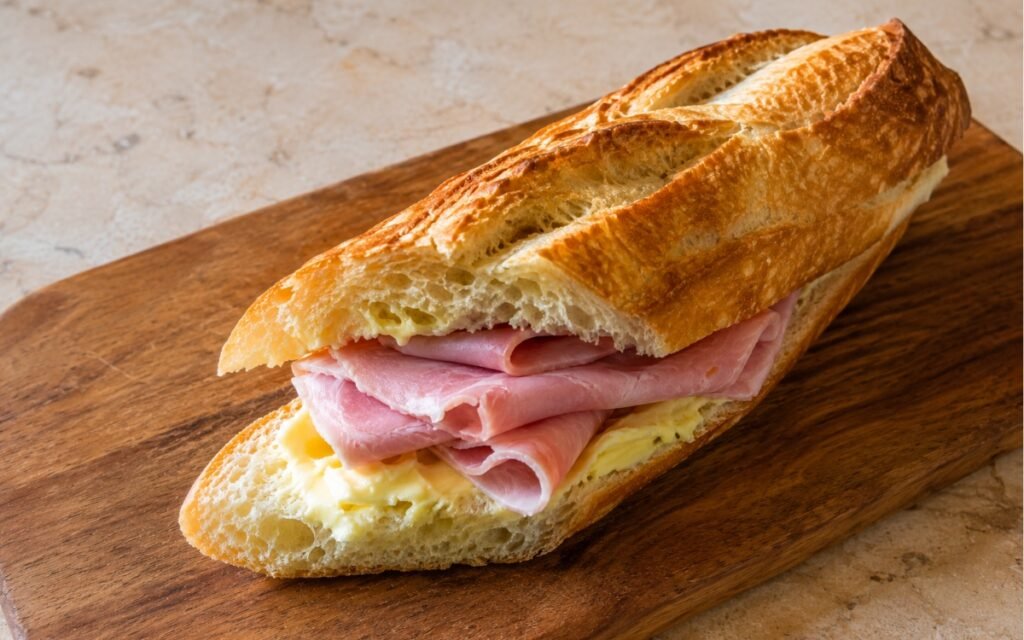
Jambon-Beurre
Fresh crusty baguette, a generous layer of softened butter, and thinly folded slices of pale pink French ham.
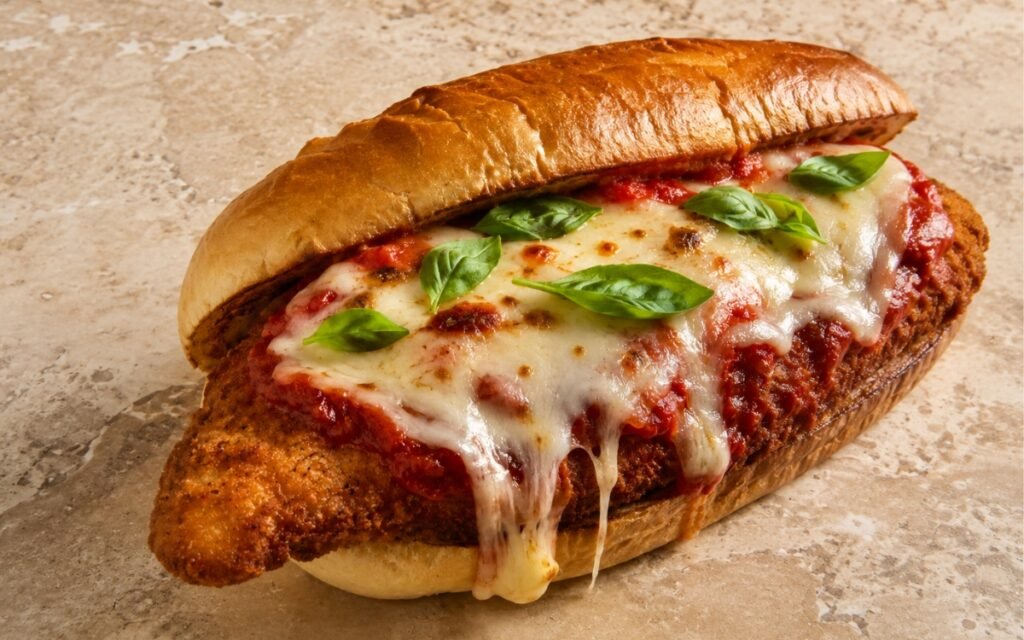
Chicken Parm Hero
A golden fried chicken cutlet in a toasted hoagie roll, topped with thick marinara, melted mozzarella, Parmesan, and fresh basil.
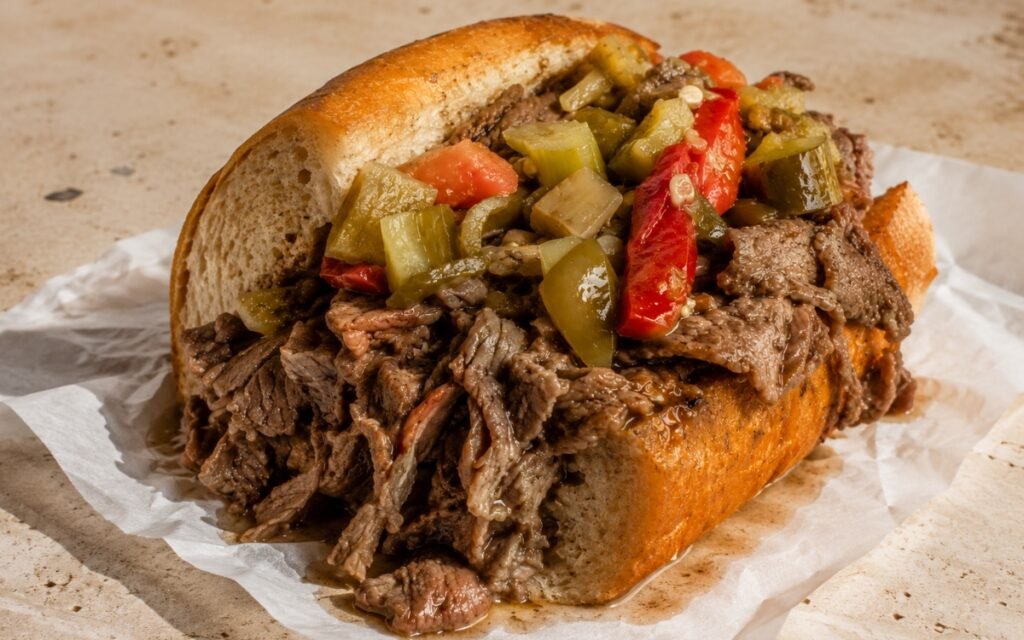
Italian Beef Sandwich
Thin-sliced roast beef warmed in a heavily seasoned au jus, piled into crusty homemade French rolls with sharp giardiniera and roasted peppers.
You might also like
You might also like
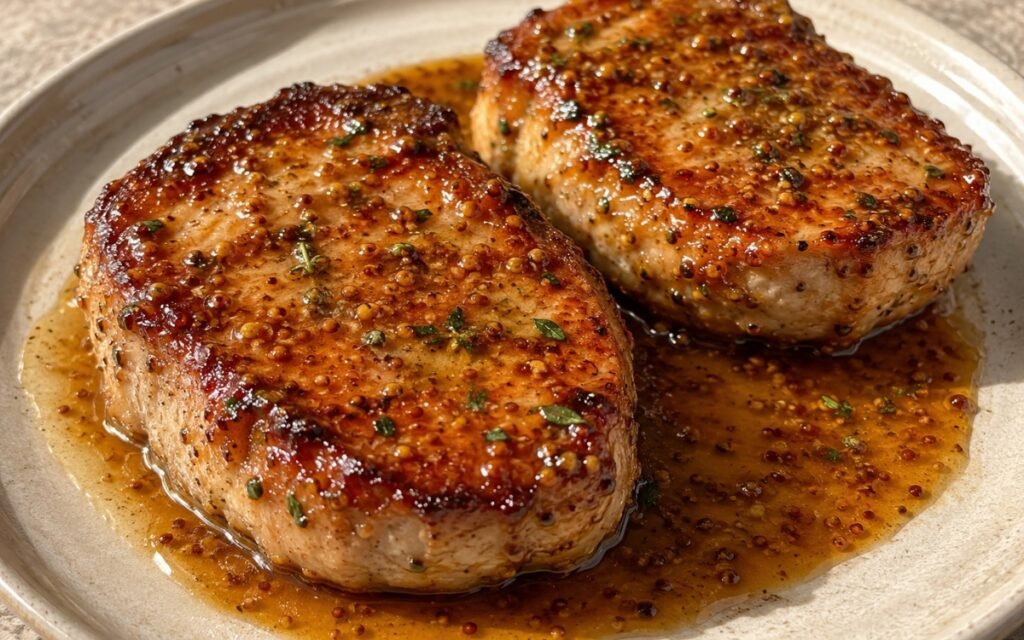
Honey Mustard Pork Chops
Pork chops seared golden, glazed with honey and dual mustard after the flip, basted until sticky and caramelized, rested. Sweet and tangy.
Pan-Seared Pork Medallions
Pork tenderloin sliced and pounded even, seared golden, finished with a rich Dijon pan sauce from the fond. Quick and restaurant-quality.
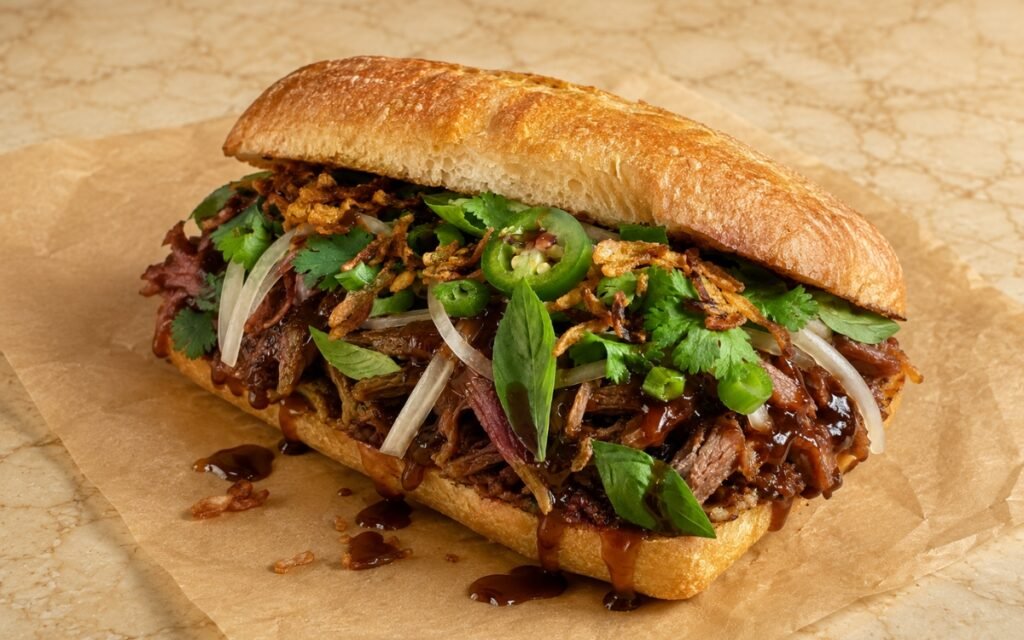
Pho Sandwich
Slow-braised beef in a fragrant, charred pho-style spice base, sliced and glazed, piled into a crusty baguette with fresh herbs and crispy shallots.

Croque Monsieur
Ingredients
Method
- Melt the butter in a saucepan over medium heat. Add the flour and whisk constantly for 1–2 minutes until it forms a smooth pale roux. Do not brown the roux. Croque monsieur béchamel should stay creamy and pale, not taste like toasted flour. Slowly whisk in the warm milk in several additions, making sure each addition is smooth before adding more. Cook for 4–6 minutes, whisking often, until thick, glossy, and spoonable. Season with salt, black pepper, and nutmeg. Stir in 80g grated Gruyère until melted. The béchamel should be thick enough to sit on top of the sandwich without running straight off. If it is thin and loose, keep cooking. Runny béchamel ruins the whole structure. Using warm rather than cold milk, and adding it gradually in stages, is what keeps the roux from seizing or forming lumps — each addition needs to fully smooth out before the next goes in, giving the starch time to properly hydrate and thicken evenly.
- Spread a thin layer of softened butter on one side of each slice of bread. This buttered side will face the pan. Spread Dijon mustard lightly on the inside of 4 slices. Do not overdo it. Mustard should sharpen the sandwich, not dominate it. A restrained amount of mustard is meant to provide a background sharpness that cuts through the richness of the béchamel and cheese, rather than becoming its own dominant flavour note competing with everything else.
- Place 4 slices of bread butter-side down. Add a layer of Gruyère, then the ham, then another light layer of Gruyère. Close with the remaining bread slices, butter-side facing out. Keep the ham folded neatly so it reaches the edges without hanging out too much. Messy overhang burns under the broiler. Cheese placed directly against both the bottom bread and again above the ham means the melting cheese binds the whole interior together from both directions once griddled and broiled, rather than leaving the ham as a loose, separate layer.
- Heat a large skillet or griddle over medium-low to medium heat. Cook the sandwiches for 3–4 minutes on the first side until deeply golden and crisp. Flip and cook another 3–4 minutes until the second side is golden and the cheese inside starts melting. Do not use high heat. The bread will brown before the cheese melts, and then you are stuck with a pretty exterior and a cold centre. This griddling stage is doing real, separate work from the broiler that follows — it’s specifically what crisps the bread’s exterior and begins melting the interior cheese, tasks the broiler alone (focused entirely on the top) wouldn’t accomplish for the sandwich’s base and sides.
- Transfer the griddled sandwiches to a baking tray. Spoon a generous layer of béchamel over the top of each sandwich, spreading it close to the edges. Scatter the remaining Gruyère over the béchamel. Finish with a little black pepper and a tiny pinch of nutmeg if using. Spreading the béchamel close to the edges, rather than leaving a wide bare border, ensures the whole top surface bubbles and browns evenly under the broiler rather than leaving dry, unsauced patches of bread exposed to direct heat.
- Place under a hot broiler for 3–5 minutes, until the top is bubbling, blistered, and deeply golden-brown in spots. Watch constantly. This goes from perfect to burnt fast. Walking away here is how you destroy it. The béchamel and cheese topping is thin enough, and broiler heat intense enough, that the gap between “just right” and “scorched” is genuinely only a matter of seconds — this is one step in the whole recipe that tolerates no distraction.
- Let the sandwiches rest for 1–2 minutes, then serve hot while the top is bubbling, the cheese is melted, and the bread is still crisp underneath. This brief rest lets the molten béchamel and cheese firm just slightly so the sandwich holds together when cut or picked up, while everything is still fully melted and bubbling hot.